


Winter Olympics memories: From U.S.-Canada hockey to freezing my pens off, I’m returning for more

By the time you read this, I’ll be in Cortina d’Ampezzo, Italy, for my fourth Winter Olympics. I’m covering it for Colorado Public Radio and National Public Radio and can’t wait to put back on my sportswriter fedora which will be replaced by a stocking cap as soon as I step outside.
Here in Rome, I finally found long underwear for those long snowy days in mid-teen temps. I made the mistake of not wearing them when I covered luge, bobsled and skeleton in the 2002 Salt Lake City Olympics where they had the bright idea of holding outdoor sliding sports at night. (Read below.)
In the 2006 and 2010 Olympics I graduated up to covering figure skating. It had the benefit of greater readership and warmth in indoor arenas but I suffered in the raft of crap I took from friends. Said one: “How was Glee?”
The Winter Olympics are so much different than the Summer, which I’ve also covered three times. Winter Olympics, for some reason, are far less political. The atmosphere is more festive, maybe because the host cities are smaller. Can you imagine a Summer Olympics in Lillehammer, Norway?
But the tension, drama and excitement are the same. I’ve witnessed many thrills of victory and agonies of defeat covering Olympics for The Denver Post in 2002 in Salt Lake, 2006 in Turin and 2010 in Vancouver. Below are 10 of my top memories. I’m guessing after these Olympics, I’ll add to the list.
Please follow my dispatches, starting later today, at CPR.org. Opening Ceremonies are Friday.
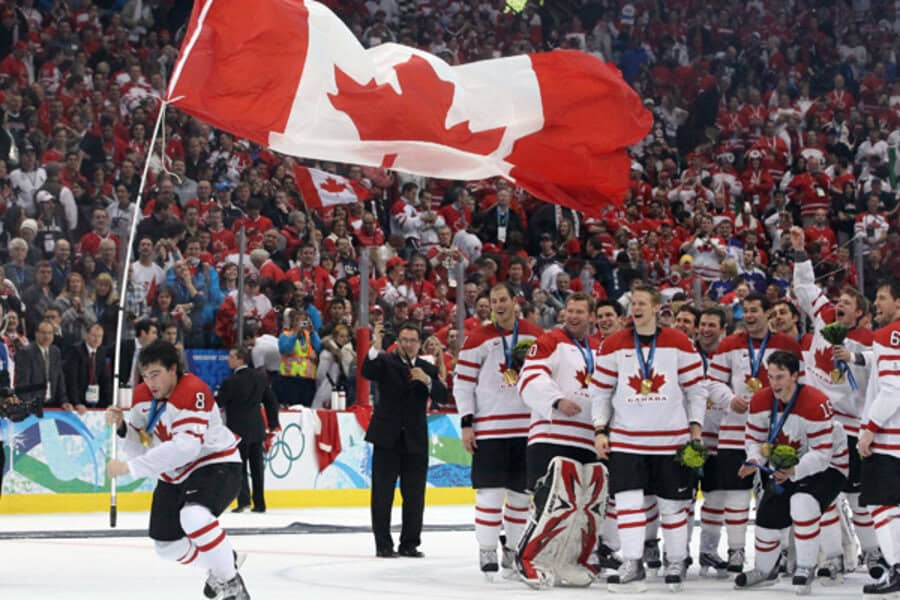
USA-Canada hockey, 2010
The U.S. was playing its biggest hockey game in history outside its win over the Soviet Union in 1980. Our two veteran hockey writers, Adrian Dater and Terry Frei, weren’t on the Olympic coverage team and the assignment of the USA-Canada gold medal game was given to me.
And until I moved to Denver in 1990, I didn’t know hockey was played on ice.
I had covered exactly two hockey games in my life. I didn’t even know the rules. During the game I sat next to a writer from the Vancouver Province and asked him, “What the hell is roughing? It’s hockey!”
As it turns out, it was one of the best games in Olympic history. Canada won in overtime when Sidney Crosby scored for a 3-2 win, sending the home crowd and the entire country from Vancouver Island to Prince Edward Island into delirium.
I stood in the media mixed zone and U.S. goalkeeper Ryan Miller most succinctly put his feelings into very short words. “It sucks” he said as he walked away.
Hours later, as I stood in an empty subway station at 2 a.m., I saw a maintenance worker sweeping the floor, quietly singing, “O Canada.”
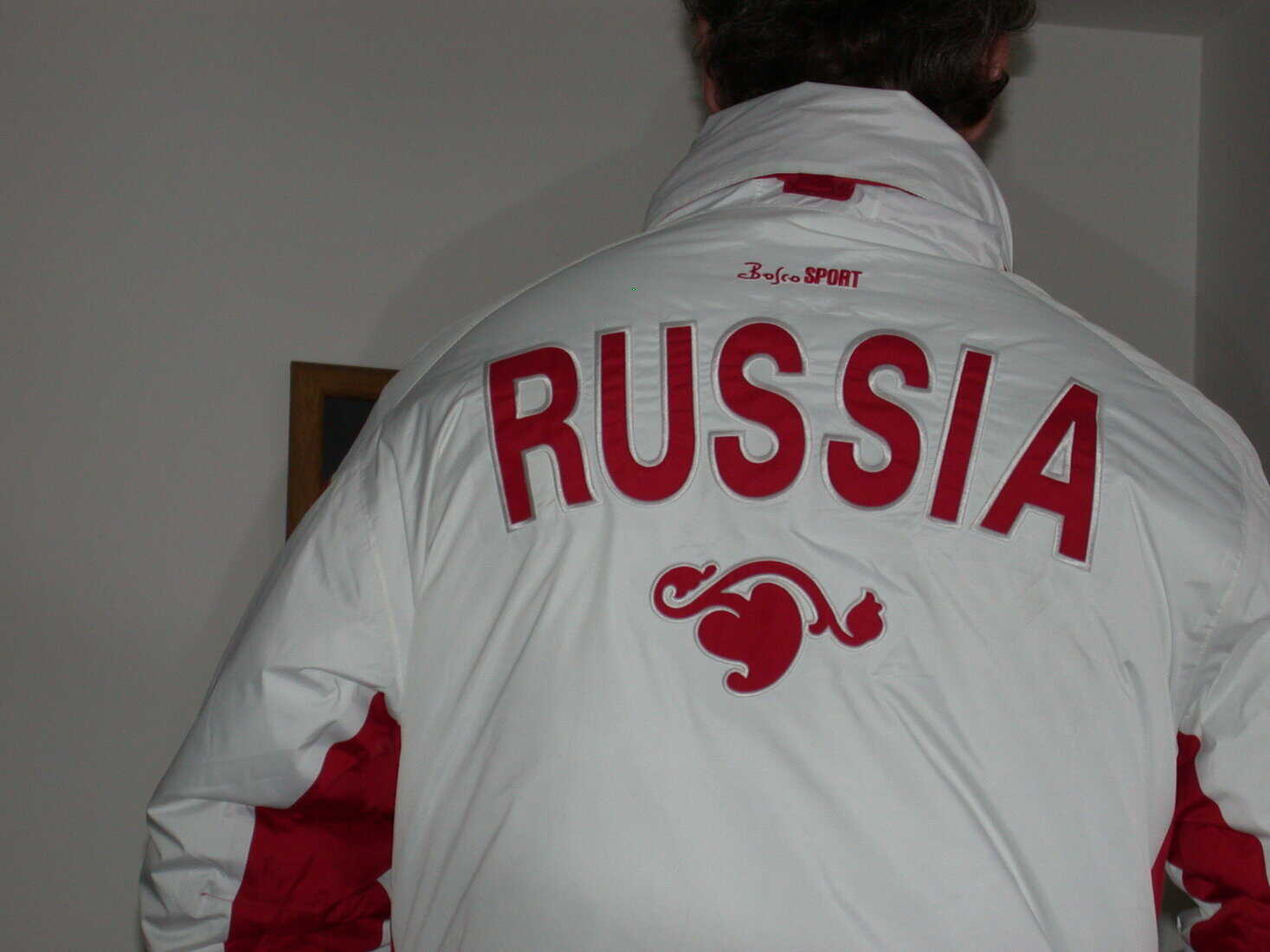
Russia House, 2006
One of the best attended venues at the 2006 Games in Turin was the Russia House. The Russian Olympic Team turned a former Kappa clothes factory into one giant souvenir store. The entire three-room store was filled with Russia’s loud and, frankly, beautiful, red and white floral pattern.
Every day it was filled with Russian officials, Russian athletes after their events and fans from around the world. I could tell the new Russia had discovered capitalism. I paid €269 for a snow-white parka with the gold eagle on the shoulder, Russian flag on the chest and “RUSSIA” in big bold red letters on the back.
Later, I wore it skiing in Colorado, complete with a black Cossack hat I bought in Lithuania. When anyone complimented me on my outfit, I’d reply, “Thank you, comrade.”
I don’t think I would wear that parka now.
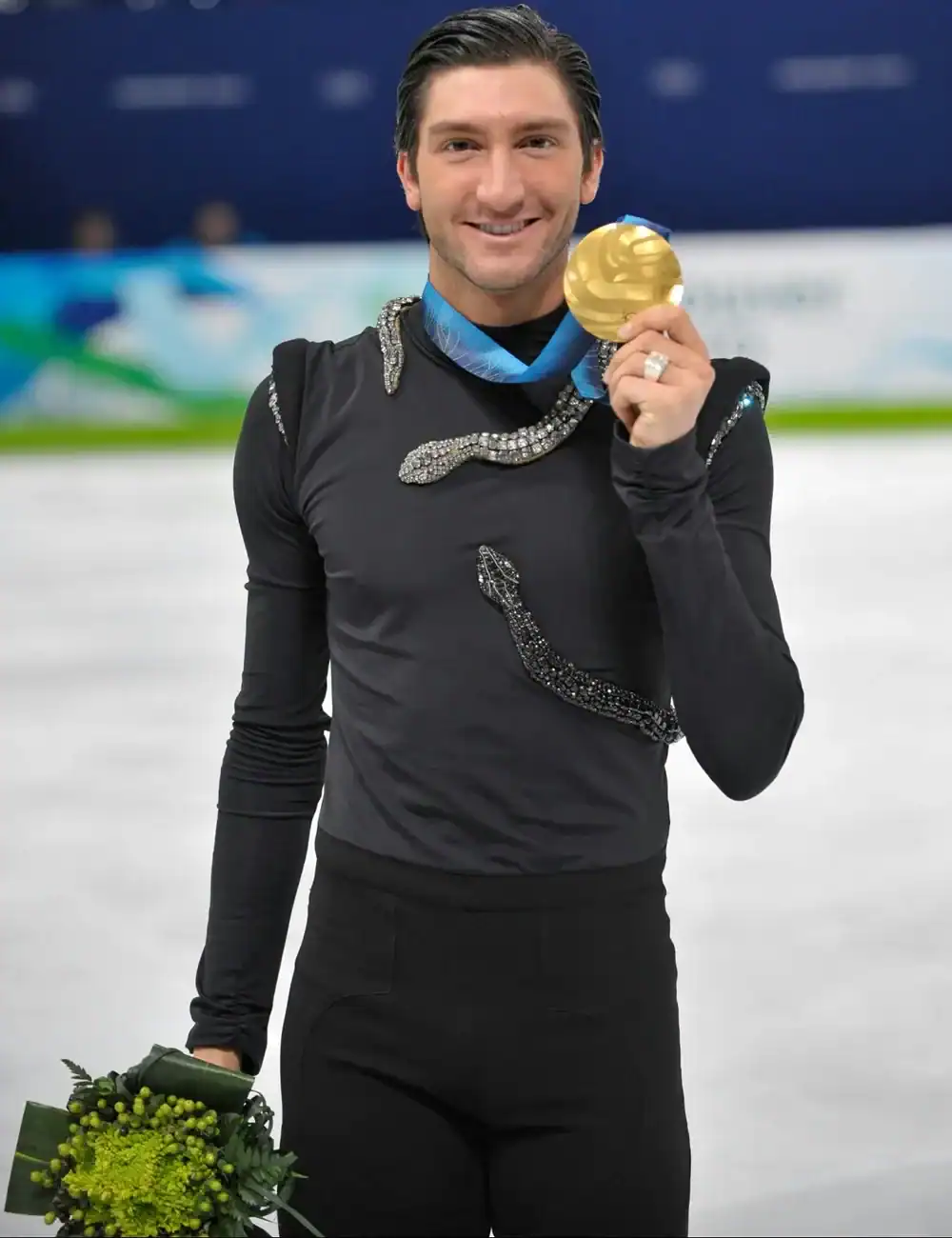
Evan Lysacek, figure skating gold, 2010
Men’s figure skating in the Olympics was as Russian as borscht. Russian and Soviet men had won six straight Olympic gold medals in the sport until Evan Lysacek, a 24-year-old from suburban Chicago, won gold in Vancouver.
He was the defending world champion but Evgeni Plushenko, the defending Olympic champion, had taken three years off. He came back for the Olympics and while it wasn’t exactly a Cold War rivalry, heat could still be seen coming off the ice, and it wasn’t from condensation.
Plushenko’s strength was his quadruple jumps – four revolutions – and he landed his in a pretty solid performance. Lysacek had previously hurt his left ankle and dropped his quad from his long program. Instead, he landed eight triples in a flawless performance that left Plushenko steaming afterward.
At the press conference, Plushenko said any skater who doesn’t land a quad should never win gold. He called it dancing. Then he stormed out of the press conference.
Lysacek answered, “If it was a jumping competition, they’d give you 10 seconds to run and do your best jump.”
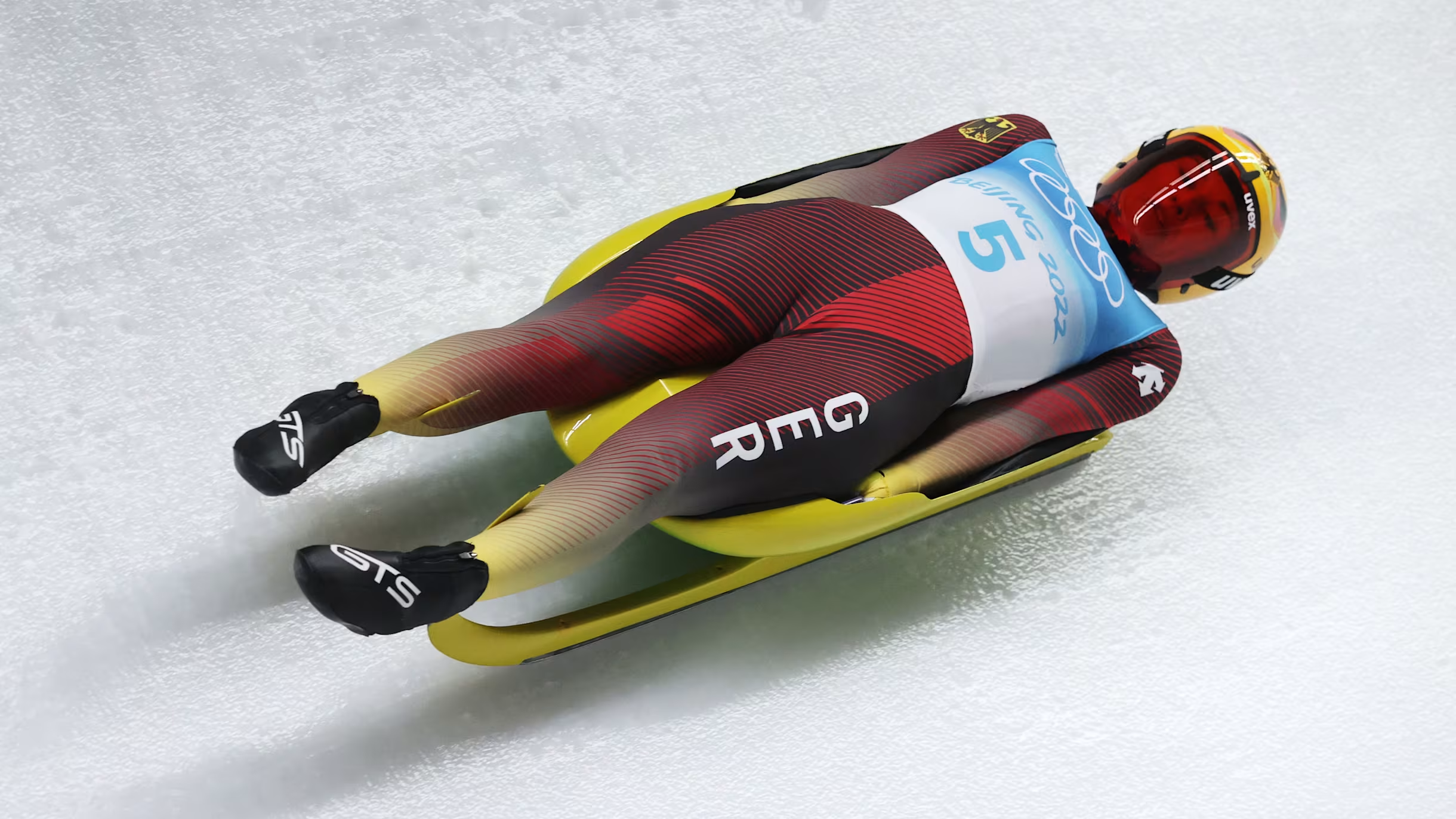
Sliding sports, 2002
Covering my first Winter Olympics in Salt Lake City, I got the worst assignment in the Games: luge, bobsled and skeleton. They’re great sports. The difference between gold and also ran is microseconds. You’re one mistake away from quadriplegia.
But in 2002, they were all at night. Outside. It was more than freezing. Temperatures at Utah Olympic Park, at 7,300 feet (2,225 meters), were in the high teens (minus-6 to minus-9 celsius).
I stopped using pens. They kept freezing in the middle of interviews. My hands shook so much, my pencil points broke.
I remember doing a feature on sliding athletes from tropical countries such as Jamaica, Bermuda and the U.S. Virgin Islands. These poor athletes, dressed in Lycra, shivered like abandoned cats. They deserved gold medals just for talking to me.
Death of a luger, 2010
Speaking of sliding sports, the biggest difference between Winter and Summer Olympic sports is we’ve all done most Summer Olympics sports: running, jumping, throwing. How about walking? That’s a Summer Olympics event.
No one has ever walked down an icy sidewalk and casually landed a triple lutz.
But the two Winter Olympics sports I would never try are luge or skeleton. You scream downhill on a course of sheer ice at 90 mph (150 kph). Nothing drove that point home better than one afternoon in Vancouver.
I was sitting in the Media Centre writing and casually looked at the TV monitor on my desk. These monitors show a continual loop of Olympic sports. They even show training.
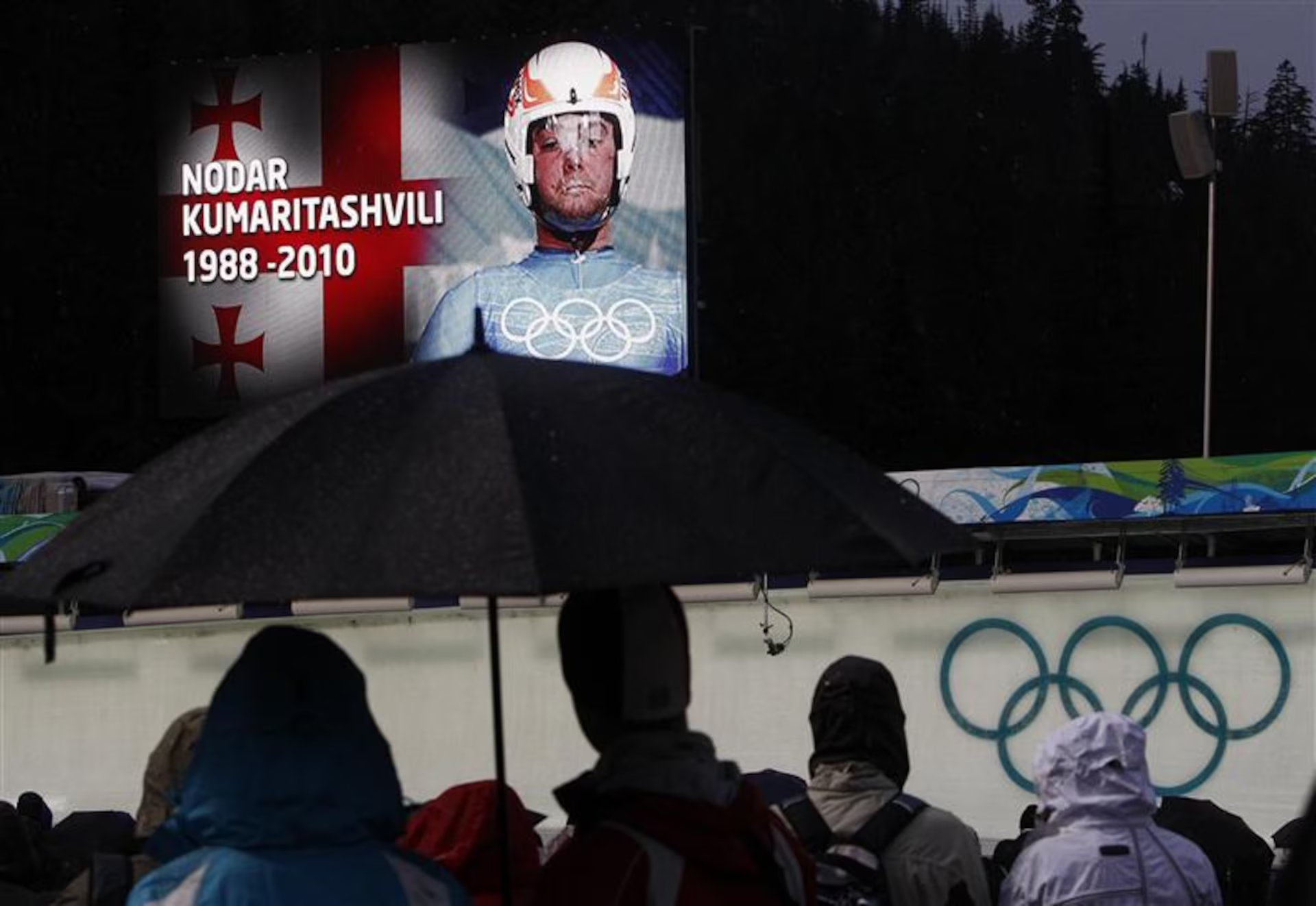
Training on the luge course was one Nodar Kumaritashvili from the Republic of Georgia. After covering luge in 2002, I recognized good from bad. Hmm, I thought. He’s going really fast. Maybe too fast.
I thought, This guy is going to crash. He did. He flew high off the final turn and his body hit an unpadded steel support pole. His body lay awkwardly and motionless as my mouth dropped. I thought, That guy is dead.
He was. The son of a luger, he had told his father that he was worried about that final turn. After the incident, officials shortened the course.
Rachel Flatt, 2010
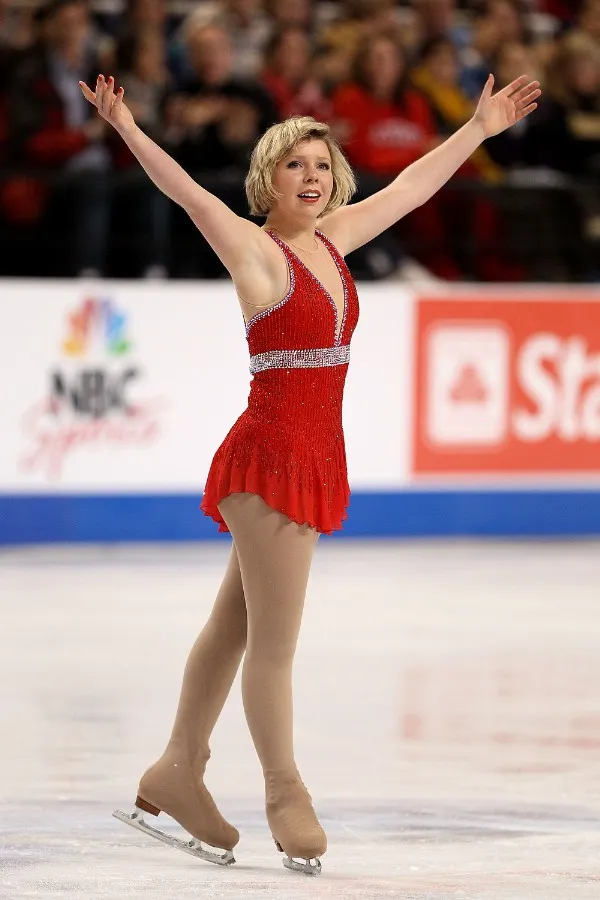
Rachel Flatt was a Colorado Springs girl and senior at Cheyenne Mountain High School whom I chronicled from the year before through winning the 2010 national title, to her rousing homecoming to her Olympic Games.
She was a remarkable story. The daughter of two Ph.D parents, one in chemical engineering and the other in molecular biology, Flatt had never received anything but A’s. Not one B. Forget a C.
After she won nationals, I went to her high school gym where 1,400 students filled one side. They heard the Olympic anthem, the national anthem and the principal gave a speech. Hardened football players cheered wildly as her winning long program played on the big screen.
She went to the Olympics as a darkhorse and skated an excellent clean program. I thought she may have risen from fifth place to the medal stand. So did most everyone else.
Her scores, however, were surprisingly not clean. She finished seventh.
Ski jumper Simon Ammann, 2002
I didn’t cover ski jumping but what I love about the Olympics is it is the height of pressure. It’s when four years come down to one run, one throw or, in Ammann’s case, one ski jump off a 70-meter-high hill.
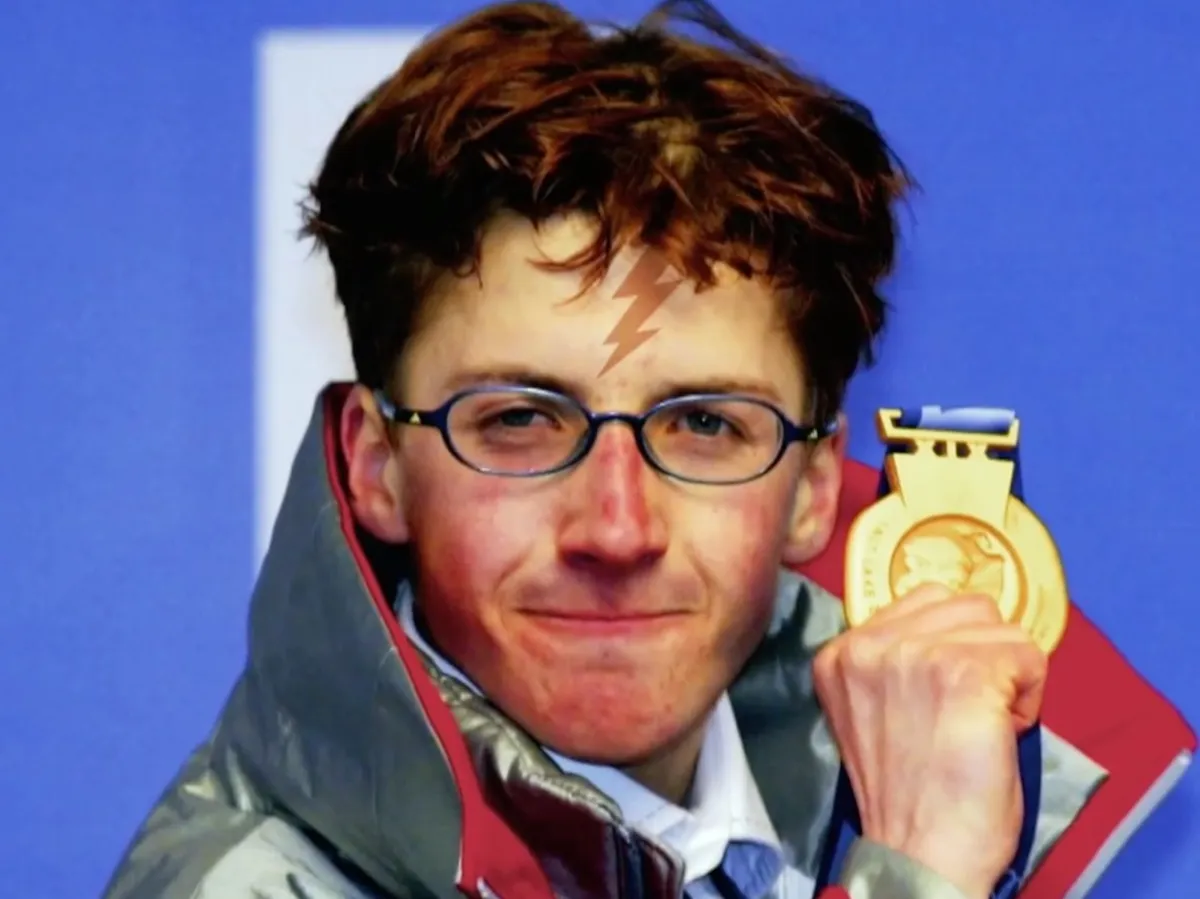
I casually watched on the Press Centre TV and saw this 20-year-old Swiss, who looked like Harry Potter, sit atop the hill as the last competitor of the normal hill competition. He was in first place after his first jump but needed another superb jump to win gold.
With his nation watching, with the packed crowd standing in tense silence, with me watching wondering how you can not crack under the pressure, he leaped like an eagle and won gold.
He went on to also win gold in the large hill, then duplicated the feat in Vancouver and went on to compete in seven Olympics. He tried for an eighth in Cortina but, alas, the Swiss Olympic Team, left him off.
Curling, 2010
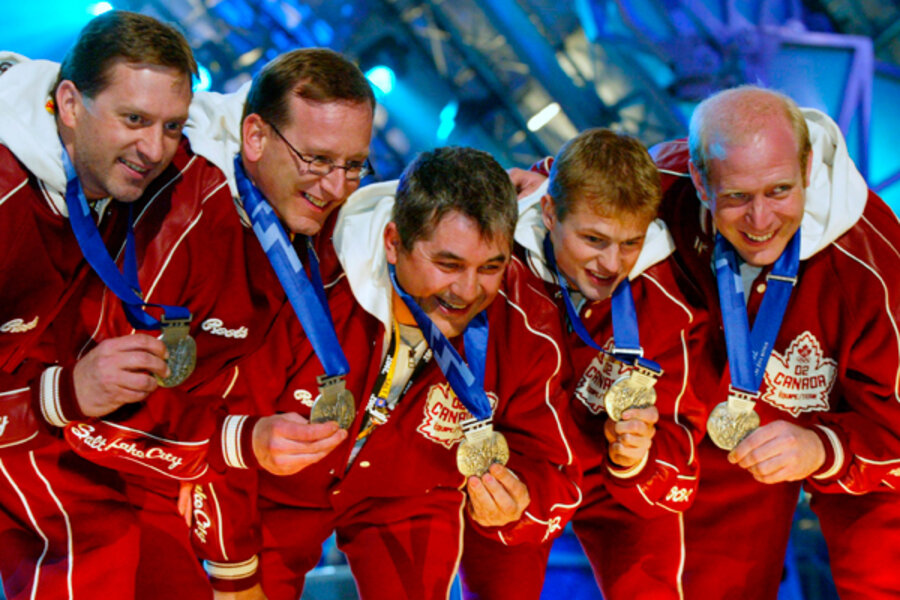
Well, some Winter Olympics sports we can do. Take curling. It’s shuffleboard on ice. But it’s like bowling or playing the outfield. It’s easy to do but hard to do well.
I covered curling in Vancouver and surprisingly got into it. I covered the Olympic Trials in suburban Denver and went to a curling ring in Vancouver to talk to weekend hacks about the sport.
Canada is curling crazy. Of the 1.5 million registered curlers in the world, 1 million live in Canada. Turns out, it is not that easy throwing a 42-pound, $400 flat rock 93 feet onto a bull’s eye, called a button.
At the Marpole Curling Club near Vancouver’s airport, a portly man named Scott Wells was profusely sweating from sweeping the ice with his broom for 30 minutes.
“If you sweep right, you get exercise,” he said. “If you don’t sweep right, you don’t get exercise.”
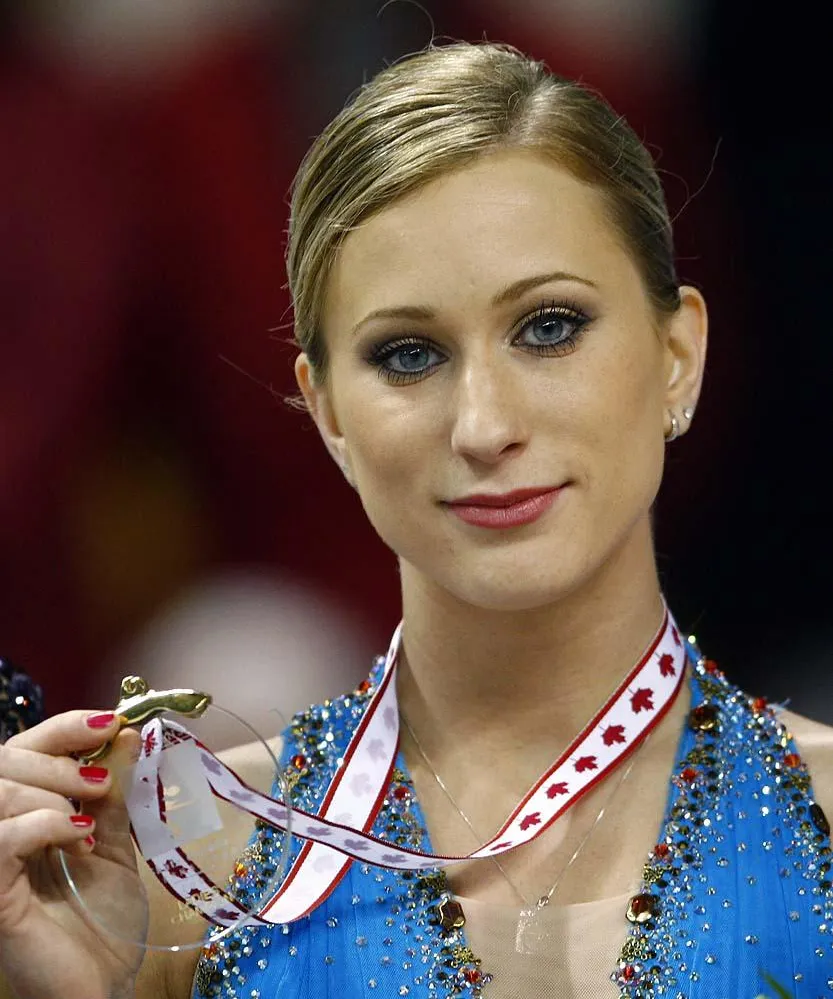
Joannie Rochette medaling with broken heart, 2010
Six-time Canadian figure skating champion Joannie Rochette was looking so forward to seeking a medal in front of her nation’s eyes. Then, two days before her competition, her mother, in Vancouver from Quebec to watch her daughter, died of a heart attack.
She skated anyway and scored her personal best to stand third after the short program. She held it in the long for a bronze medal as the packed Pacific Coliseum roared, not without a few tears.
At the Olympic figure skating gala after the competition, she skated to the French version of Celine Dion’s song “Fly.” Rochette’s mother was a huge Celine Dion fan. Rochette finished her performance with her face pointing to heaven.
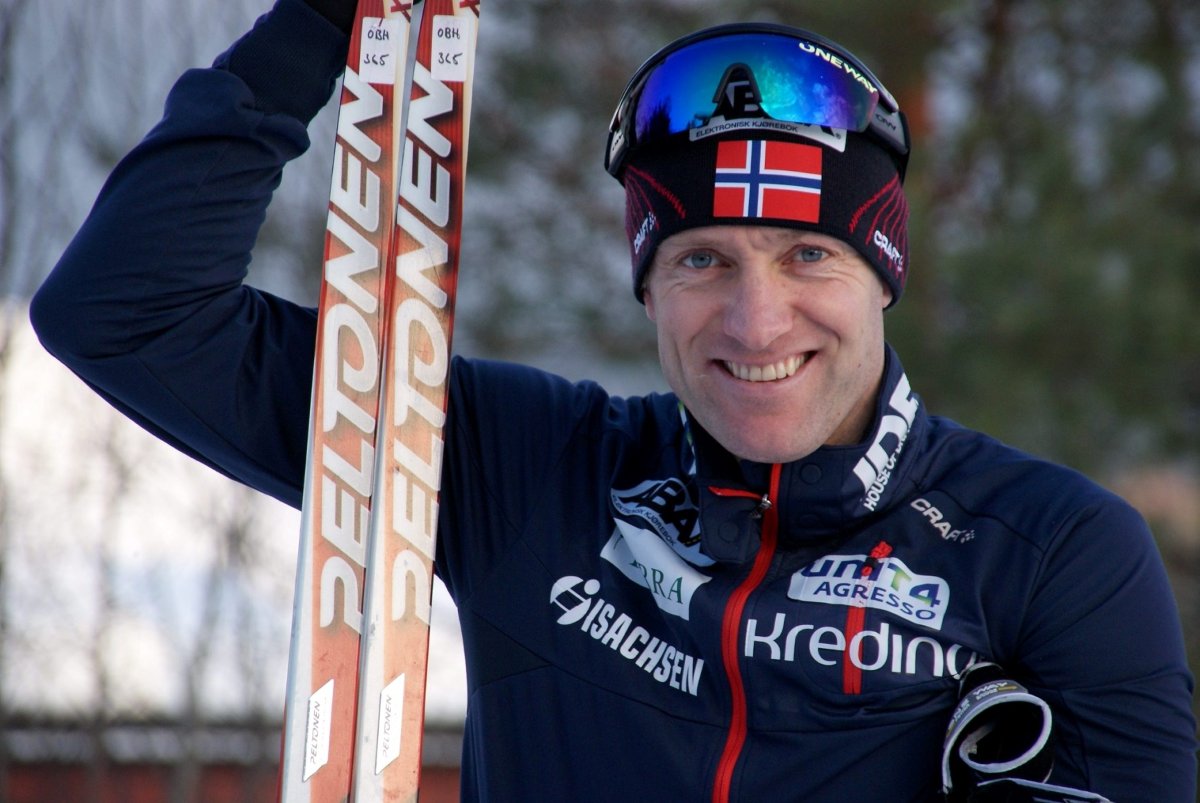
Best quote, 2010
Sportswriters love frank quotes. But in the case of Norwegian cross country skier Odd-Bjoern Hjelmeset in 2010, sometimes they’re too frank. After helping his team win silver in the men’s 4 x 10K relay, he said, “I skied the second lap and I (messed) up today. I think I have seen too much porn in the last 14 days. I have the room next to Petter Northhug and every day there is noise in there.”