


Arezzo: Tuscany’s “other” city a little artistic jewel
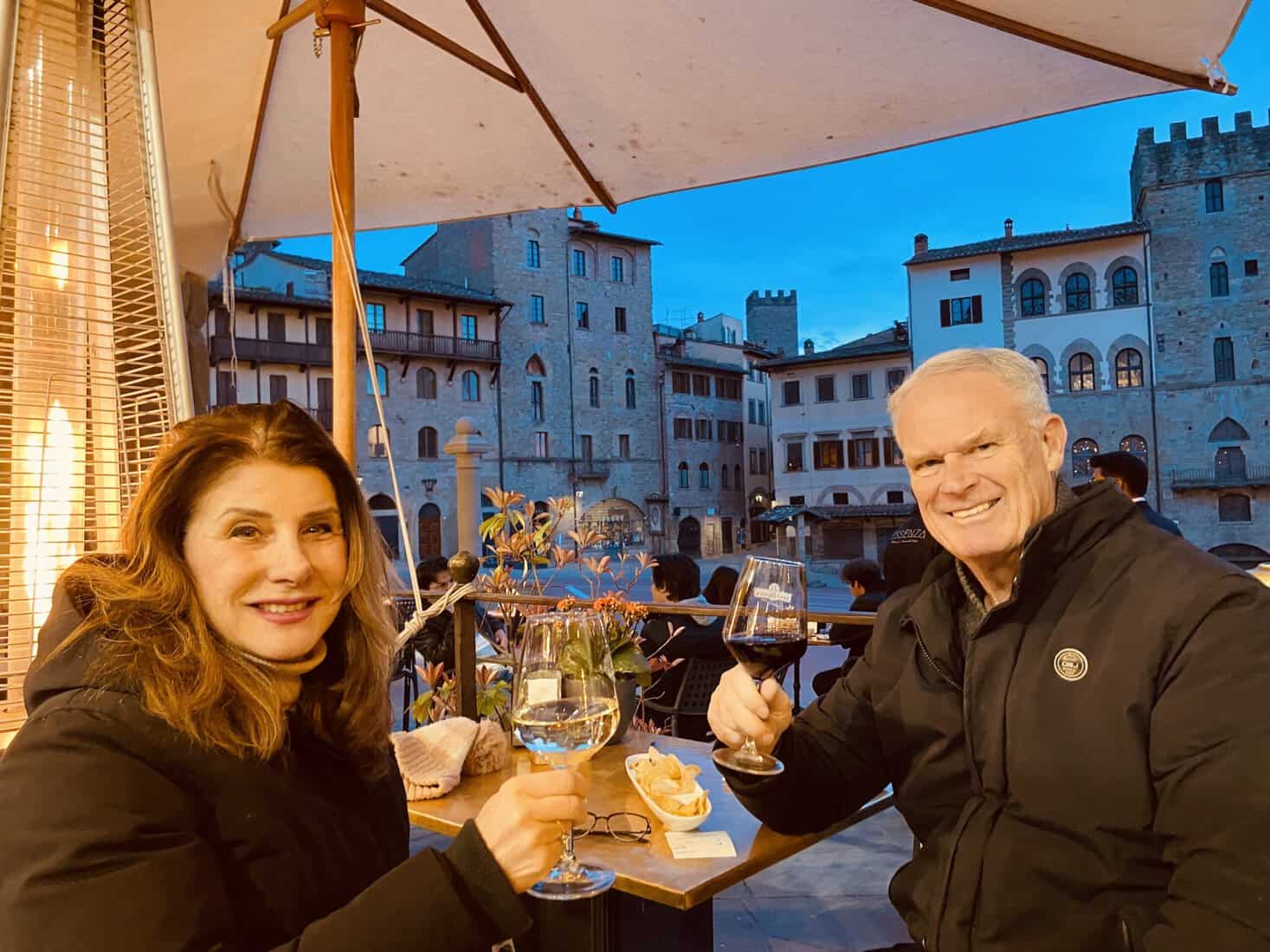
AREZZO, Italy – What separates Italy from the rest of the world, and a big reason I retired here, is its piazzas. They are the quiet bastions of any city, a place to while away a day, like lunching on a boat in a calm sea.
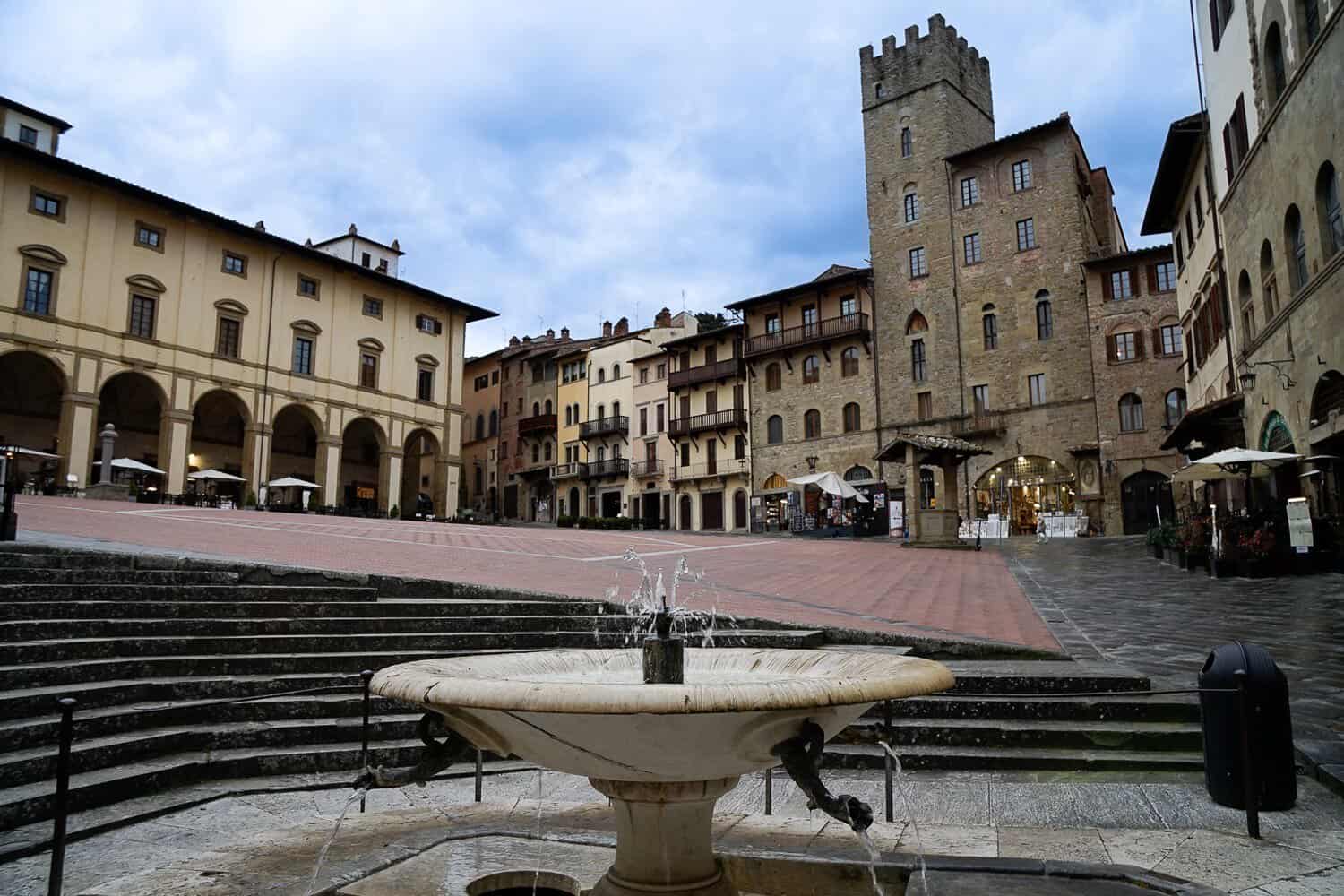
What separates Arezzo from the rest of Italy is its piazza. Piazza Grande is bent. Yes, bent as in weird. It’s also bent as in really bent. Like, it noticeably slopes downhill.
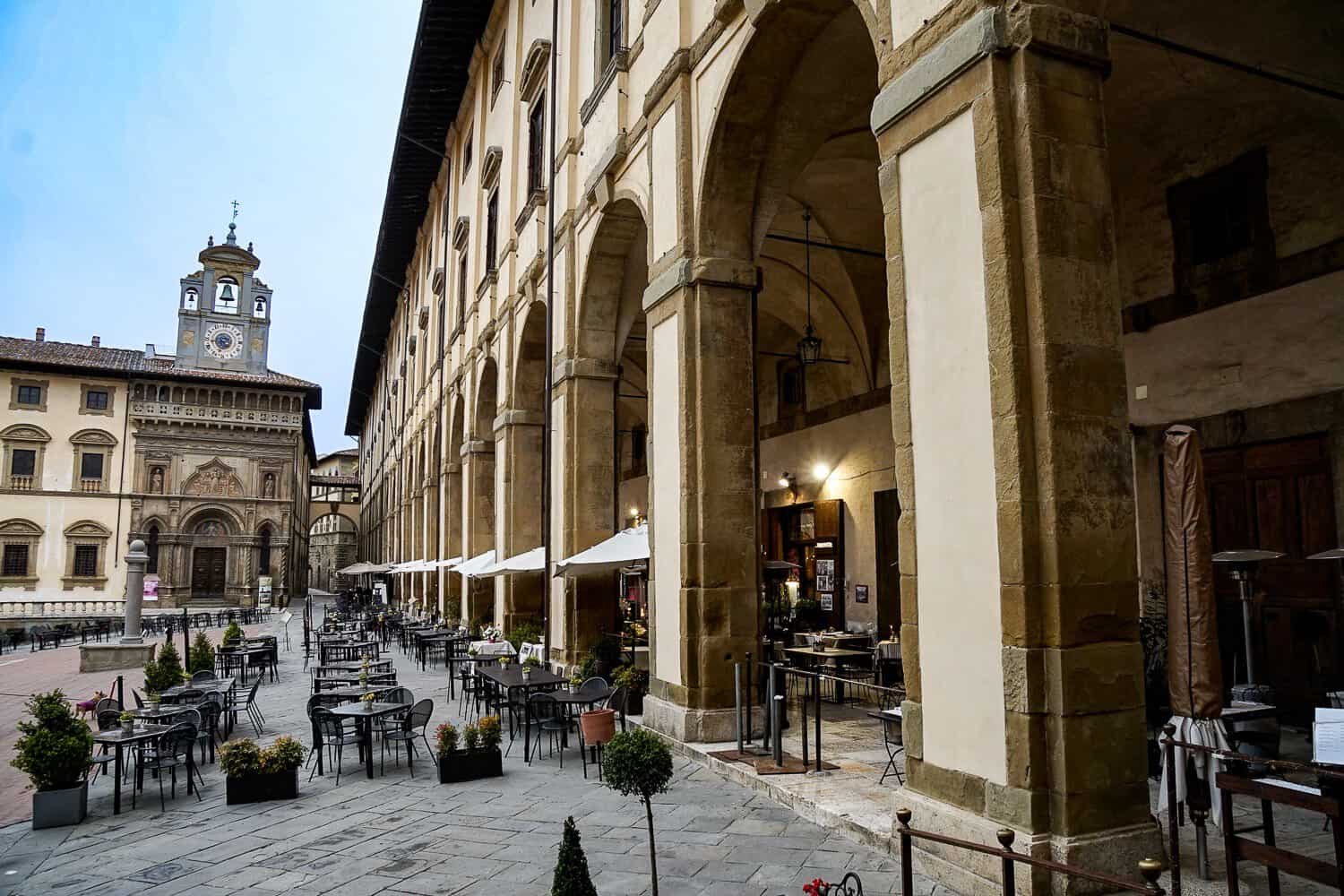
Having a glass of Tuscan Cabernet Sauvignon at an outdoor table of the historic Vasari Café, I looked down – yes, down – the sloping piazza at the string of Gothic and Renaissance buildings, including the long string of majestic porticoes of the 16th century Logge Palace. I kept thinking a Renaissance festival would begin.
Hey, how fun would downhill jousting be?
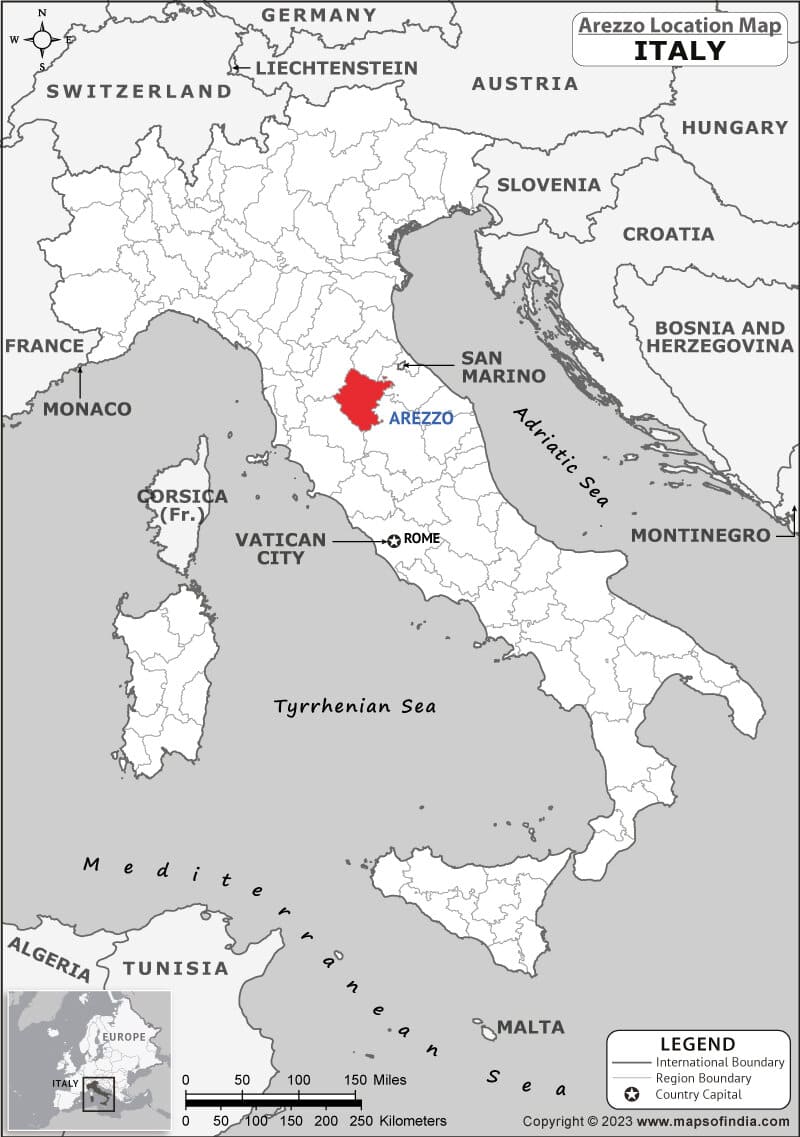
This is also what helps separate Arezzo from the rest of Tuscany. That’s not easy. Florence, Siena and Pisa, among others, dominate the region’s internationally renowned reputation. Tuscany has a well-beaten triangle that wine lovers, art aficionados and cycling enthusiasts have trodden for centuries.
Arezzo is Tuscany’s “other” city. And it’s moving up.
A revived art scene, quiet atmosphere and overlooked wineries have made Arezzo a hip place to visit for savvy travelers. Look, where can you find ample parking like this in Florence?
Arezzo (pop. 96,000) is Tuscany’s fourth-largest city behind Florence (362,000), Prato (196,000) and Livorno (153,000). In terms of overnight visitors, Arezzo is a distant fifth with only 300,000 behind Florence (13 million), Pisa (2 million), Siena (1.5 million) and Livorno (550,000).
Admittedly, Marina and I came to Arezzo by default. The Iran War cancelled my 70th birthday celebration in the Maldive Islands last month, and Arezzo was an easy fallback plan. Located 45 miles (76 kilometers) southeast of Florence, it’s only a 2 ½-hour drive north from Rome and has 100-150 wineries within its province.
But the city of Arezzo has so much to offer without ever popping a cork. We spent four days here and barely looked under its hood.
“The city today after 11 years has an international mood they didn’t have before,” mayor Alessandro Ghinelli told me over the phone. “Arezzo wasn’t known outside these walls. Now it is. And not only in Europe.”
IConic Spa
Since I turned 70, I needed some digs that made me feel younger. What sounds more relaxing than a spa in Tuscany? (OK, a bungalow in the Maldive Islands. Shut up. Don’t remind me.)
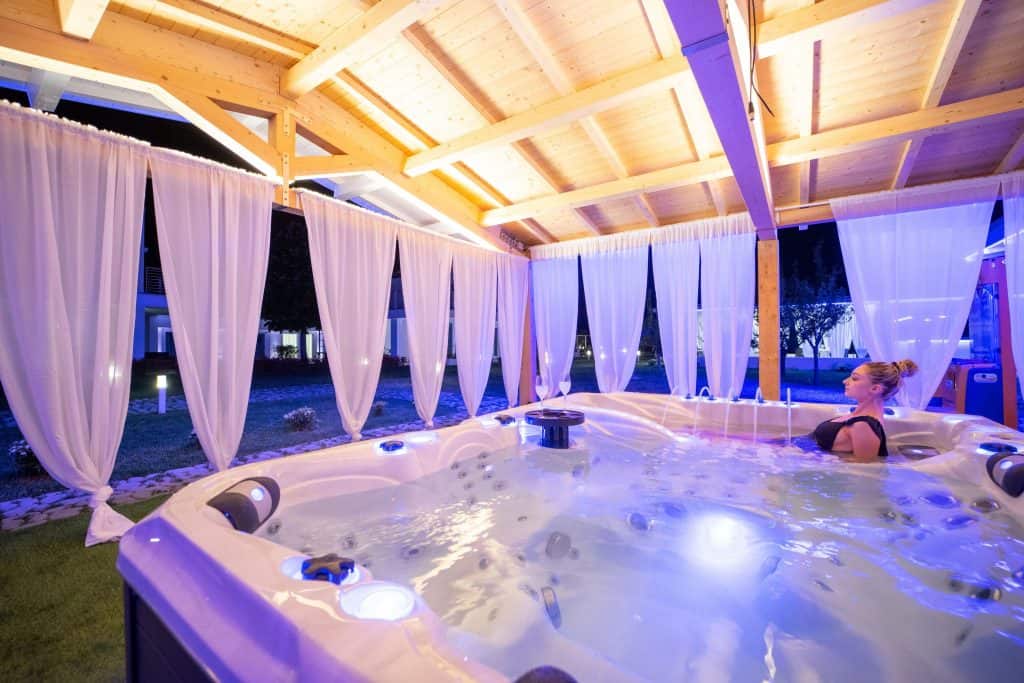
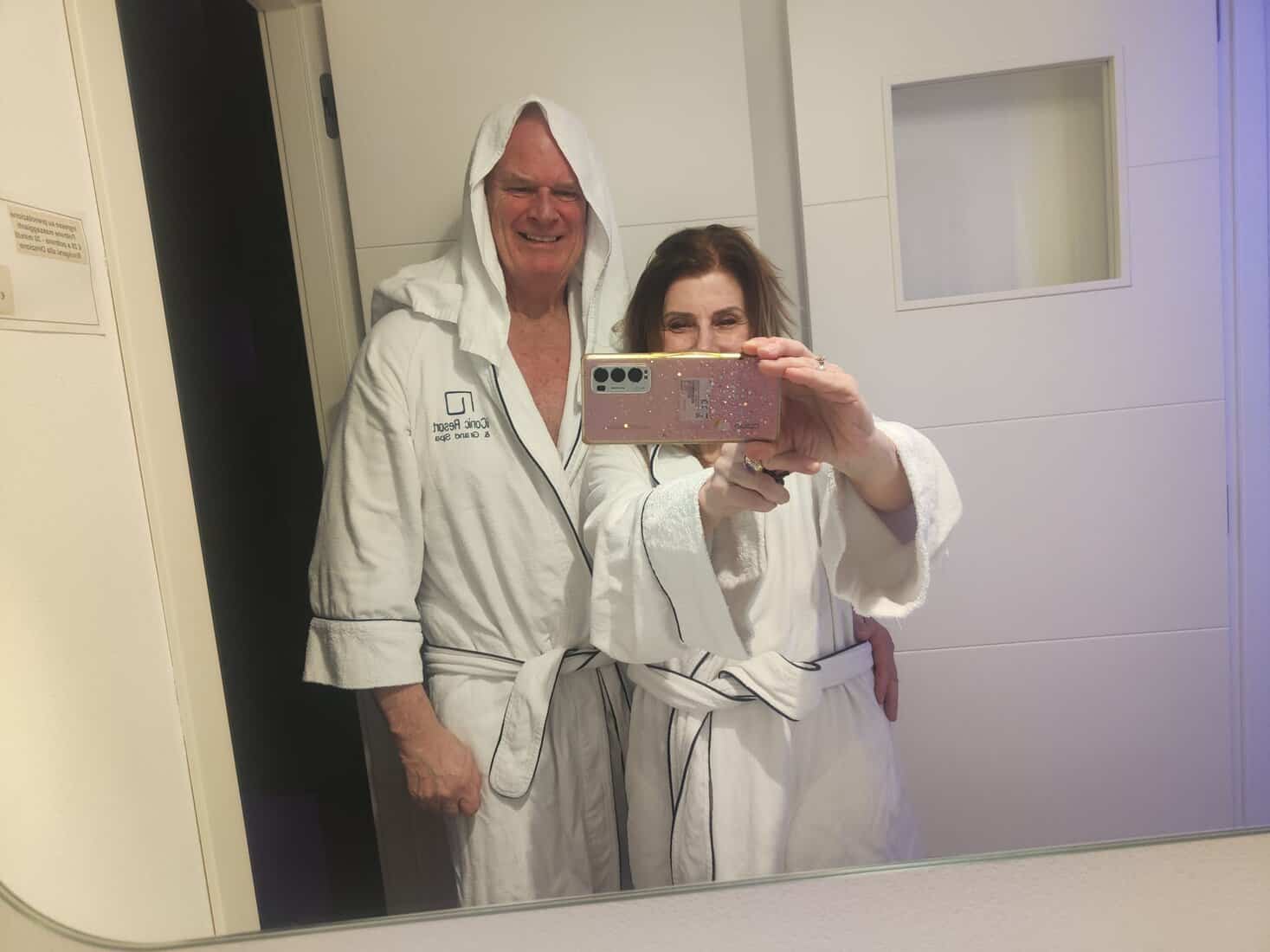
We stayed at the IConic Wellness Resort & Spa, a beautiful 10,000-square-meter facility on the outskirts of town. Jacuzzi. Sauna. Two outdoor swimming pools and one indoor. Outdoor veranda. It also featured these addicting massage chairs that rotate pressure up and down your body by electronic memory. It felt like a dozen hands.
It has only seven deluxe rooms and four junior suites. We practically had the place to ourselves. We scheduled private spa sessions every day as a great way to dry out. After all, wine tasting is a lot of work.
The weather was cold and gray. The miles of vineyards were black stubs, hauntingly waiting for summer growth season. But Arezzo’s bursting art scene makes weather a non factor. The centro storico’s uphill main pedestrian drag of Corso Italia leads to a plethora of new galleries. The LIS10 Gallery moved to Arezzo from Milan and features an exhibition of African art sharing wall space with 20th century Italian artists like Guttuso and Vedova.
The Rosy Boa gallery, opened in 2022, shows contemporary Italian artists in a cement post-World War II building.
“We are working a lot on our image,” Ghinelli said. “We’re working a lot on our artistical life. It’s very important because culture is not something you only have to see or feel. You have to live it.”
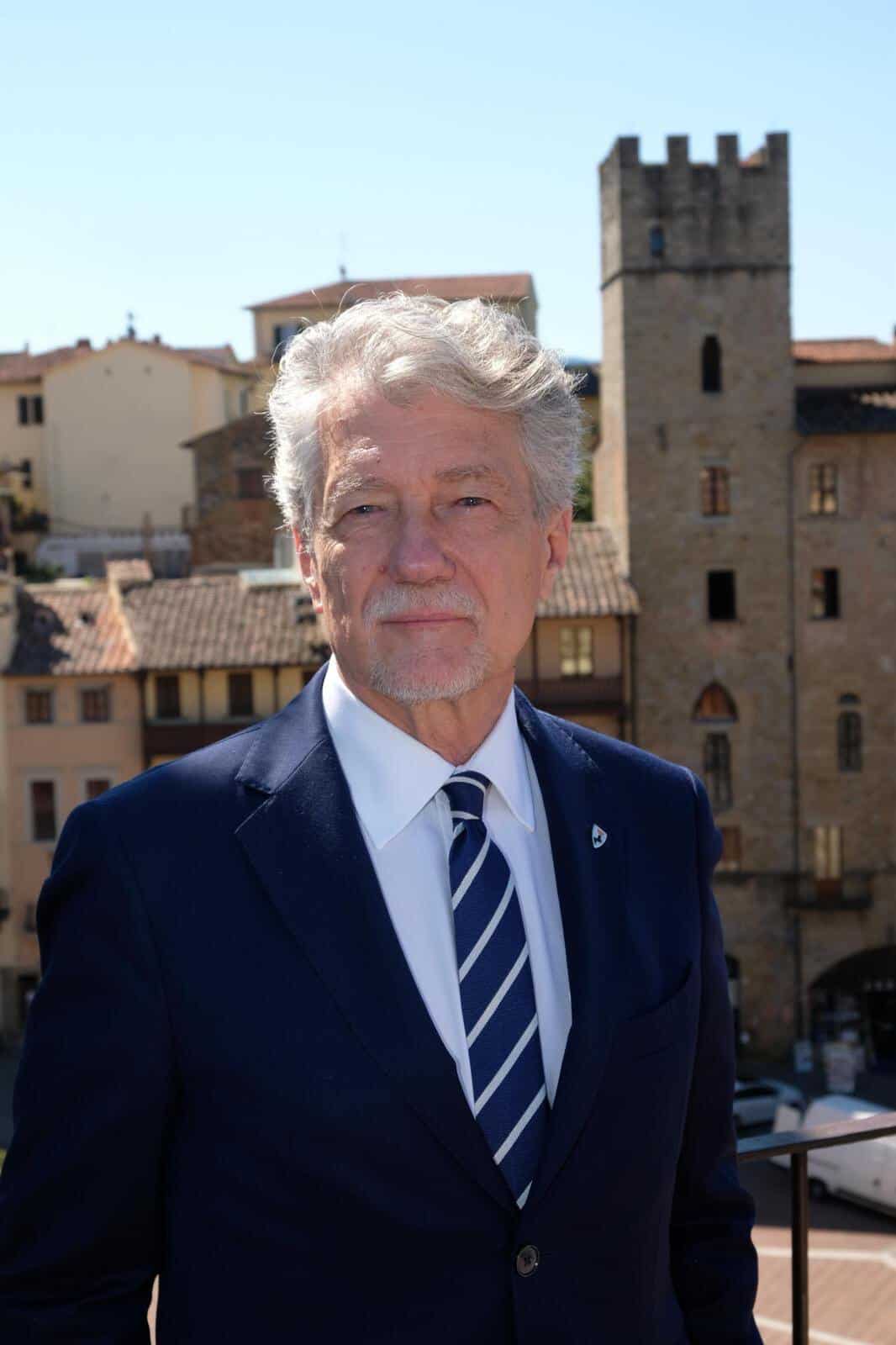
Ghinelli does. Born in Pistoia, 30 miles (50 kilometers) northwest of Florence, his family moved to Arezzo when he was 6 months old. He spent a year of high school in Ventura, Calif., where he learned excellent English he has kept to this day. He spent two years in Paris as a university teacher.
Now 73, he is finishing his 11th and final year as mayor before elections next month. He lives on Piazza Grande and takes breakfast most mornings in Vasari Cafe, occupying a building built in 1200.
He is working with Foundation Arezzo which takes its name, not from the city, but from Guido D’Arezzo, a 10th century monk who invented the language of musical notes. His birthplace of Arezzo is disputed but his impact on a millennium of music is not.
“Written music is a universal language,” Ghinelli said. “You give a piece of music to a violin player of the Tonga Islands and you give a piece of music to a violin player in Canada, they play the same language.”
The foundation joins all of Arezzo’s major cultural institutions to form ideas and proposals from artists for the public. This week it has an exhibition introducing visitors to Francesco Redi, a scientist, courtier, scholar and physician to the Grand Dukes of Tuscany.
From October 2024-March 2025, the town hosted an expo on the 450-year anniversary of the death of local son Giorgio Vasari, the 16th century artist considered to this day as one of history’s most influential writers of Western art, especially on Michelangelo and Leonardo Da Vinci. In three months, the exhibition attracted 40,000 people.
Piazza Grande hosts an antiques fair on the first Sunday and the preceding Saturday of every month.
“(Arezzo) became in the past 10 years a true artistic city,” Ghinelli said.
Yes, people are discovering Arezzo. Since 2000, tourism has doubled. Yet Arezzo has straddled the narrow precipice between economic growth and overtourism. It’s much appreciated. Around Florence’s Duomo, Italian is nearly a second language.
In four days in March, a popular month for travel in Italy, we saw no package tourists or tour groups. We saw just a few savvy, cultured travelers that we hope we are. This is who Arezzo is targeting.
“We are making events of high quality,” Ghinelli said. “People come here to listen to a concert, to see a stage program. They know they will find – I won’t say an expensive life – but not a cheap life. People come because they have an interest in what we’re doing in the city.
“They’re not just people who go around and buy one ice cream in one day.”
Arezzo food scene
Arezzo is a rich city. We saw no beggars, no homeless. The streets are spotless. The restaurant scene reflects it.
Just a few meters away from Vasari Café is La Lancia D’Oro. Built in a 500-year-old building, at a time when Michelangelo and Da Vinci strolled Piazza Grande, La Lancia D’Oro is a third-generation family run restaurant that opened in 1993.
It looks straight off a country estate. Ferns hang from an archway separating dining rooms adorned with white tablecloths. Black and white photos of old Arezzo hang from the walls.
It serves gourmet Tuscan dishes like pappardelle al vino Sangiovese con ragu bianco di lepre (Wide ribbon pasta with white wine and wild hare sauce) and filetto di manzo al Brunello (beef fillet with Brunello wine sauce and small, yellow Tuscan beans).
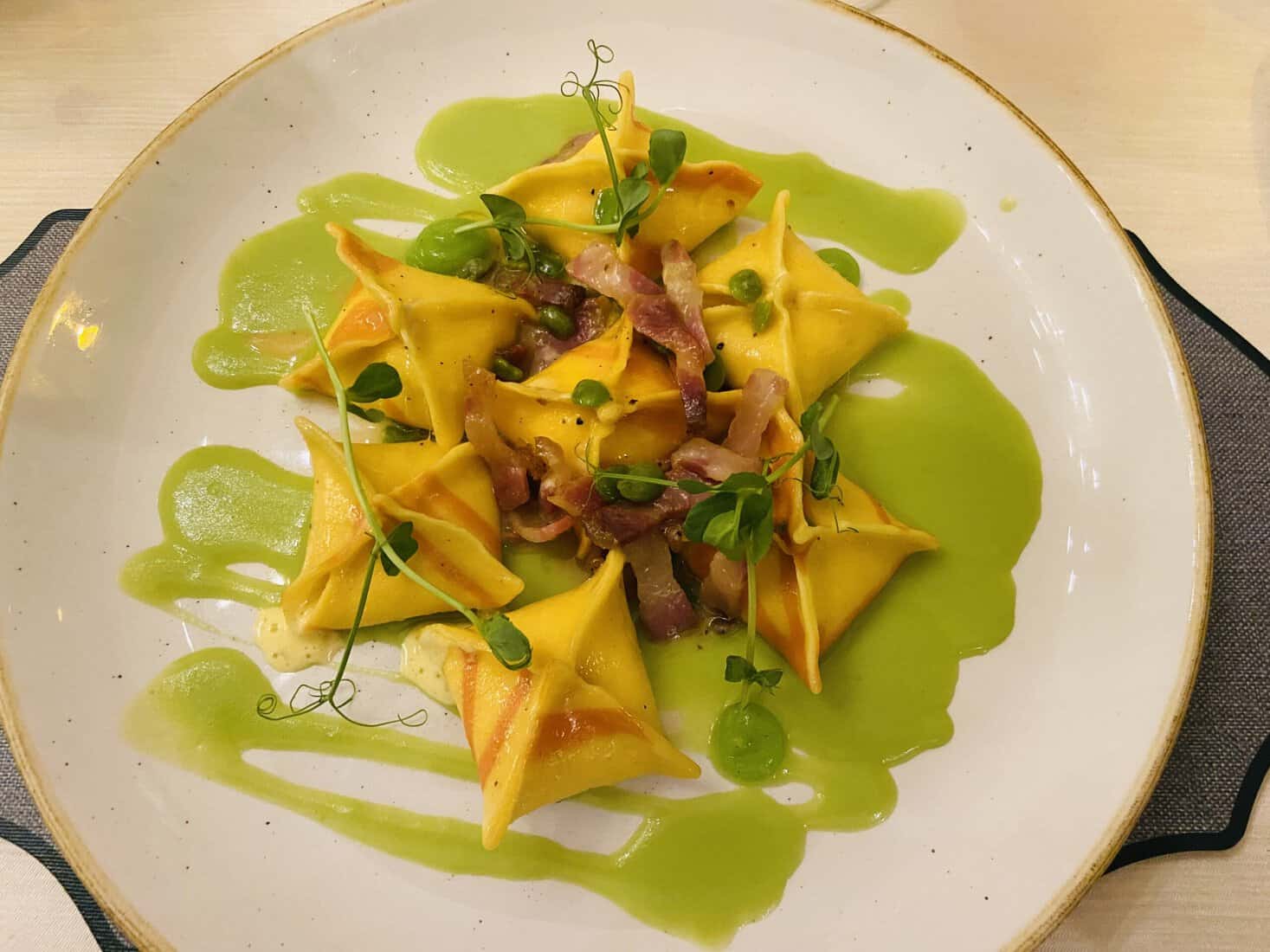
My calamari ravioli, seven fat, bow-tied ravioli filled with squid, was one of the best raviolis and it put La Lancia D’Oro among my top five restaurants in Italy.
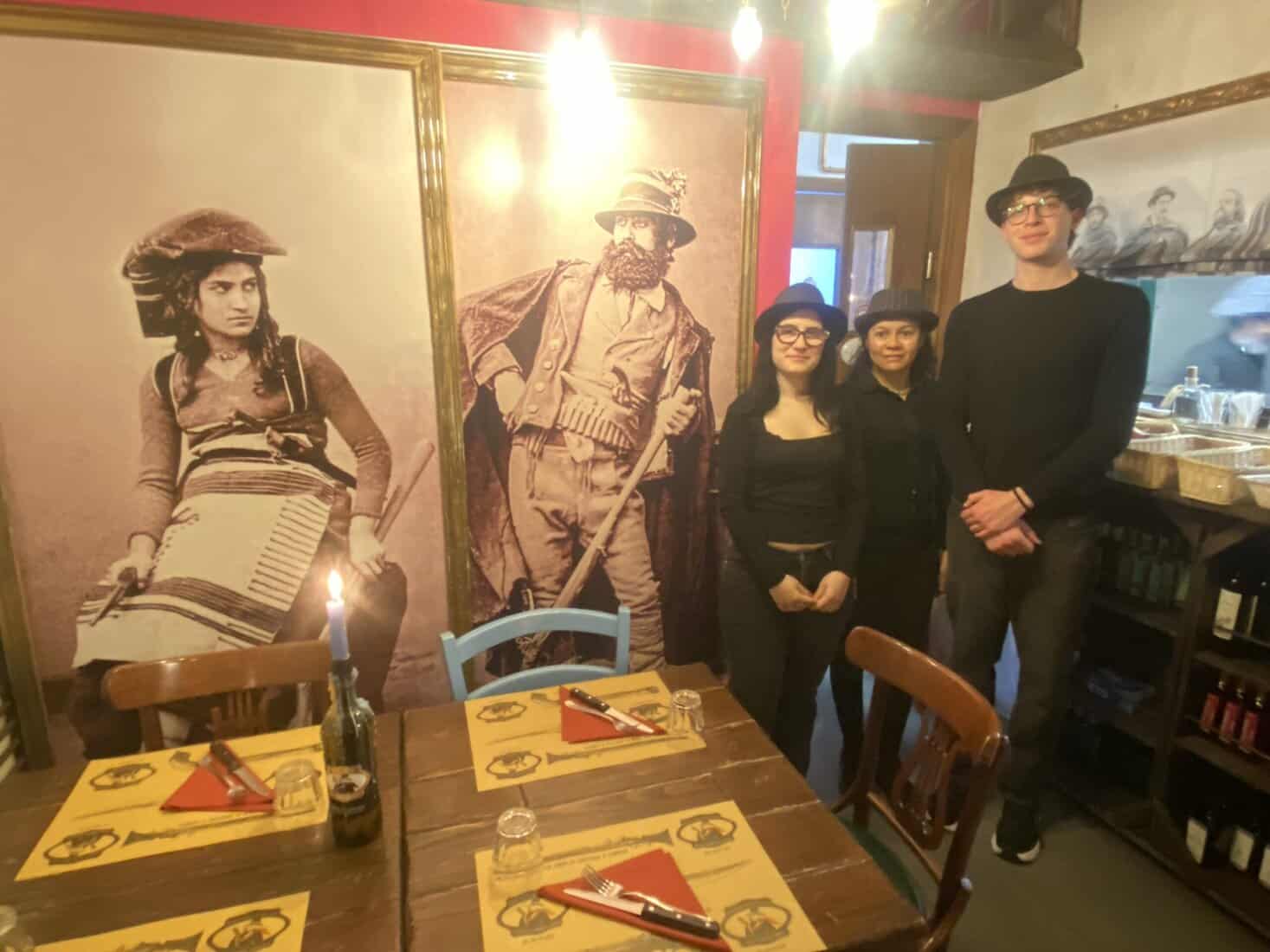
The next night we went down a side street to the hip, funky Il Covo dei Briganti, a long, narrow restaurant with a briganti (outlaws) theme, an obsession of the owner. Ropes hang from the wall. The young wait staff all wear Robin Hood hats.
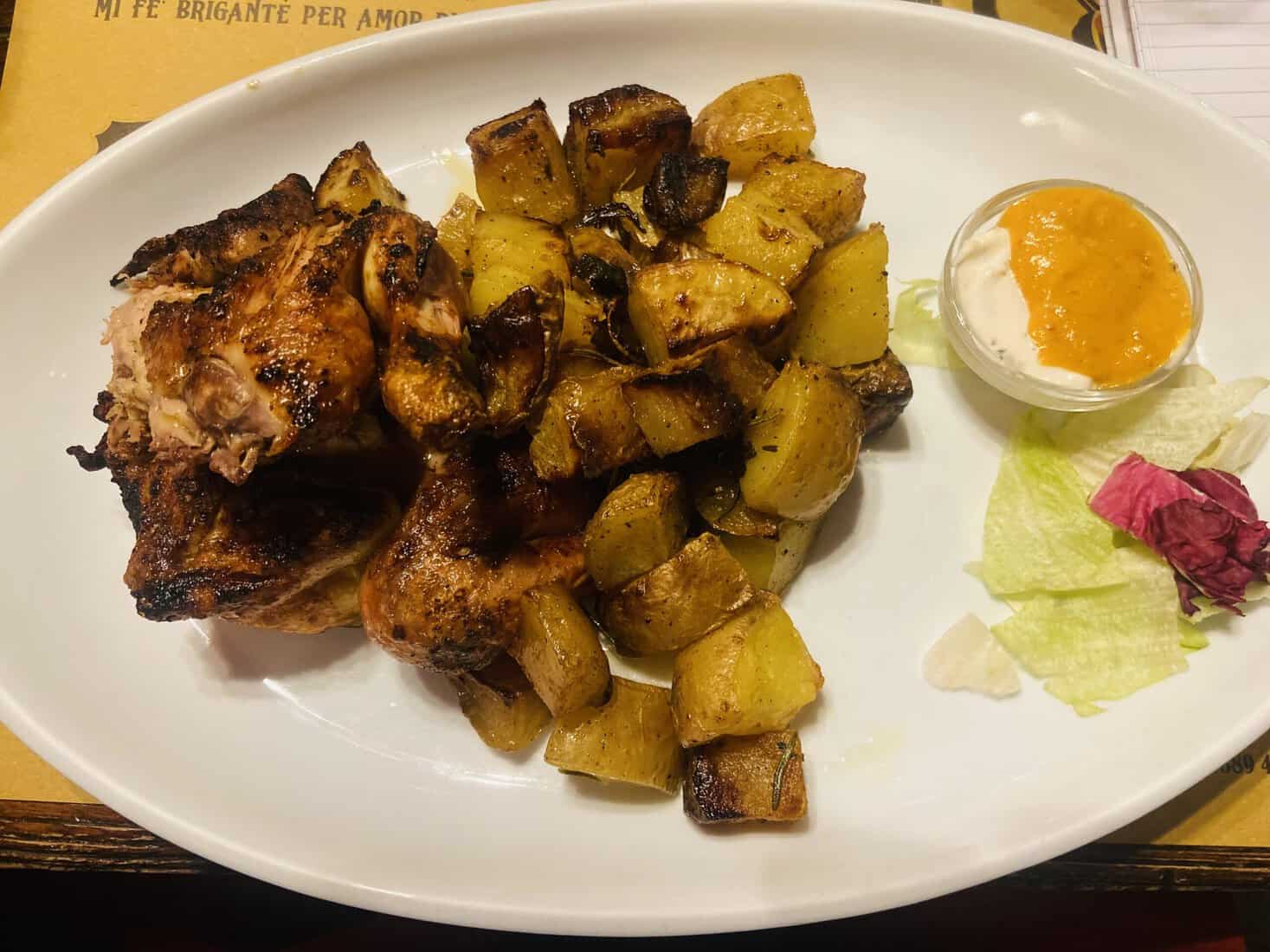
I had the stinco di maiale, an unappealing name but a very appealing dish: a big, huge pork shank seasoned in garlic, rosemary, white wine and juniper berries with a pile of roasted potatoes. It all came with a delightful bell pepper and mayonnaise sauce.
Ghinelli asked if we’d been to Bucca di San Francesco. No.
“You have to come back!” he said. “Bucco di San Francesco was historically important until 30 years ago. Then the owner died and the son wasn’t able to keep up the activity. Five years ago, Patrizio Bertelli is the padron of Prada. He bought that restaurant, he made a new kitchen and now it’s a restaurant with many Aretian dishes. It’s a true one. Very good, high-quality one.”
Arezzo history
Arezzo’s art scene is a rebirth from its days as an Etruscan trading post in the 9th century B.C. even before the Roman Republic. It was considered one of the 12 most important Etruscan cities – part of the Etruscan League – and attracted art from Greece.
The Etruscans were master goldsmiths and to this day Arezzo is often referred to as “The City of Gold.”
It was also an art center during the Renaissance and not just because Da Vinci and Michelangelo were born near here. Vasari had close connections with the Medicis, one of the most powerful families in Florence.
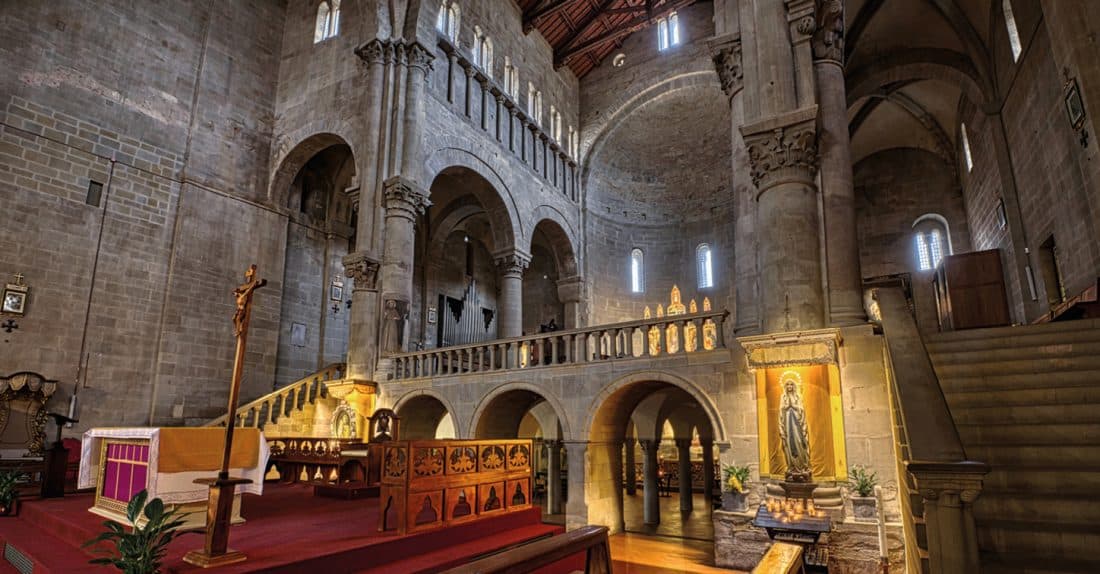
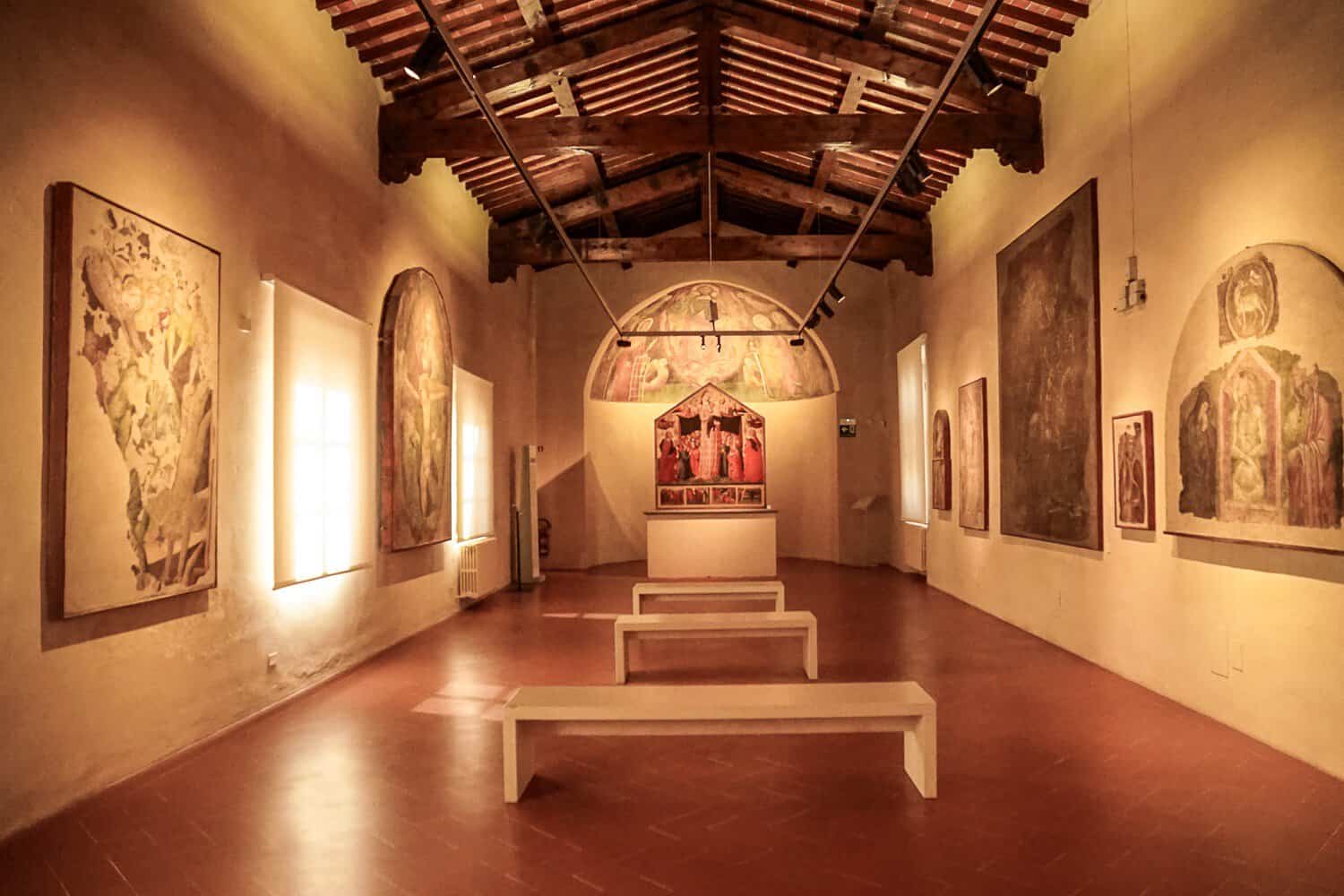
Today, you can see Piero della Francesca’s famous fresco, “Legend of the True Cross,” in Basilica di San Francesco near Piazza Grande. In Basilica di San Domenico is the famous 13th century wooden crucifix painted by Cimabue, one of the most famous painters in pre-Renaissance Florence.
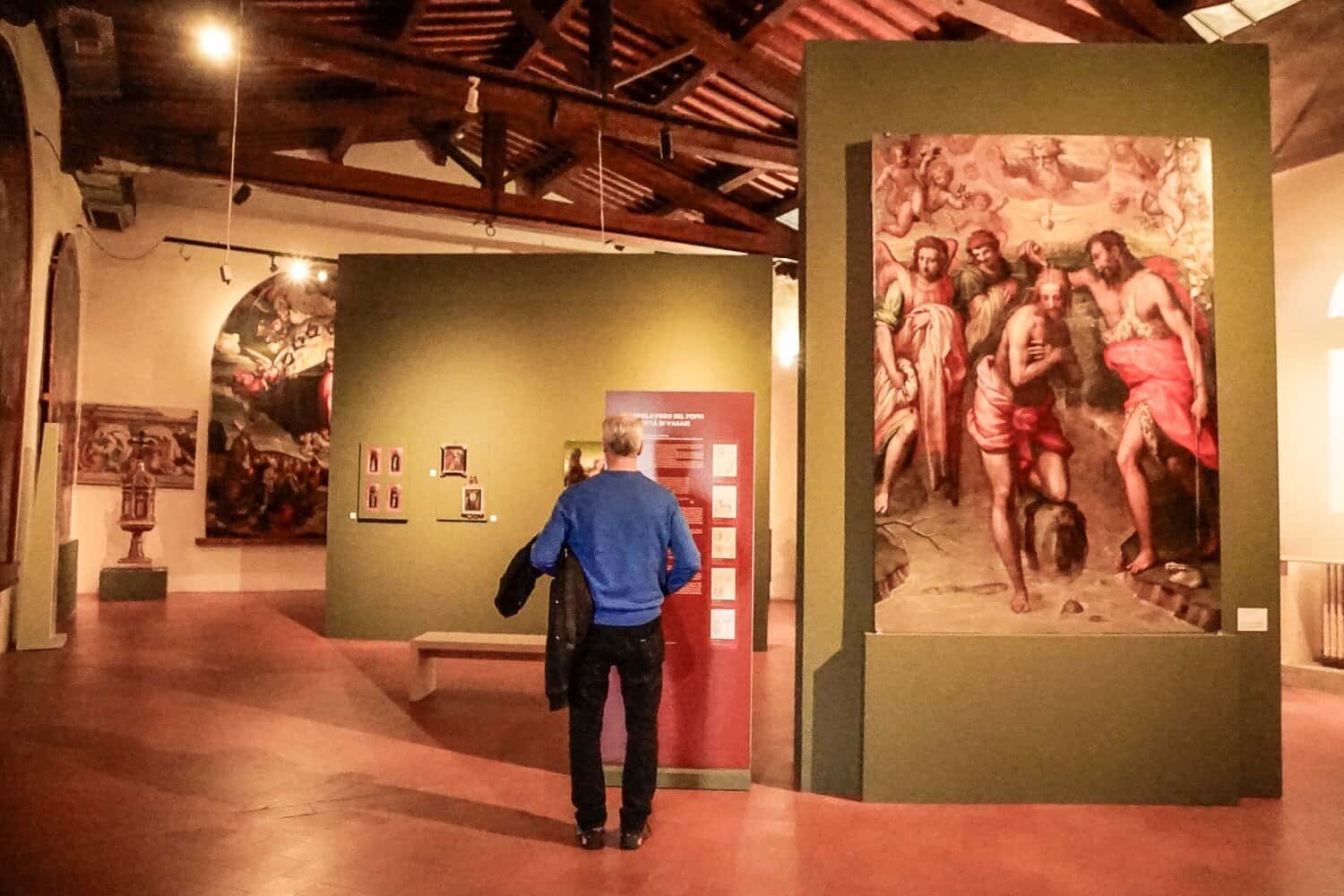
We spent one morning at the National Archeological Museum. Built in a 14th century convent building across from the ruins of a Roman amphitheater that once held 10,000 people, the museum has Etruscan and Roman artifacts dating back to 6th century B.C.
That includes an Etruscan vase showing Hercules in battle. We saw some of Vasari’s work, such as the “Banner of St. Roch,” an altarpiece showing St. Roch doing what he did best: visiting plague victims. It also featured medieval swords and giant wood panels depicting St. Michael the Archangel. A famous fresco featured is “Pretor with the Mystic Lamb.”
It’s all well signed in English and Italian and, like everything else in Arezzo, was never crowded.
The only downer of our stay came thanks to Italy’s horribly underachieving soccer team. We sat at Inside Pub, a popular, narrow, dark bar on Corso Italia, packed with middle-class Areteni watching their country’s once proud squad choke like gagging dogs, losing to Bosnia-Herzegovina to miss its unprecedented third straight World Cup.
I didn’t really care. I had my perfect 70th birthday present: a spa in Tuscany in an uncrowded, authentic city. That night I raised a glass of Tuscan red, hoping it stays that way.
If you’re thinking of going …
How to get there: Frequent trains leave daily from Rome’s Termini station. The 2 ½-hour ride ranges from €27.50-€64.30 one way, depending on the time. From Florence, it’s one hour, 90 minutes and costs €9.30 one way.
Where to stay: IConic Wellness Resort and Spa, Via Andrea della Robbia 175, Arezzo, 39-05-75-964-100, https://www.iconicresort.com, info@iconicresort.com. Three-star hotel and spa on outskirts of Arezzo. Fantastic spa includes Jacuzzi, sauna and massage chairs. Outdoor pool perfect for hot summer days. I paid €361 for three nights, including breakfast.
Where to eat: La Lancia D’Oro, Piazza Grande 4, Arezzo, 39-05-752-1033, https://ristorantelanciadoro.it, lancidoro@loggevasari.it, noon-3:30 p.m., 7-10:30 p.m. Tuesday-Sunday, noon-3 p.m., 7-10:30 p.m. In a 500-year-old building on the charming, sloping Piazza Grande, La Lancia D’Oro is a third-generation family run restaurant with ferns hanging from the central archway. Lots of free house goodies on the side and excellent Tuscan dishes. Try the calamari ravioli. Dinner for two with antipasti, wine, desert and tip for excellent service was €144.50.
When to go: Arezzo is at 1,000-foot elevation (300 meters) so it’s 5-8 degrees cooler than Rome year round. As I’ve always said, avoid Italy in July (too crowded) and August (too hot). Best time to tour vineyards is during the fall harvest season.
For more information: Arezzo Turismo, Emiciclo Giovanni Paolo II, https://www.discoverarezzo.com, 9 a.m.-4 p.m.
April 15, 2026 @ 7:50 pm
Arezzo is excellent. It is worth going for the antique market alone. I have eaten at La Lancia d’Oro and agree that it is great. One of the best delis anywhere is just off the lower end of the piazza. The shopping is good. There is lots to love in Arezzo!
April 16, 2026 @ 7:44 am
Thanks, Debra. I’m already planning a return.
May 8, 2026 @ 7:29 pm
Looking forward to visiting Arezzo. As a professional musician, Guido‘s hand is part of our training. We live in Bologna but have already fallen in love with Perugia and Siena.
May 8, 2026 @ 8:38 pm
Great to hear how Guido is still lending a hand. We can’t wait to return. Thanks for the note.