


Mussolini at the table: On the anniversary of his death, I look at a restaurant-museum honoring his name
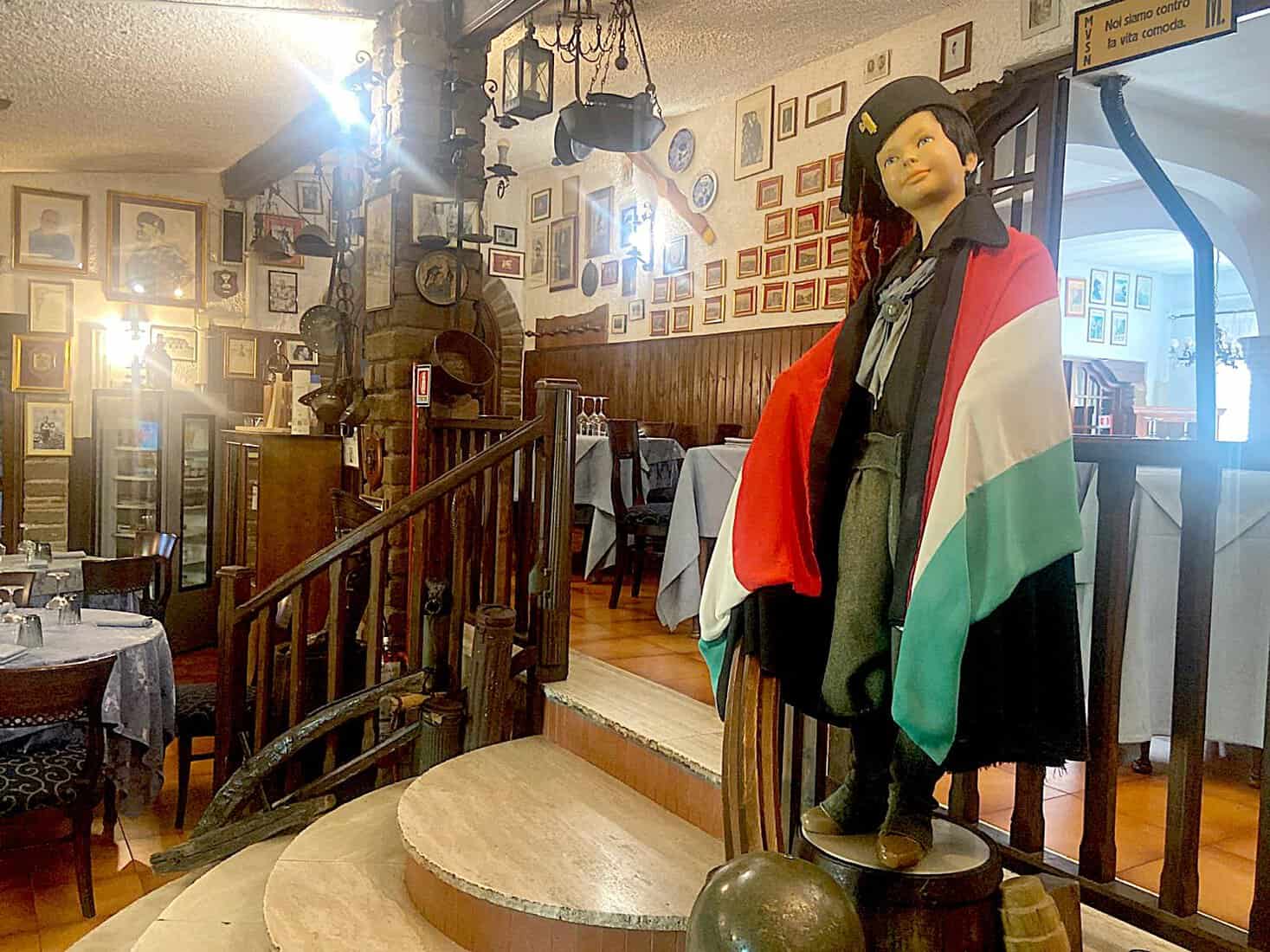
ARTENA, Italy – Sometimes restaurant decor revs up my appetite. Like ship wheels and fishing nets on the walls of a seafood restaurant. Photos of snowcapped peaks in a mountain chalet dining room. Cowboy hats and Texas flags in a barbecue joint. Then there’s the kind of decoration I saw in a restaurant Sunday.
Benito Mussolini.
Yes, in the small town of Artena (pop. 14,000), 53 kilometers (30 miles) southeast of Rome, is a restaurant totally dedicated to Il Duce. This isn’t just a restaurant. It’s not just a museum.
It’s a shrine.
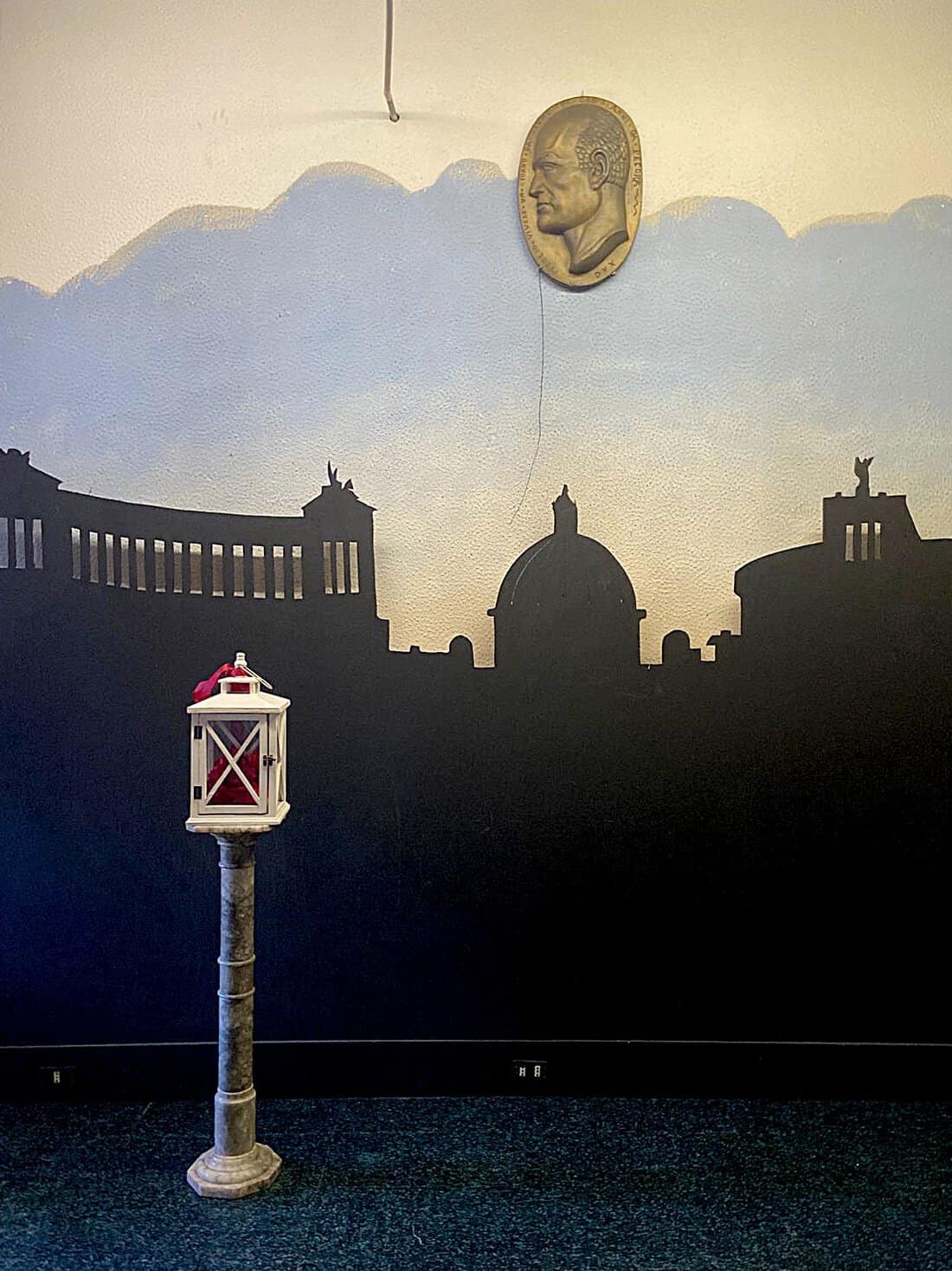
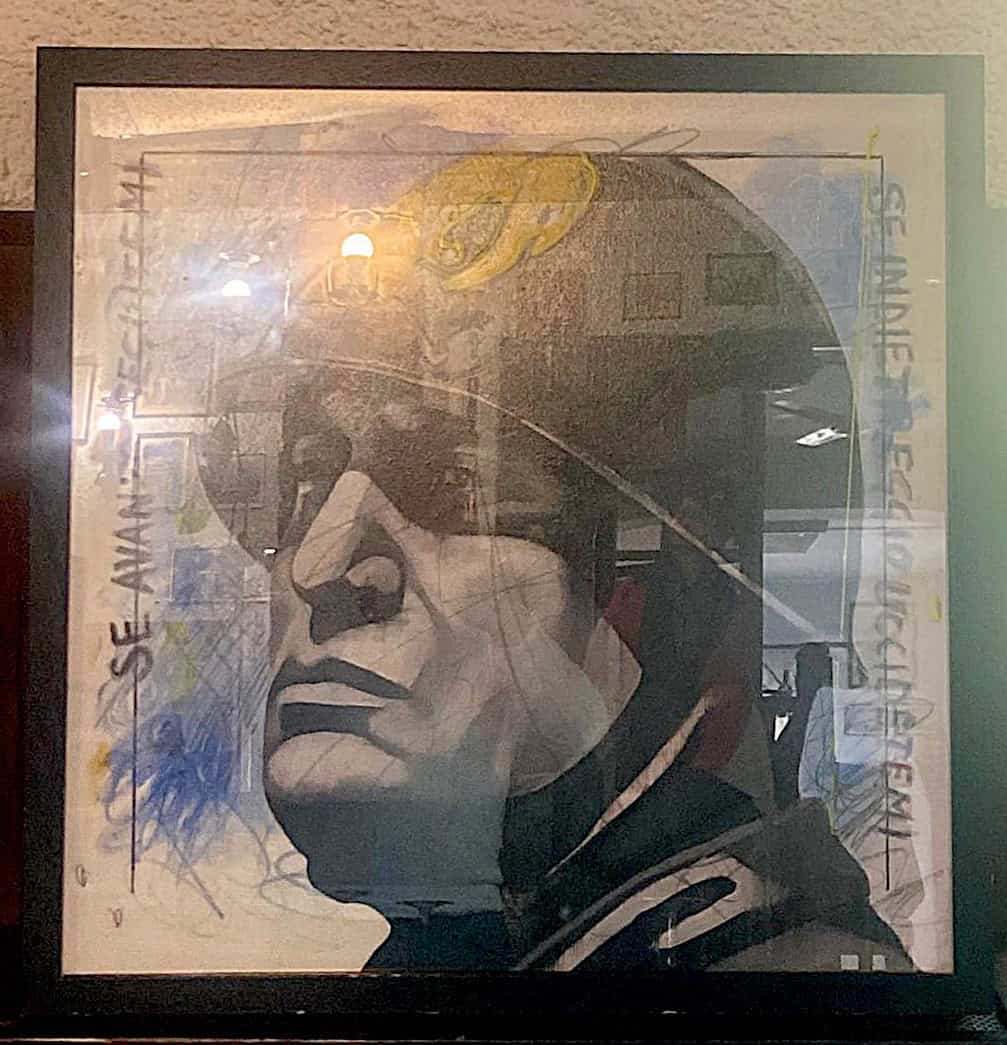
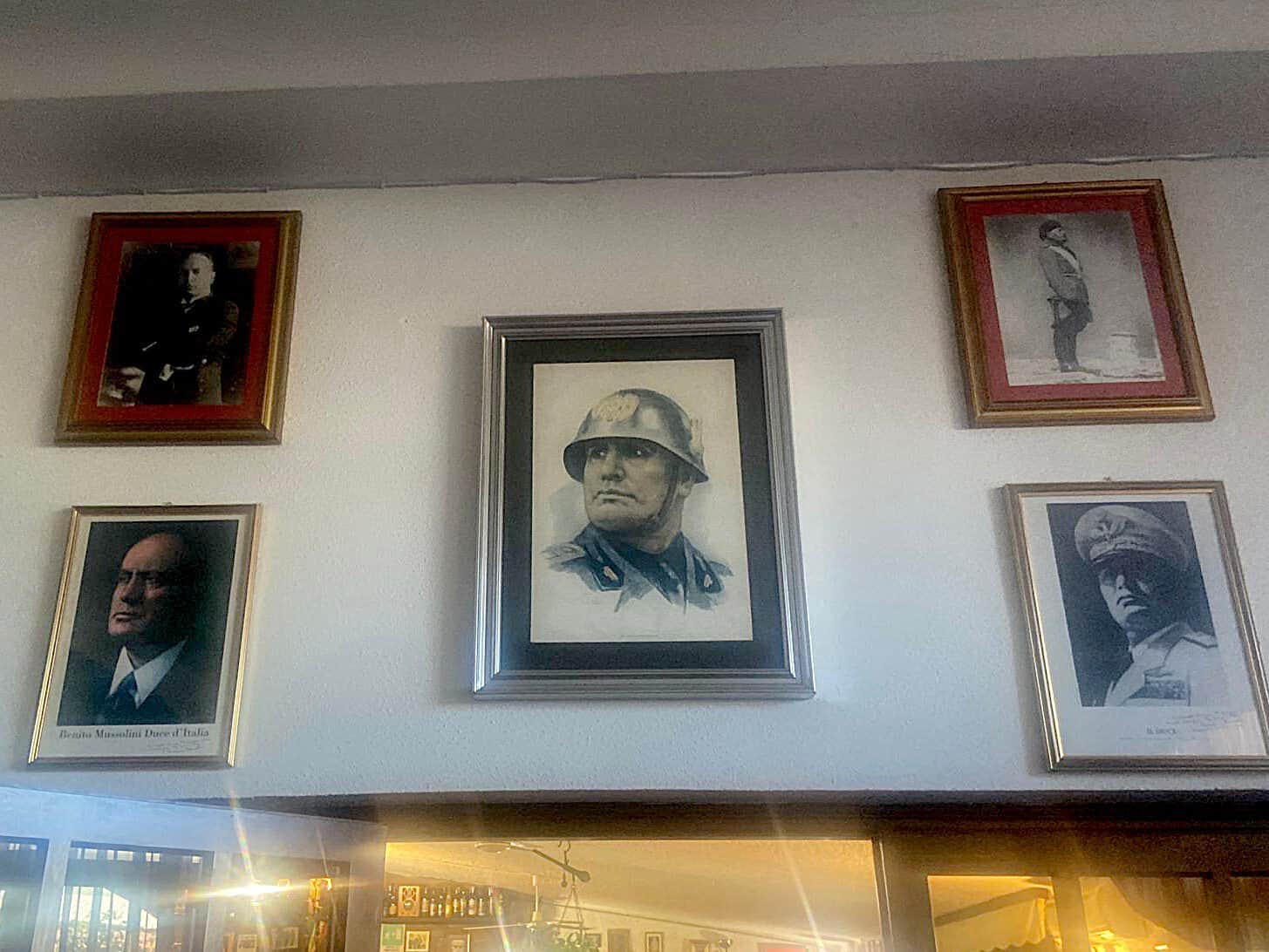
Countless photos of Mussolini in everything from full battle regalia to suit and tie adorn the walls. Full newspaper pages emblazoned with his image are framed. His profile hovers over a back-lit image of Rome, like a holy saint.
The restaurant is called, appropriately, Il Federale.
I came upon it on our way back from a TraveLazio assignment to Fiuggi, a beautiful spa town I’ll profile Friday at www.travelazio.it. My friend and driver, Alessandro Castellani, knew about Il Federale from his many visits to Artena’s other place of interest, the Rugby Museum.
And I thought rugby was violent.
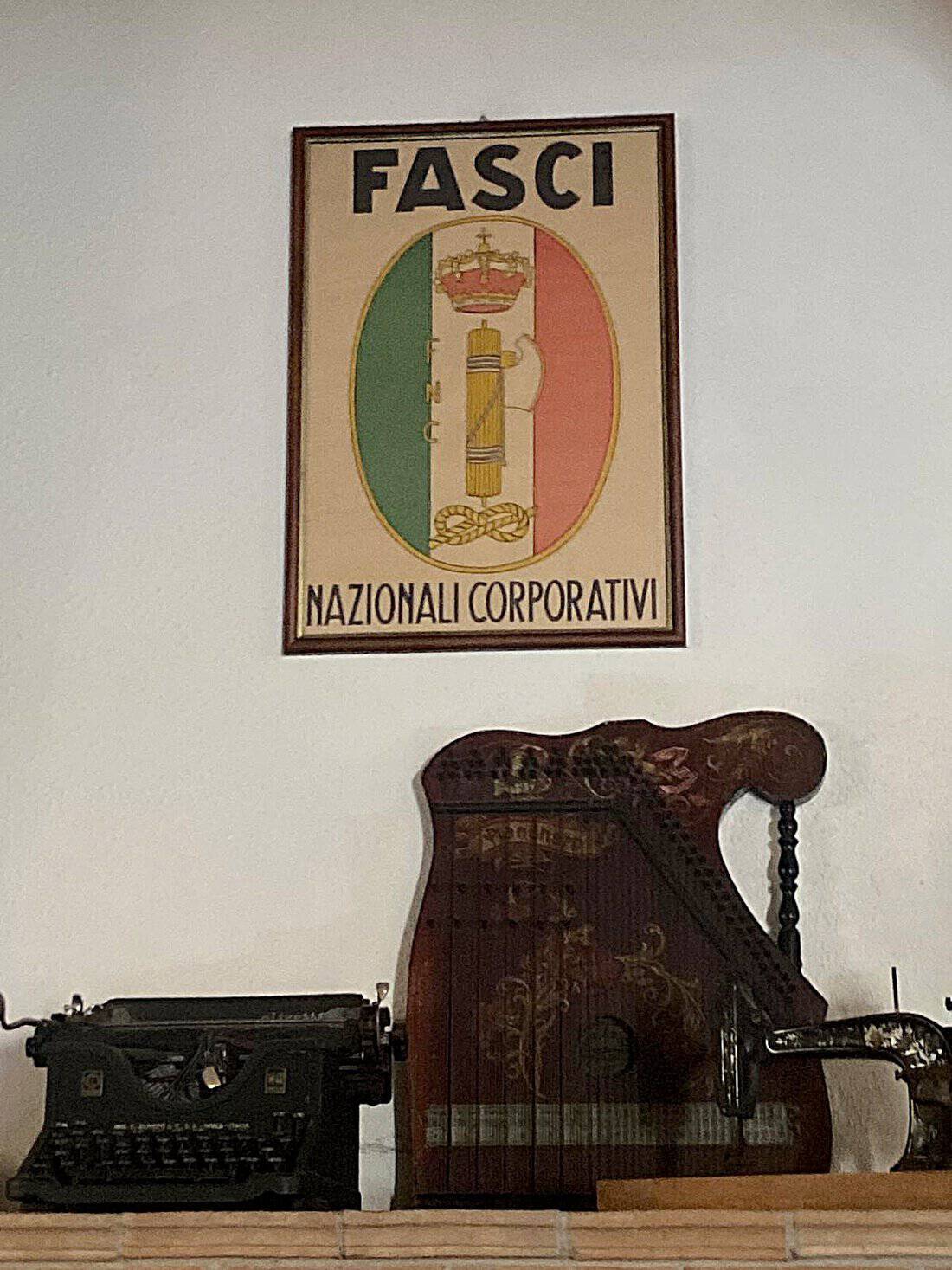
We walked in and it was dark, almost eerie, even without the mannequin draped in an old Italian fascism flag and Mussolini’s trademark beret. The sprawling restaurant has two rooms and there was little wall space between the plethora of framed Mussolini photos and fascism signs.
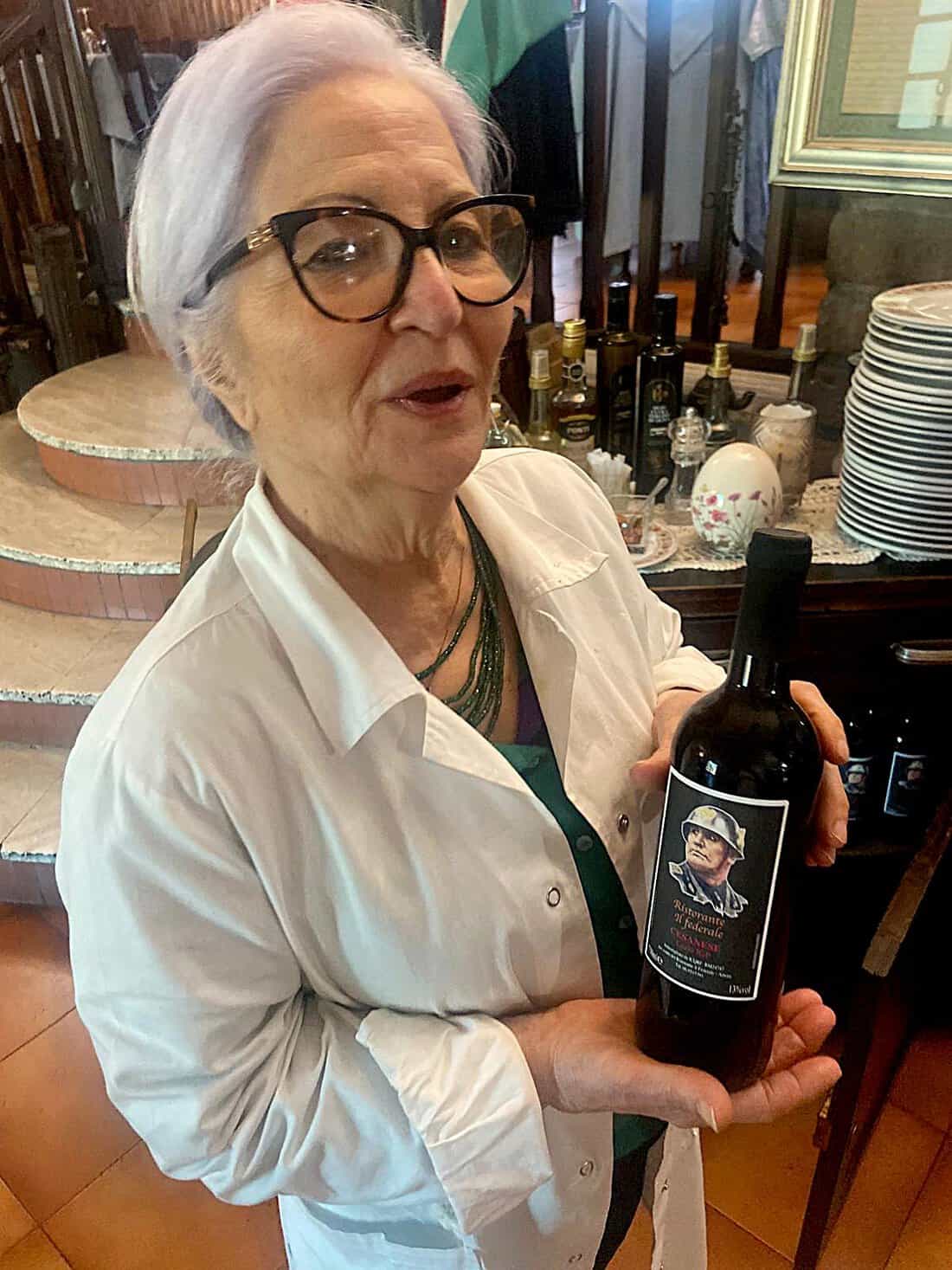
Sitting at the table was a diminutive lady with white hair and oversized glasses. Alessandro chatted with the woman, who goes by signora Adelaide. She and I chatted in Italian a bit. She asked me where I was from.
“Oregon,” I said. “Mussolini?”
“Yes, fascism.”
“He sent Jews to the death camps,” I said, trying to hide my disgust.
“No, he didn’t. Hitler did. If Mussolini didn’t do what Hitler said, he would’ve bombed Rome.”
“But what happened at the end of the war?”
She shrugged.
I wasn’t going to write anything about this. I thought I’d write a note about it in my new Friday Substack newsletter. I had no desire to sit down for a lengthy lecture about the glories of fascism and genocide. Maybe I’d save a “restaurant review” for the anniversary of Mussolini’s death. Then I looked online.
It’s today.
Yes, on April 28, 1945, Benito Mussolini, the fascist dictator who led Italy from 1922-43, was shot by a firing squad in the village of Giulino di Mezzegra near the Swiss border. The next day, he hanged from his toes in a Milan service station where he was stoned by civilians who survived while he ran Italy into the ground.
So what would inspire a family to open a “restaurant-museum” in honor of a man who sent nearly 8,000 Italian Jews to prison camps, 90 percent of whom were murdered? How do you honor someone who, on Oct. 16, 1943, ordered 1,023 Jews out of Rome’s Jewish Ghetto to Auschwitz and only 16 returned?
It turns out, Adelaide’s father was a member of the Decima Mas, an elite Italian naval commando unit that fought alongside the Nazis during World War II.
The family opened the restaurant in 1954 and it has grown into one of the biggest collections of Mussolini memorabilia in Italy. Adelaide, however, said she is not a racist. She even adopted a Black child from the United States.
Then I saw on the wall: In a cluster of hundreds of photographs, I saw one of a Black child about 10-13 years old, with a grown man.
They were both giving the Nazi salute.
Mussolini in Italy
Retired to Italy for 12 years, I’ve learned a lot about Mussolini. It’s not just the two books I read about him. I learned about what Italians think of him, especially in Rome.
Yes, he did plenty of good for the city and region. To wit:
- He turned Lazio’s swampland into a series of nice beach towns.
- He built Rome’s first public housing for the poor and cleaned up numerous crime-riddled neighborhoods.
- He restored ancient sites.
- He improved infrastructure such as roads, public buildings and railways. (Yes, the trains still run on time.)
On the flip side:
- He befriended Hitler.
- He sent thousands of Jews to their deaths.
- He befriended Hitler.
- He raped Ethiopia and allowed his soldiers to rape Ethiopian women but not bring them home.
- He befriended Hitler.
- He bankrupted Italy with his ill-conceived war plans.
- He befriended Hitler.
- He left Italy weak in war with outdated weaponry and aircraft.
- He befriended Hitler.
- He destroyed democracy.
In light of all this, the funniest line I’ve heard in 12 years of writing travel in Italy came from this lady. Alessandro asked what she thought of Donald Trump. She said she didn’t like him.
“He’s crazy,” she said.
Ha! Hey, Republicans, put that on your next Trump rally sign. A woman who admires Benito Mussolini thinks Donald Trump is “crazy.”
Il Federale in the media
A frequent diner is Roberto Vannacci, the founder of the new far-right National Future party and former member of the far-right League party. In political campaigns, Vannacci often called Mussolini “a statesman” who “did some good things.”
In 2017, Italy’s special operations police made a high-profile raid of a Mussolini rally at a Punta Canna beach club in the northern region of Veneto. Inspired by the event, investigating journalists flocked to Il Federale.
Adelaide told “ECG,” a Rome campus radio program, “Anyone can come to us, as long as they respect my rules. But right-wingers in particular come. They’re my favorite customers.”
In a documentary on Agora’ Estate, a morning TV talk show on Italy’s Rai 3, a diner was asked if she thought the restaurant could offend Jews.
The diner said, “We should broaden the spectrum a little. It’s not as if the red part of the world has done any less heinous things. I think that without harming anyone and respecting everyone’s opinion, there should be the freedom to frequent a place because it commemorates or contains Benito Mussolini memorabilia, or to visit Benito Mussolini’s tomb in the Predappio cemetery, as thousands of people do.”
Another local woman said in the film, “My father-in-law was a prisoner. Fascism scares me, but the restaurant doesn’t because we’ve known each other forever.”
Yet another said, “History repeats itself twice: once as a tragedy, once as a farce. This is a farce, and I’m not taking part in it.”
Elsewhere in the world
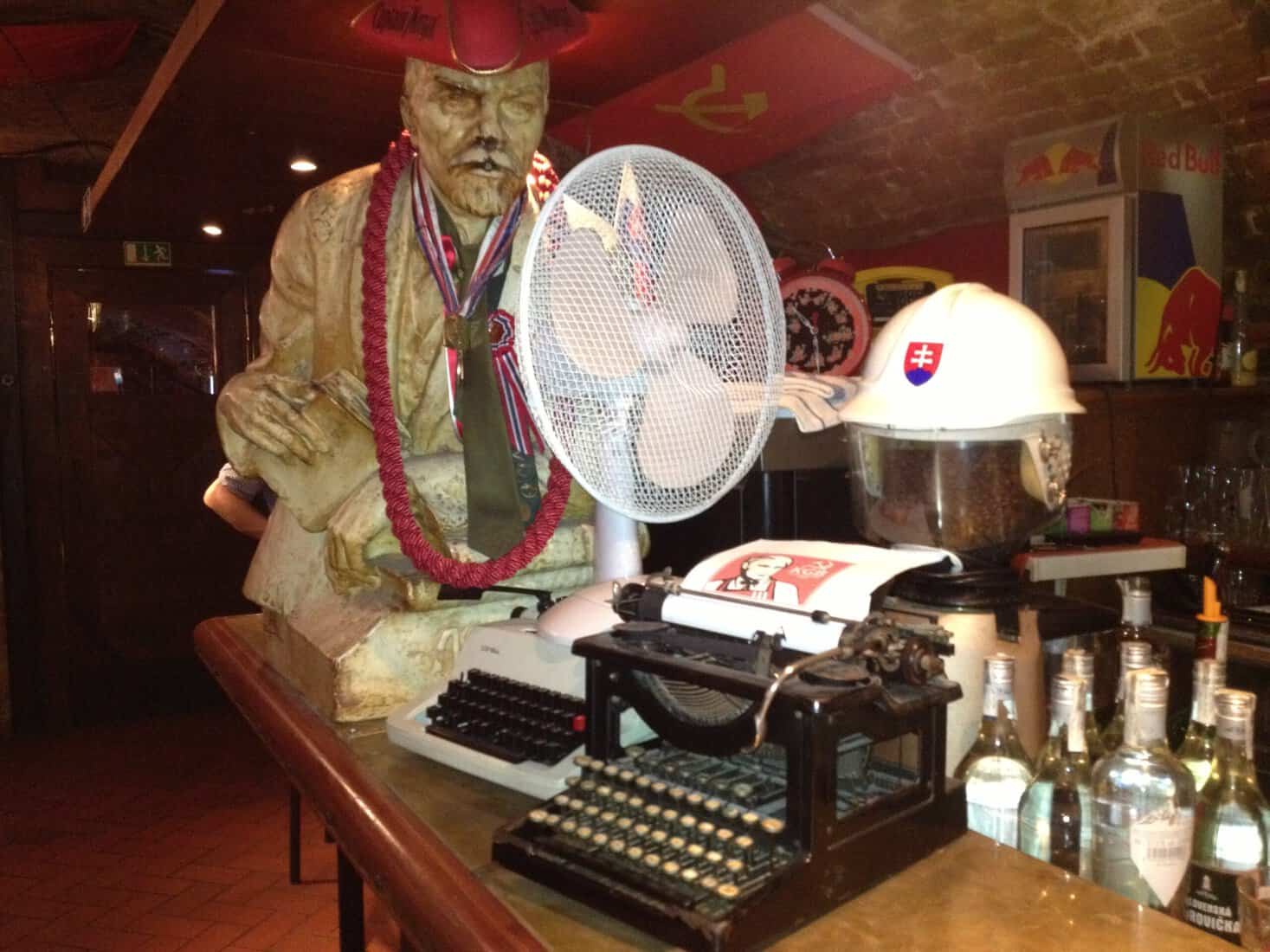
It’s hard to comprehend the uniqueness of Il Federale. I’ve been to places that have evil paraphernalia but it’s more kitsch. Bratislava, Slovakia, has the KGB bar which has busts of Lenin and Stalin, some with leis looped over their neck. The bar’s sign is of a peasant woman in a head scarf with her index finger pointed in front of her pursed lips as if to say, “Shh! Just keep quiet.”
A bartender there told me, “It’s mostly for irony. They’re making fun of it.”
Berlin has a huge communist museum. Vilnius, Lithuania, has its old political prison open to the public. But it’s all educational. It’s not a shrine.
When I worked in Las Vegas, in 1988 the Nevada Gaming Control Board fined Imperial Palace owner Ralph Engelstad $1.5 million for having a room full of Nazi memorabilia and holding parties on Hitler’s birthday.
The room was dismantled.
The food
We didn’t eat. We already had lunch. Besides, I didn’t know if I could keep an appetite with Benito Mussolini staring at me from 100 photos on the wall.
But unlike the Imperial Palace, the food at Il Federale is reportedly quite good. It must. Restaurants in Italy don’t last for 72 years if they’re not good. Gambero Rosso, Italy’s highly respected restaurant ratings website, gave it a four out of five under a review headlined, “Fascism at the Table.”
It has some unique dishes such as seafood in radicchio leaves and spaghetti with lobster. One dish is called medaglioni del Duce (The Duke’s medallions) and Claretta mousse, named for Claretta Petacci, Mussolini’s mistress who was executed with him 81 years ago today.
When we arrived, the Vis Artena fifth-division soccer team was lounging in the courtyard. Maybe they saw Mussolini’s last words emblazoned on a plaque on the counter:
“I only wish that one day Italians would remember that I loved them above all, and that my every action and thought were dedicated to the greatness of Italy.”
Those words still ring loud and clear at Il Federale. Before we left, Adelaide opened a cupboard drawer and showed us a bottle of wine. It was Ristorante Il Federale’s local Cesanese red wine, featuring a label with Mussolini sticking his jaw out from under his helmet.
It used to have the Italian flag behind him. A couple years ago, a court made her remove the flag. They said it was offensive.
April 28, 2026 @ 6:07 pm
Thanks for this one, John. Well done.
May 1, 2026 @ 8:50 pm
Thanks, David. As you know, some stories just write themselves.
April 29, 2026 @ 7:24 pm
I read a credible article (sorry I cannot recall the source) that said that in recent history, a letter was found written before WWII started, to Mussolini from Churchill, after Mussolini had requested to join the Allied Forces. Churchill said that although he could be open to that, he knew the French would never have it.
Apparently Mussolini only joined with Hitler because he had no other choice. I doubt neutrality would have been a viable option. It doesn’t take away the horror, but it complicates it.
May 1, 2026 @ 8:50 pm
From what I’ve read of Mussolini and the videos I’ve seen of him, I think he took a particular glee at sending the Jews off to their deaths. What few people know is what he did in Ethiopia. That was pure race war. He wanted to conquer the people but not let a single one of them contaminate the blood pool in Italy.