

Lebanese wine: How a growing 5,000-year-old tradition was started by a hungry, wily fox
(This is the last of a three-part series on Lebanon)
“They shall blossom like the vine; their fame shall be like the wine of Lebanon.” – the prophet Hosea (780-725 B.C.) to his followers, urging them to return to God.
ZAHLE, Lebanon – Ol’ Hosea was pretty good at his job. Nearly 2,800 years later, Lebanese wine remains pretty famous, at least among wine connoisseurs.
I’m no connoisseur. But I live in Italy, love wine and adore Lebanese cuisine. Combine the three and I have been a long-time lover of Lebanese wine. Lebanon’s Bekaa Valley, a long 45-mile swath of vineyards between two mountain ranges about 50 kilometers (30 miles) east of Beirut, is the Tuscany of Lebanon.
It produces an average of 12 million bottles of wine a year. Three million bottles are exported. This year the expected sales are around $180 million.
During my trip to Lebanon this month, I visited the Valhalla of Lebanese wine. My Travelers’ Century Club, which had our biennial meeting in Beirut, organized a day trip to the Bekaa Valley and the top winery in Lebanon.
Chateau Ksara produces 3 million bottles a year or 25 percent of Lebanon’s wine. It exports 40 percent to 37 countries. Ksara is a player on the international wine map, having won more than 200 awards around the world. And it has one thing to thank for it.
A fox.
Back in the 19th century, the area that is now Chateau Ksara was a Jesuit church. The Jesuits made sweet wine for their ceremonies and red wine for their own consumption. They also raised chickens for their own consumption.
In 1898, they discovered a fox was stealing their chickens. One day they tracked down the fox and it led them to a giant cave. Turns out, the cave had the perfect temperature for storing wine.
Today, that cave is the biggest and oldest wine cellar in Lebanon.
The arrival
Our bus drove about an hour from Beirut. Lebanon is 70 percent mountains and valleys and we went into the heart of them. We climbed into the hills and saw mist forming a gentle cloud over the valley. We pulled into the pleasant town of Zahle, the capital of the Bekaa Valley with a healthy population of 150,000.
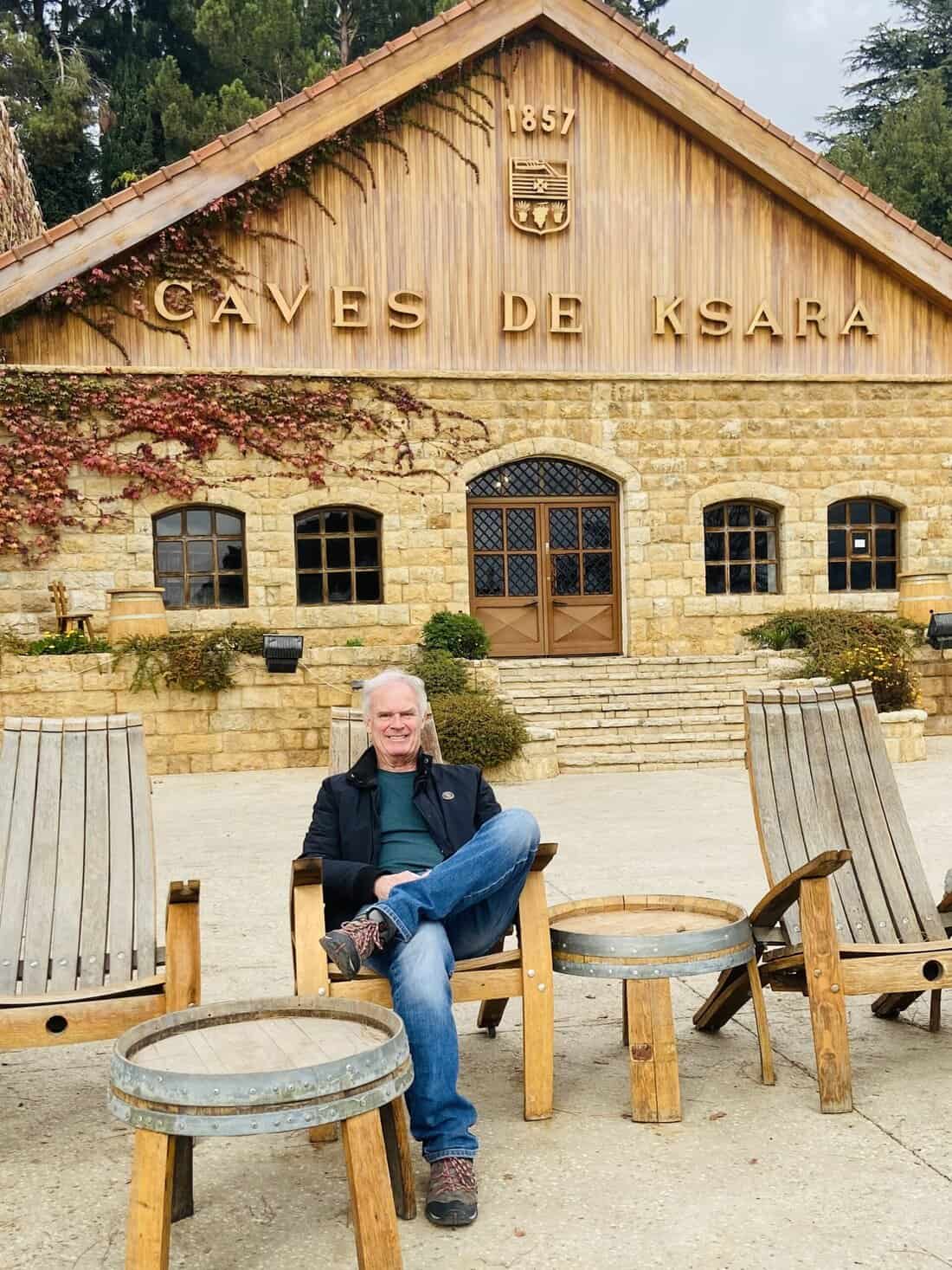
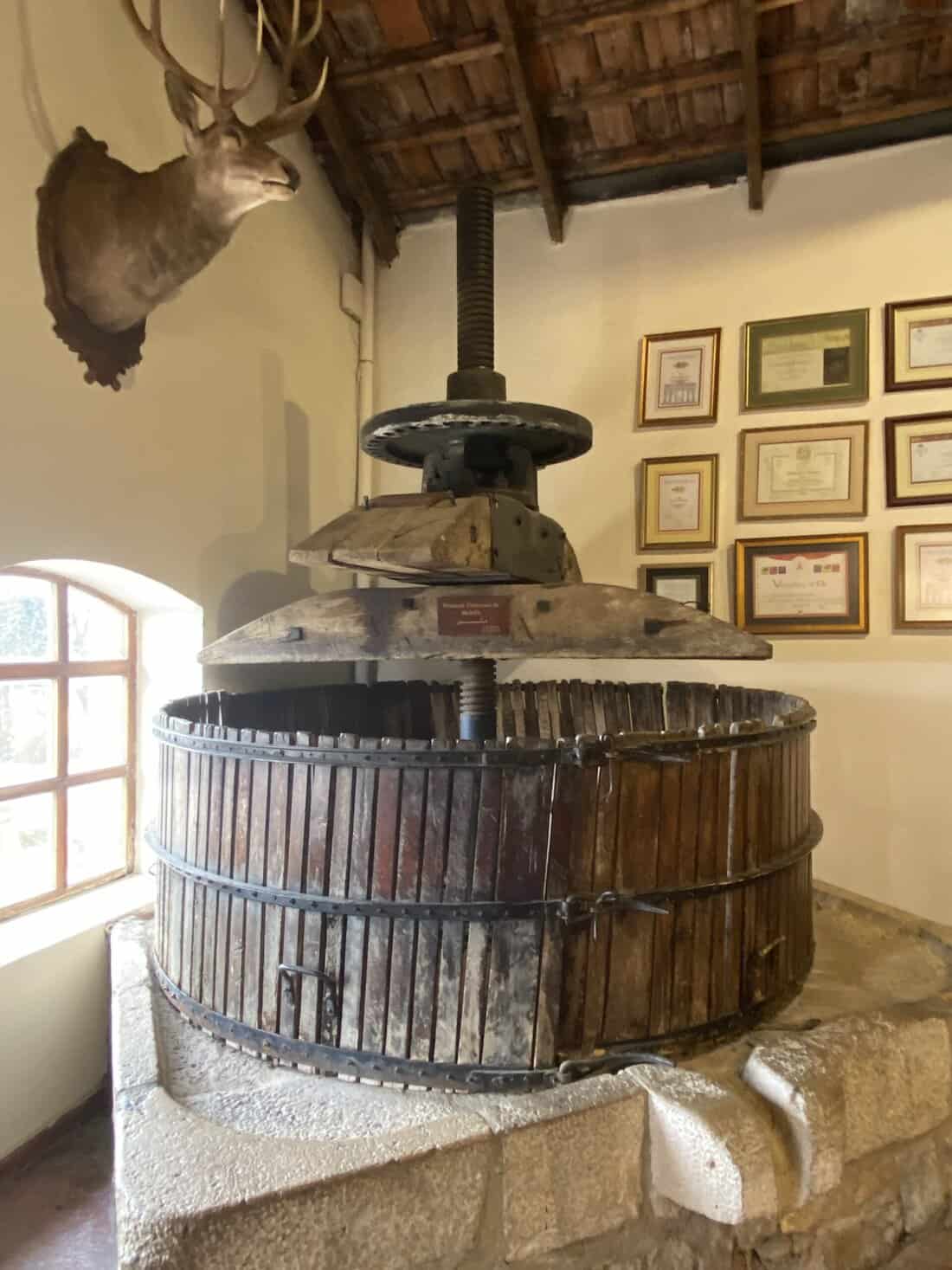
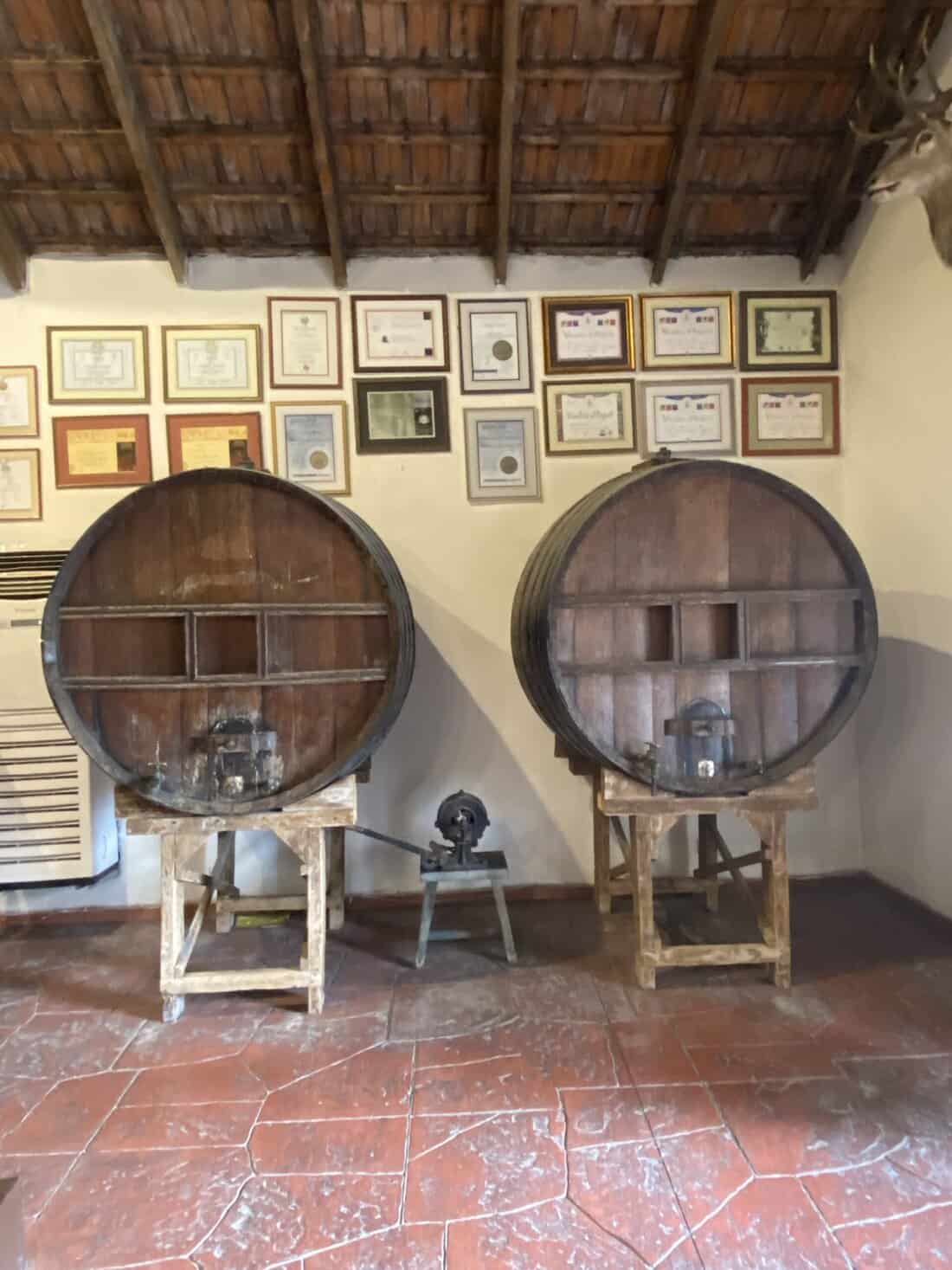
Chateau Ksara is a beautiful A-framed building made of yellow brick and wood. Red vines creep along the wall near the front door. Inside is an ancient grape crushing barrel and wood storage barrels. A Christmas tree and miniature nativity scene indicate Bekaa Valley’s Christian base.
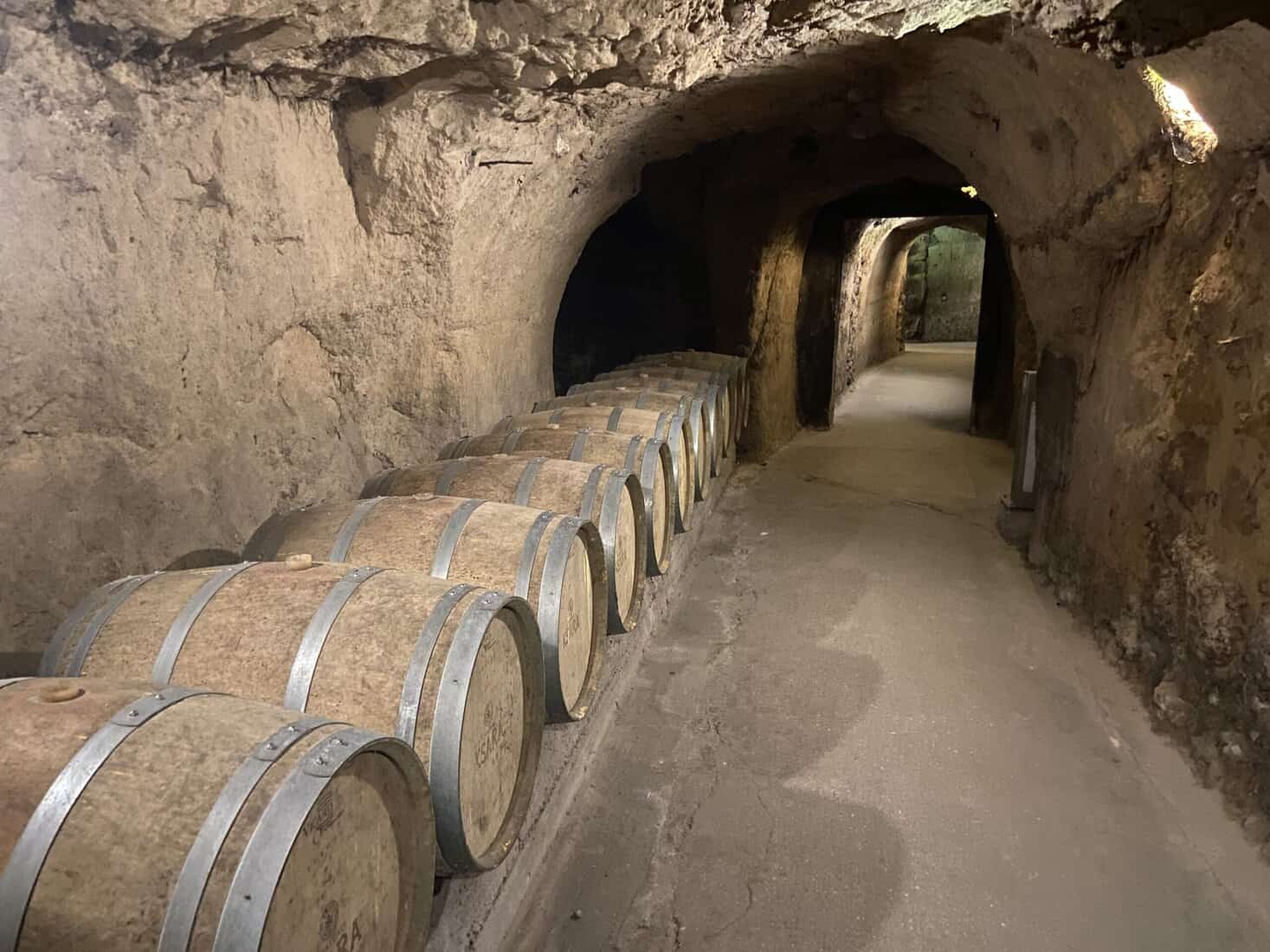
Reine Saade, our guide, has worked at Ksara for 20 years and gave us one of the eeriest winery tours of my life full of them. The cave stretches 2 kilometers and is hauntingly lit. Wine bottles, some covered in dust, line many of the walls.
Reine explains the cave has more than 1 million bottles of wine. One remains from 1918.
“It’s our treasure,” she said.
Ksara has stayed ahead of a growing Lebanese wine scene. Reine said in 2007, Lebanon had 18 wineries. Today it has 65.
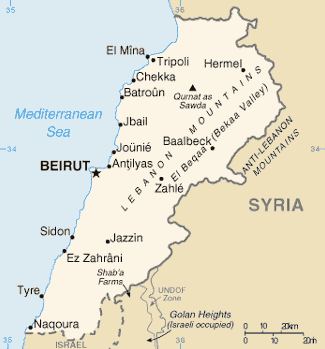
Look at my map above and you can see why this is such fertile wine country. The Bekaa Valley sits between two small mountain ranges at an elevation between 900-1,000 meters (3,000-3,300 feet). It gets cooling breezes from the Mediterranean Sea an hour away.
“We usually have snow and the water from the snow goes into the roots of the grapes,” Reine said. “We don’t need to make any irrigation. We have rain. We have good climate. We have good summer days. It’s hot during the day and humid during the night.
“We are Lebanon.”
Lebanese wine history
Lebanese wine goes back way before Hosea began trumpeting it. Wine production here is 5,000 years old. The Phoenicians, the great traders that they were, inhabited the Bekaa Valley and spread the wine throughout the Mediterranean. It was even mentioned in the Bible. In Genesis 14:18, King Melchizedek, a high priest from the Middle Eastern town of Salem, offered bread and wine to Abraham.
The Ottomans banned it for 400 years except for Lebanese Christians to use for religious purposes. In 1982 during the Lebanese Civil War, 80 hectares (197 acres) of Chateau Musar’s vineyards were used as a front line between Syrian and Israeli tanks.
When the war ended in 1990, Lebanese wine began to grow. Foreign investment poured in, mostly from France.
Then conflicts with Israel returned. In 2006, the wineries decided picking grapes with Israeli warplanes flying overhead may be counterproductive. They stopped. However, proving maybe there is a god who loves wine, Israel signed a ceasefire right when the Chardonnay grapes reached maturity.
However, in 2024 when Israel intensified its war with Hezbollah, the paramilitary-political group based in Lebanon, Israel did bomb towns near vineyards. Some sustained damage to wine cellars.
Still, Lebanese wineries in 2024 produced 15 million bottles.
The wines
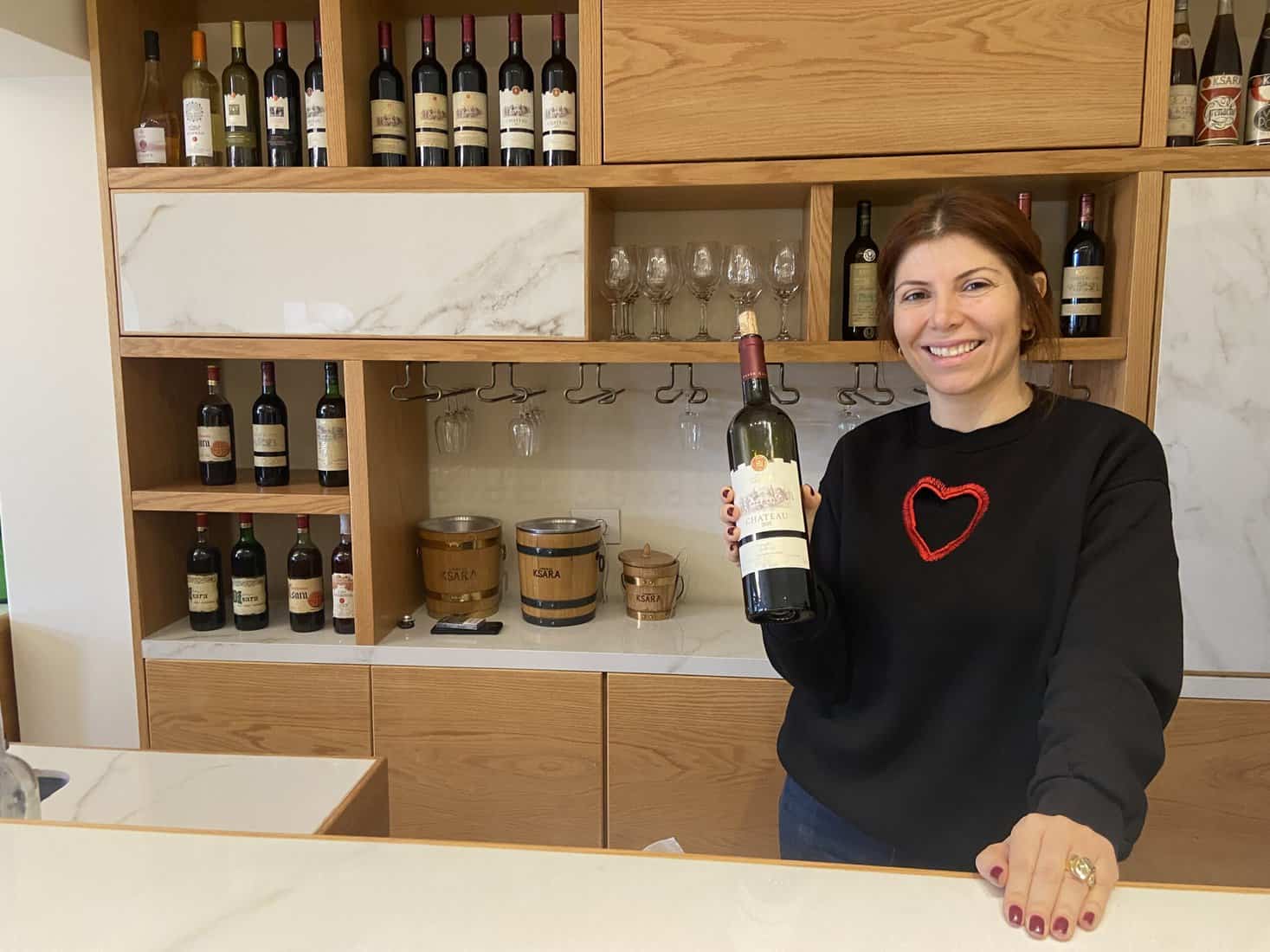
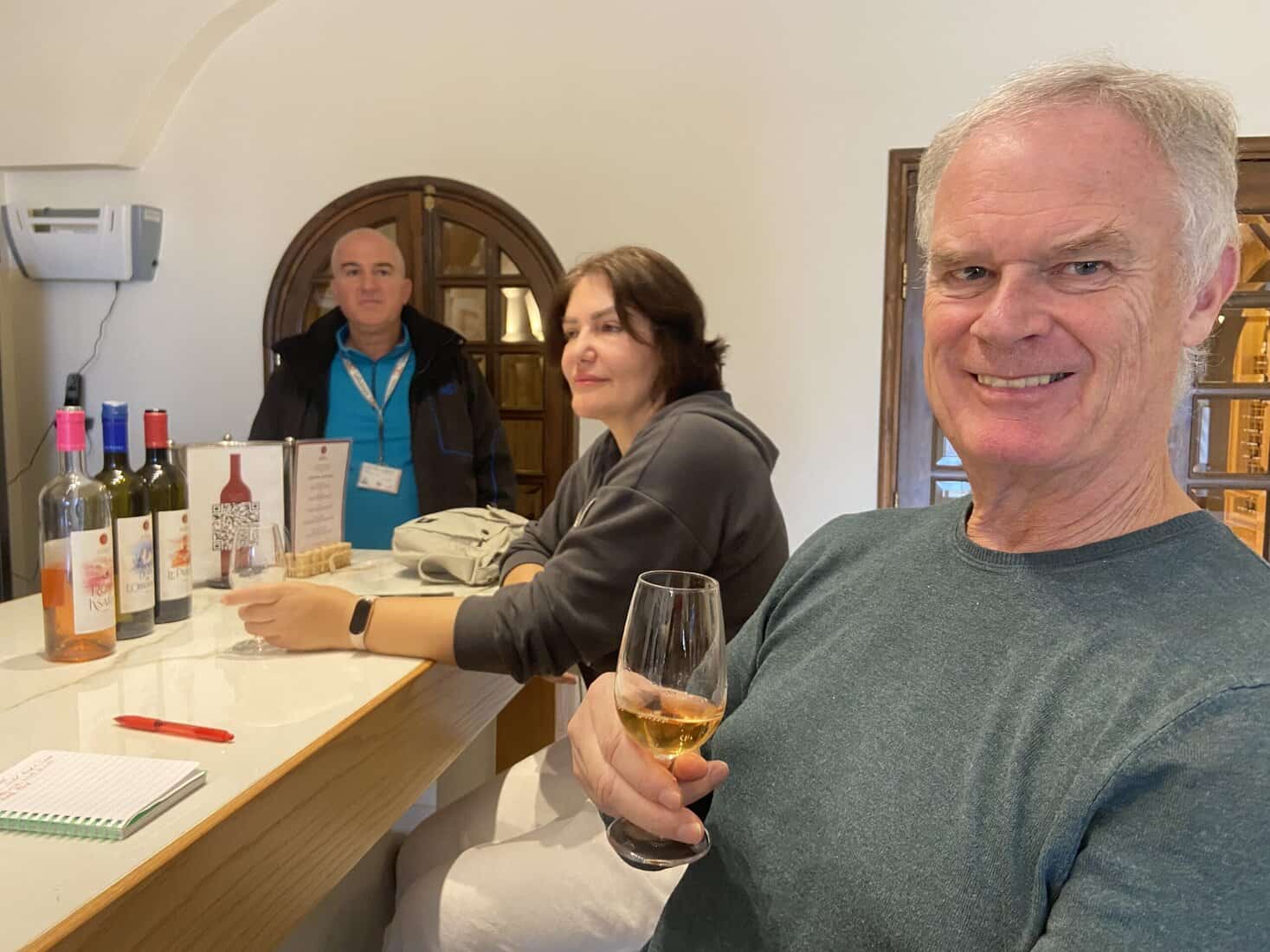
Reine led us to a big wine tasting room where we got the glorious task of drinking delicious wine at 11 in the morning. Ksara has about 36 different international grapes ranging from Cabernet Sauvignon to Malbec.
It has two indigenous grapes, both white: Obaideh, high in sugar similar to a Chardonnay with tastes of honey and lemon (Wine Searcher’s description, not mine), and Merwah, featuring light citrus and nut flavors.
Here are thumbnail sketches of the wines we tasted:
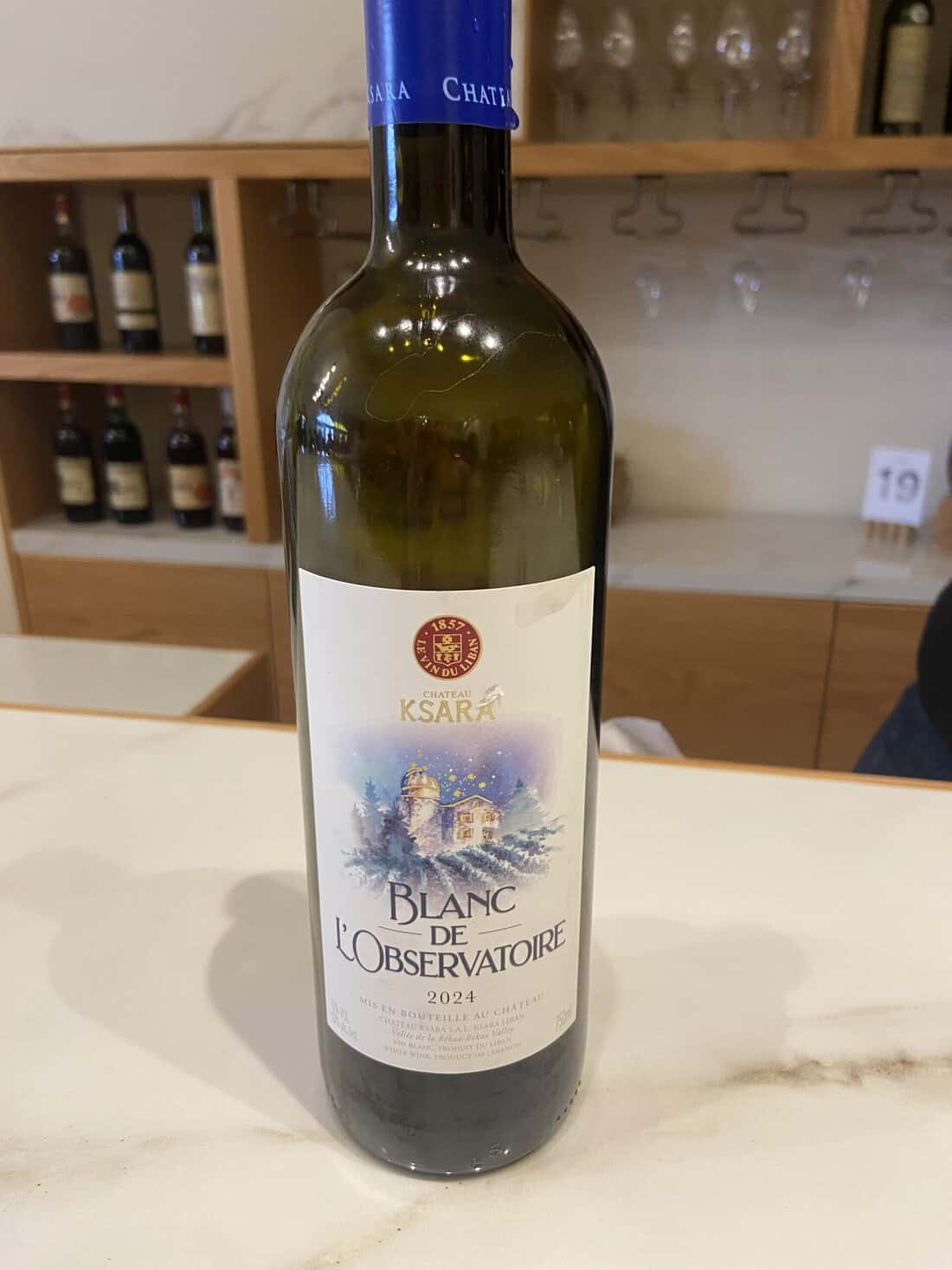
Blanc de L’Observatoire 2024. A blend of Sauvignon Blanc, Clairette and Muscat. Very light and balanced. A good wine with white fish.
Rose’ de Ksaaa 2023. Too light. Not much flavor. But I’m not a big rose’ guy.
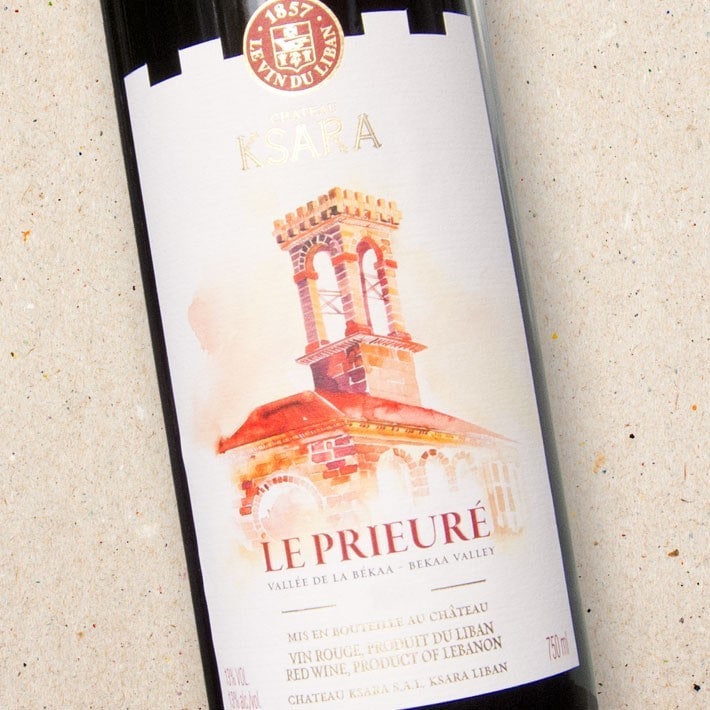
Le Prieure’ 2021. This was the best wine I had in Lebanon. It won a gold medal at a wine competition in Canada. It’s a blend of the red grapes Cinsault, Caignan, Mourvedre and Caladoc. It can be served chilled. It is full flavored, deep and rich with hints of spice and licorice. It’s stored in the same concrete tanks the Jesuits used.
Moscatel Ksara. A sweet dessert wine which I don’t usually like but this wasn’t so sweet that you’d only pour it over ice cream.
Unfortunately, the Beirut airport’s duty free shop didn’t carry Le Prieure’. I settled for Ksara’s Reserve Du Couvent 2022, a red blend of Syrah, Cabernet Franc and Cabernet Sauvignon. I read it matches the red wines of Bordeaux.
The best thing about these wines? Most retail between $4-5.
If you’re thinking of going …
How to get there: Paris flies direct to Beirut. I paid €332 round-trip ticket for the seven-hour trip from Rome including a three-hour layover in Istanbul.
How to get around: Public transportation outside of Beirut is spotty. It’s best to rent a car for Zahle. Rentals in Beirut start at €38 a day.
Where to stay: El Sheikh Suites Hotel, Sidani Street, Hamra, Beirut, 961-1-756-756, www.elsheiksuitehotel.com, info@elsheikhsuiteshotel.com. In the heart of Hamra and not far from the Cornish, the El Sheikh has large comfortable rooms and a helpful English-speaking staff. I paid €52 a night.
Where to eat: Liza, Rue Trabeau, Beirut, https://lizabeirut.com, iinfo@lizabeirut.com, 961-71-717-105, noon-midnight. Built in a 19th century Ottoman House, Liza was called by Conde Nast “one of the most beautiful restaurants in the world.” Classic Lebanese cuisine in an elegant setting. Order dishes and share. Appetizers start at $8, mains at $16.
When to go: Summer days average highs around 90 and spring in the high 70s. In my week in December it was in the 50s and low 60s.
For more information: Ministry of Tourism, 961-1-340-940, https://mot.gov.lb/en, 8 a.m.-3:30 p.m. Monday-Thursday, 8 a.m.-3 p.m. Friday.