


Tramezzino: Italy’s famous sandwich is 100 years old this year and I visited its birthplace in Turin
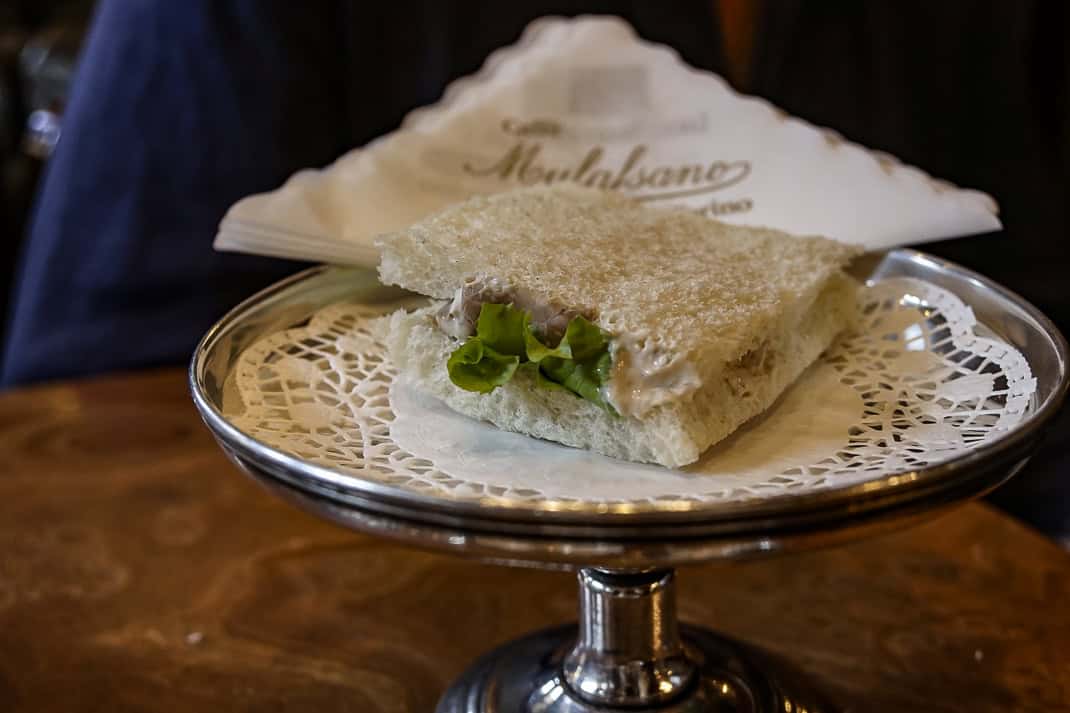
TURIN, Italy – The corner bar is as important to every Italian resident as his family doctor. Called “cafes” elsewhere, the corner bar is where you go in Italy for familiarity. The familiar cappuccino, the familiar cornetto, the familiar barista.
For 12 years in Rome I have gone to Romagnani Caffé across my street. The mornings are the same. I talk to Davide, my barista about our AS Roma’s latest triumph or choke job. I take my Corriere dello Sport to an outdoor table with a cappuccino and fagottino, the square flaky pastry to which I’ve grown addicted. (Please note: One “g.”)
At lunch, if I have no food at home and am too busy to shop, I return to Romagnani for more familiarity.
The tramezzino.
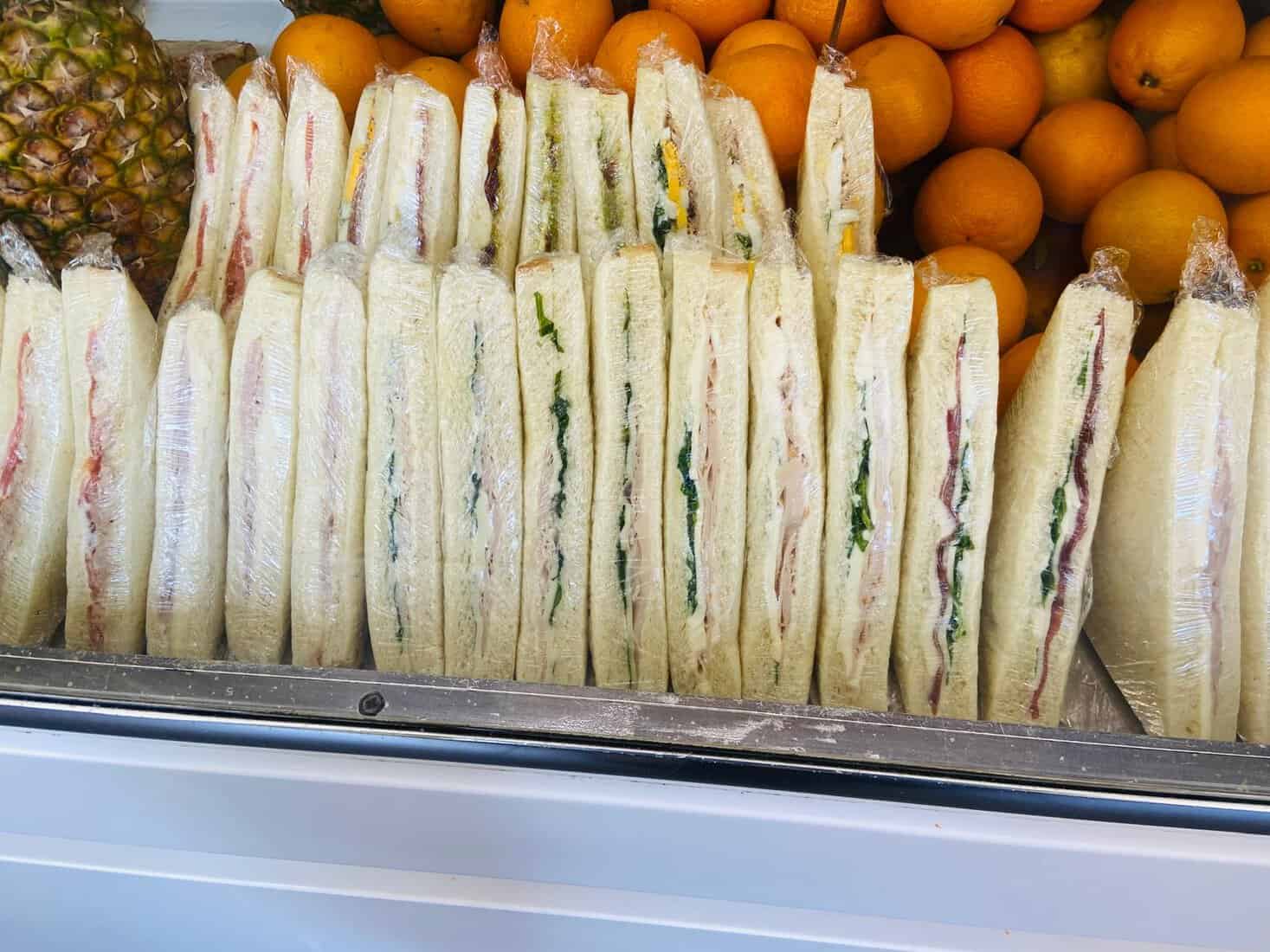
It is a triangle sandwich made from white spongy bread with a variety of fillings, from prosciutto and cheese to tuna to salmon. The tramezzino is in every bar in every village, town and city in Italy, from Sicily to the Alps. It usually sells for €2-€3 and is a quick, easy, filling bite when you’re hungry and in a hurry. The tramezzino is as big a part of Italian cuisine as pizza if not as internationally renowned.
Two weeks ago, I sat in Caffè Mulassano, the Turin bar where this legend was born.
One hundred years ago this year.
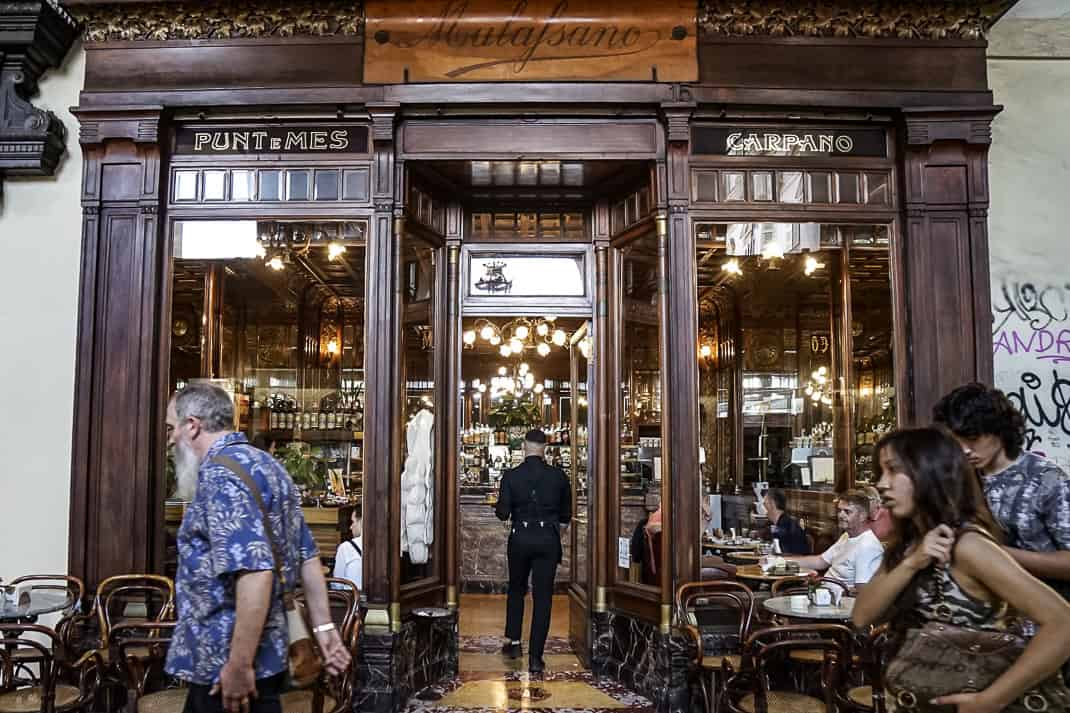
Caffè Mulassano
The tramezzino’s birthplace is so beautifully decorated it looks transported from the nearby Palazzo Reale, the House of Savoy’s royal palace. In a building that opened in 1907 on Piazza Castello, Mulassano is known as a “jewel box” of a cafe.
Its Art Nouveau style is a tasteful collaboration of polished mahogany paneling, gleaming brass and mirrors that make the cozy 31-square-meter (334-square foot) space seem bigger.
Its marble counter is topped with a bronze and marble fountain. Waiters buzz around in pressed white shirts and black bow ties. Even drinking a bottle of water I felt like a noble.
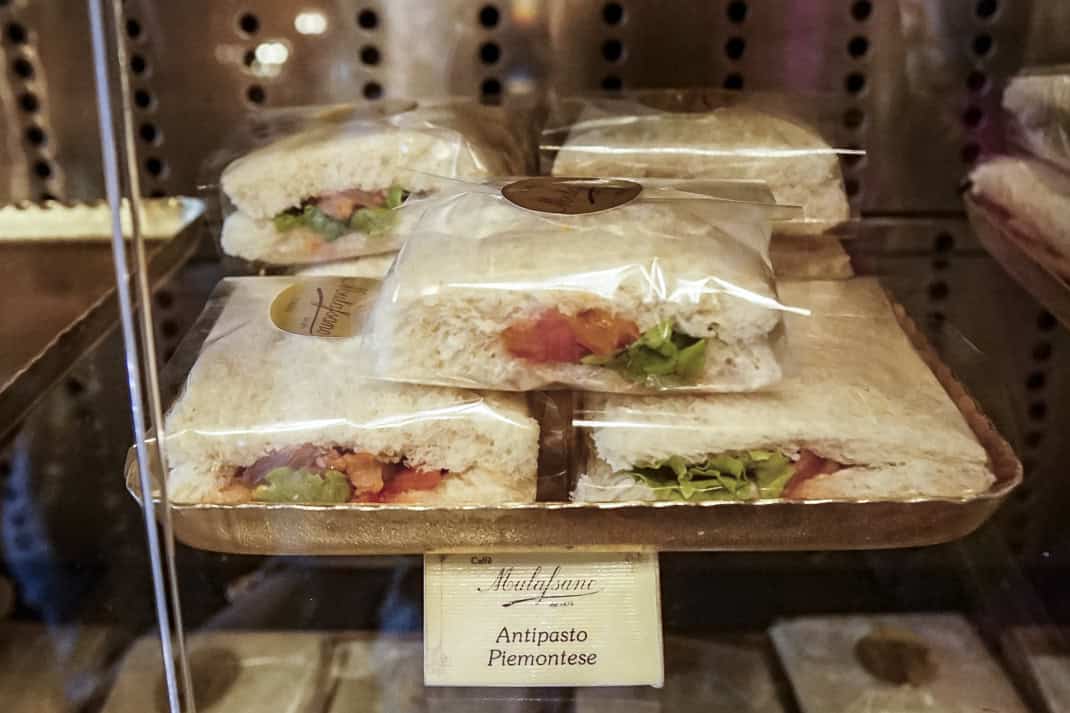
Some of Mulassano’s 14 varieties of tramazzini were in display cases, as highlighted and protected as Faberge eggs.
Federico Montanari, 30, has been a waiter at Mulassano for 3 ½ years. He used to come for tramazzini to celebrate after his university exams.
“Then I switched to vermouth,” he said with a smile.
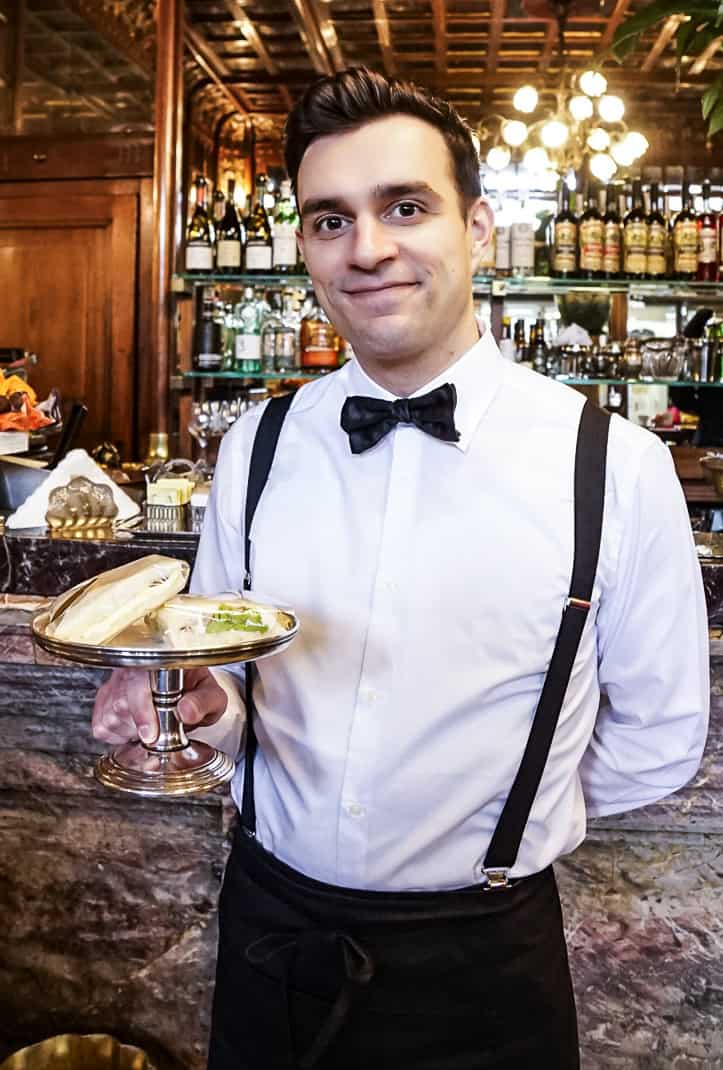
The anniversary
I asked how this simple sandwich has remained popular for 100 years.
“It’s because tramezzini are made the same way as when it was first opened, with the same artisanal care and production,” he said. “It’s become a landmark in Turin. We still get a lot of regulars coming here.”
The cafe is celebrating the 100-year anniversary in style. Three Michelin-star chefs are designing three new sandwiches that will be introduced over the summer.
The first, introduced April 16, came from Matteo Baronetto, the head chef for 11 years at Ristorante Del Cambio, a Michelin-star restaurant that opened nearby in 1757 and where a steak tartare appetizer sells for €55.
Baronetto filled his tramezzino with wide-ribbon shaped crespelle, kind of an Italian crepe, with mayonnaise, a spot of wasabi and slices of meatloaf. A new one was presented Tuesday: chives, mayonnaise, smoked trout and toasted sunflower seeds inside whole wheat bread. Another will be available later then all of them will land on the permanent menu.
I ordered the Vitello Tonnato: sliced veal in a tuna caper and egg sauce. It’s the original and the best seller by far. I can see why. The sauce added the perfect tangy touch to the lean veal. Inside two slices of spongy bread, it tasted like a gourmet sandwich, if there is such a thing.
Strangely, the tramezzino never made it overseas. Maybe it’s because bread and sandwiches are also very American and Northern European. I actually once had a sandwich in Sandwich, England.
“It really took off here because we have a cultural aperitivo in Italy,” Montanari said. “Tramezzino is one of the best options for an aperitivo. In two bites they’re over. They can vary with the drink. They come with so many fillings. It’s really hard not to find one for yourself.”
The only difference is Mulassano’s tramezzino is square. Most elsewhere in Italy they are triangular.
“At some point, they just started cutting them in half,” Montanari said.
The tramezzino history
The tramezzino story dates back before it was invented here in 1926. A woman named Angela Demichelis Nebiolo (Not to be confused with the famous Nebbiolo wine from Turin’s Piedmont region), was born in Turin in 1904. At 15 she moved to Detroit where she married Onorino Nebiolo, a fellow Italian, and they worked together in the food and beverage industry.
In 1926, the couple took their two children – and a toaster – back to Turin where they took over Caffe Mulassano, already a Turin establishment since it opened in 1879 before moving to Piazza Castello in 1907.
In the U.S., toast became one of Angela’s diet staples. She wanted to make it more sophisticated for her refined countrymen. Instead of reheating a prefilled sandwich, she used a soft bread with a unique gluten structure, served best at room temperature and without the crust.
A few years later, Gabriele D’Annunzio, Turin’s famed flamboyant poet and loyal Mulassano customer, named the sandwich tramezzino, from the words tra (between) and mezzo (middle).
With the growing popularity of the sandwich and the beautiful cafe’s draw for guests from around the world, Caffè Mulassano made the list of the Association of Historic Places of Italy.
A large portrait of Angela will be installed in the cafe sometime this summer. In September, the cafe will hold a contest for students from the Turin Hotel Institute about Turin’s tastes within the legendary tramezzino.
Today, Mulassano sells about 200-600 a day at €4.50-€6. Among the 30 varieties that they have used are lobster, truffle, the Garibaldino (sundried tomatoes, green olives, capers and tuna) and the Patè di Tartufo e Mascarpone (truffle pate’ and mascarpone).
Before leaving, I bought another to go. The cashier said the tramezzino is just as good the next day.
She was right.
If you’re thinking of going …
Where is it: Caffè Mulassano, Piazza Castello 15, 39-348-170-1696, https://www.caffemulassano.com, info@caffemulassano.com, 10 a.m.-8 p.m. Thursday-Tuesday, 10 a.m.-4 p.m. Wednesday.
How to get there: Direct trains leave for Turin all day from Milan, 80 miles (125 kilometers) to the east. The 50-minute one-way journey costs €25.90 on TrenItalia. From Rome, the five-hour trip was €153.80 for two round-trip tickets on Italo.
Where to stay: Best Western Hotel Luxor, Corso Stati Uniti 7, 39-011-562-0777, https://www.hoteluxor.it, luxor.to@bestwestern.it. A standard chain hotel five minutes from the train station on a quiet street with big rooms and helpful staff. I paid €396 for three nights including an excellent buffet breakfast.
When to go: Repeating myself, do not travel anywhere in Italy in July and August. It’s hot and crowded, even in Turin. Winter months in Turin are in the 40s with occasional snow. Spring and fall are in the 60s and 70s. In the last week of April, we had temps in the 60s with gray skies and no rain.
For more information: Turismo Torino e Provincia, Piazza Carlo Felice, 39-011-53-5181, www.turismotorino.org, contact@turismotorino.org., 10 a.m.-4 p.m.