


Turin: Italy’s “most underrated city” is still punching above its weight
TURIN, Italy – We stood on the bank of the River Po Friday and looked across the bridge to what is usually a beautiful view of Piazza Vittorio Veneto, one of the biggest piazzas in a city full of them. But we saw hardly any concrete.
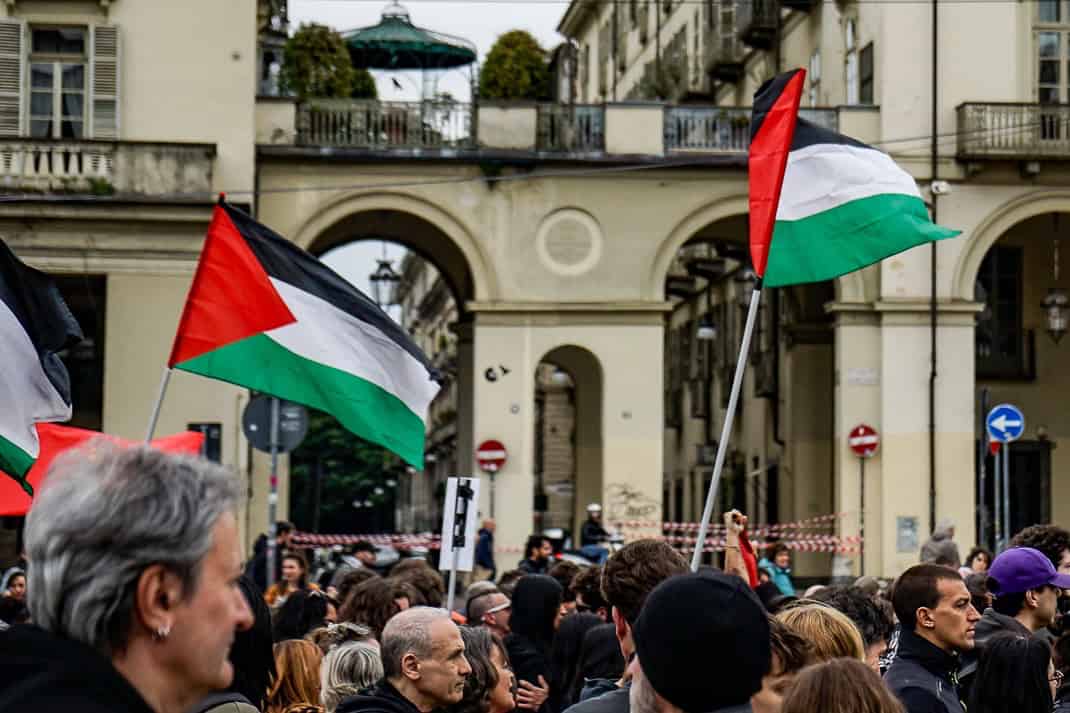
Every inch of the square was covered in humanity, an estimated 15,000 people.
People shouting. People chanting. People dancing. Music blared between angry words about the state of the war-torn world, particularly one created by my old United States.
We had stumbled onto Turin’s May Day parade. It’s a tradition around Italy but a holiday dedicated to workers takes special meaning in one of Italy’s most liberal cities.
From the birthplace of Italian unification to auto workers unions to the Red Brigades to rebirth as a cultural center to a city of acceptance and inclusion, Turin (Not Torino) is more than just a gateway to the Alps.
It’s my kind of town.
Return trips
Marina and I came here for our 11-year anniversary, a tradition that has sent us to various paradises in Italy around every April 29. The Amalfi Coast. Sardinia. Venice.
Marina had been here many times before when she dated a Torinese years ago. This was my third trip. I came in 2002 to preview Turin four years before it hosted the 2006 Olympics then returned for the Games.
I chuckled whenever I heard an Italian call Turin the “Detroit of Italy,” merely because it’s the home of Fiat. No Italian who ever said that has ever been to Detroit. Comparing Turin to Detroit is like comparing a Fiat 500 to a Ford Pinto.
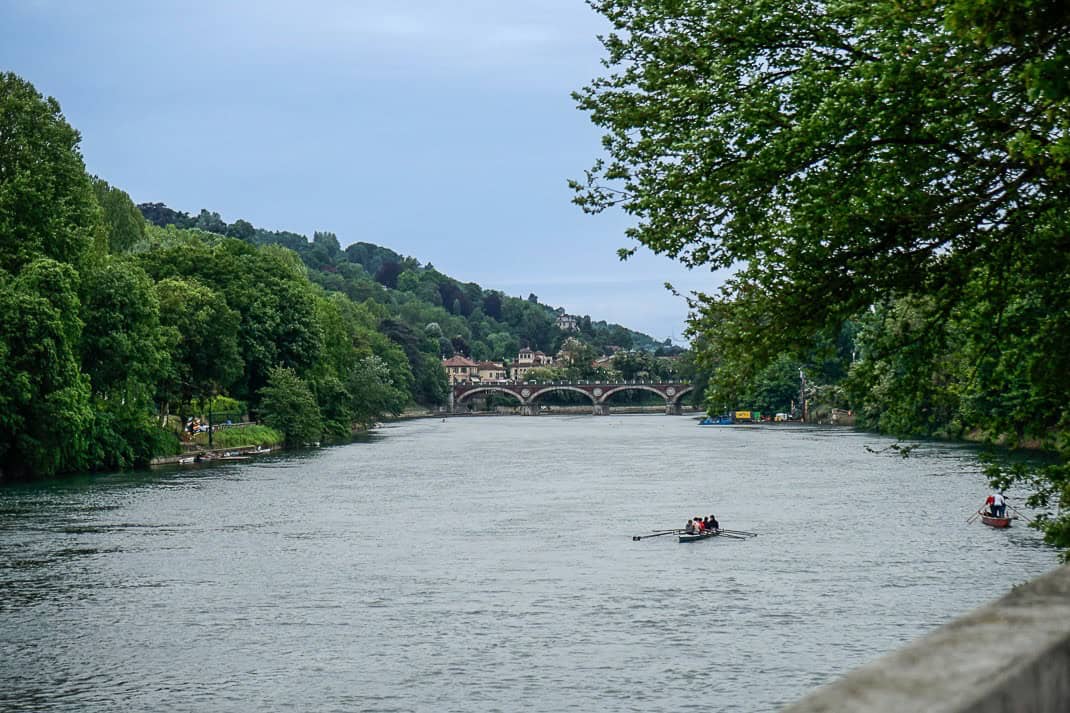
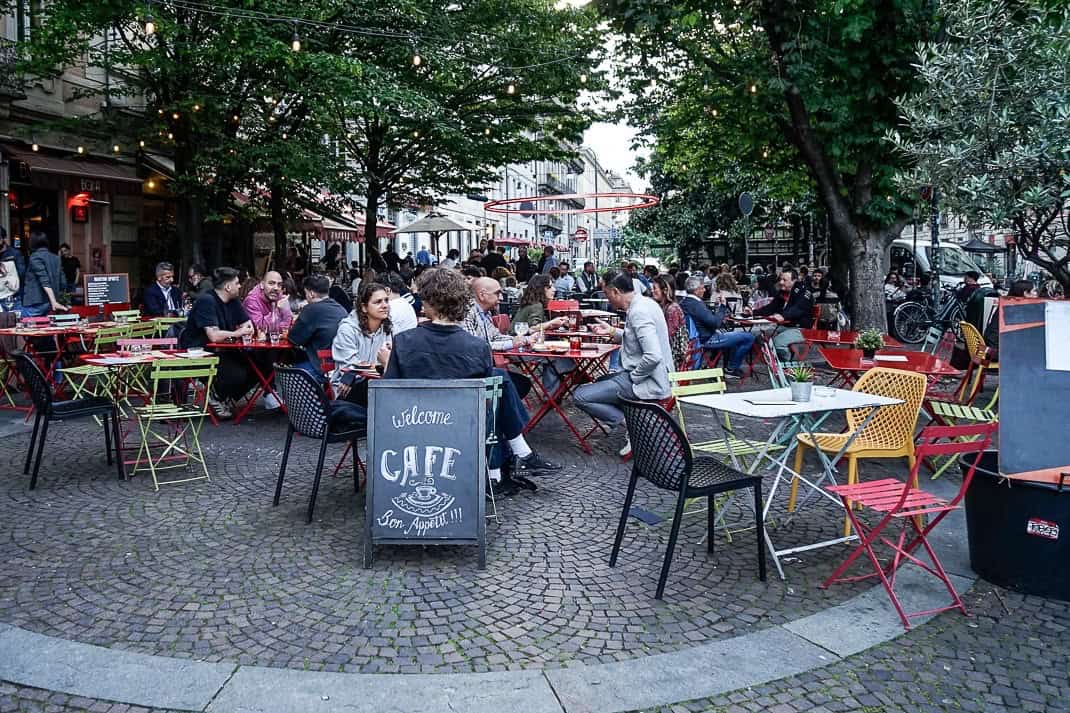
What I see in Turin is a city (pop. 855,000) covered in beautiful piazzas, of spectacular palaces and home to Italy’s best chocolate and wine. Throw in the clean, languid River Po snaking past the 550,000-square-meter Parco Valentino (Lover’s Park) and the liberal bent of the learned people, and Italy’s fourth-largest city is one of my favorite places in the country.
Yet Turin is only Italy’s sixth-most visited city.
EuroNews called Turin “The most underrated city in Italy.” Vogue called it “Italy’s Most Elegant City.” German philosopher Friedrich Nietzsche said “Torino is noble like Paris.”
Nietzsche should know. He lived in Turin in 1888-89. OK, he died here the next year, crazier than a loon. But about his adopted city he was spot on.
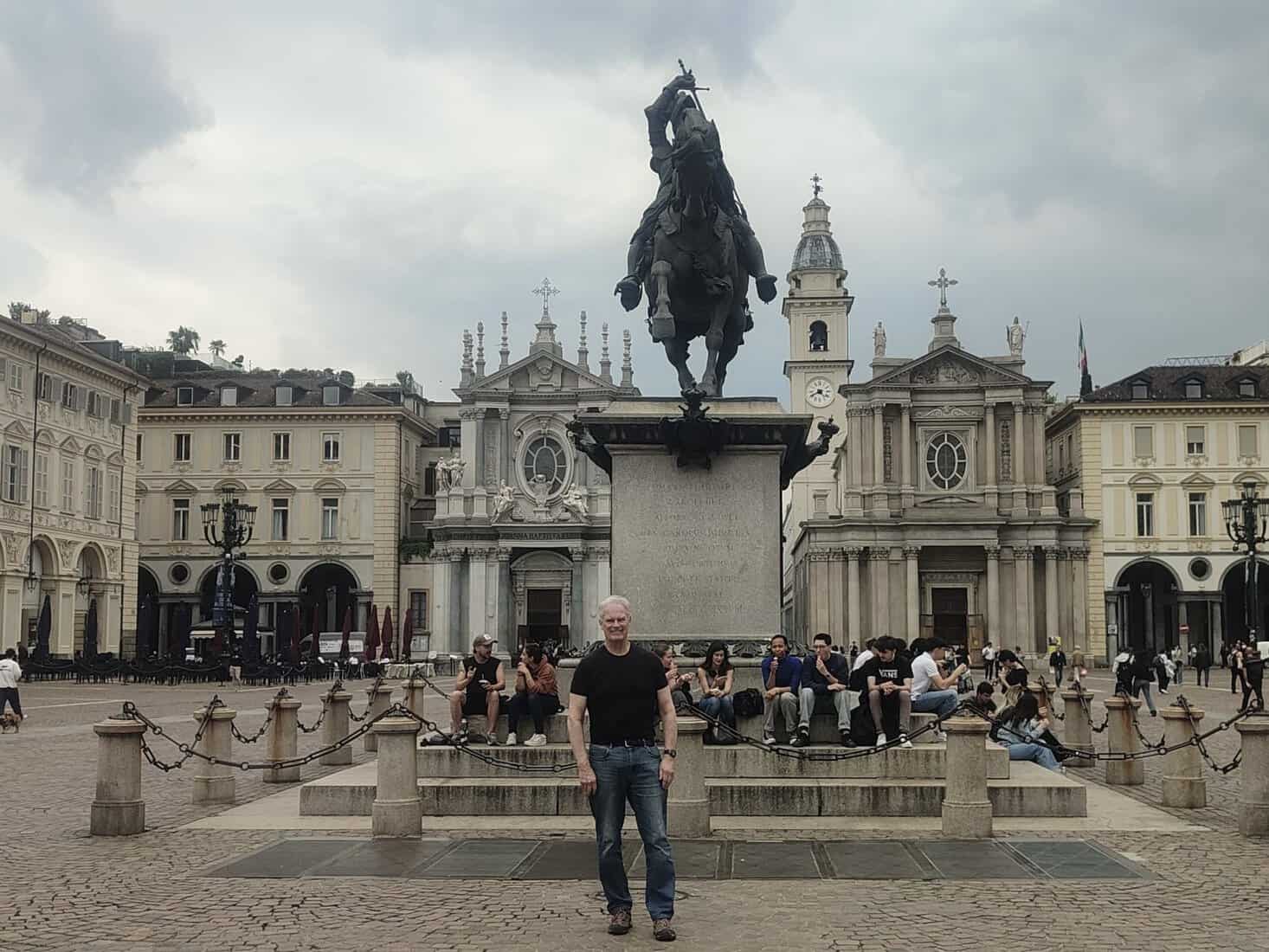
Turin’s layout enchants you. It is one of Italy’s most walkable cities. Piazza Vittorio Veneto is a short stroll from Piazza Castello and its Palazzo Reale, one of Italy’s most beautiful palaces. Piazza Castello leads to Piazza Carlo Alberto, flanked by the 18th century Palazzo Campana and the red-tinted Palazzo Carignano.
In a room on this square, Nietzsche wrote his famed The Antichrist and Twilight of the Idols.
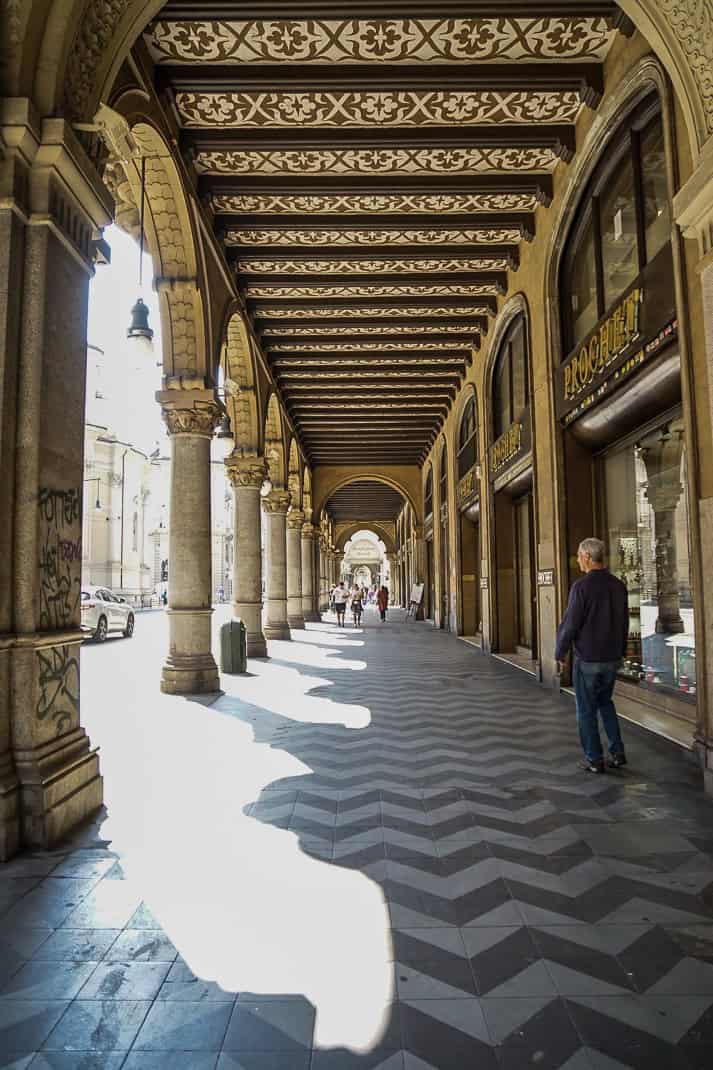
Connecting the piazzas to the rest of Turin’s center are long boulevards lined with graceful, arched porticos perfect for protection from the snow that pelts this city every winter.
Our hotel, the four-star Best Western Luxor, was just down from the train station in a quiet retail area and well connected to Turin’s excellent public transportation system.
(Side note: Please, unless you’re going to continue your conversation in Italian, do NOT refer to Turin as Torino. It’s Torino in Italian, too-REEN in English. It’s that simple. People call it Torino to sound more Italian. They don’t. They sound like they just walked off an American Express bus.)
Gaza exhibit
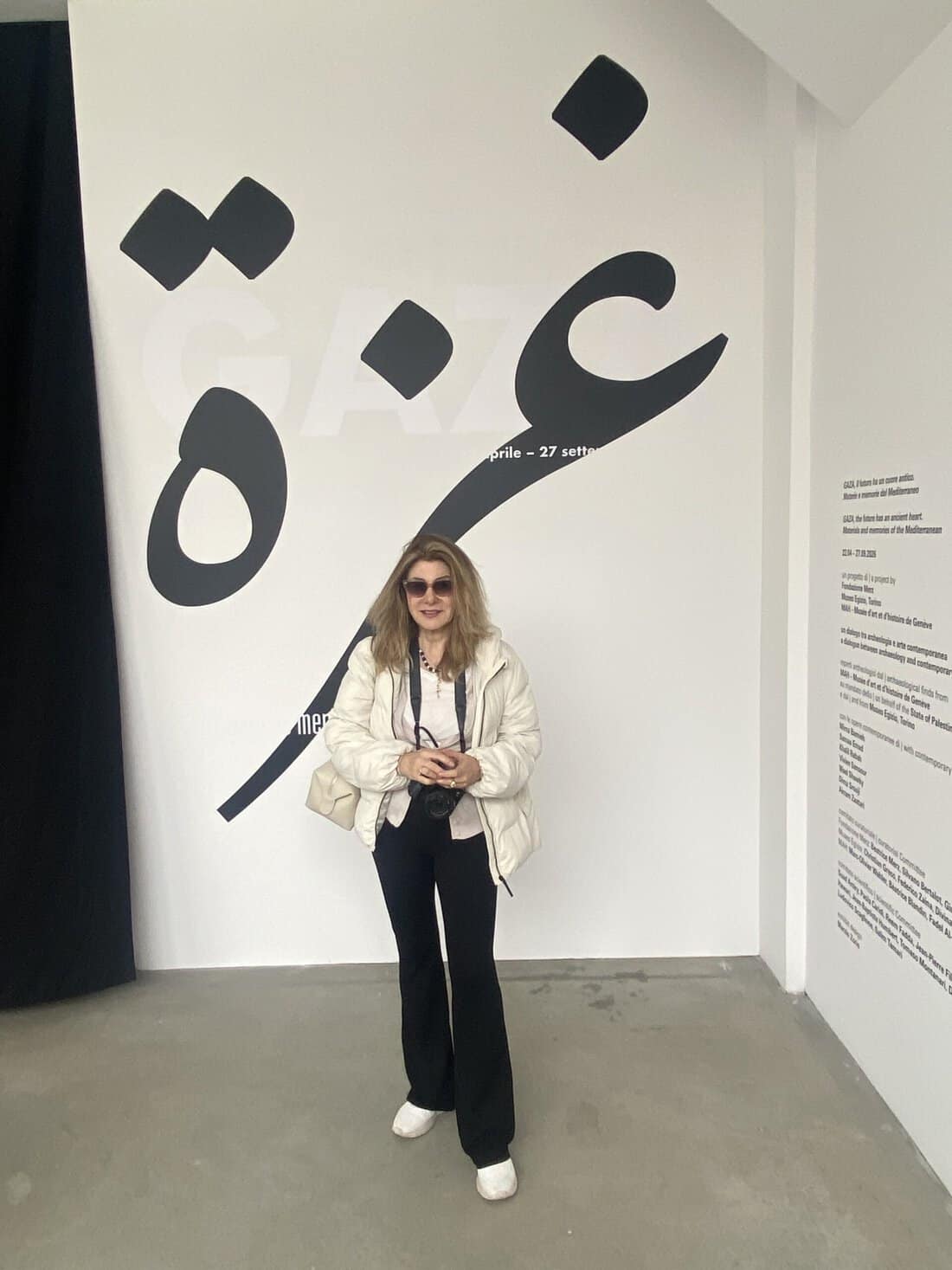
We timed our visit well. From April 22-Sept. 27 Turin’s Fondazione Merz, a museum built in an old Lancia heating plant, is hosting “Gaza: The Future Has an Ancient Heart.” It’s a tribute to Gaza, once beautiful now bombed back to the Stone Age.
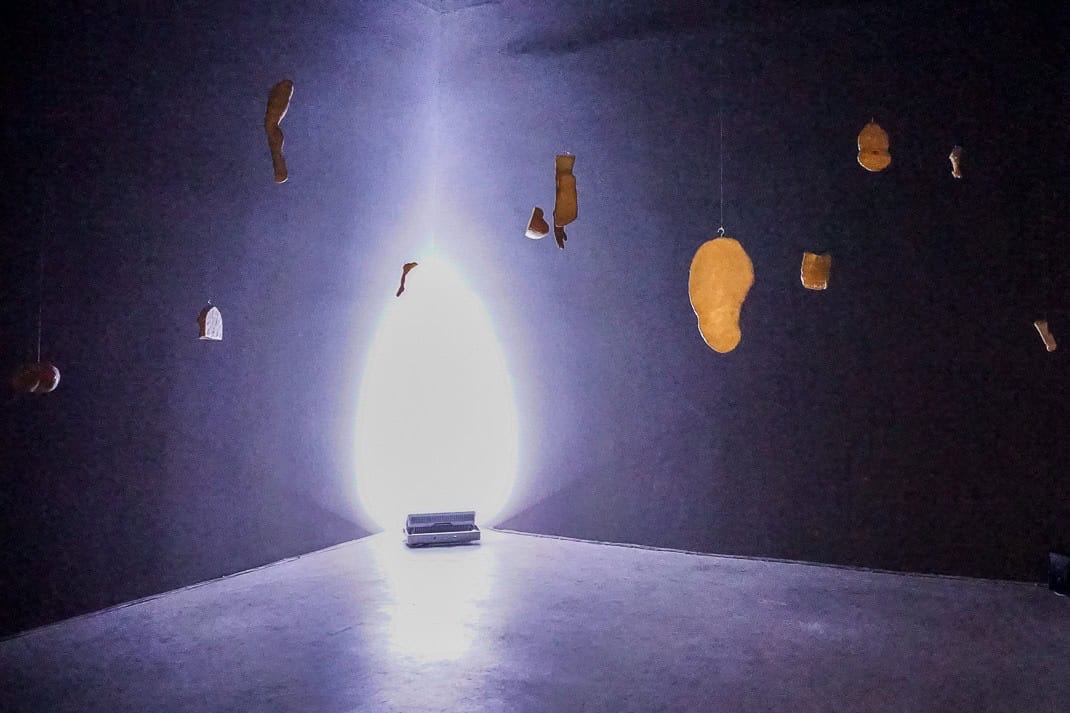
It showed before and after pictures of Gaza, from nice villages and seashores to rubble and flattened lots. A three-panel display has photos and descriptions of 50 separate Palestinian villages. Another has dozens of artificial body parts hanging by strings from the ceiling representing the death and dismemberment during the war.
It has light illustrations on the floor showing the architectural additions, over a period of 1,000 years, to the beautiful 1,400-year-old Great Mosque of Gaza, most of which the Israelis destroyed.
Turin has always been a center of independence and resistance. It’s here where Turin’s own Count Camillo Benso di Cavour, the prime minister of Italy’s ruling Savoy monarchy, turned Italy from a collection of city states into a united country in 1861.
Turin was its first capital for four years before moving to Florence then to Rome in 1871.
In the early 20th century, Turin became one of Italy’s leading industrial centers with the growth of Fiat. The company moved 100,000 workers from Southern Italy to work in its factories, eventually leading to one of the strongest labor unions in Europe in the 1960s and ‘70s.
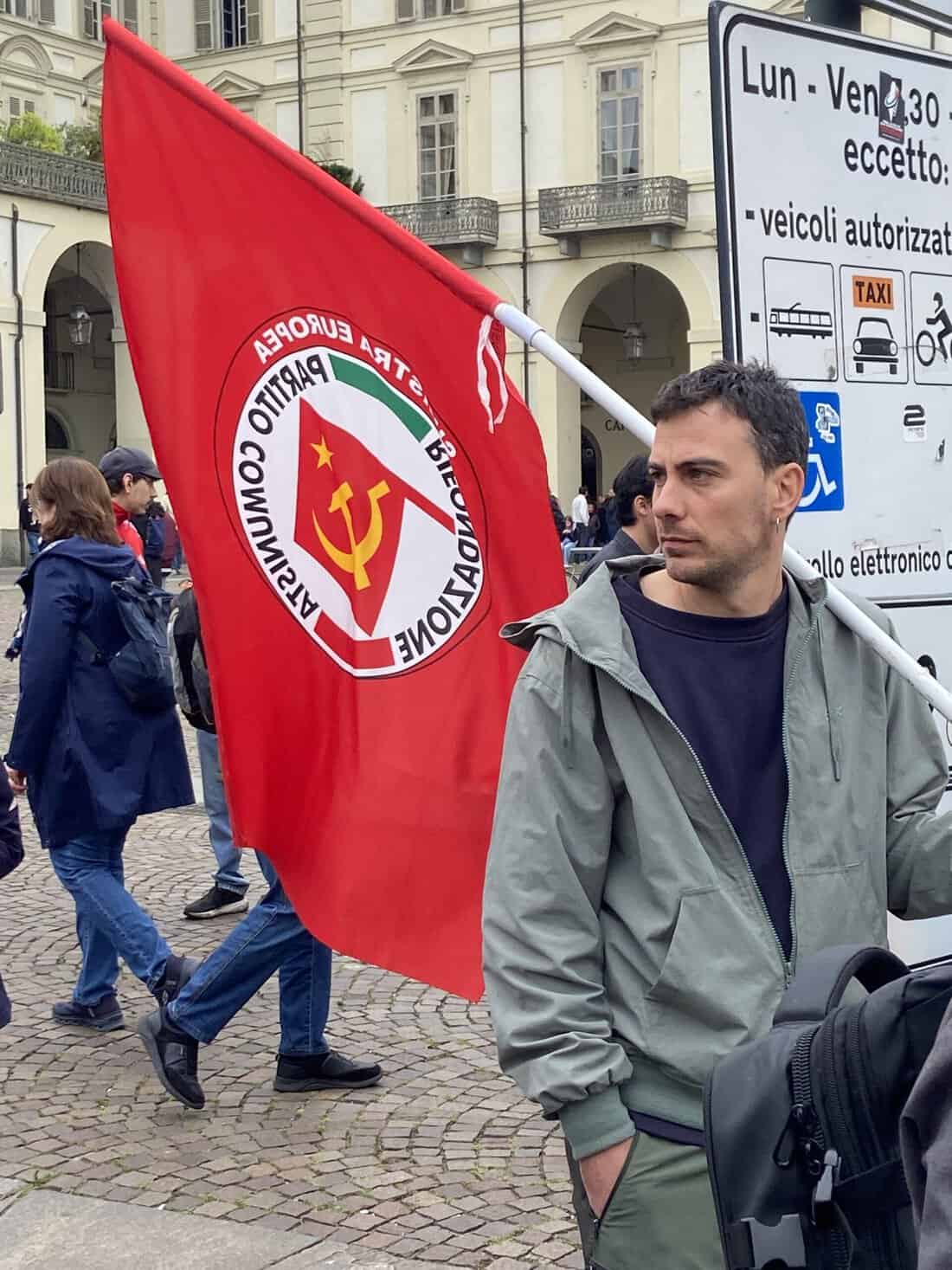
Through a politically active working class and student activism, the radical far-left Red Brigades militant organization made Turin a stronghold. While its leanings toward a communist system – not to mention the kidnapping and murder of Italy prime minister Aldo Moro in 1978 – turned off most Italians, the Red Brigades strengthened Turin’s reputation as a bastion for liberalism.
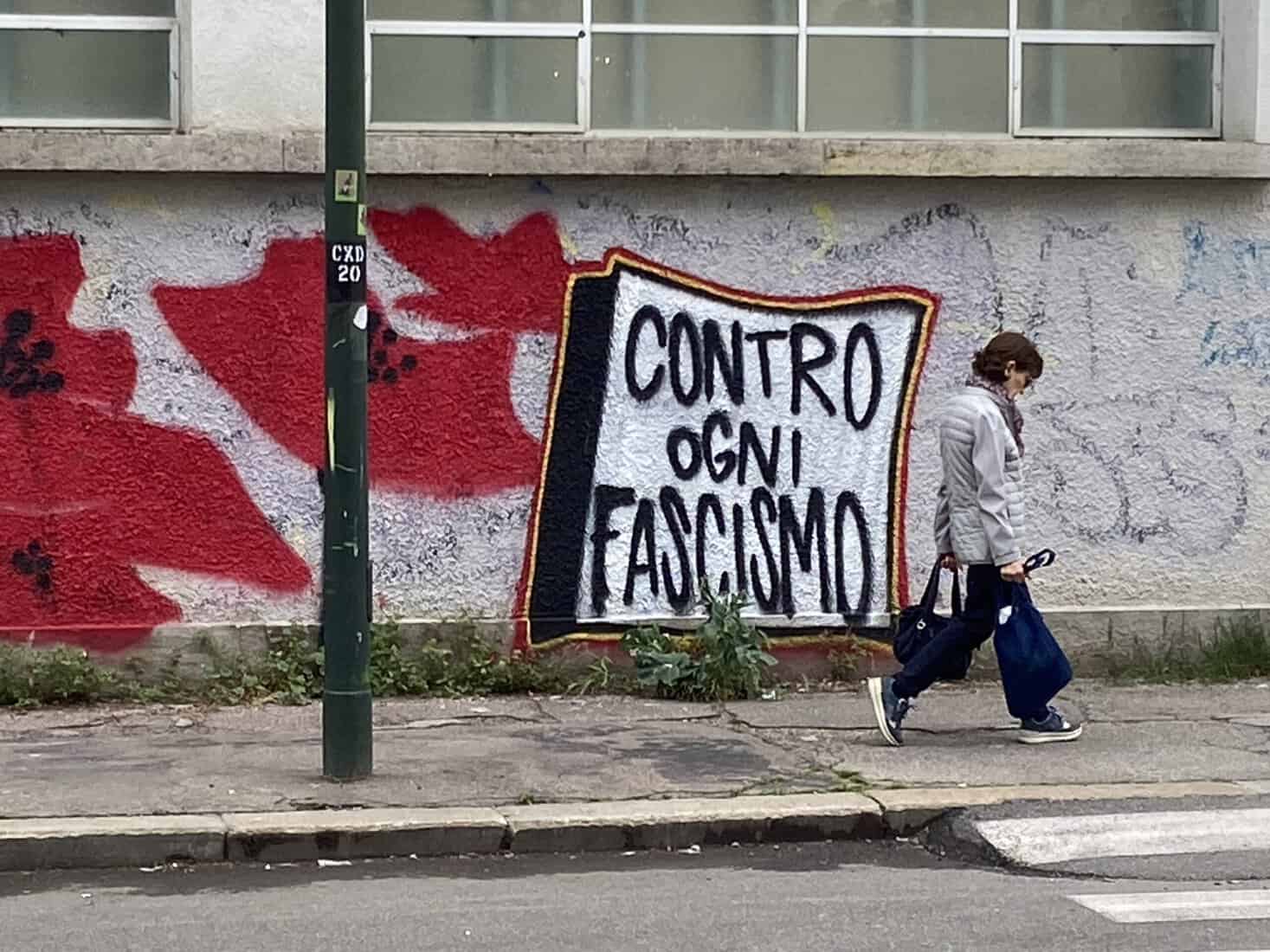
We saw it everywhere. In the Ancient Roman Parco Archeologico near Piazza Castello, lesbian couples canoodled in the open. African refugees were common sights. Political graffiti decorated walls. “CONTRO OGNI FASCISMO (AGAINST ALL FASCISM)” read one. “LOTTA E RESISTI (FIGHT AND RESIST)” read another.
This is an educated population. Bookstores are all over Turin. The University of Turin, founded in 1404, is one of the oldest universities in Europe.
I feel comfortable when I see a city with many bookstores. I feel comfortable in Turin. As British philosopher John Stuart Mill wrote in 1861, “The worth of a state, in the long run, is the worth of the individuals composing it.”
Shroud of Turin
For travelers into must sees, I’d give Turin three: One, Mole Antonelliana is Turin’s landmark: a 167-meter skyscraping needle topping Italy’s spectacular national cinema museum; two, the Museo Egizio, the greatest collection of Egyptian treasure outside Cairo; three, Palazzo Reale.
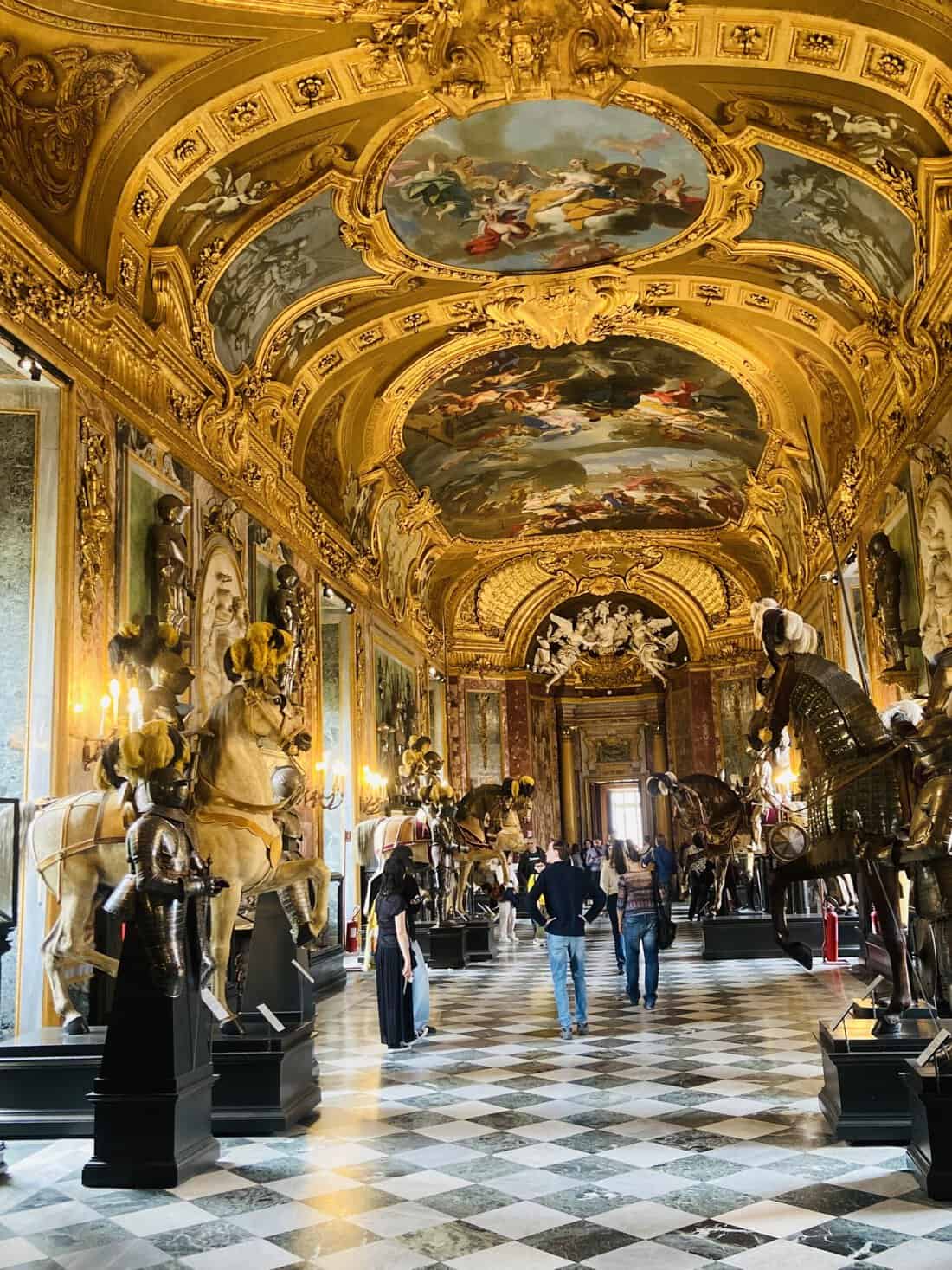
Marina and I had both been to the Mole and the Egizio but I was too busy working in the past to visit Palazzo Reale. It was built for Carlo Emanuele II, the Duke of Savoy, in 1646 and is a collection of some of Europe’s most jaw-dropping rooms and hand-carved ceilings.
It features a throne room with a high chair behind a gold, carved rail. Paintings depict the Savoy family’s military victories. A massive armory is filled with suits of armor and enough knives and swords to defeat the German army.
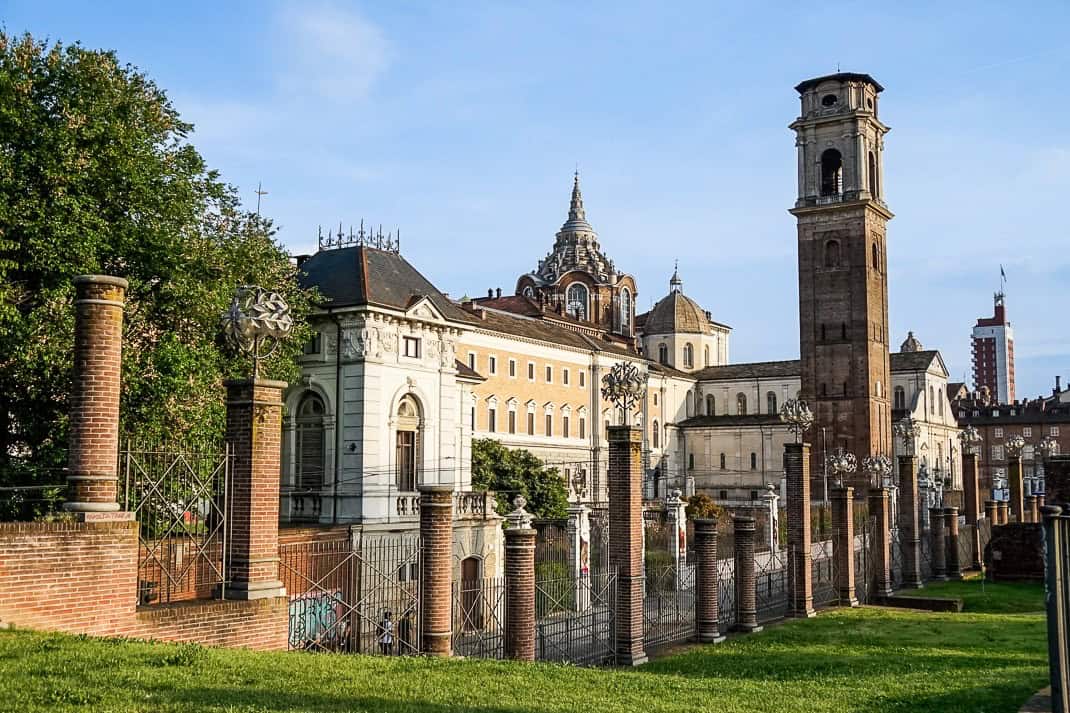
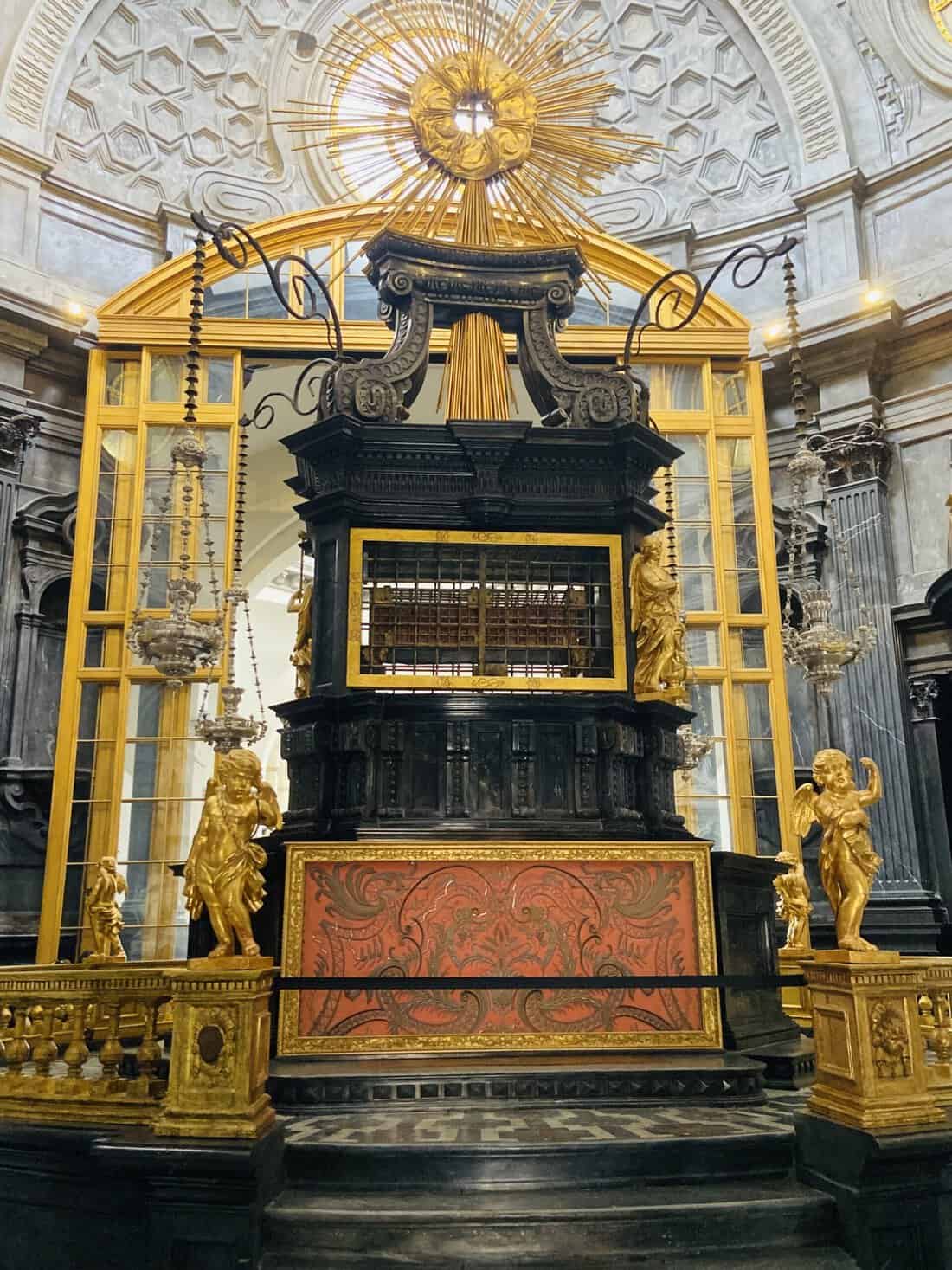
One of its highlights is what draws many pilgrims to Turin. The Chapel of the Shroud is a huge, domed room that once housed the Shroud of Turin, the linen cloth that Christians believe housed Jesus Christ after he was pulled from the cross.
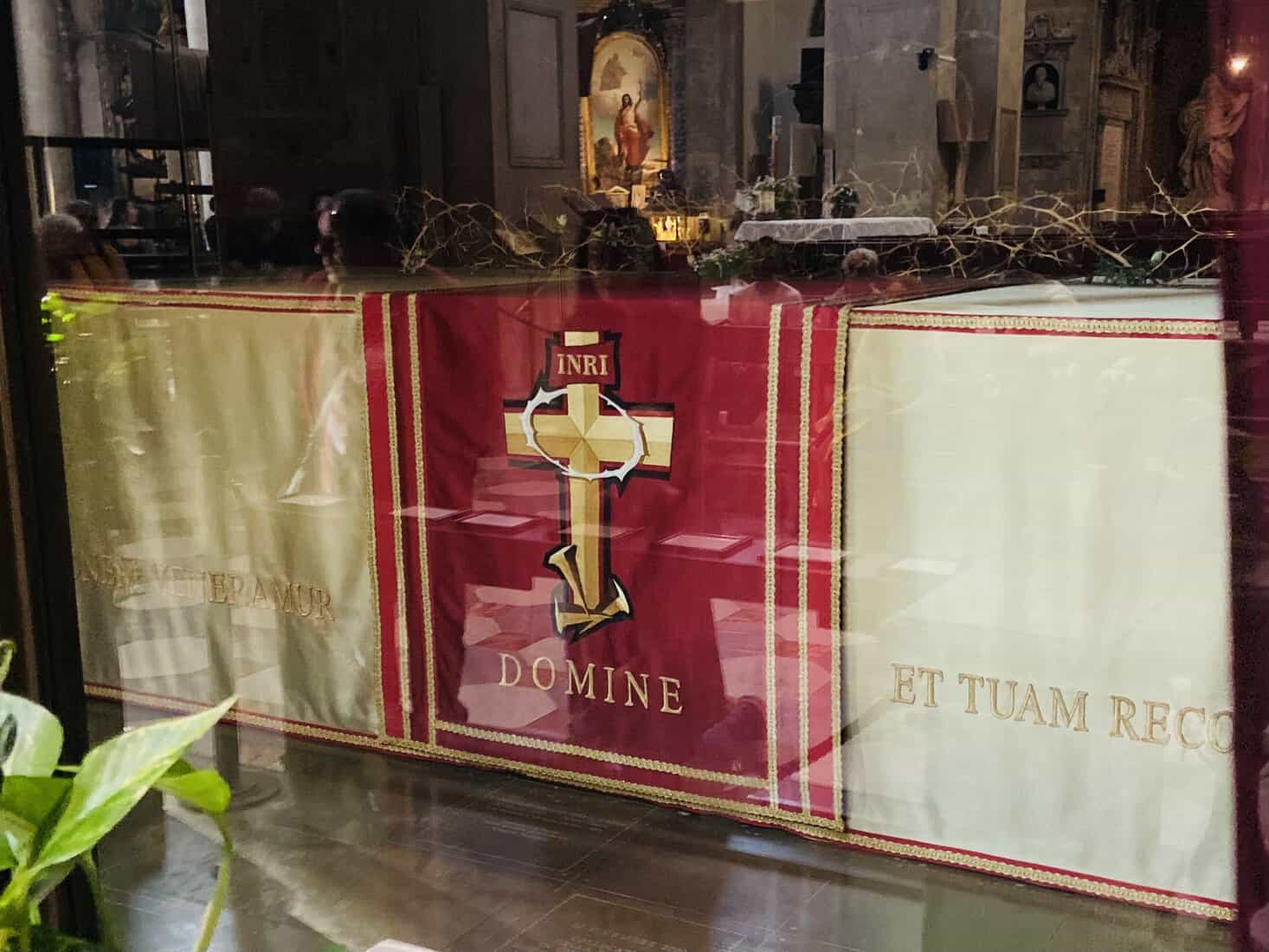
A fire in 1997 moved the Shroud to the nearby 15th century Cattedrale di San Giovanni Battista. In the church is a video showing spots on the Shroud that many say show signs of nails, blood and whippings. It is stored in a long climate-controlled case draped with the banner showing a cross, nails and a wreath of thorns.
However, Jesus makes about as many public appearances as the Shroud does. The last time it came out for public viewing was 2015 for a youth pilgrimage event.
I saw a glimpse of the case – just before the church closed the drapes for the day. If this was in Rome, I wouldn’t be able to get within 50 feet of it.
I looked around.
Next to me were only 10 other people.
Food
I remember during the Olympics dining with an American foreign correspondent in Cairo who wondered why Turin menus were so meat oriented. “Where’s the pasta?” she said. “This is Italy.”
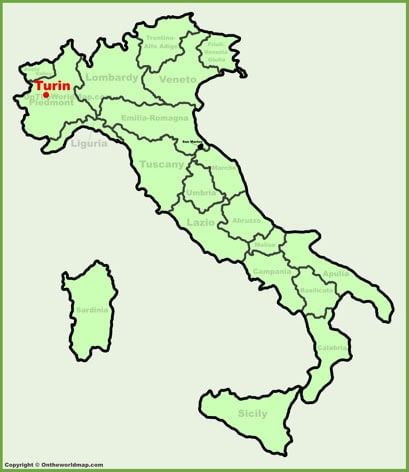
Look at the above map and Turin is closer to France than it is any other Italian city. Only 35 miles (60 kilometers) from the French border, Turin’s Piedmont regional cuisine uses more butter than olive oil. The dishes feature thick creams with fattier cheeses and game birds such as pigeon, turkey, geese and guinea fowl.
It’s Italian mountain comfort food. Then again, any food tastes great with a glass of Piedmont’s trademark Barolo, my favorite wine in the world.
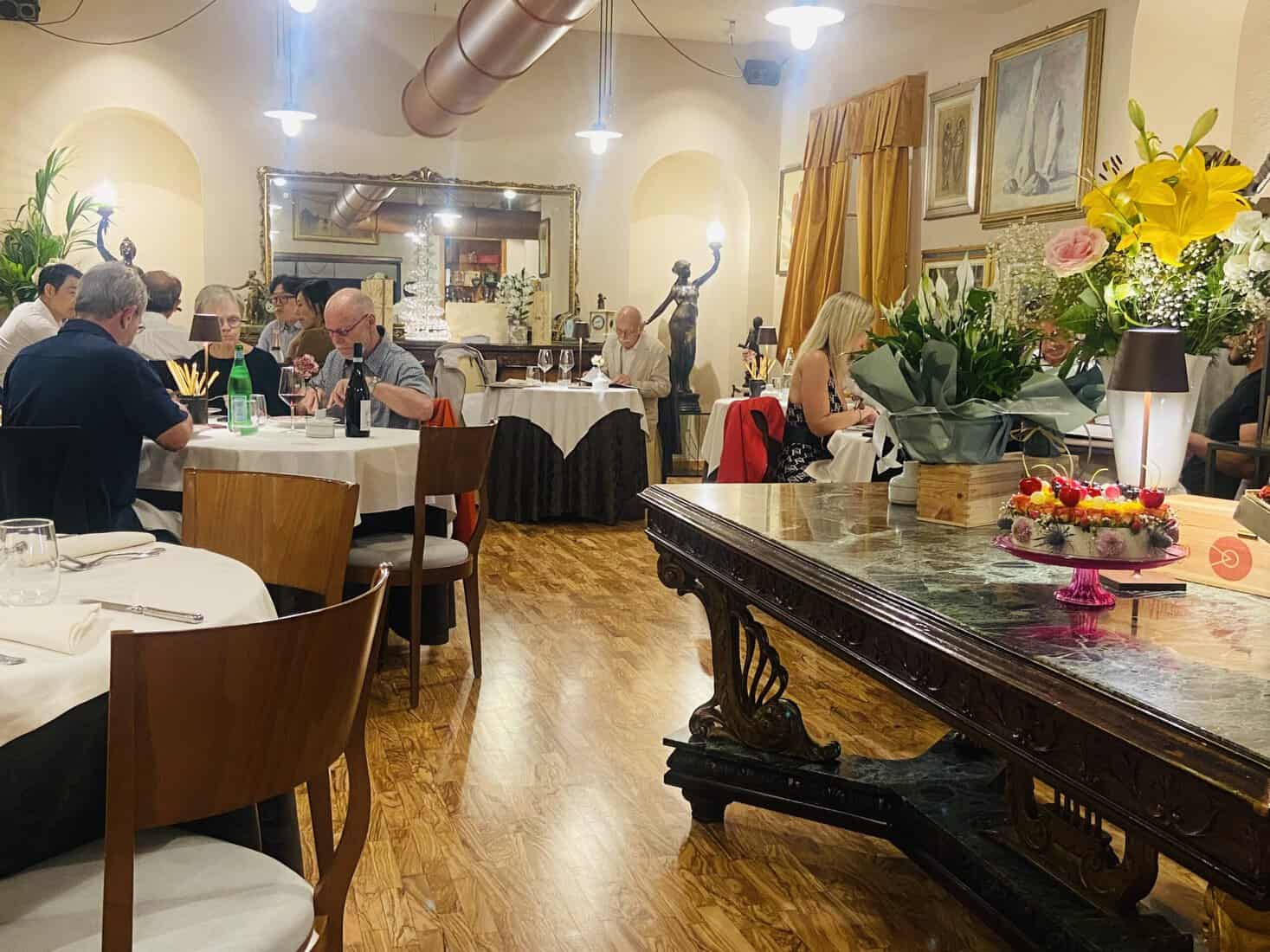
Our first night, tired from the five-hour train ride from Rome, we took our hotel’s advice and went around the corner to Giovanni, a dull name for a spectacular restaurant. The 50-year-old Turin institution is elegantly decorated in white tablecloths and little table lamps. American love songs fill the air.
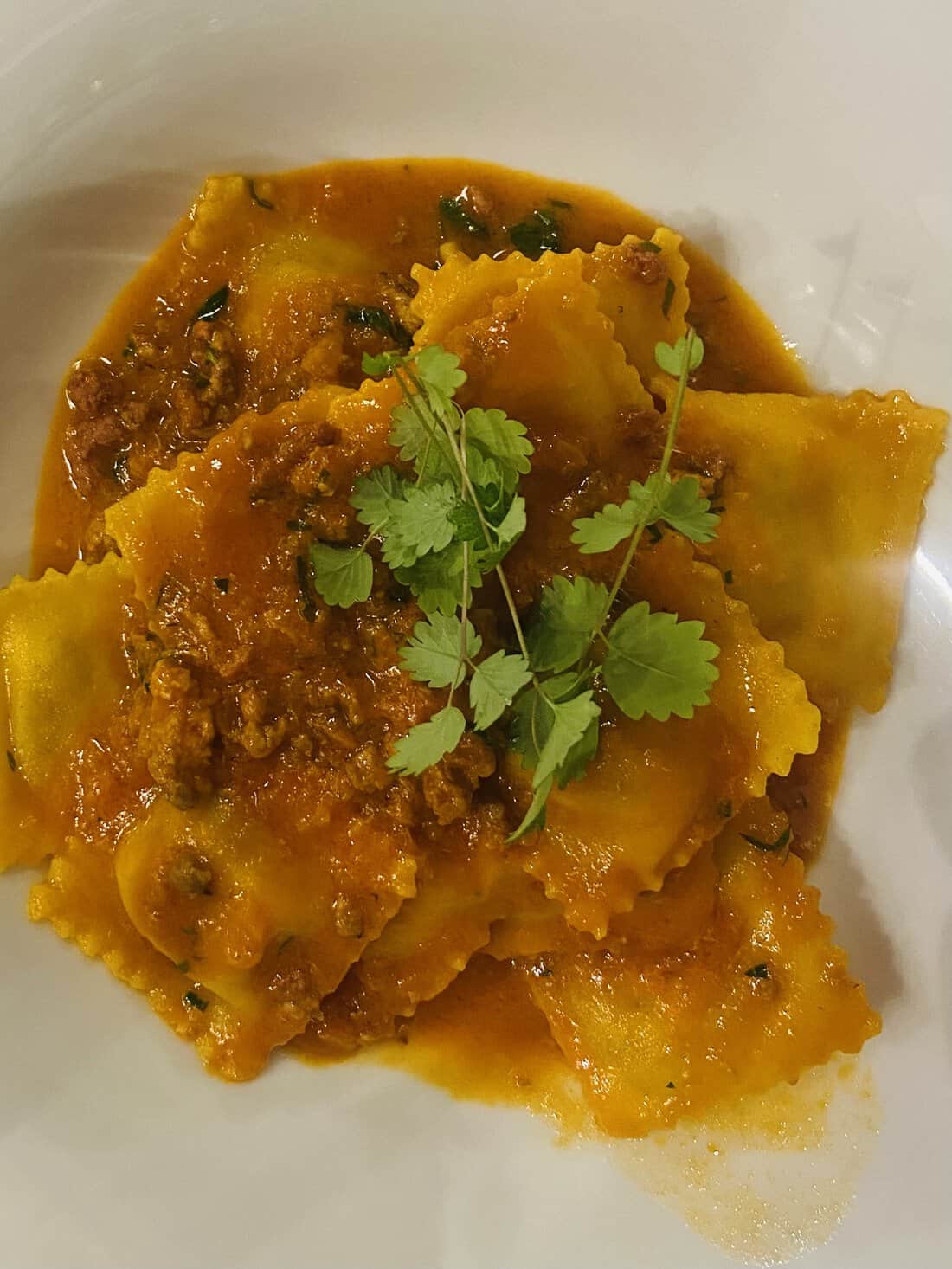
Marina had the caponet di verza con battuta di salsiccia, ground pork sausage mixed with cheese in a reduction of Barbera wine and red fruits. I had the agnoletti, Piedmont’s small ravioli stuffed with roasted meat and covered in meat sauce.
I didn’t miss Rome’s pasta carbonara one bit.
On our last night, I took her to Porta di Savona, where my Denver Post colleagues and I dined during the Olympics. In a house built in 1830 on Piazza Vittorio Veneto, with oil paintings and black and white photos of old Turin, it was like stepping into the 19th century.
I tried another Piedmont specialty: fondue. But in the dish they call novarese, the fondue isn’t a giant dip. It’s melted gorgonzola cheese covering a big, round chunk of breaded veal.
Mediterranean Diet this is not.
May Day gets crazy
Waiting for our train home, we went to Caffé Fiorio. Founded in 1780 near Piazza Castello, Fiorio has all the original plush red furnishings from when Nietzsche hung out here babbling about creeping fascism.
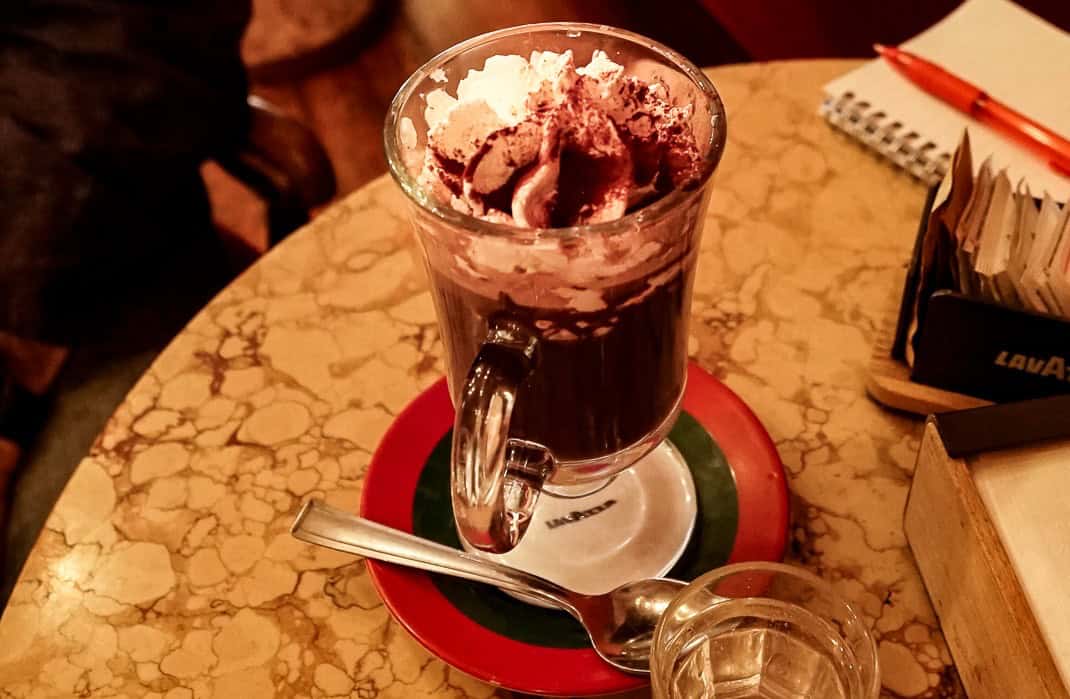
Fiorio is famous for the bicerin, meaning “small glass” in Piedmontese dialect. Invented in the 18th century, it’s a dangerously addicting hot-chocolate drink made from a mix of espresso, hot chocolate and cream topped with a generous pile of whipped cream.
We left before events not far away made news we read about on the train home. About 1,000 marchers broke from the May Day parade and went to the nearby Askatasuna social center, a meeting place for political strategies and events for 30 years until the city evicted it in December.
Shielded police were waiting. Protesters clubbed the shields and sprayed officers and soldiers with canisters. The police charged them with a water cannon.
In some ways, Turin hasn’t changed much. As a man yelled into a microphone before storming toward Askatasuna, “This city has taught us so many things over the years. This city has taught us that injustices should not be ignored.”
If you’re thinking of going …
How to get there: Direct trains leave all day from Milan, 80 miles (125 kilometers) to the east. The 50-minute one-way journey costs €25.90 on TrenItalia. From Rome, the five-hour trip was €153.80 for two round-trip tickets on Italo.
Where to stay: Best Western Hotel Luxor, Corso Stati Uniti 7, 39-011-562-0777, https://www.hoteluxor.it, luxor.to@bestwestern.it. A standard chain hotel five minutes from the train station on a quiet street with big rooms and helpful staff. I paid €396 for three nights including an excellent buffet breakfast.
Where to eat: Giovanni, Via Gioberti 24, 39-011-539-842, www.ristorantegiovanni.it, info@ristorantegiovanni.it, 12:30-2:30 p.m., 7:30-10:30 p.m. Monday-Friday, 12:30-2:30 p.m., 7:30-11 p.m. Saturday. High-end, romantic 50-year-old restaurant with seafood dishes starting at €22 and meat dishes at €18. I paid €95 for two including wine and dessert.
When to go: Repeating myself, do not travel anywhere in Italy in July and August. It’s hot and crowded, even in Turin. Winter months are in the 40s with occasional snow. Spring and fall are in the 60s and 70s. In the last week of April, we had temps in the 60s with gray skies and no rain.
For more information: Turismo Torino e Provincia, Piazza Carlo Felice, 39-011-53-5181, www.turismotorino.org, contact@turismotorino.org., 10 a.m.-4 p.m.