


Vietnam: Red flags, open markets and a tourism boom
(This is the first of a five-part series on Vietnam.)
HANOI, Vietnam – Walking the streets of Hanoi, your senses are bombarded with a meteor shower of urban chaos. The continuous, slithering snake of rushing cars and motorbikes makes jaywalking only appropriate for death wishes. People spill out of coffee shops onto sidewalks barely wide enough for a cup and saucer. Nail salons. Beer bars. Noodle shops.
After a while in Vietnam’s capital, it becomes a blur. I became desensitized, filtering out the noise and honing my focus, whether it was another great restaurant, fascinating museum or cheap taxi.
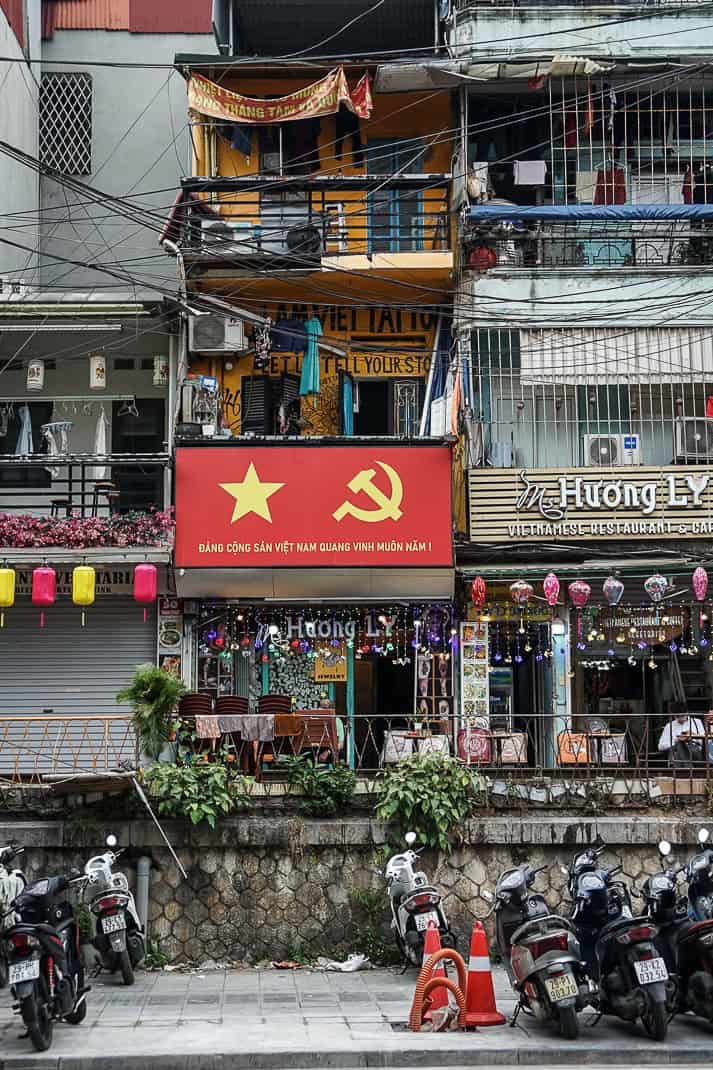
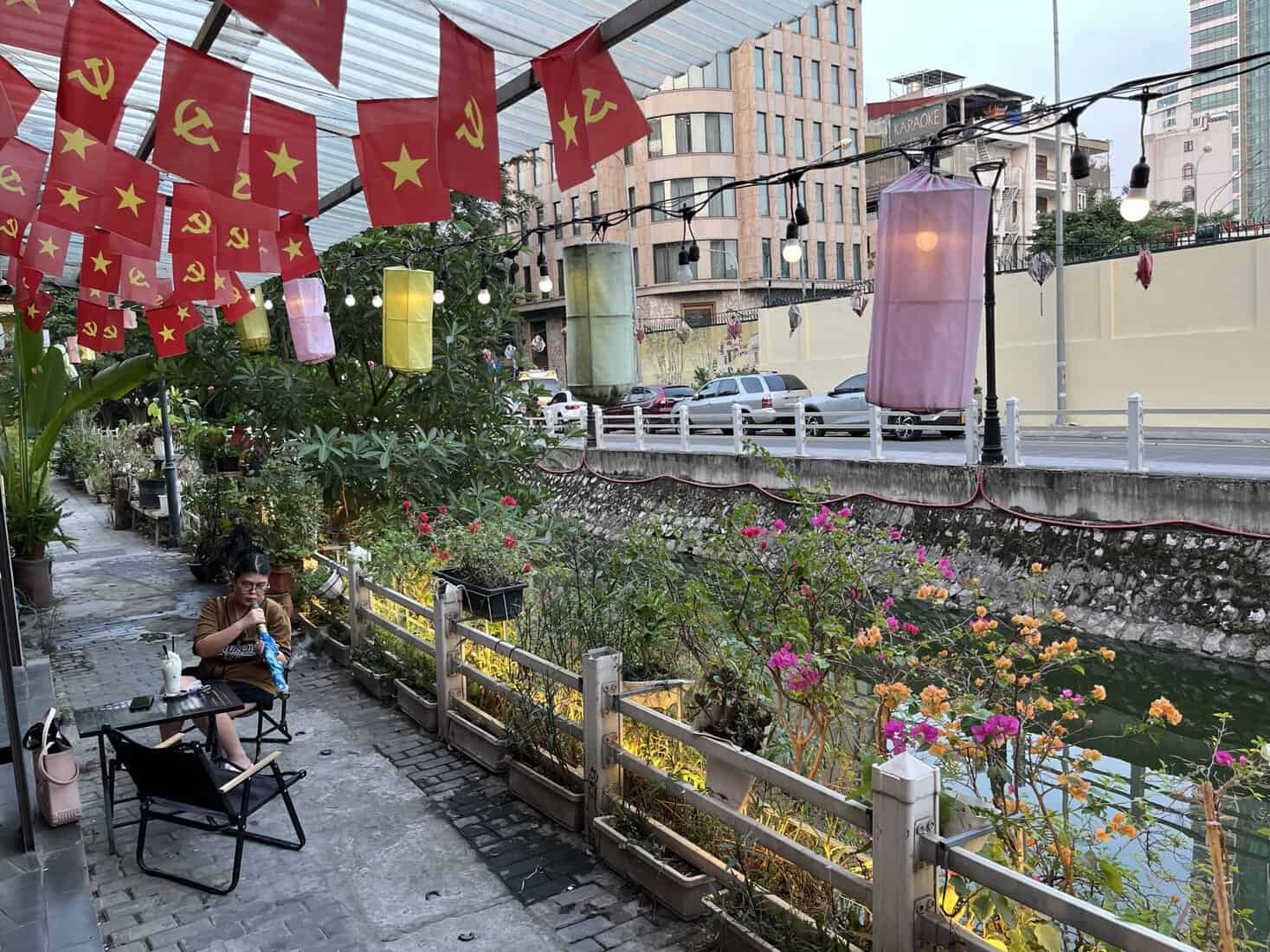
But one visual always made me stop. It stood out like neon, and the colors were just as bright. Nearly everywhere I went in Hanoi, and elsewhere in Vietnam, over the street or a business I’d see long strings of red and yellow flags: Vietnam’s star of its national flag and the hammer and sickle of the Communist Party.
Then I’d go to Train Street, one of the world’s biggest tourist traps, and order a wildly overpriced €6 beer.
The dichotomy of traveling through Vietnam is one of the most confusing on the travel map. It’s where capitalism and communism, the two main ingredients of the Vietnam War, have become strange bedfellows.
I’d often see the two side by side, like a hooker and nun sitting in a cafe together drinking Hanoi’s signature egg coffee.
Marina and I just spent two weeks in northern Vietnam. I thought my health-conscious Italian girlfriend would love Vietnamese cuisine. The fall avoids the sweltering summer heat that Vietnamese told me keeps even them inside. She’s a photographer, and she’d be like a little girl in a doll store in such a stunning country.
But I kept wondering: How in the world can a nation with a booming tourist industry, where barkers try luring us into their restaurants, where so many tour boats cause traffic jams at docks, call itself communist?
It’s like Karl Marx bragging about his chateau in the Alps.
“We are communists,” said Nguyen Tai Thinh, the general manager of our beautiful Aira Boutique Hotel in Hanoi, “and we always follow that.”
Hey, who am I to question Vietnam? Its GDP growth rate in 2025 was 8 percent. The government is shooting for 10 percent this year. The United States’ last year?
Signs of capitalism
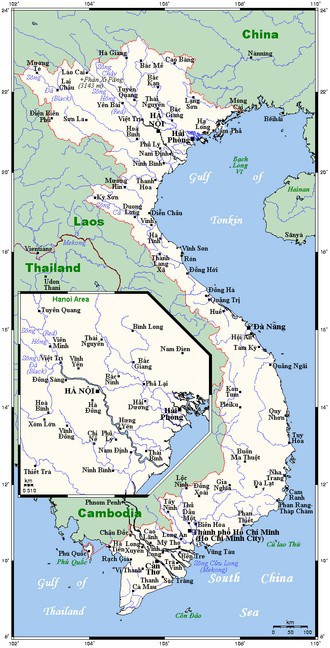
I’d been to Vietnam before. In 2005, I went to Ho Chi Minh City, formerly Saigon and the capital of the former South Vietnam. It was mainly a layover for a small motorboat I took up the Mekong River into Cambodia and I only stayed in Vietnam a few days. But it was enough to see capitalism digging its claws in Vietnam’s communist soil.
I saw skyscrapers, foo-foo restaurants, shopping malls, advertising. Sure, South Vietnam was the capitalist foil to North Vietnam’s communism. But the war ended in 1975. Vietnam had been a communist country for 30 years. Where was the gray? The government housing? The frowns?
In 2005, Vietnam was racing toward capitalism. In 2026, one year after the 50-year celebration of the end of what the Vietnamese call the American War, capitalism has made Vietnam the 10th fastest growing economy in the world.
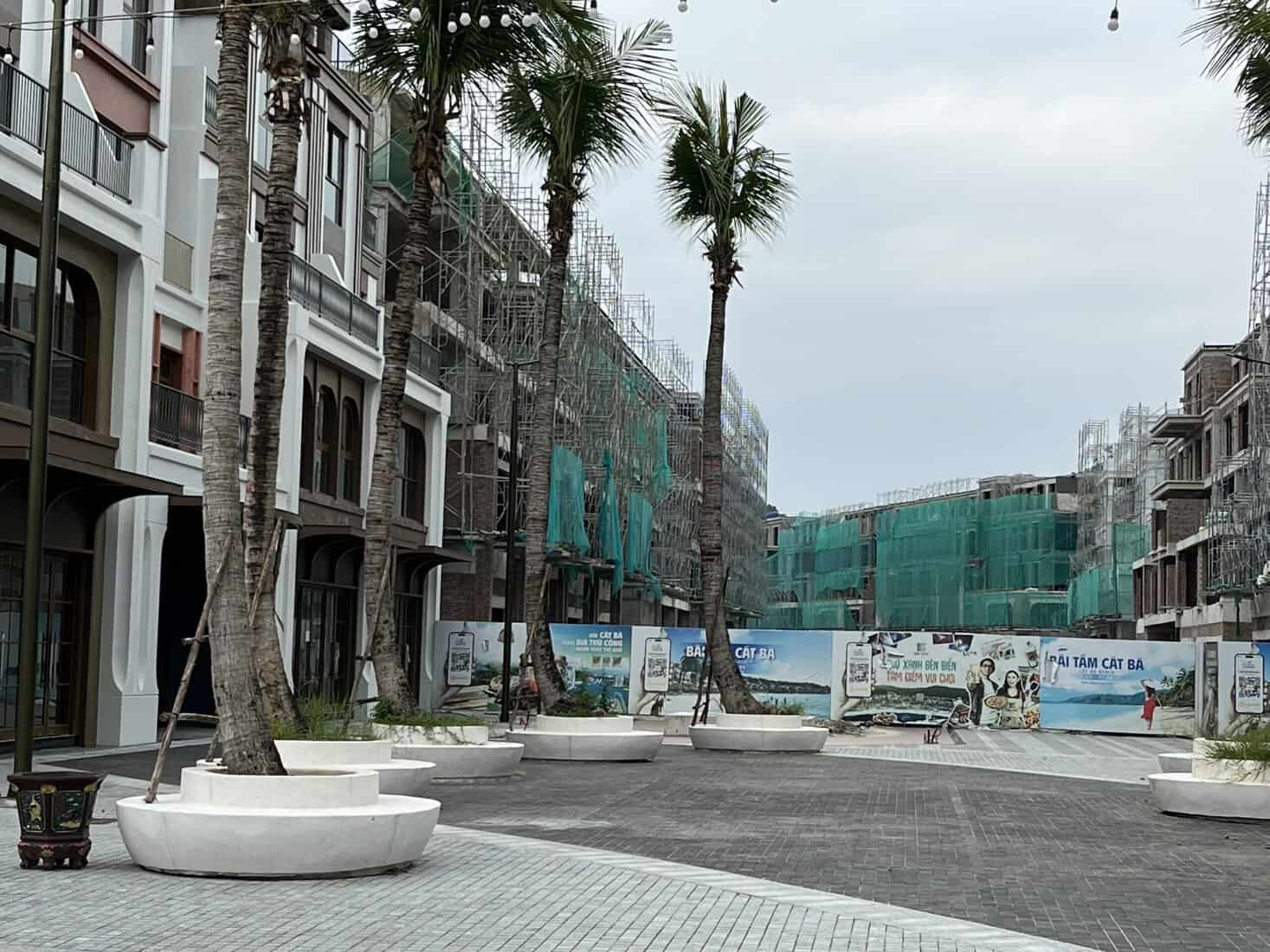
Everywhere I went I saw indications. In the coastal town of Cat Ba, I walked under cranes dominating the skyline over the numerous foundations of new apartment houses. We ate at one of Hanoi’s four Michelin-star restaurants. I stopped counting all the art stores where I pored over local artists’ beautiful tapestries.
All three hotels we stayed in had been built in the last eight years. We never ate at a restaurant that was open during the war. I had two beers at Pasteur Street Craft Beer bar, run by American entrepreneur Tom Duncan, who has three branches in Hanoi and 15 in Ho Chi Minh City.
“As long as we follow the rules carefully,” Nguyen said, “we can do anything.”
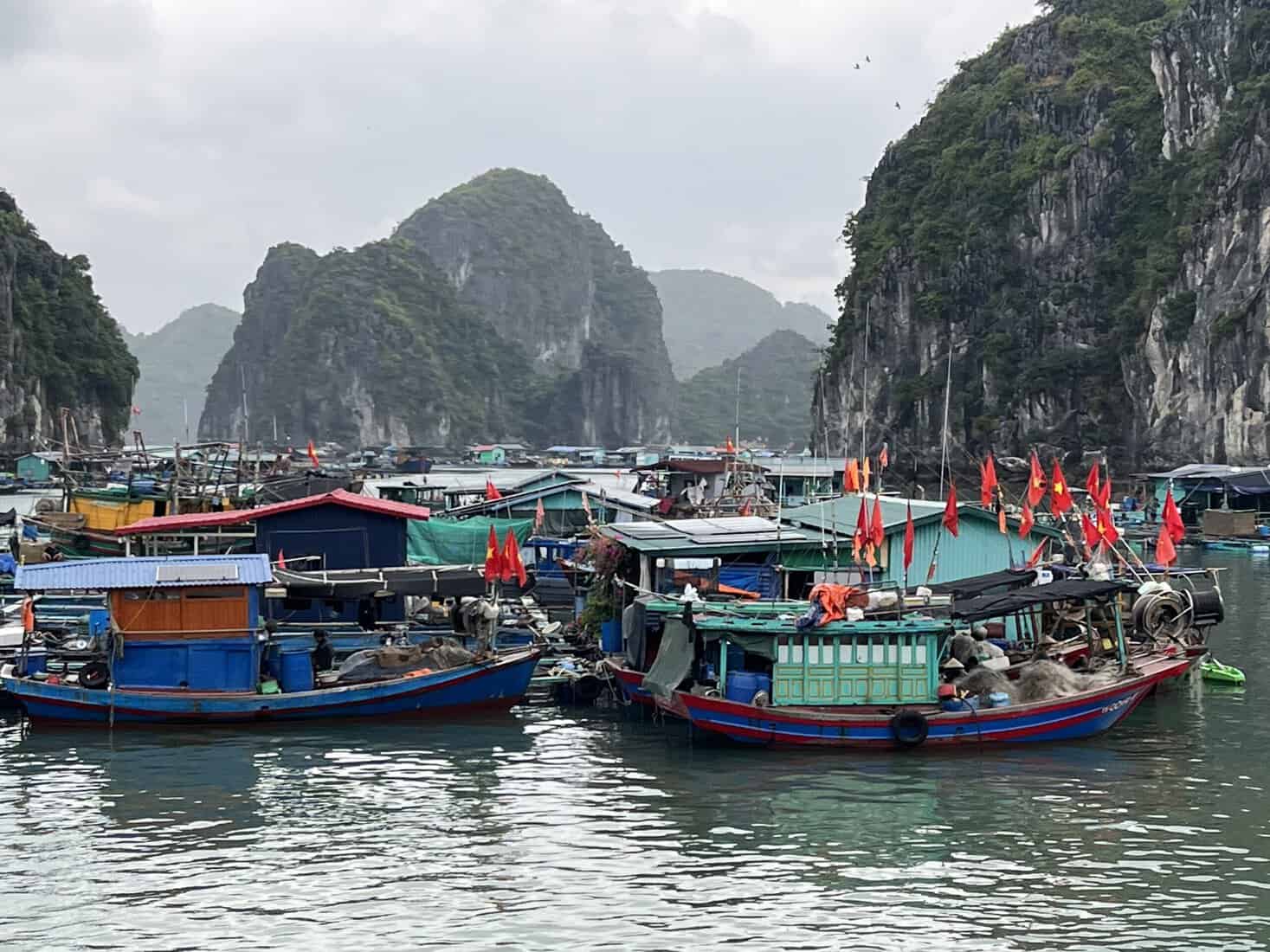
Advice to the Vietnam government: Apply some brakes. Rules? In places, it appears capitalism has run amok. Hidden not so subtly behind Vietnam’s beauty, charm and tastes are some teeming tourist traps.
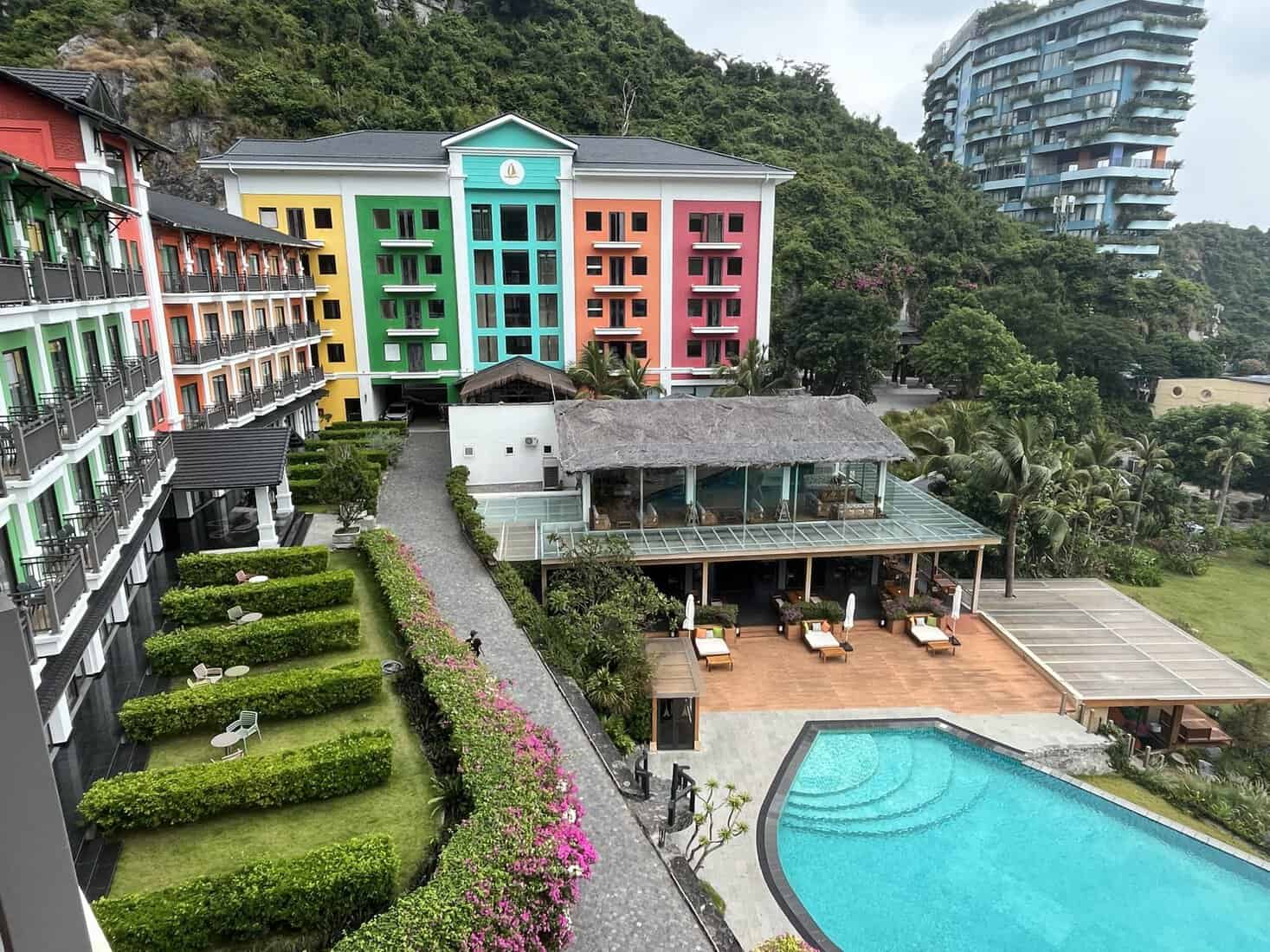
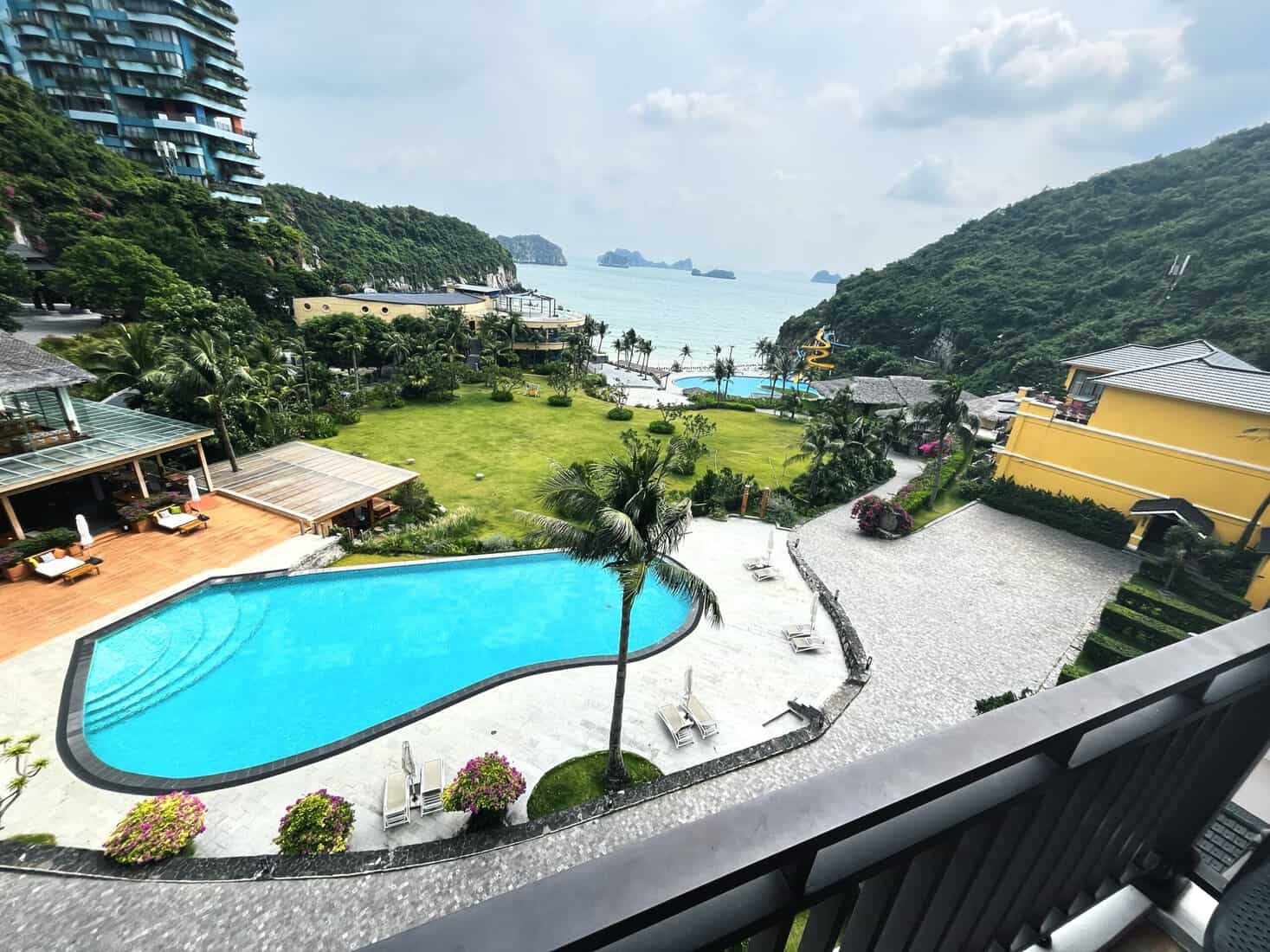
The main drag in Cat Ba, a town of 12,000 on the Gulf of Tonkin, is a backpacker’s ghetto. It’s one long line of cheap restaurants serving Western food right along with Vietnamese. We checked into our lovely five-star May Legend resort, complete with two swimming pools, spa and spectacular beach void of pebbles and lounge chairs.
We cruised the strip and stepped into The One Hostel. It was all young Westerners on the patio drinking cheap beer and listening to rock music. A stage with a giant sign read “I (heart) Cat Ba” in neon.
Scores of restaurants were filled with only Westerners without a Vietnamese in sight. It reminded me of Thailand in the ‘80s about the time the country’s main islands lost their soul.
I took a beautiful boat cruise around the Gulf of Tonkin’s Lan Ha Bay, a Cat Ba must-do. Motoring around the hundreds of tall rock formations sticking out of the calm, bathtub-warm water, it was hard to believe the Gulf of Tonkin was where the United States used a disputed second attack on American destroyers in 1964 to secure congressional authority for a major escalation of the Vietnam War.
When we returned to dock at 5 p.m., the flotilla of tourist boats disgorged as many travelers as a cruise ship.
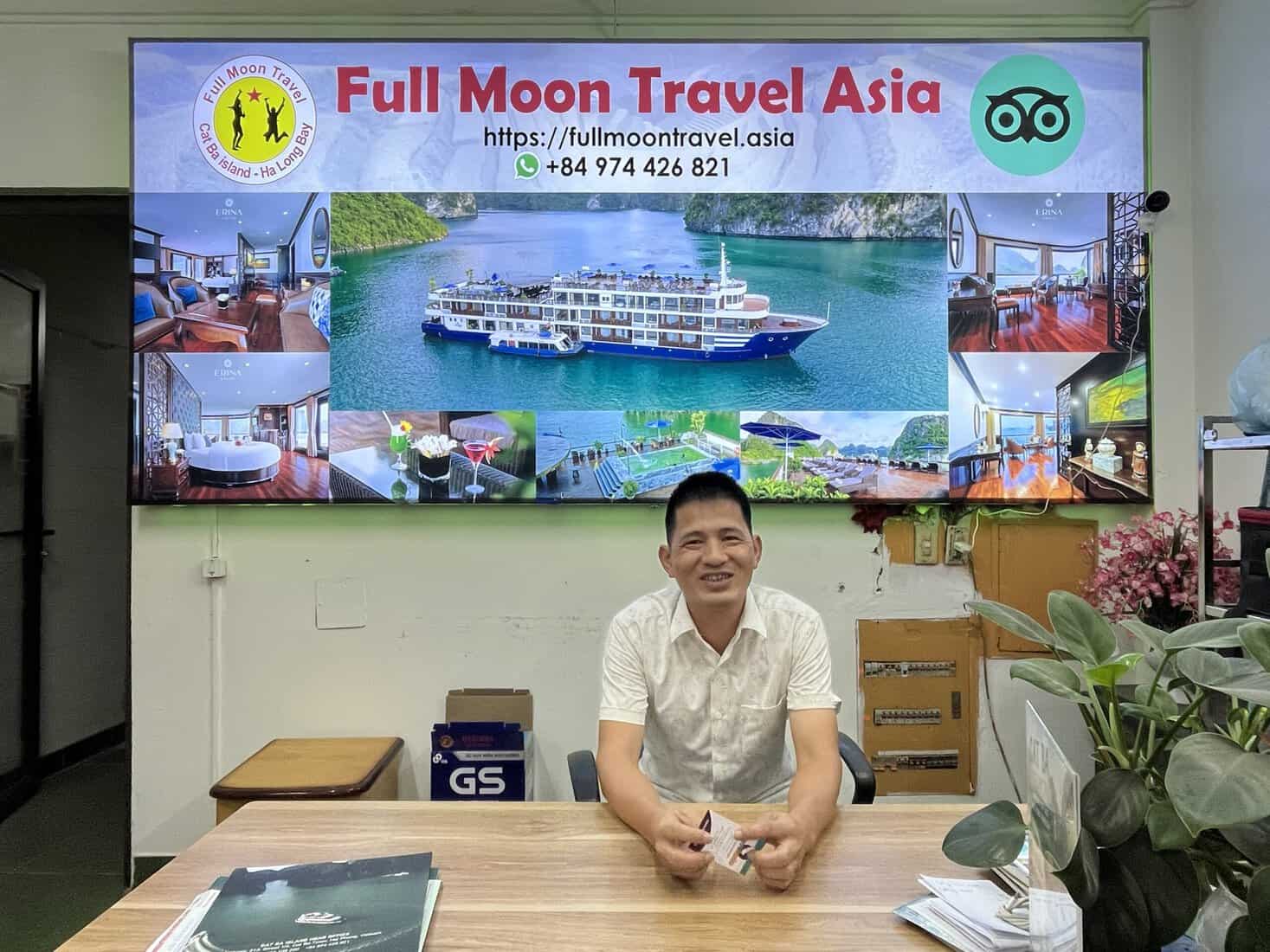
“The customer numbers are rising every year,” said Michael Hoai, 44, who has run Full Moon Travel Asia in Cat Ba for eight years. “Profits, of course are rising. But we pay more for taxes.”
Marina and I saw the same thing in Ninh Binh, an inland city known for its pagodas, ancient capital and river cruises past towering rock formations with killer views of the countryside.
But the village of Tam Coc, closest to the nature sites, is a long string of cheap restaurants and bars. We didn’t see a Vietnamese guest in any of them. Happy hours include beer for 10,000 dong (about 35 cents). We ate once next to a Vietnamese cook making pizza crusts.
This is not your father’s North Vietnam.
Then again …
If you go looking for Vietnam’s communist side, you can find it. In our case, it was right around the corner. Our Hanoi hotel was in Ba Dinh, a bustling, tree-lined neighborhood closely associated with Ho Chi Minh and Vietnam’s French colonial past.
Everywhere we walked we passed beautiful French Colonial architecture with iron balconies, graceful facades, shutters and ornate detailing. It’s all left from France’s brutal occupation of what they called French Indochina from 1887-1954 before Uncle Ho drove it out.
While Hanoi doesn’t have much of the coyote-ugly Soviet-style concrete architecture that remains in former East European capitals, it does have a communist presence.
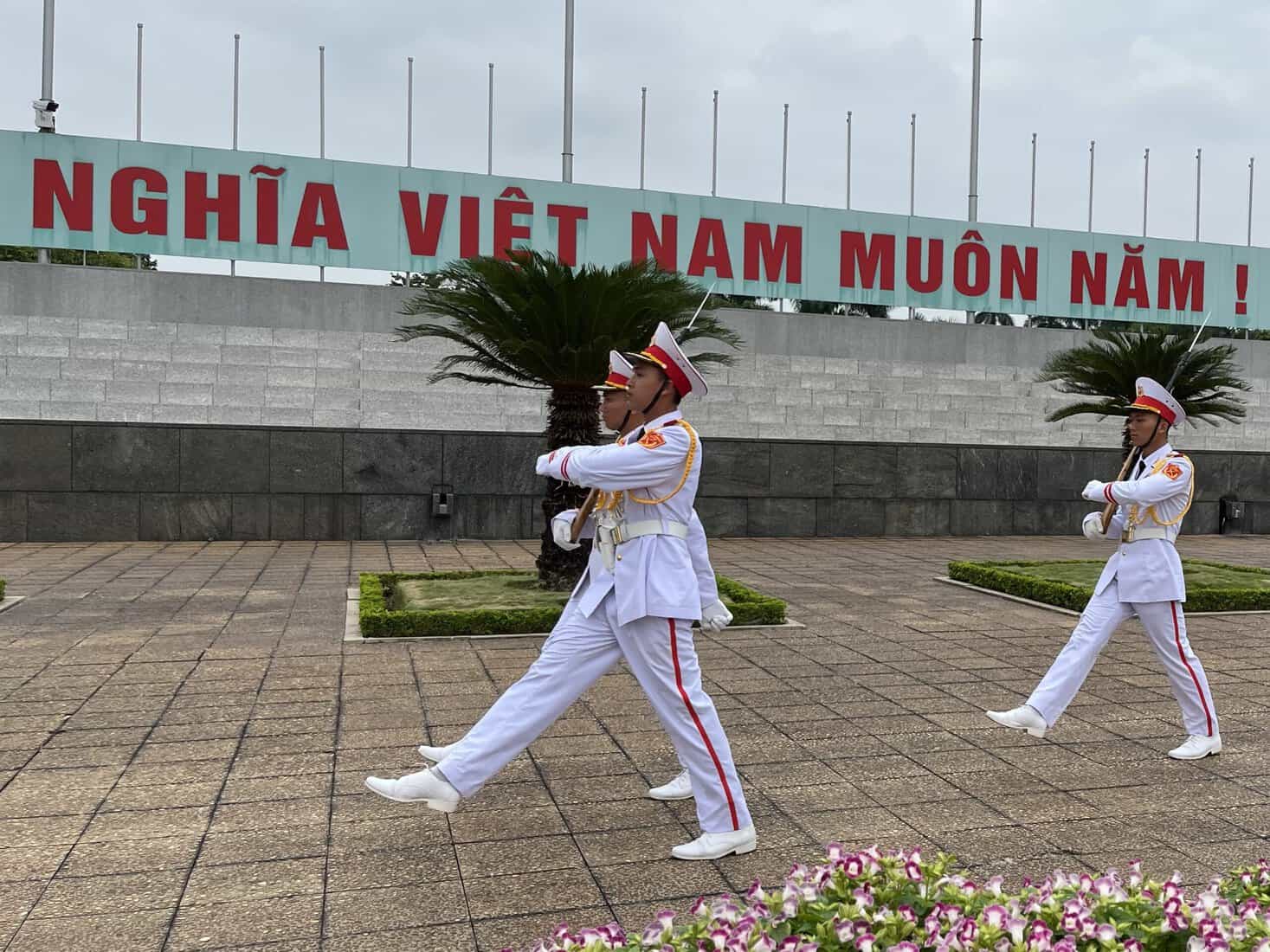
A Hanoi must-do is a visit to Uncle Ho. His mausoleum, museum, Presidential Palace and former home occupy a massive plot of land in the middle of Ba Dinh. To get there, we walked around the corner near our hotel past Vietnam’s Ministry of Defense.
It covers an entire city block. Its mustard-colored walls stood 10 feet high. Vietnam’s red star was everywhere. Peeking inside I could see some pretty palm trees. I also saw dozens of young guards in olive-colored uniforms and grim expressions.
Walking by numerous times over five days in Hanoi, sometimes I’d smile at them and say, “Xin chao (hello).” Sometimes they smiled back. Why not? They won the war.
Ho’s mausoleum dominates the landscape. Its towering gray granite edifice is surrounded by strong marble columns and the grounds cover 12,000 square meters, the size of two soccer fields. It was closed for renovation but 50 years after Vietnam’s victory and 57 years after his death in 1969, it’s clear how heavy Ho’s presence remains.
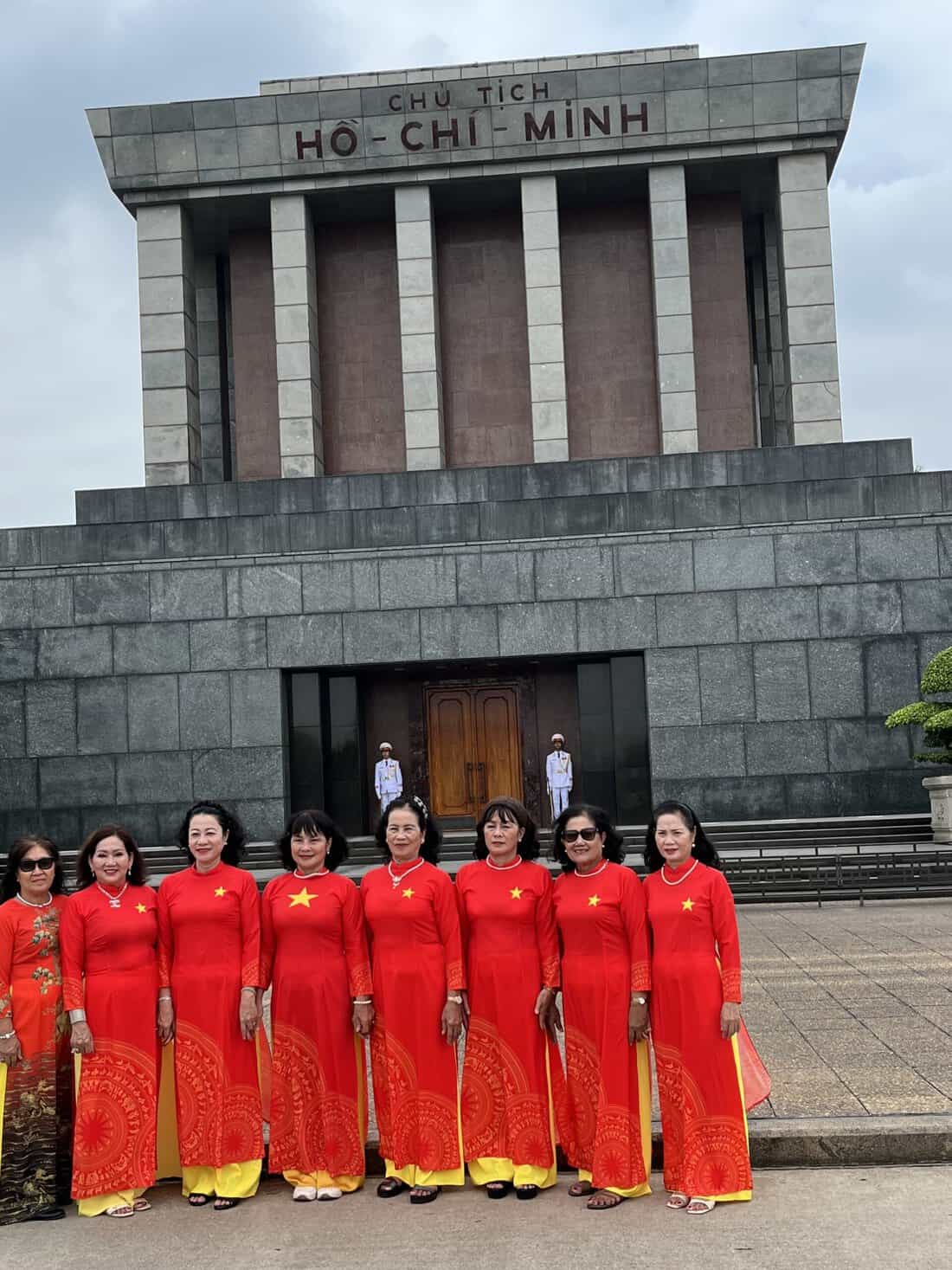
Vietnamese kneeled and prayed. A group of women came dressed in long red gowns with bright yellow stars. They looked like a parade of Vietnamese flags. Guards in spanking-white uniforms and bayoneted guns marched up and down in front of the entrance.
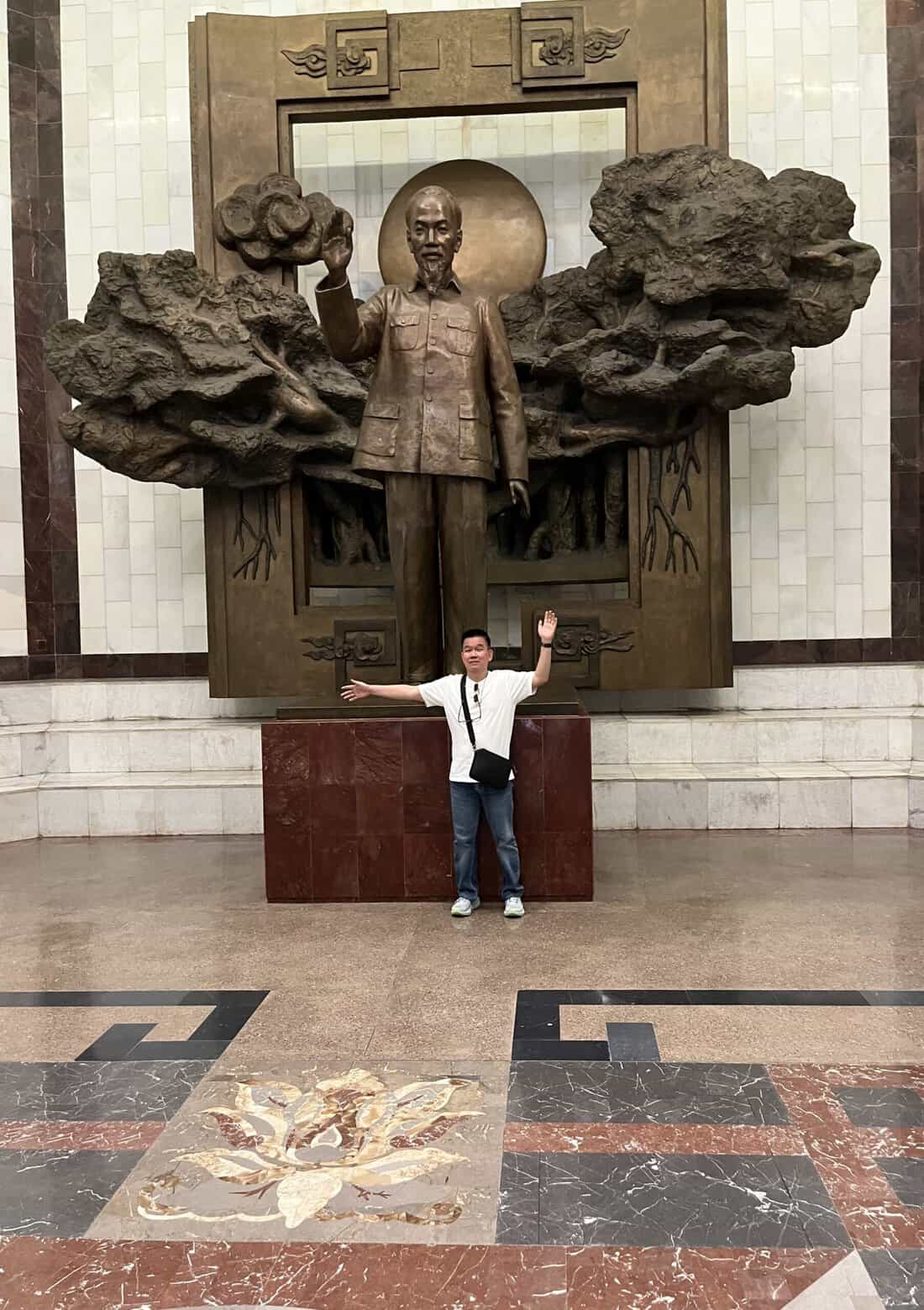
As soon as we walked into the nearby Ho Chi Minh Museum, we were greeted with a towering brass statue of Uncle Ho. His raised hand and subtle smile made him look like a favorite grandfather meeting his flock. Not far away was an exhibition filling a large room honoring Vladimir Lenin, whose writings greatly influenced Ho.
The museum was filled with reminders of Vietnam’s victory over the French and U.S. One photo showed Ho with Viet Cong soldiers over a caption reading, “President Ho Chi Minh with Southern heroes and brave fighters visiting the North. Feb. 2, 1969.”
On the other side of our hotel lies Hoa Lo Prison. Nicknamed the Hanoi Hilton by American prisoners of war who stayed there, it’s where presidential candidate John McCain spent his first two months before spending five years at the Plantation, a terrifying POW camp on Hanoi’s outskirts.
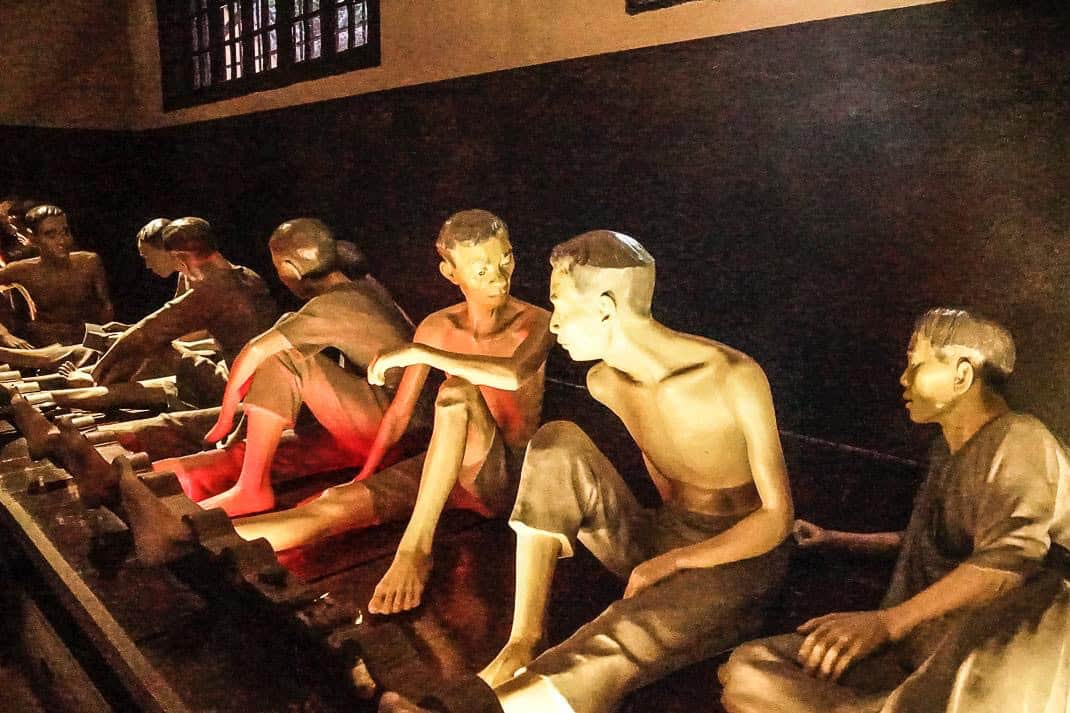
The Vietnamese government destroyed most of Hoa Lo in 1993-94. What remains is a testament to Vietnamese communism. The French built it in 1896 to keep the ornery Vietnamese in order, then the North Vietnamese used it for American POWs.
We saw sections of sewers prisoners escaped through. We saw photos of McCain visiting the prison in 2000 and with the Hanoi man who rescued him from pretty Truc Bach Lake after McCain’s plane was shot down in 1967.
The propaganda messages were ever present: “Americans waged war to destroy North Vietnam’s infrastructure.” Another next to a photo of the U.S. bombing Hanoi and Haiphong on April 16, 1972, a U.S. prisoner is quoted saying, “We, the Americans detained in Hanoi, could do nothing to help them because we were also under attack by this unjust act …”

On our train ride from Ninh Binh to Hanoi, in a comfy sleeper car, we saw giant red and yellow banners hanging in various towns. They read, “Long live the glorious Communist Party of Vietnam!” and “The Communist Party leads the nation toward victory!”
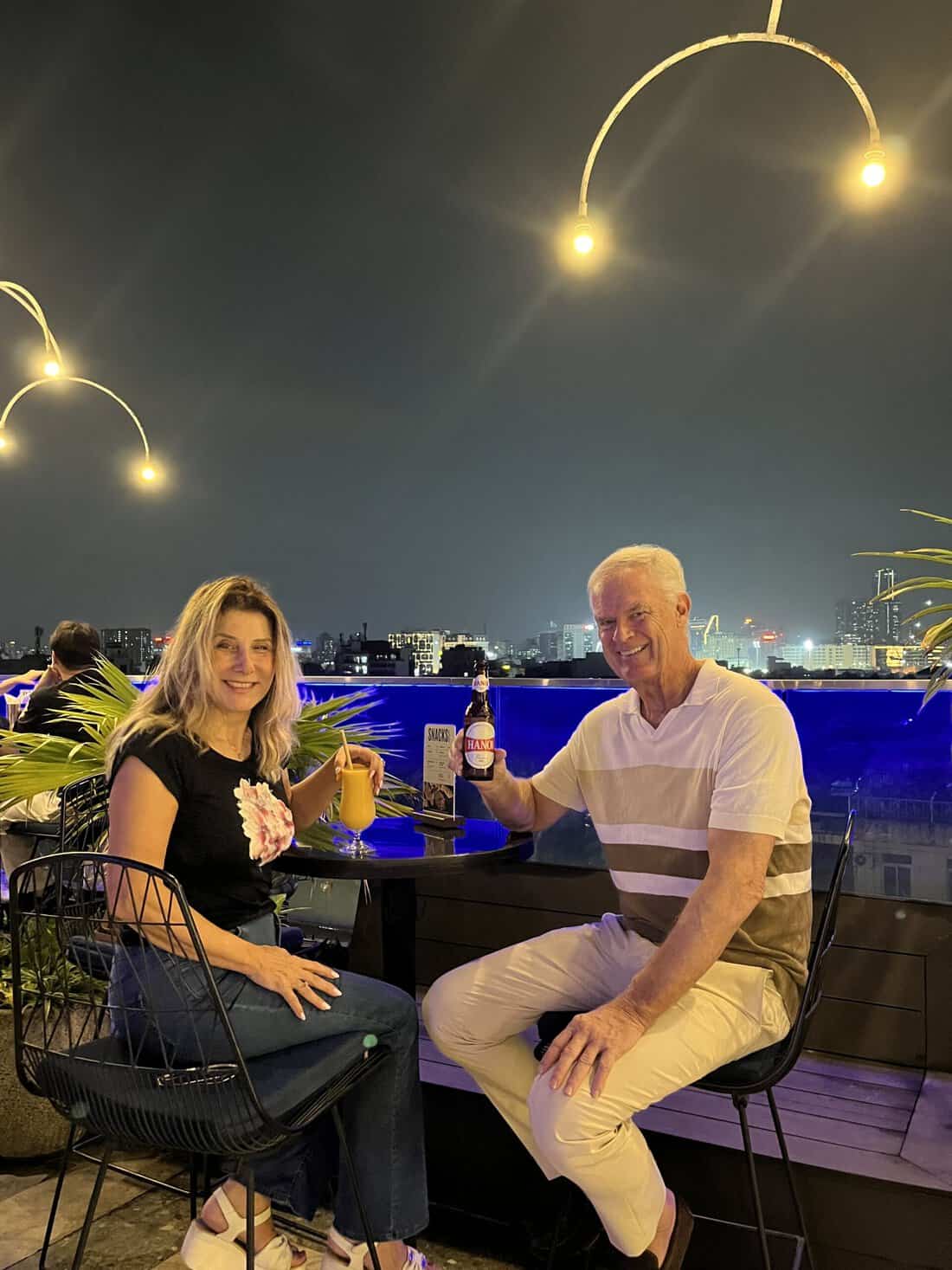
Then we’d go to the rooftop of a five-star hotel and have Hanoi-style vermicelli noodles while overlooking the bright lights of Vietnam’s bustling capital.
Vietnam’s subtle communism
Much of Vietnam’s communism is hidden where mostly the locals only notice. Here are five ways in which Vietnam differs from democracies:
- One-party system. The president is To Lam, 69, a former security officer who rose up through the communist politburo and was appointed in 2024.
- No privately owned land. Any Vietnamese can open his own business. He can not own the land under it.
- The state maintains control of major national enterprises such as gas, electricity and mining.
- Vietnam’s Constitution states it regulates economic development while respecting market forces. In the gas industry, private companies can buy and sell petroleum but the government regulates the process.
- No free speech. Vietnam, a country of 103 million, has only 98 newspapers. All are restricted by the state.
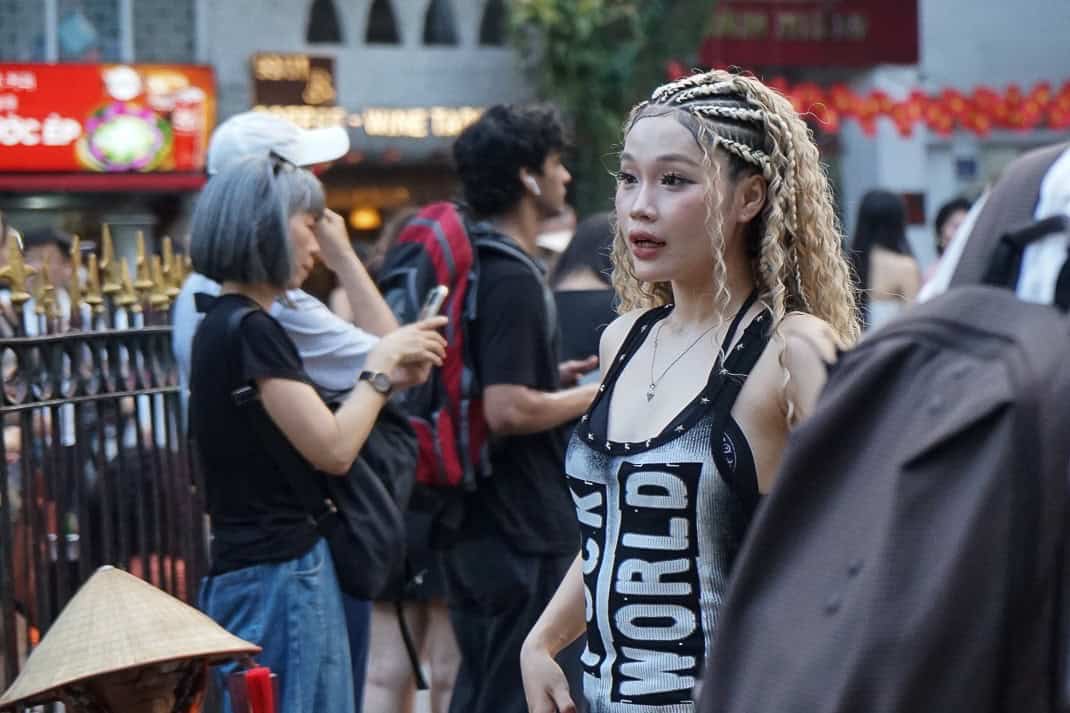
The latter interested me the most. I could live in a communist country but not as a journalist. Reporters Without Borders ranks Vietnam 174th out of 180 countries on its World Press Freedom Index. Only China and Myanmar have more journalists in jail. Some in Vietnam have been in prison for more than 10 years.
A fellow South Eugene (Ore.) High School grad and friend, John Gotteberg Anderson, has worked as a freelance journalist in Vietnam for seven years.
“I can not criticize,” he told me recently by phone. “Maybe I’m able to criticize an action but not criticize an individual by name or position. As long as it doesn’t identify a particular government department or leadership. People still keep eyes on me.
“I’ve learned over seven years here to keep my mouth shut to a large degree. Pick my battles.”
Socialist-oriented market economy
The story of how Vietnam developed a capitalist heart in a communist body is one of ingenuity and a touch of desperation.
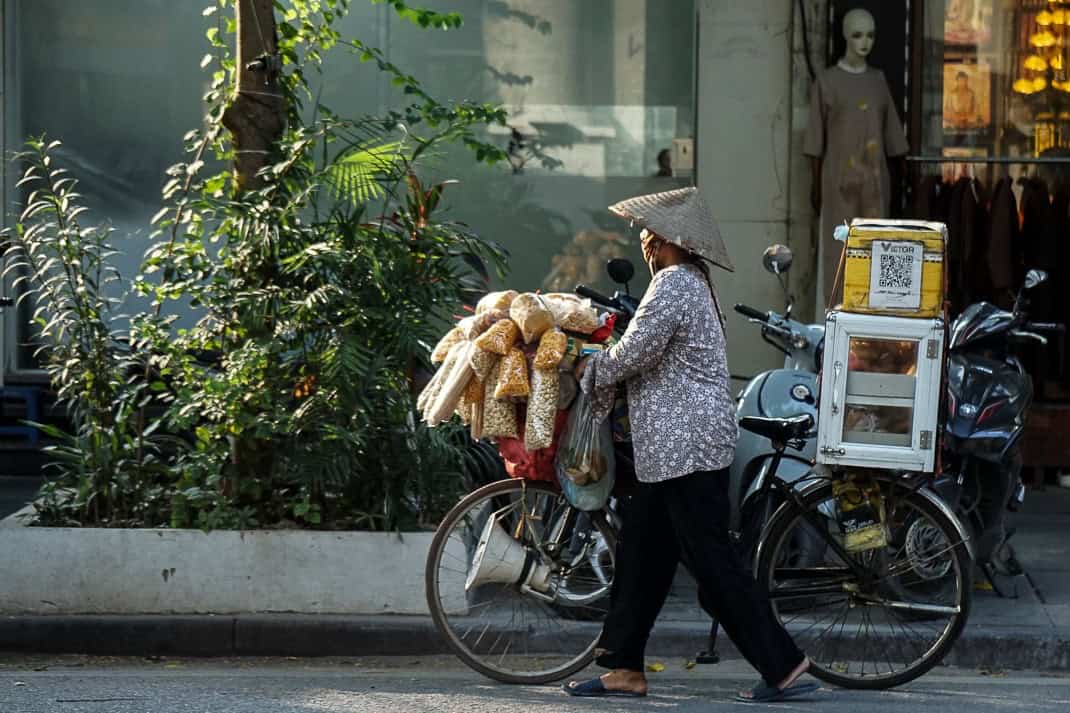
After North Vietnam won the war and reunified the country under communist rule in 1975, farmers in the south refused to accept collectivization. The country wound up importing 200,000 tons of rice to prevent starvation.
The government required quotas but soon allowed state companies to buy and sell supplies independently. Farmers could sell excess rice. Abusing the looser rules, illegal trading doubled from 20 percent in 1980 to 40 percent in 1982. The government decided to allow independent business once they met their quotas.
Thus, Asia’s biggest economic reform began. Vietnam calls it a socialist-oriented market economy.
It worked. Vietnam has made one of the world’s most dramatic poverty reductions. In 1992, 58 percent of its population lived below the national poverty line. By 2025, its multidimensional poverty rate had fallen to 1.3 percent. (Vietnam’s poverty line is $57 a month in rural areas and $77 in urban.)
The low poverty line has made Vietnam one of the cheapest countries in the world. Our five-star resorts were only about €100 a night. I rarely spent more than €10 for dinner. Our bill at Tan Va, the Michelin-star restaurant, was only €25. Beer (away from Train Street) was usually €1. In two weeks using Grab, Vietnam’s equivalent of Uber, I spent only €77.
Communist Party leaders also began profiting and let the market have greater influence. They labeled it Doi Moi, or Renovation. The free market became dominant. Land reform helped farmers. Agriculture boomed.
In 1991, Vietnam restored relations with China after years of hostility and cheap imports poured in. With no war, Vietnam cut military spending. The collapse of the Soviet Union and the end in Soviet aid forced Vietnam to increase foreign investment. Foreign companies in Vietnam such as Samsung, Intel, Canon, Ford and Nike have made Vietnam a major manufacturing base. After the war, the 75 miles (120 kilometers) between Hanoi and Haiphong was mostly rice fields.
On our train ride, in a luxury VIP train tricked out like a carriage under French occupation, we saw mostly industrial parks and factories.
In 2000, Vietnam opened its first stock exchange in Ho Chi Minh City. Growth in the private sector soon outgrew that of the state. In 2007 Vietnam was admitted to the World Trade Organization. Today 50 percent of the GDP and 82 percent of the work force is in private business.

Last year, the government came out publicly stating the private sector is a “crucial driving force of the economy.”
As Bill Hayton wrote in Vietnam: Rising Dragon, his terrific 2010 book on Vietnam’s post-war growth, “It’s prepared to use all the tricks in the capitalist book to keep the socialist part of the economy sailing.”
Indeed, Marina loved Vietnam. As we left, we vowed we’d return. We wanted to see more mountains, cycle around terraced rice fields, eat more cheap food, drink more €1 beer. I kept thinking back to what Uncle Ho wrote to a students in 1945 that proved true in 2026:
“The Vietnamese people can step up to the glory comparable to powerful nations in the five continents.”
If you’re thinking of going …
How to get there: San Francisco is the only U.S. city that flies direct to Vietnam and it’s to Ho Chi Minh City. Flights from Ho Chi Minh City to Hanoi start at €43 one way.
Where to stay: Aira Boutique Hotel, 38A Tran Phu St., Ba Dinh District, 84-24-3935-2485, www.airaboutiquehanoi.com, info@airaboutiquehotels.com. Wonderful four-star hotel with rooftop bar within walking distance of most major sites. I paid €102 a night including an excellent buffet breakfast.
Where to eat: Tam Vi, 4b Yen The St., 84-966-323-131, https://www.nhahangtamvivn.com, 10:30 a.m.-9 p.m. A 10-minute walk from the hotel, it’s been called the most inexpensive Michelin-star restaurant in the world. Mains start at €3. Try the caramelized pork belly with shrimp. I paid €25 for two including appetizers, drinks and dessert.
When to go: In the north, fall. Summer is sweltering and wet. Even fall was hot with temperatures during our stay in the low 80s with mid-80s humidity. In central Vietnam, it’s February-April when temperatures are in the high 70s. Southern Vietnam is best in winter when temps are in the ‘80s and little rain.
For more information: Vietnam Tourism, https://vietnam.travel, contact@vietnamtourism.gov.vn.
(Friday: Hanoi’s coffee culture.)