


St. Pauli: Sex, sin and gentrification in Hamburg’s red light district
(This is the second of a three-part series on Hamburg, Germany).
“I was born in Liverpool. I became an adult in Hamburg.” – John Lennon
HAMBURG, Germany – For one week, I slept next to an S&M club.
On the next street over was an erotica museum. One street over on the other side was an alley with prostitutes behind display windows. On the next corner was a flock of hookers who grabbed me as I approached my hotel.
Two blocks away on the neon-lined main drag, I could enter a brothel tricked out like a five-star hotel or walk five minutes to a sex emporium where I learned a dozen ways how a person can get sodomized.
(People really use cucumbers?)
After a week sleeping in Hamburg’s St. Pauli neighborhood, I am sexually numb. Visual sex overload from spending every night in what is widely known as Europe’s largest red-light district left me limp as a Vienna sausage. My poor Big Al was hiding deep in my shorts.
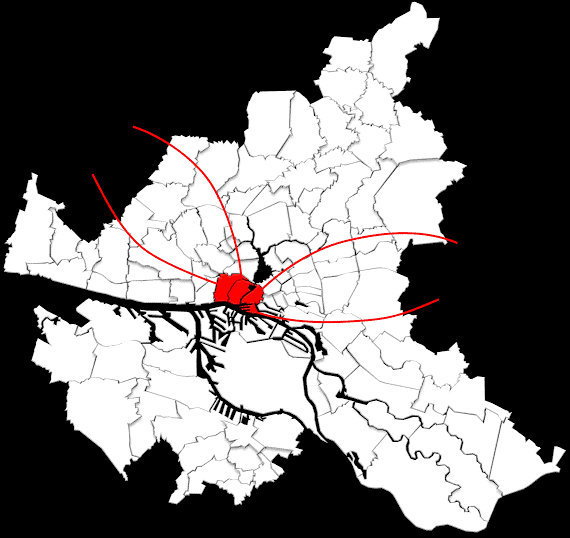
Lennon and the other Beatles lived in St. Pauli from 1960-62 when their reputation wasn’t nearly as big as this neighborhood’s. It has been around since the early 19th century and has experienced numerous ups and downs (pun intended) through history.
Parts of St. Pauli have gentrified. I found lovely zones with elegant restaurants, classy wine bars, cozy cafes and local art galleries. I found dive bars as friendly as any in Italy. The streets were clean. The streets were safe. Many were even quiet. Tree-lined, they could pass for being in a small town in Vermont.
But I also found what many of Hamburg’s 8 million annual visitors come for.
Sex.
Lots of it. Much of it was right around my Hanseport Hotel, a classy, clean, three-star hotel with a wonderful buffet breakfast and friendly staff. If you stay in St. Pauli and want to just look and not touch, it’s helpful to learn a handy German phrase.
It worked like a charm on my first night when I returned from Zum Silversack, the legendary bar that became my local hangout. I crossed Hans-Albers-Platz onto a corner where four young, attractive women in stretchpants stared at me.
I assumed they hadn’t just returned from the gym.
One pretty blonde grabbed my arm and said something in German. I replied, “Ich zahle nicht (I don’t pay.)” She buttonhooked and left faster than an NFL cornerback. A tall, curvy brunette uttered a well-rehearsed German phrase and I said, “Ich spreche Englisch. (I speak English.)”
“I can do English!” she said in very good English.
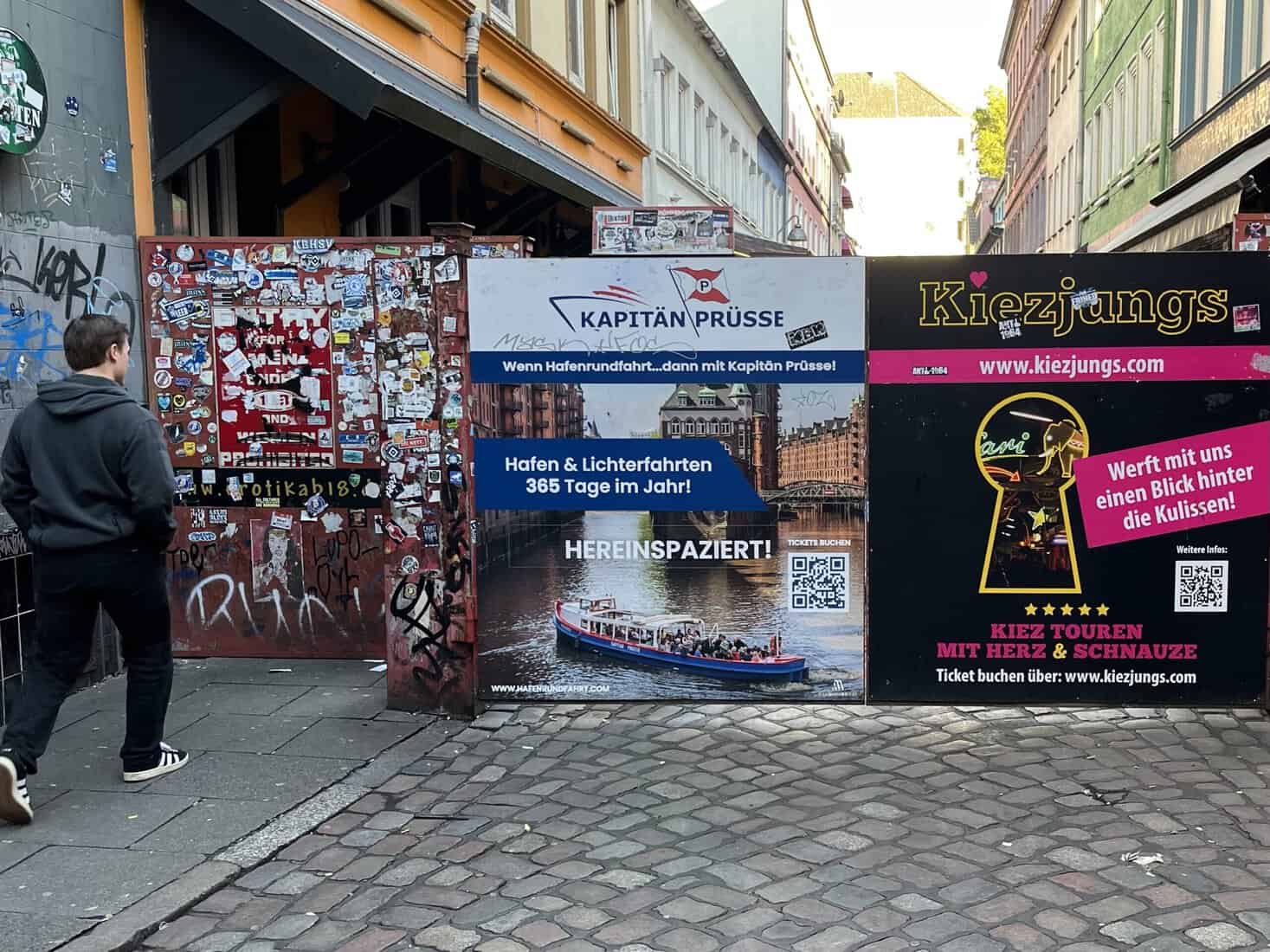
I kept walking. A few meters away I came to Herberstrasse. It’s a short alley with seven-foot-high boards curiously placed one after the other, leaving a little maze to enter. I knew what it hid.
One time past midnight I ventured in. Both sides of the street were lined with big picture windows. Behind each one were beautiful women in the sexiest lingerie this side of a Victoria’s Secret catalog. I walked by one and a short, curvy blonde in high-cut white bikini bottoms opened the window.
STRICTLY for journalistic research (SHADDAP!), I asked, “How much?”
“Fifty euros for a half hour.”
“What do you get for €50?”
“Whatever you want?”
“Can you kiss?”
“Not on the mouth.”
Yes, the hookers’ universal rule holds true even in Europe’s biggest sex den. As I turned and neared the exit, a tall, beautiful blonde opened the window. I don’t know what she wore. I was too mesmerized by the gargantuan breasts that nearly formed a total eclipse of the back wall.
“What’s your name?” she said as the bored woman next to her stared at her cellphone.
“John.”
“I’m Emma.”
“How much?”
“Fifty euros for a half hour.”
“No way is it only €50.”
“If you want to stay more, I can do more.”
Sometimes less is more.
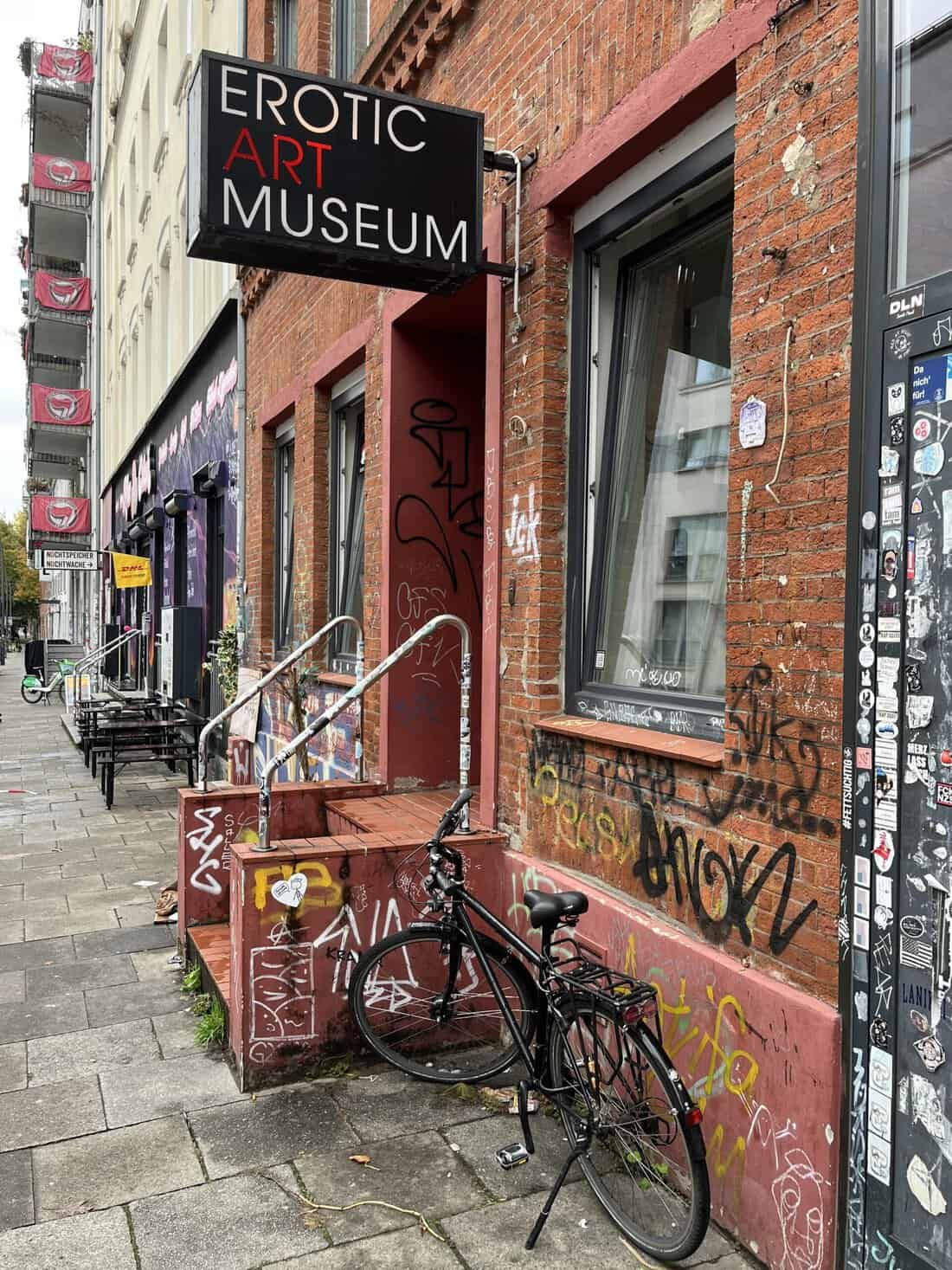
Erotica Art Museum
Hamburg is famous for its museums. The Kunsthalle covers seven centuries of European art. The International Maritime Museum celebrates Hamburg’s seafaring history with ship models and naval artifacts.
Another museum features a dick in a birdcage.
The Erotica Art Museum near my hotel has two small rooms crammed with enough sexual artifacts to put a dozen priests into comas. One wall is covered with album covers with nudity. Another has a painting of a woman getting penetrated from behind by a dildo on the end of a power drill.
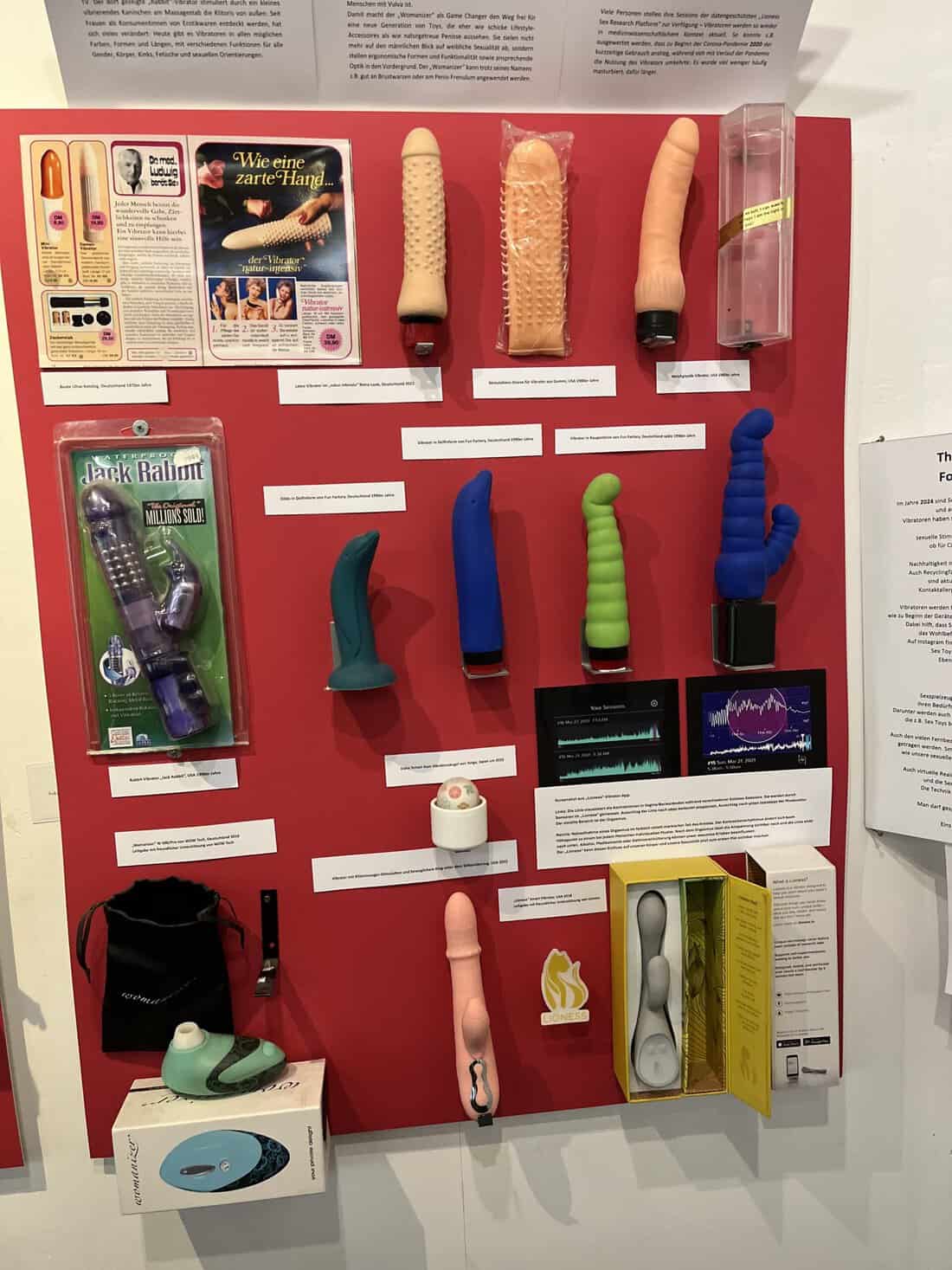
The other room features three red panels covered in various sex toys with learned magazine reviews.
Greeting me at the door with overt enthusiasm usually reserved for Halloween parties was museum owner Ekkehart Opitz. This space was once a bar he frequented and when it closed, he reopened it in 2018.
The bar already had the sexy album covers. Opitz started adding sexual artifacts and, like flirting and foreplay, one thing led to another. Soon he had one of the most unique museums in Europe. Tall, fit and always smiling, Opitz was asked why he likes St. Pauli and its attitude toward sex.
“I like sex,” he said, smiling.
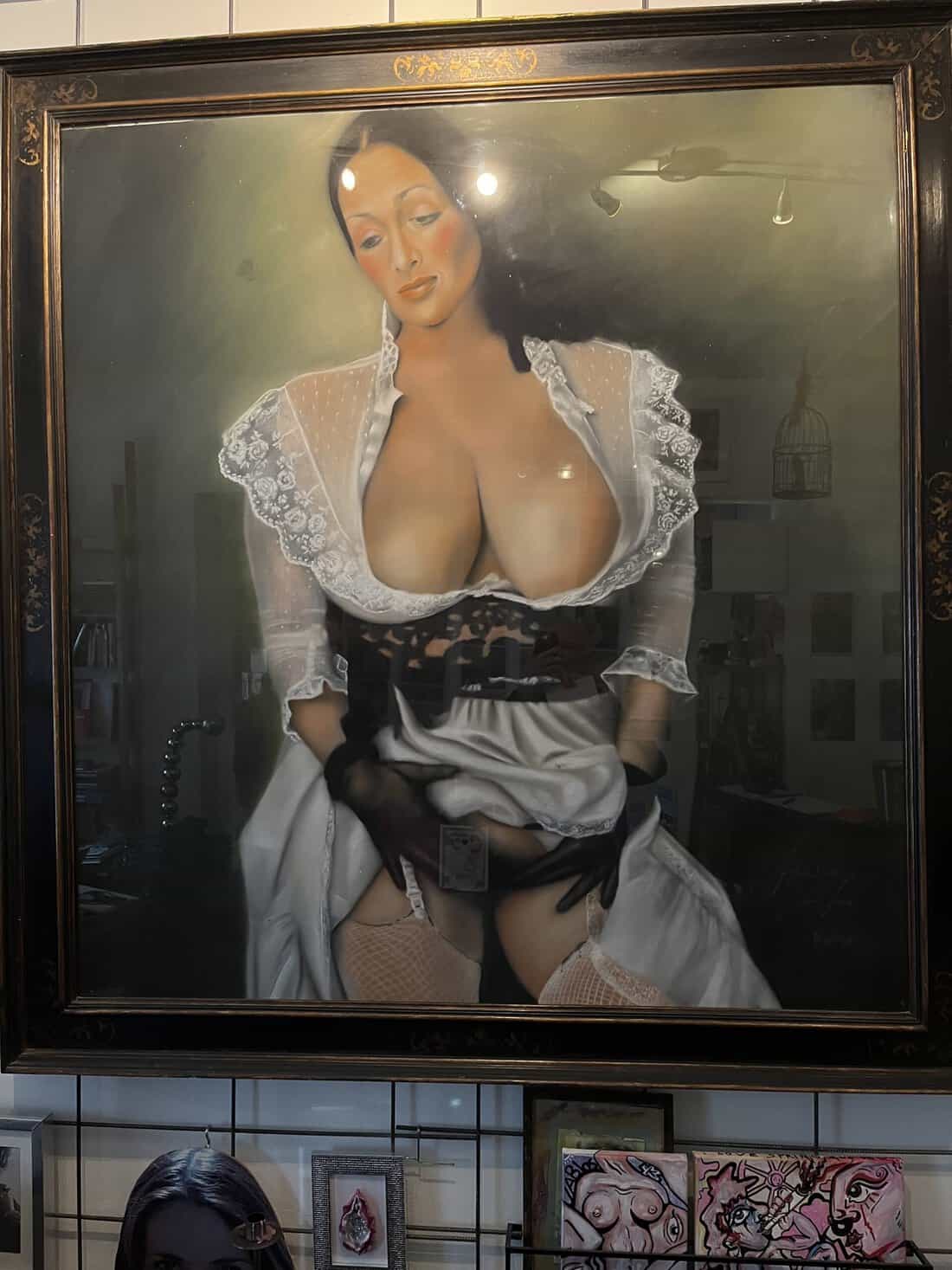
He showed me some of St. Pauli’s sexual history. There’s a huge painting and photo of Domenica, St. Pauli’s most famous prostitute in the 1980s who fought for the rights of sex workers. He also pointed out some erotic paintings done by Klaus Barkowski, who doubled as one of St. Pauli’s more powerful pimps.
But something disturbs Opitz about St. Pauli. I asked him what he thinks of how Hamburg has handled sex laws.
“They’re killing it,” he said. “We have no live sex shows anymore. If you are advertising that you are a red light district, you have to follow modernization. If you don’t do that, if you’re not kinky enough, then it’s done.
“They forgot the Internet. The Internet is so free, they need to do something more.”
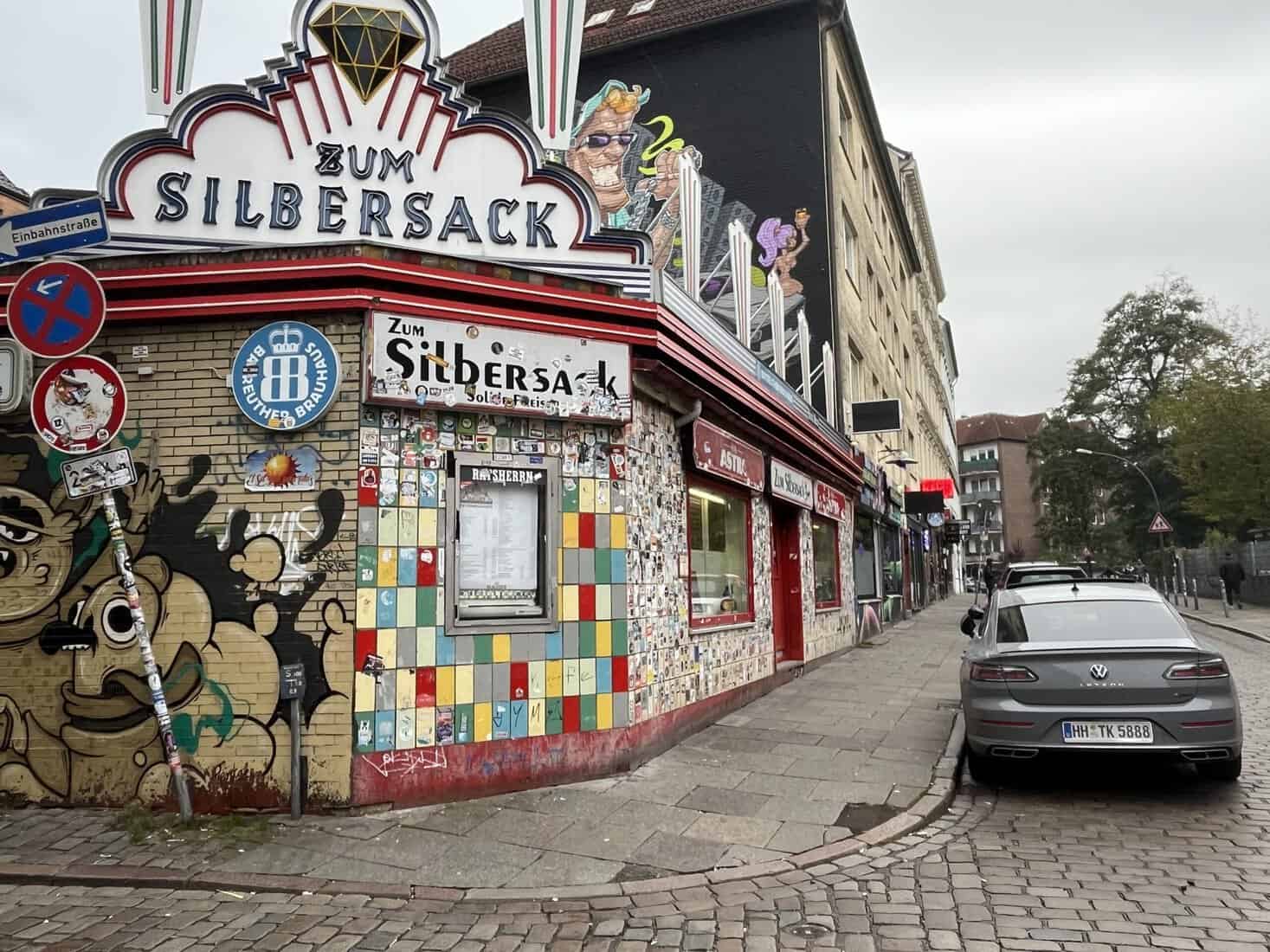
The local bar
Zum Silbersack is an old, yellow brick building that wraps around one corner on Silbersackstrasse. The outside is covered with decals and stickers. Inside it’s dark, old and cozy. A jukebox sits near the bar where owner Dominik Grossefeld has been selling their signature Silbersack beer to St. Pauli’s 23,000 residents and beyond since he bought it in 2009.
According to regional law, if he sold food, he couldn’t permit smoking; if he didn’t sell food, he could permit smoking.
He doesn’t sell food.
“Fifty percent of my guests were sitting at the bar and smoking,” he said. “They gave me a recommendation. They said they’d never come back if they’re not allowed to smoke.”
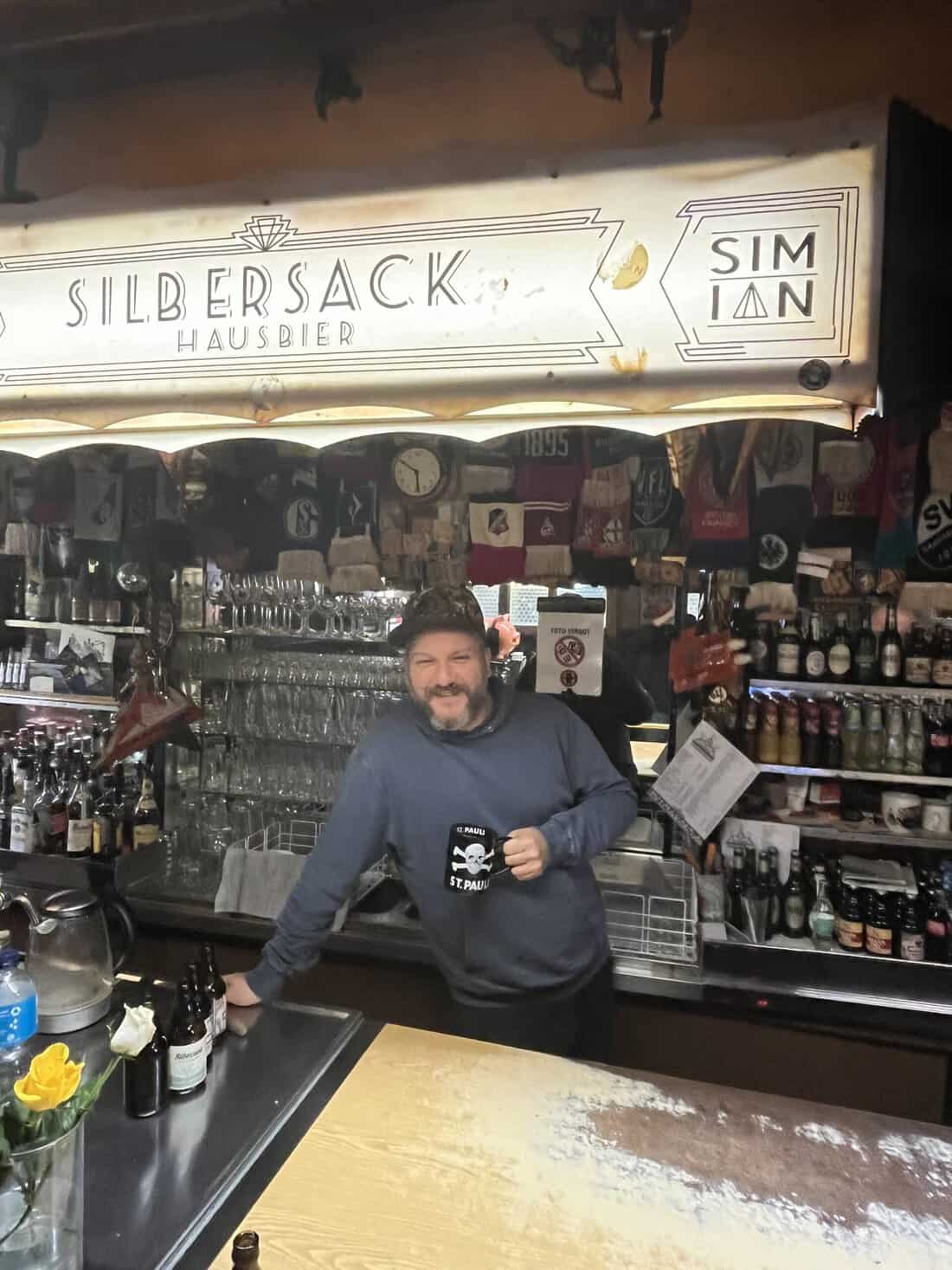
It’s one of the best-known bars in Hamburg and Grossefeld has seen it all. He says St. Pauli may have Germany’s “highest diversity of different peoples.” He talked about the other side of St. Pauli tourists don’t see, such as the 16 kindergartens and the music festivals and the restaurants.
But he also talked about the “20 o’clocks,” named for the hookers who, according to law, can work only from 8 p.m.-6 a.m. He says of the neighborhood’s sexual reputation, “There’s a little bit of civic pride in that.”
He does have rules, however. The hookers are a short walk from his door.
“In winter, when it’s cold outside and they have less business, they are allowed to come in here,” he said. “But not to ask for clients in here. They’re only allowed to come in here for a drink when they talk outside to clients or guys who will become clients. They can take a seat and talk to each other about what is possible and what they have to pay.
“They can never come in without.”
The other side of St. Pauli
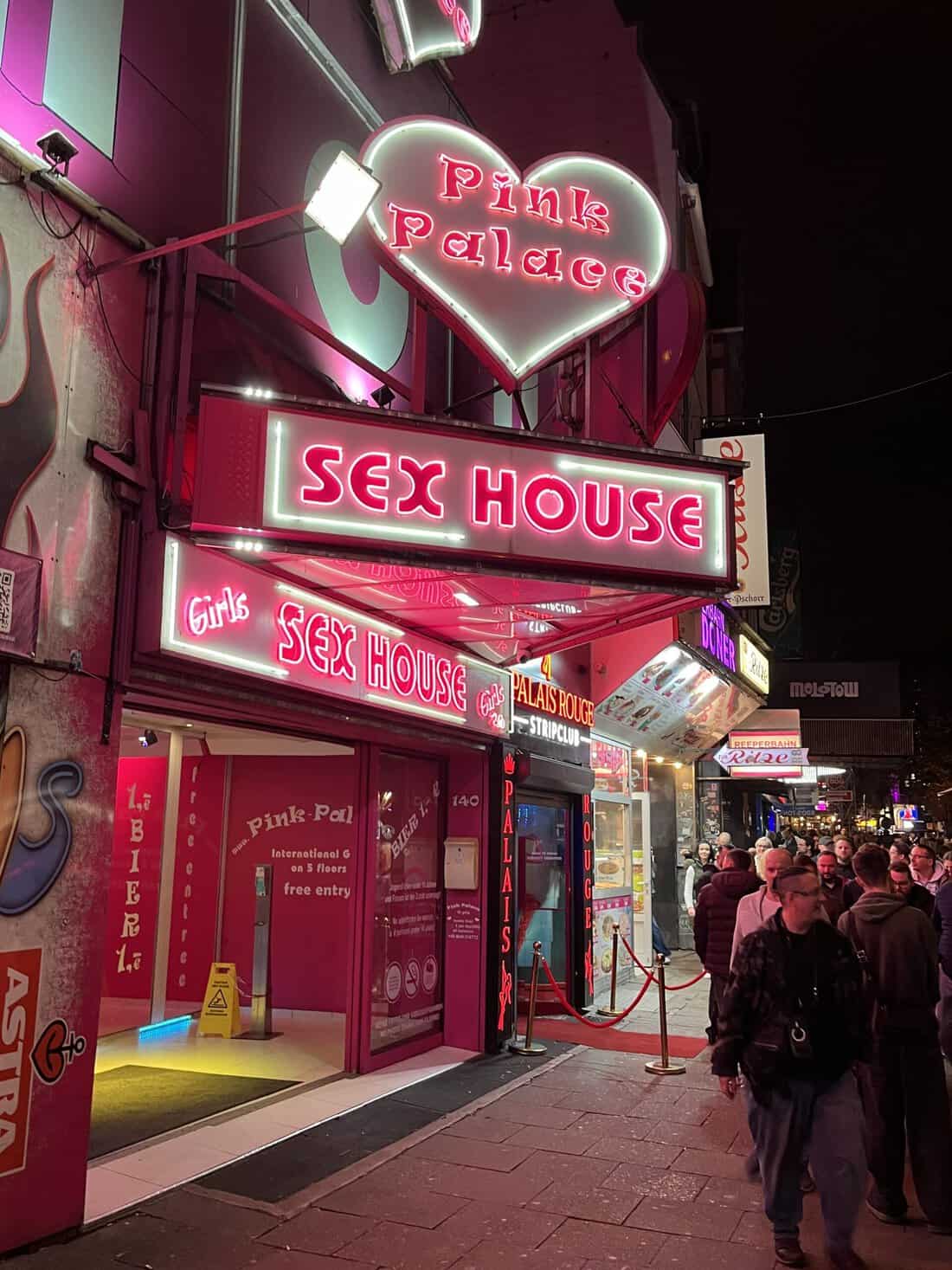
St. Pauli is divided by the Reeperbahn, a long, wide boulevard lined with neon-laced bars and sex shops on one side and restaurants and retail shops on the other. Sex or shopping. Your call.
But walk just five minutes past the neon side of the street and St. Pauli evolves into one of the coolest neighborhoods in Hamburg. Well-dressed professionals dined in Haebel, St. Pauli’s Michelin Star restaurant. Students and casually dressed adults sat at outdoor cafes sipping coffee and worked on laptops.
At Freudenhaus, you can get some of the best wiener schnitzel in Hamburg in a friendly, lively setting. (But just to remind you of where you are, on one wall there’s a painting of an angel orgy.)
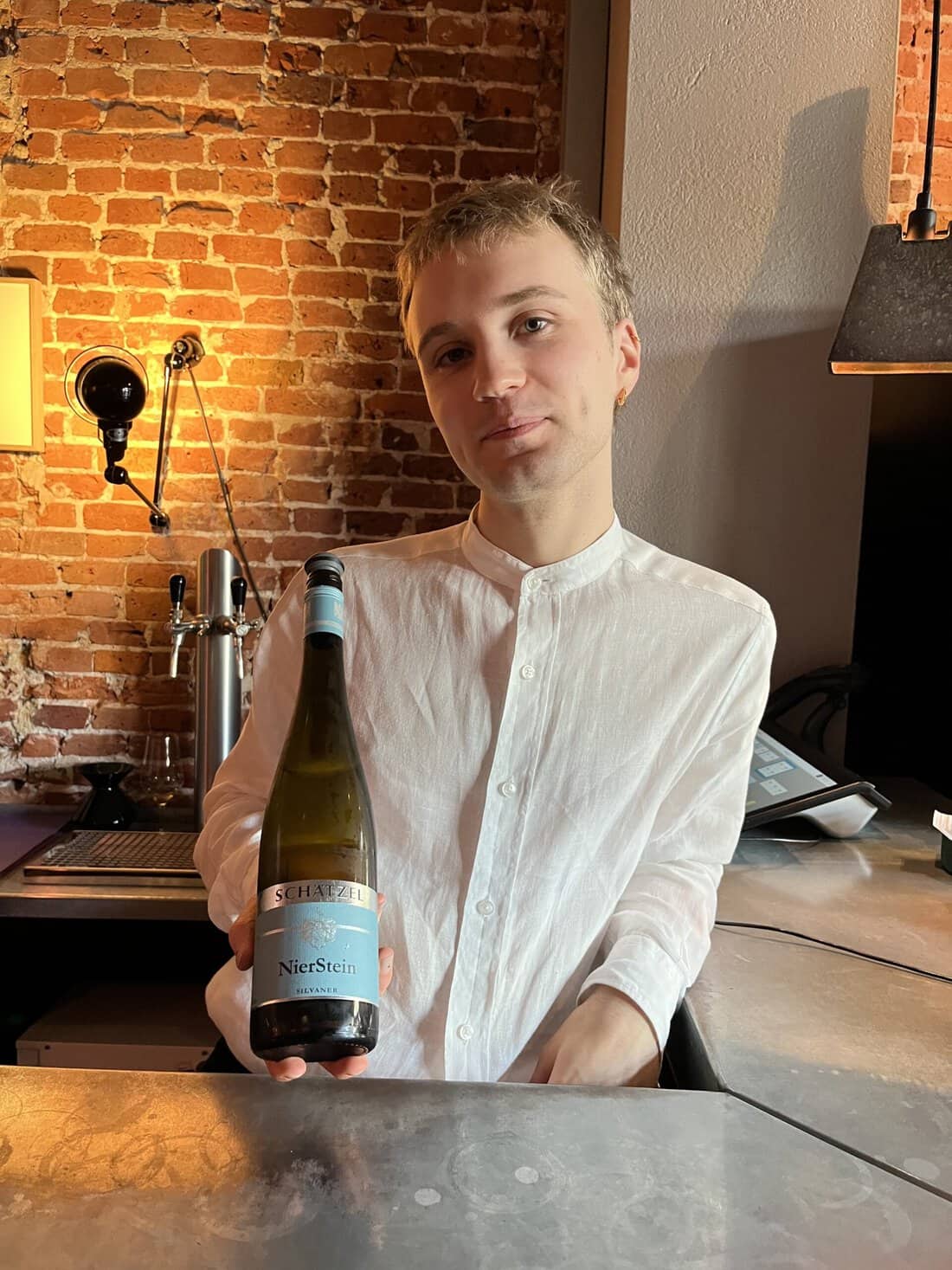
Tall, billowly trees lined the streets. Weinladen is an elegant, simplistic wine bar that opened 10 years ago featuring 200 wines and 800 online. Over a nice, crisp white Nierstein from southwest Germany, I asked the bartender, Daniel, about this side of St. Pauli.
“Obviously it’s been gentrified,” he said. “Here the hipsterish scene is pretty big. Lots of art. Also, the homeless and partying is less.”
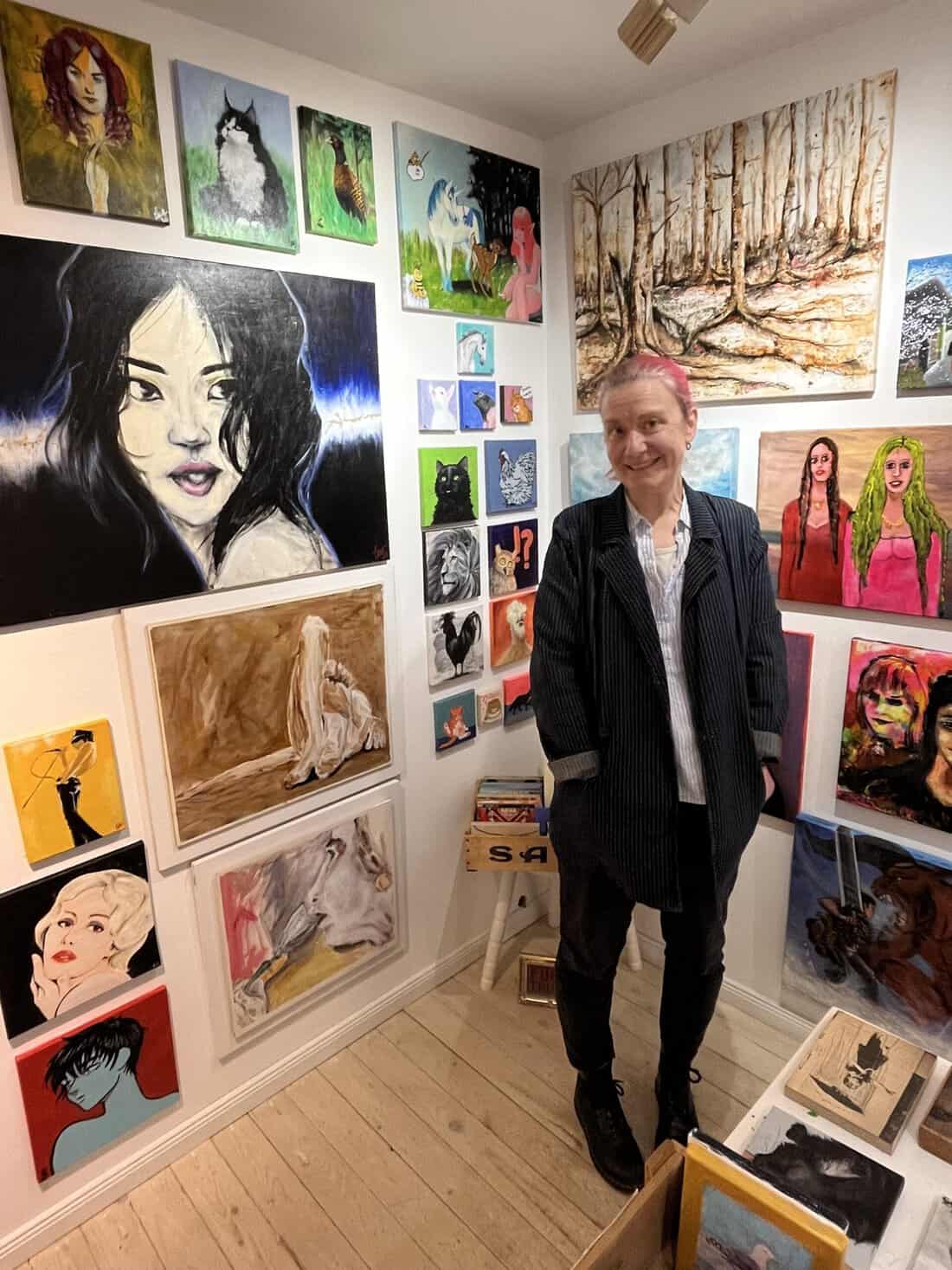
I love local art stories and this side of St. Pauli has plenty. HamburGGalerie had the kind of cat art Marina loves and it drew me in. Owner Inga Tausendfreund sold me two pieces and talked to me about how much the locals appreciate art.
And not the kind with power tools.
She talked of St. Pauli’s community spirit, pointing to a friend who lived near Reeperbahn.
“She lived there for 16 years and then she died in a horrible accident,” she said. “And everyone around, it was just like a little village. Everyone was involved. Everyone came to the church. I’ve lived the same amount of time, like, a few stations down to the west and I hardly know my neighbors.”
The tour
The city of Hamburg offers a terrific St. Pauli tour which starts on one of those leafy, sedate streets with a hip cafe next door. Tour guide Sebastian Sierk lives two blocks away. He’s long and lean and bearded. His red bandana around his neck and stocking cap made him look hip enough to blend in anywhere in St. Pauli.
He pointed out how strange it is for this neighborhood to be named after St. Paul, who wrote letters in the New Testament. What would ol’ Paul write about this place now?
“It’s pure madness,” Sierk said. “It’s Carnival, Oktoberfest, Halloween and spring break – but 365 days a year.”
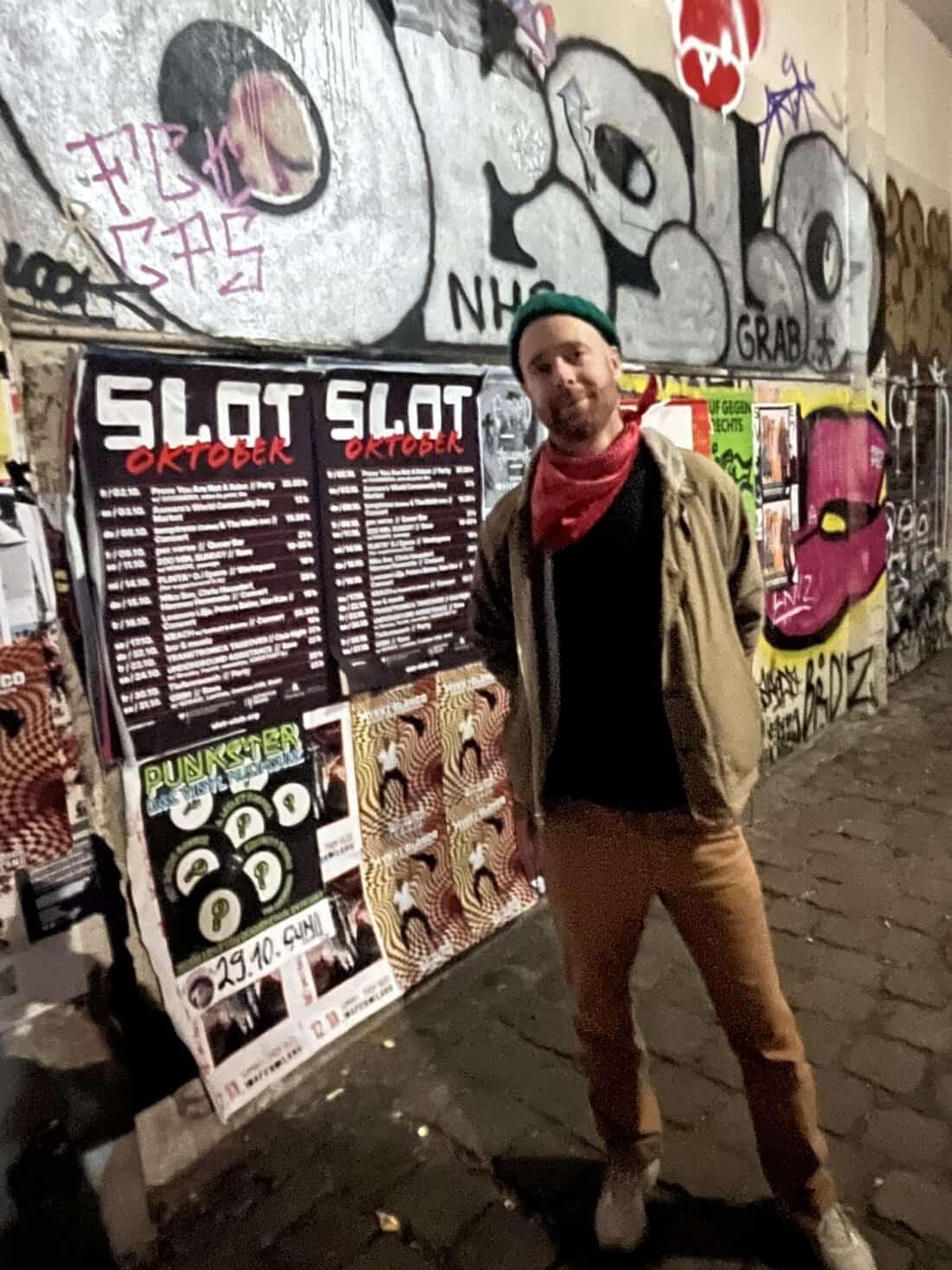
He’s obviously a fan of St. Pauli, everything from the grit and sleaze to the stories and gentrification. He pointed out a quote from German writer Rocko Schamoni who once wrote of St. Pauli, “Everything that’s shitty and stupid has taken place here.”
“But,” Sierk added, “I say, everything spended, interesting, fascinating, lovely and wonderful have also taken place here.”
He spent a lot of time talking about St. Pauli’s fascinating history. It goes back centuries to when it was called Hamburger Berg. He said the city of Hamburg built a fortification to defend itself against the neighboring Danes who wanted to take over Hamburg’s rich sea trading industry and possibly put it under Danish control.
However, the jerks at city hall did not put Hamburger Berg inside the walls.
“We’ve always been outsiders and underdogs,” Sierk said.
The neighborhood was known for its rope makers who built ropes for the hundreds of boats who sailed through Hamburg’s harbor. The Danes, obviously afraid of heights, decided not to climb the walls and never attacked.
In 1795, Hamburg banned traveling actors in the city. The ‘hood began building their own stages. Thus, the neighborhood’s future as an entertainment mecca began. In 1833 it was renamed St. Pauli after a local church and it became an R&R post for sailors needing entertainment.
“They had a thirst for two things,” Sierk said. “Carnal pleasures and alcohol. And that’s what they got.”
In the early 19th century, St. Paul grew like few neighborhoods in Europe. In 1894 it had 72,000 residents and developed its current reputation by the early 20th century.
“You’d ask a sailor about St. Pauli and Reeperbahn, and his eyes get like this!” said Sierk, his eyes as wide as saucers.
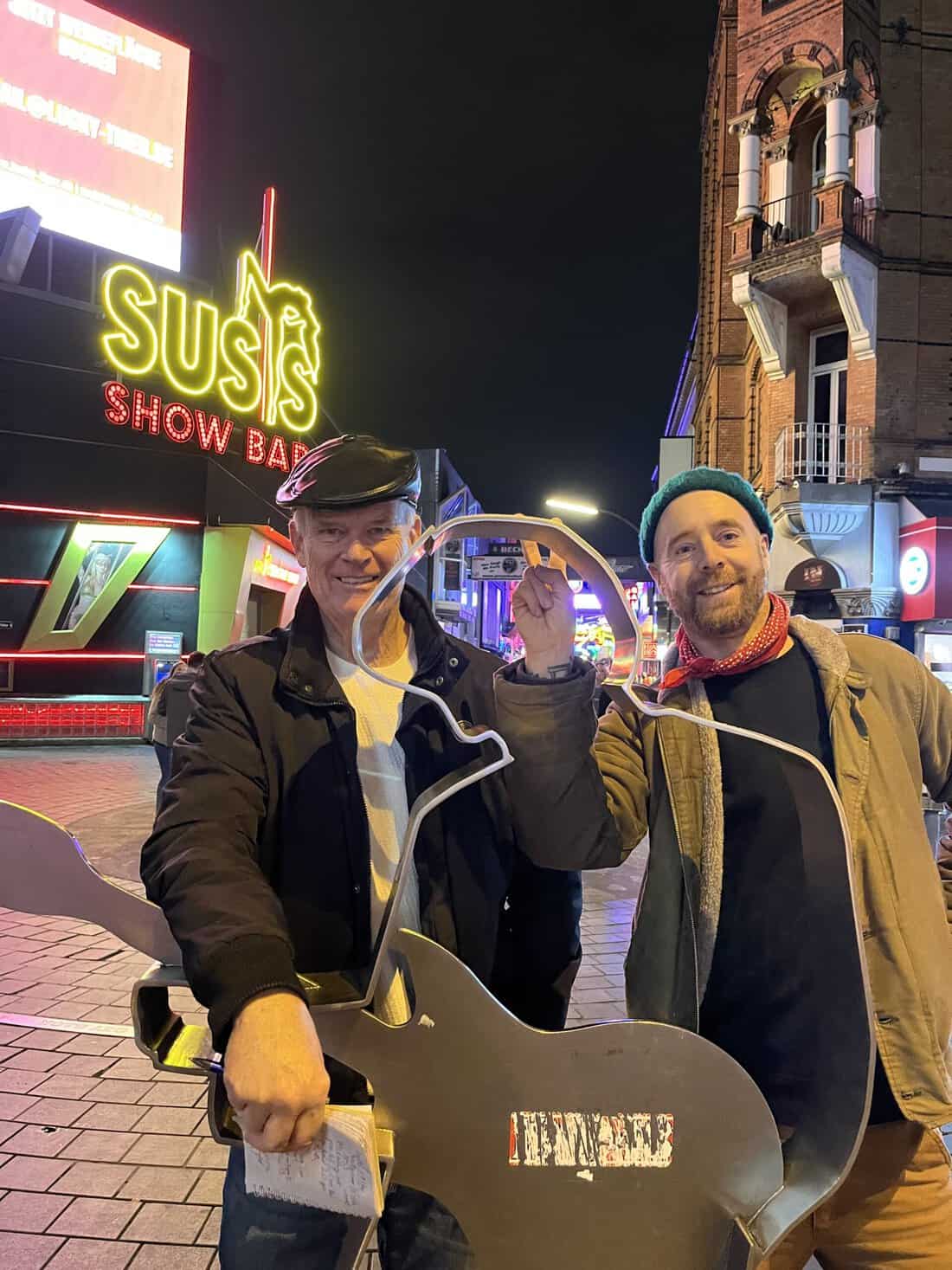
By the 1960s, St. Pauli resembled rats on Viagra. Live sex shows. Strippers. Prostitution. And another St. Pauli claim to fame:
Mud wrestling was invented here.
But also in the ‘60s, the shipping industry changed. New technology made manual labor less necessary. Hamburg’s harbor concentrated on container shipping. No longer were sailors spending a month in St. Pauli while their boat was getting cleaned.
In the 1970s and ‘80s, some working-class residents disliked the red-light reputation, however reduced. St. Pauli began attracting artists, musicians and some who saw it as exploitation of women. Organized crime came in.
Soon rules changed. The city banned live sex shows. Street hookers were restricted to certain zones in the neighborhood. Sex with a prostitute without a condom can result in a €50,000 fine.
Some musicians, however, have always felt right at home.
The Beatles
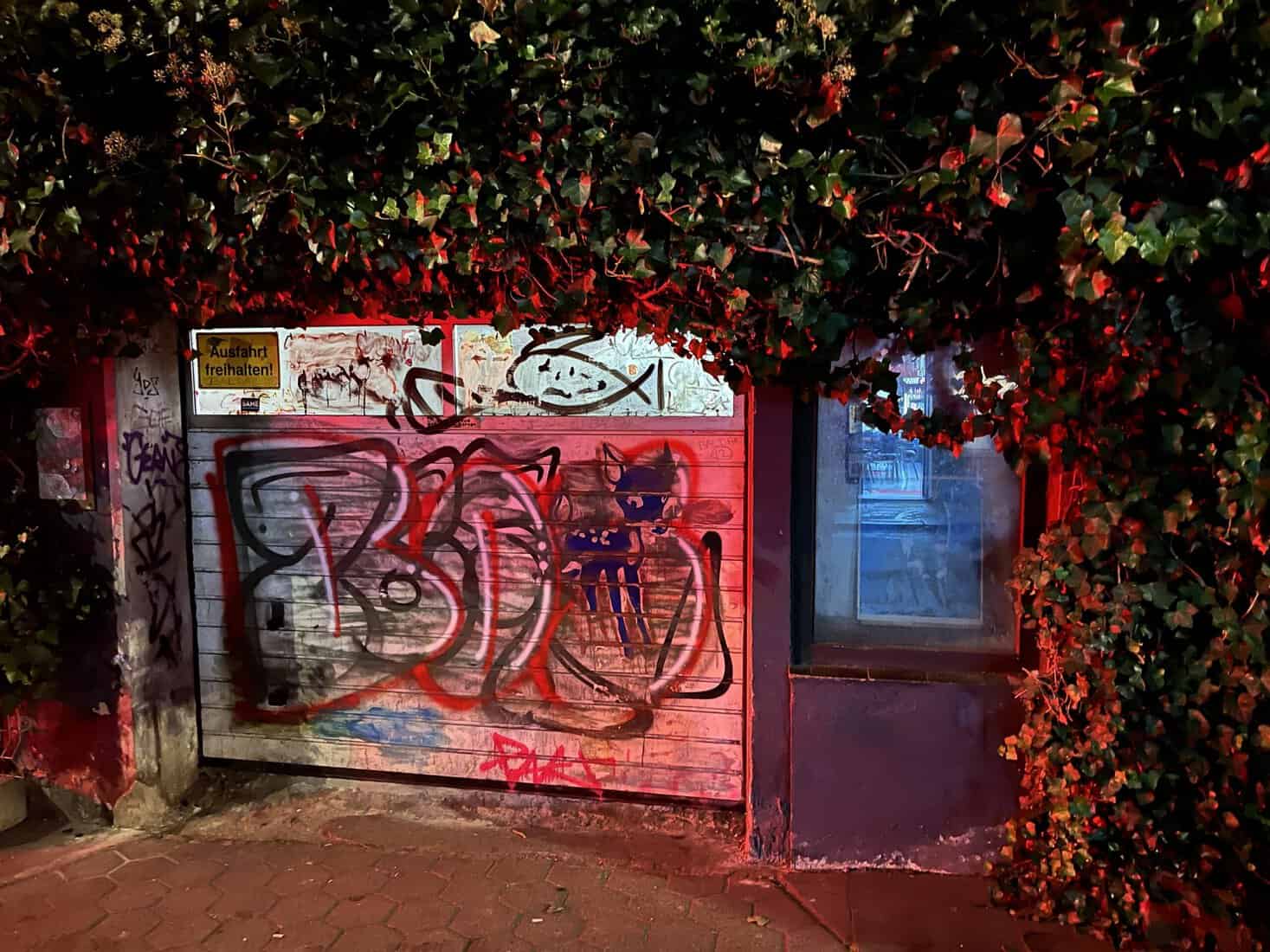
We walked down a dark street and Sierk pointed to a graffiti garage door next to a door under an overgrown tree. This is where The Beatles lived around 1960 when they were first starting out and Lennon was “growing up.”
They played at the Indra, long into the night for many nights in a row. Today, Beatles cover bands play in an open-air bar at Indra on Grosse Freiheit 64.
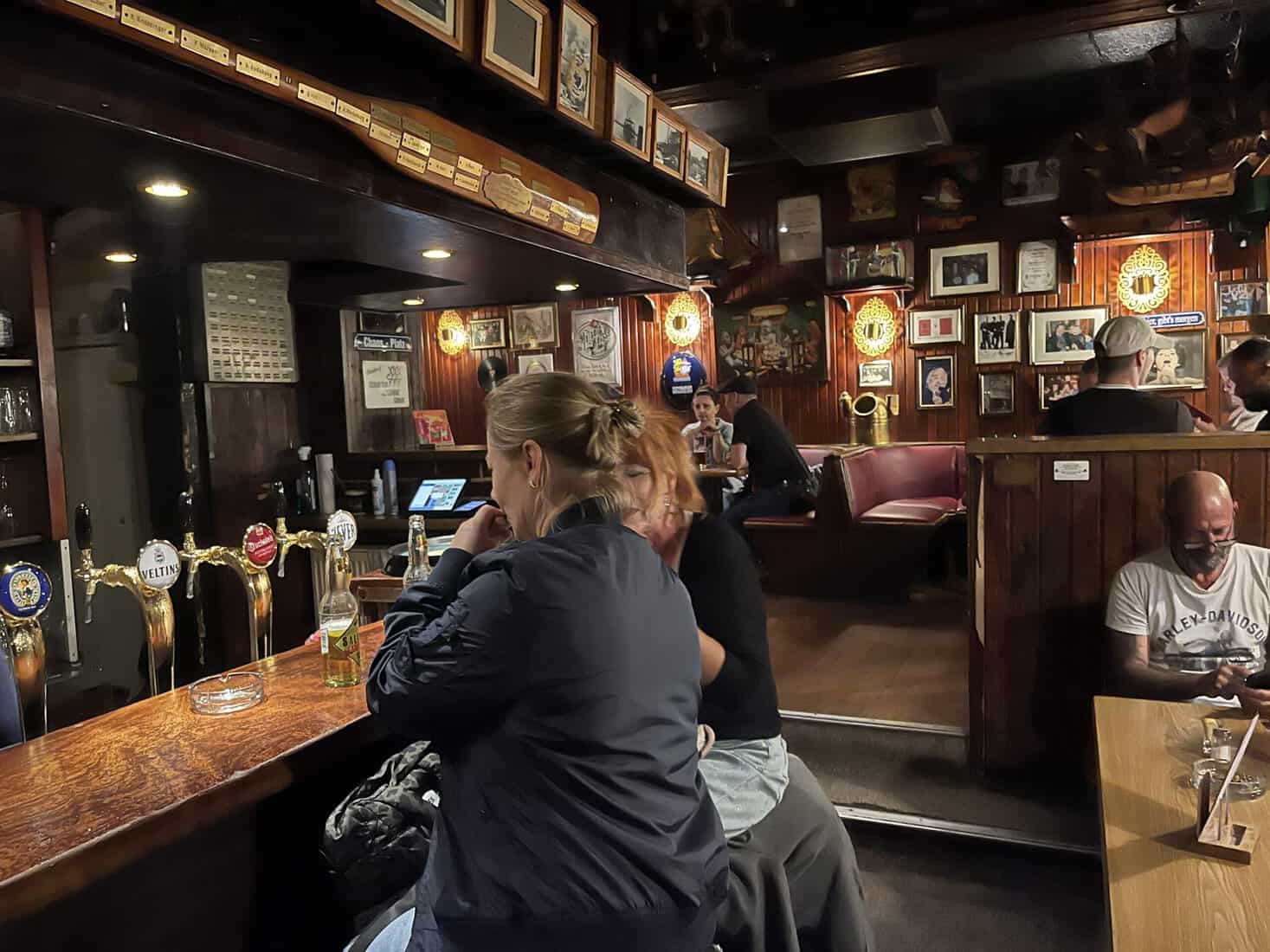
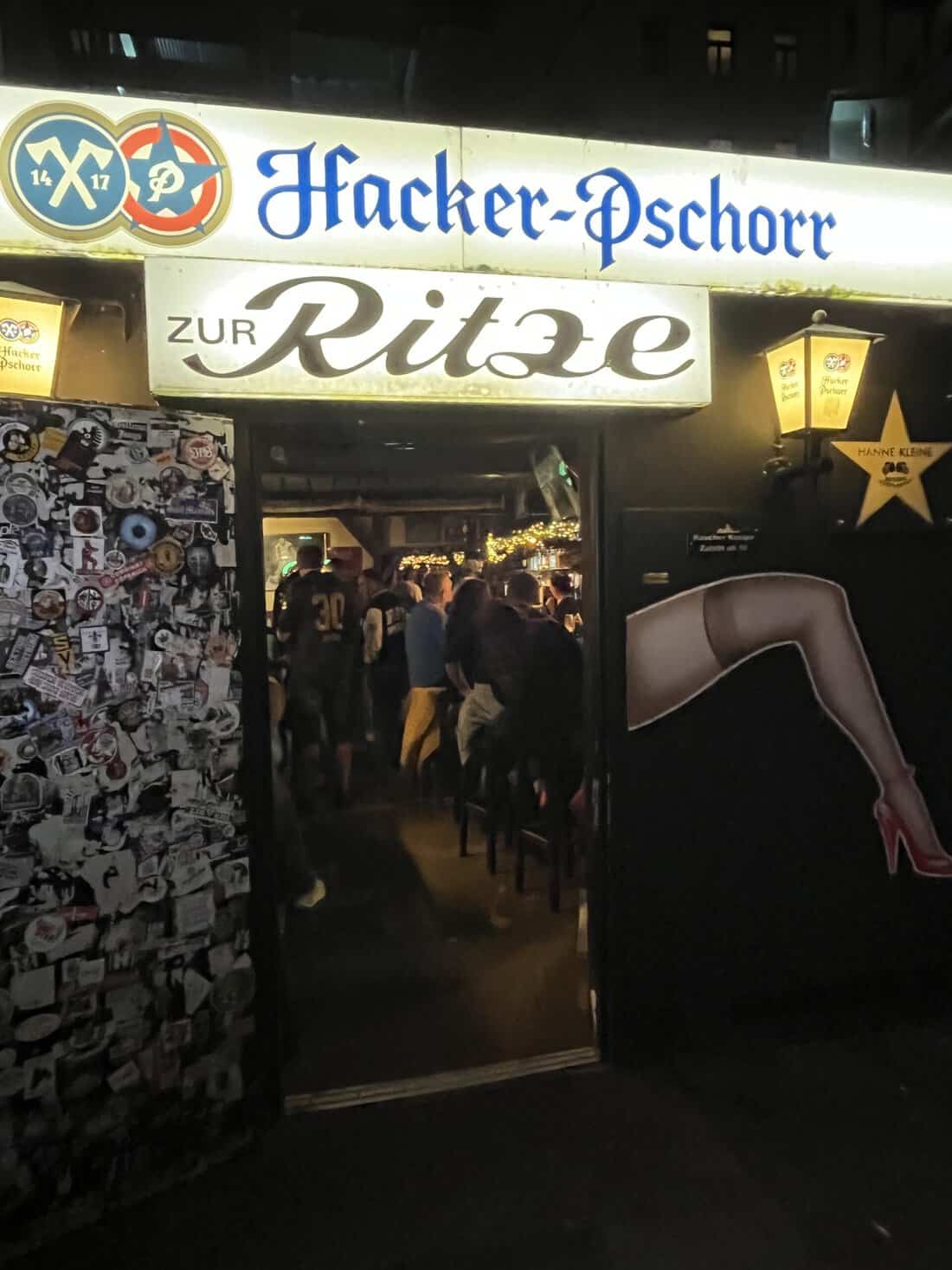
After concerts, they’d go down Grosse Freiheit and drink at Gretel & Alfons. Built in 1953, it’s still crowded, smoky and loud. A giant poster of McCartney hangs on a wall. He will never have to buy a beer at Gretel & Alfons.
Twenty years after The Beatles left Hamburg and became cultural icons, McCartney was reminded he left a $200 tab at the bar. He returned and paid it.
Then it gets sleazy
A cliche about travel is everyplace is about contrasts. But few places offer the contrast of a Catholic Church in the middle of St. Pauli. On Grosse Freiheit we stopped at St. Joseph Church, a big brick church built in 1723. We watched a nun leave the church and enter living quarters next door.
The church sits perpendicular with a street famed for trans prostitutes. On the church is a sign reading, “There is nothing Jesus can not handle.”
“St. Pauli is a place of contradiction and change,” Sierk said. “Nothing is black and white. There’s a lot of gray. Lots of shades of the rainbow.”
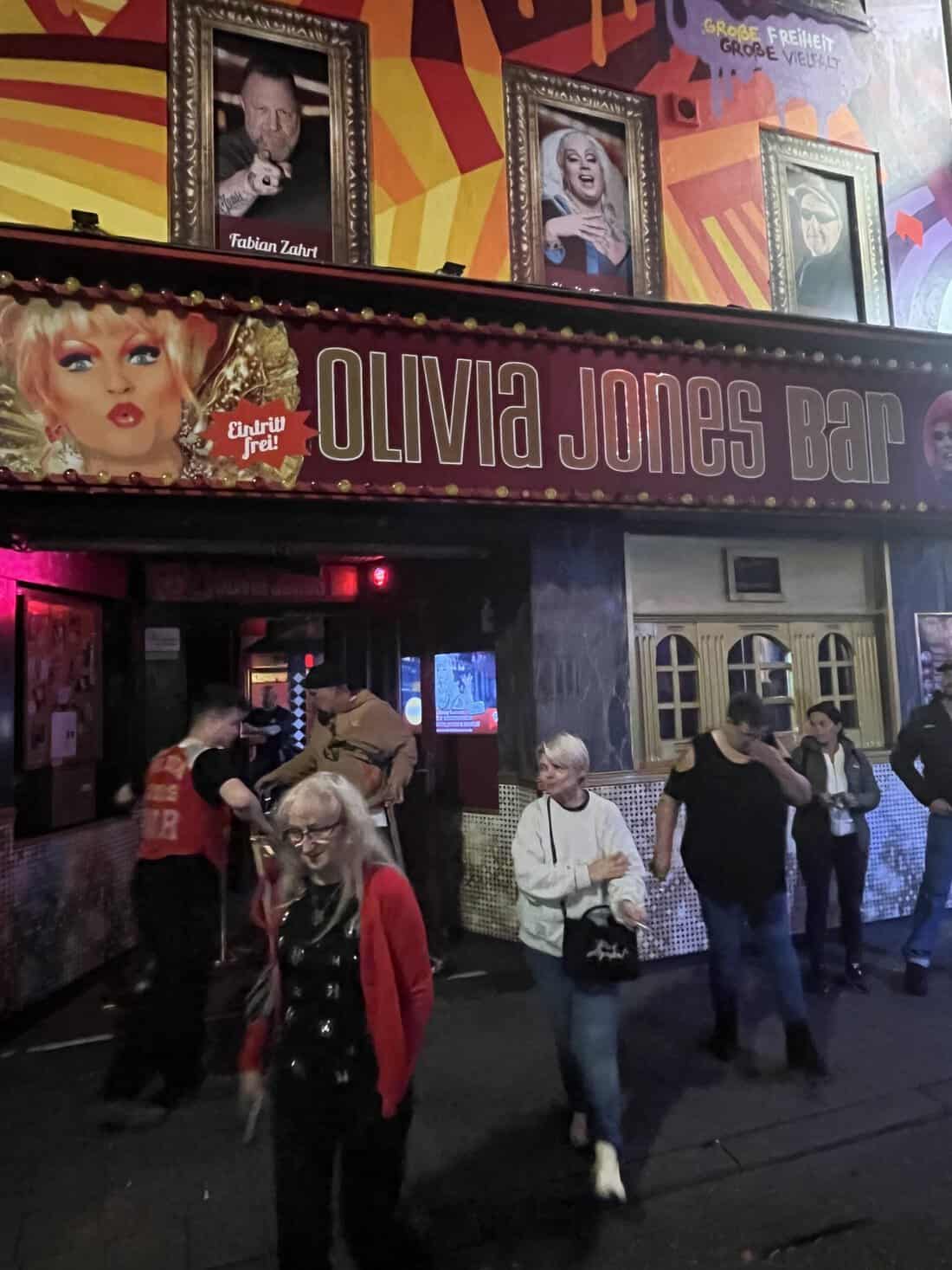
Speaking of men in drag, Sierk led me to Olivia Jones Bar, St. Pauli’s most famous drag queen who opened this bar for burlesque shows in the 2000s.
We passed under a neon Safari sign spanning Grosse Freiheit, one of the last bars to offer live sex shows. I told Sierk I attended one – ONE! – in San Francisco and it was a joke. They didn’t even touch each other.
“Oh, this was real,” he said. “These guys did it four times a night.”
Four times?
“Slackers!” I said. A tour guide who’d seen and heard it all emitted a polite chuckle.
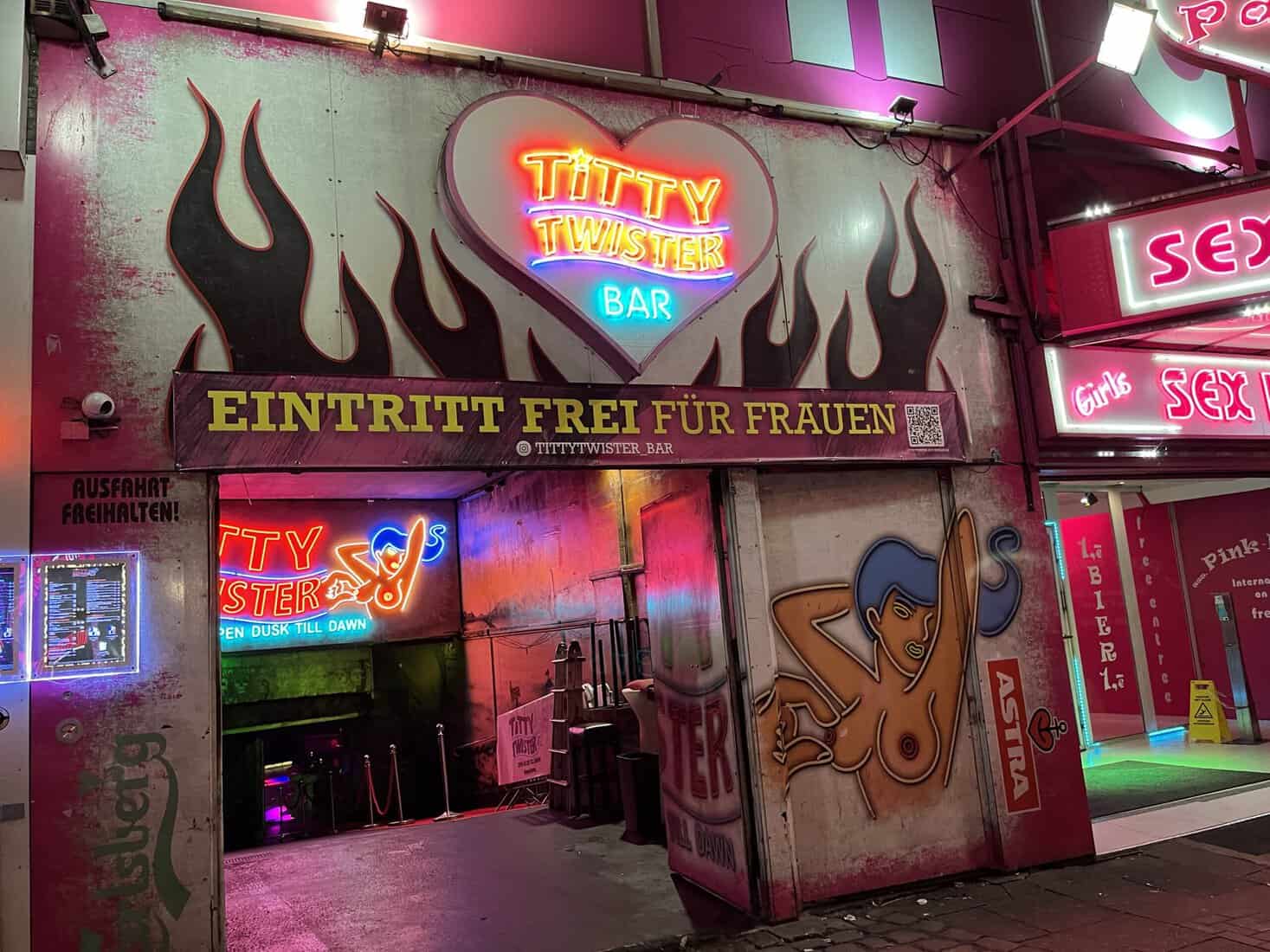
We finally turned on Reeperbahn and passed a phalanx of neon-lit bars. They had names like Top Secret, Blue Night, Titty Twister. Some advertised €1 beer. What they don’t advertise are the women who lure you into VIP rooms and rip you off with soft whispers and vague promises.
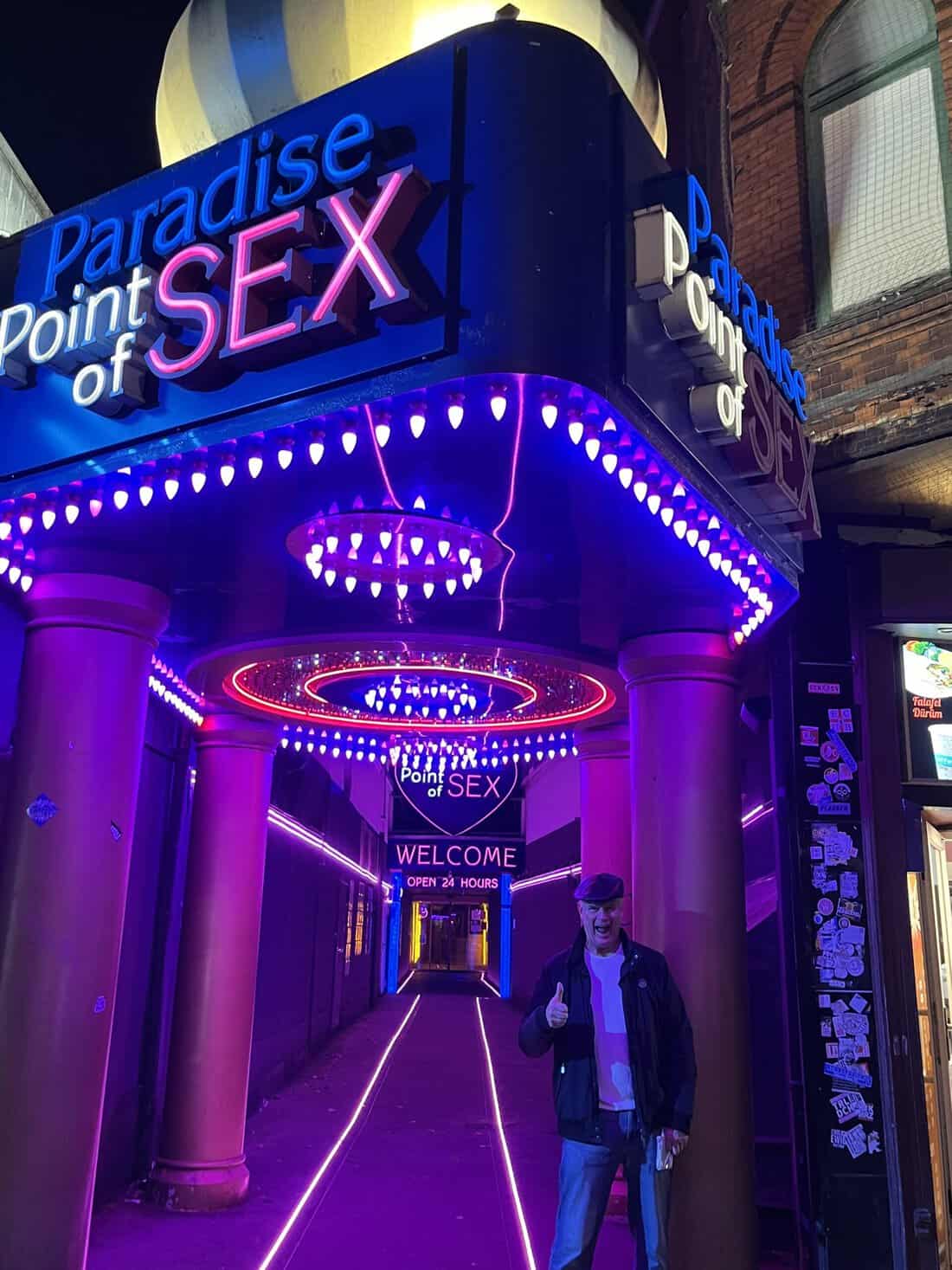
Then we came to the real deal. Paradise Point of Sex has a facade lined with white lightbulbs under a long corridor draped in purple light. It’s a legalized brothel. Over the distant door is a sign reading, “Welcome. Open 24 hours.”
I saw two men casually walk out as if they’d just finished a gym workout which, I guess they kind of did.
The nearly three-hour tour ended and I enthusiastically thanked Sierk. I was starving. But not for sex.
One last dip into depravity
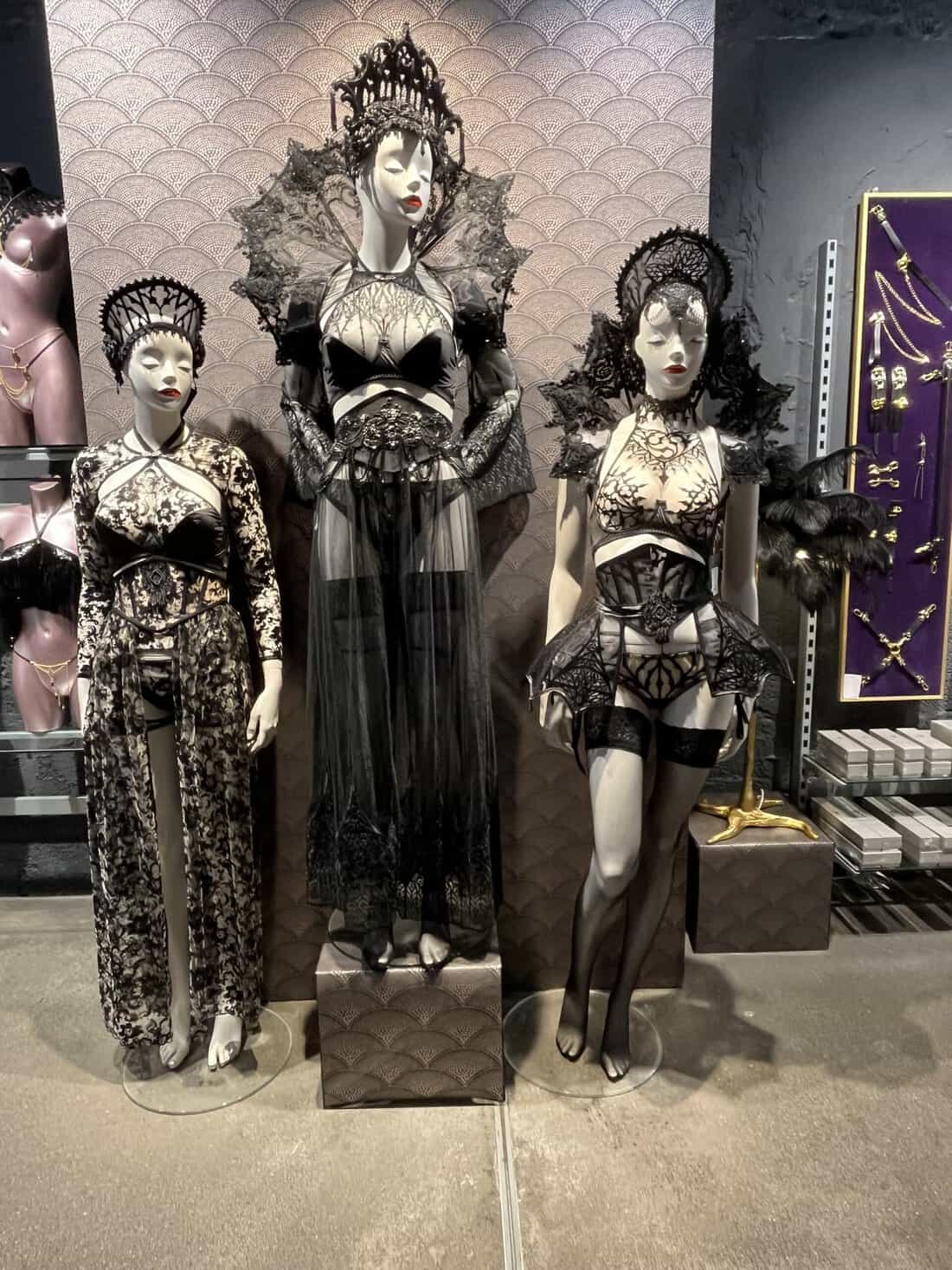
On my last night in Hamburg, I entered another famous St. Pauli landmark. The Boutique Bizarre is a giant, snow-white building that could pass for a chain department store in a mall if not for the show windows with mannequins dressed in leather straps.
Inside is a sex emporium that feeds every depravity known to man – and others man may not even know. I entered to see counters lined with sex toys of shape and fetish. Big. Curved. Black, Red. Even green. It was simply called “Cucumber.” And that’s what it looked like.
Something you’d carve into your Greek salad.
One looked cute. It was a series of small glass balls tied end to end, each one with a little flower inside.
Farther along were entire sections of goth. Women wearing black capes and masks and leather bras that looked lethal. There were chokers, belts and whips. And Christmas is approaching. Wondering what to get your loved one who has everything?
How about a spiked jockstrap?
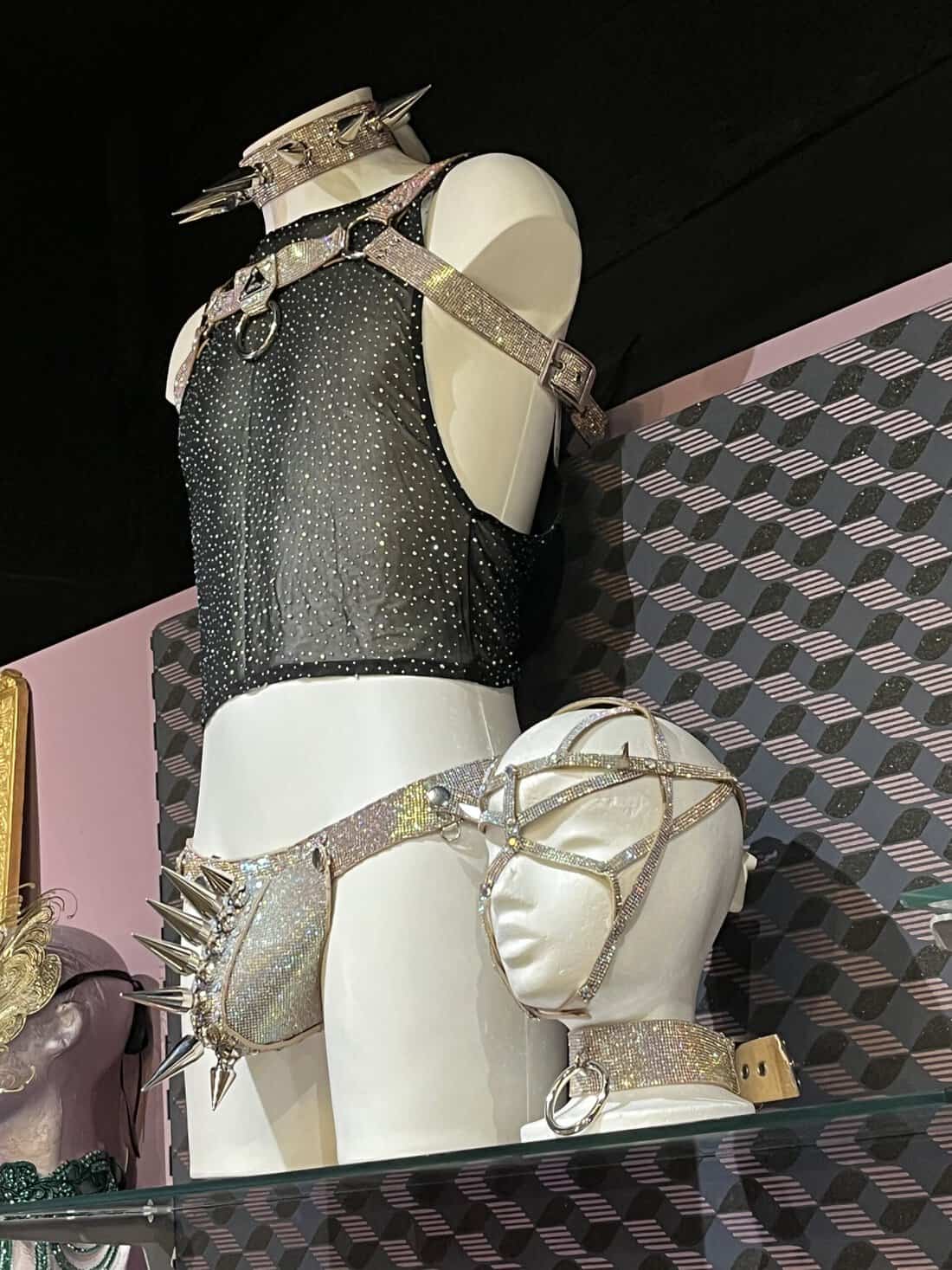
Seeing that sticking in the air, I left, bracing for the next fight through the fearsome foursome in stretchpants.
If you are thinking of going …
How to get there: Many major U.S. cities fly to Hamburg via Frankfurt or Amsterdam. My round-trip, 2½-hour flight from Rome was €265.
Where to stay: Hotel Hanseport, Erichstrasse 18, 49-40-31-9970, www.hotel-hanseport.de, info@hotel-hanseport.de. Simple 3-star hotel in the heart of the St. Pauli neighborhood. Big rooms and helpful staff. I paid €732 for six nights, including an excellent buffet breakfast.
Where to eat: Freudenhaus, Hein-Hoyer-Strasse 7-9, 49-40-31-4642, www.st.pauli-freudenhaus.de, info@st.pauli-freudenhaus.de, 5-11 p.m. Tuesday-Saturday. Opened in 1997, it serves traditional German dishes in a cozy atmosphere. Try the roast beef with onions, green beans and terrific potato salad with mustard or the goulash. I paid €53.80 including wine.
When to go: Near the North Sea, Hamburg really gets steaming. Summer temperature highs in the 70s. But it does get crowded in summer. Winter lows around freezing. My week in October was in the 50s with occasional rain.
For more information: Hamburg Tourismus, Wexstrasse 7, 49-40-300-51701, https://www.hamburg-travel.com, 9 a.m.-5 p.m. Monday-Friday.
(Next week: The former East German town that’s a royal destination.)