


Hanoi: Where coffee is more than a caffeine fix — it’s a culture in every cup
(This is the second of a five-part series on Vietnam.)
HANOI, Vietnam – I have a fun rule when I travel. When I check into a hotel, the first thing I do is stake out a local bar. It’s where I go every afternoon or night to unwind from a day’s touring. I get a beer, talk to the bartender, hopefully a few regulars. After a few days, I’ve made some friends.
In Hanoi it’s different. In Hanoi, as its 8.7 million residents will attest, you stake out a cafe. And you drink coffee. Always coffee. In Hanoi, you can not live without coffee.
Hanoi’s coffee culture is like nowhere I’ve seen. And I live in Rome. In Rome, coffee is the fuel that energizes the city. But the coffee cultures of Rome and Hanoi are as different as their languages.
In Rome, I order an espresso, caffé schiumato or cappuccino. I stand with others at the bar and chat with the barista about AS Roma’s latest collapse or the road construction outside. Then I’m gone. It’s drink and dash.
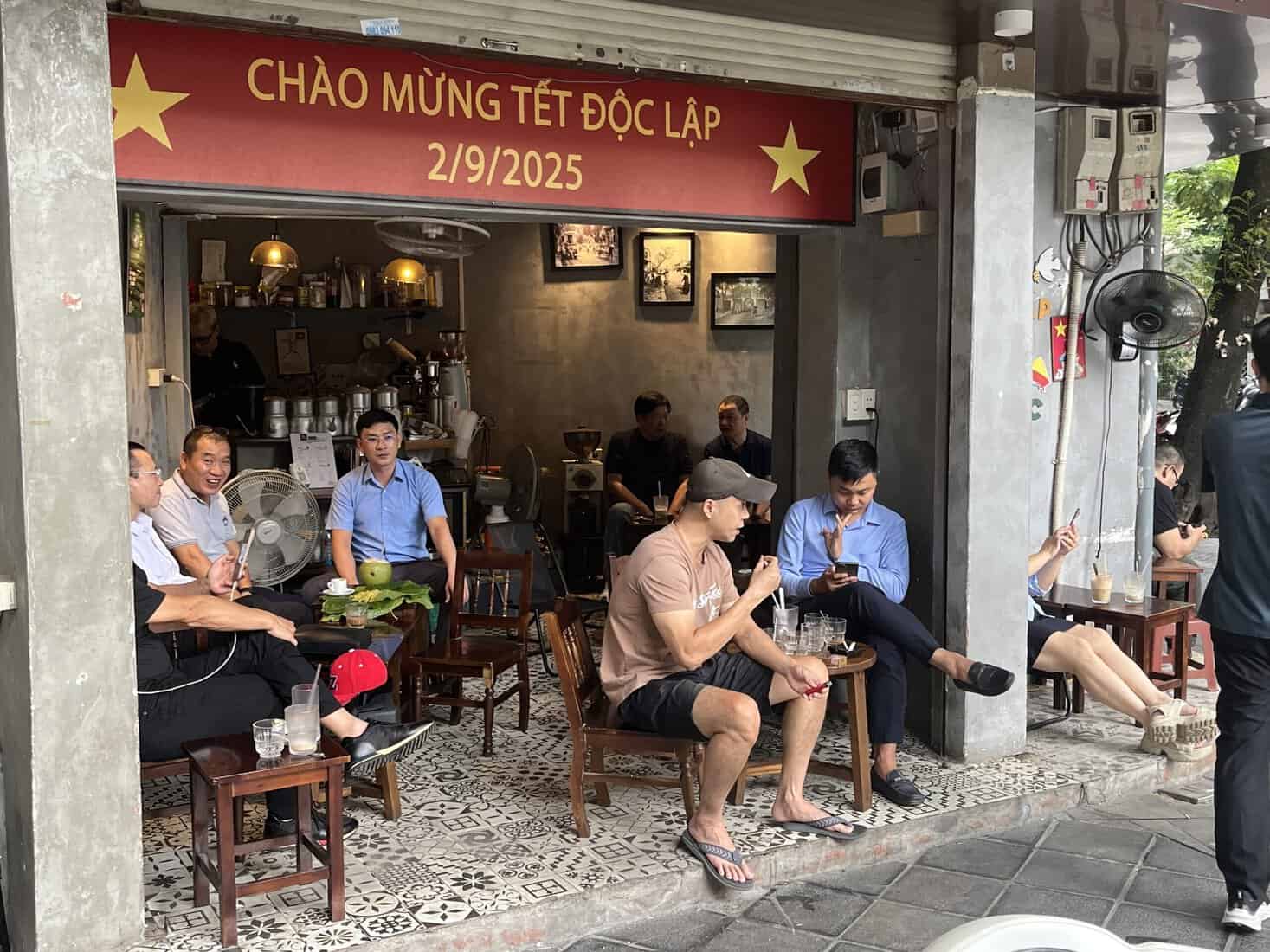
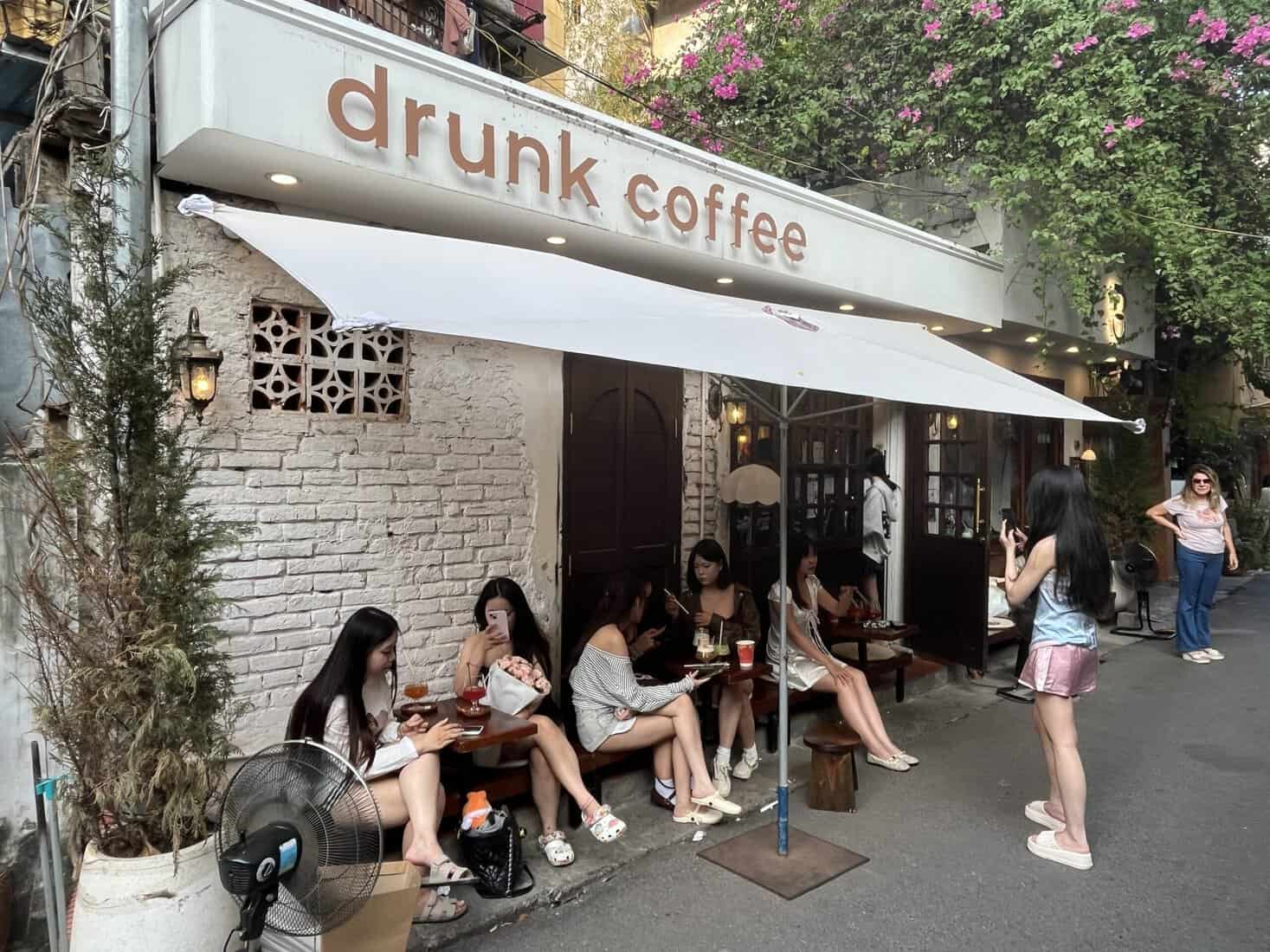
In Hanoi, the cafe is a second living room. You sit and sip, talk and laugh. Despite the frantic traffic outside that makes every day seem like the Fall of Saigon, the cafe is a sea of tranquility.
During our recent two-week stay in Vietnam, our pseudo cafe was Café Con Cá Đỏ. It was across the street from our Aira Boutique Hotel and a snapshot into Hanoi’s famous coffee culture.
On our first morning, two middle-aged men sat at low, tiny tables only a foot off the floor. Each had a ceramic coffee cup in front of them, not one of those disgusting oversized paper cups that pollute American cafes. In casual business wear, they chatted and laughed, in no hurry to go anywhere.
Outside at tiny tables were other men gathered around coffee in various shapes and flavors. Motor bikes and cars flew by. Another man stared at his cell phone between sips.
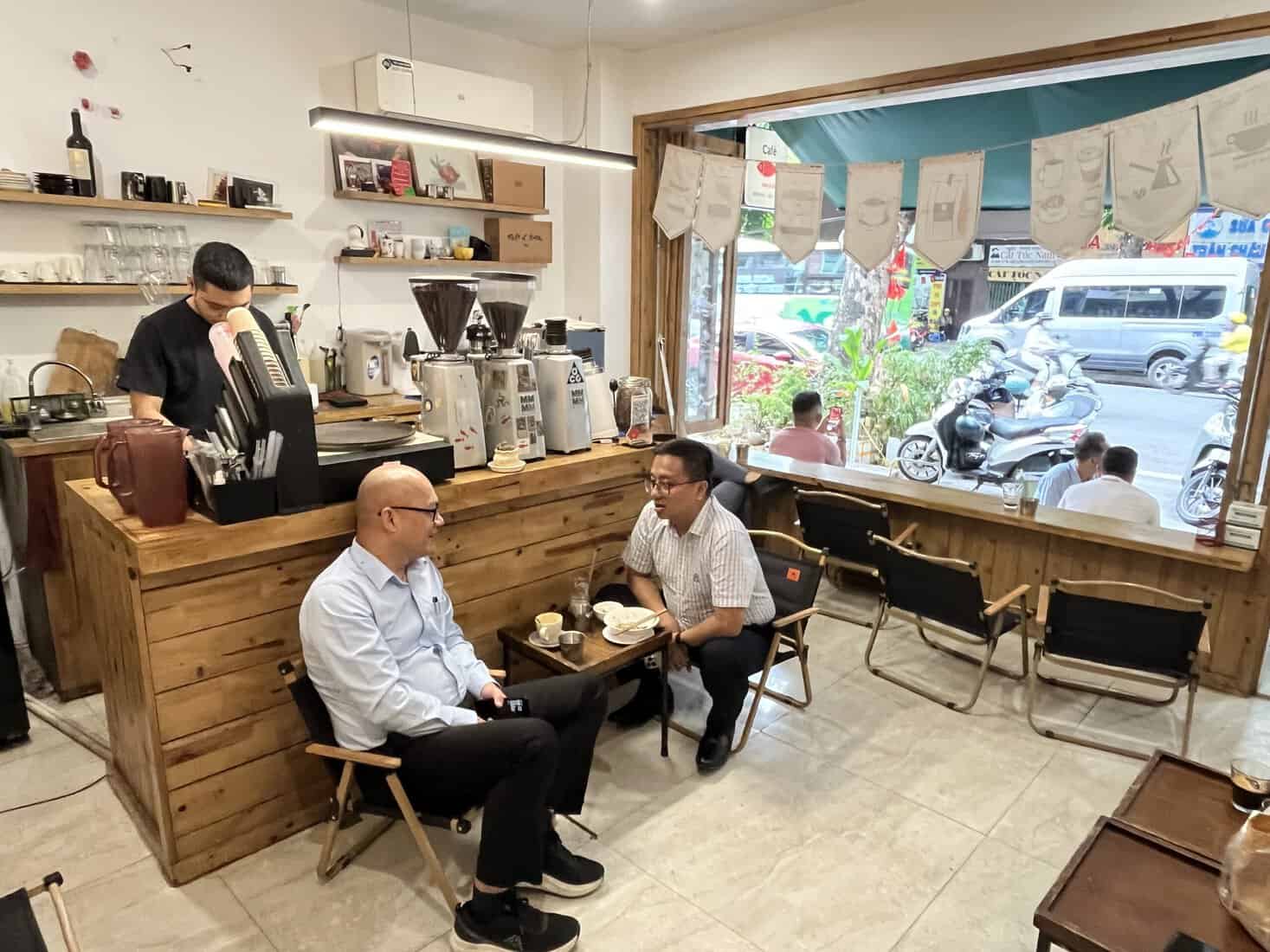
I asked the young coffee jockey, Ly Ngoc Long, if Hanoians come for the coffee or the socializing.
“Both,” he said in good English. “In the morning, there’s a little time before work. You can meet and talk about life and things. A coffee shop is like a place to connect with everybody. You can make friends.”
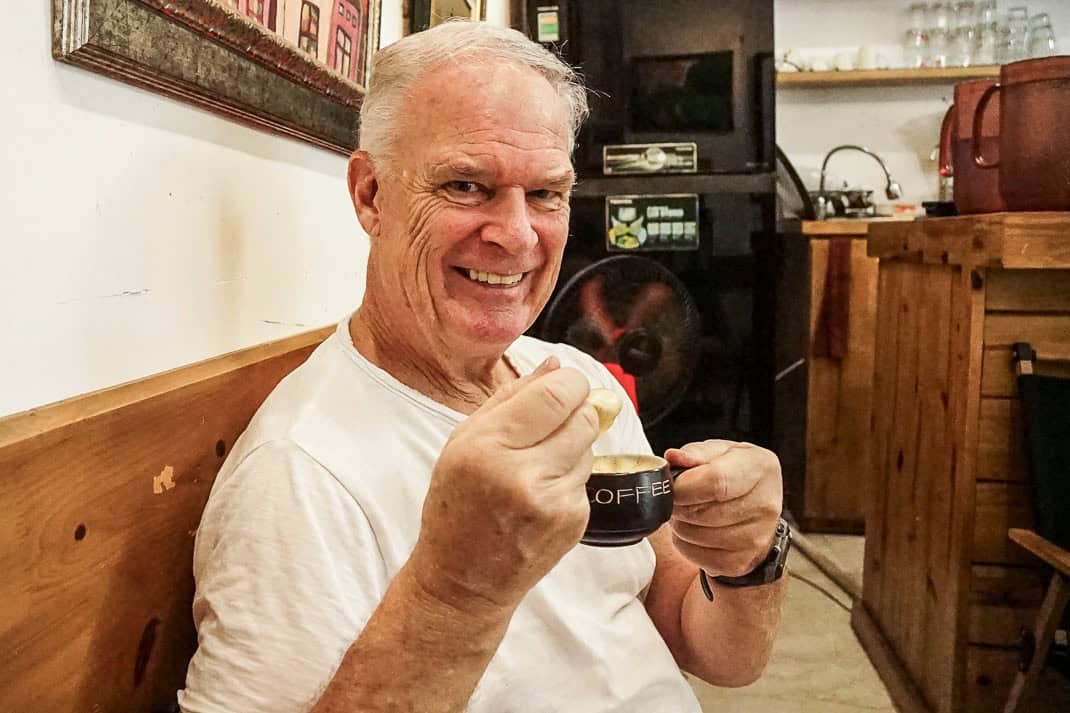
I asked him how he became so interested in coffee at such a young age.
“When I was a kid, my father and mother drank coffee in the morning and with friends in the afternoon,” he said. “Good coffee and good talk is important in Hanoi.”
Hanoi’s coffee history
The French were colossal swine as colonists in Vietnam but they left great coffee. In 1857, French missionaries introduced coffee plants near Catholic churches in the northern Vietnam countryside. By the 1880s, after much sipping and praying, they had commercialized coffee plantations.
By the 1920s, the soil-rich Central Highlands became a perfect region for growing coffee and it remains the chief producer of Vietnam’s coffee today.
When the Vietnamese 86’d the French in 1954, the communist government in North Vietnam took over the French plantations and established state-run coffee farms. With Soviet assistance, it developed 24 plantations. Production peaked at nearly 5,000 tons in 1968. But lousy agricultural planning and the early years of the Vietnam War took their toll. By 1972, only four plantations remained, producing less than 1,000 tons annually.
While coffee production suffered in the North, coffeehouses flourished in South Vietnam, particularly Saigon. They became popular gathering places for students, artists, intellectuals and businessmen. It was there that coffee evolved beyond a French colonial import into an important part of urban Vietnamese social life.
In the North, cafes remained popular despite the production problems. People gathered to discuss the latest war news, not to mention hide from U.S. bombing raids. The communist North Vietnamese government started highly popular state-run cafes.
After the war ended in 1975 and Vietnam sunk into economic chaos, coffee became scarce. It became a luxury. Few cafes survived. Then in the 1980s Vietnam kicked off Đổi Mới, its highly successful economic reforms, and in the ‘90s coffee production skyrocketed, particularly in the Central Highlands.
Cafes returned to Hanoi and Vietnam became one of the world’s leading coffee exporters. According to Vietnam News, last year Vietnam had 500,000 coffee shops. Its domestic coffee industry in 2024 had a market value of $510 million and the projection is $765 by 2029.
The menu
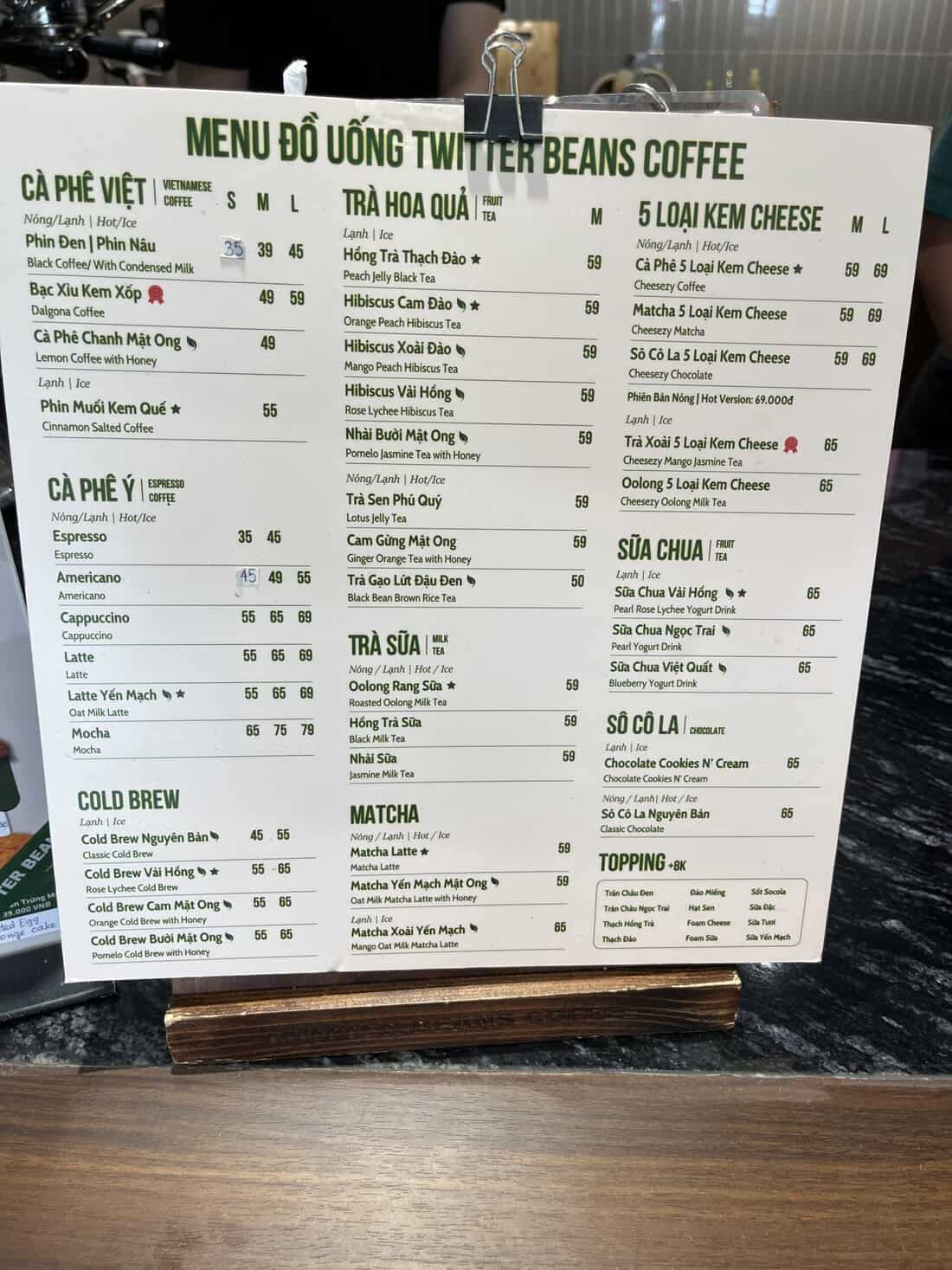
Just don’t give the French too much credit. They introduced coffee to Vietnam, but Vietnam has made coffee all its own. And it has a lot. Coffee clerks in Hanoi told me the variety is in the hundreds.
I never drank coffee until I moved to Rome the first time in 2001 and fell in love with cappuccino. In Hanoi I fell in love with three types I’d never heard of until I started researching before my trip:
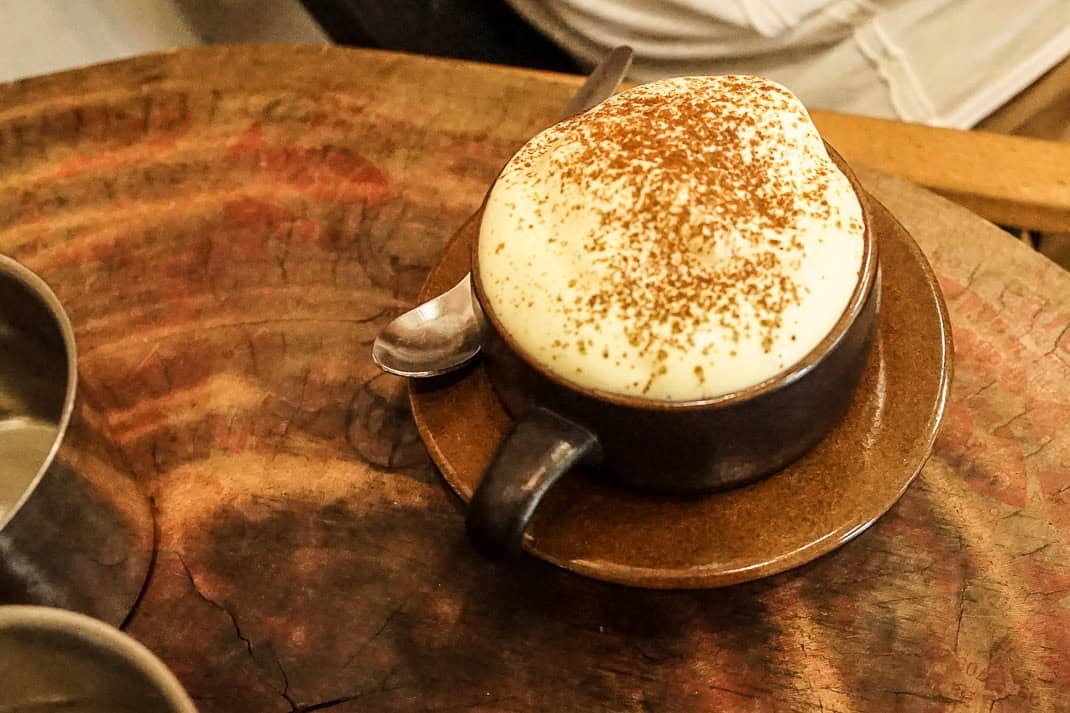
- Egg coffee. Strong black coffee topped with whipped egg-yolk cream.
- Condensed milk coffee. Just like it says, it’s black coffee with a major dollop of thick, sweet condensed milk.
- Salt coffee. Called cà phê sữa in Vietnamese, it’s dark, black coffee topped with salt, milk and whipped cream or condensed milk. It’s called cà phê sữa đá if served with ice.
This doesn’t count the others I saw on menus such as coconut coffee, banana coffee, cinnamon coffee, Oreo coffee, green bean coffee and cocoa coffee.
Starbucks has nothing on Hanoi.
Hanoi’s coffee star
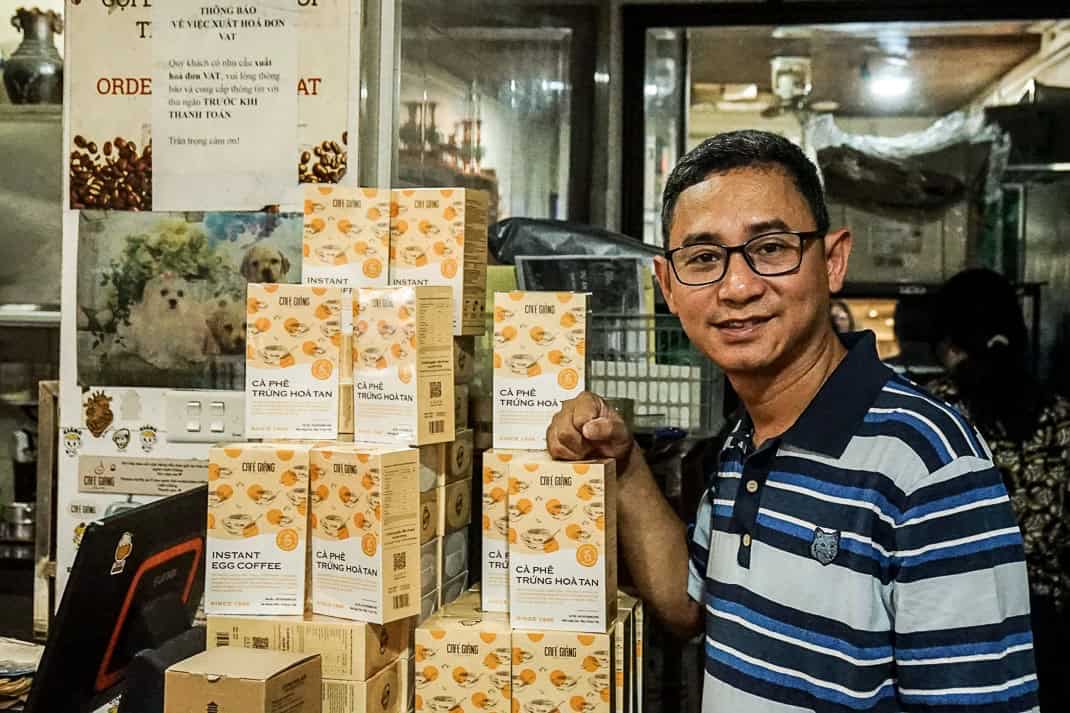
Hanoi’s signature coffee is egg coffee. Sounds gross? It isn’t. I never eat eggs in Asia. I’ve been sick four times overseas and every time was in Asia. Three were from eggs. However, I will forevermore drink egg coffee.
It was invented in 1946 by Nguyễn Văn Giang, a bartender at Hanoi’s legendary Sofitel Legend Metropole Hotel. It was during the first Indochina War against the French and fresh milk was scarce. As a substitute, he used egg yolks. He whipped them up to make a sweet topping on the coffee.
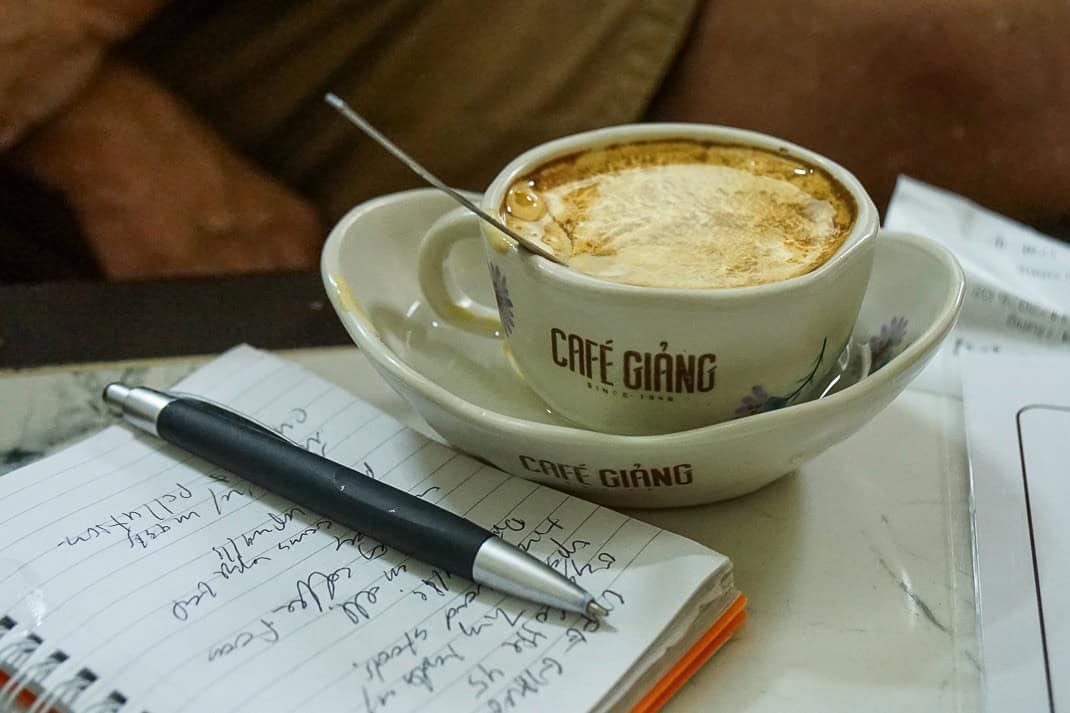
Later that year, he opened Cafe Giang in Hanoi’s bustling Old Quarter. Two other shops opened in Hanoi and egg coffee has been a standard ever since.
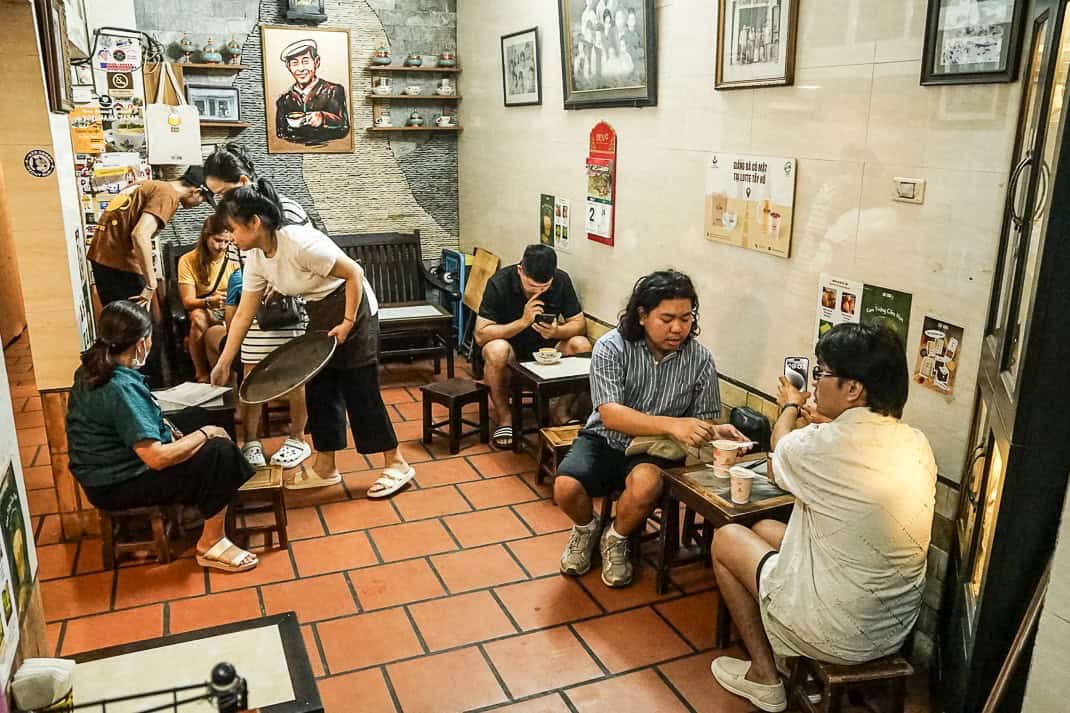
Marina and I walked up its narrow staircase to an upstairs with tiny tables and tiny wood stools. Five quaint rooms were filled with young Vietnamese with coffee cups, all staring at their cells. Plants adorned the walls.
I ordered the egg coffee. It tasted like liquid mousse. Its frothy head was sweet as a dessert and so thick I drank it with a spoon. Eventually, the foam gave way to deep, dark, roasted black coffee below. I loved it. It was different, tasty and sweet.
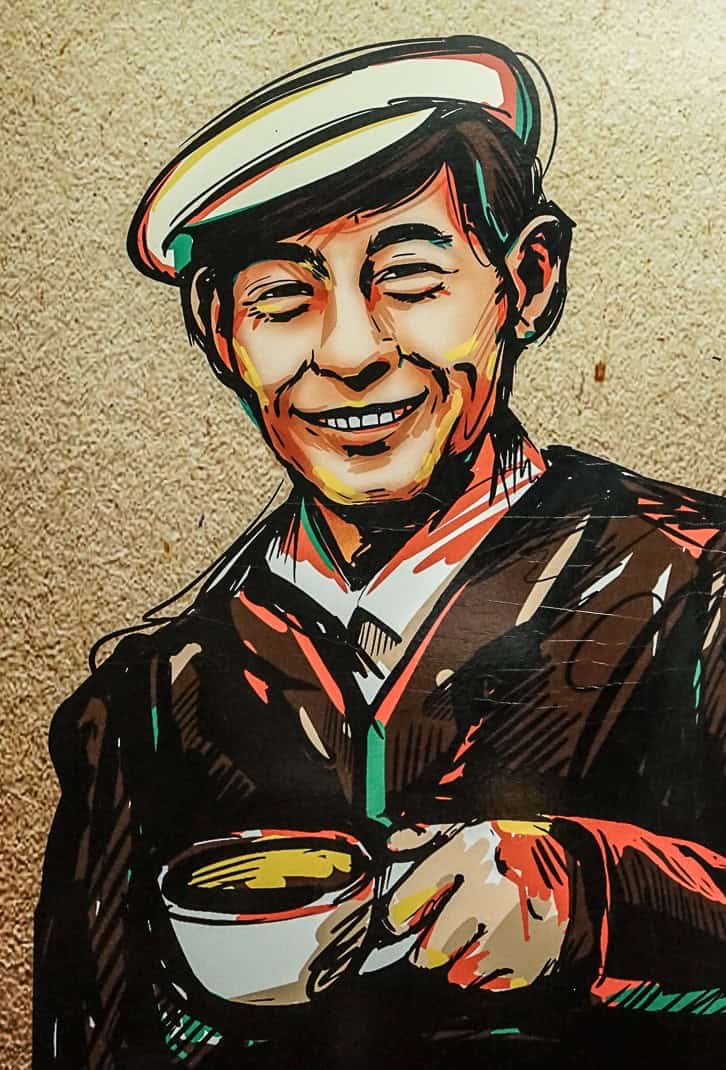
I talked with the man at the cashier. Martin Son is the grandson of Nguyễn whose smiling caricature holding a cup of coffee hangs on the wall as you enter. His whole family runs the place which he says the three shops sell 3,000-5,000 cups of coffee a day.
“People drink coffee every morning, every day,” he said. “Hanoi people, father, son, everybody, drink coffee. We stop everything and talk about the future.”
It turns out, Martin and I had something in common besides a love for egg coffee. He also is a sports editor of a soccer newspaper. He was familiar with AS Roma’s two recent choke jobs in the Champions League.
After we exchanged soccer news, I asked him what coffee means to him.
“I like coffee because my father likes coffee,” he said. “My father likes coffee because we can earn money and pay for everything.”
The others
Our hotel had an excellent breakfast buffet, and I asked a waitress what the little steel cannister next to the coffee machine was for. It’s condensed milk? What do you do with it?
She said, “Pour some in the coffee” without me feeling too stupid.
I tried it and it was delicious. It was a different kind of sweet than what the cane sugar gave my coffee back in Rome. Condensed milk coffee became my morning ritual and I vowed to find condensed milk, called latte condensato, when I returned.
I discovered salted coffee in Toninni Cafe, a small Hanoi chain without a Starbucks chain feel. It was small, cozy, with little wooden benches and chairs.
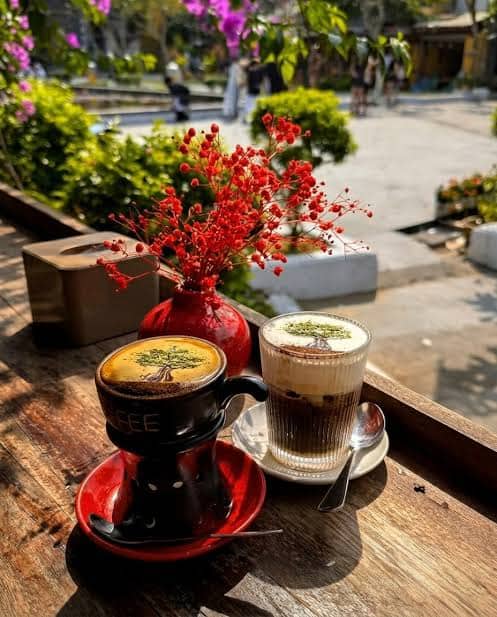
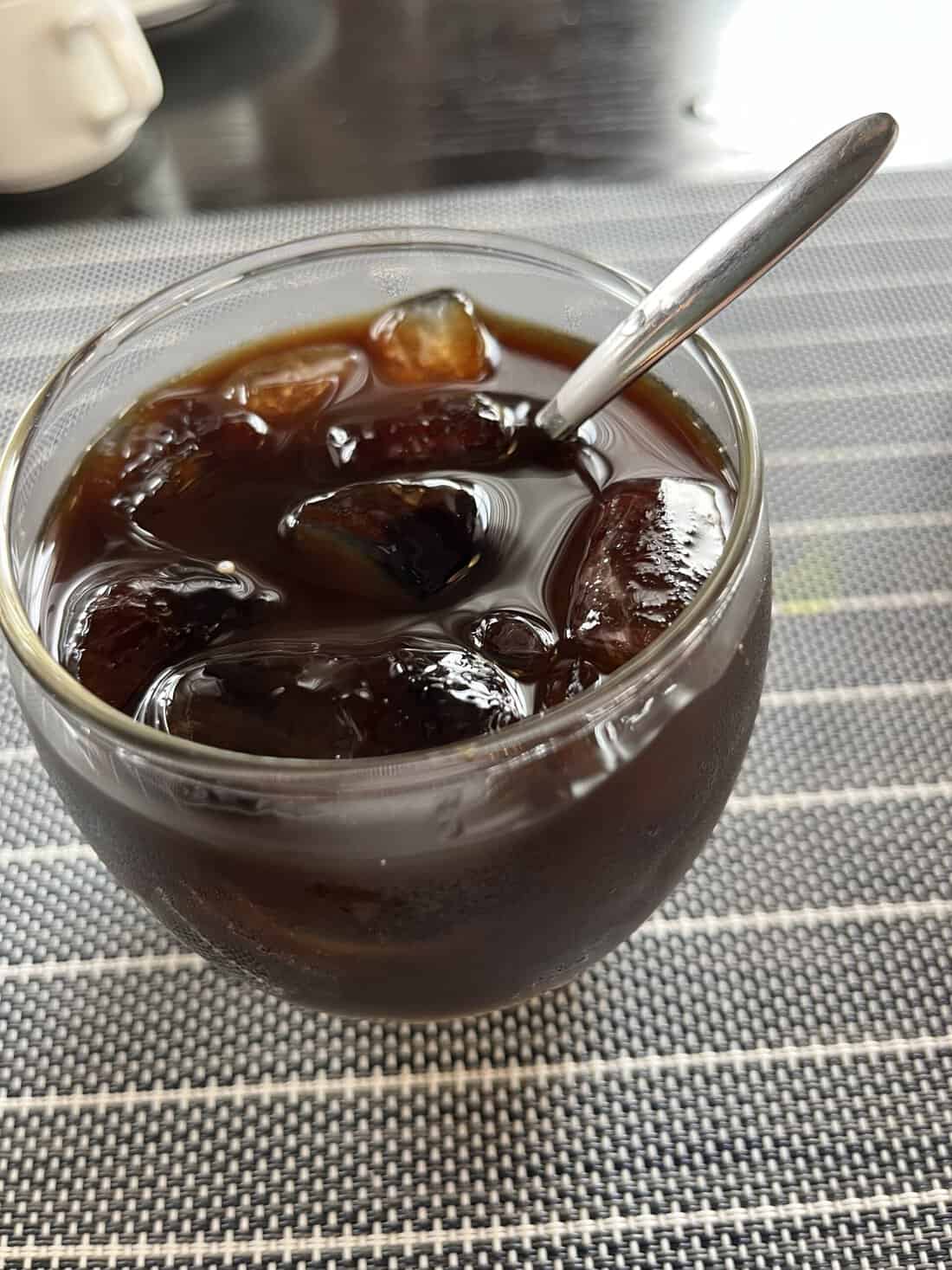
It was a typical hot Hanoi day, about 90 with 86 percent humidity. I knew drinking beer, which is about as cheap as coffee in Hanoi, wasn’t a good idea at 9 a.m. I saw salted coffee was served with ice. I ordered it, as much for the ice as the coffee.
It came out covered with white foam and chocolate sprinkles. It poured over a tall glass of ice like cascading waters and tasted like a Butterfinger.
The French didn’t invent this. It was a couple in Hue, in central Vietnam, named Hồ Thị Thanh Hương and Trần Nguyễn Hữu Phong. In 2010 they opened a cafe called Ca Phe Muoi, or Salt Coffee. They wanted a competitive edge against all the other cafes in town.
They experimented with salt and discovered that it softened the bitterness of the coffee yet balanced the sweetness of the condensed milk. Soon, other cafes in Hue served it and it spread throughout Vietnam.
But alas, the couple never patented it and they didn’t see a penny of the €1 I spent on it.
If you’re thinking of going …
How to get there: San Francisco is the only U.S. city that flies direct to Vietnam and it’s to Ho Chi Minh City. Flights from Ho Chi Minh City to Hanoi start at €43 one way.
Where to stay: Aira Boutique Hotel, 38A Tran Phu St., Ba Dinh District, 84-24-3935-2485, www.airaboutiquehanoi.com, info@airaboutiquehotels.com. Wonderful four-star hotel with rooftop bar within walking distance of most major sites. I paid €102 a night including an excellent buffet breakfast.
Where to eat: Tam Vi, 4b Yen The St., 84-966-323-131, https://www.nhahangtamvivn.com, 10:30 a.m.-9 p.m. A 10-minute walk from the hotel, it’s been called the most inexpensive Michelin-star restaurant in the world. Mains start at €3. Try the caramelized pork belly with shrimp. I paid €25 for two including appetizers, drinks and dessert.
When to go: In the north, fall. Summer is sweltering and wet. Even fall was hot with temperatures during our stay in the low 80s with mid-80s humidity. In central Vietnam, it’s February-April when temperatures are in the high 70s. Southern Vietnam is best in winter when temps are in the ‘80s and little rain.
For more information: Vietnam Tourism, https://vietnam.travel, contact@vietnamtourism.gov.vn.
(Tuesday: A ride on Vietnam’s VIP Red Flamboyant train.)
November 13, 2026 @ 6:02 pm
Ya…I had the egg coffee at Hanoi House, across from St Joseph’s cathedral. Indeed, it sounded gross…but it was a happy ending sitting out on the 2nd story terrace overlooking the square….
November 13, 2026 @ 6:21 pm
Thanks, Scott. Tried to make one yourself in Anchorage? I won’t dare try. I prefer the fond memories.