


Vietnamese cuisine: A country’s history served on a plate
(This is the last of a five-part series on Vietnam.)
“The food, culture, landscape and smell; they’re all inseparable. It just seemed like another planet; a delicious one that sort of sucked me in and never let go.”
— Celebrity chef Anthony Bourdain on Vietnamese cuisine in a 2014 interview with Condé Nast Traveler.
HANOI, Vietnam – Marina and I followed Anthony Bourdain’s footsteps in Vietnam. Why not? If it was good enough for Pres. Obama, it was good enough for us.
On our recent two-week visit, we only had two restaurants on our to-eat list: Tâm Vị and Bún Chả Hương Liên. The Hanoi restaurants represent polar opposites of Vietnam’s culinary atmosphere. Tầm Vị is one of Hanoi’s four Michelin-starred restaurants, offering an elegant, artistic experience that makes you feel like you’re dining inside a pagoda.
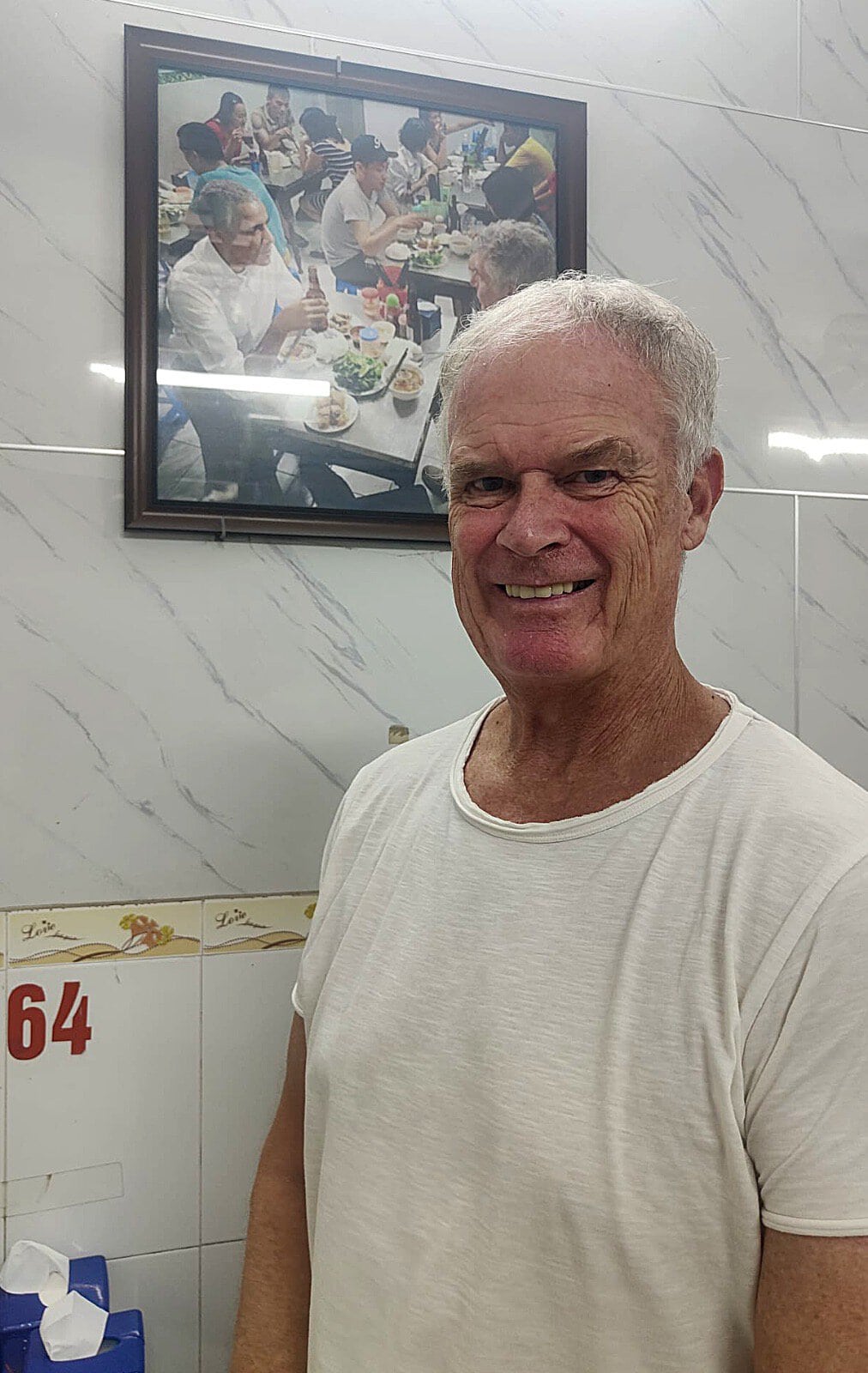
Bún Chả Hương Liên is a dump.
It’s a no-frills, rough-and-tumble eatery with little on its plain white walls except mostly photos of Obama’s visit with Bourdain in 2016. Steel tables. Plastic chairs. A one-page menu with only seven items.
In other words, they were both going to have authentic, excellent food. Also, because this is Vietnam, the prices, by international standards, wouldn’t be much different.
One of the ways I sold Marina on visiting Vietnam was its cuisine. Healthy. Balanced. Delicious. (I didn’t tell her it was also cheap.) Anyone who values big-flavor dishes without leaving with a big belly should eat their way across Vietnam.
Like Bourdain, food helped lure me back to this beautiful country as much as the landscapes. On my first visit in 2005, I went to southern Vietnam and I could tell that 30 years after the country’s unification and the disastrous nationalization of private businesses, Ho Chi Minh City had made quite the culinary comeback.
I won’t go as far as Bourdain and say Vietnamese food is on “another planet.” My three favorite cuisines in the world remain Italian, Greek and Indian. After two weeks, I started seeing rice and noodles in my sleep. I missed pizza.
But there are worse holidays than eating delicious dishes you can’t pronounce let alone have never tried. After visiting Vietnam, I’m sure Obama feels the same way.
Regional differences
Vietnam is more than 1,000 miles (1.650 kilometers) long and covers 15 degrees in latitude. The geography is varied which varies the regional cuisines. They can be be divided into three distinct categories.
South: Coconut milk is more prominent. Dishes tend to be sweeter with tropical fruits and fresh herbs. River fish is also prominent.
Central: The region’s many ethnic minorities influence the highlands area with grilled meats and vegetables from the mountainous terrain. Bamboo shoots and fermented foods are common. The popular coastal areas are known for spicy dishes with complex seasonings and seafood.
North: Less sweet and spicy and more subtle flavors. Soups and broths are big and Chinese influence from the north is evident. Also common is vermicelli, a thin, light noodle.
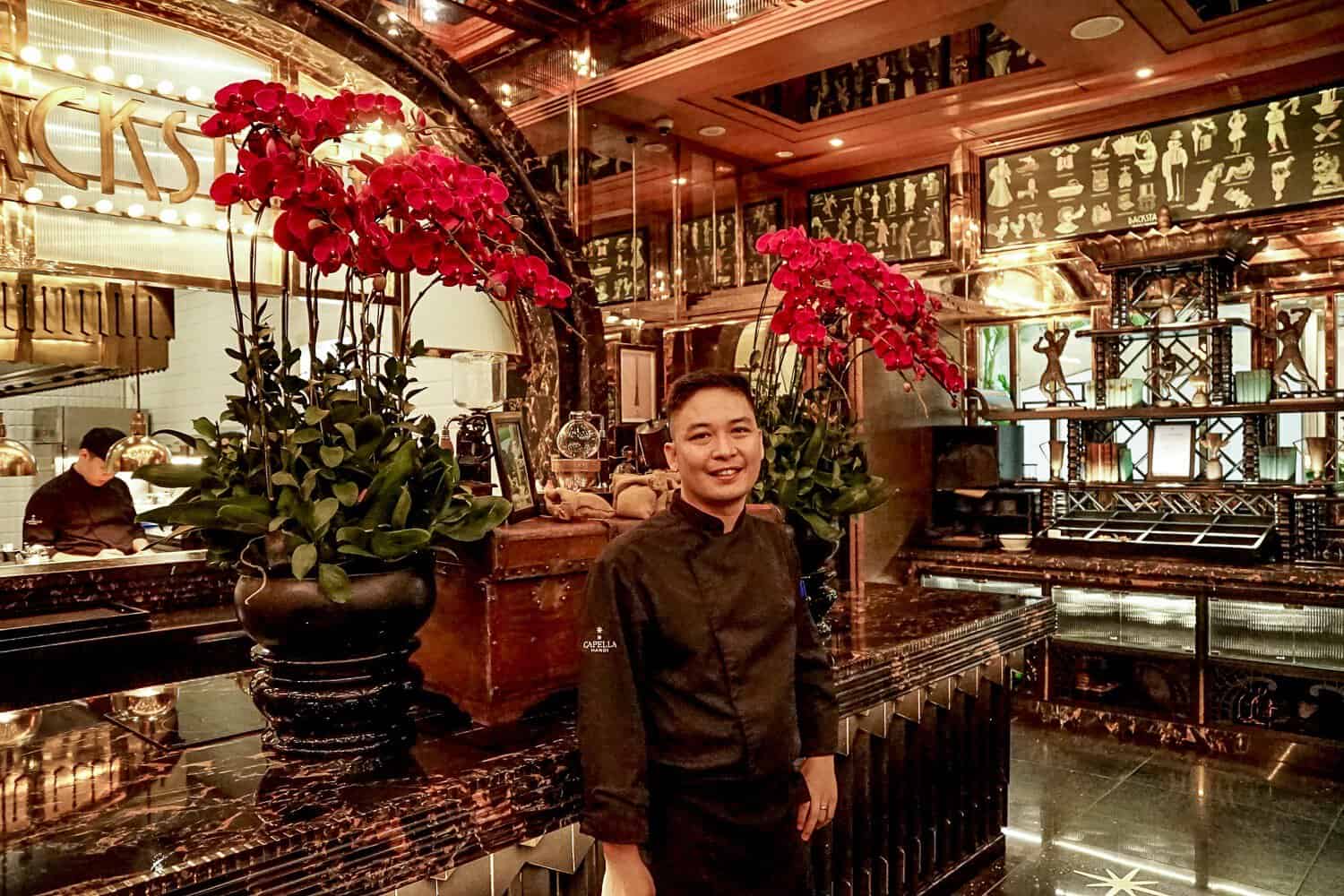
To get the skinny on the northern cuisine we were eating, we sought out Nguyễn Quyết, the cook at Backstage, one of Hanoi’s most elegant restaurants. It’s in the French Quarter’s Capella Hotel which is only five years old but harkens back to Vietnam’s old French colonial days.
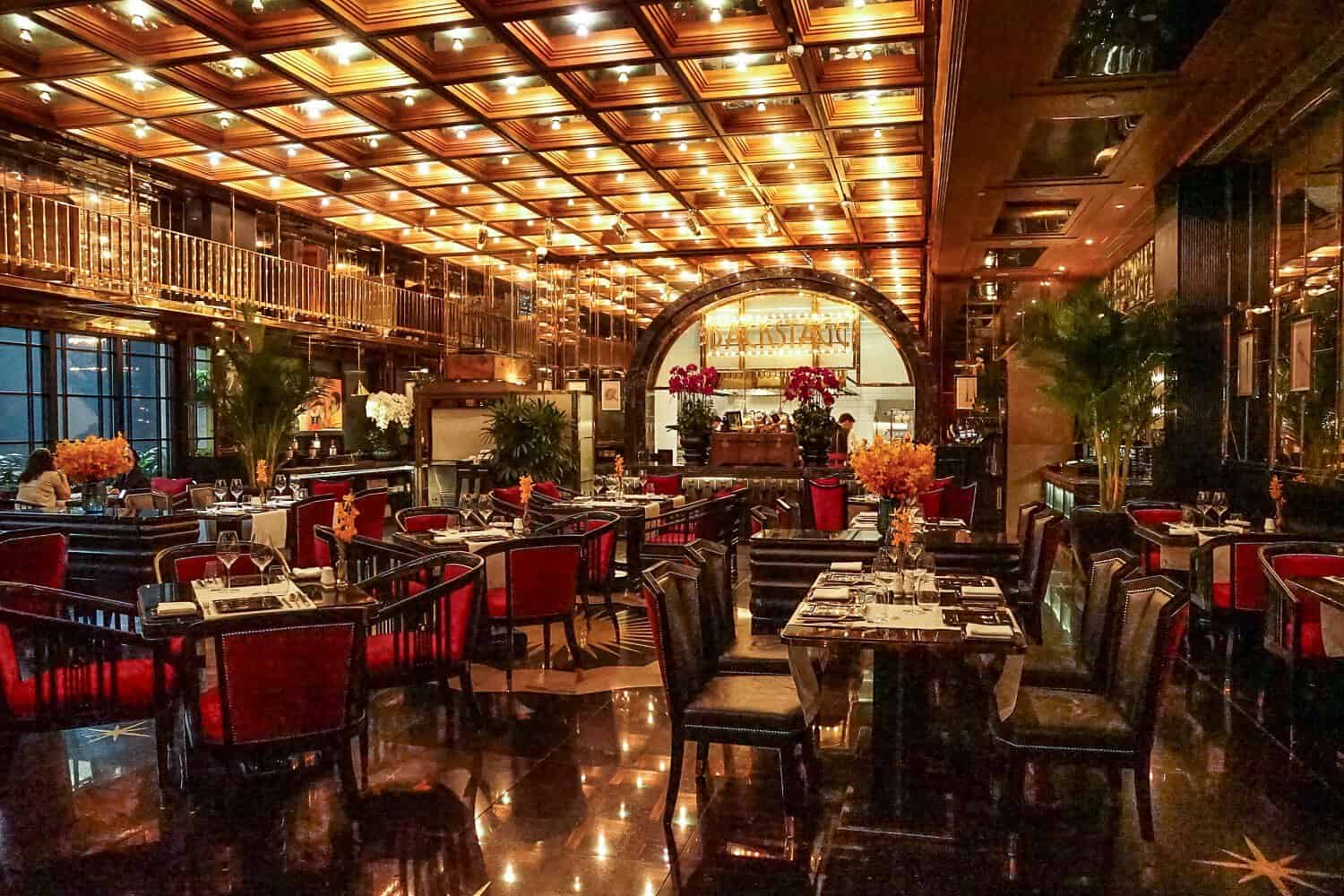
With its Art Deco flourishes, crystal chandeliers and marble floors, it feels like you’re walking into a Paris opera house in the Roaring ‘20s – the 1920s.
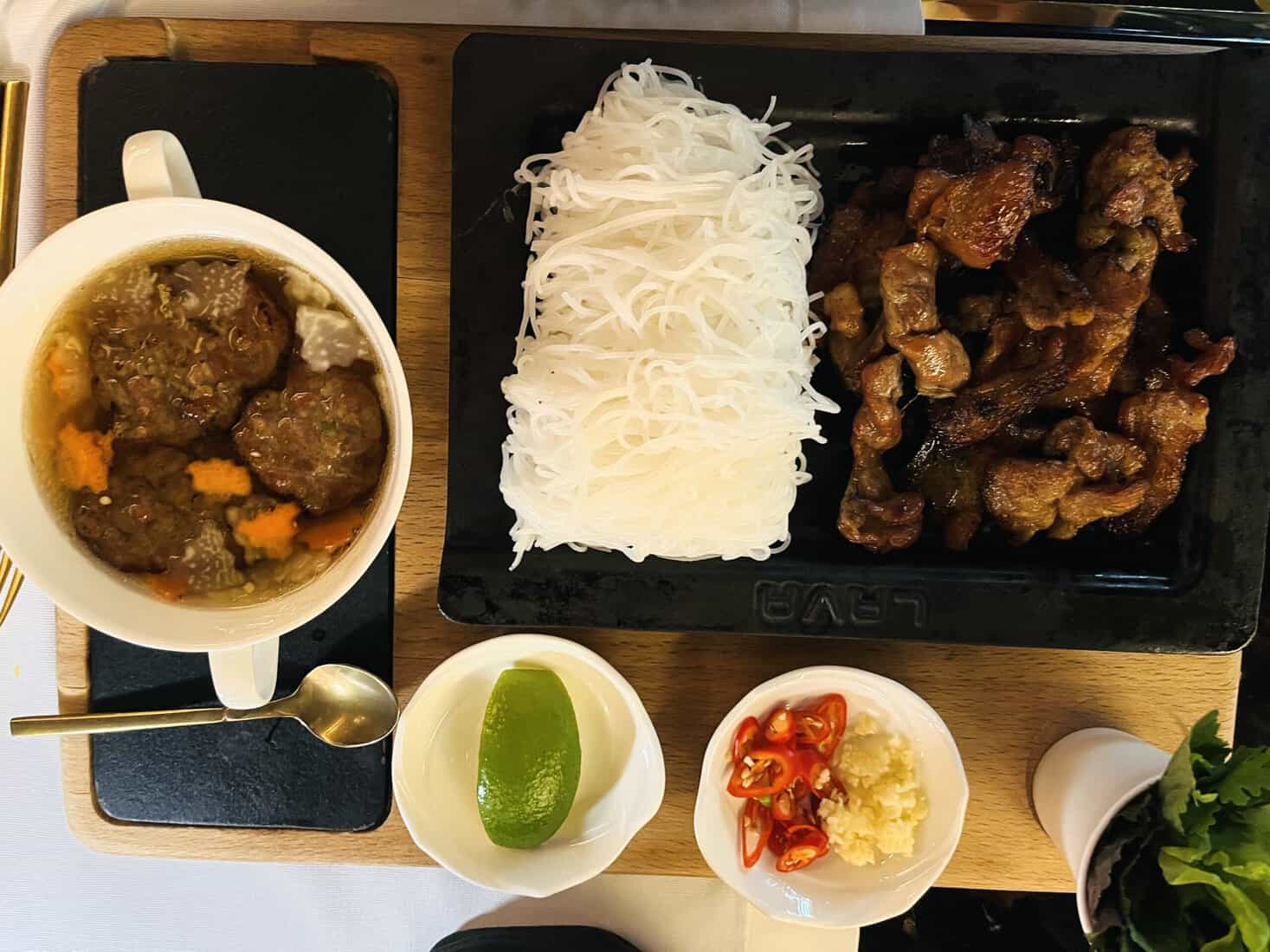
We took a red velour seat in Backstage’s dining room with fresh flowers on the tables and gold decor dripping from the walls. I ordered the bún chả, one of northern Vietnam’s signature dishes. It’s charcoal-grilled pork patties, grilled slices of pork belly with a sweet-and-sour fish sauce for dipping, vermicelli, fresh herbs and vegetables.
It was excellent. The broth added oodles of flavor to the pork and crisp pork belly was the perfect accompaniment.
Quyết, 38, came out and we thanked him profusely for the meal before he explained through an interpreter what makes northern Vietnam cuisine special. Diminutive with a clean-shaven, youthful face, he said Vietnam’s first kings and emperors were in the north and, of course, royalty must eat well.
But geography also plays a big role.
“The northern side, compared to the south side, we have very clearly four seasons: winter, summer, spring and autumn,” he said. “And each season has their own special cuisines. And also there are spices for every season.”
Quyết grew up near Halong Bay, now one of northern Vietnam’s most popular resort areas. His parents were farmers and he always wanted to be a cook. He’s too young to remember North Vietnam and the Vietnam War but he’s old enough to see the transformation in Vietnam restaurants.
“The Vietnamese, we’ve got skill. We’ve got ingredients,” he said. “And they got money. And now for about five years, six years, there are more and more international corporations. They come to Vietnam. They see the potential, and they invest more money.
“They bring the Vietnamese dishes to a new level. Like it’s more of a luxury.”
Not everywhere
I can picture Bourdain turning up his nose to Backstage. He’d roll up his sleeves, find a no-frills dive and try to decipher a menu. Kind of like what he did with Obama.
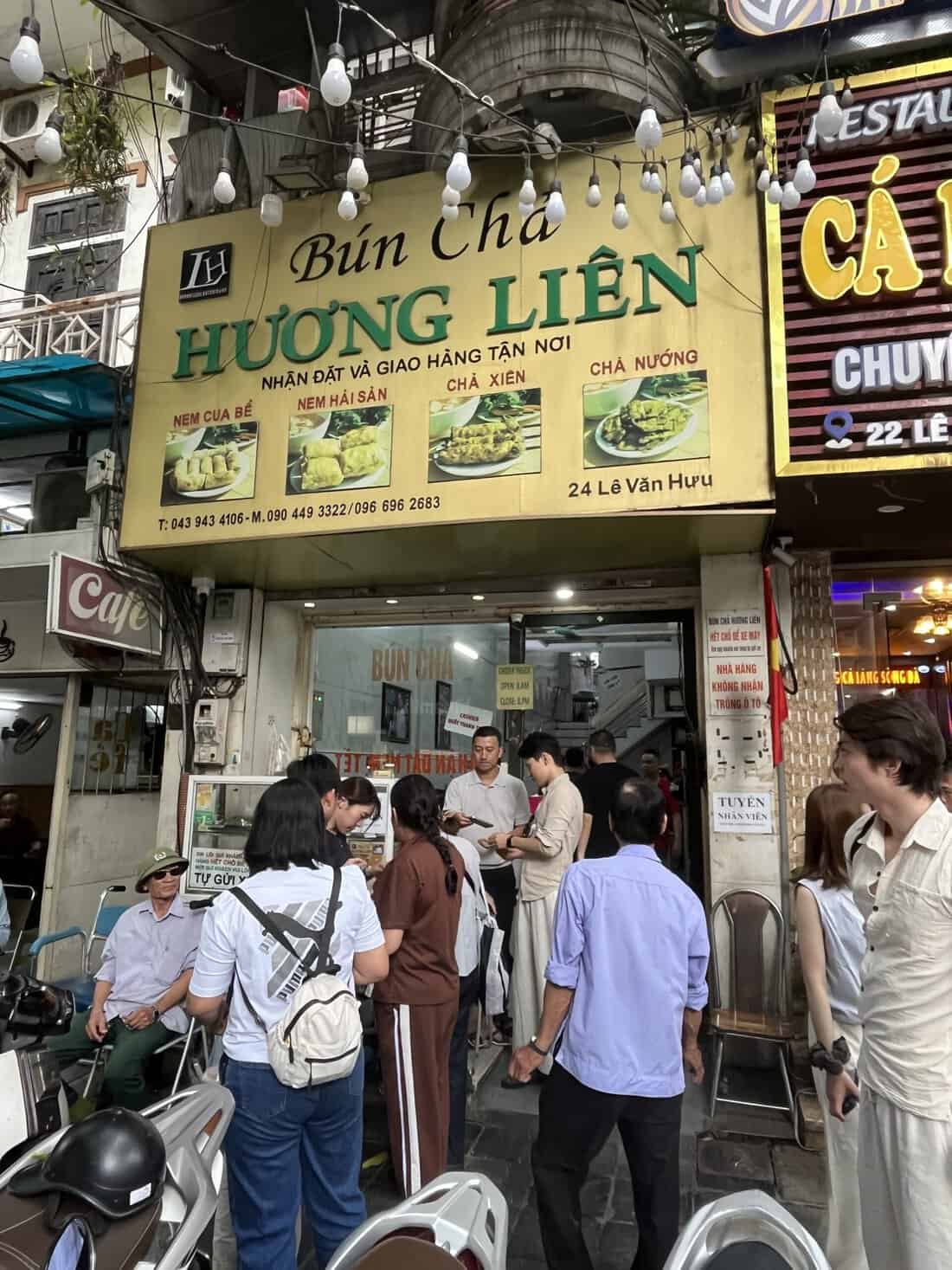
I call Bún Chả Hương Liên “a dump” as a compliment. It’s clean. It just has all the elegance of a vending machine. In 1993 it opened on the southern fringe of the French Quarter and has a plain wooden sign with the ubiquitous pictures of various dishes.
Bourdain invited Obama to experience the real Hanoi, not Vietnam’s buttoned-down diplomatic version. The good sign is it was packed with Vietnamese. We were the only Westerners. I could smell fish sauce and chilies and lemongrass.
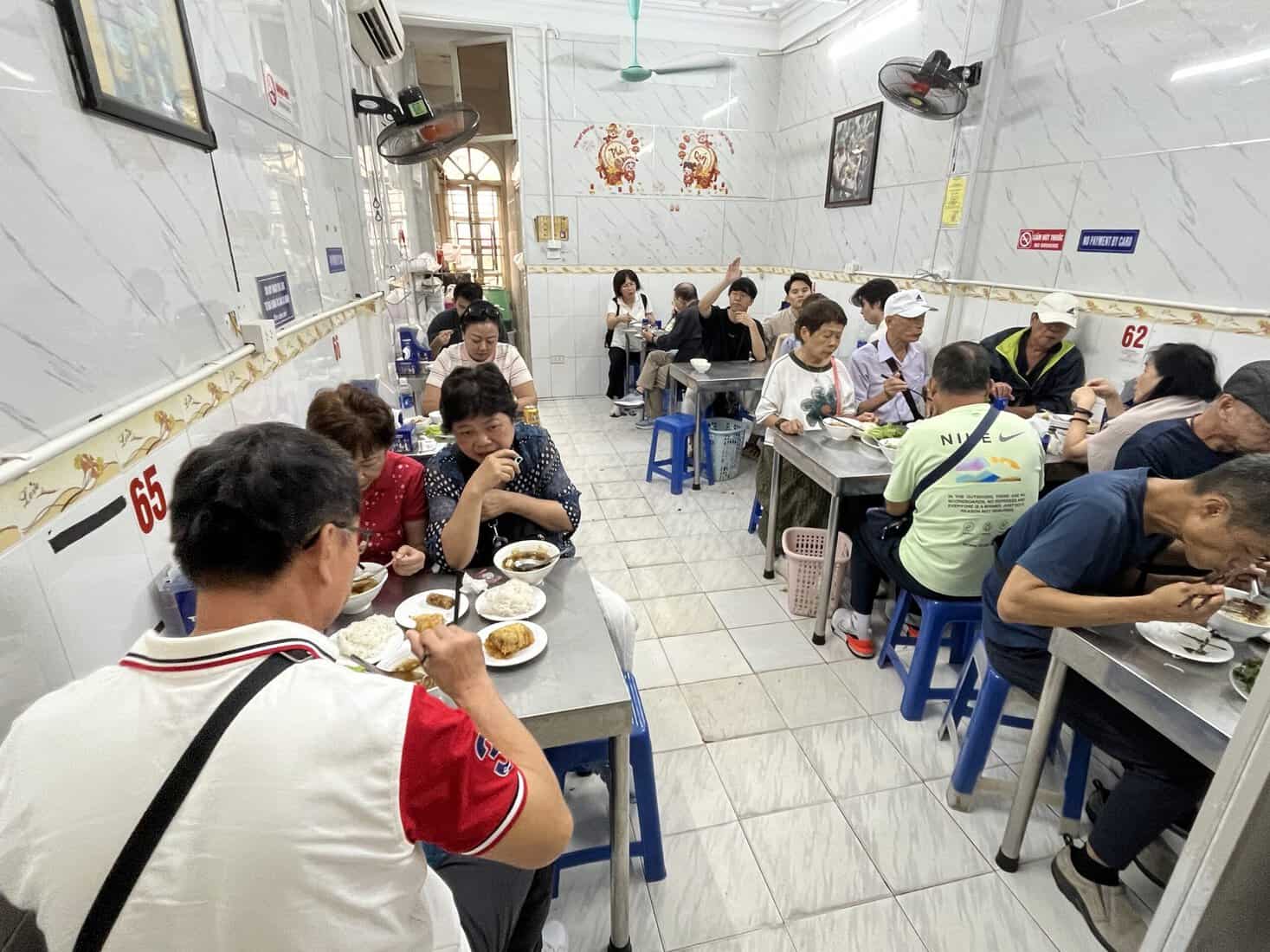
We took plastic chairs upstairs and a waitress flipped us a one-page menu without saying a word or making eye contact. Two women shoveled lettuce from giant bowls onto plates with vermicelli.
Waitresses yelled at waiters. Dishes of rice and noodles flew around like speedy drones. Bún Chả Hương Liên is the least romantic restaurant in Hanoi.
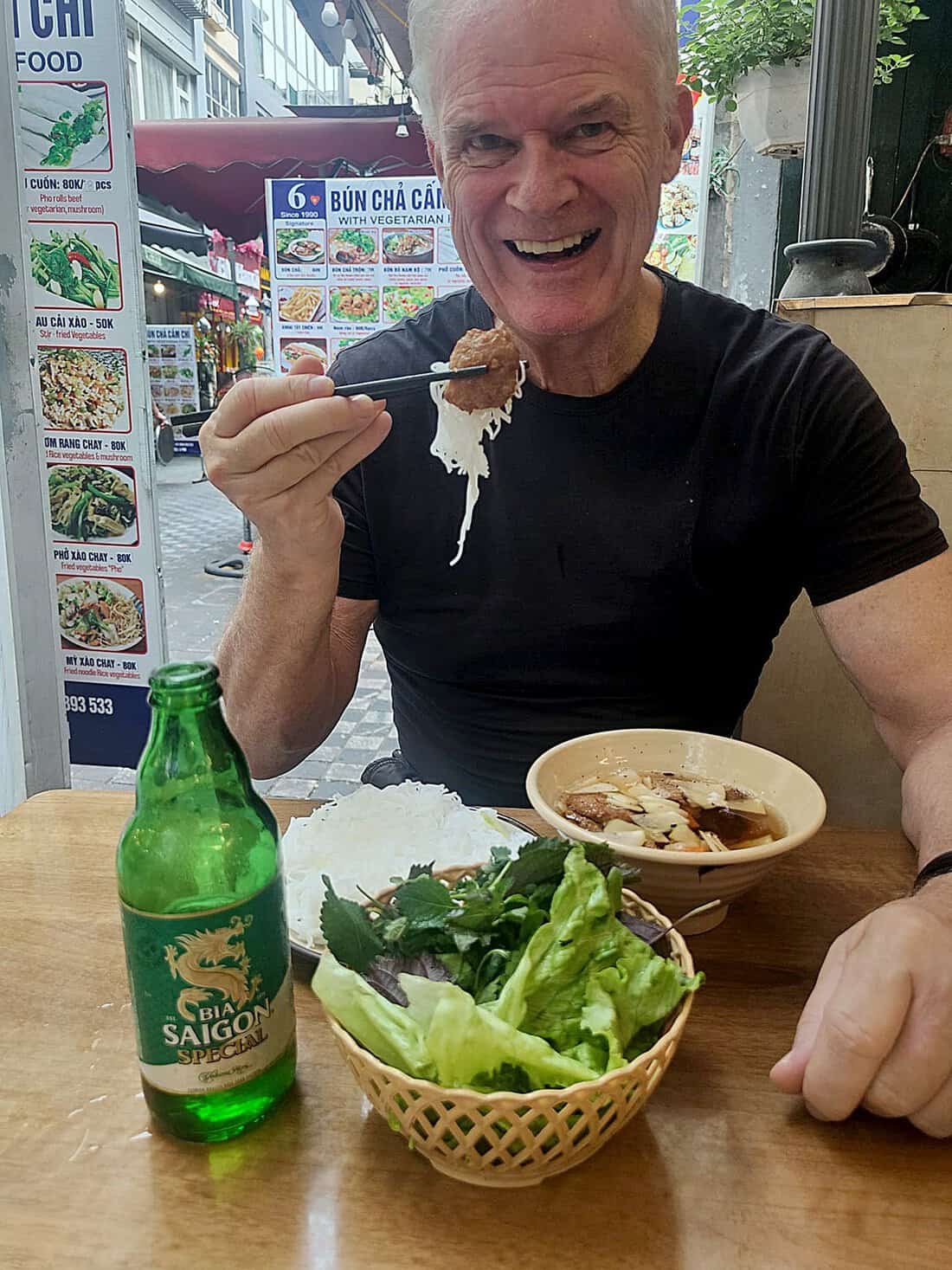
I ordered the fried crab roll, a spring roll for only 10,000 dong (33 cents) each. Unfortunately, the waiter misunderstood me – or he didn’t see the dish I pointed at on the menu – and brought me a giant bowl of soup.
I pointed again at the crab roll and, putting on an expression that made me think he’d turn chopsticks into deadly weapons, angrily grabbed the dish and stormed off. He brought me the crab roll without looking at me and then three more as I realized these were some of the best spring rolls I’ve ever had.
Three most important dishes to try
Talking to locals and research, I narrowed northern Vietnam’s three must-try dishes. Quyết confirmed them:
- Bún chả. It goes back to the mid-20th century when Hanoi street vendors carried portable charcoal grills and the smell of pork sizzling on the coals drifted through the narrow streets of Old Town. It has always been a traditional lunch dish and is symbolic of Hanoi. Obama raved about it. I also had fabulous bún chả at the Sky Bar atop L’Heritage Hotel and at Bánh cuốn Kỳ Đong, a delicious dive on Food Street, lined with similar cheap outdoor restaurants.
- Spring rolls. Everywhere we went we saw these on the menu, just as you would in every Vietnamese restaurant around the world. But in Hanoi there’s a variety. Besides the crab rolls, there are deep-fried pork spring rolls, the uncooked rice-paper rolls and fresh rolls made with sheets of phở rice noodles rather than rice paper.
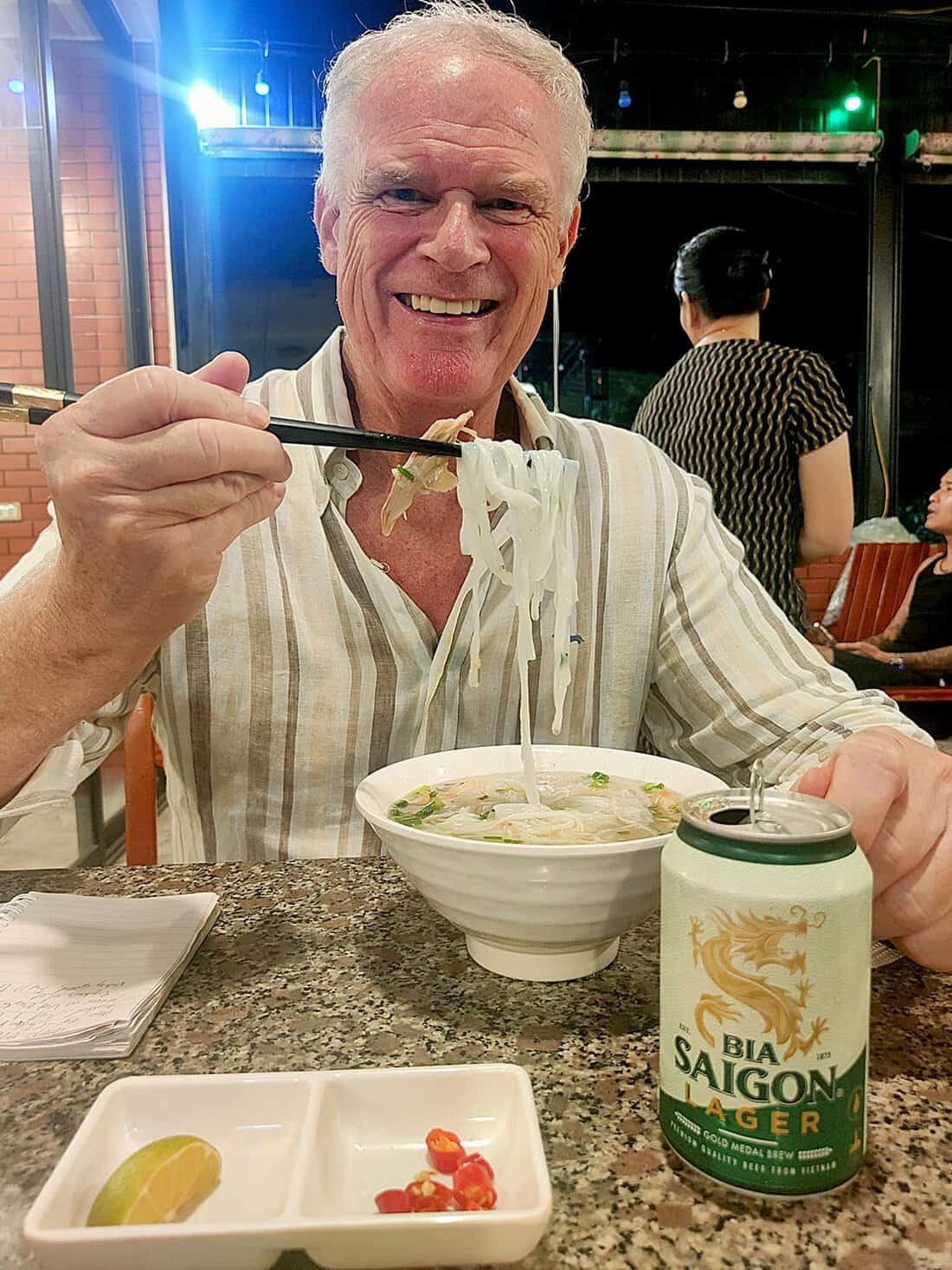
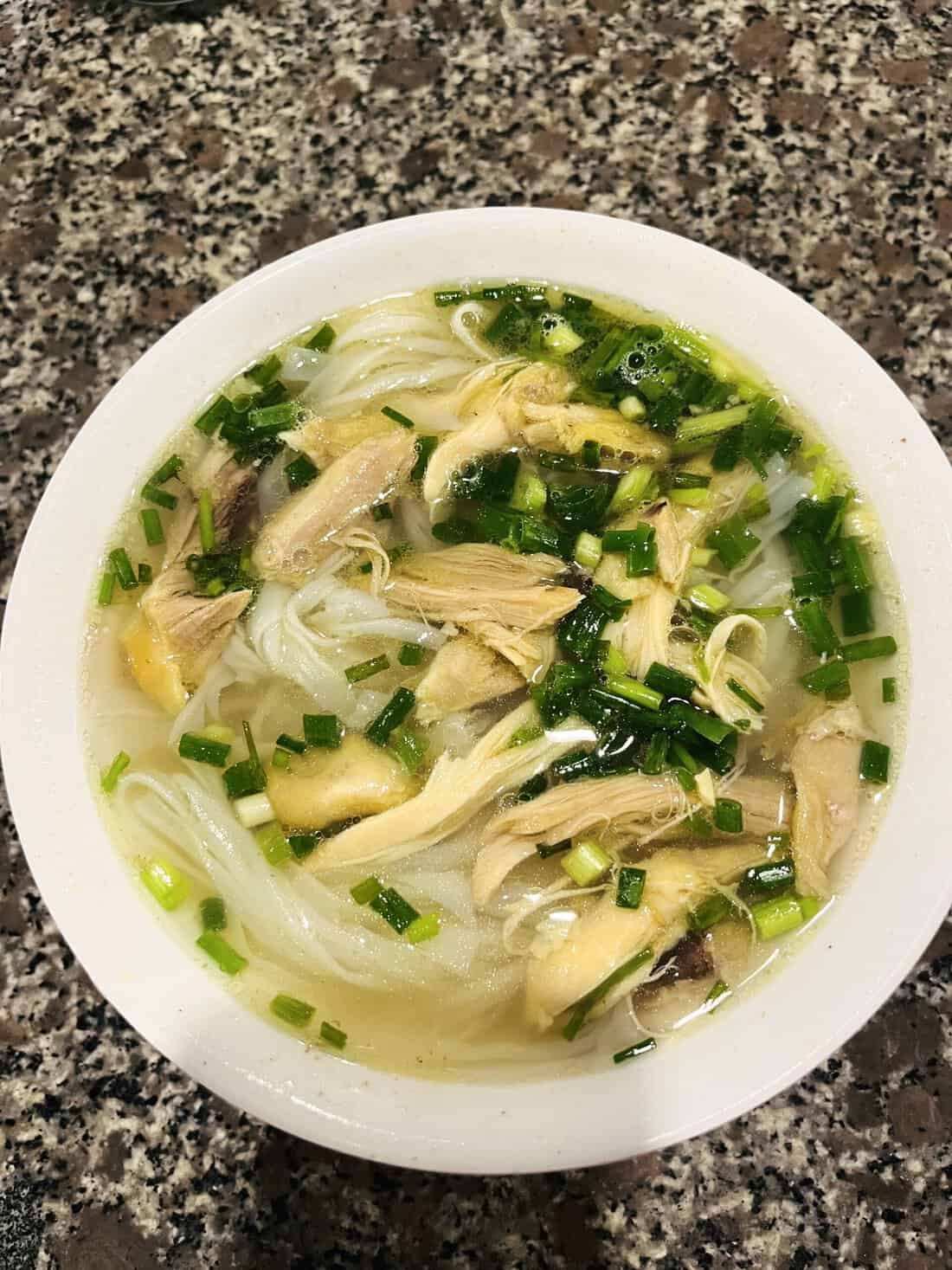
- Phở: Classic noodle soup in a rich broth with beef or chicken. A disclaimer: I’m not a big phở fan. Vietnam is hot. Really hot. And we didn’t even go in the steaming summer. It’s too hot to eat noodle soup. It’s like drinking a beer outside in Vladivostok. But one night at Chef Hien in Tam Còc, the backpacker village near Ninh Binh, I tried it and it was wonderful. Lots of juicy chunks of chicken in a flavorful soup packed with herbs.
Other dishes
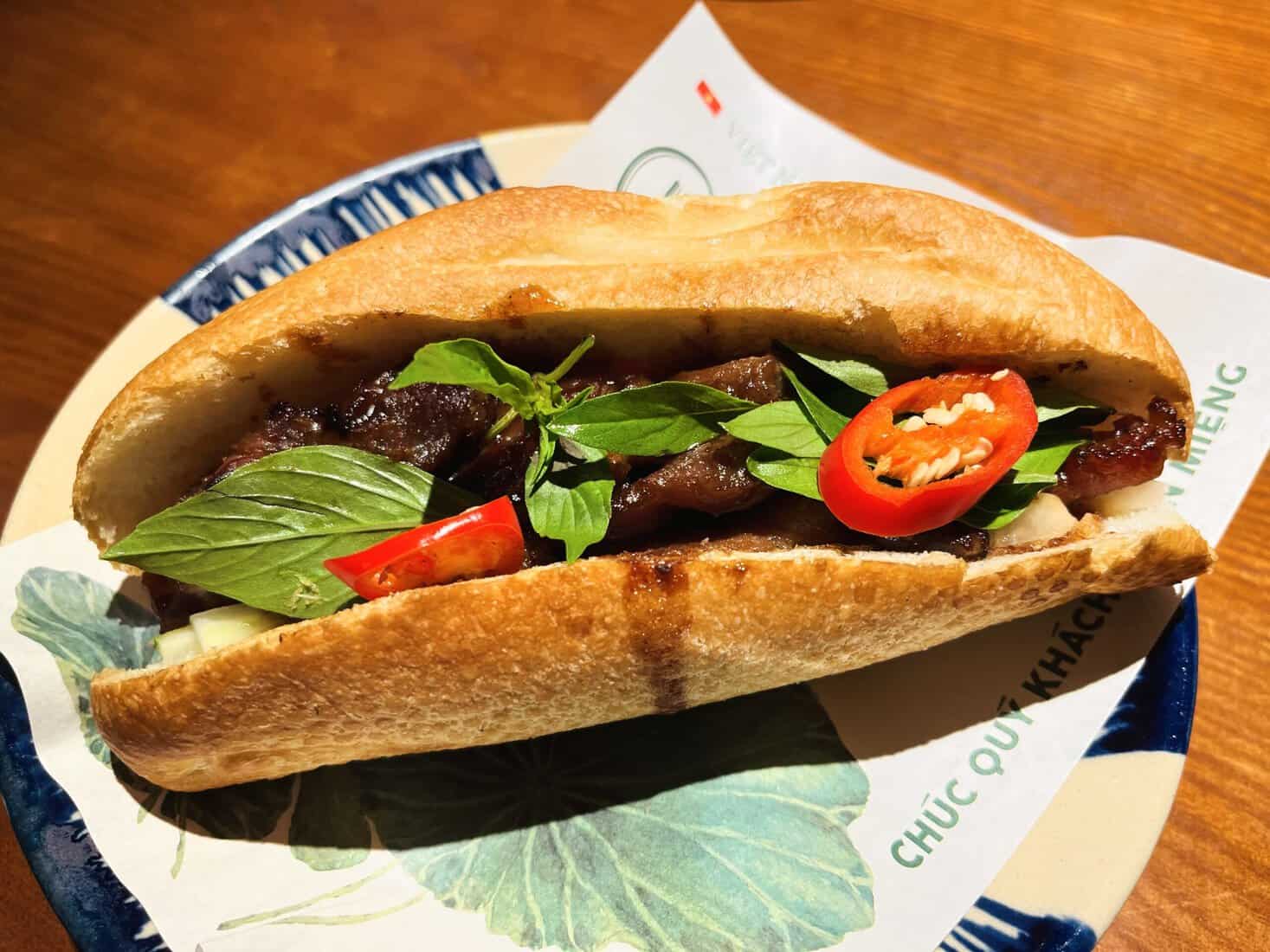
Bánh mì: Bánh means flour-based foods such as bread and that’s one thing the French left after colonization besides a railroad and economic exploitation. Bánh mì is a baguette filled with a variety of toppings. My bánh mì came with caramelized pork, lettuce, cherry tomatoes and topped with coriander sauce.
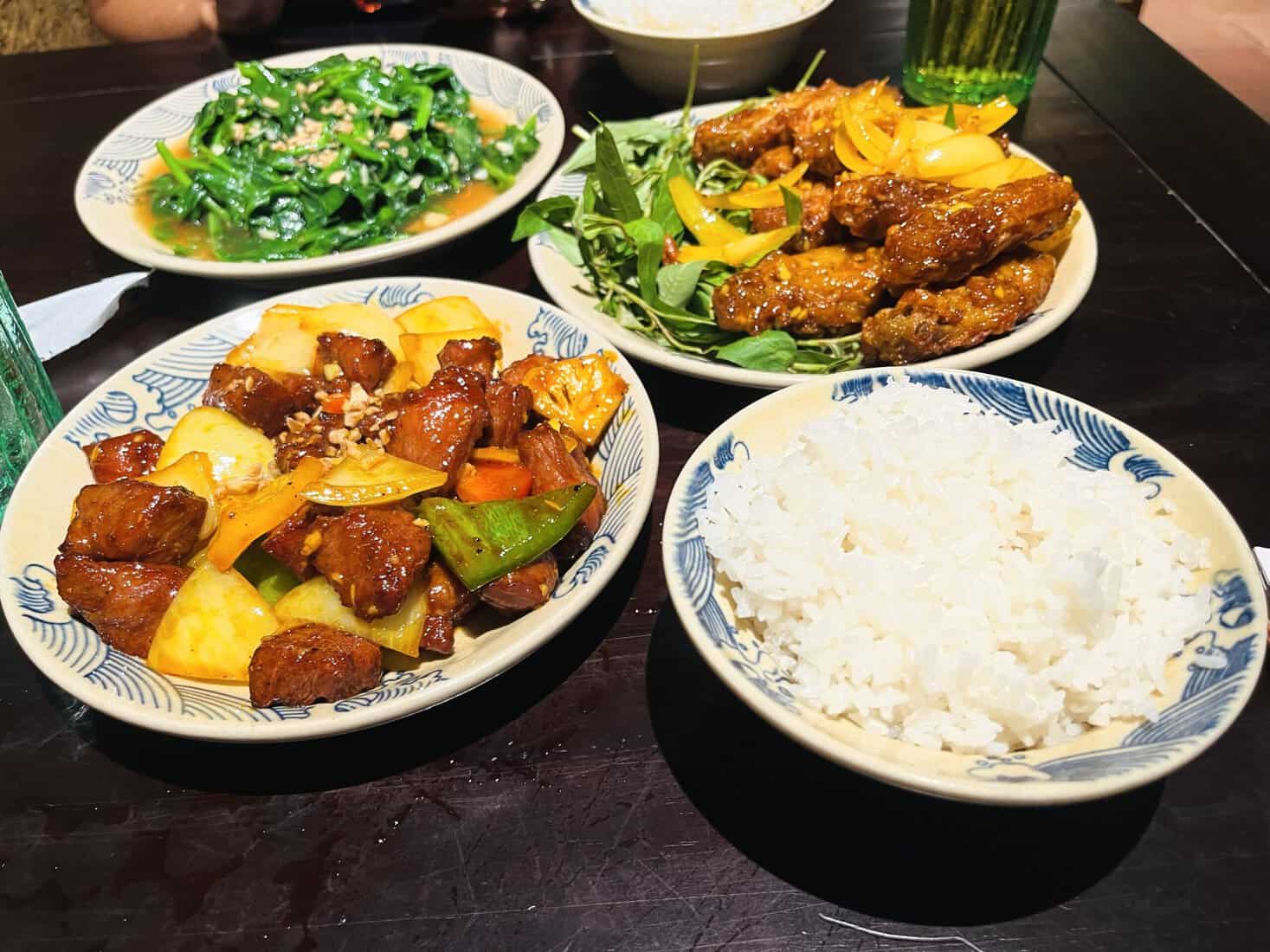
Bò lúc làc: That means “shaking beef.” Mai La, a two-year-old Hanoi restaurant, is decorated like a Vietnamese village eatery with its thatched bamboo hanging over an entryway. It serves this Vietnamese favorite: beef tossed with bell peppers and onion and Mai La adds pineapple. It’s marinated in soy and fish sauce and served with white rice, and I chased it with a mango smoothie.
Bánh xèo: This is Vietnam’s sizzling savory pancake. Its name imitates the sound the rice-flour batter makes when it hits a hot pan. Some see a French crêpe influence, although the dish’s origins remain debated. Usually filled with pork, shrimp and bean sprouts, it’s eaten with fresh greens and dipped in fish sauce. You dip it in fish sauce which, at the Oasis Bar in Cát Bà, was the only flavorful part about the dish. This was the most major disappointment of our culinary tour.
Tâm Vị
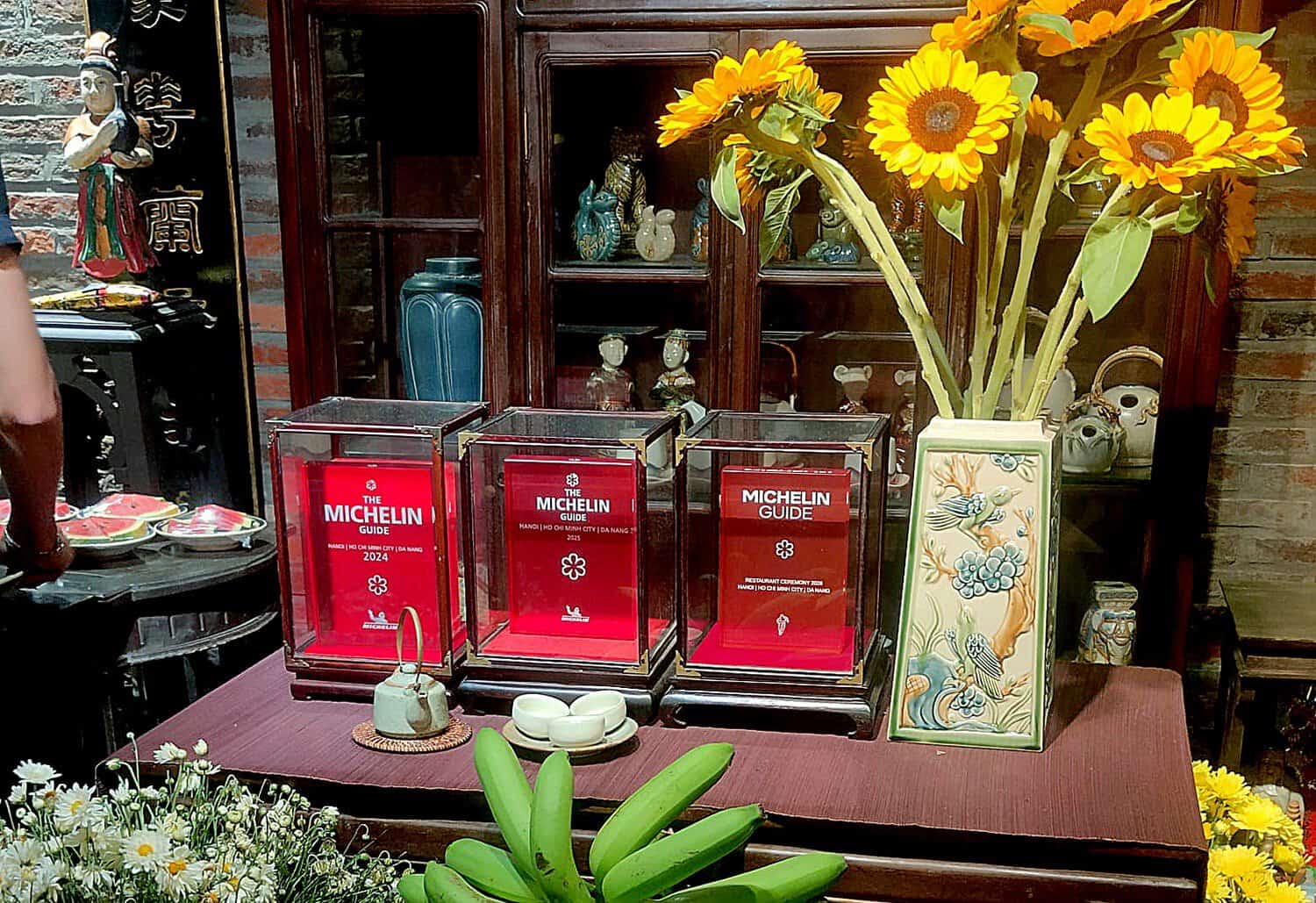
During my pre-trip research, I read an inconceivable sentence: Tâm Vị is “the cheapest Michelin-starred restaurant in the world.” Does that mean it only costs a month’s mortgage rather than your first-born male child?
Earning a Michelin star gives restaurants license to double or triple their prices. I avoid them like McDonalds.
But Tâm Vị is different. Main dishes start at … wait for it … €2.50. I’m serious. And it’s excellent. It’s rooted in home cooking and the prices reflect Vietnamese family dining.
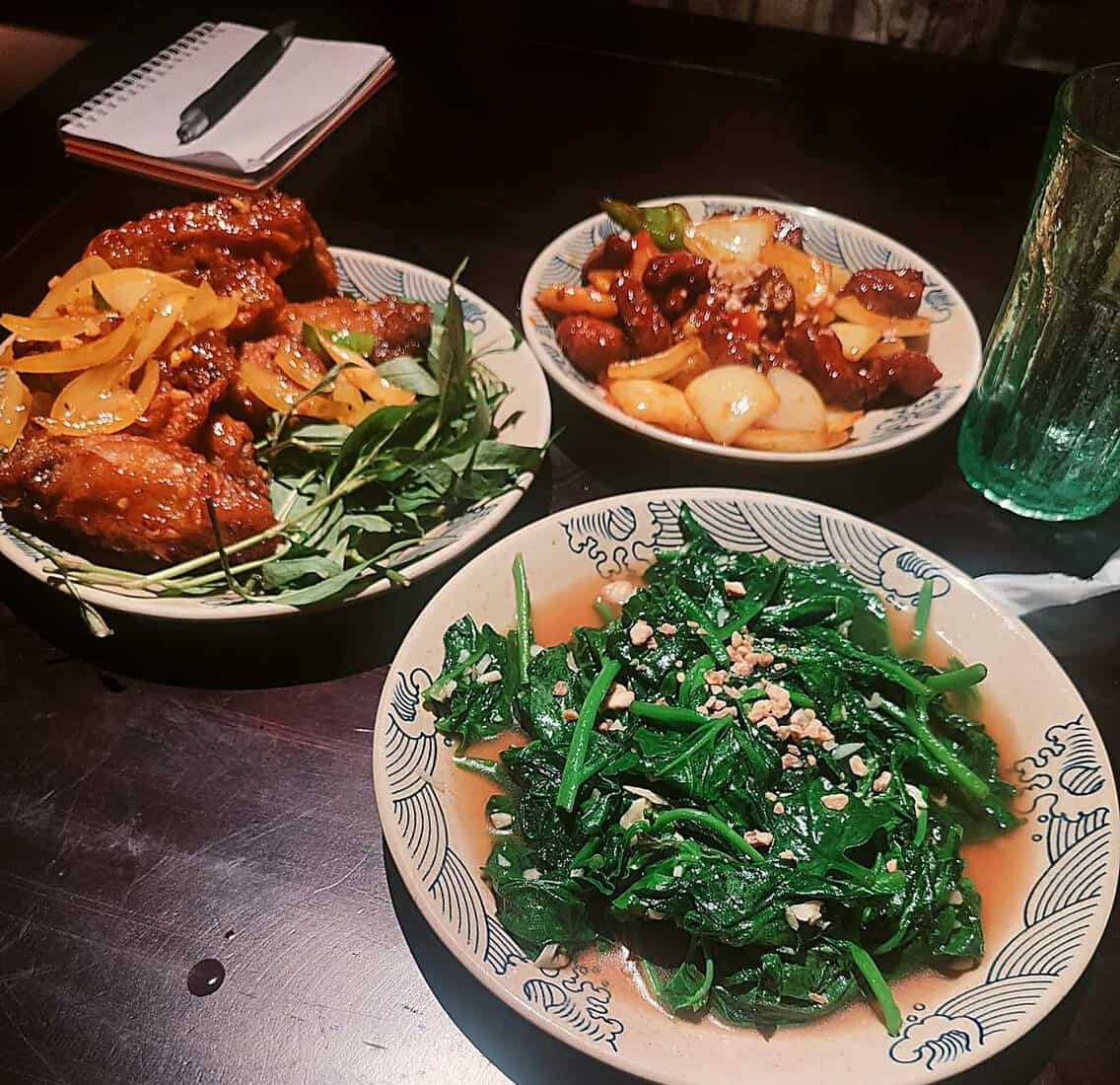
Opened in 2019, Tâm Vị’s walls are lacquered wood with little vases, flowers, Vietnamese figurines and antique furniture everywhere. Tapestries of birds and flowers hang on walls. Michelin awarded it the star in 2023, partly for the authenticity of its northern Vietnamese cuisine.
We sat in an intimate room with tasteful lighting and I had the tôm rang thịt ba chỉ: caramelized shrimp stir-fried with pork belly. It was one of the best meals I’ve had anywhere in Asia. The pork was lean and the green onions added the perfect contrast. Price?
175,000 dong. That’s less than €6.
If you’re thinking of going …
How to get there: San Francisco is the only U.S. city that flies direct to Vietnam and it’s to Ho Chi Minh City. Flights from Ho Chi Minh City to Hanoi start at €43 one way.
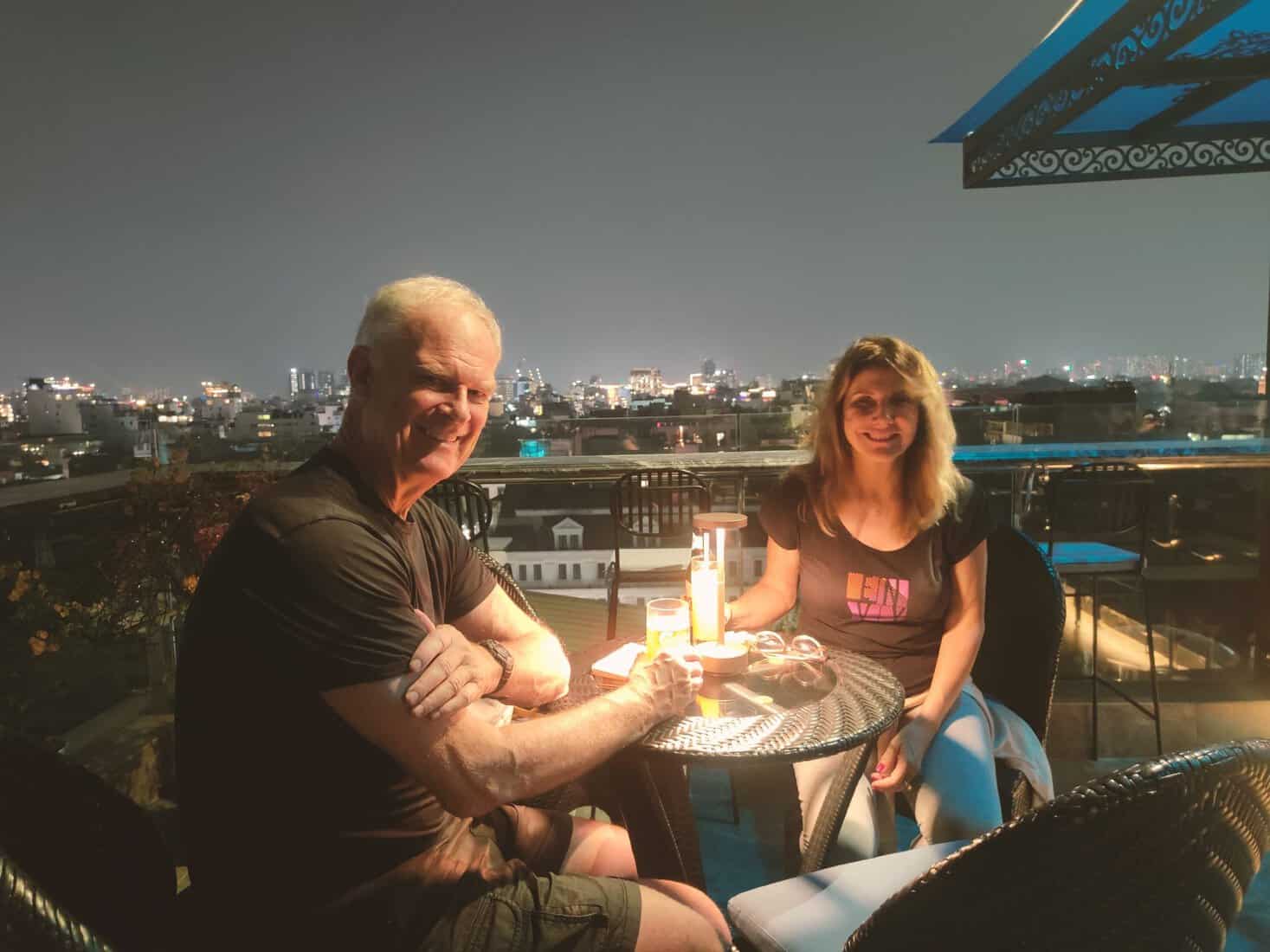
Where to stay: Aira Boutique Hotel, 38A Tran Phu St., Ba Dinh District, 84-24-3935-2485, www.airaboutiquehanoi.com, info@airaboutiquehotels.com. Wonderful four-star hotel with rooftop bar within walking distance of most major sites. I paid €102 a night including an excellent buffet breakfast.
Where to eat: Backstage, 11 Le Phung Hieu, Hoan Kiem, Hanoi, 84-243987-8888, https://capellahotels.com/en/capella-hanoi/dining/backstage, backstage.hanoi@capellahotels.com, 6:30-10:30 a.m., 11:30 a.m.-2:30 p.m., 5:30-10 p.m. High-end, elegant restaurant with gourmet Vietnamese dishes. Mains start at €12. Lunch for two with appetizers, mains and drinks was €54.
When to go: In the north, fall. Summer is sweltering and wet. Even fall was hot with temperatures during our stay in the low 80s with mid-80s humidity. In central Vietnam, it’s February-April when temperatures are in the high 70s. Southern Vietnam is best in winter when temps are in the ‘80s and little rain.
For more information: Vietnam Tourism, https://vietnam.travel, contact@vietnamtourism.gov.vn.