


Vietnam’s Red Flamboyant: A taste of the Orient Express
(This is the third of a five-part series on Vietnam.)
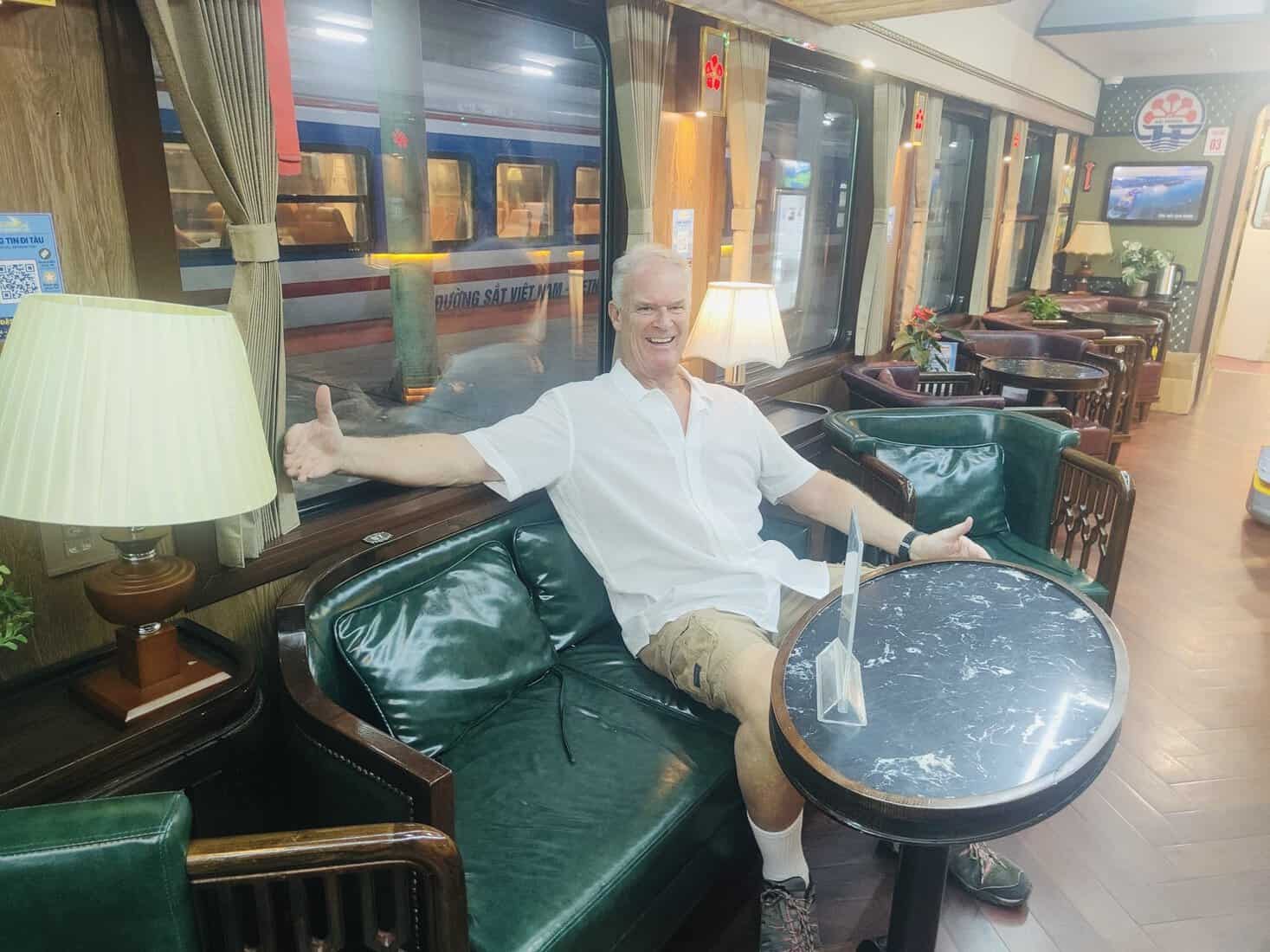
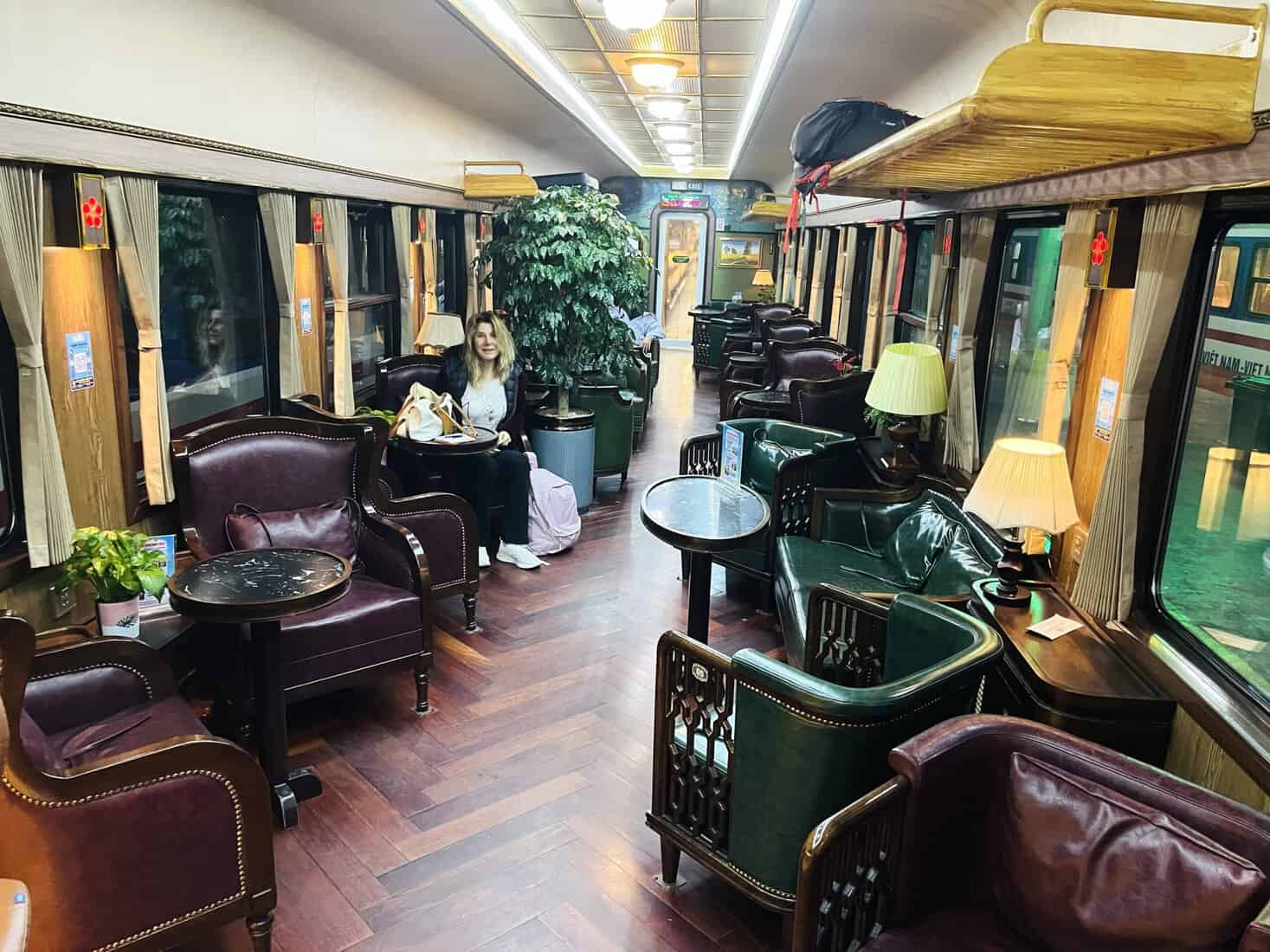
HAI PHONG, Vietnam – The green, overstuffed leather chairs and couches shined like wet jade under the LED strip lighting. Dark brown chairs with curved backs lined up next to little cocktail tables. Small, stylish 19th century table lamps highlighted warmly decorated wooden walls.
A six-foot potted plant sat on the expensive, wood-paneled floor. Silk curtains were drawn from giant picture windows.
Marina and I walked in feeling like Sarah Bernhardt and Jacques Damala entering a Parisian palace in 19th century Paris. But we weren’t. We had checked out of our hotel that hour.
We walked onto a train. In Asia.
For me, Asian trains have always carried all the romance of Asian alleys. About my only experience riding a train in Asia was taking a second-class Indian train from Delhi to Agra and standing flesh to flesh between cars for three hours. Then waiting for the return train in Agra, I saw the track covered with crawling, hungry, black rats.
But this is Vietnam. In Vietnam, they have put train travel on your must-do list. They even made trains a spectator sport.
I wanted to treat Marina with lavish luxury on our two-week trip to Vietnam. Five-star resorts. Michelin-starred restaurant. And a train.
A train?
Yes, Vietnam Railways has introduced luxury carriages with Indochine-style interiors, blending French colonial elegance with Vietnamese design. The style dates back to when Vietnam was called Indochina and riding these trains were French aristocrats and military personnel. For a 2 1/2-hour trip from Hanoi to Hai Phong, on our way to Cat Bay, we traveled like French royalty.
The difference is, we didn’t disembark and guillotine any Vietnamese.
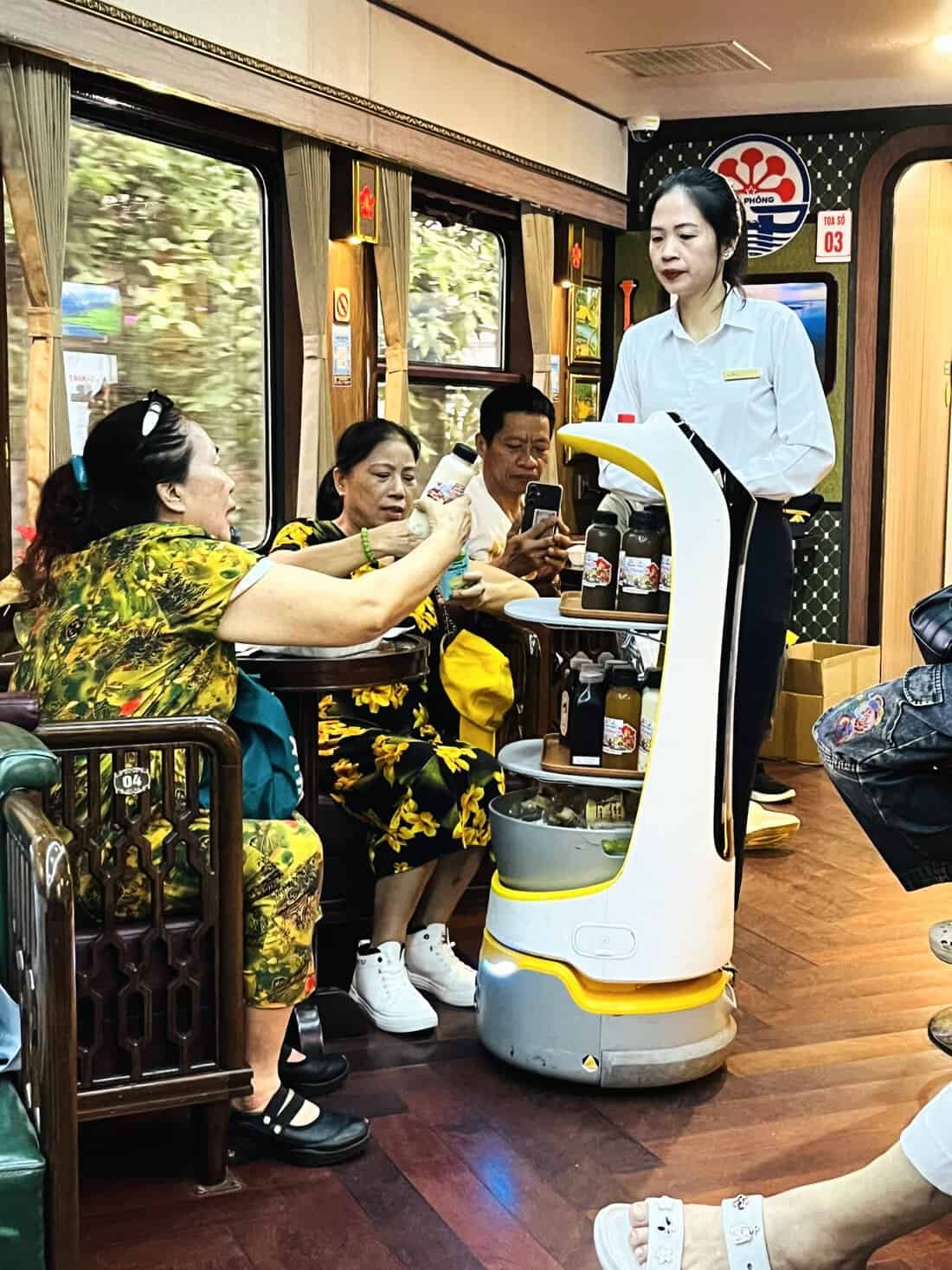
The train is called the Red Flamboyant, and I purchased two seats on its VIP carriage. It seats only 34 people, you get free snacks and coffee served up by young Vietnamese women dressed in crisp white blouses. You sit in comfy seats associated with a hotel salon and look out at the rolling Vietnamese countryside.
Vietnam Railways started this service on May 10, 2025 and it has been a huge hit – and not just because it only cost me €17 for two tickets. It combines Vietnam’s history with modern comfort in the best mode of transportation in the world.
Trains.
Train history in Vietnam
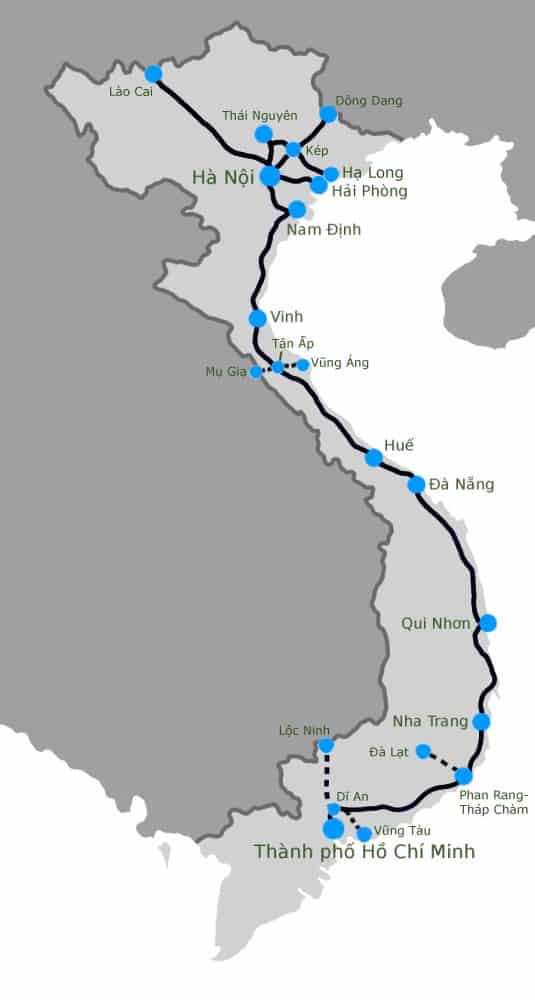
After the French invaded Vietnam in 1858, it completed the first intercity railway from Saigon to Mỹ Tho in 1885. By 1898, the French had approved an ambitious railway construction program, and the Hanoi-Hai Phong line opened in 1902. That same year Hanoi’s railway station opened.
By 1887, France had formally established French Indochina, incorporating Vietnam and Cambodia into its colonial empire. Laos joined in 1893., and French colonial rule would not end completely until Vietnam 86’d it in 1955. Until then, the French needed a way to transport their smug administrators, vicious troops and delicious goods around the country. They wanted them to travel in style.
After all, they’re French.
By 1936, Vietnam had 2,569 kilometers of railway track. World War II and the subsequent war against the French devastated much of that network, destroying bridges, tracks and rolling stock.
In 1954, Vietnam divided into North and South, then the Vietnam War reduced train travel from a slice of colonial luxury to just getting from Point A to Point B. And watch out for the napalm.
Then last year, Vietnam wanted to honor the 70-year anniversary of the liberation of Hai Phong from French forces in 1955. Vietnam Railways named the train the Red Flamboyant for the flamboyant tree that blooms beautiful red flowers, symbolizing Hai Phong, northern Vietnam’s most important seaport.
It also wanted to attract tourism to Hai Phong which the United States nearly bombed back to the Stone Age during the Vietnam War. According to a Hai Phong historical account, American attacks throughout the war killed 3,295 people, wounded another 5,429 and destroyed 14,437 thatched homes. Today, Hai Phong has made a nice comeback with a charming city center, tree-lined boulevards and quiet, outdoor cafes.
Frankly, we just wanted to sip Vietnamese coffee on overstuffed couches.
The arrival
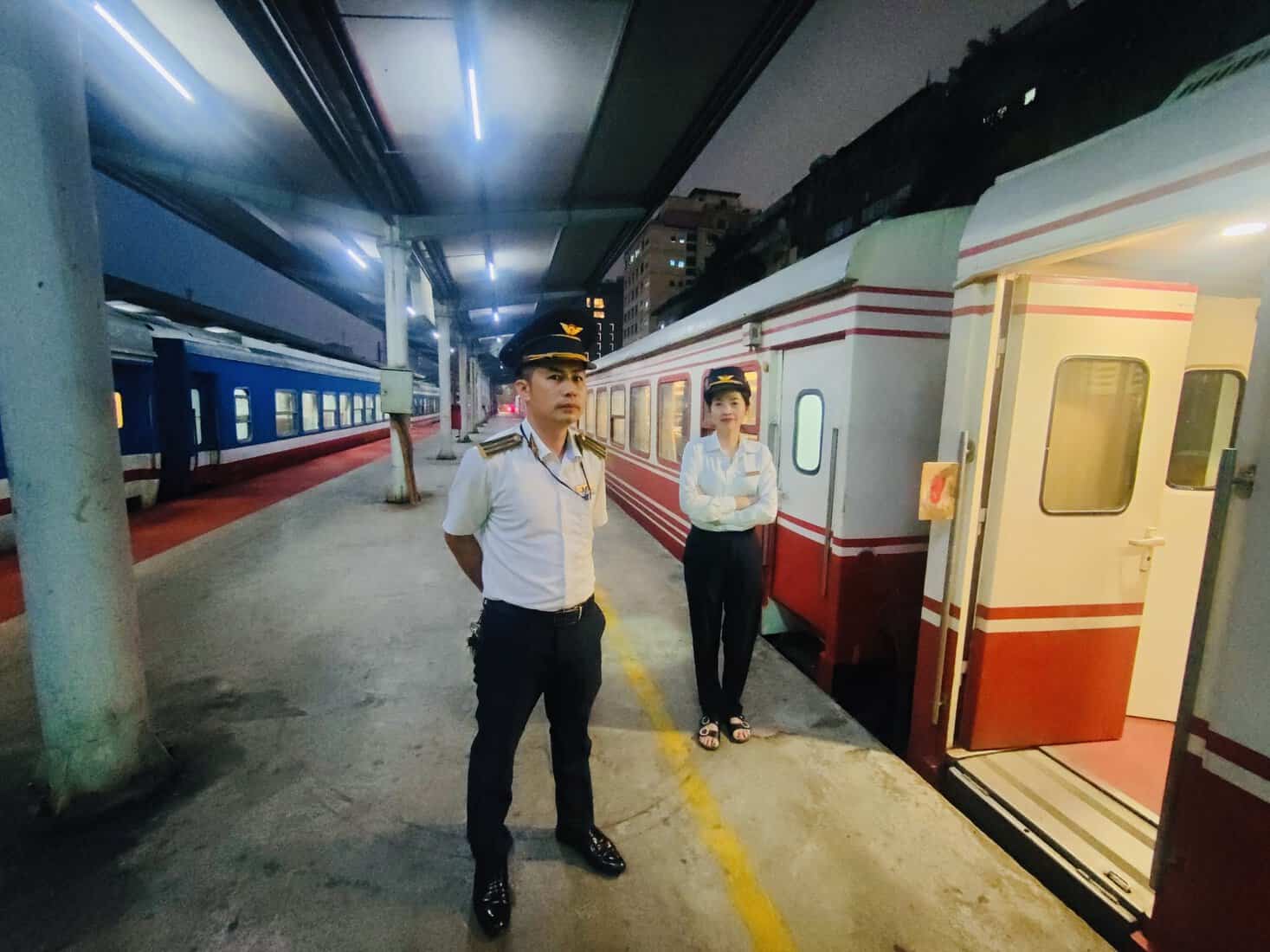
We arrived early for the 6 a.m. departure. The French built Hanoi’s train station in 1902, the Americans bombed its central lobby in 1972 and the Vietnamese rebuilt it in 1976. Two surviving wings still have the double-sloped roof popular in France during the early 20th century.
We entered an empty train car. Two stern-looking train officials with wings on their caps stood guard at the door. We plopped down in our number-assigned chairs and exhaled. It was so clean I was afraid to touch anything. I wanted to wrap my questionably sanitary backpack in plastic.
We were not used to this. Train travel in Italy is as hectic as a soccer riot. Trains are old. Rome’s Termini station is chaotic and, occasionally, dangerous. The Red Flamboyant is the train’s equivalent to the Learjet.

Vietnam Railways built 18 luxury carriages for different trains for the Hanoi-Hai Phong route and two over-the-top VIP carriages. It’s easy to book online. Why is it so cheap? Have you seen salaries for Vietnamese labor? They also didn’t have to build a separate railway or station. It’s the same route they’ve used since 1902.
We sat back, listened to the soft music and basked in peace in the lap of luxury.
Then it was back to chaos we never even experienced in Italy.
The journey
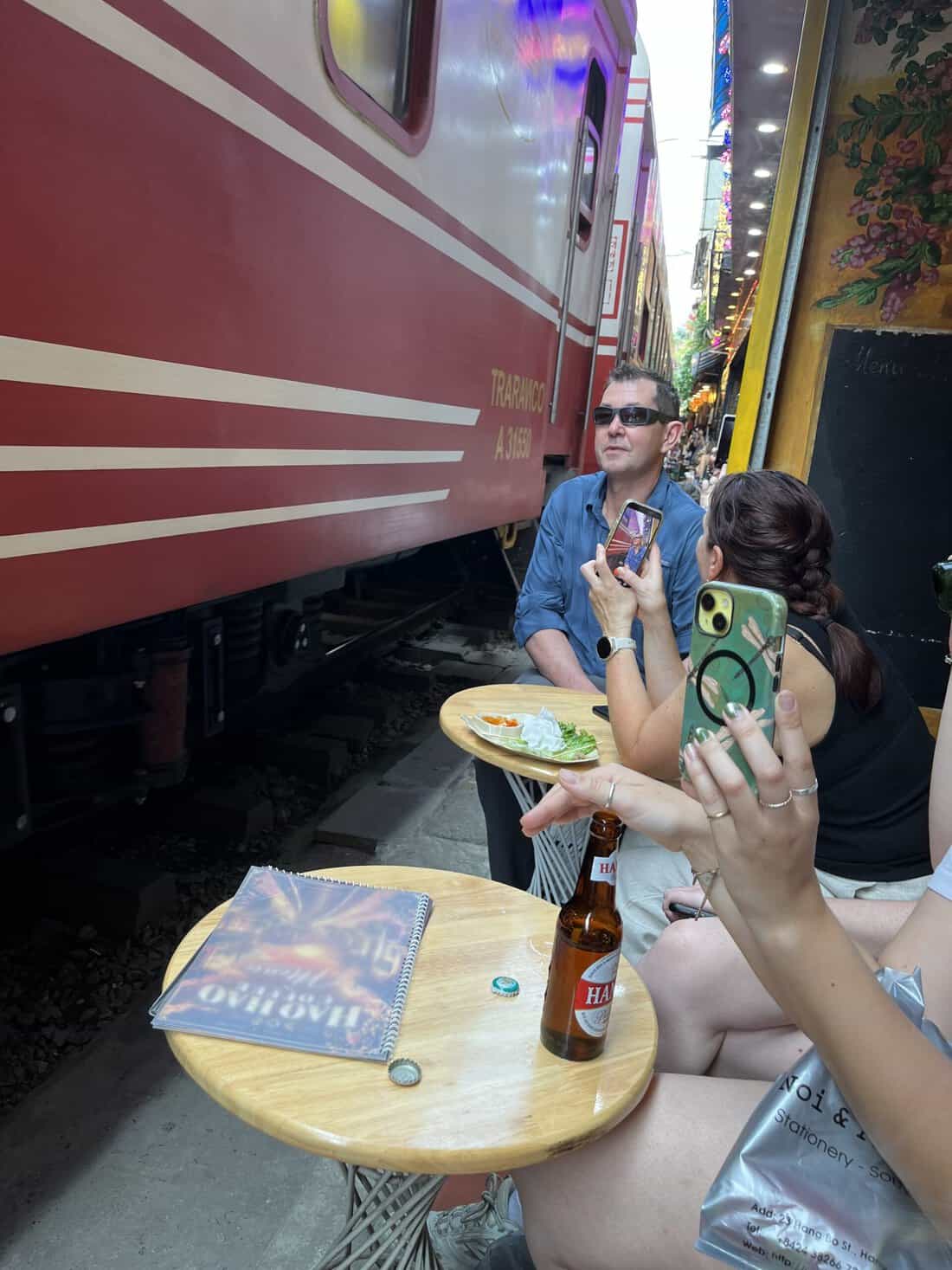
We pulled out of the station and headed east. The long train snaked through Old Town Hanoi and into the biggest tourist trap in town. Train Street is the ubiquitous Hanoi sight in which the track slices through two long rows of cafes and bars no more than two meters from the track.
Vietnamese convert their houses into makeshift cafes and charge outrageous amounts for beer, coffee and food to people one slip forward away from decapitation. Trains come through about a dozen times a day and night and the cafes are packed. This time, we weren’t watching the train.
The tourists were watching us.
As we hit Hanoi’s outskirts, the tranquil journey turned into midnight in the Hanoi Holiday Inn lounge. A huge pack of laughing middle-aged women from Bac Ninh, 25 kilometers north of Hanoi, had filled our car. They were traveling to celebrate Vietnamese Women’s Day, one of two days the country honors women’s courage and patriotism over the years.
And the women decided to ruin my appreciation for them by launching into two hours of karaoke.
I’m not a music guy. From country western to classic, music does nothing for me. But the one music that can drive me out of a room faster than “Hotel California” is karaoke. Anywhere.
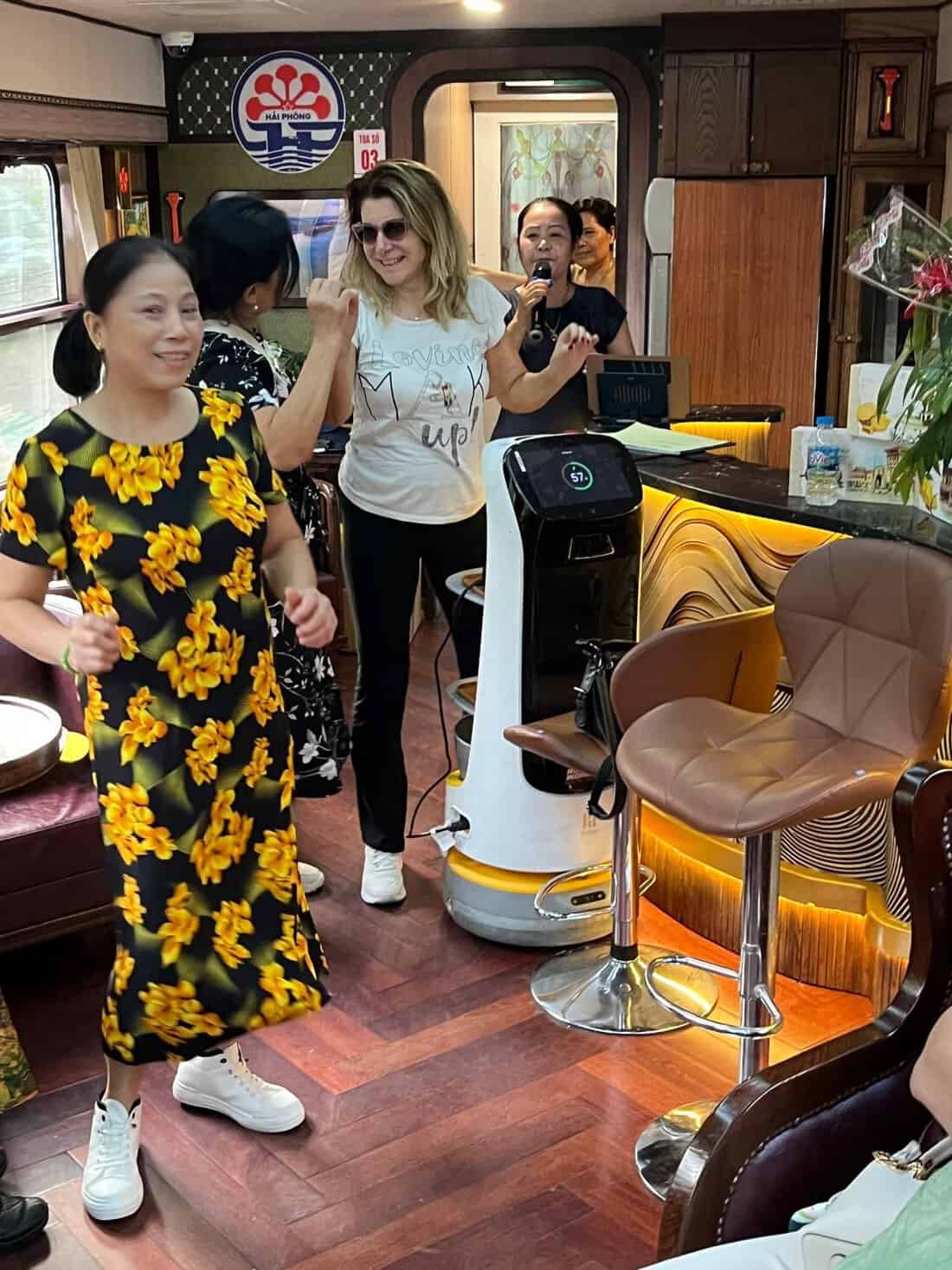
The women took turns belting out Vietnamese love songs in various levels of window-breaking pitch. Marina danced with them. They tried dragging me onto the floor but my attempt to break my eardrums with steel chopsticks got my message across the language barrier.
I stared out at the post-war business parks that replaced the rice fields, and the singing mercifully stopped a half hour before arrival.
The women celebrated their contribution to Vietnamese society. Marina and I celebrated Vietnam Railways’ contribution to luxury tourism.
If you’re thinking of going …
Vietnam Railways: https://dsvn.vn/?utm_source=chatgpt.com#/ Select Hanoi to Hai Phong. Choose your travel date. Look for the 34-seat VIP special class carriage. Select seats and purchase tickets. The VIP carriage isn’t available on every departure. Check train’s carriage options.
(Friday: Ninh Binh – Natural paradise or tourist trap?)