


Fall colors: Seven great spots from Oregon to Vermont
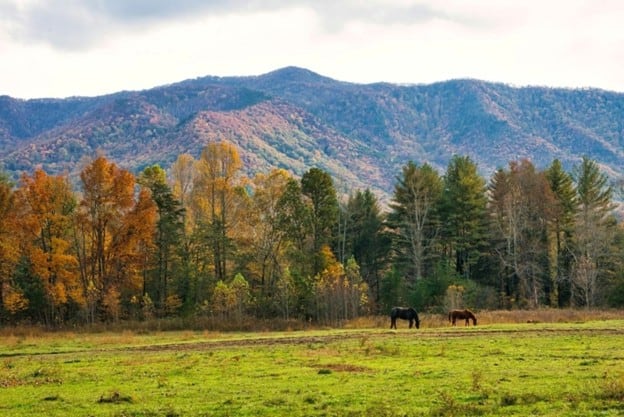
(Director’s note: With international travel in total chaos during this Iran War, maybe it’s best that Americans schedule a domestic trip in the fall. Ever seen the fall colors? Everyone knows about New England’s. There are other beautiful spots around the country. The Georgia CFY editorial team put together descriptions of seven fabulous places to experience nature’s wonders.)
The best fall color appears on quiet mornings when the air smells of woodsmoke and the tour buses haven’t arrived yet. When fog still clings to valleys and sunlight turns entire mountainsides molten. When you pull over, not because someone told you to, but because you can’t help it.
These seven destinations deliver that moment. Some blaze fast and fierce. Others linger for weeks. All of them reward timing, patience, and the willingness to wander off the obvious route.
Vermont’s Route 100
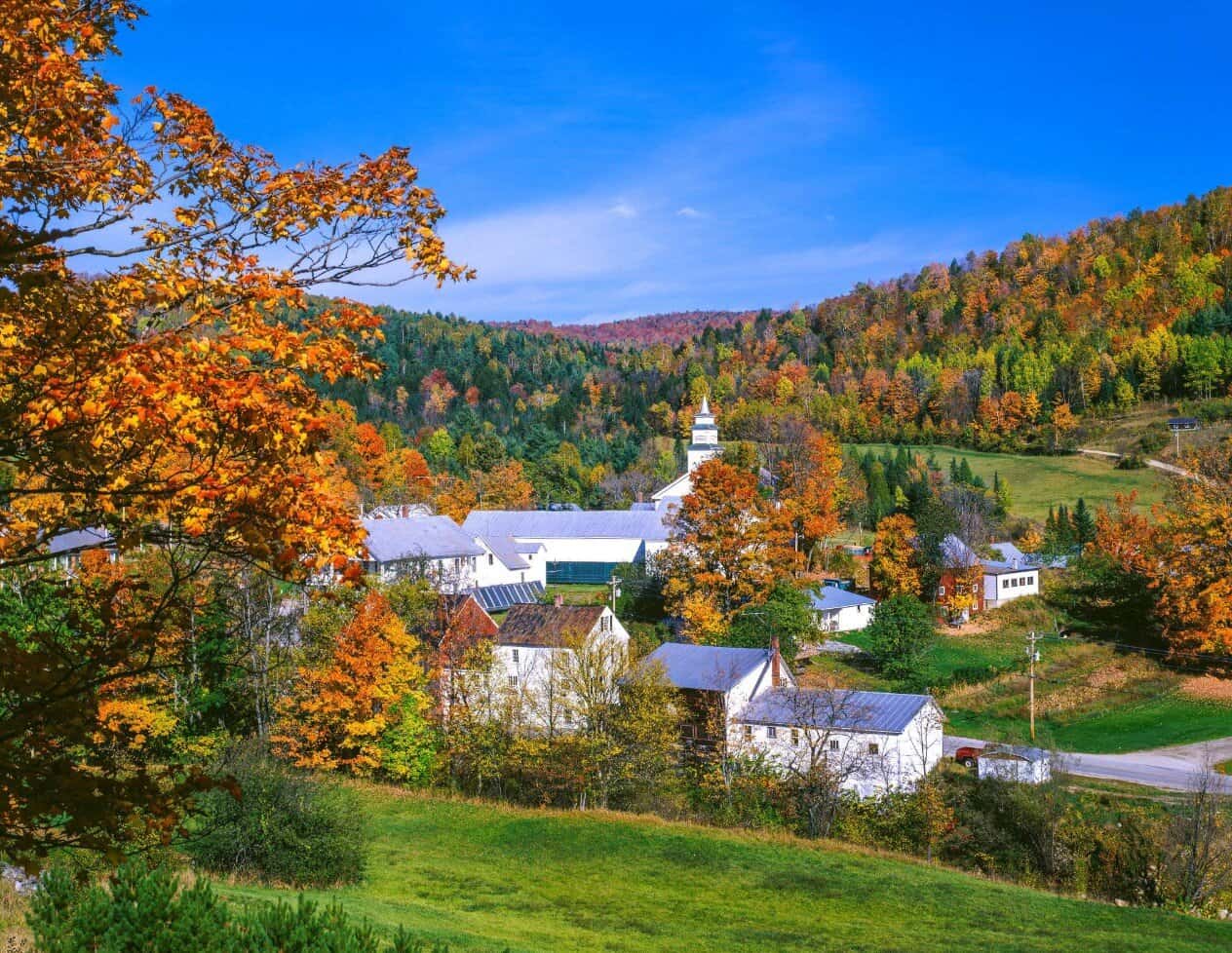
Vermont’s Route 100 is one of the quietest and most relaxing places in the U.S. It stretches through the Green Mountains, threading together villages that look frozen in time. White church steeples, covered bridges and farm stands stacking pumpkins beside maple syrup signs.
Drive it in early October, and you’ll understand the appeal. Fog pools in valleys. Hills roll outward in crimson, amber, and burnt orange.
Vermont doesn’t rush. Color creeps down from higher elevations first, gradually spilling into farmland. Peak weekends bring traffic, but on the right morning, with frost still clinging to grass and the road momentarily empty, it earns its reputation.
New Hampshire’s White Mountains
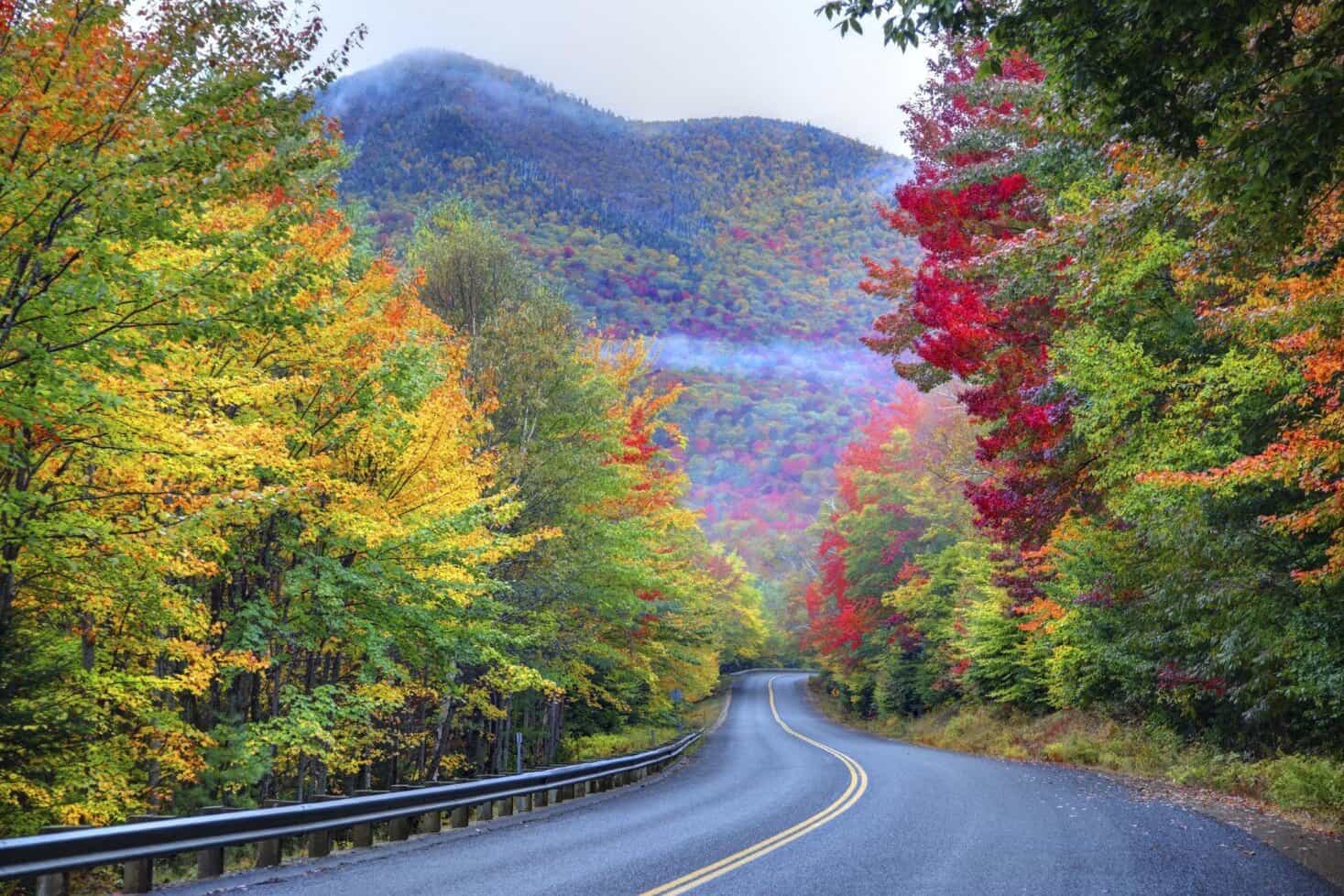
The White Mountains feel sharper. Peaks rise abruptly, granite faces cutting through glowing forests. The Kancamagus Highway curves through the heart of it all.
Elevation plays tricks here. Higher ridgelines ignite weeks before valleys below. A single drive carries you through multiple autumn stages.
Pull off at a turnout, and the air feels different. Wind sweeps across exposed rock. Short hikes lead to sweeping vistas. Rivers flash silver beneath yellow birch and red maple canopies.
When conditions align, the contrast is unforgettable: granite cliffs rising behind flame-colored forest, impossibly blue sky above. It feels wilder than Vermont. Less curated. More elemental.
North Georgia’s Blue Ridge Mountains
By the time New England sheds its brightest leaves, North Georgia’s Blue Ridge Mountains are just warming up. Autumn drifts in slowly here, with color deepening into late October and even early November. Instead of a brief peak, the season stretches comfortably across the hills.
Drive north from Atlanta, and layered ridgelines roll into view, glowing amber and rust at sunrise. Scenic drives, waterfall hikes and Ellijay’s apple orchards reward unhurried days.
Travelers who stay in Georgia Cabins trade hotel crowds for private decks, misty mornings and fireplace evenings.
Here, autumn doesn’t rush. It lingers.
Tennessee’s Great Smoky Mountains
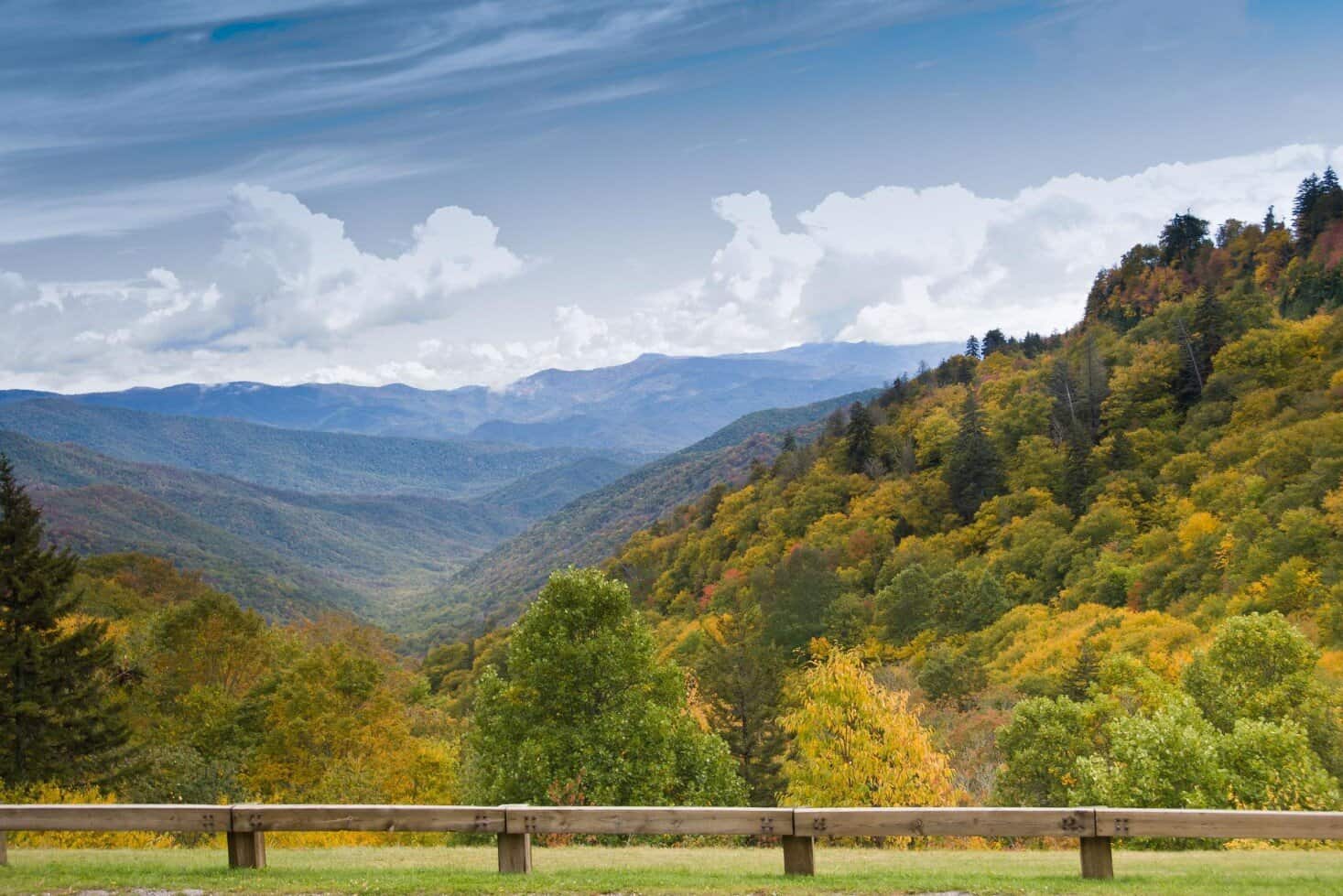
The Great Smoky Mountains contain one of the world’s most biodiverse temperate ecosystems. That translates into unusually rich fall color. Different tree species change at different times, creating hillsides brushed with multiple shades at once.
Drive Newfound Gap Road in mid-to-late October and watch elevation rewrite the landscape. Lower valleys hold green while higher slopes flash crimson.
The park’s scale allows for quiet pockets if you walk a little farther. Trails lead to waterfalls framed by golden leaves.
Major gateways like Gatlinburg offer easy access, which means traffic slows during peak weeks. But the breadth of landscape gives the Smokies a layered character.
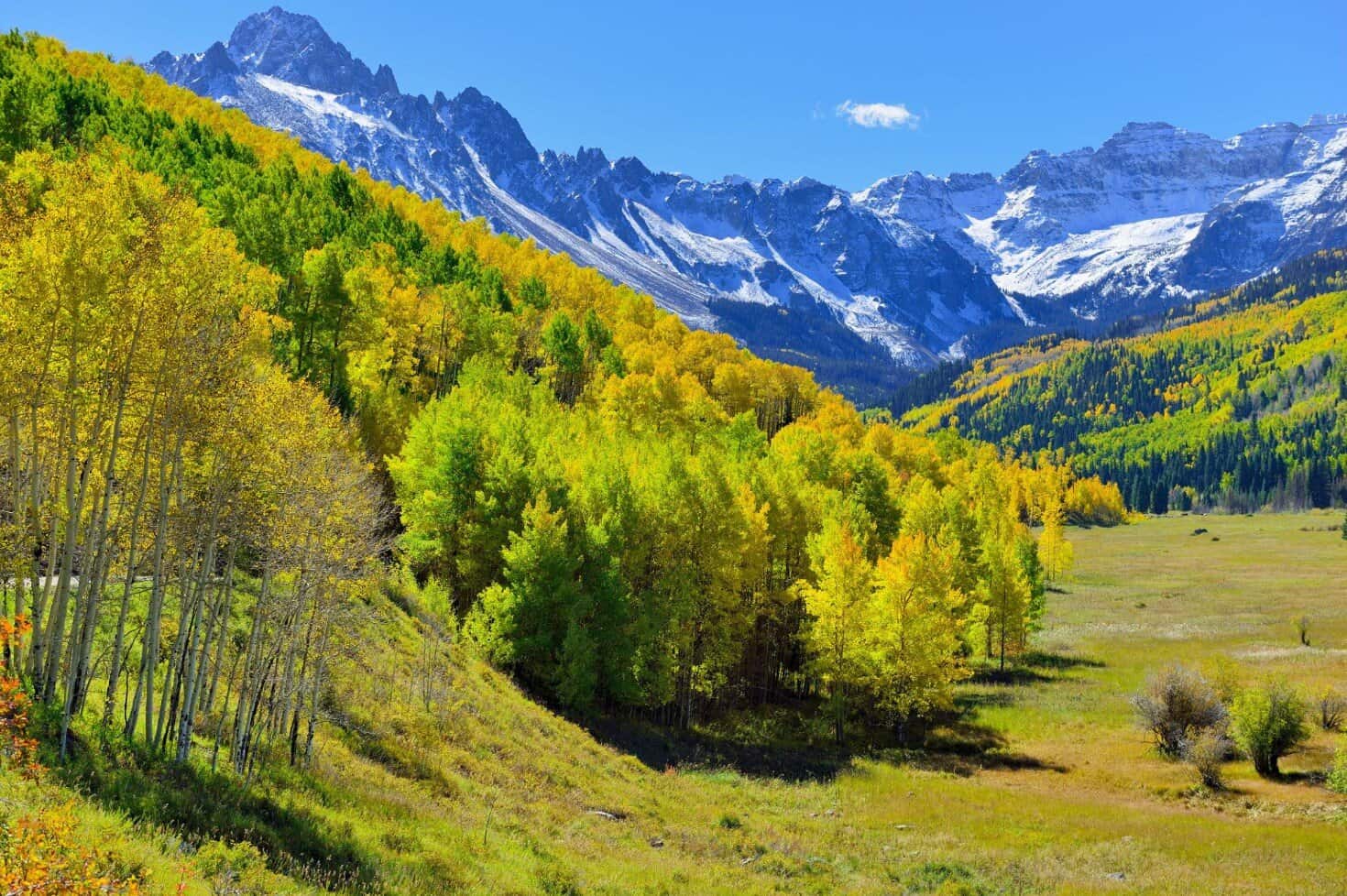
Colorado’s Rockies
In Colorado’s Rockies, aspens are the stars. Entire mountainsides flicker gold as slender white trunks stand in tight groves, leaves trembling at the slightest breeze. The effect is electric against dark evergreens and the first snow along higher peaks.
Peak color often arrives by mid-to-late September. A cold snap accelerates the transformation. A strong windstorm can end it just as quickly.
But when timing aligns, the contrast is unforgettable. Golden aspen forests cascade toward valleys already touched with frost. Above, jagged peaks rise under a cloudless blue sky.
The Rockies reward early starts. Scenic drives over passes like Independence or Trail Ridge reveal broad, sweeping views that feel less intimate than Appalachian backroads but more dramatic.
Autumn in Colorado is brief, bold and high-contrast. It doesn’t linger. It performs.
New York’s Adirondacks
If the Rockies perform and the Smokies unfold, the Adirondacks settle into something quieter. One of the hidden gems in New York is this six-million-acre park which feels less choreographed than New England’s classic corridors. Roads narrow. Lakes appear without warning. Canoes drift across still water that mirrors entire hillsides of red and gold.
Here, autumn isn’t confined to a scenic byway. It spills across backcountry ponds, mountain summits and small towns. Early mornings are the secret. Mist rises off lakes. The reflection is sometimes brighter than the trees themselves.
Crowds thin quickly beyond the most photographed spots. Lakeside lodges offer front-row seats to a slower version of fall.
Oregon’s Columbia River Gorge
The Pacific Northwest doesn’t compete with Vermont’s blazing reds or Colorado’s electric gold. It offers something moodier. Along the Columbia River Gorge, autumn weaves through basalt cliffs and evergreen forests, layering soft yellows and muted oranges against dark rock and rushing water. Waterfalls feel framed by vine maple turning quietly brilliant against moss-covered stone.
The Historic Columbia River Highway curves past overlooks where the river widens beneath rolling clouds. Mist is part of the aesthetic. Light filters differently here, turning the landscape into something textured rather than flashy.
Hike to Multnomah Falls in late October for fewer crowds to see why it is a must-visit place in the US.
Fall colors: Timing matters more than ranking
Travelers often ask which destination is “best.” The better question is when. Peak foliage is a moving target shaped by latitude, elevation, rainfall and temperature swings. A warm September can delay color. An early frost can intensify it. A heavy rainstorm can bring it down overnight.
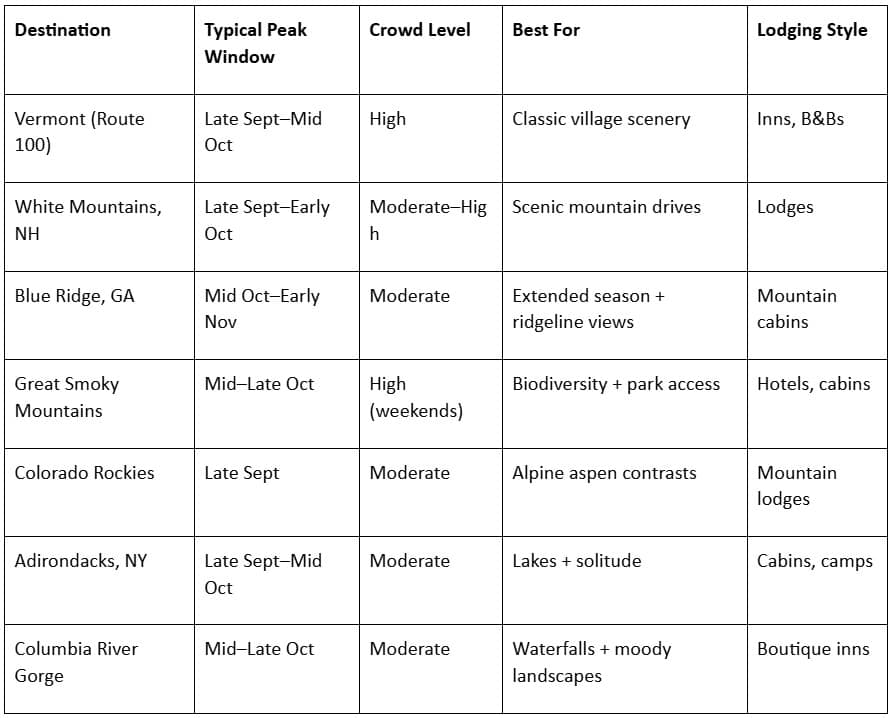
Save this chart below for your next trip.
March 29, 2026 @ 12:50 am
Good evening John
It is always great to take the time to read your articles.
You concisely describe Fall in the White Mountains of New Hampshire and pointing out that the area is wilder than Vermont is absolutely right on. Vermont has a lot of rolling hills that are conducive to farming and dairies whereas the mountains of New Hampshire don’t allow for as much settlement and cultivation because they are closer together, steeper and form deeper and narrower notches.
Although we are privileged to live in the White Mountains National forest….our hearts always draw us towards beautiful Italia!
March 29, 2026 @ 7:56 am
Thanks, Rosanna. But thank the Georgia agency that put it together. It was a guest blog. Still, I’d like to visit Vermont again.