


Lampedusa: It’s more than migrants’ “Gateway to Europe”
(This is a two-part blog on the Italian island of Lampedusa.)
LAMPEDUSA, Italy – Lampedusa is rural Arizona with a good beach and better pizza.
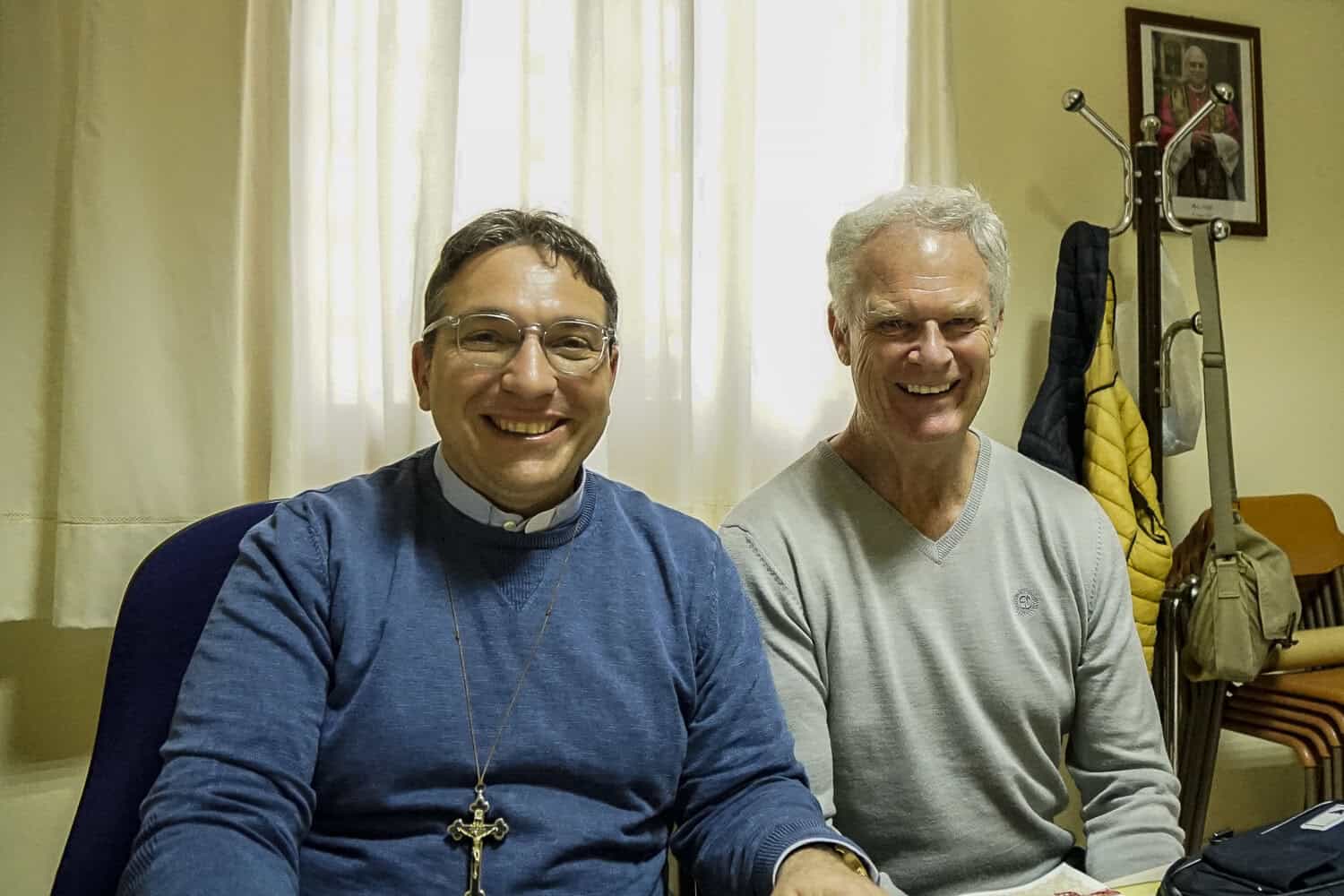
I won’t call it ugly. Calling the aforementioned beach as “good” is a gross understatement. It’s one of the best in the world. And anyplace with palm trees, as tired and limp as Lampedusa’s are, can’t be a complete blight on world geography.
But its landscape a few meters inland from the surrounding Mediterranean Sea is more of a desert. It’s swaths of dry land interspersed with bushes and shrubs. Flat, windy and desolate, one of Lampedusa’s more redeeming qualities is at least it’s not very big.
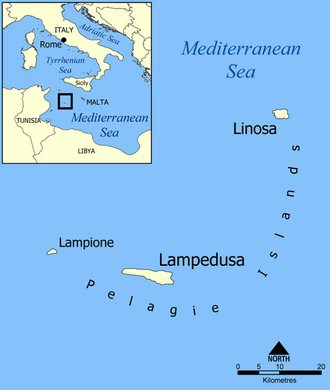
It’s only 20 square kilometers (8 square miles). That’s the size of West Hollywood. Lampedusa isn’t nearly that weird but it’s just as tolerant. Since the beginning of this century, Lampedusa has been the top immigration entry point for Europe. (More on that next Tuesday when I interview locals and the island’s top immigration official about the issue.)
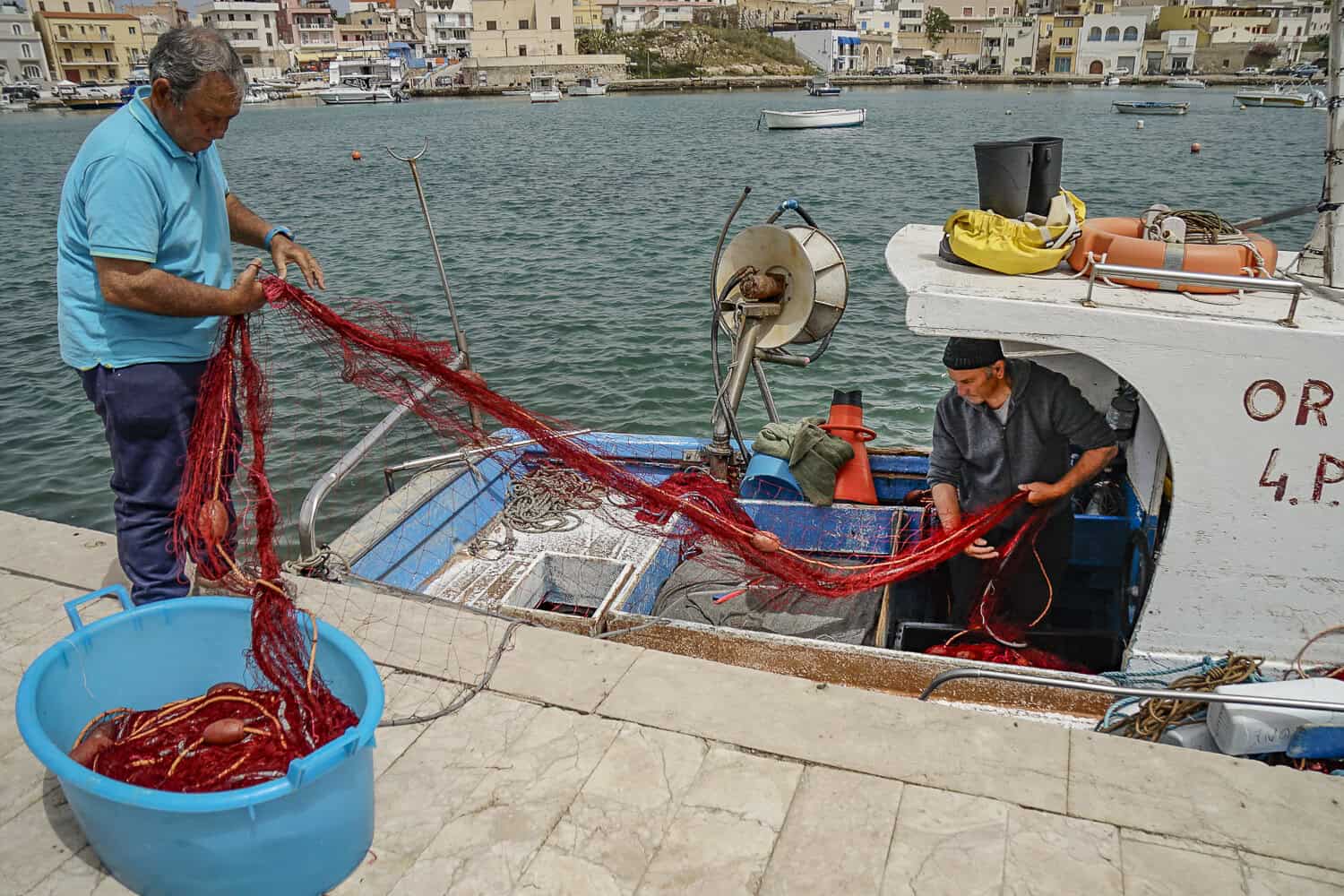
A teaser: Immigration is a non issue to the 6,400 locals. The immigration process has become so smooth, no one ever sees migrants. In five days, Marina and I saw only two persons of color. Both were busy working on a fishing boat.
We didn’t come here for a deep dive into Europe’s growing immigration issue. We came for a meeting of my Travelers’ Century Club, for members who’ve visited at least 100 countries and territories. Lampedusa is a logical location for our Mediterranean Chapter as it’s one of the most remote islands in the Mediterranean.
It’s actually closer to Africa than the rest of Italy. It’s 113 kilometers (60 miles) from Tunisia and 205 kilometers (120 miles) from Sicily. In fact, Lampedusa is so far from mainland Europe, it’s 220 kilometers (125 miles) south of the northern tip of Tunisia.
Marina and I had been here before. Marina came in 1985 with a former boyfriend; I came in 2002 with a former girlfriend. I looked at my journal from those long four days and I wrote, in words never before revealed in public, “This place is an overrun pile of souvenir stands, jammed beaches and motorinos.”
I called it “the loudest island in the world outside Manhattan.” I wrote, “For the second straight night, our huge apartment has mysteriously transformed into the infield of the Indy 500. In this world of fantasy, the Indy cars are replaced by little wimpy, whiny, filthy Italian motor scooters. Again, they ran all night past our street. All night. Every fucking minute, another motorino buzzed our house. It was like living inside a bumblebee’s nest.”
In 2002 I came to Lampedusa in August. As I’ve learned, never ever travel anywhere in Italy in August. It’s hotter than the sunny side of Venus and packed to the Speedos. Nowhere was it worse than on a tiny island like Lampedusa. I only read about its sandy beaches because I couldn’t see a grain of sand under the mosaic of beach towels.
Since then, the island has discovered motor scooter mufflers. Our trip two weeks ago was noticeably quieter. Then again, it’s May. We were among the few visitors. The sea was freezing to the point of risking sterility.
Lampedusa tour
It also didn’t help that in the entire month of May, Lampedusa would experience bad weather in only three of the five days we visited. Marina and I could bring bad weather inside a domed stadium.
But temperatures in the 60s with a cool breeze is perfect weather for touring. The 11 of us gathered outside our hotel, located less than 100 meters from where immigrant boats dock nearly daily.
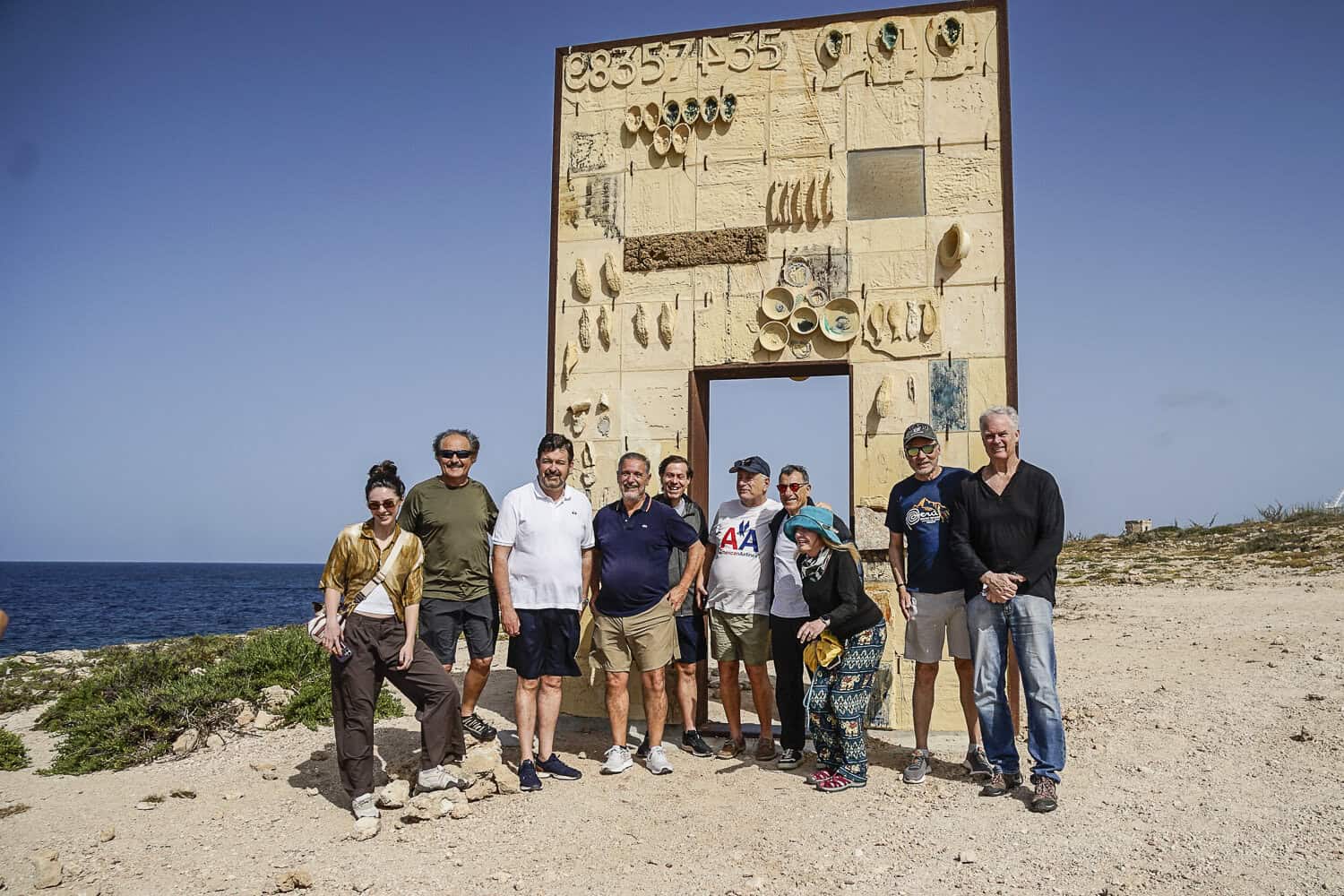
It doesn’t take long to tour Lampedusa. But in two hours, we saw more than you’d expect from an island more known for desperate migrants than geographic splendor. Our first stop was a 15-foot arch made of rectified ceramic and iron. Erected in 2008, the Porta d’Europa (Europe’s Gateway) is dedicated to what the United Nations estimated as 30,000 migrants who’ve died trying to cross the Mediterranean.
(Add another to the total. An infant girl died of hypothermia after her boat of 55 African immigrants landed Saturday morning.)
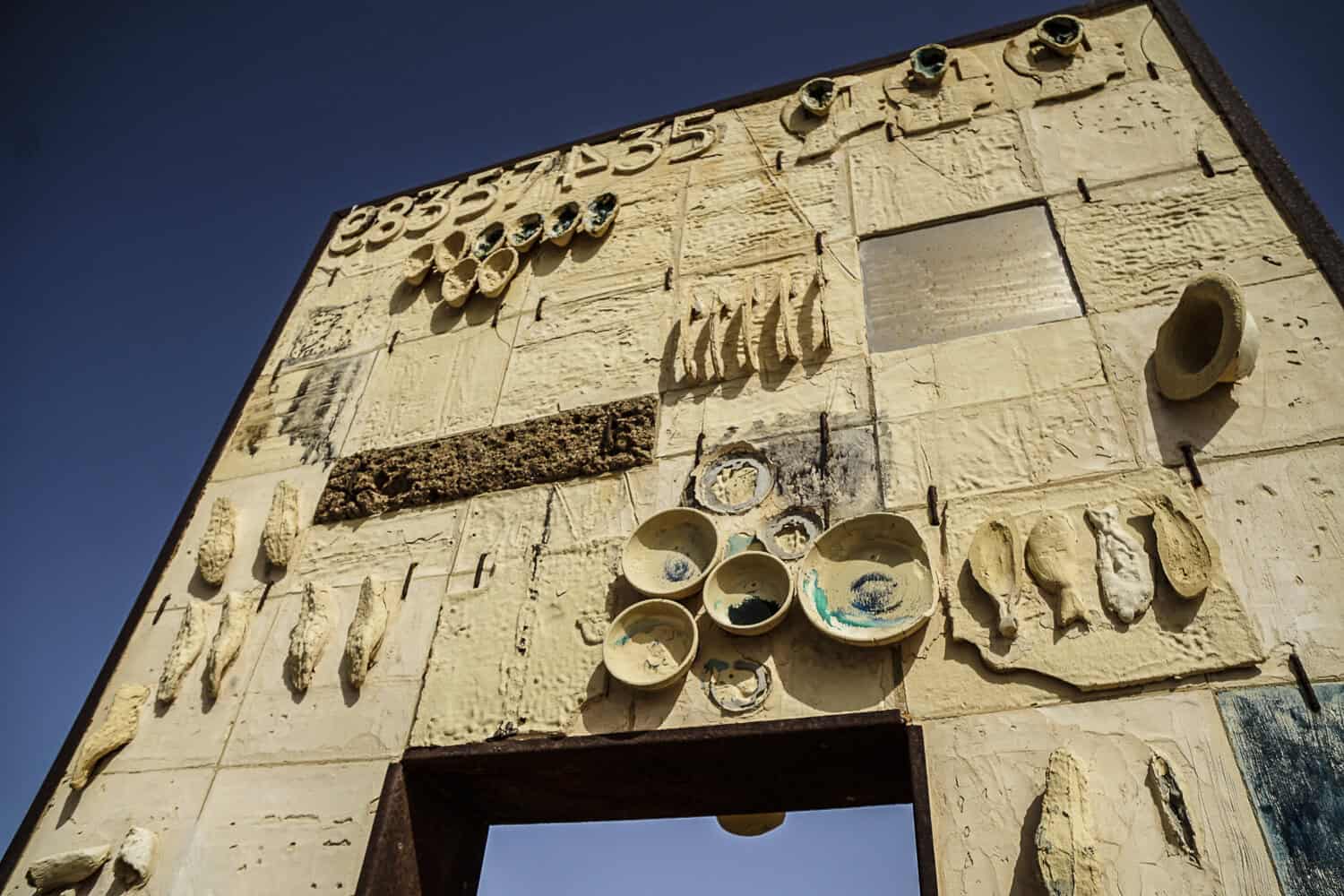
Artist Mimmo Paladino covered the arch with likenesses of shoes, household utensils and tools, symbols of everyday life the migrants sought before they were lost at sea. Looking out from the arch, we saw a beautiful turquoise ocean, not a death trap.
We drove past seagulls pecking at rocks and goats roaming in desolate fields. We came to a scruffy lighthouse dedicated to more Italian tragedy. In front of the lighthouse is a sign dedicated to Giovanni Falcone and Paolo Borsellino, the two anti-mafia judges who were killed in 1992. When I’ve flown into Palermo, Sicily, I always went past another monument at the spot on the highway where the Cosa Nostra blew up Falcone, his wife and three bodyguards with a roadside bomb.
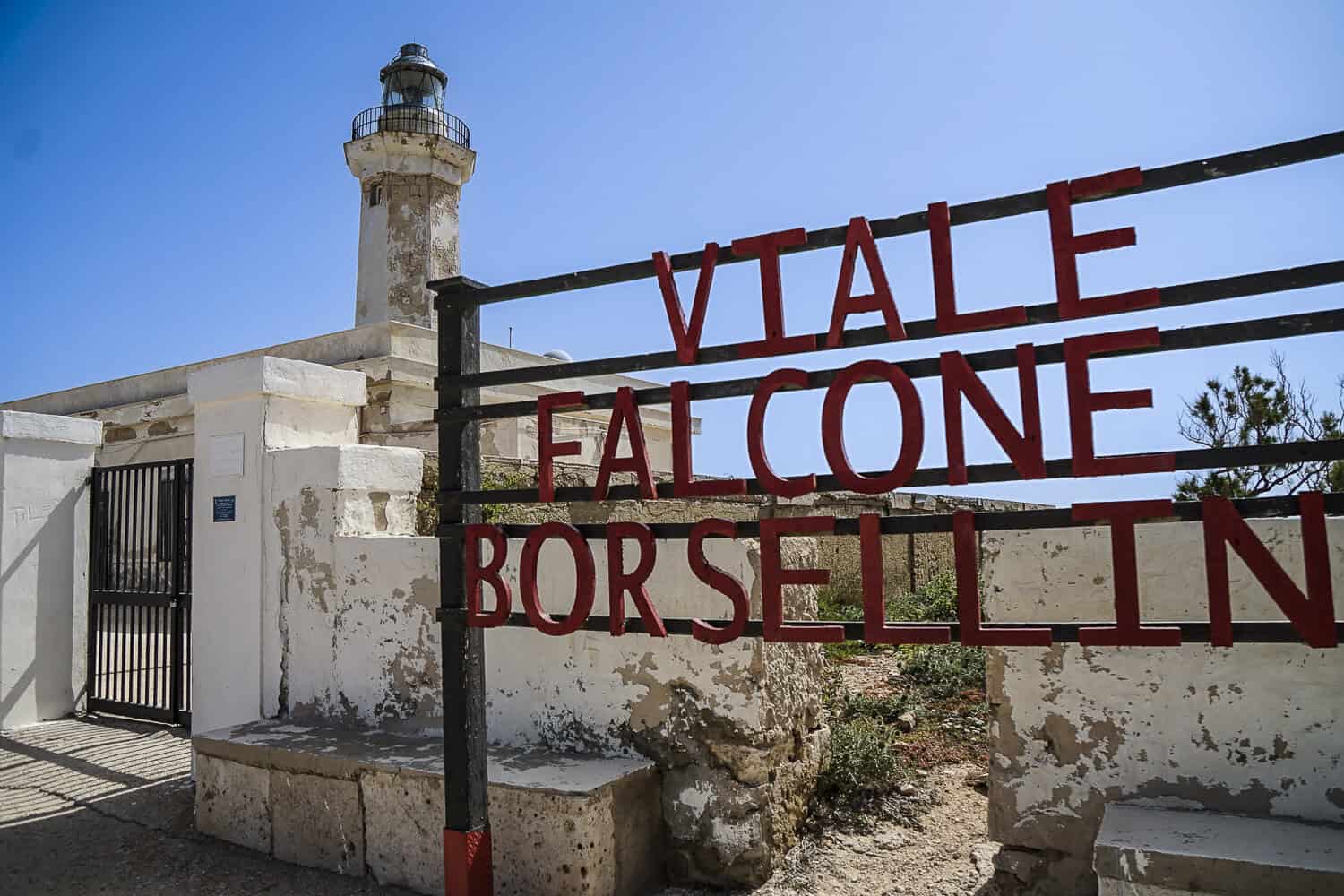
The lighthouse is a reminder of Lampedusa’s name. It comes from the Greek word lampas for “torch” as they were placed on the island to guide sailors when Lampedusa was a marine base for the Greeks in the 4th century B.C.
We passed cacti as we climbed to Lampedusa’s highest point: 133 meters (400 feet). Three sticks in the ground represent the exact point of the 35th Parallel. It also represents a beautiful view from a cliff 70 meters (200 feet) high.
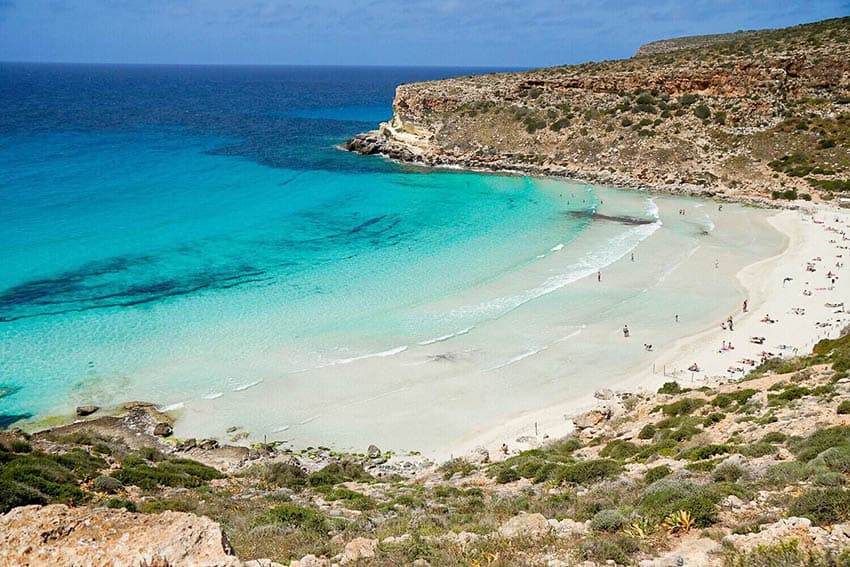
Our next stop is what attracts most of the 250,000 annual visitors. In 2013 TripAdvisor ranked Spiaggia di Congli (Rabbit Beach) as the most beautiful beach in the world. It’s not. I’ll put the beach on the Seychelles island of Mahè over it. But in respect to the rest of the island, Rabbit Beach is Italy’s Garden of Eden.
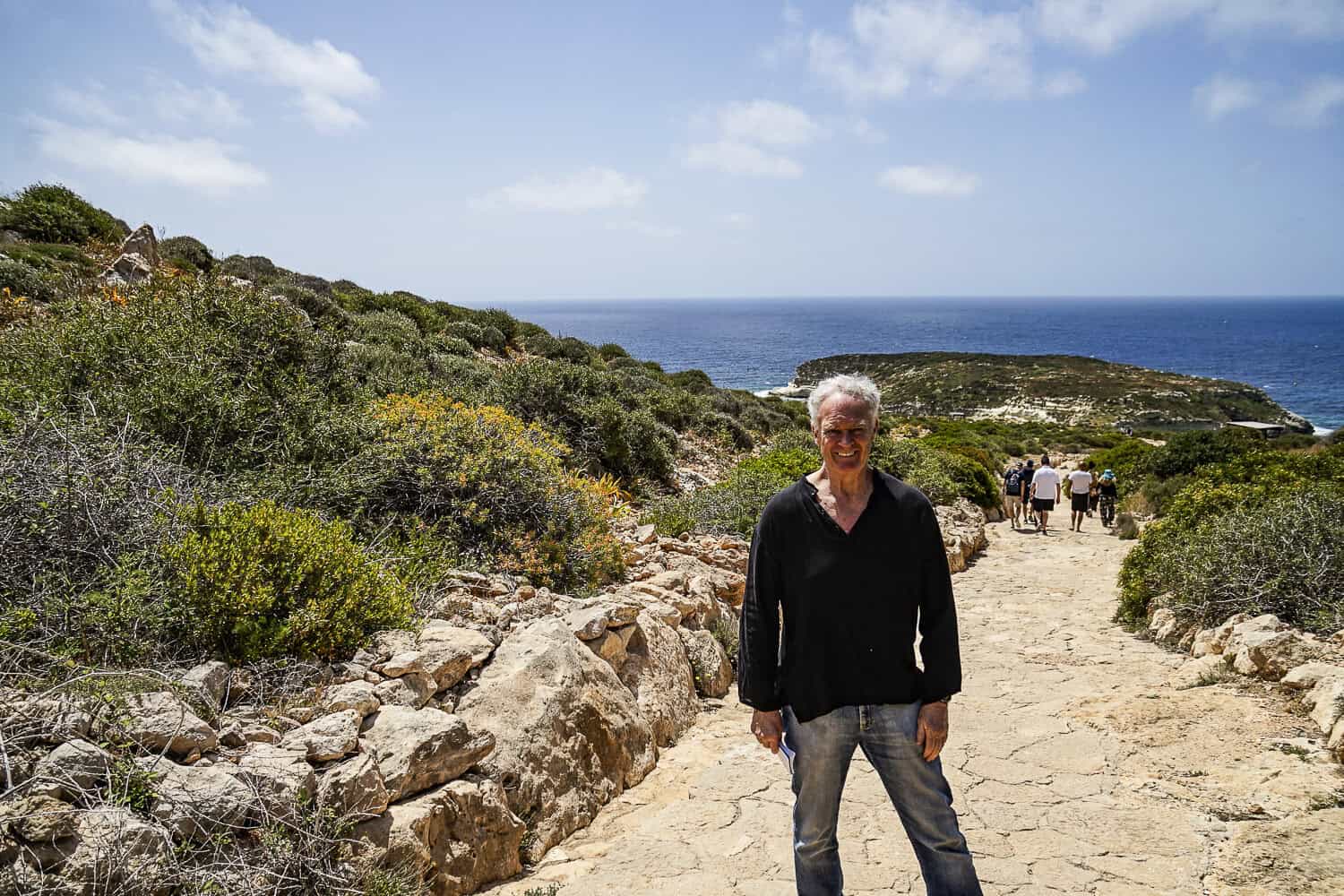
From the road we walked down a goat path (It seems most beaches accessible only by goat paths are beautiful) about 20 minutes when we looked down at a perfect halfmoon bay, a gentle arc of sugary white sand. Framed by cliffs on both sides was a sea as turquoise as a summer sky.
I’ve seen this color of sea in French Polynesia but rarely in Europe. I remember this beach highlighted my 2002 trip. On this trip, it highlighted our tour.
What highlighted our trip to Lampedusa was the food.
Sicilian cuisine
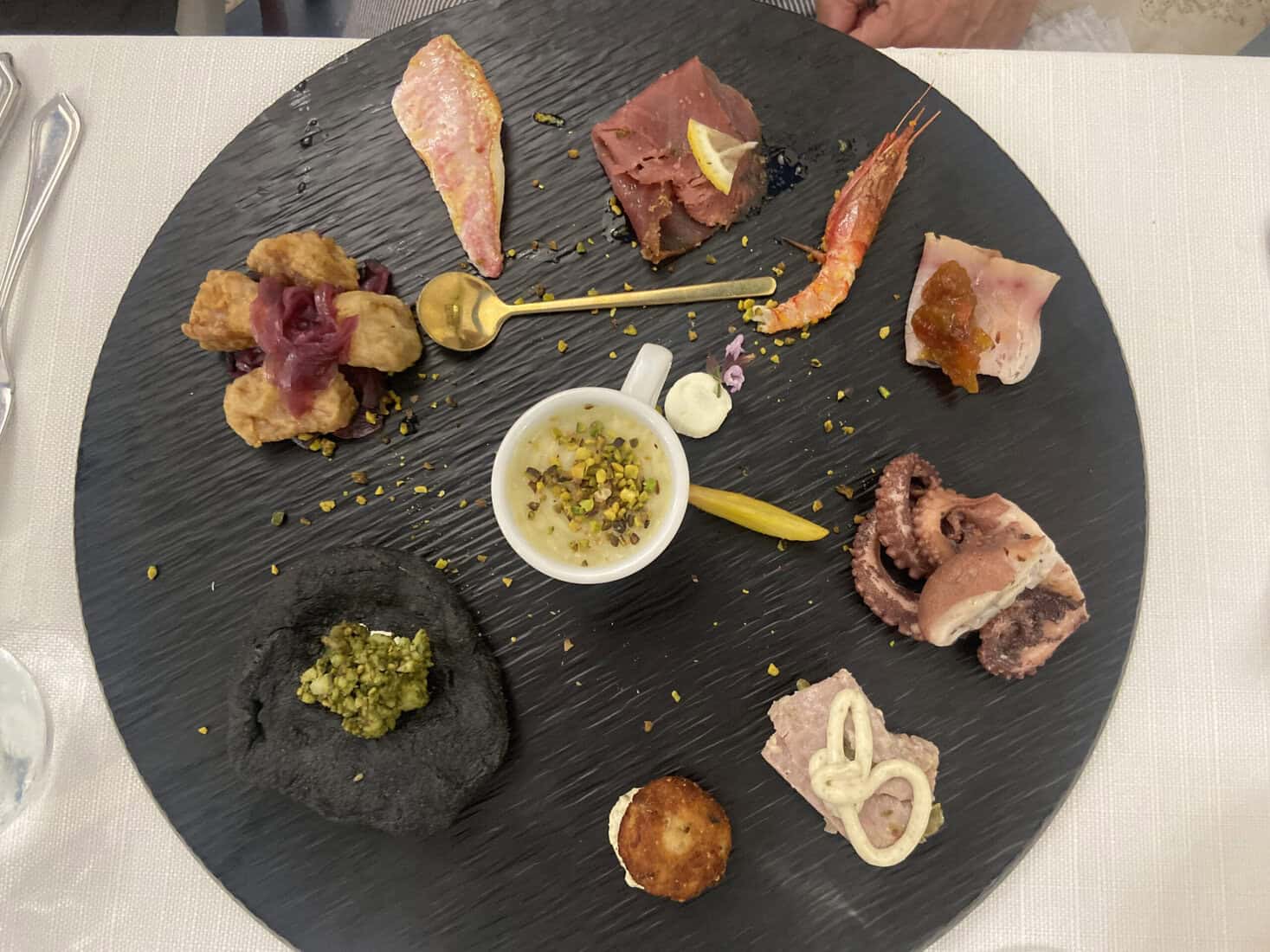
Sicily governs Lampedusa which means you not only get the Sicilian language but also its cuisine. Fresh fish from the sea. Couscous from its Arabic past. Cannoli from homemade bakeries. Outside of Rome’s Lazio, Sicily is my favorite cuisine region in Italy.
Our go-to place in Lampedusa was L’Aragosta, a five-minute walk from our hotel and right on the sleepy harbor. We knew it was good because on every visit it was filled with Lampedusa police.
My spaghetti alla vongole was filled with tiny clams and fresh tomato sauce. Marina’s calamari was fresh from the sea that day. Later I had involtini di spada, swordfish stuffed with capers, olives, tomatoes and pistachios in a cream cheese sauce.
Our group meal was at Le Mille e Una Notte (The 1,001 Nights), called the Best Restaurant in Lampedusa by celebrity chef Alessandro Borghese. Built in an old fish factory, it’s an elegant restaurant seemingly suited for wedding parties. A column in the middle is adorned with purple, blue and white flowers.
A cave in the back where the old factory once stood has tables in a cozy if a bit eerie atmosphere. I had fanese spada, a baked swordfish steak with breadcrumb crust, Parmigiano Reggiano, capers, oregano, garlic and extra virgin olive oil.
Add a couple of cannoli stuffed on site with that fresh ricotta cheese and topped off with an ice cold almond granita, and no trip to Lampedusa is bad as long as you have time to eat.
Just don’t come in the winter.
Interview with a priest
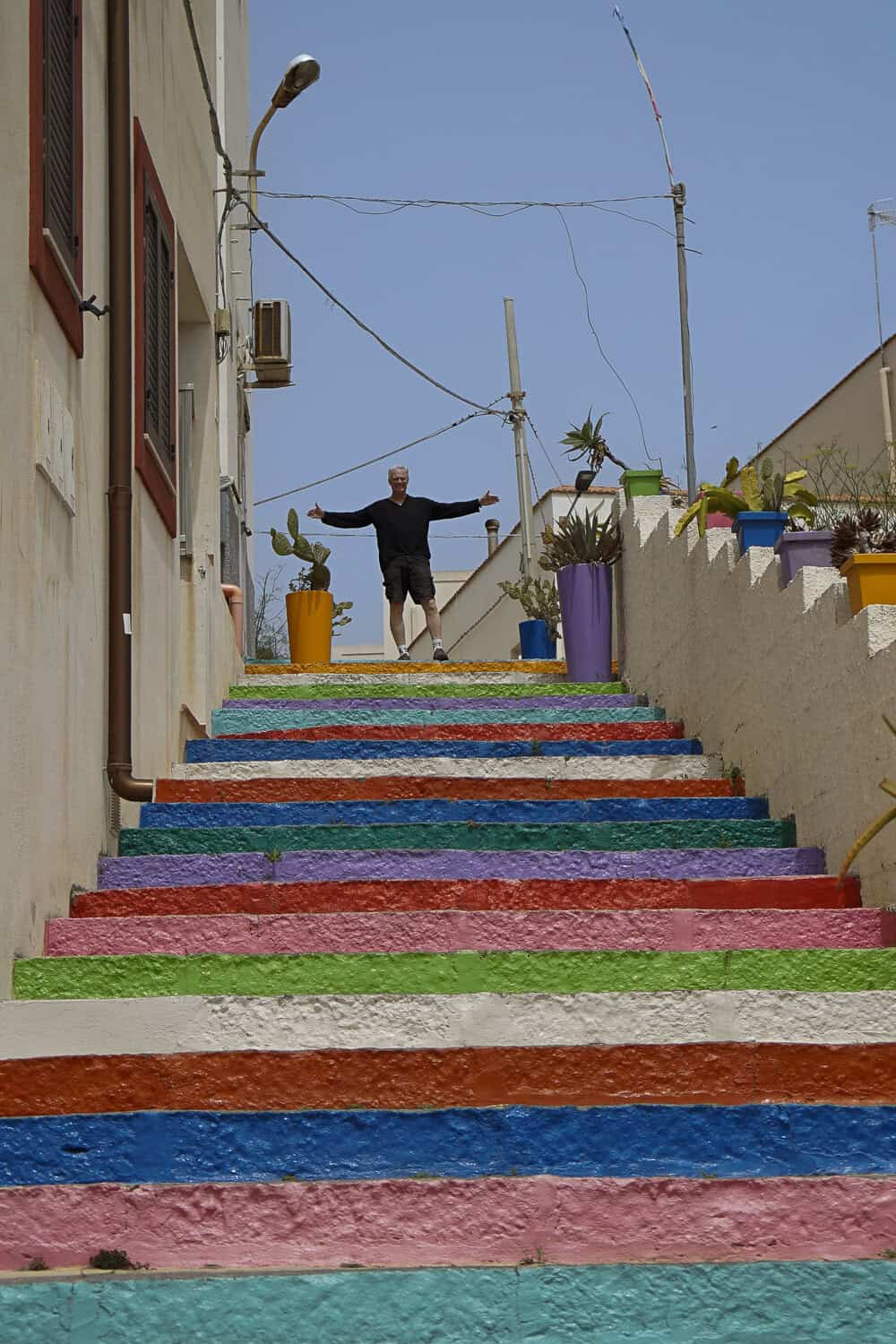
The pulse of Lampedusa runs down Via Roma. The long pedestrian street is lined with restaurants, souvenir stands, pasticcerie and boutiques. Youths play soccer away from the crowds. A sculpture of an octopus offers a wish to come true if you just rub its head.
Right off Via Roma is the 18th century Parrocchia San Gerlando, a rather bland church by Italy standards but buzzing with activity at evening mass. Before one service we sought the one person who could give us an honest answer about life in Lampedusa, the one source we knew wouldn’t lie
A priest.
Father Carmelo moved to Lampedusa 3 ½ years ago from Agrigento, the city in Sicily which is Lampedusa’s administrative center. Short with a youthful face and short hair parted in the middle, he smiled more than any priest I’ve ever met.
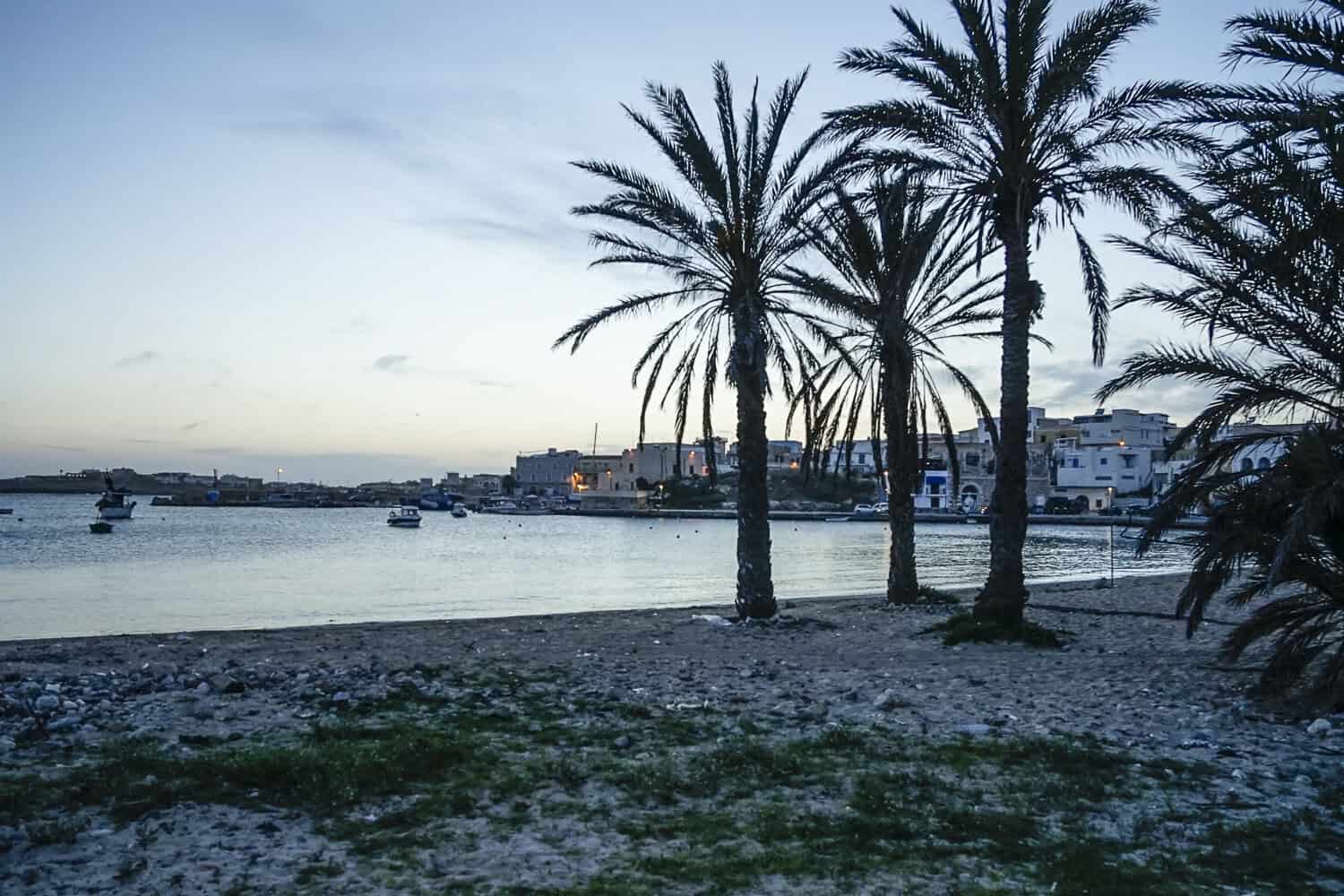
I asked how life really is in Lampedusa.
“The life of Lampedusa people can be divided into two,” he said through his Indian interpreter. “One depends on tourism and they work from May to October and they are occupied with tourists. Then October to April, May, they are in their houses and they are calm.”
So isolation on this island must be tenfold in winter.
“In the winter, everything is closed,” he said. “Everyone is home, inside their houses. We don’t see life. It’s a difficult time.”
But this isn’t Lampedusa’s biggest problem. It seems the same as in 2002. The island still has no hospital. That sounds ludicrous for a landing point for migrants. The Red Cross does have a processing center and healthcare for them but if there’s an emergency, a helicopter must take them or locals to Agrigento or Palermo.
The cost is €7,000. Yes, the state healthcare system pays for it but waiting for a chopper is a lot more inconvenient than driving to a hospital. In fact, most everything in Lampedusa is connected to Sicily.
“Lampedusa is nine hours (by ferry) from Agrigento,” Father Carmelo said. “It’s very complicated. It depends on the weather. If the weather is good, ships can go to Agrigento. If it doesn’t come, people have difficulties. Sometimes they don’t get their fruits, their meat.”
Father Carmelo does have something to look forward to this summer. Pope Leo, showing solidarity with migrants, will visit Lampedusa July 4.
This island could use a blessing.
(Next Tuesday: The migrant island has no migrants. Here’s why.)
If you’re thinking of going …
How to get there: Numerous Italian cities have direct flights to Lampedusa. From Rome I paid €247.94 for two round-trip tickets for the 90-minute flight.
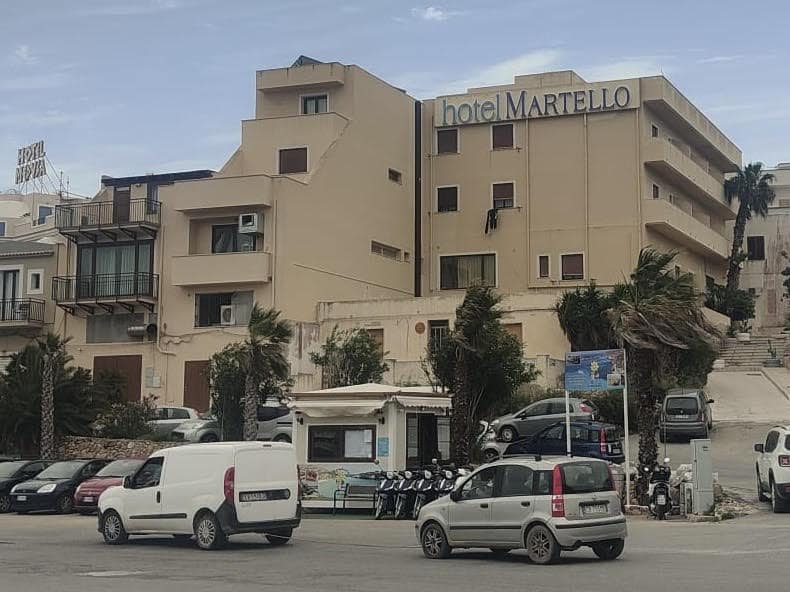
Where to stay: Hotel Martello, Piazza Medusa 1, 39-09-2297-1479, www.hotelmartello.it, info@hotelmartello.it. A three-star hotel in the Best Western chain, it’s right near the port and walking distance from the center of town. Spacious rooms range from €90-€126 a night including a buffet breakfast.
Where to eat: L’Aragosta, Via Madonna 8, 39-09-2297-3083, www.laragostalampedusa.it, info@laragostalampedusa.it, noon-3 p.m., 7 p.m.-midnight. It’s where the locals go. Good, casual seafood restaurant on the port. Fish dishes start at €24. Pasta dishes at €17.
When to go: May-October but skip July and August. Way too hot and crowded. The island all but closes in winter. The weather in May is beautiful. In September, the crowds have left and the sea remains warm.
For more information: Infopoint Turistico Lampedusa, Piazza Castello, 9 p.m-midnight, Saturday-Monday, Wednesday.
(Next: Immigration in Lampedusa.)