


Krakow: Outshining Poland’s capital after a century of horror
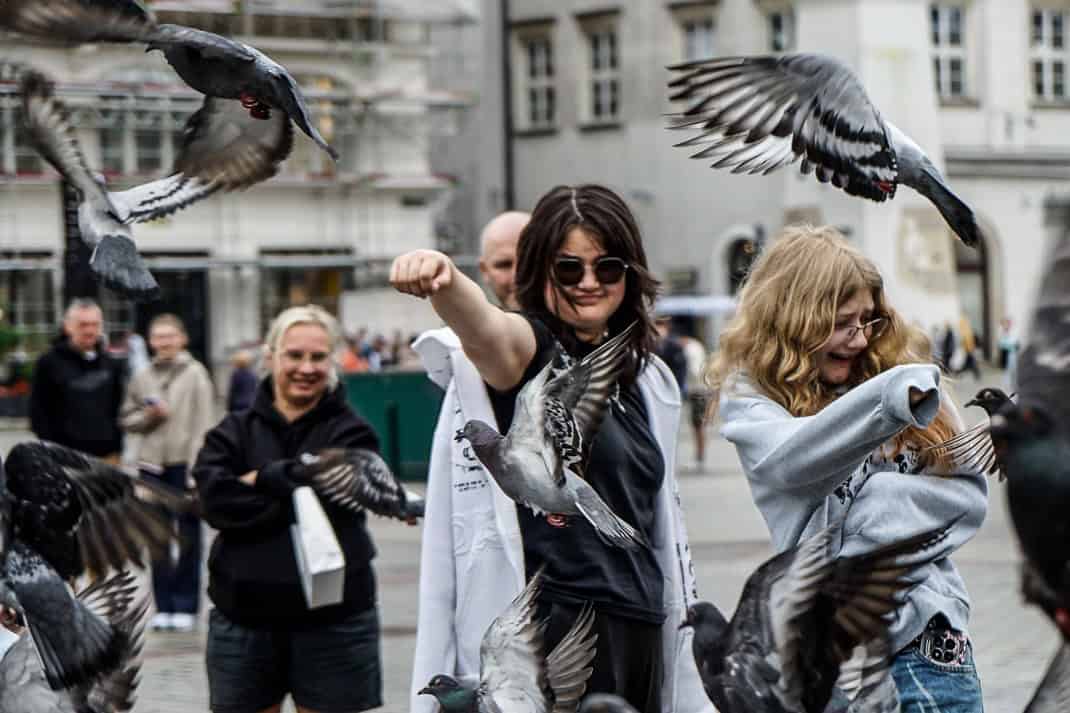
(This is the first of a two-part blog on Krakow, Poland.)
KRAKOW, Poland – The beauty of Eastern Europe is when the Iron Curtain collapsed, the unshackled countries turned on their lights. They shined them on their capital, wiping off the dust that communism left, painting over the gray that Marxism promoted.
What we’ve had for 35 years are some of the prettiest cities in Europe: Ljubljana, Slovenia, and its lazy river through the center: Prague and its majestic bridges; Tallinn, Estonia, and its medieval pedestrian streets.
While old East European countrysides may suffer from the loss of state support, the capitals are the beacons that draw droves to the countries. However, there is one old Iron Curtain city that shines much brighter than its capital and remains the country’s cultural center. It’s one of the most dynamic, star-crossed cities in Europe.
Krakow.
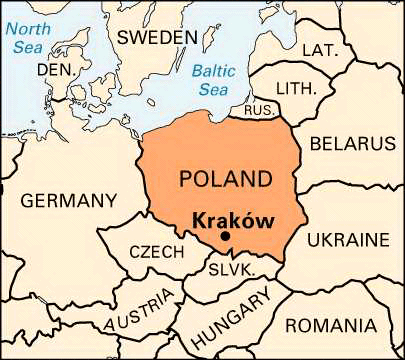
Poland’s first capital sports a 16th-century castle overlooking crisscrossing pedestrian streets all leading to Old Market Square. Sit at one of its sidewalk cafes and you can almost sense medieval villagers selling their fish and salt in the 14th-century Neo-Gothic Cloth Hall.
You could make an argument that St. Petersburg, Russia, is prettier than Moscow. But roam Moscow at night, with its brightly lit bridges and onion-domed churches, and the debate could last through an entire bottle of Beluga vodka.
Comparing Krakow to Warsaw is like comparing a Russian model to her babushka. World War II leveled Warsaw twice and it was rebuilt by that fine architectural school only a dictator could love – or live in: communism.
Today, Krakow rocks across a dichotomy that rattles the historical senses. Goth-dressed punks in spiked, gelled hair eat tofu stew at trendy outdoor cafes in the same neighborhood where 18,000 Jews were hauled off into a Nazi-built ghetto.
Welcome to Krakow, the gateway to Auschwitz and a city with a haunting, violent past now glistening in the limelight.
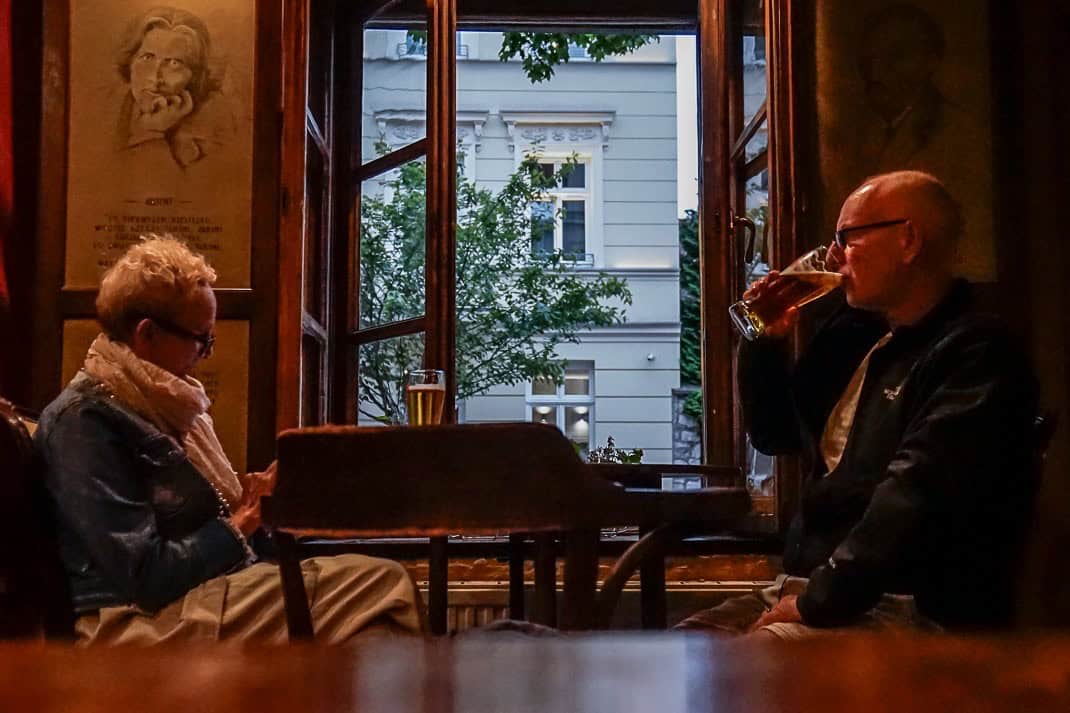
Kazimierz
Absynt is a cocktail lounge filled with overstuffed couches and loveseats. On the walls hang framed quotes – in Polish and English – from famous characters about absinthe, the bar’s signature alcohol.
Oscar Wilde: “After the first glass you see things as you wish they were. After the second, you see things as they are not. Finally you see things as they really are.”
He could’ve also said the same about Absynt’s cherry vodka.
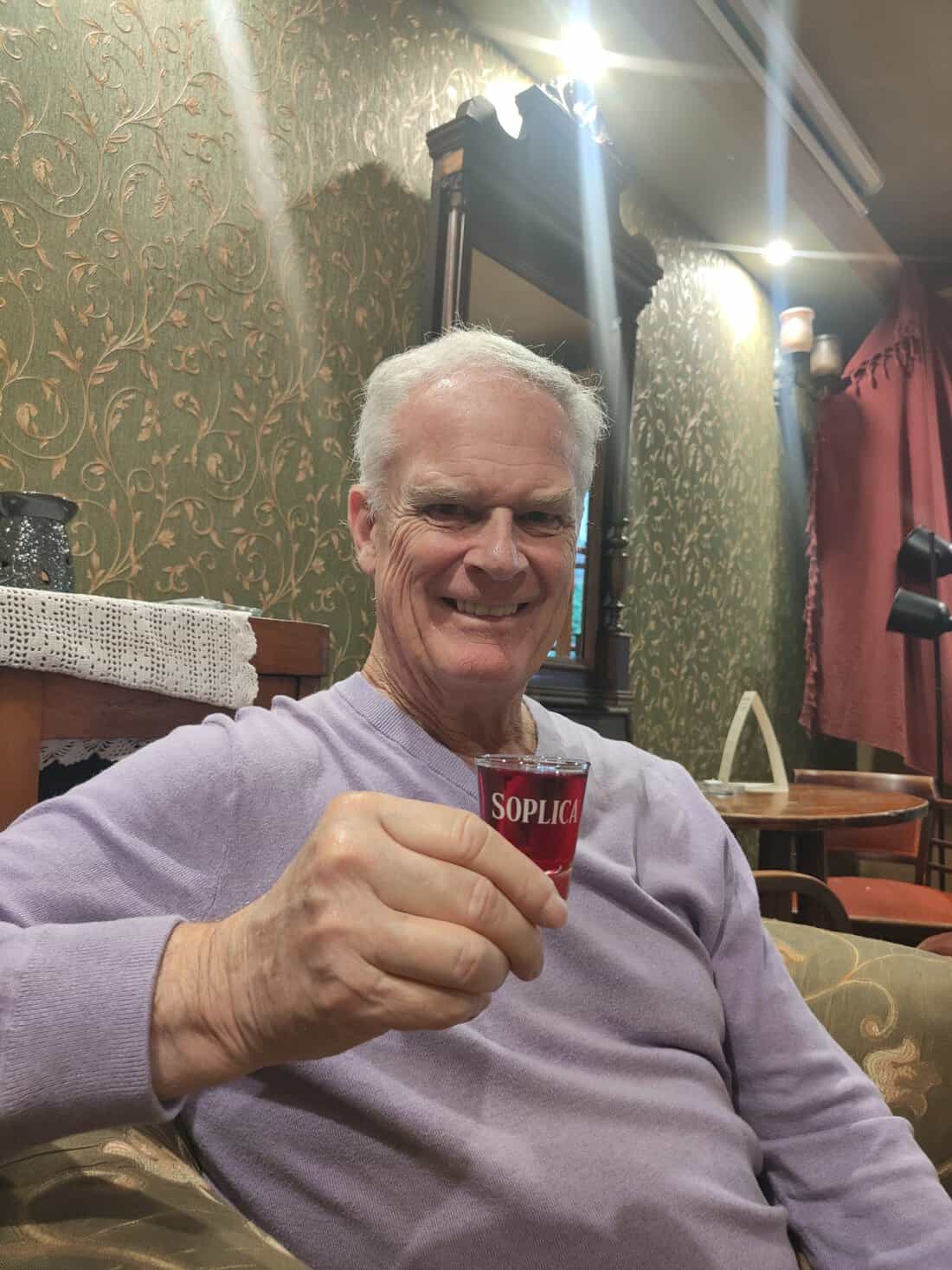
Absynt was across the street from our Hotel M29 and our go-to hangout during our four days in Krakow last week. Like many places in Krakow, Absynt was built after the Iron Curtain fell in 1989. Opened in 2001, Absynt is one of the most romantic lounges in a former Eastern European region full of them.
It’s in the neighborhood of Kazimierz, walking distance from the teeming tourist mobs of Old Market Square and still called the Jewish Quarter in honor of its pre-war past. A waitress told me the local buzz was about the mayor, Aleksander Miszalski, getting dismissed two weeks ago for lousy financial management.
Our hotel had a bar on every corner. Young and old Poles, couples and well-dressed singles, sat at outdoor tables and drank Polish beers with no vowels and vodka cocktails.
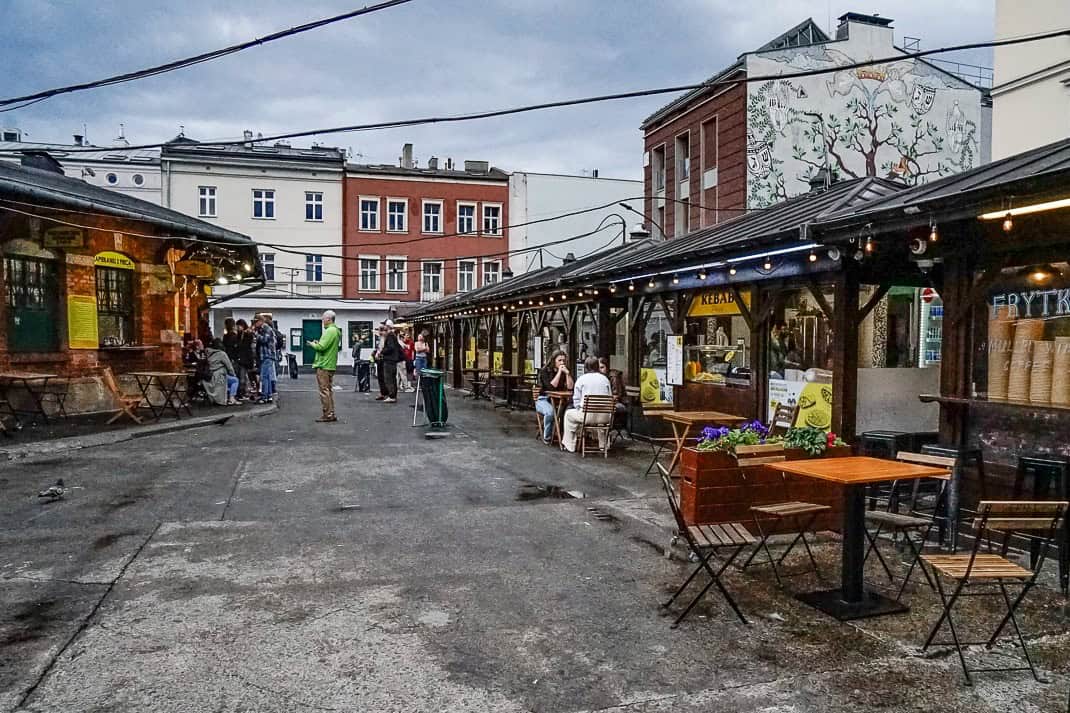
In Plac Nowy (New Square), lines formed at a dozen shops encircling a round building serving from a long list of zapiekanka, half of a long baguette covered in cheese, tomato sauce and a variety of toppings.
We stumbled down an alley where a photo exhibit illustrated some of Krakow’s tragic past. It was a long line of black and white photos of Jews hauled off to ghettos and mugshots of those who died there.
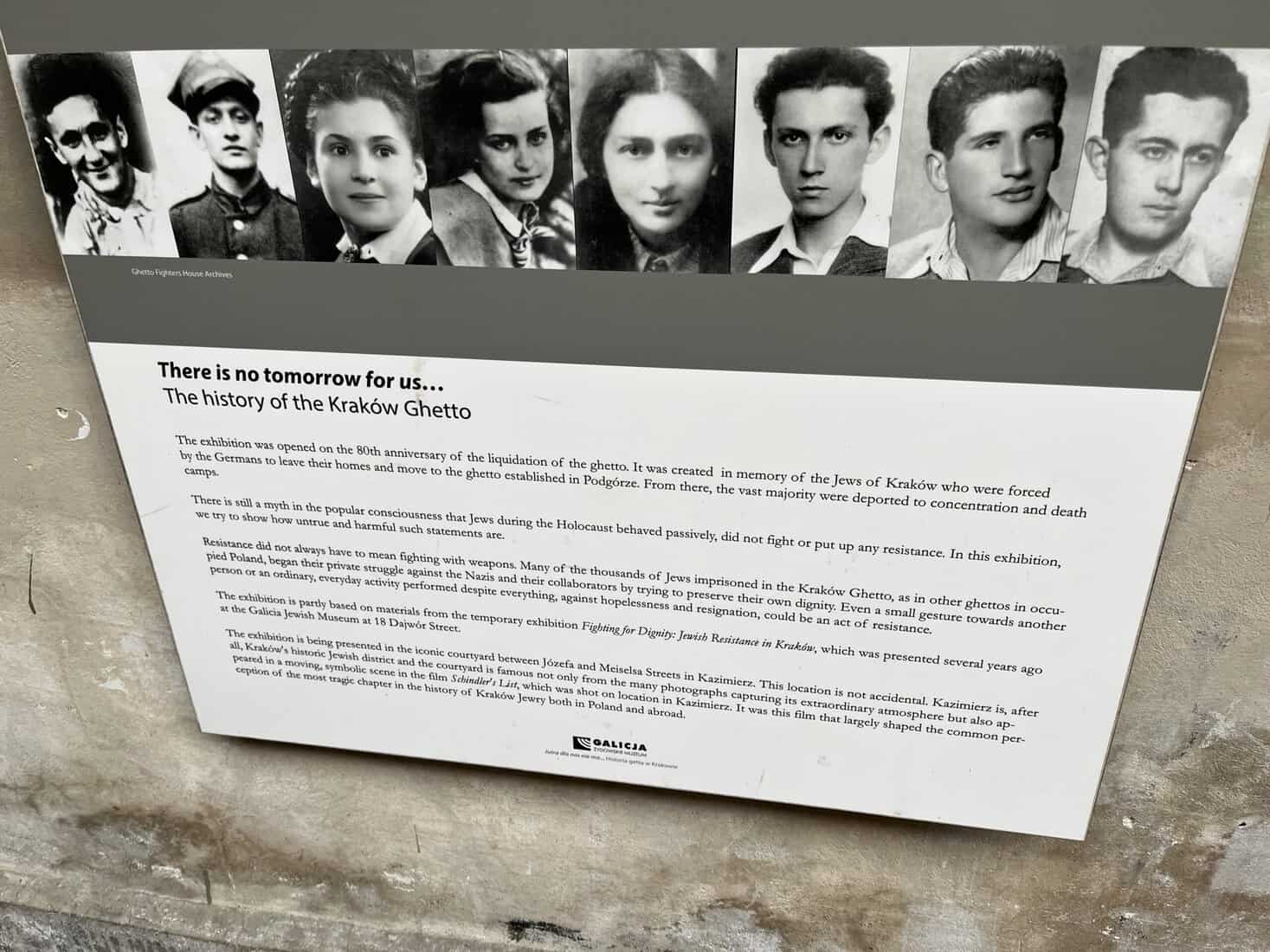
As we left, we saw a group of Israeli teenagers, all wearing matching white shirts and yarmulkes. I told them “Welcome to Krakow.” They looked headed to the exhibit.
They weren’t crying. Yet.
Krakow’s Jewish history
As late as the 1930s, Kazimierz was Krakow’s Jewish Quarter. Of Krakow’s 250,000 people, 60,000 were Jewish. In Kazimierz they ran thriving businesses, ate in fine restaurants and lounged in Plac Nowy and Ulica Szeroka, a big, shady square adjacent to the 15th century Old Synagogue.
Then the Nazis came.
Poland was Adolf Hitler’s main target. At the start of World War II, Poland had 3.3 million Jews, the largest number outside Israel and 10 percent of the country’s population.
And Hitler blamed the Jews for Germany losing World War I, felt his hatred united Germany and also because he was a first-class prick.
In March 1941, on orders to liquidate Poland of all Jews, 18,000 Jews in Kazimierz were forced across the bridge to a makeshift ghetto in Podgorze, a Catholic neighborhood. Many displaced Catholics in Podgorze moved into the Jews’ homes in Kazimierz.
An estimated 1,000 Jews were shot in the ghetto’s streets. Another 2,000 were sent to Auschwitz 70 kilometers (40 miles) to the west. (Read my blog on my tour of Auschwitz next Tuesday.) Several thousand others were sent to a labour camp in Plaszow not far away.
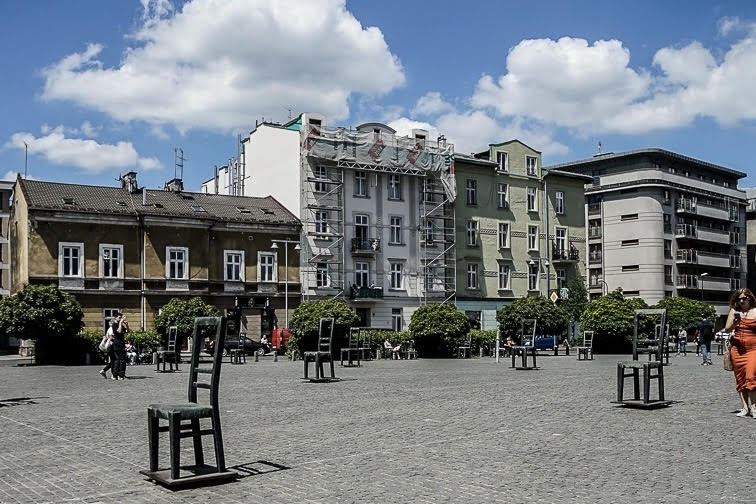
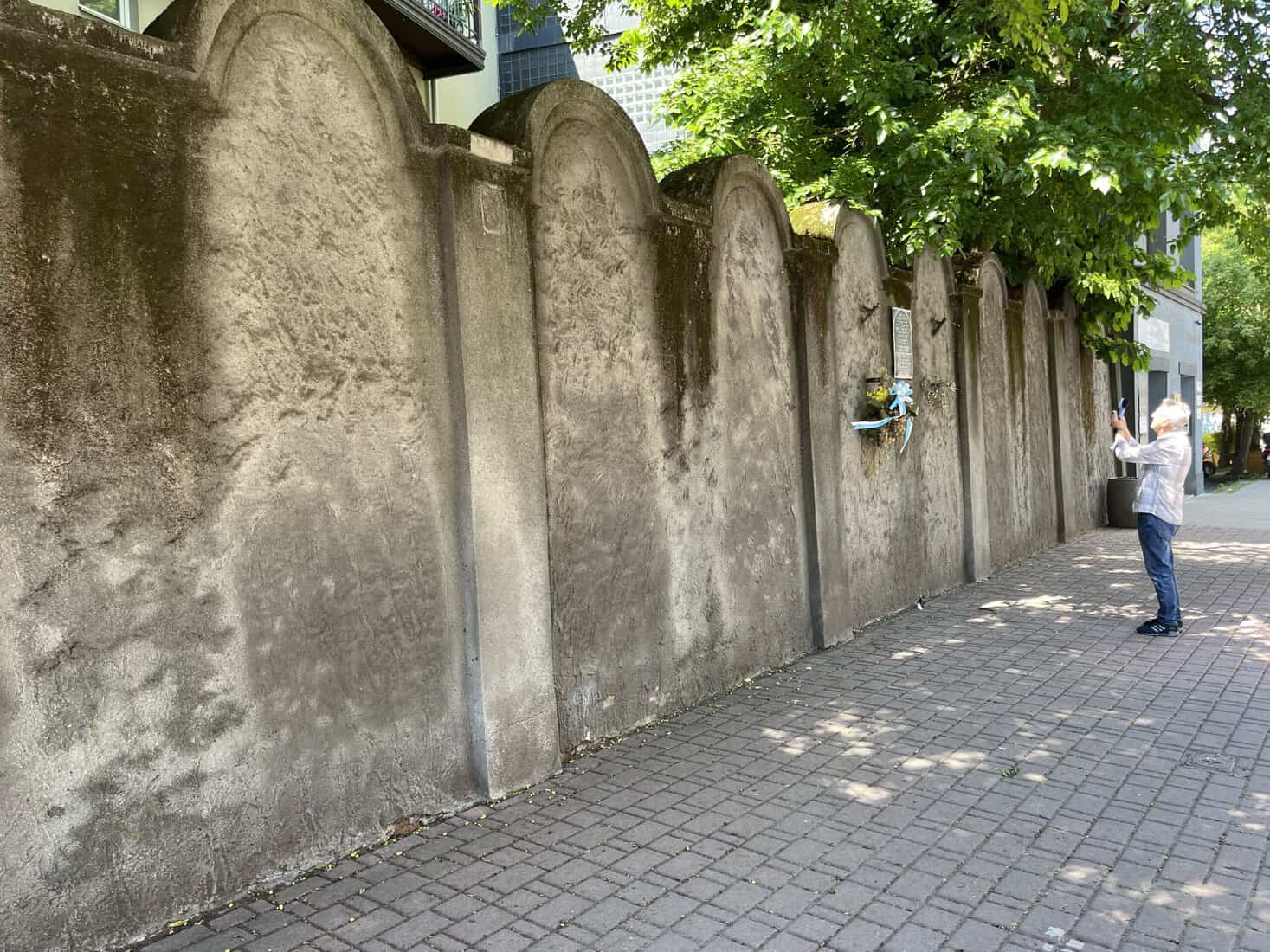
We walked to Plac Bohateròw, the ghetto’s main square where Jews could gather while awaiting their fate. Today 70 high-backed metal chairs are scattered around the square to represent the lost Jewish community. Nearby are the remains of the original wall. It stands 15 feet high and is made of two-foot-thick concrete.
Next to it is a tattoo parlor.
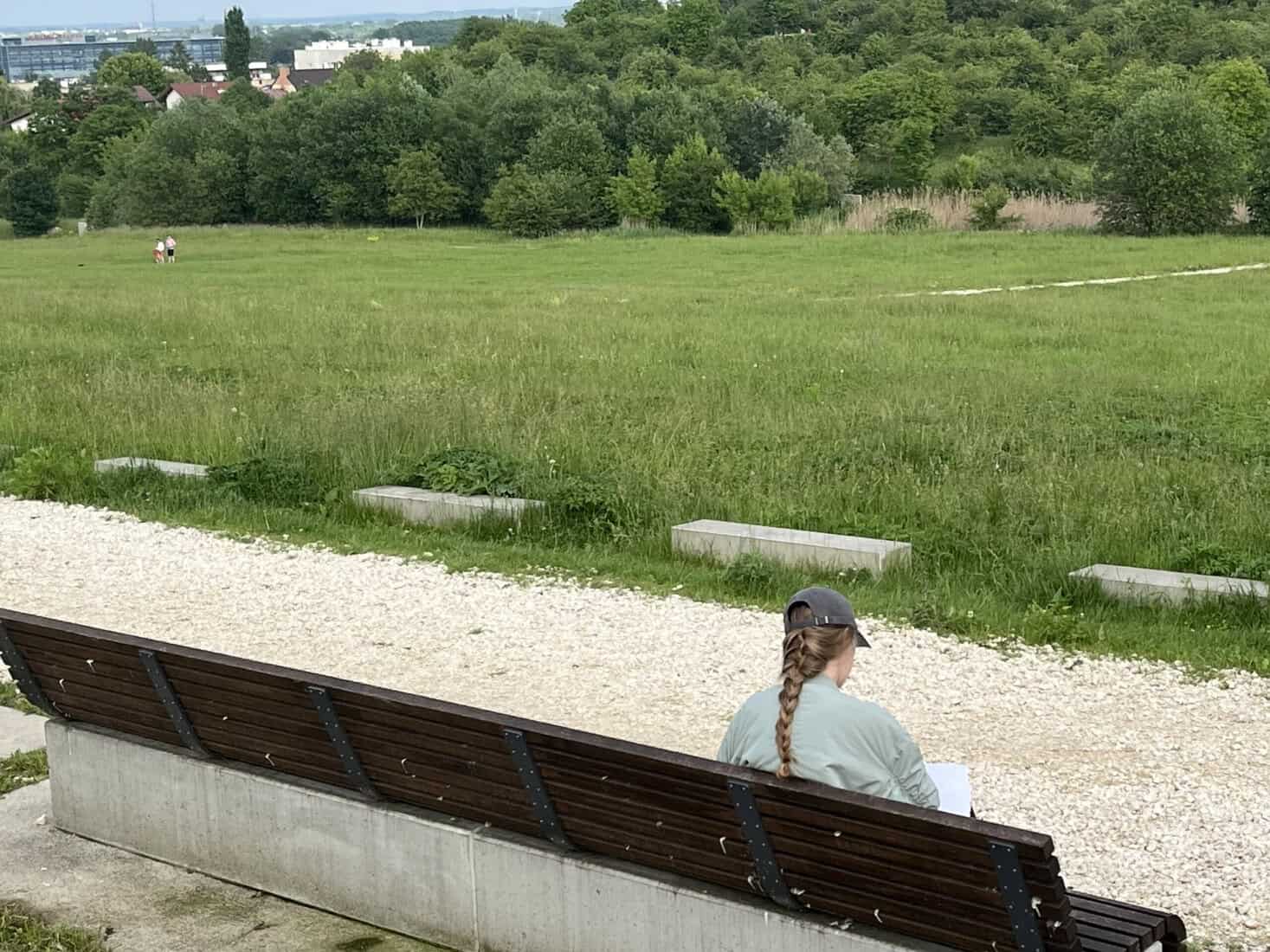
We walked around 20 minutes to what was then the Plaszow labour camp. It shocked me in its innocence. It is a huge, grassy memorial park, lined with walking paths and long benches. People walked their dogs, studied, cycled.
You could feel the sweet tangs of romance if you didn’t read plaques listing testimony of former prisoners recalling how they watched their mothers march to pre-dug graves where they were shot.
One man remains a hero in Krakow 80 years after the war. Oskar Schindler was a German industrialist who became an intelligence officer with the German military and ran an enamel factory in Krakow. As his Jewish workforce made him rich, he began doing favors for his employees such as helping with funds and personal correspondence.
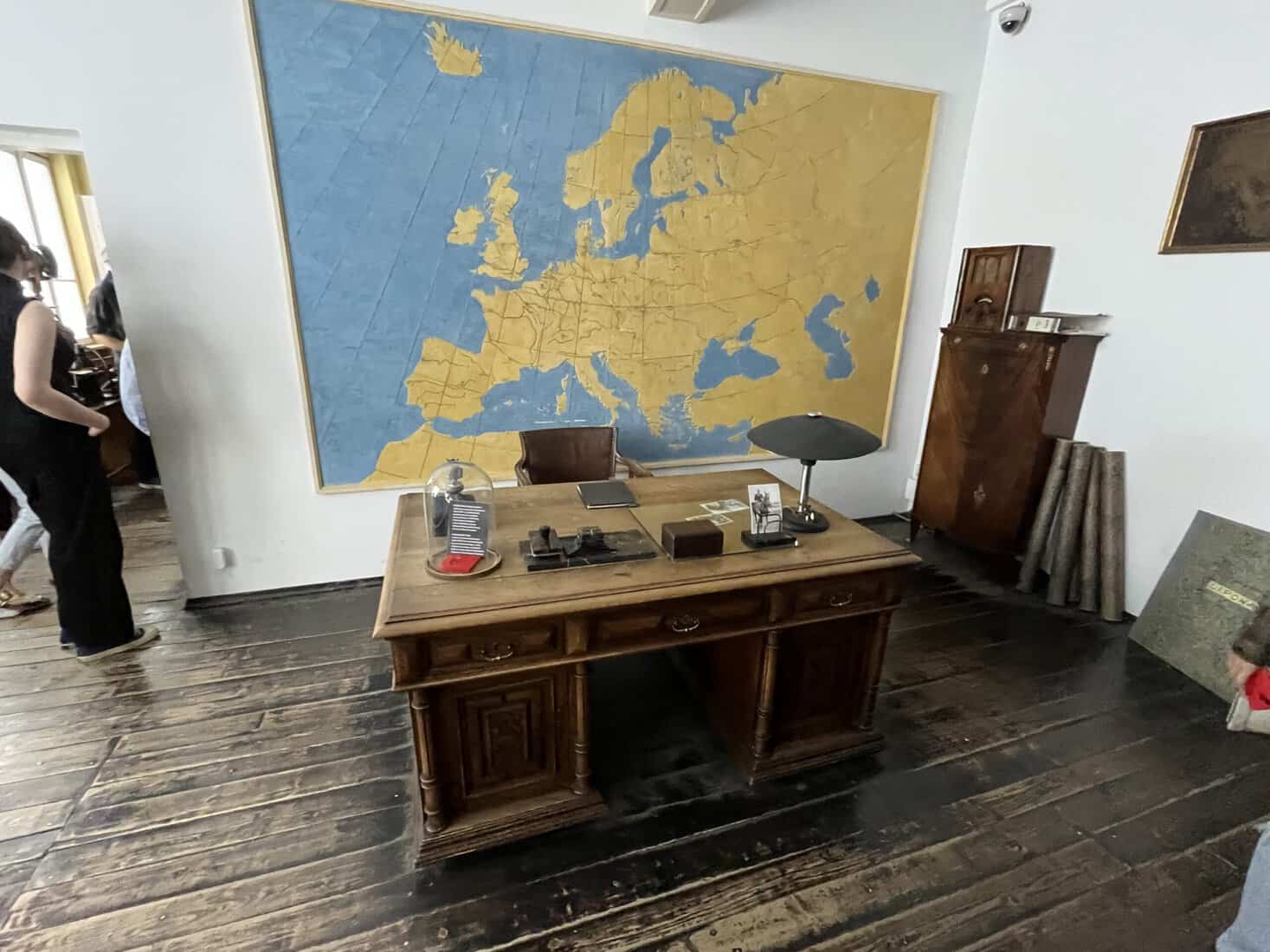
Using his factory to shield Jews from deportation and murder, he eventually saved more than 1,000 lives and inspired Schindler’s List, the Oscar-winning 1993 film that drives thousands of tourists to his old plant-turned museum.
It’s mostly a history of Krakow during World War II but Schindler’s office remains intact, complete with a giant map of Europe, his big wooden desk, an anvil-sized 1940s phone and an ink stamp.
A plaque from one Niusia Horowitz-Karaklska reads, “And how many worlds did Oskar Schindler save? If it weren’t for him, there would not be me, and there would not be my family, either, nor our descendants …”
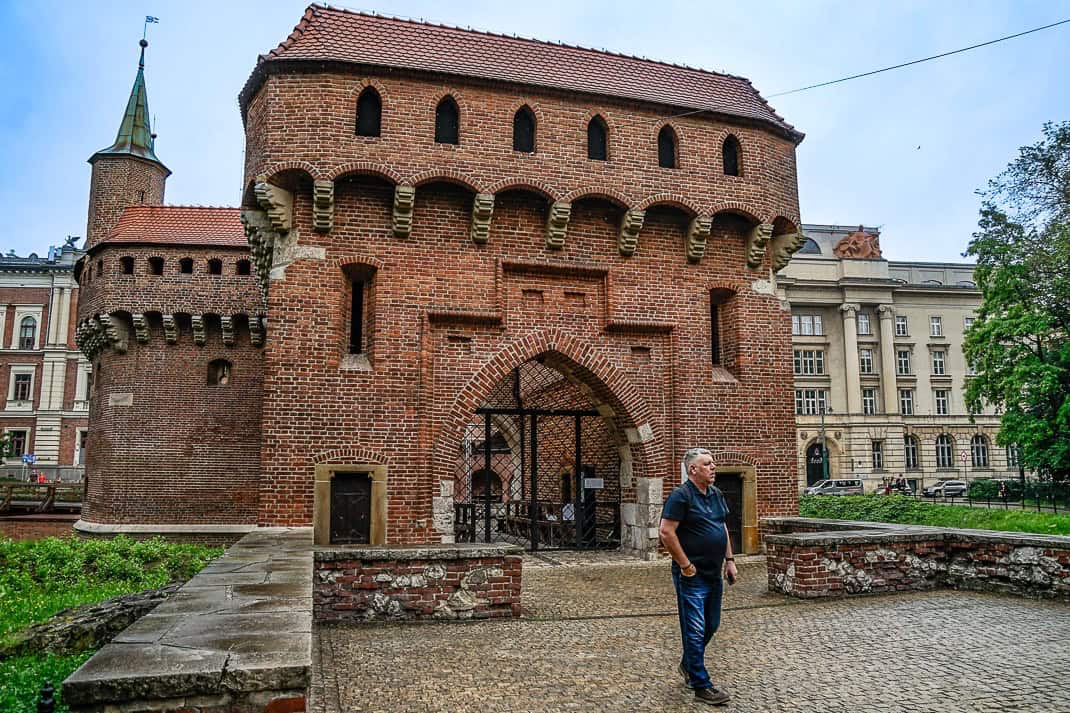
Walking today’s Krakow
Poland is known for its concentration camps and the site of the Holocaust’s most brutal episodes. But more than Jews suffered in Poland’s history. From the late 18th century to the end of World War I, there was no Poland. Today’s territory was divided between Russia, Germany and the Austro-Hungarian Empire.
Then in World War II, 20 years after reforming, Poland lost 20 percent of its population.
What held it together: Catholicism. Nearly 90 percent of the country is Catholic, by far the most of the old Eastern Bloc. And remember, Pope John Paul II, who ruled in the Vatican from 1978-2005, went to university in Krakow to study philosophy and languages.
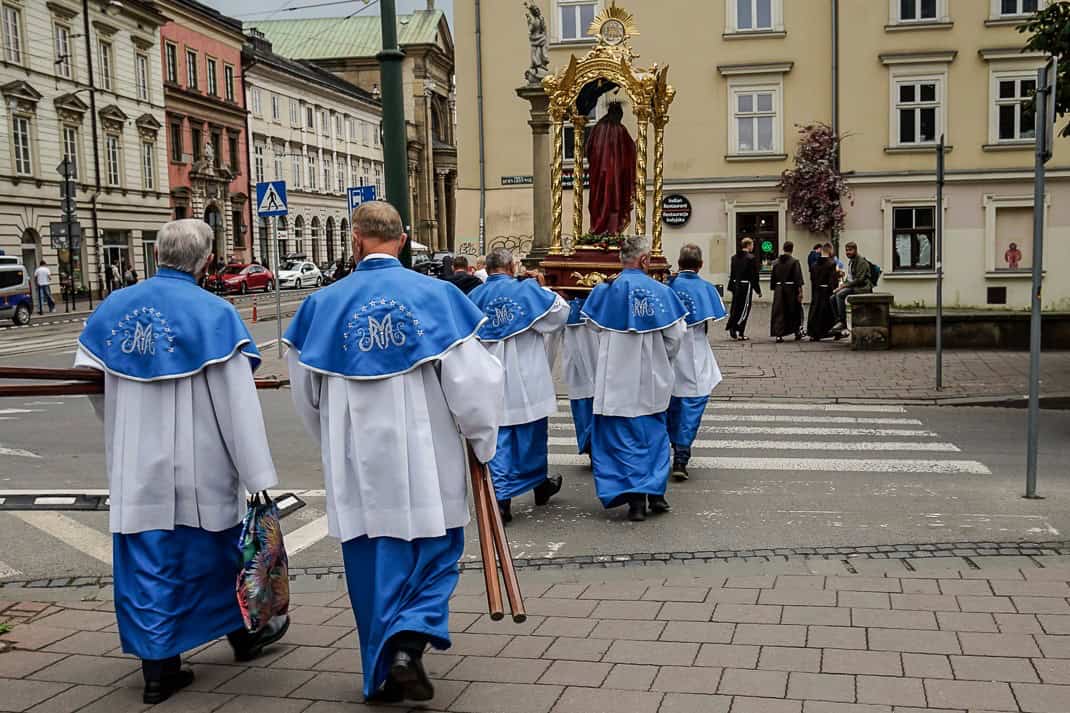
During a free city walking tour, we frequently saw flocks of priests in various colored robes roaming the pedestrian streets.
Krakow’s Catholic aura is most evident in Old Market Square. The city’s biggest tourist attraction is a perfect 200 meters x 200 meters. In 1257, the Duke of Poland rebuilt the square for trading.
One of the square’s anchors is St. Mary’s Basilica. Built in the 1220s, St. Mary’s is a city landmark with its 82-meter-high (269-foot) tower. Every hour on the hour, one of seven rotating firefighters working 24-hour shifts opens a top window and plays a short firefighter hymn on his bugle.
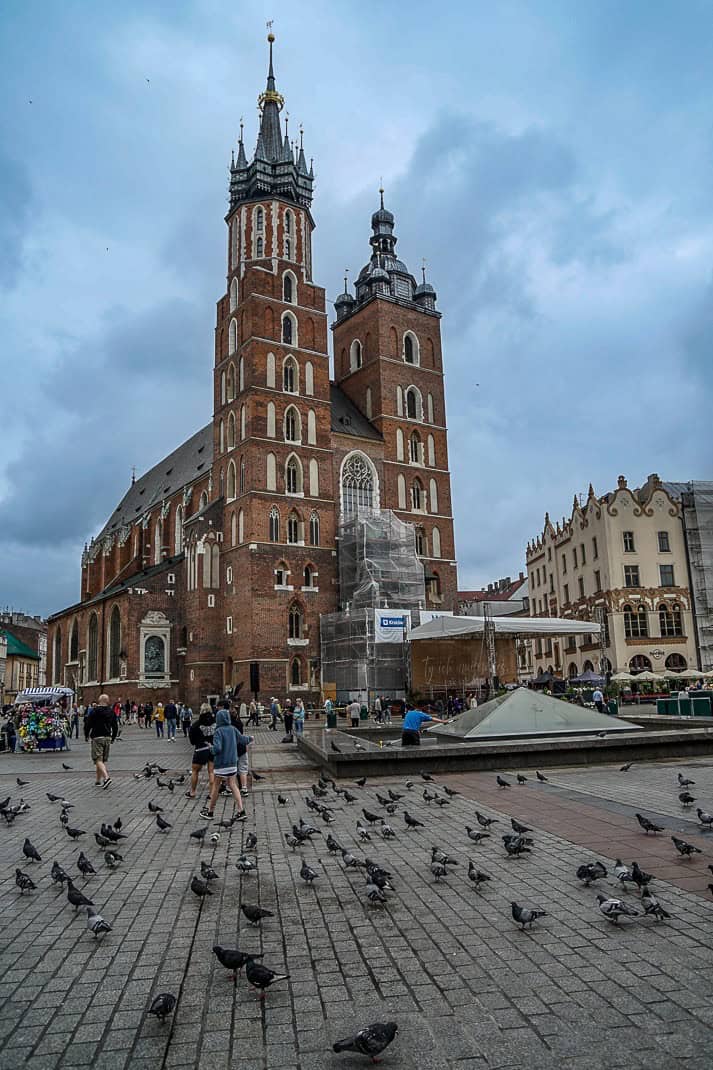
When it was built, the watch tower was used to spy approaching armies and later to locate fires. Today local firefighters continue the tradition of causing hundreds of tourists to look up at the top of every hour.
Fewer people bother going inside St. Mary’s which boasts a spectacular carved wooden altarpiece showing the death of the Virgin Mary. Not far away is the 13th century Holy Trinity Basilica which has a monastery beyond its northern wall.
We left Old Market Square and passed through a beautiful, lush, green park and made a short climb up Wawal Hill to famed Wawel Castle, the symbol of the nation. Standing guard over the city with a beautiful view of the town and the Wisla River snaking through it, the castle is an architectural wonder of yellow limestone and sandstone topped by a red peaked roof.
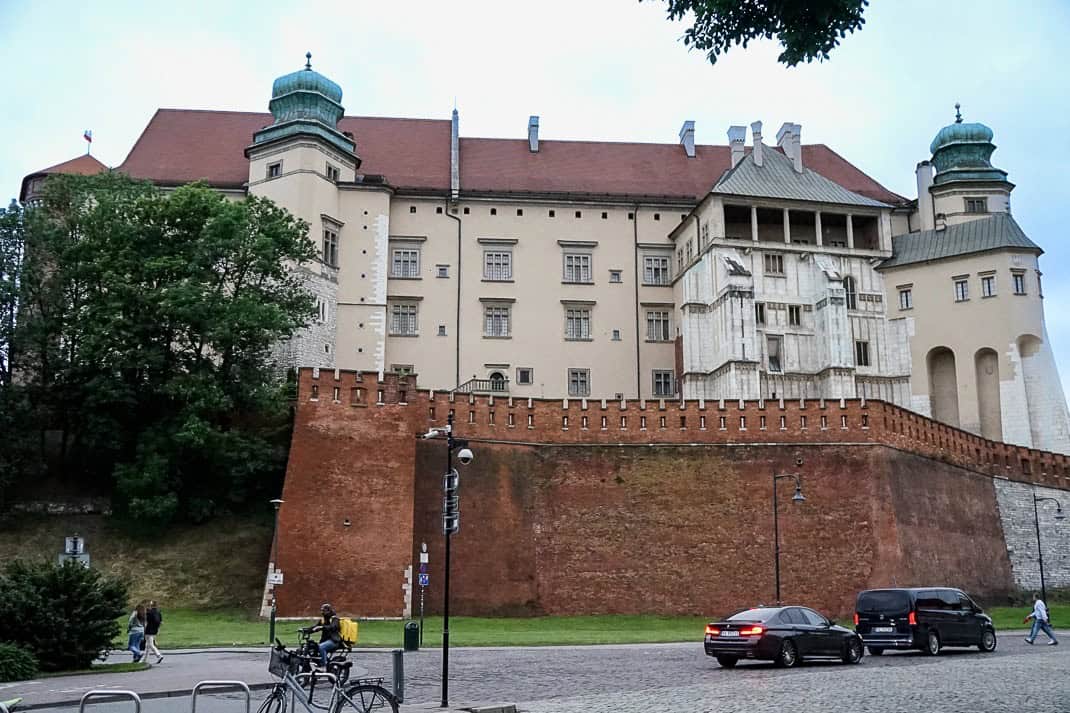
It was built in the 16th century for the coronation of Polish kings and even continued after the capital was moved to the more central Warsaw in 1596.
The adjacent Wawel Cathedral, meanwhile, looks like acid was prevalent when architects built it in 1364. It’s a hodgepodge of brick, white stone and yellowstone with a blue-green bell tower above it all.
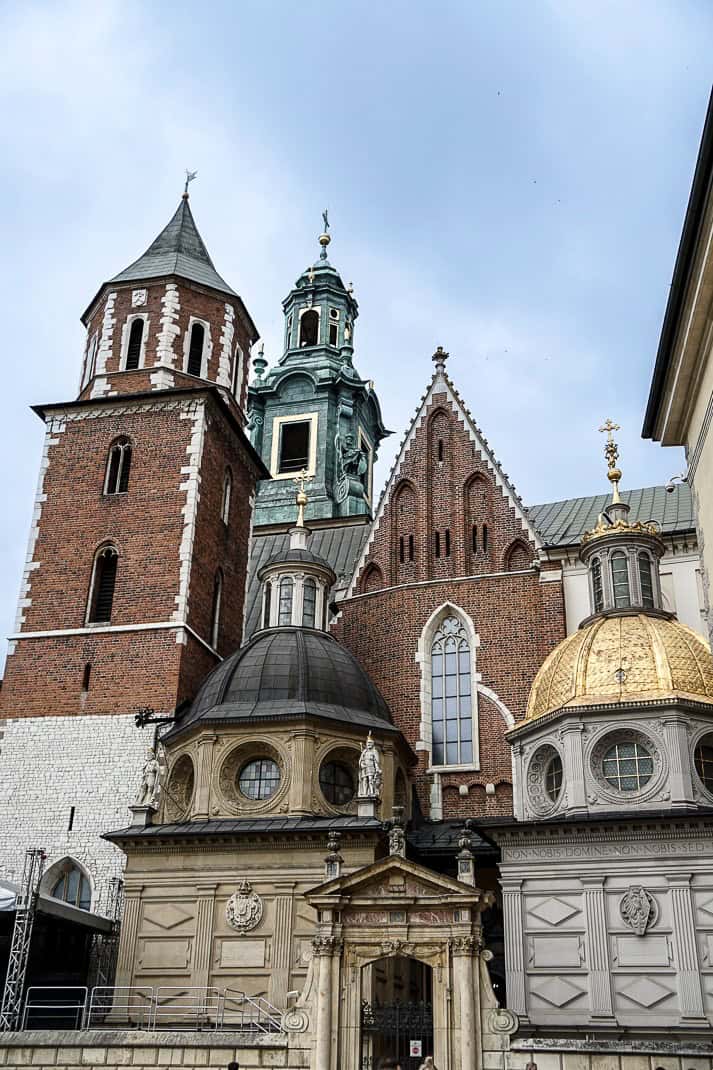
So how did all of this survive World War II while Warsaw was bombed back to the Stone Age? The Nazis viewed Krakow as a perfect base for its military operation. They only bombed nearby munitions sites, hoping their military’s aim missed the beautiful buildings, not to mention the homes the Nazis commandeered.
To this day, a rivalry exists between Warsaw and Krakow. Warsaw views Krakow as too religious; Krakow views Warsaw as too corporate.
I view Krakow as a European gem, a survivor of unspeakable horror to shine a light on what beauty really is.
(Next Tuesday: Auschwitz.)
If you’re thinking of going …
How to get there: Many cities fly direct to Krakow. I paid €255.92 for two round-trip tickets for a two-hour flight on RyanAir from Rome. Regular daily trains from Warsaw take three hours and range from €10-€52.
Where to stay: Hotel M29, U. Miodowa 29, 48-12-448-3917, www.hotelm29.pl, info@hotelm29.pl. Excellent modern four-star hotel in the heart of the Jewish Quarter and walking distance from Old Market Square. I paid €490 for three nights including a massive breakfast.
Where to eat: Restauracja Sasiedzi, Miodowa 25, 48-510-004-473, https://sasiedzi.oberza.pl/menu.pdf. Brick walls and arched ceiling give it an old Europe feel although it opened in the Jewish Quarter in 1998. Very traditional menu with dishes ranging from €10-€23. Try Poland’s signature potato pancakes covered in goulash. I paid €44 for two including wine and an appetizer.
When to go: Locals and tour guides warned me in July and August it is hot, humid and crowded. Last week it was in the 60s, mostly cloudy with a touch of rain.
For more information: InfoKrakow, 25 Szpitainz St., 48-510-004-473, www.infokrakow.pl, 8 a.m.-10 p.m.
June 9, 2026 @ 11:23 pm
Like the architect was on acid…..great line John !
June 10, 2026 @ 8:05 am
Thanks, K.C. I still have a little left in the tank.