


Auschwitz: Interview with a tour guide of “The Most Terrifying Place on Earth”
(This is the second of a two-part blog on Krakow, Poland.)
AUSCHWITZ, Poland – When she was a little girl in Krakow, Poland, her grandfather would always tell her bedtime stories, the kind that infuriated her grandmother. She wanted him to tell her fairy tales. Instead, he filled her head with stories from another time, a time that wasn’t a fairy tale at all.
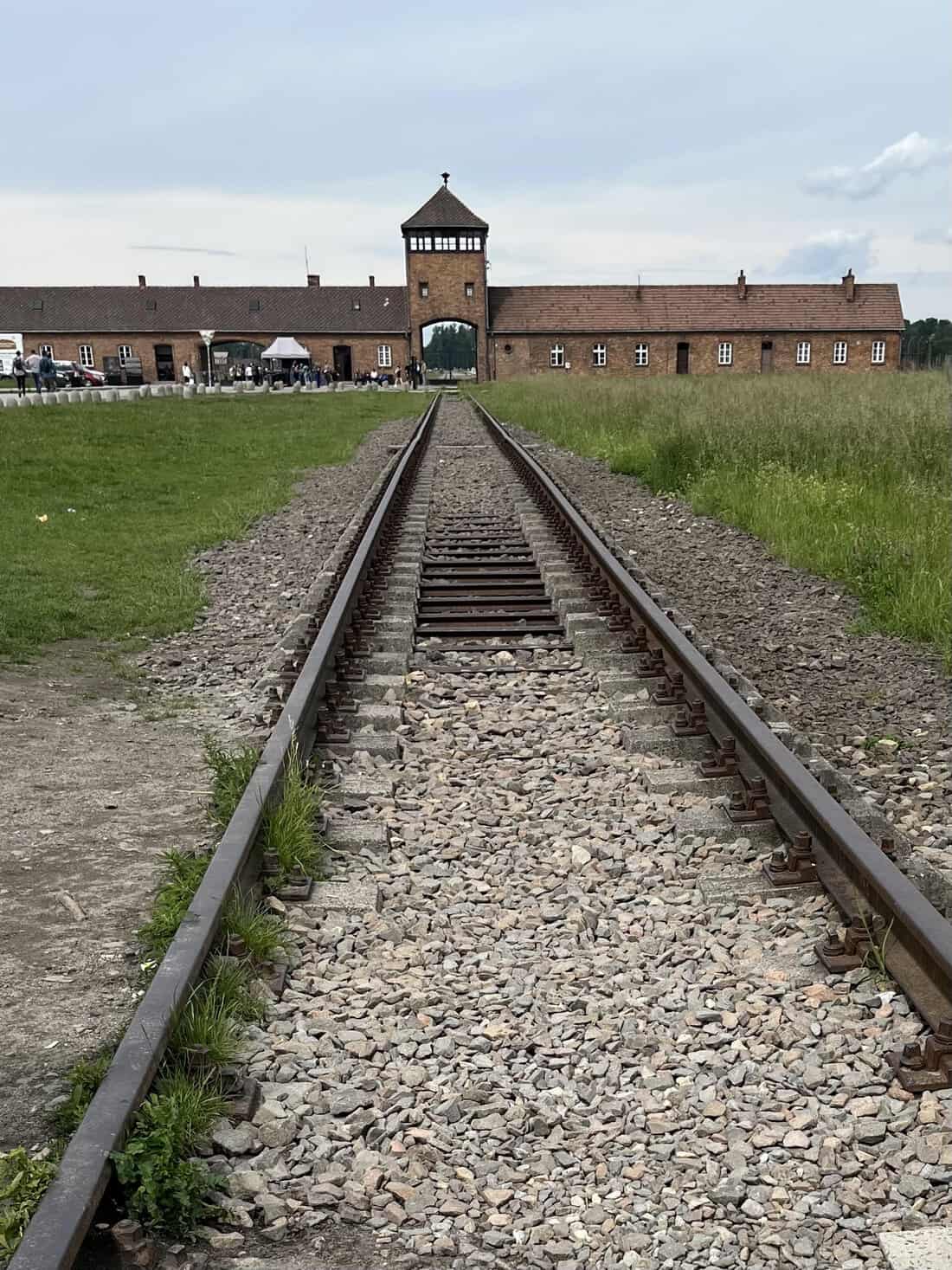
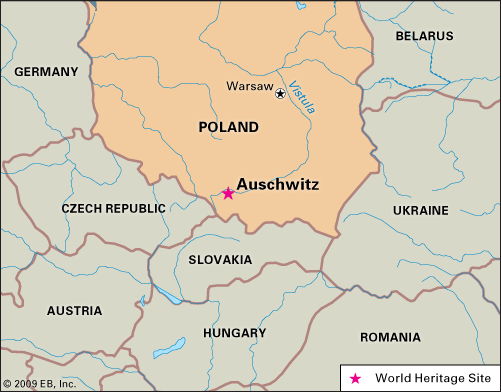
Auschwitz.
Anna remembers one story in particular. Her great grandfather was walking his heavily pregnant wife down a Krakow street. It was early 1940s. Nazi soldiers started making fun of her. They made vulgar gestures. Her great grandfather politely asked them to stop.
Later that day, Nazi soldiers came to their home and hauled him away. Her great grandfather was never seen again.
“My great grandmother, she only remembers they were shouting at him and saying, ‘Auschwitz! Auschwitz!”’ Anna said. “But whether he was really sent here or killed at the police station just around the corner no one knows.”
Stories like that fueled little Anna. Growing up just 40 miles (70 kilometers) east of Auschwitz, the concentration camp often referred to as The Most Terrifying Place on Earth became her obsession. It had stories to tell. She had stories to tell, which led her to her current occupation.
Auschwitz tour guide.
The numbers
I take my share of guided tours. Most European cities offer free guided walking tours such as the superb one I took of Krakow two weeks ago. Some places you need a guide. The Forum back home in Rome is a must. So many ruins are scattered about, you need a guide to tie them together.
At Auschwitz, you need a guide not so much for what you see but for the stories behind it all. And it’s up to us, the travelers who see it, to continue telling the stories.
That’s where Anna comes in.
“Still we have survivors in the world,” she said. “But soon, they will be all gone. And who will pass information of what happened here? Will the information be in line with the true history of this place? We can not forget all the kinds of people who died, who were suffering here.”
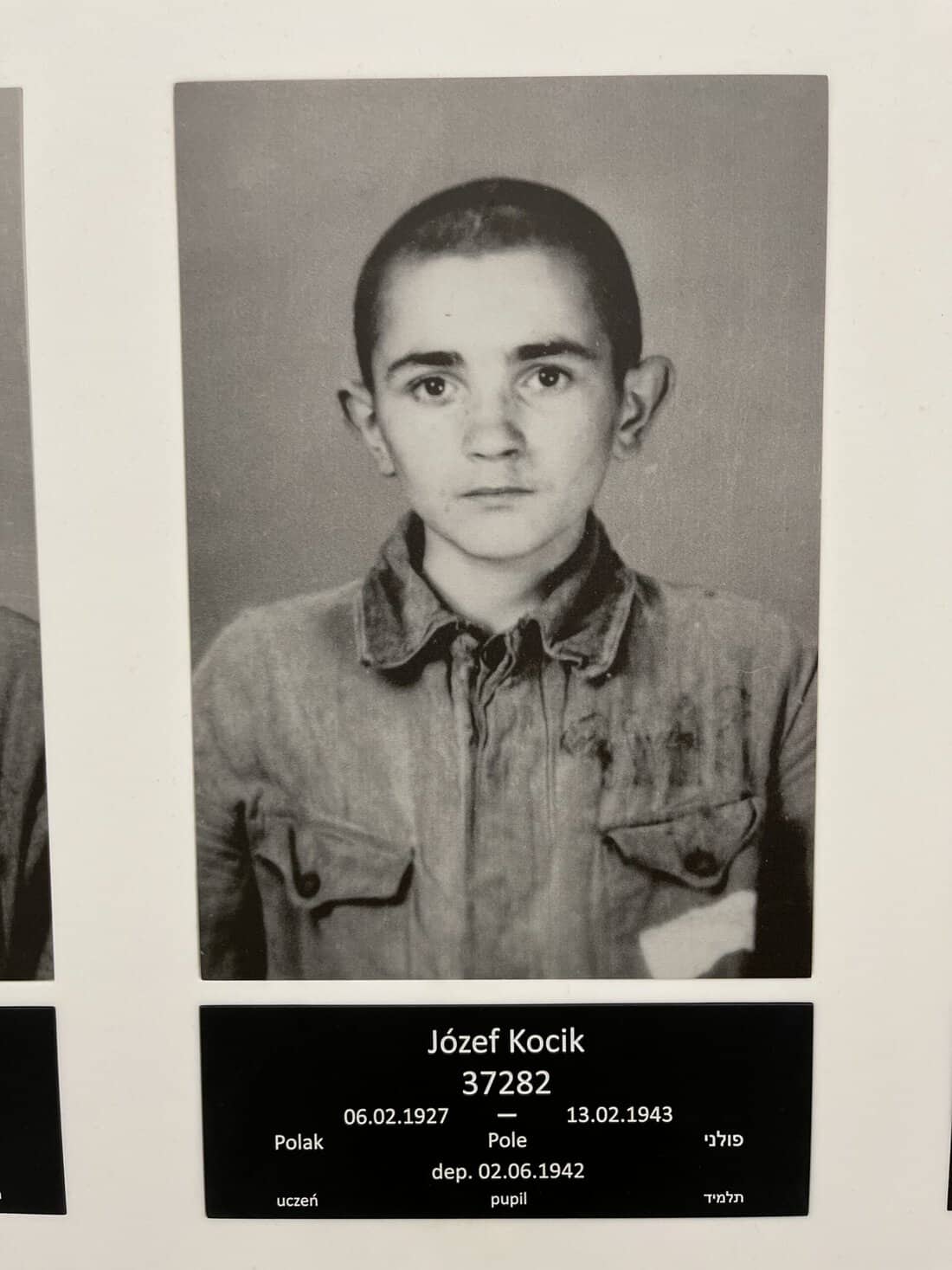
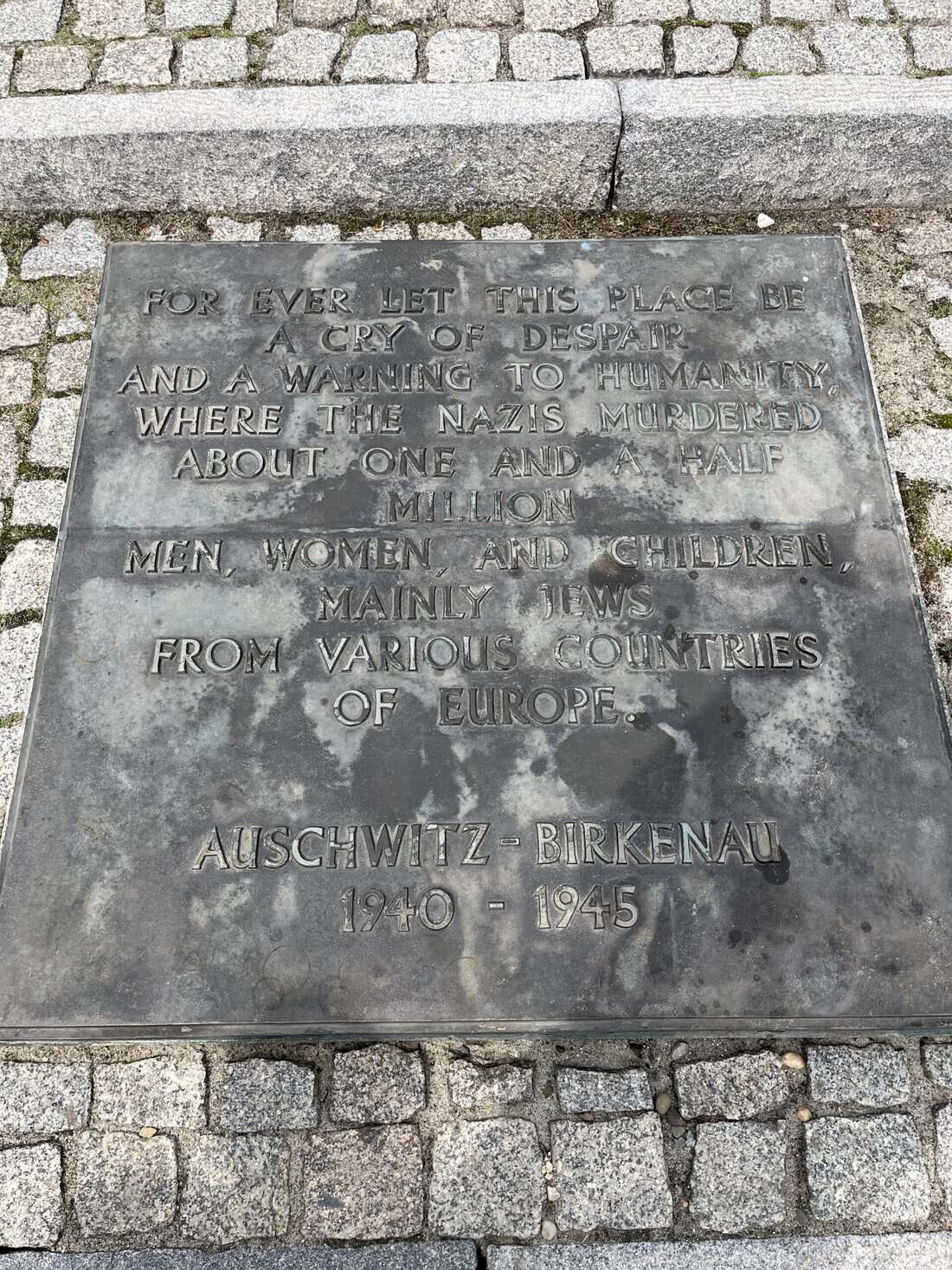
The statistics alone are worth embedding in our brains. The Nazis slaughtered 6 million Jews. In the five years they operated Auschwitz from 1940-45, they killed 2.5 million. The campaign was billed “The Final Solution.”
Ninety percent were Jewish. But there were also Gypsies, Soviets, Poles, handicapped and political opponents. They included anyone living in a country that Adolf Hitler wanted to exterminate in his quest to conquer Europe and beyond. At the time, Europe had 11 million Jews.
The greatest number, 3.3 million, were in Poland.
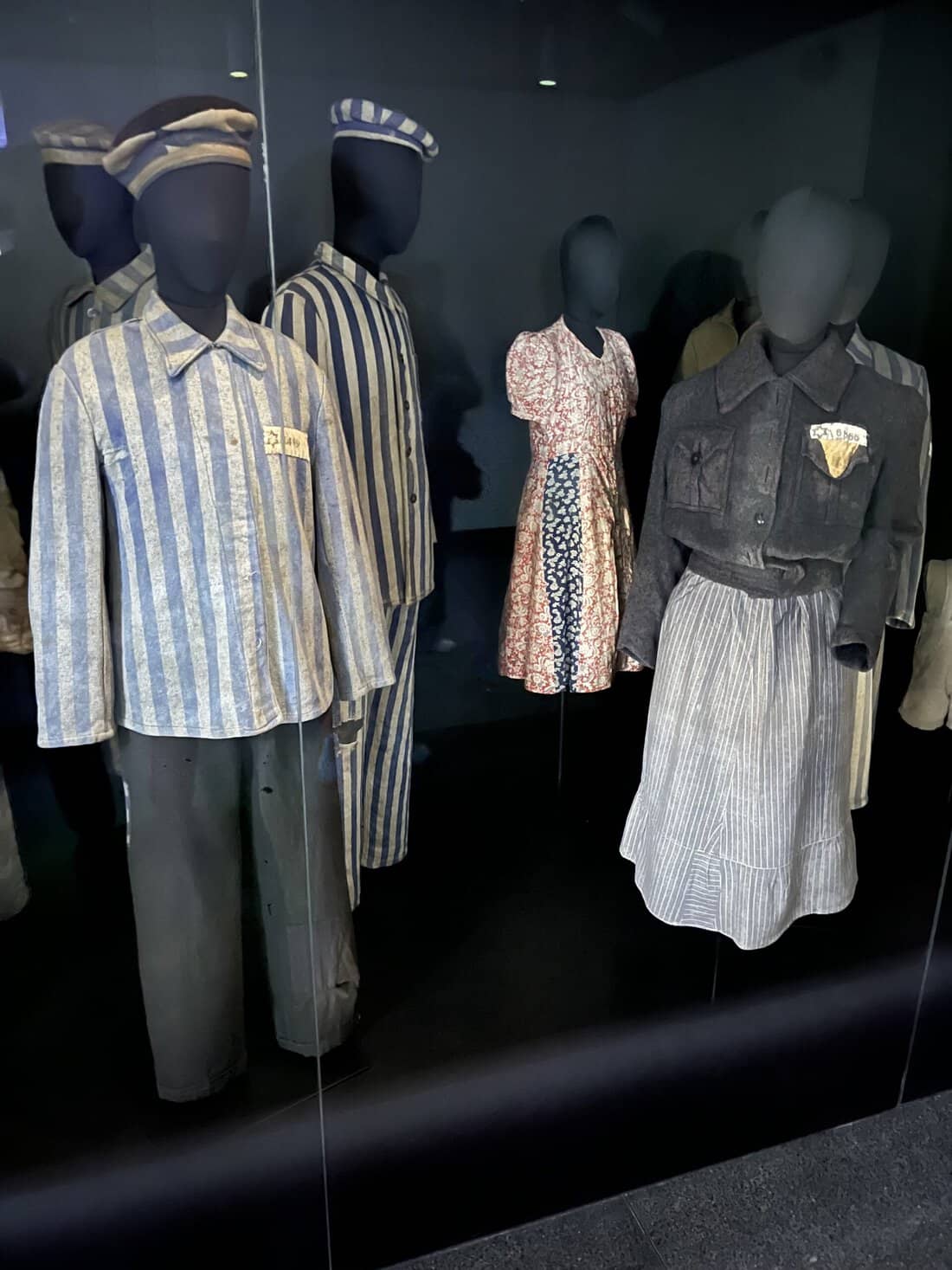
Auschwitz consisted of 28 buildings which housed 20,000 prisoners. The buildings became so cramped, the Nazis built another camp, a larger camp, two kilometers away in Birkenau. Known as Auschwitz II, it held 300 buildings and 93,000 prisoners.
Every day, the Nazis killed 1,000.
It was this history that I threw myself into on a four-hour tour.
Visiting Auschwitz
This was my second concentration camp. In 1978, I toured Dachau outside Munich. But I was a 22-year-old backpacker and toured it sans guide with just a few other tourists and a troop of Israeli Boy Scouts. When the Scouts entered, they were horseplaying and shouting and laughing.
When we left at the same time, they were bawling.
I met my tour group in front of Krakow’s Radisson Blu hotel at dawn. It was a beautiful sunny day in the mid-60s, perfect for touring but there is no “beautiful” day to tour what German philosopher Theodor Adorno once said, “Auschwitz begins wherever someone looks at a slaughterhouse and thinks: They’re only animals.”
Our van passed through southern Poland’s pleasant countryside. It’s forests and meadows and patchworks of farms with preserved villages sprinkled in between. I wondered if this is what the millions of Poles saw as they were hauled from Krakow to what they knew was certain death.
We didn’t go through the town of Auschwitz, known as Oświęcim in Polish, a pretty town of 35,000 known for its Jewish center, castle and chemical plant. Oh, and the biggest German concentration camp in World War II.
Instead, we went straight to a giant parking lot that made me think more of Goofy and Mickey than Nazis. The lot was packed like Disneyland. Buses and big vans filled the area. Dozens of tourist pods surrounded guides explaining protocol and tour procedure.
I saw a food truck that sold ice cream and kabobs. Anna said it once stood even closer to the entrance before officials complained and it was moved back. It sounds like sometimes Auschwitz is a tourist trap.
Anna said some tour companies follow Auschwitz with a trip to Fun Park and Energylandia, two Krakow-area amusement parks.
“What makes me feel bad when I’m guiding here is how people dress,” she said. “This is a place where millions of people died. And there are people who come in summertime in swimming suits. You need to show respect for a place. It’s a place that’s really difficult. It’s difficult to be here.”
Touring Auschwitz
When I signed up for my tour, I read an advisory: “Don’t plan on doing anything festive that night.” No, Graceland this is not.
When Anna met us, she gave us more rules: No video. No selfies. No posed photos. No photos of working personnel. When told to be quiet, be quiet.
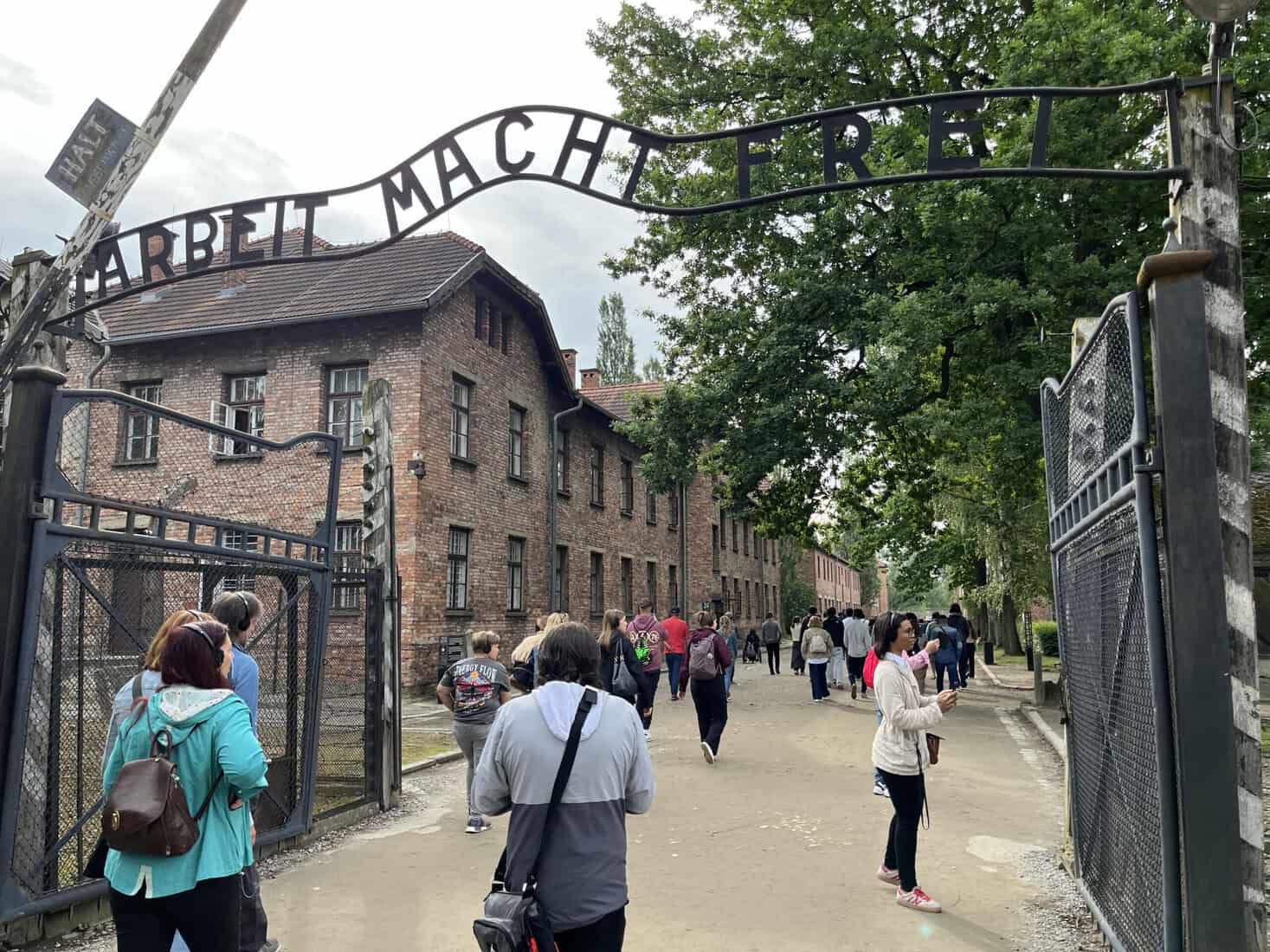
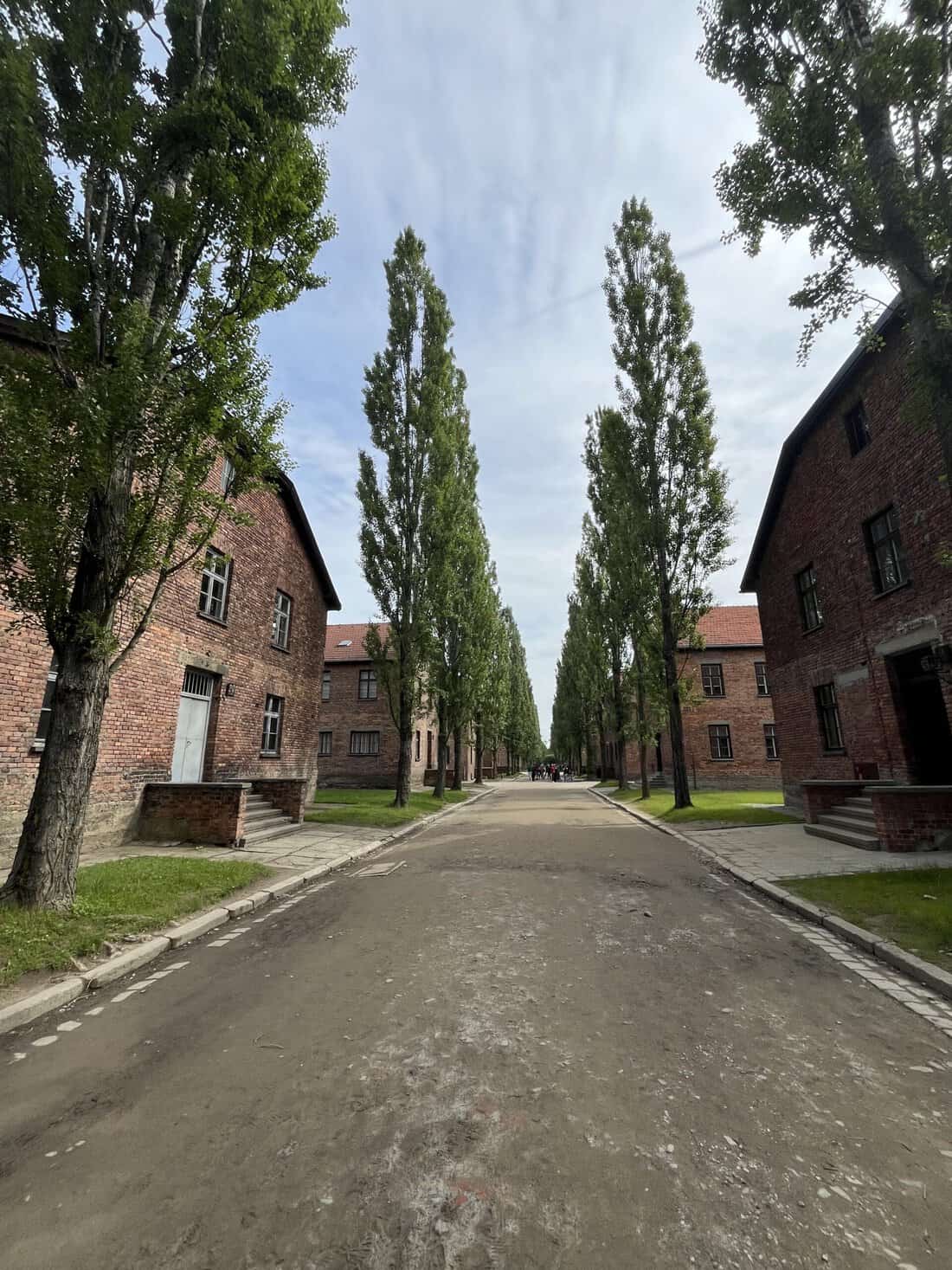
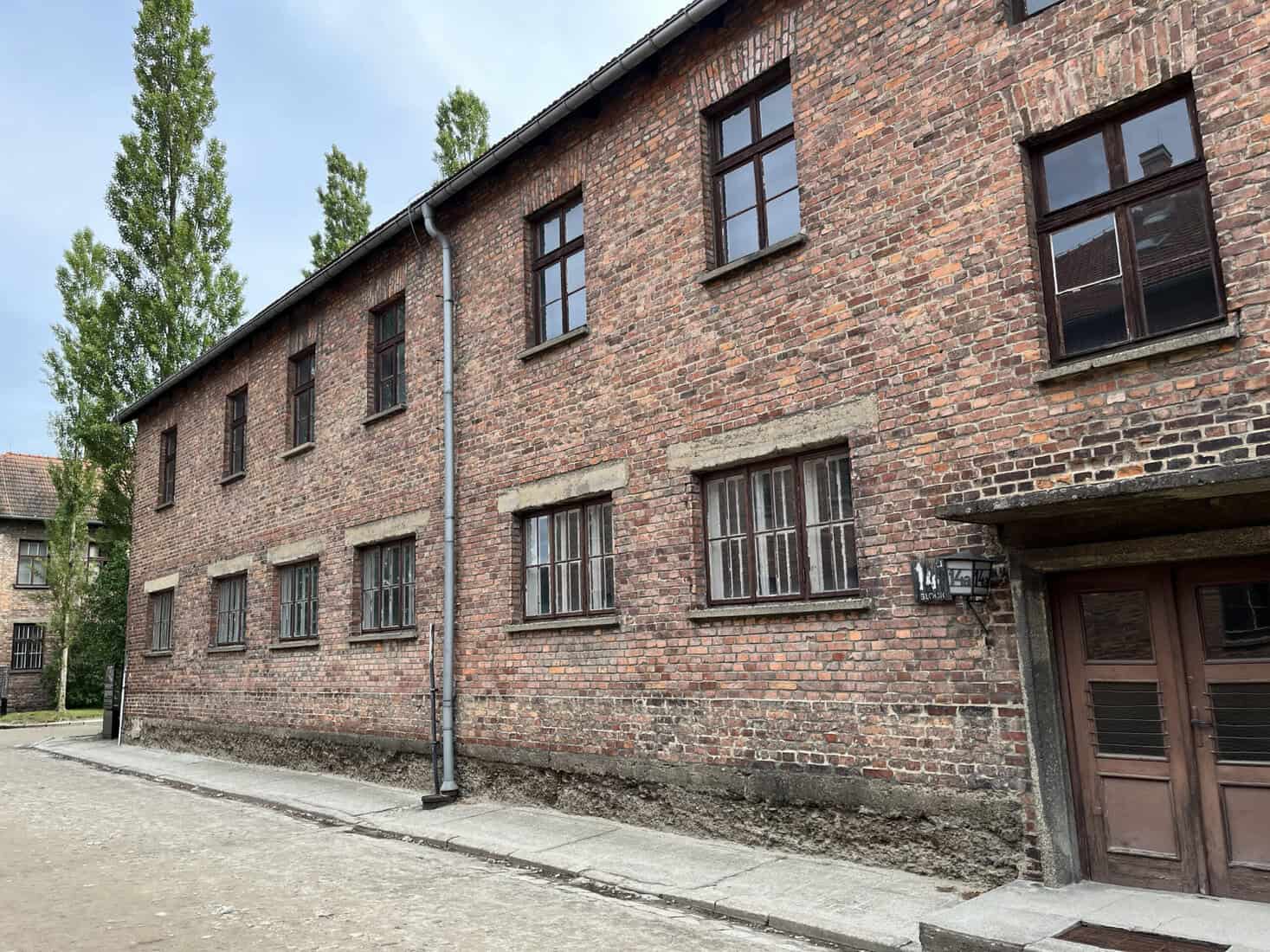
After a long walk between high walls, we were spit out into the camp. It consists of numerous narrow streets, just big enough for two cars – or maybe a tank. On both sides are long rows of two-story brick buildings with peaked, red-tile roofs.
The streets are lined with tall, elegant poplar trees, very similar to the ones prisoners walked between every day more than 80 years ago. Maybe it was the postcard-perfect weather, but it actually looked like a pleasant country neighborhood.
Then I looked closer at the buildings. The second floors were all made of a different shade of brick. The Nazis converted this former Polish army camp and built second floors to double capacity for the expanding prison population.
Anna was a terrific guide. While we walked slowly between buildings, she gave us a sense of history, including a rare look at Hitler’s side. She said he hated Jews because he felt they cost Germany World War I, not to mention the overall antisemitism in his native Austria where he grew up.
She said of the 1.3 million sent to Auschwitz, 1.1 were killed although she said the number is likely larger. The rest died at Birkenau.
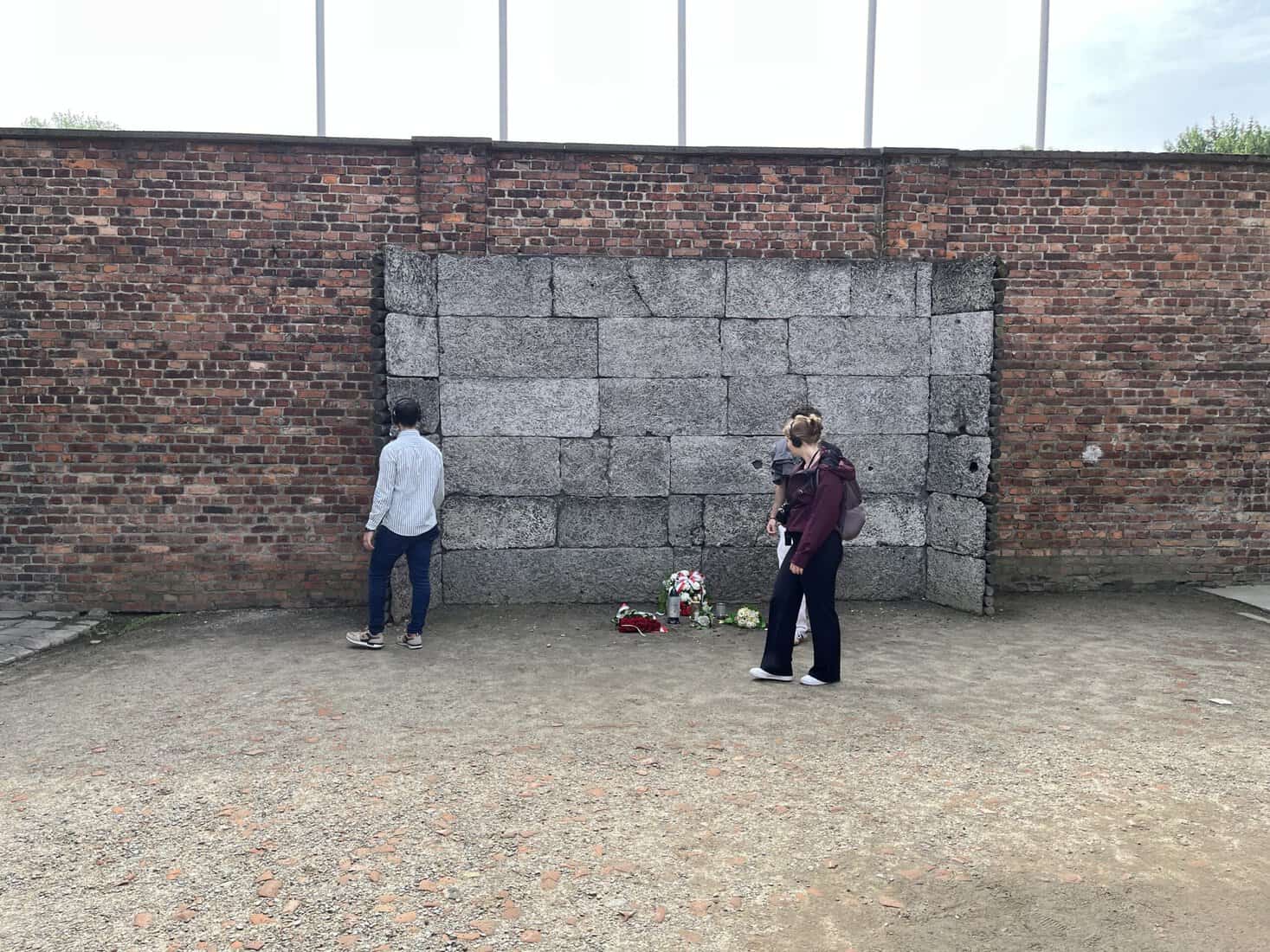
The causes of death were multiple. And we saw it all. They were shot in the streets we walked along and in an execution ground marked by a solid gray stone wall. Some visitors had placed flowers at the base.
They were beaten to death for the simplest offenses such as taking extra food or being late for daily roll call. If anyone escaped, the Nazis executed 10 random people in that person’s building. Everyone was a snitch.
We walked by a simple empty room. It looked nothing different than the other rooms we saw serving as overcrowded cells.
This was the starvation room.
Nazis put 10 prisoners in this room with no food and water, locked the door and never returned. One time after a prisoner escaped, they put 10 men in the starvation room. One man cried and pleaded that he had a wife and children. A Catholic priest named Maximilian Kolbe offered to take his place. He did.
After two weeks, the Nazis came and collected the bodies. Nine were dead; Kolbe was alive. An act of God? Nope.
The Nazis executed him with a shot of carbolic acid.
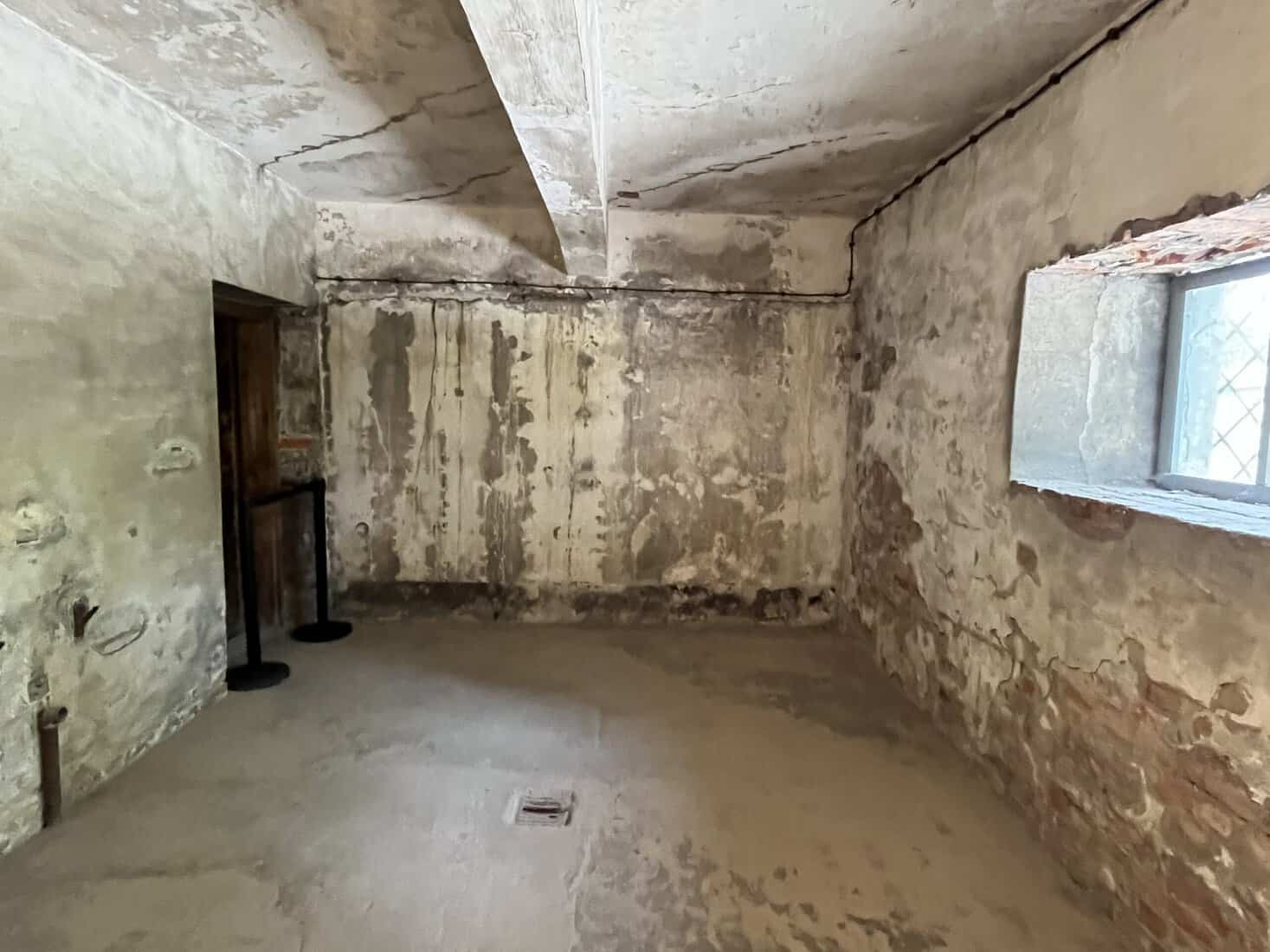
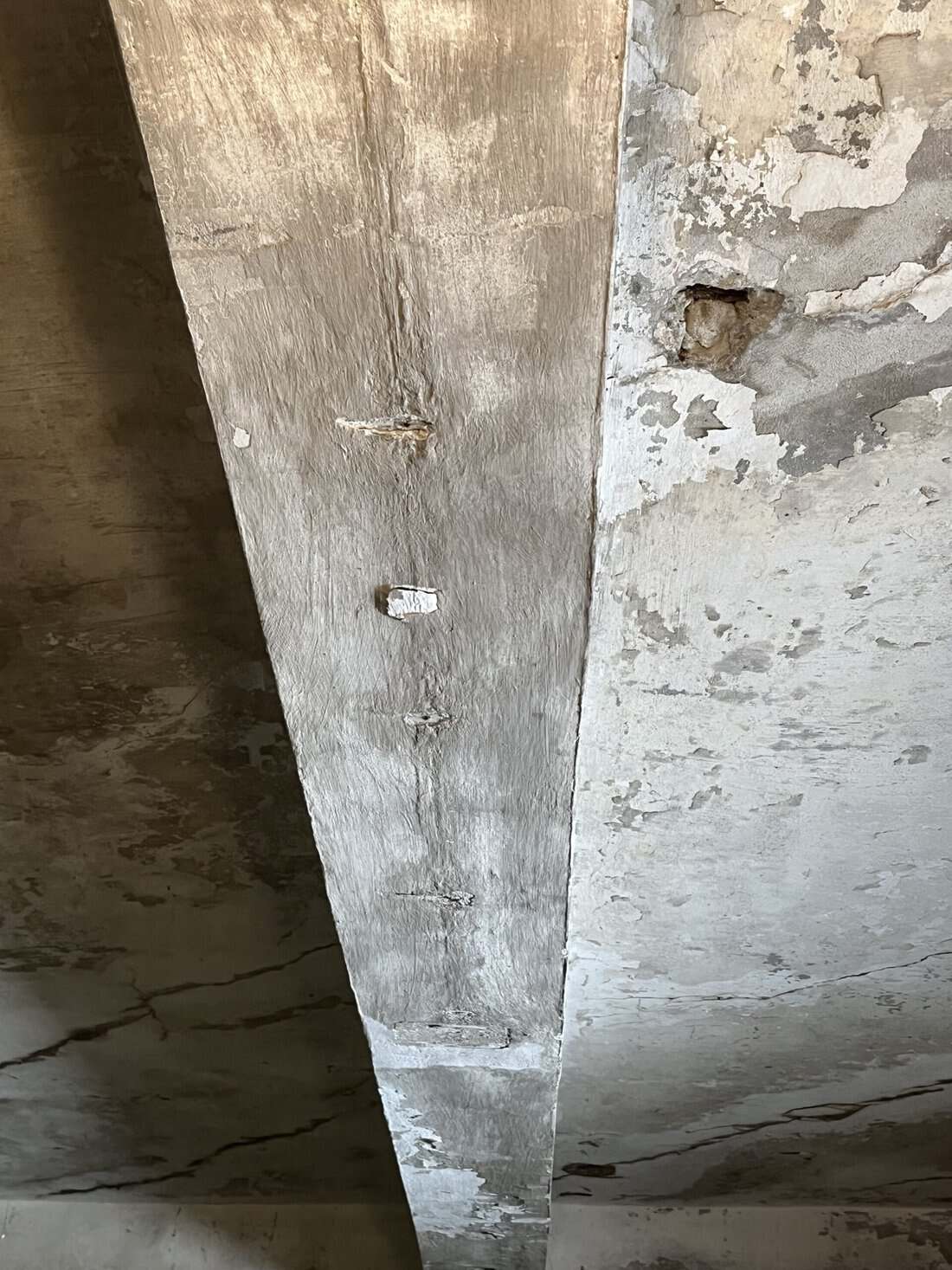
And, of course, there was the gas chamber. At the end of one building, near the exit, is a room about 20 feet (6.5 meters) by 15 feet (5 meters). The faded yellow paint was half scraped off as if tens of thousands of nails had torn into them trying to get out.
On the ceiling was a solid white beam with little holes, long ago plugged, where they poured Zyklon B, a pesticide that when exposed to air releases hydrogen cyanide.
Next to the gas chamber is another small room where the prisoners, chillingly, leave their clothes before walking a few steps to their death.
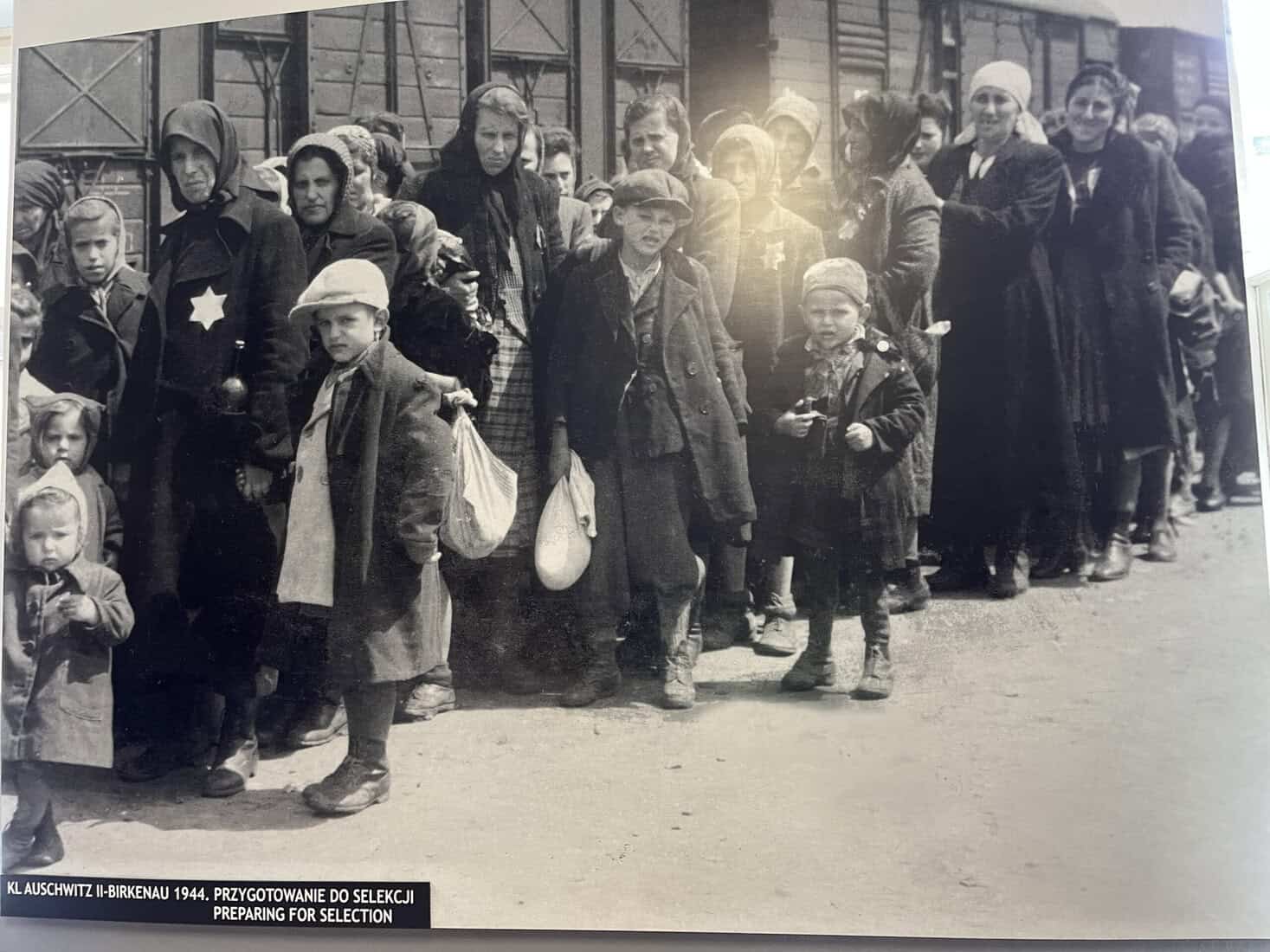
The Nazis’ formula for choosing who would die was simple: children too small and people too old to work in the Nazi war machine. Anna showed a haunting photo of an old man checking into Auschwitz in front of a Nazi officer. The man leaned on a crutch.
The picture shows the Nazi pointing to the gas chamber.
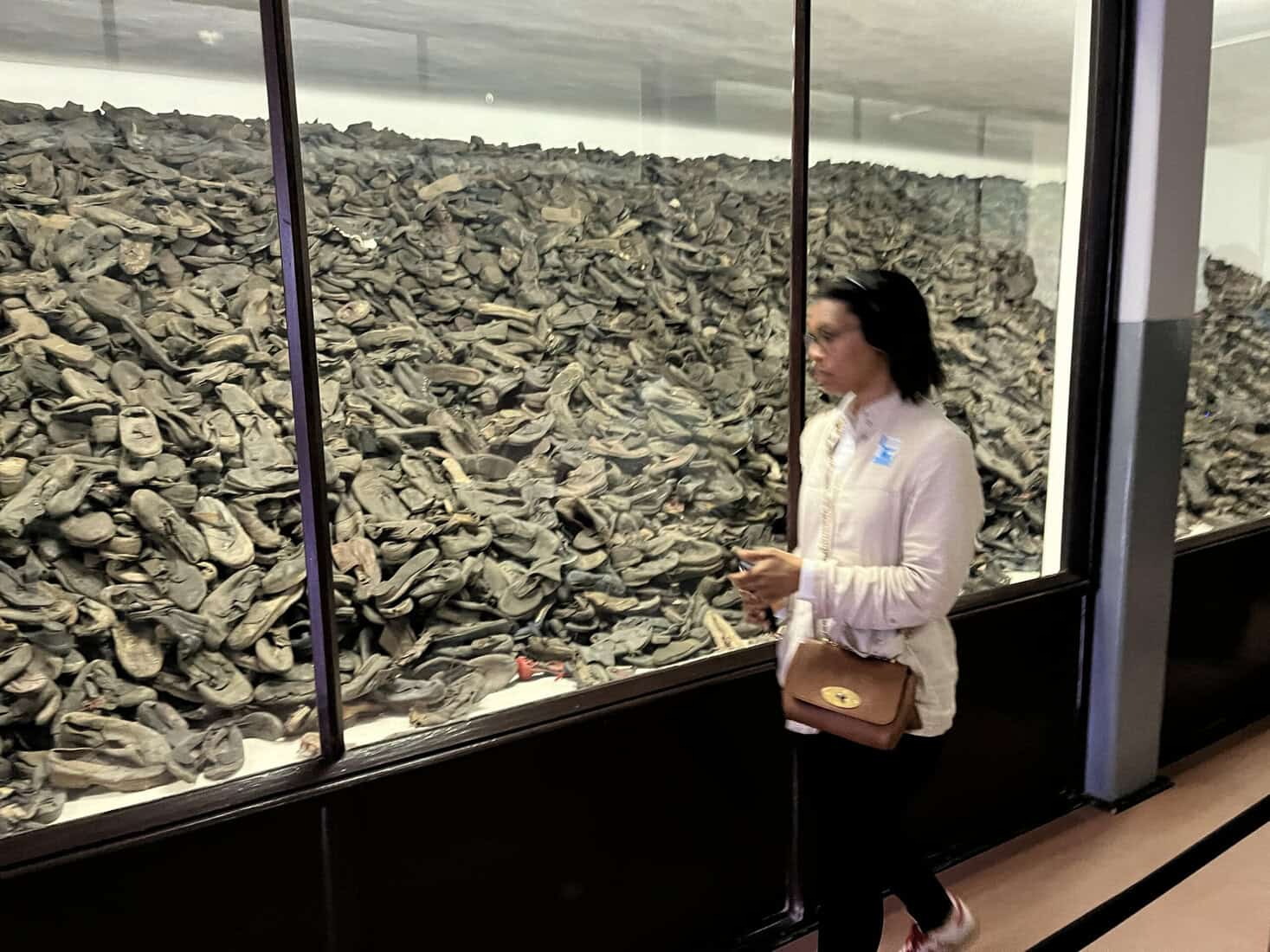
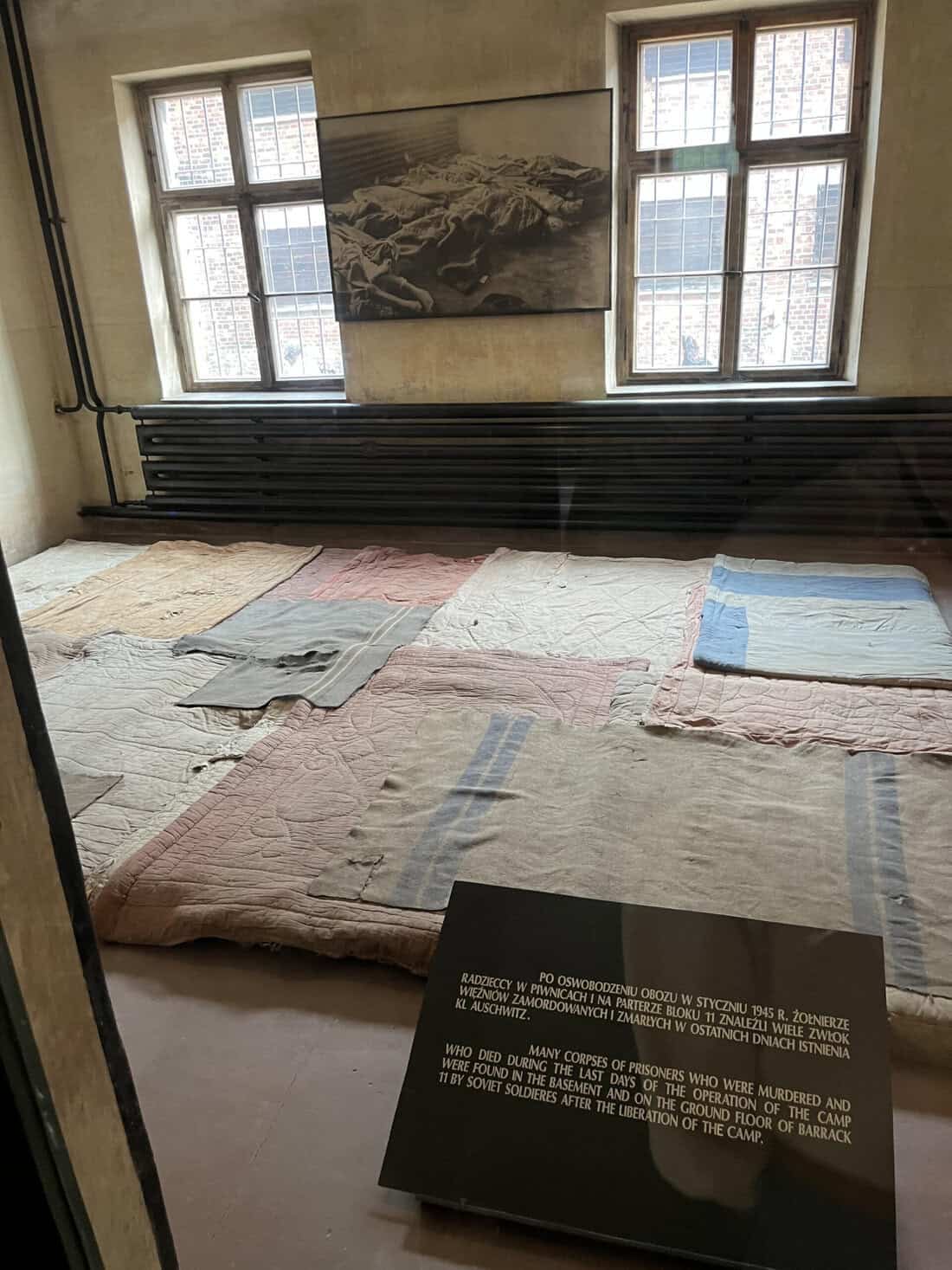
Block 5 was a series of rooms, all with possessions the prisoners left. One room had piles a foot high of eyeglasses. Another had dishware, another suitcases. Two huge rooms facing each other were filled with nothing but old, beaten shoes, mostly with no laces and filled with holes.
One room was filled with hair shaved off the 40,000 women who came through. It looks like a five-foot-high pile of really filthy cotton candy. Anna said the hair collection weighs 7,000 kilograms (15,400 pounds).
Quotes from survivors are placed on some walls. One reads, “The corpse which had just been removed stared in at me with glazed eyes. Two hours before I had spoken to that man. Now I continued sipping my soup.”
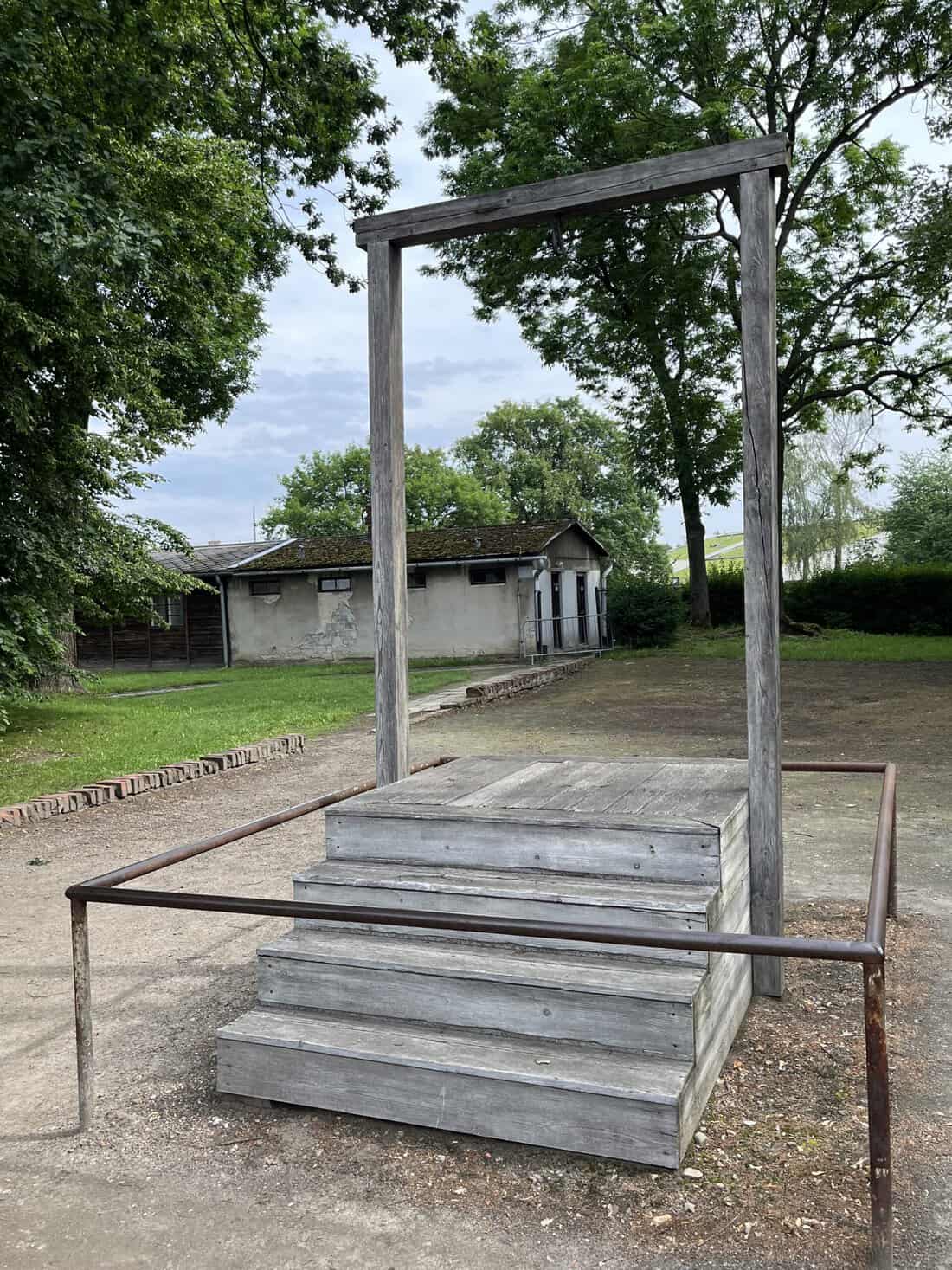
As I walked out of the last block, I had no time to process it. As we walked toward the exit, we passed three horizontal bars about 10 feet high. This is known as Gallows Road, where they hanged prisoners.
Not far away is a single wooden gallow with four steps leading to a small platform. It’s where they hanged Rudolf Hess, director of the Auschwitz camp, after he was found guilty of war crimes at the end of the war in 1947.
We weren’t through. Auschwitz wasn’t the most gruesome concentration camp. There was another that was worse.
Birkenau.
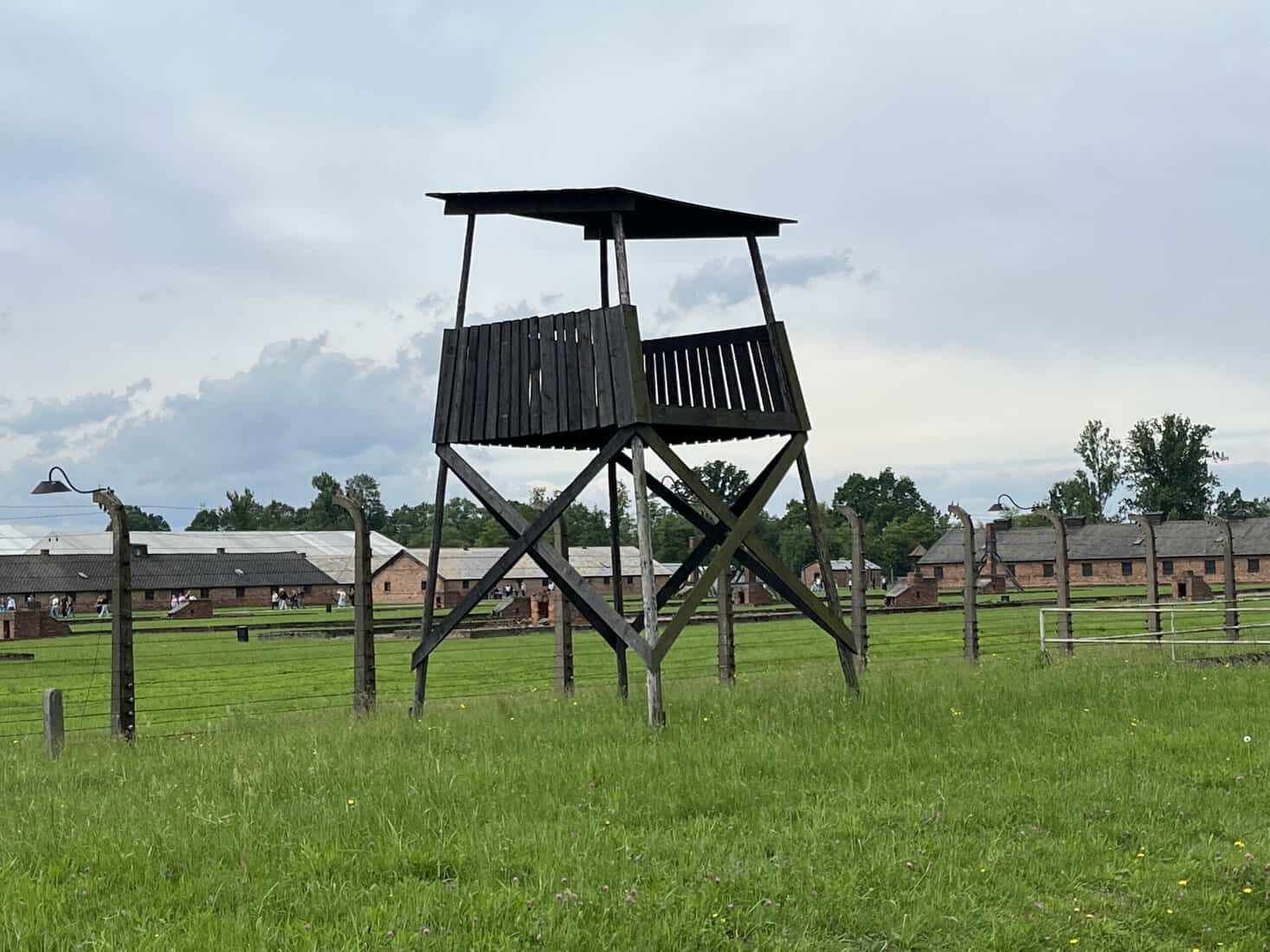
Touring Birkenau
Just a five-minute van ride away is one of the first scenes from Schindler’s List.
It’s the train that brings prisoners into Auschwitz. It’s on a long straight train track that enters through a big brick gate with a watch tower. Look at the two windows above the gate and the gate looks like a gaping maw of a monster.
In the movie, it’s a dark and snowy night. We walked through the gate on a sunny day in the mid-60s. The movie labels it Auschwitz. Auschwitz II is in the village of Birkenau. At least, it was a village before the Nazis destroyed it to build the camp.
Birkenau is terrifying.
The track goes through the gate and another 300 meters – right to one of four gas chambers. I walked toward it. It has been reduced to a pile of twisted concrete. But Anna explained it well. At the end of the building was the crematorium.
This was the final destination for the few survivors who sometimes traveled for days on the train crammed with 100 passengers and no food, water or toilet. They were told as they disembarked to take off their clothes and take a long-awaited shower. They were even told to remember the number on their clothes hook. They gladly obeyed.
Instead, they were gassed.
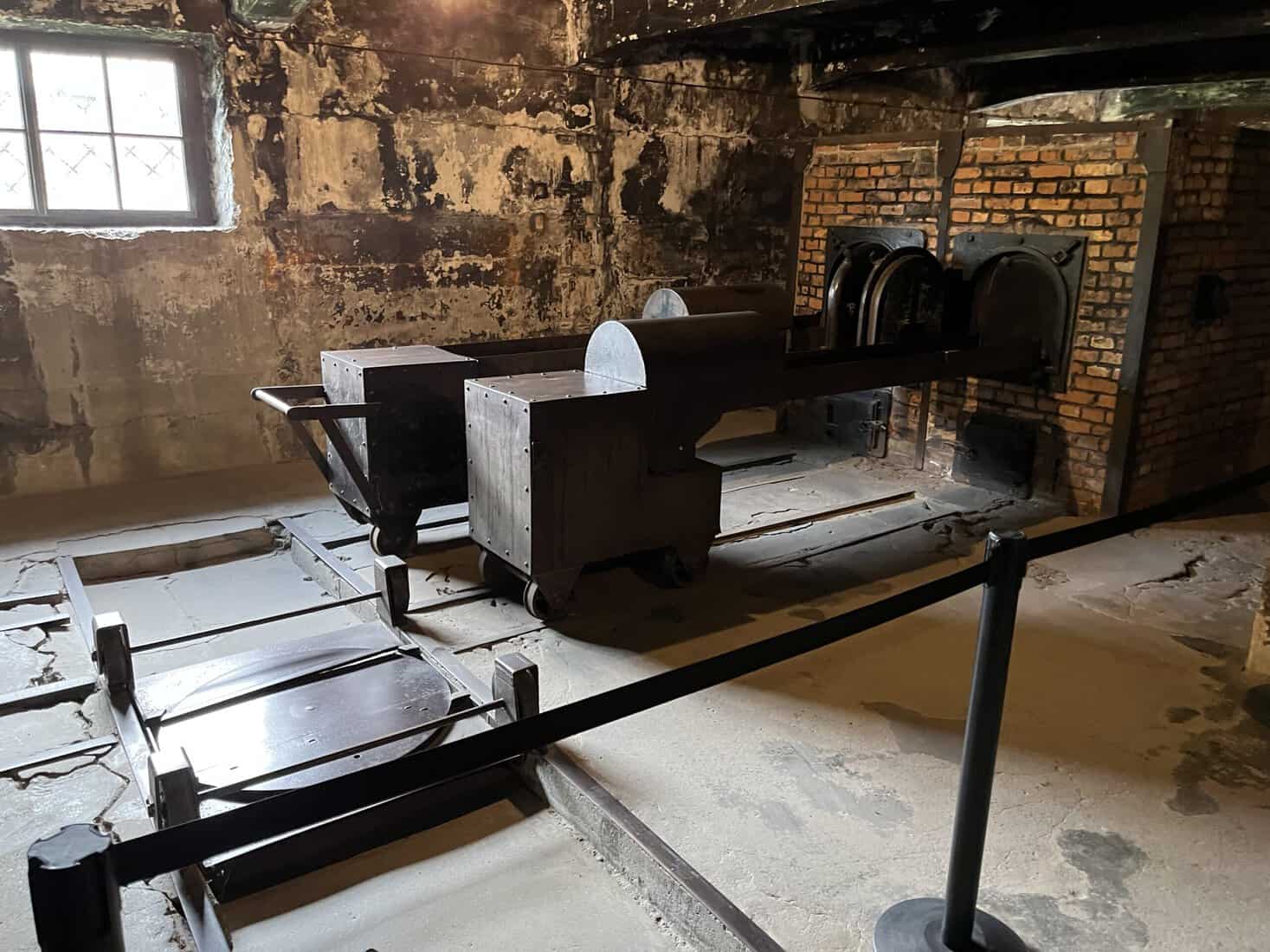
The bodies were dumped in the next room and cremated. The ashes were dumped in the Wisla River which flows through Krakow.
A stone memorial built in 1967 honors the dead in 22 languages.
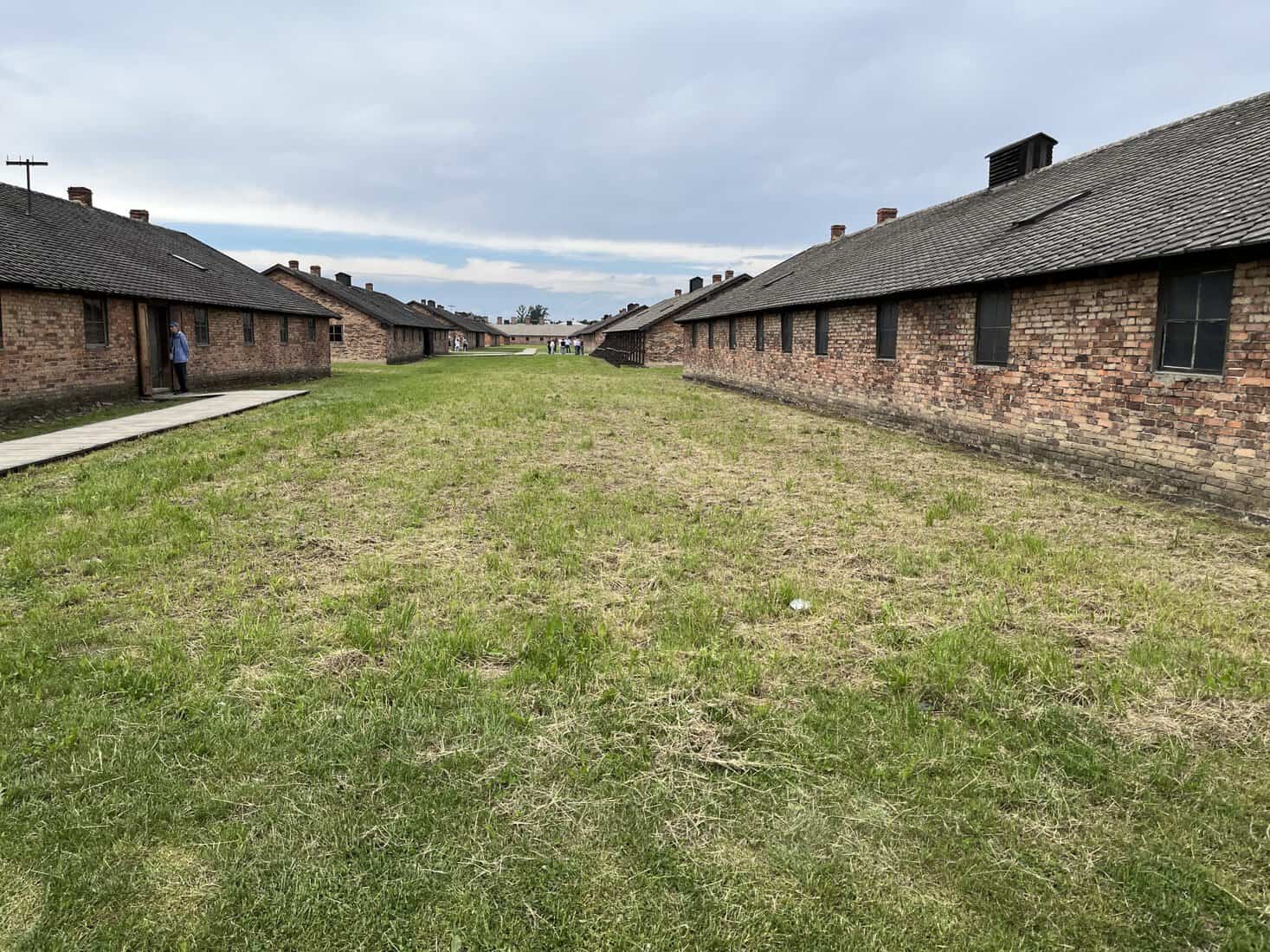
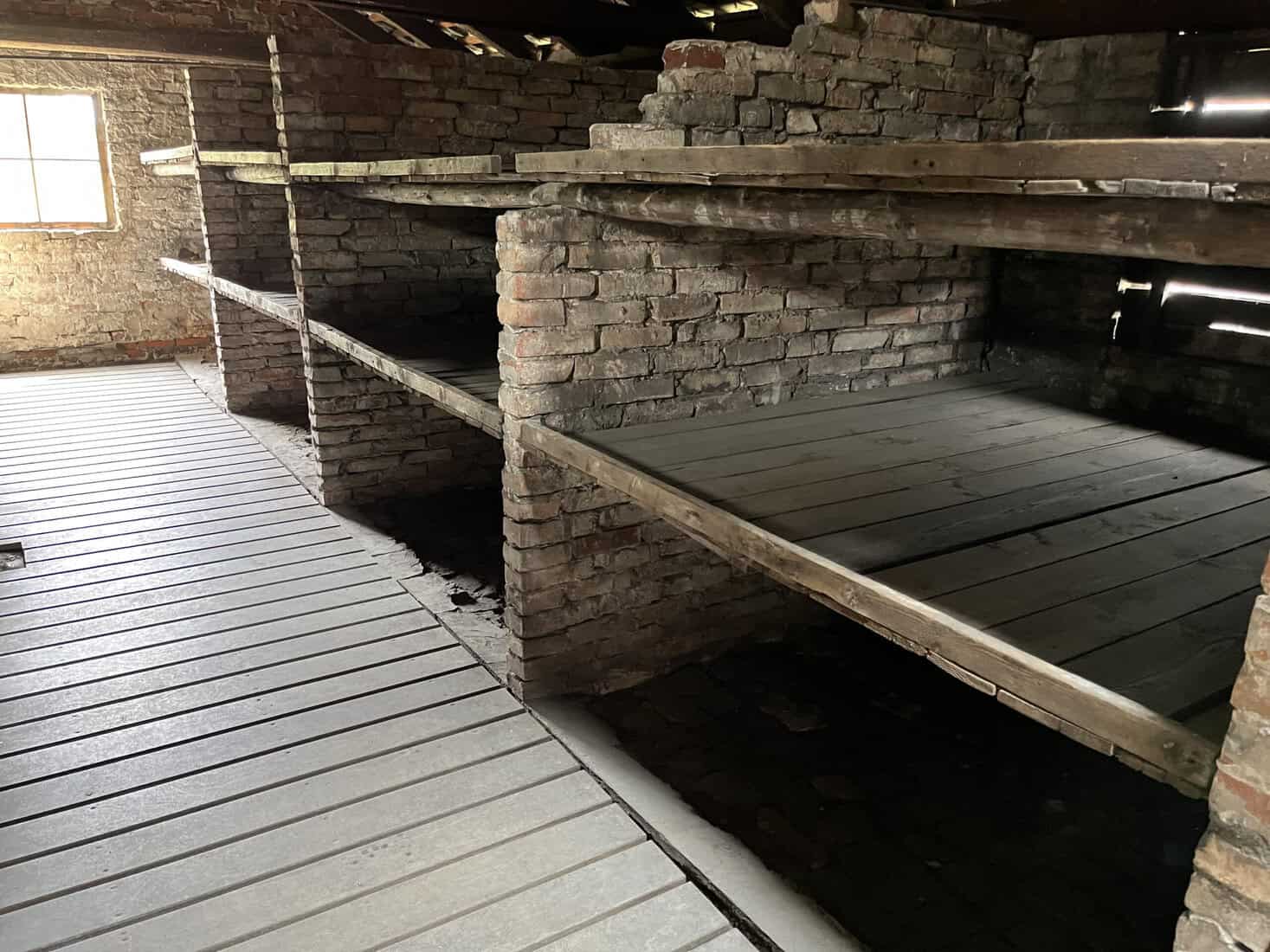
Birkenau was 20 times bigger than Auschwitz I. The barracks were built for 400 prisoners but held 700. Of the 300 barracks, 150 remain. We went inside, and sleeping quarters were rows of three wooden bunks. It was survival of the fittest to reach the top bunk as a major cause of death in the camps was diarrhea.
I won’t go into more detail.
It all ended on Jan. 27 1945 when the Russians liberated the camps and the Germans evacuated. They burned all the documents; they moved prisoners to Germany. Between 55,000-65,000 prisoners marched 50-60 kilometers (30-40 miles) to trains.
Only 7,500 were found alive.
Interview with a tour guide
Unlike in Dachau, I saw no visitors cry. Everyone was very respectful, somber, even reflective. As a sportswriter for 40 years, I toured with a well-trained journalist’s cold detachment.
Even after 16 years of touring the same concentration camp, Anna does not.
Due to company policy, she couldn’t give her last name but she agreed to sit with me near the visitor’s center (No tasteless souvenirs. Mostly history books and survivors’ memoirs.) and I asked her: What’s it like to guide people every day through the worst example of human depravity?
“The question is if they were still human if they were behaving like that,” she said. “That’s my thought every time I’m here.”
Fit in her 30s or 40s with short blonde hair, Anna is Catholic. Yet she knows her hometown of Krakow was extinguished of all Poles to make way for Germany’s Aryan nation. Dozens of professors were taken, as she said, “When you want to destroy a country through a war, you destroy intelligence, people who could lead.”
“It doesn’t matter about my great grandfather or anyone else from my family,” she continued. “I’m still Polish and this is what happened here. It happened on my ground. So I feel it is a crime against my nation.”
Her will to never let us forget drives her. She has seen how it affects visitors. The week before my visit, a survivor returned. He is 94. She once saw a man go through the camp touching the walls. “He was thinking he could feel the spirit inside.”
People cry. Germans apologize. I asked her how she holds up emotionally. After all, she’s a mother of four.
“Sometimes it’s more difficult,” she said. “Sometimes it’s easier. Sometimes you just turn on your tape in your head and not still think about it. But there are tours that are really difficult.
“Like when I was pregnant. I remember one day when I was guiding. Remember the picture I showed of the woman going with her kids to the gas chamber? It was almost at the end of my pregnancy. And my child in my belly started to move when I was telling about her.”
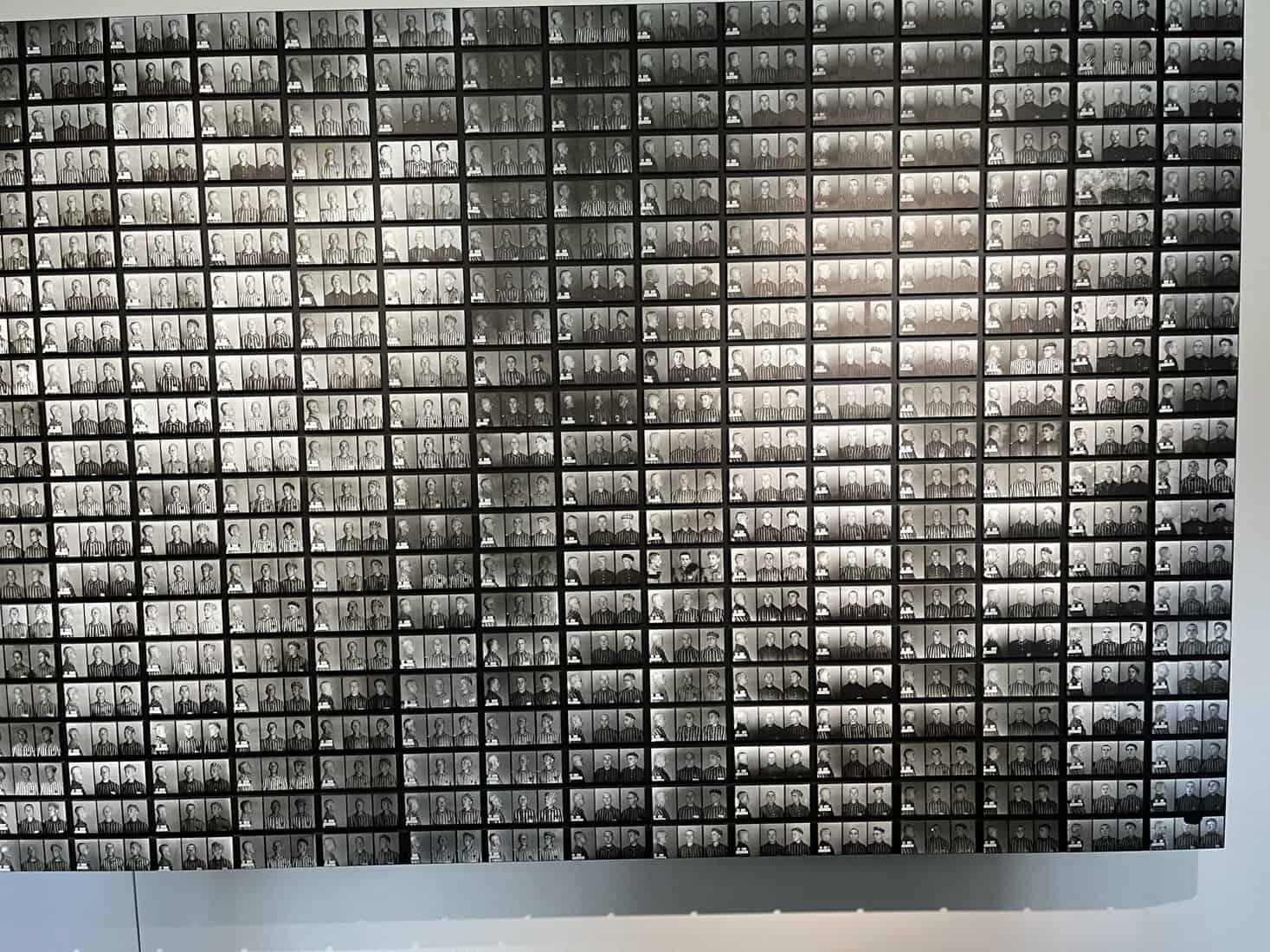
This is the most difficult part for Anna. She discussed how children too young to work were immediately shot or gassed. Photos of children barely old enough to say, “Please don’t” adorn some walls.
“The children. Always the children,” she said. “When you see how they were born here, how they died here, how the selection worked. People who you should take of – older people, children – they were the first killed here.”
For my last question, I asked her how this job changed her views of mankind. She said the story of Maximilian Kolbe taking the place of the husband and father in the starvation room renews her Catholic faith.
But she also remembers how he was repaid for his unselfishness.
“Being Catholic, you’re always wondering where the God was,” she said. “I know that He was here. Why did He let so many people die? Why did He let so many people suffer so much? But I think it was kind of a lesson for the world also.
“In this case, we learned nothing.”
If you’re thinking of going …
How to get there: Buses leave regularly from Krakow Bus Station to the site. The 1-hour, 45-minute ride costs 22 zloty (about €4.50). Other buses leave Krakow for the town of Auschwitz (Oświęcim).
How to visit: Numerous travel agencies in Krakow organize tours including transport to both camps and a guide. I used KrakowDirect and paid €69. Individual visits without a guide can be arranged only by reserving online at least seven days in advance. Use this website: https://www.auschwitz.org.
Where to stay: Hotel M29, U. Miodowa 29, Krakow, 48-12-448-3917, www.hotelm29.pl, info@hotelm29.pl. Excellent modern four-star hotel in the heart of the Jewish Quarter and walking distance from Old Market Square. I paid €490 for three nights including a massive breakfast.
Where to eat: Restauracja Sasiedzi, Miodowa 25, Krakow, 48-510-004-473, https://sasiedzi.oberza.pl/menu.pdf. Brick walls and arched ceiling give it an old Europe feel although it opened in the Jewish Quarter in 1998. Very traditional menu with dishes ranging from €10-€23. Try Poland’s signature potato pancakes covered in goulash. I paid €44 for two including wine and an appetizer.
When to go: Locals and tour guides warned me in July and August it is hot, humid and crowded. Two weeks ago it was in the 60s, mostly cloudy with a touch of rain.
For more information: Visitor Services Center, Wiezniow Oswiecimia 55 Street, Oświęcim, 48-33-844-8000, https://www.auschwitz.org/en/museum/museum-structure/visitors-services.
June 16, 2026 @ 7:43 pm
Excellent article John. Well written. I broke down and cried at Auschwitz… just the accumulated horror got to me. I’d recovered somewhat by Birkenau. It’s important that people witness this with their own eyes.
On a brighter note, the Art Museum in Krakov is fantastic…. and has Lady with Ermine, in my humble opinion the best of Da Vinci’s portraits.. and no queues, no bullet proof glass….
June 17, 2026 @ 8:36 am
Thanks, Steve. I felt guilty that I didn’t feel more emotional. I get more emotional reading about it. I’m reading “The Girl in the Red Dress,” written by the little girl whose dress was featured in “Schindler’s List” and who survived Auschwitz and wrote about it. It’s bad enough and where I’m at she’s still a little girl hiding from the Nazis. I missed the art museum. We kind of ran out of time.
June 20, 2026 @ 5:57 pm
Great account of a horrible place, old friend.
June 21, 2026 @ 10:36 am
Thanks, buddy. The written accounts I’ve read about Auschwitz are even worse. You doing OK? Email me an update.
June 23, 2026 @ 11:30 am
Powerful, moving, and meaningful article. I recently read “The Escape Artist” about one of the few people to escape Auschwitz; this article evoked similar gut-wrenching, heart-breaking emotions.
June 24, 2026 @ 10:56 am
Yes, sometimes the written word is more powerful than actually seeing an empty — and surpisingly clean — concentration camp. I’m reading “The Girl in the Red Coat” about a Jewish girl who grew up in Krakow’s Ghetto and hid from the Nazis until the Russians came. The things she relayed about what survivors told her about Auschwitz was sometimes worse than the stories our guide told.