


Writing on the road: Your journal writing will improve if you follow these tips
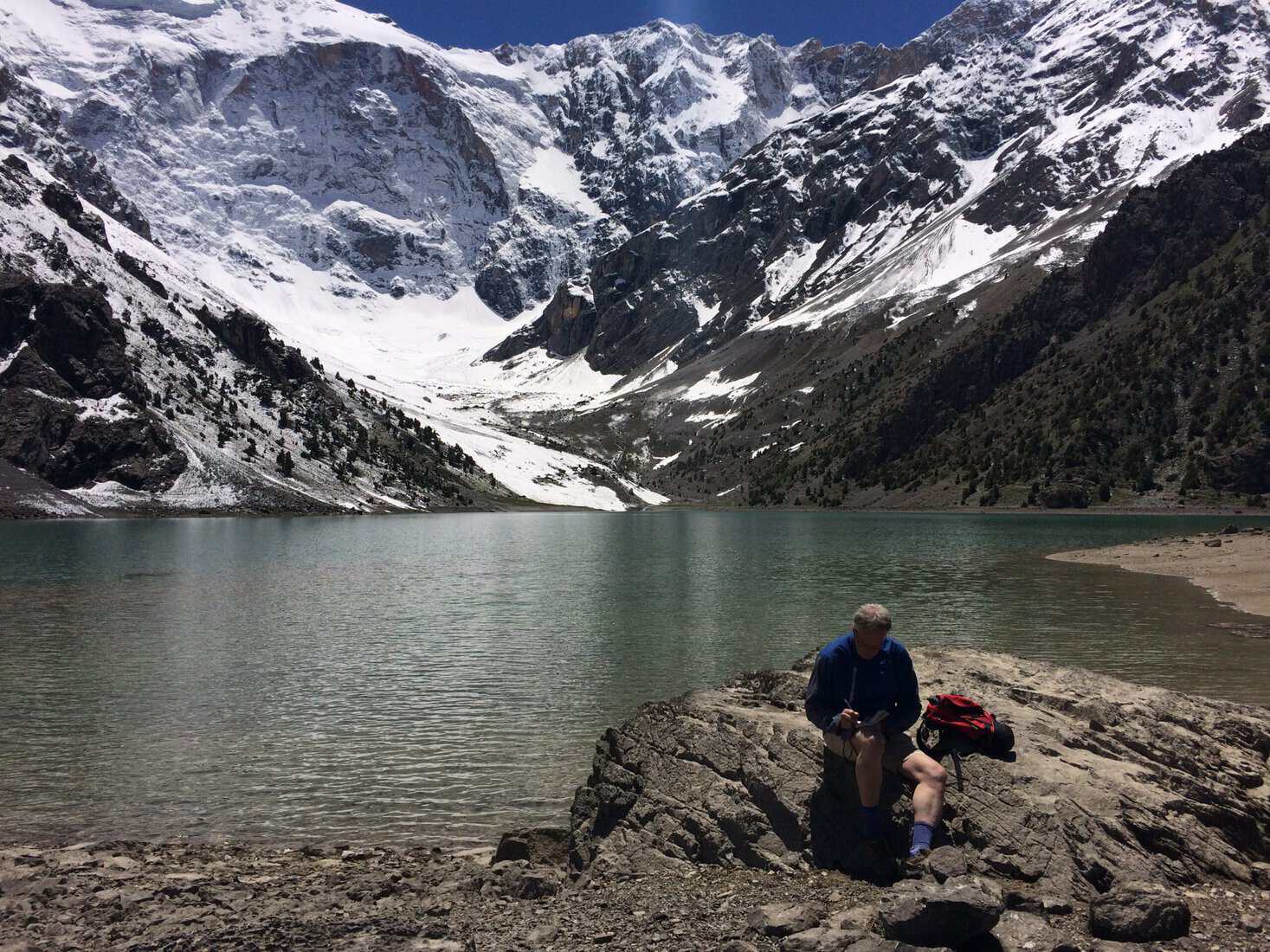
(Director’s note: A café table in Lisbon. A night train through Central Europe. A market in Naples at 7 a.m. Some places just make you want to write. London-based travel writer James Merritt writes about why moving through the world changes the way you tell stories – and what happens when the words finally catch up to the experience.)
The Eurail train is shaking somewhere between Vienna and Budapest. Your notebook is open. The light outside is doing something unexpected – flat farmland giving way to the Danube floodplain, the sky going orange in a way that feels almost theatrical. You want to write it down, but the words that come feel wrong. Too familiar. Too much like something you’d write at home.
That gap – between what you’re experiencing and what you can put on the page – is exactly where travel writing begins.
Why place changes your writing
There’s something about being somewhere unfamiliar that strips out the autopilot. At home, description comes from habit. You know what your street looks like, so you stop actually seeing it. Travel forces attention back onto the basics:
- What does this place smell like at 7 a.m?
- How loud is the market compared to the street outside?
- What’s the quality of light in a Palermo side street versus a rainy Edinburgh afternoon?
- What sounds are missing that you’d expect to hear at home?
Writers who travel consistently describe a shift in sentence rhythm. Short, observational notes replace longer constructed paragraphs. The present tense shows up more. Details that would feel trivial at home become worth recording because they’re genuinely new.
Ernest Hemingway wrote much of The Sun Also Rises from notes taken in Paris and Pamplona. Joan Didion kept notebooks throughout her life and wrote extensively about recording as a way of processing unfamiliar experiences. Place is one of the most reliable ways to break a writer out of their existing patterns.
When the words stop coming
Not every travel experience unlocks something. Sometimes the opposite happens. You’re in Rome, surrounded by more history than a semester of art classes could prepare you for, and you write nothing for three days because the scale of it is paralyzing. Writer’s block on the road has a specific texture. It’s not the blank-page kind. It’s the too-much-input kind.
The trick is to keep moving anyway: Write one bad sentence, then another. Lower the stakes completely. Write about the coffee, the weather, the noise from the street below. Rome’s layered history makes it a common subject for literary work, and those who want a stronger foundation consider PapersOwl writing help to get a clearer sense of how to approach the material. Bit by bit, the notes stack up, and suddenly the block isn’t a block anymore. The best travel pieces rarely start as good writing. They start as honest writing, and the rest gets sorted out later.
Europe and the writer’s voice
Europe is particularly interesting as a writing environment because the contrast between places is so compressed. A four-hour train ride takes you from the ordered quiet of Zurich to the noise and warmth of Milan. Three hours more and you’re in Florence, where every street feels like it’s been arranged for a painting.
Each environment pulls a different register out of a writer:
| City | What it does to your writing |
| Zurich | Invites precision, short sentences |
| Milan | Rewards speed and sharp observation |
| Florence | Slows everything down, longer sentences |
| Naples | Pushes you toward chaos and color |
| Lisbon | Melancholy, specific details, fading light |
| Budapest | Layers – history underneath everything |
Paying attention to how your writing changes across places teaches you that voice isn’t fixed. It’s responsive. That’s a harder lesson to learn at a desk.
Tips for writing while traveling
Write before you leave
The best travel notes get written in the moment or within an hour of leaving. Memory compresses fast. The specific detail that made something feel real – the way a waiter in Naples moved through a crowded restaurant, the graffiti visible from the window of a Paris Metro car – fades faster than you’d expect.
Phone notes, voice memos, a paper notebook: The medium matters less than the immediacy. Write it down before you move on.
Go small and specific
The writers whose travel pieces hold up are the ones who resist describing everything. One meal in Bologna. One afternoon in a Budapest ruin bar. One conversation on an overnight ferry from Ancona to Split.
Things worth capturing that most people skip:
- What the food actually tasted like, not just what it was.
- The social atmosphere: how people talk to each other, how loud it is.
- What surprised you versus what you expected.
- Transitions: the train station, the moment of arrival, the first wrong turn
- What you got wrong about a place before you arrived
Let the writing be rough
The instinct to write well from the start kills most travel journals. Notes on the road are raw material, not finished prose. The editing happens later, back at a desk, when you can see what actually mattered and what was noise.
One practical approach: Write fast, mark the details that feel true and leave the rest. You’re not writing a piece yet. You’re taking inventory.
Read about where you’re going
Writers who travel with some literary context produce more layered work. Reading Dante before Florence changes what you notice. Reading Patrick Leigh Fermor before walking through Central Europe puts you in conversation with someone who walked the same roads 90 years earlier.
A few books worth packing depending on where you’re headed:
- Italy – Italian Hours by Henry James, Midnight in Sicily by Peter Robb
- France – A Moveable Feast by Hemingway, The Flaneur by Edmund White
- Central Europe – A Time of Gifts by Patrick Leigh Fermor
- Portugal – The Book of Disquiet by Fernando Pessoa
- Greece – Mani by Patrick Leigh Fermor
The intertextual layer isn’t showing off. It genuinely deepens what you see and therefore what you can write.
What travel writing teaches you
The habits that make good travel writing: close observation, specific detail, honest reflection, structural clarity – are the same ones that make any writing better. People who keep a travel journal through a long trip often come back writing differently. Not always more beautifully, but more specifically. Less reliant on abstraction. More willing to stay inside a scene.
That shift carries over into essays, creative work and professional writing. Travel was the occasion. The writing was the practice. And the practice, accumulated over weeks and thousands of kilometres, tends to stick.