


My night as a Kurdish wedding guest: Neutral corners and dance, dance, dance
This is the third of a five-part series on my trip through southeastern Turkey and Iraqi Kurdistan.
HAKKARI, Turkey – Is there a better place to meet women than at a wedding?
Everyone dresses like peacocks trying to attract a mate. The air reeks of romance. There’s booze. There’s dancing. Everyone has one thing in common, the perfect conversation starter:
Do you know the groom or do you know the bride?
However, I recently attended a wedding where men and women were kept apart like rats in cages. No alcohol was served. It was a startling experience. But in a way, it was kind of evolved and added a relaxing air to the festivities.
A Kurdish wedding. I enjoyed it immensely.
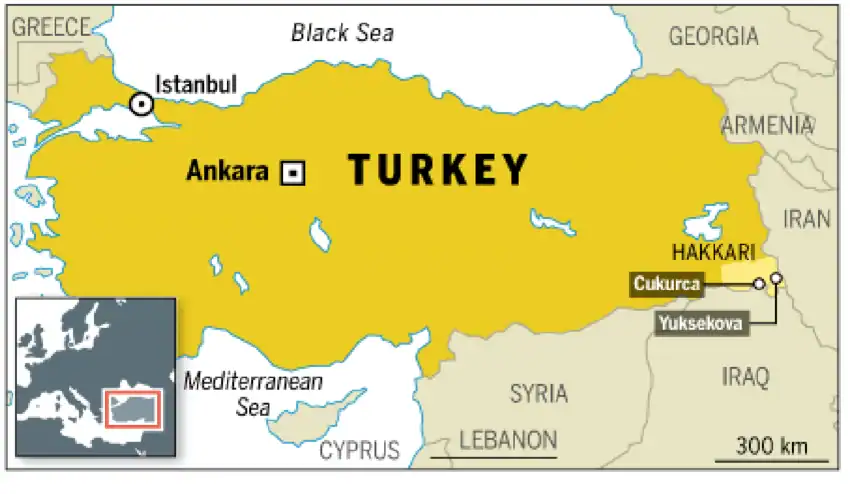
I was in Hakkari, a city of about 60,000 in the southeastern corner of Turkey 50 miles (80 kilometers) north of the Iraqi border and 70 miles (115 kilometers) west of Iran. Hakkari is in the heart of Turkey’s Kurdish southeast.
The Kurds are an ethnic group that has been persecuted, displaced, discriminated against and killed for more than 100 years and has populated a swath of land covering four bordering countries without ever having a nation to call their own.
But boy, can they throw a party.
I was touring southeastern Turkey with my Travelers’ Century Club’s Mediterranean Chapter, a group of intrepid travelers who’ve all been to at least 100 countries. Omer Yalkin, our resourceful director from Istanbul, had somehow scored a mass invitation to a wedding on our last night in Turkey.
Apparently, having visitors from around the world adds prestige to the event. Also, with 2,000 guests, what’s another 15?
A van dropped us off in a wide-open space bigger than a football field. Loud Kurdish folk songs that could be heard in Baghdad poured out of a loudspeaker.
In the field were two long rows. One was of men dressed in dress shirts and suits. They all held hands and swung their arms back and forth while hopping back and then hopping forward, like they were dodging hail.
As someone who enjoys dancing as much as a hot-lead enema, I didn’t butt in. My cell camera and notepad protected me from getting dragged into the line.
Behind them was a similar long line of women dressed in long robes of every color in a paint store. Turquoise. Pink. Gold. Green. All shimmering in lights surrounding the field. They held hands and swung their arms back and forth, moved from side to side. Every woman looking radiant and beautiful.
A male member of our club told me, “John, grab one. You could marry her tonight.”
“Yeah,” I said, “but then I’d have to dance with her and I’m not doing that.”
Turns out, I couldn’t. Neither could anyone else.
At this particular wedding, local Kurdish tradition indeed keeps them apart. Behind the lines were tables and chairs filled with men on one side and women on the other. Complete neutral corners. I hadn’t experienced a dance like this since junior high school.
I asked one of the Kurds why men and women don’t mingle, let alone dance together. He said according to the Kurds’ religious beliefs, it’s a sin for them to dance together.
“It’s a tradition from our old culture,” he said.
Looking at these beautiful women just a few feet away but separated by tradition, the amount of testosterone built up in these men could launch another Kurdish uprising, pardon the expression.
The tradition
Kurdish weddings differ slightly depending on whether you attend them in Turkey, Syria, Iraq or Iran. But they all have a few things in common:
- These are not just family affairs. They are community events. One Kurd said the 2,000 guests were “all family.” But I noticed the traffic in Hakkari was particularly light that night. This was quite the cultural gut punch to me. For 10 years I lived in Las Vegas where I attended one wedding that lasted 60 seconds and they dragged some guy off the street to be a witness.
- The line dancing I witnessed happens everywhere but called different names. In Turkey it’s called the halay. It can go on for hours. As the evening grew, the two lines lengthened like a growing snake and eventually formed neighboring circles. The dengbej, the traditional Kurdish singers and storytellers, were two men on a small stage with two musicians behind them and a well-groomed man standing nearby nodding to the beat and whirling prayer beads.
- The gifting of gold. It’s pinned on the bride by friends and family, not to mention money. It represents financial security and prosperity.
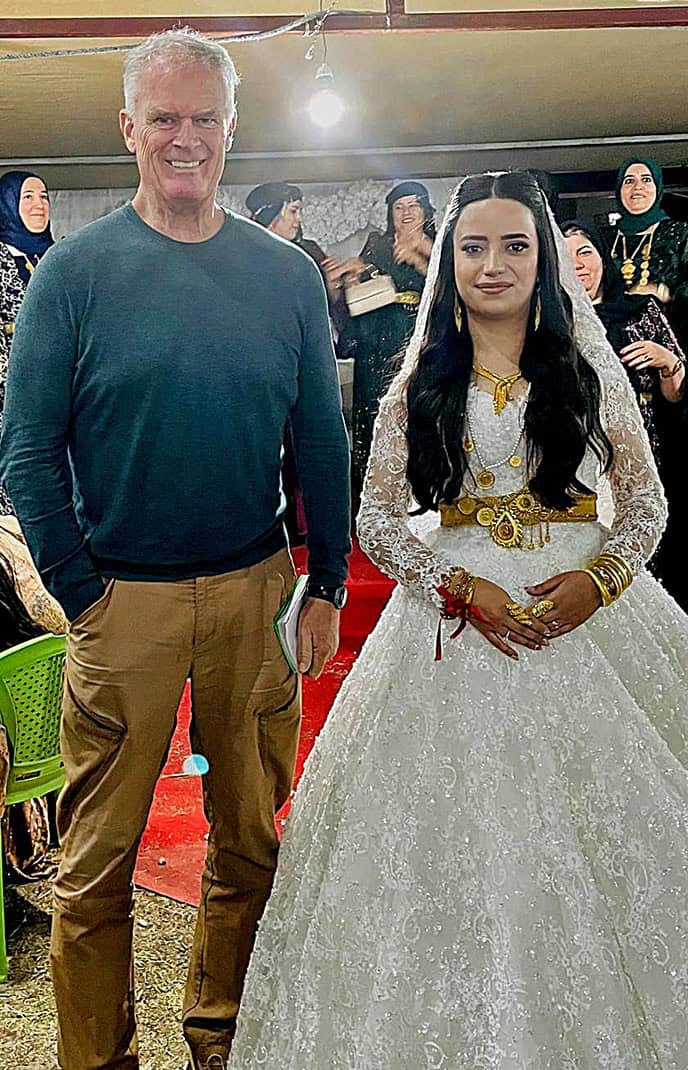
I noticed the bride had a beautifully decorated gold belt, a gold necklace, gold earrings, gold bracelets and gold rings. I know. One of the kind Kurds led me to her. She sat with her brightly dressed bridesmaids at the edge of the party.
Looking about in her mid-20s, she had this flawless skin, the eyes of a doe and long, thick, flowing black hair down to her waist. We didn’t chat but I met the groom, the only man I saw touch a woman that night. He wore a simple black suit with a tie, partially undone with a neat beard, short-cropped hair and happy, brown eyes.
This wedding lasted three days, following a pattern of Hakkari tradition. Day One begins at the groom’s home where they put a wedding flag on the roof to announce the celebration has begun. Then the food for hundreds of guests is prepared.
On Day Two, guests go to the bride’s home for celebratory folk songs and the bride’s hands are stained with henna, a reddish brown dye.
We attended Day Three. We arrived after the massive feast and in the middle of the halay which never ended from the singer with a deep, rumbling voice.
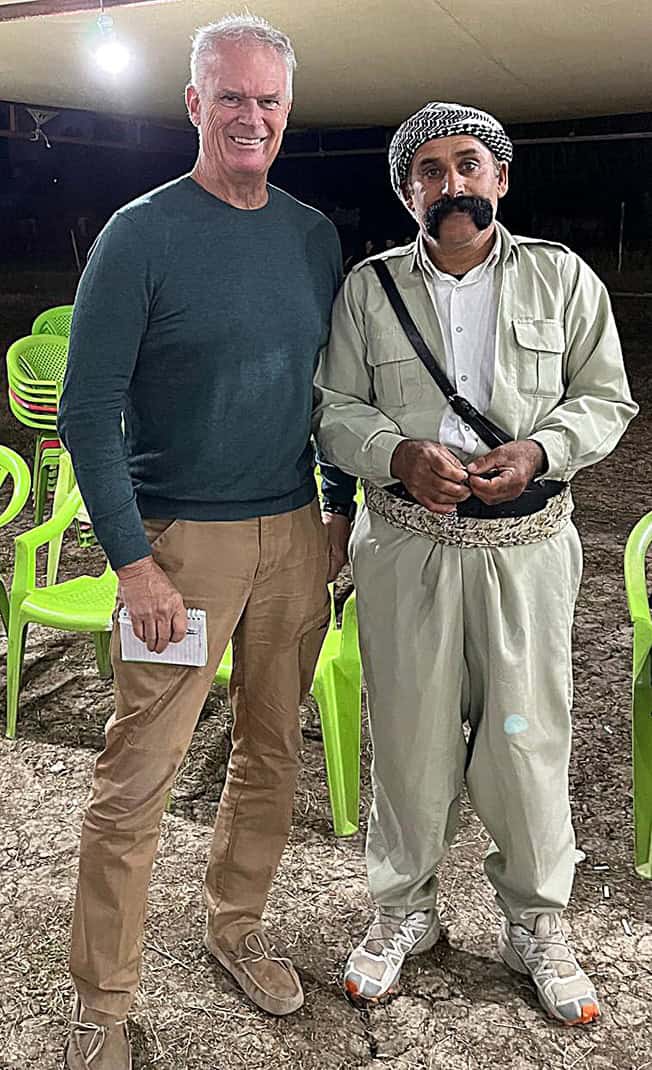
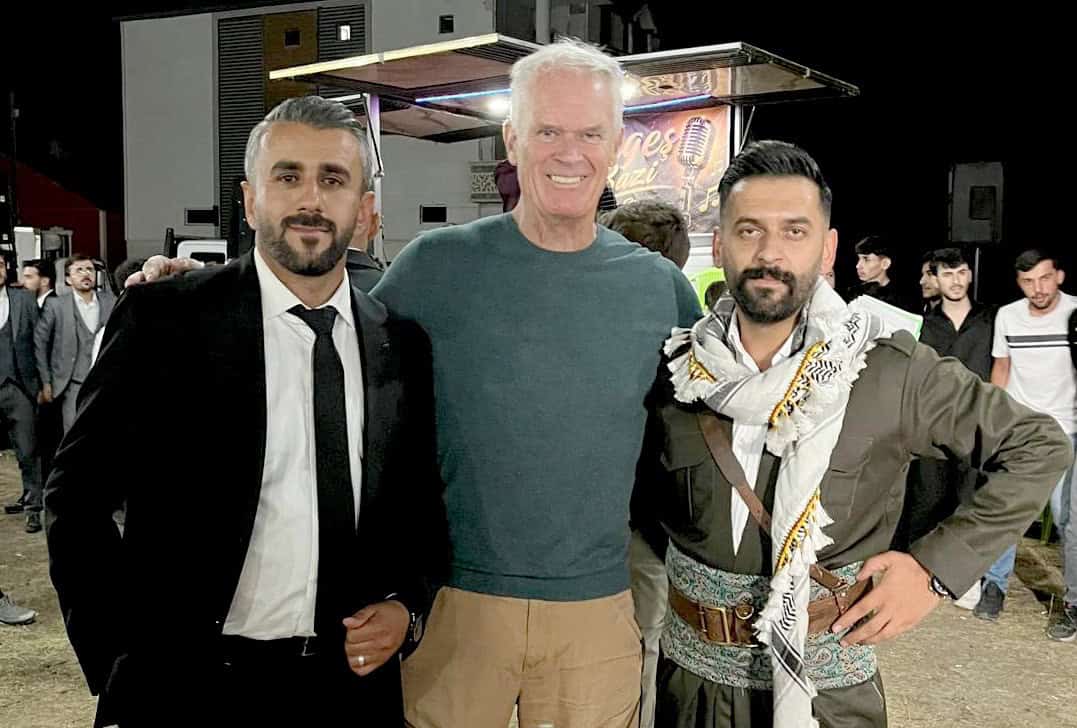
Out of the 2,000 people, we strangely felt like the honored guests. Numerous men came up to me and said, “Merhaba (Hello in Turkish)” and vigorously shook my hand. Men in grand moustaches seemingly from the Ottoman Empire took pictures with me.
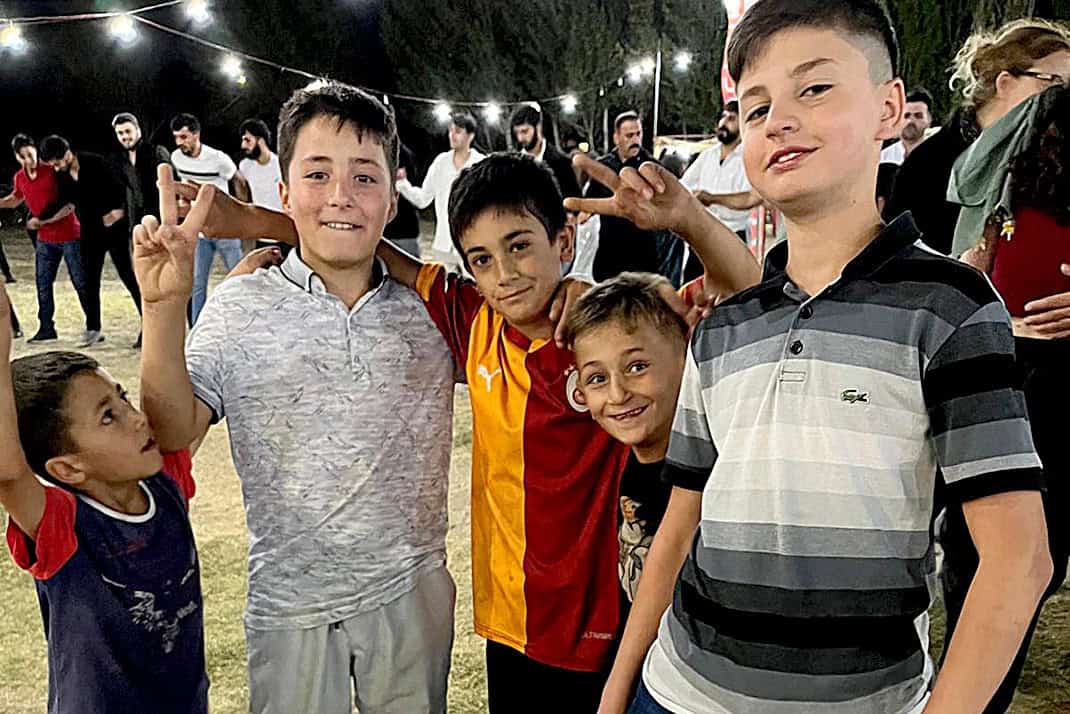
A boy wearing a red and orange jersey of Galatasaray, a soccer power in Istanbul, wanted to talk soccer.
Most Kurds are still hopeful for their own country. They’re enjoying this period of relative peace. And on this particular night, the Kurds of Hakkari celebrated as if independence was a day away.
If you’re thinking of going …
How to get there: The Hakkari Yuksekova Airport is closed through at least February due to runway maintenance. You can fly into Van, 60 miles (100 kilometers) to the north. Regular flights leave from Istanbul. The two-hour flight to Van cost me $89 one way. Minibuses and intercity buses leave regularly from Van to Hakkari. The three-hour trip is €7-€9. A rental car starts at about €60 a day and takes 2 ½ hours.
Where to stay: DoubleTree by Hilton, Esenyurt Mah, Ipek Yolu cad. 292/1, Yuksekova, 90.438-216-5560. Four-star hotel in nearby city of Yuksekova is big and comfortable but a long walk from anything. Curiously, no hotel search engines list it but it is open. Prices for similar hotels in eastern Turkey range from €60-€90.
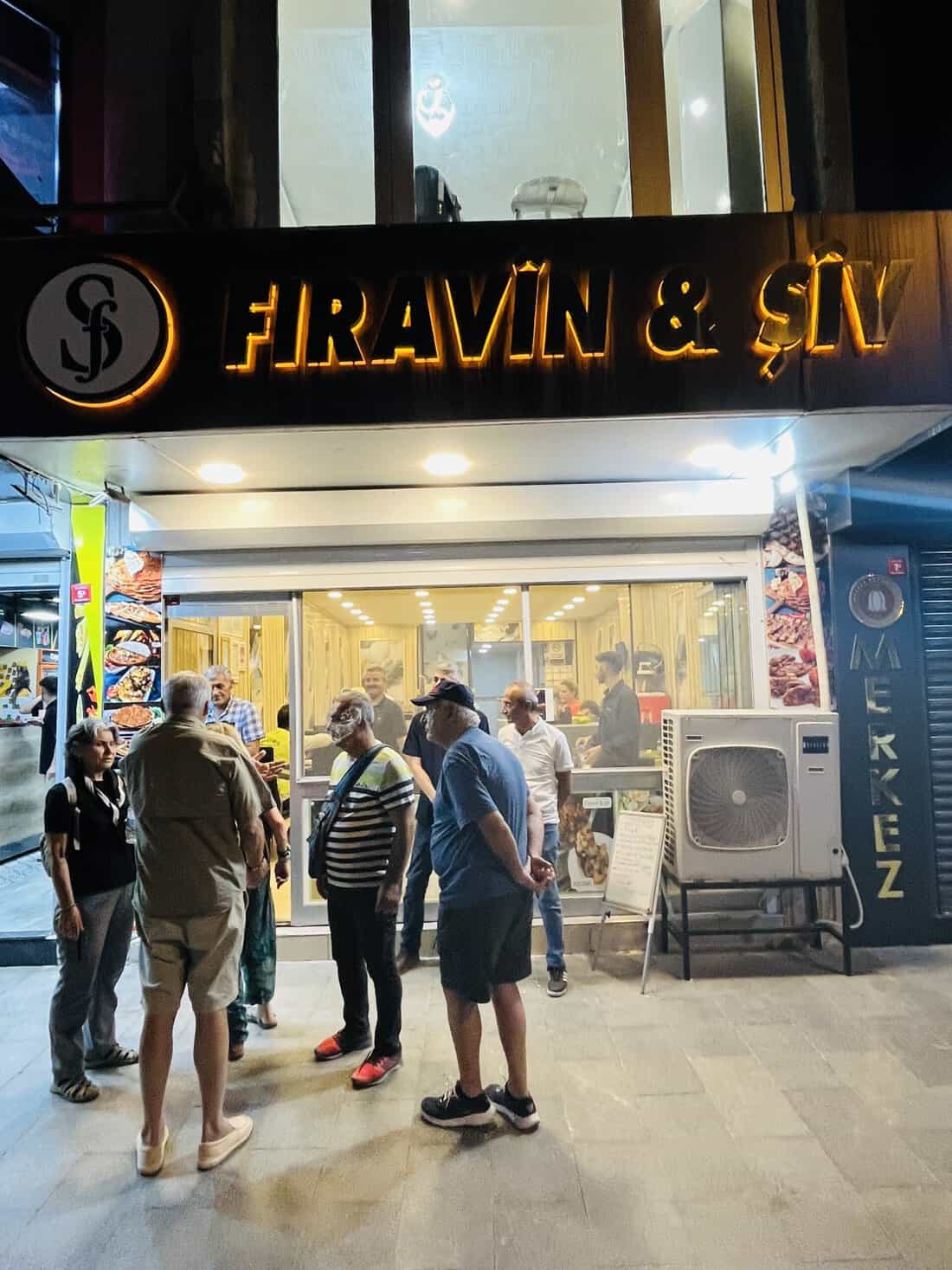
Where to eat: Firavin & Siv, Bulak cad. 5, 90-438-211-0108. A true unpretentious Kurdish diner in downtown Hakkari. All the traditional Kurdish dishes at cheap prices. Try the soups and ask for Hakkari regional specialties.
When to go: Hakkari is at 5,640 feet (1,720 meters) so it doesn’t get too hot in the summer. Hiking in the Cilo Mountains the last week of August, it was rainy, windy and in 50s. I wore a light sweater at the night wedding. In June and September it’s in the mid-70s. In January, average highs are 25 with lots of snow.
For more information: Culture & Tourism Directorate, Kiran, Sht. Mehmet Ceyhan Cd., 90-438-211-6509, 8 a.m.-5 p.m. Monday-Friday.
Next Tuesday: A day trip in Iraq.