


Into the land of the Kurds: A former war zone makes a comeback
(Director’s note: This is the second of a five-part series on Turkey and Iraqi Kurdistan.)
VAN, Turkey – If Kurdistan was a country, which Kurds have dreamed of since the end of World War I, it would be roughly the size of Germany. Its population of 30-40 million would equal Saudi Arabia.
It would be a member of the United Nations. It would have an Olympic team. Hey, maybe its soccer team could make the World Cup. Why not? Iraq made it this year, and several of its most promising players were Kurds. Iraq isn’t much bigger.
Instead, Kurds are the largest state-less ethnic group in the world. The population is spread over borders of four neighboring Middle East countries: Turkey in the north, Iraq in the south, Iran in the east and Syria in the west.
Kurds have their own language, their own culture, their own history, their own flag, their own cuisine.
Also, their own persecution.
Researching Kurds before my recent two-week trip into their homeland was like reading about the slaughters of the Jews when I visited Krakow, Poland, in June and the Armenians when I visited Armenia in November. The difference is the Jews have a homeland in Israel. The Armenians have Armenia.
The Kurds still have no country to call their own. They have an autonomous region in northern Iraq, but in southeastern Turkey the most recent major round of fighting between the Turkish army and the armed Kurdistan Workers Party (PKK) lasted until 10 years ago.
In fact, until 2016 some of Turkey’s most beautiful countryside, a region of mountains and waterfalls and friendly villagers, was mostly off limits. No one could enter.
What a shame. The world’s intrepid travelers were cut off from an unspoiled, lightly trodden path of authenticity. It is pure straight-shot insight into one of the most resilient cultures on the planet, one that has emerged from 100 years of unsightly offenses to smile, dance and thrive.
It was this land where I entered the wild world of the Kurds.
The arrival
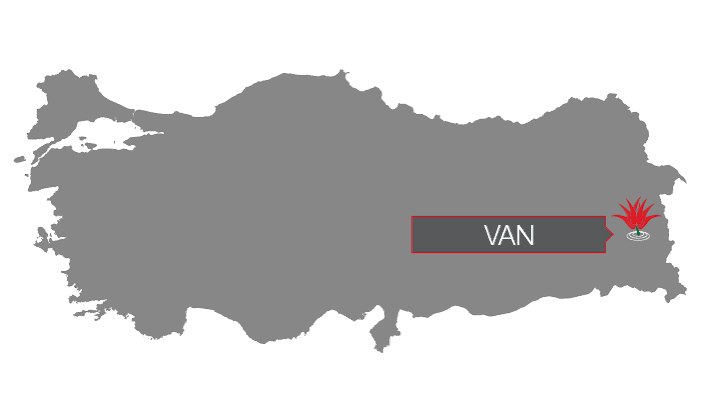
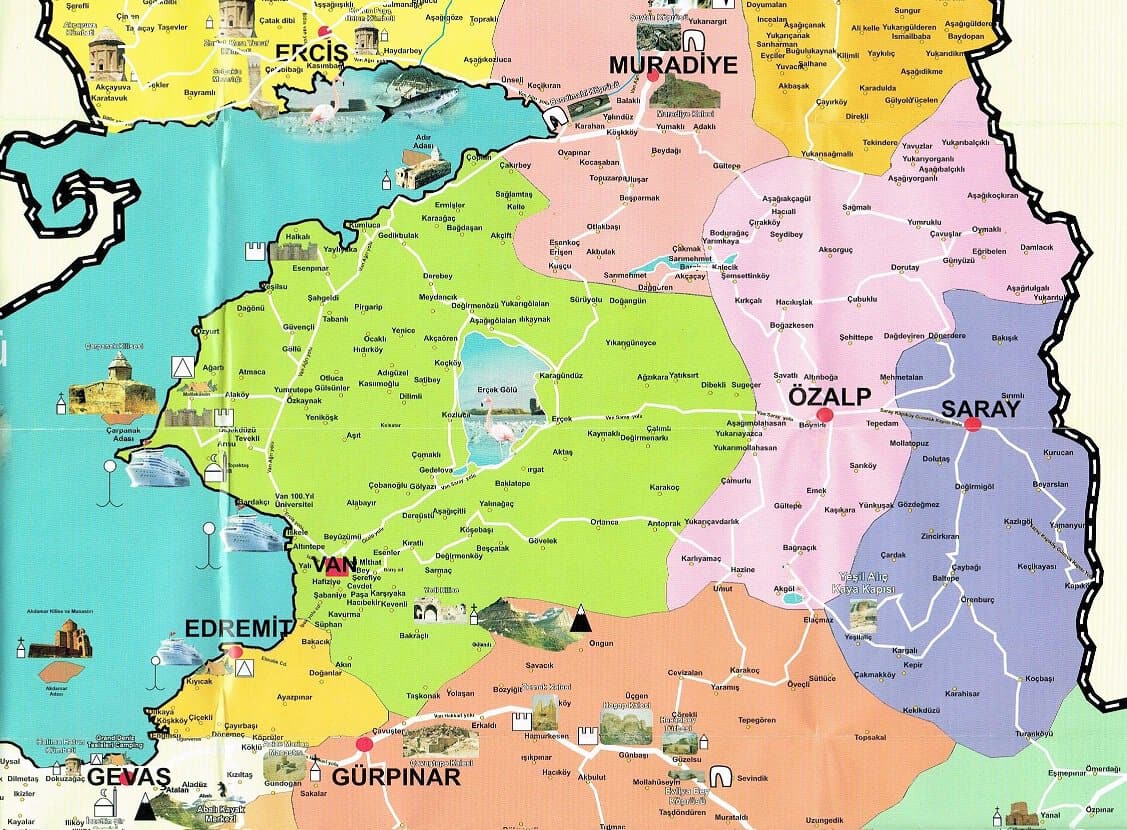
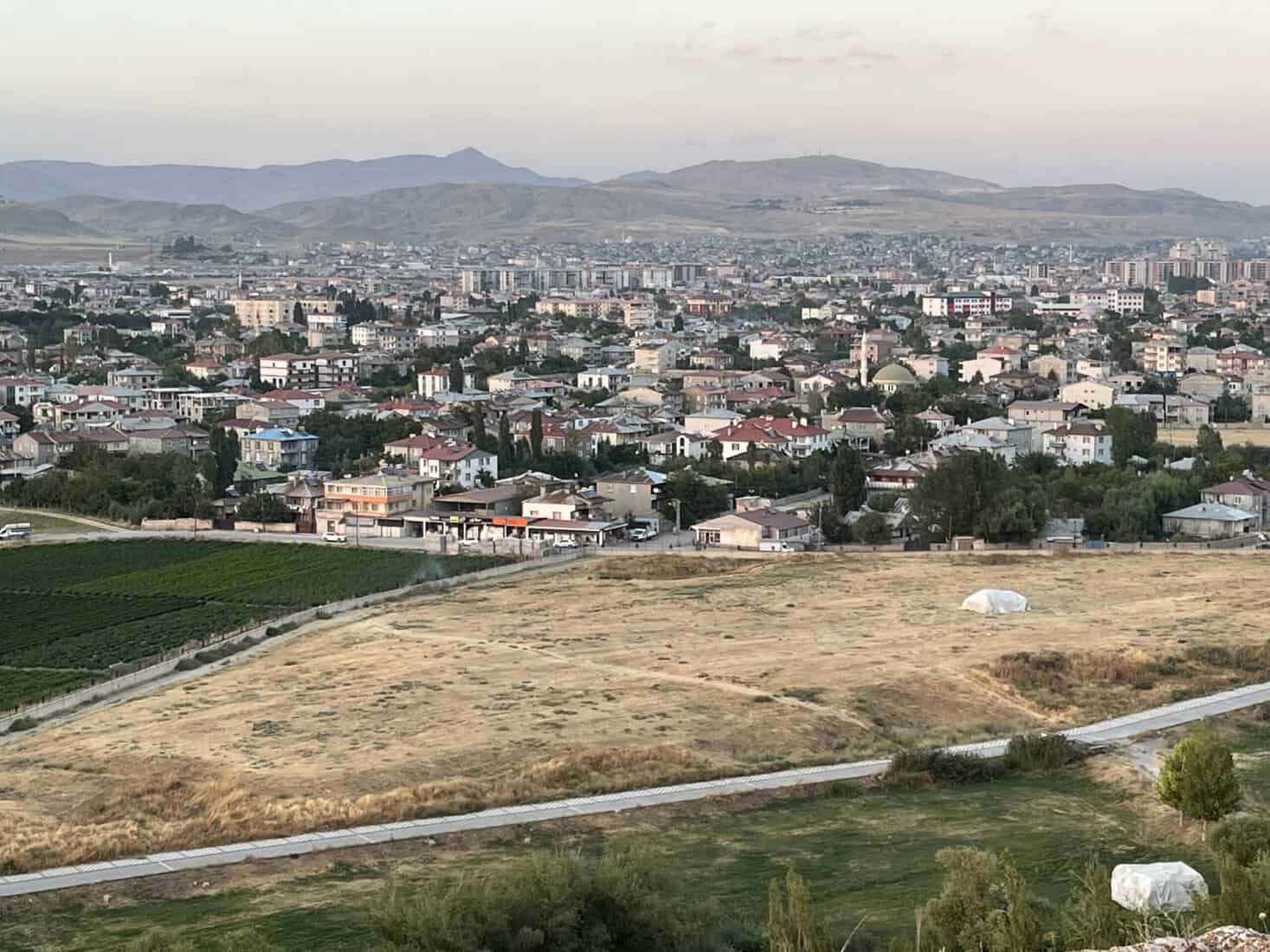
Marina had to return home to Rome after three wonderful days in Istanbul. I continued, taking a two-hour flight to Van, a pleasant, lively city of 530,000 people in Turkey’s southeast corner. It’s 60 miles (100 kilometers) from Iran; it’s 105 (170 kilometers) from Iraq.
An estimated 15-20 million Kurds live in Turkey, about one fifth the population. The heart of southeastern Turkish Kurdistan is Van.
Greeting me at Van’s small airport were 14 other members of my Travelers’ Century Club, a group of intrepid travelers who have covered every corner on Earth, from Vanuatu to Mongolia.
But no one had visited southeastern Turkey except two of the group’s four Turkish members. The beautiful mountainous countryside was off limits from 1980-2016. Van was not. However …
“From the west, people were afraid to come to Van and all of eastern Turkey,” said Abdullah Adiyamar, a village leader we met in the mountains. “They said it was not safe. It wasn’t true. In the city center it was normal.”
Van’s main drag was lined with neon-lit restaurants sporting wooden outdoor tables where young, smartly dressed adults ate kabob and drank tea and beer. It was 7:30 on a Thursday night and a traffic jam formed.
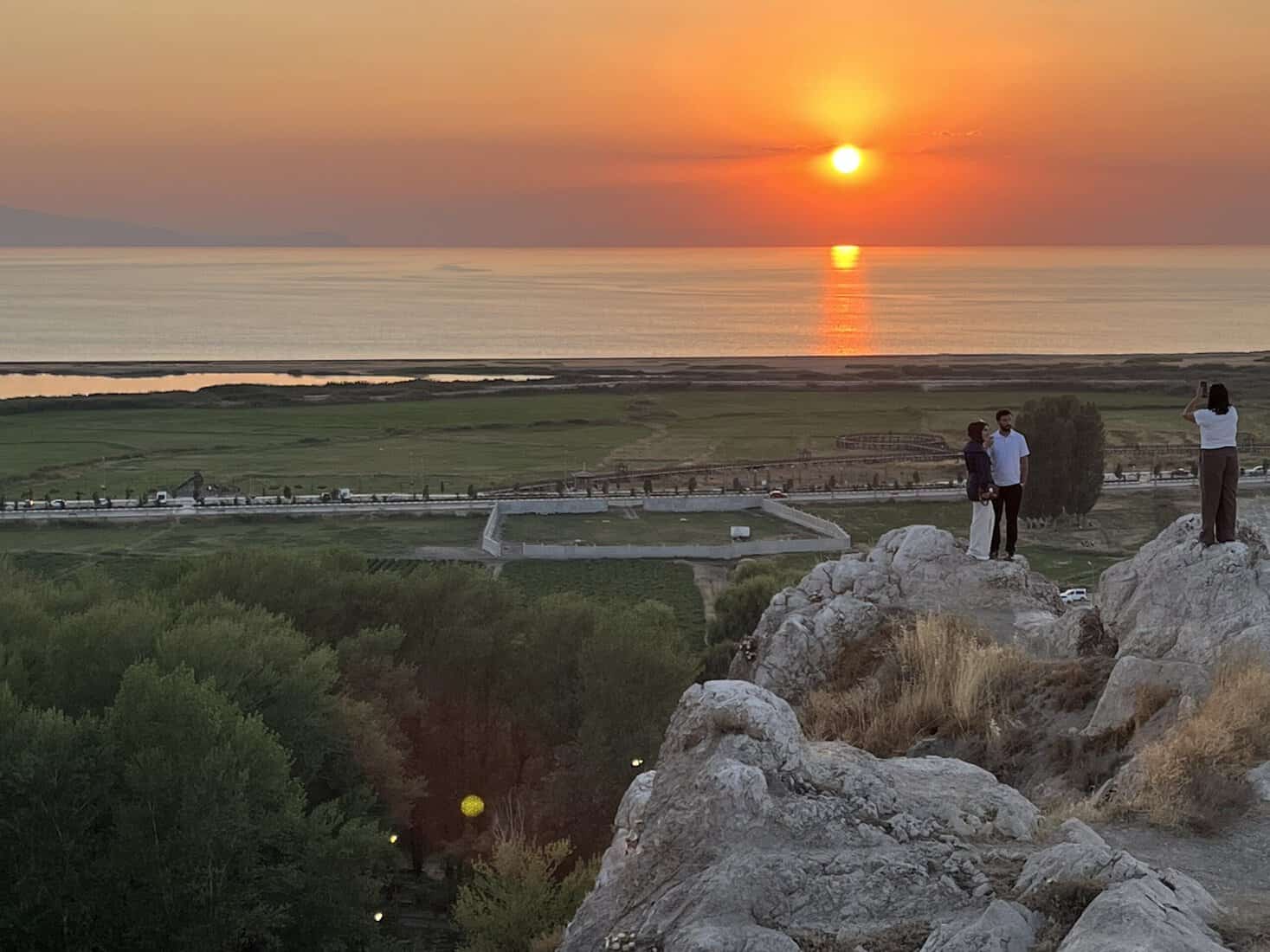
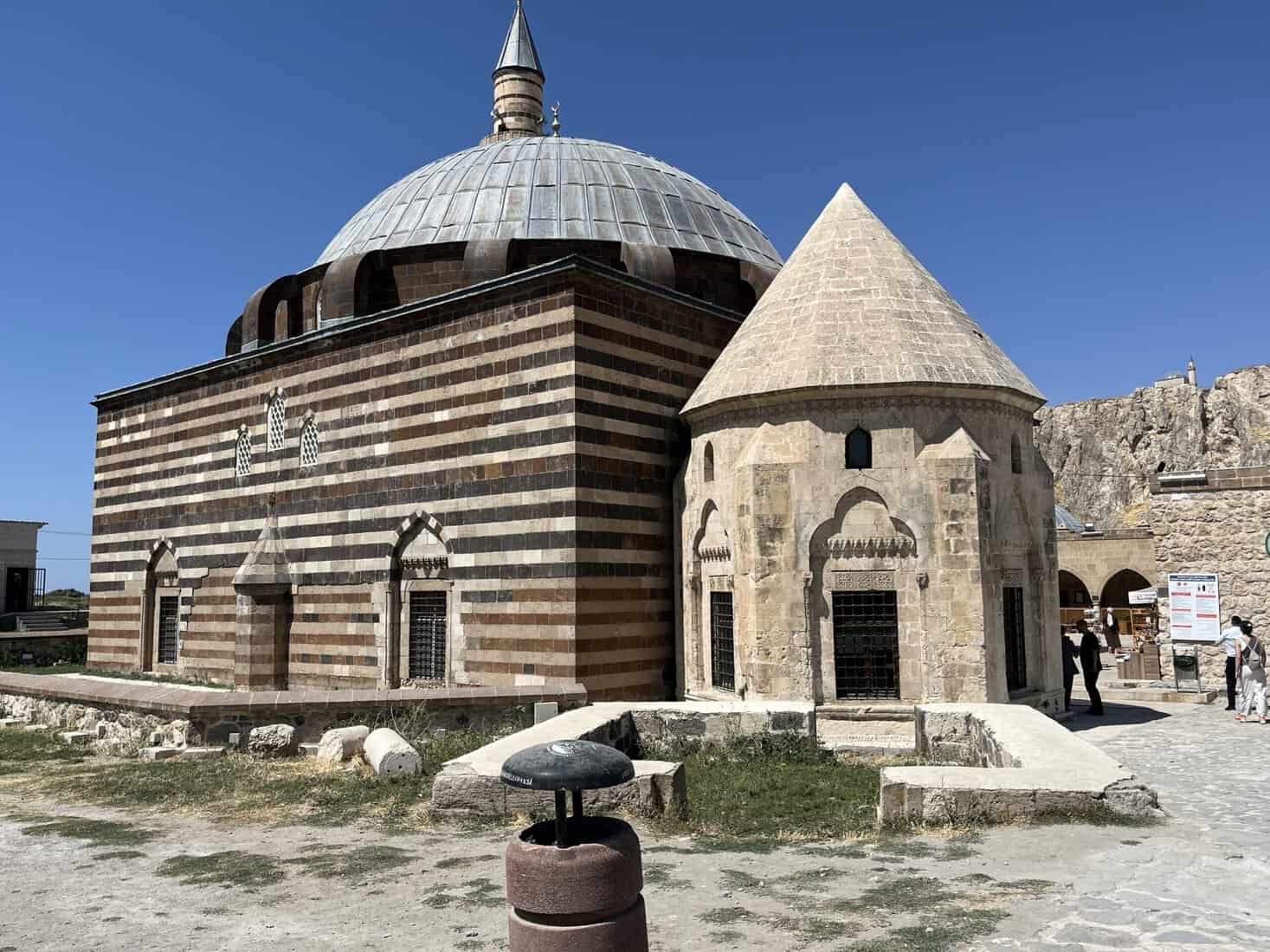
Just before sunset, we dashed to the outskirts of Van to visit its historic castle. Van Castle sits atop a tall, rocky hill overlooking the flat city below. A small mosque’s dome and minaret sit at the far end. A Turkish flag flies.
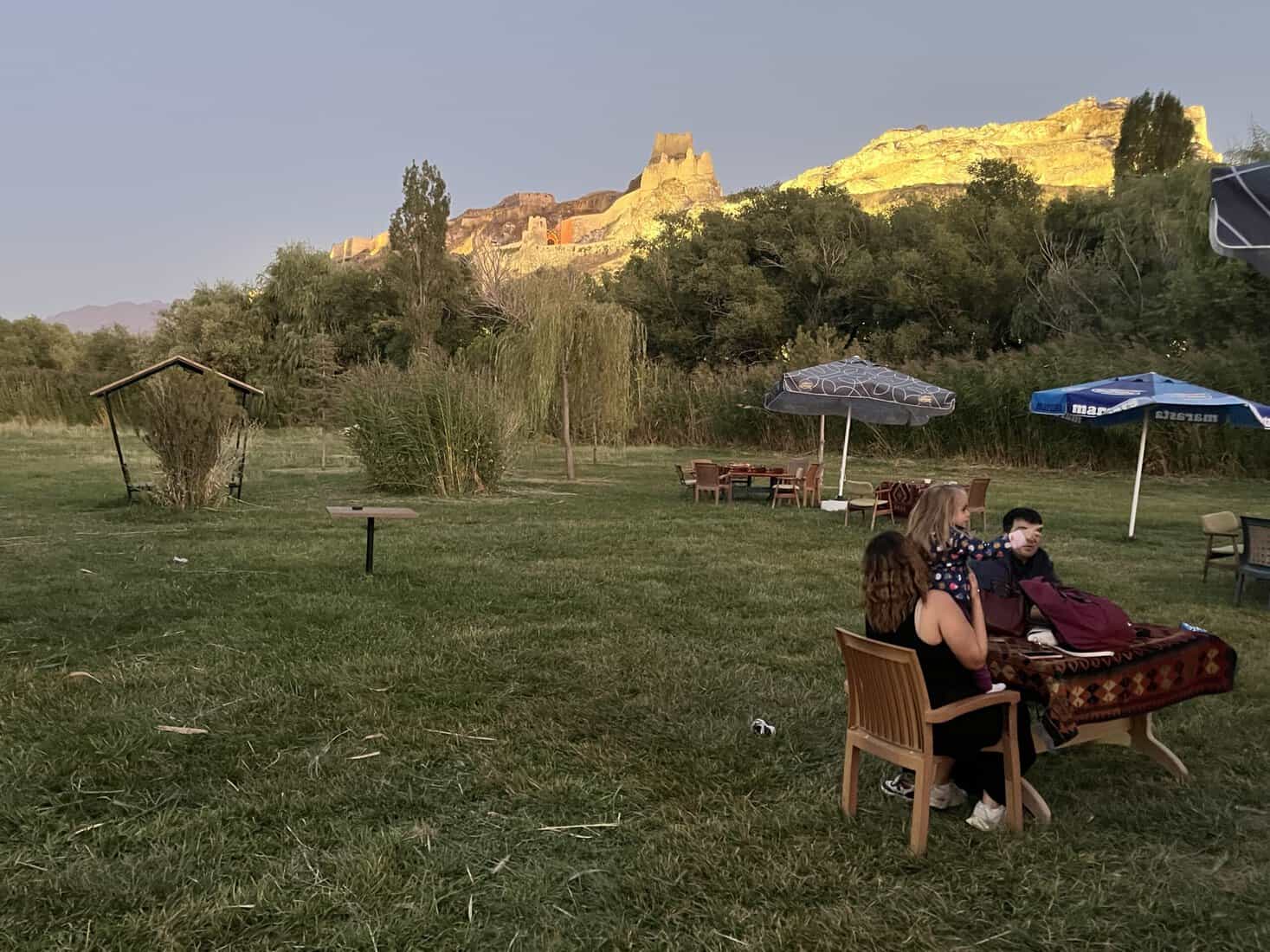
The castle was built way back in 830 B.C. by King Sarduri I, the founder of the Urartians, an ancient kingdom known for its fortresses and advanced irrigation system. At the time, Van was called Tushpa and had a population of between 30,000-50,000.
Many civilizations followed including the ruthless Ottoman Empire. Looking at the sheer cliffs 200 feet high made of volcanic rock, I wondered how many dissidents the Ottomans threw off them.
Instead, we hiked up. We passed women in burqas hiking down. Kurdish families in traditional robes ate at small tables. We arrived just in time to see the orange ball of the sun set on nearby Lake Van. Only a few other people were present at one of the most romantic venues in a country full of them.
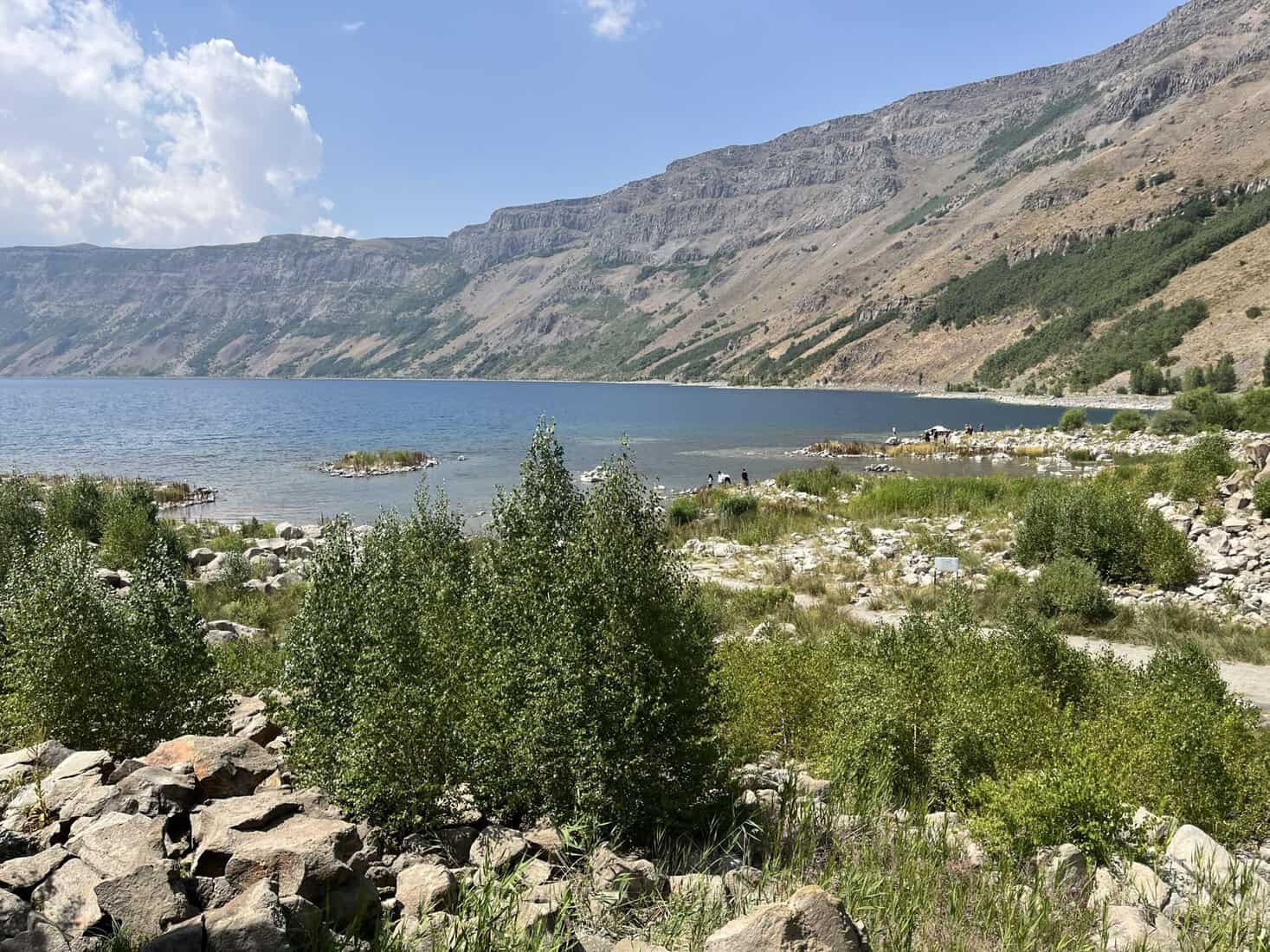
Lake Van is one of the biggest sites in southeastern Turkey. The largest lake in Turkey covers 1,430 square miles (3,700 square kilometers). The road running along it covers 265 miles (430 kilometers) and takes five hours to drive around.
Little picnic tables with cute arched roofs cover one spot. A sandy beach isn’t far away, the perfect place to grab a tan. The lake’s color stunned me. It’s a bright blue-green so clear you could see the sandy bottom from the shore.
The lake sits at 5,380 feet (1,640 meters) and the heat had been displaced by temps in the high 70s and a cool breeze. My need for a swim had disappeared.
Overlooked by Van Lake is Lake Elek, a volcanic lake so warm we could feel heat coming up through the rocks on shore.
Sunset views from a high castle. Warm lakes in the mountains. Istanbul isn’t the only place in Turkey that’s romantic.
Funny, while researching the Kurds’ history in Turkey, I never once read the word “romantic.”
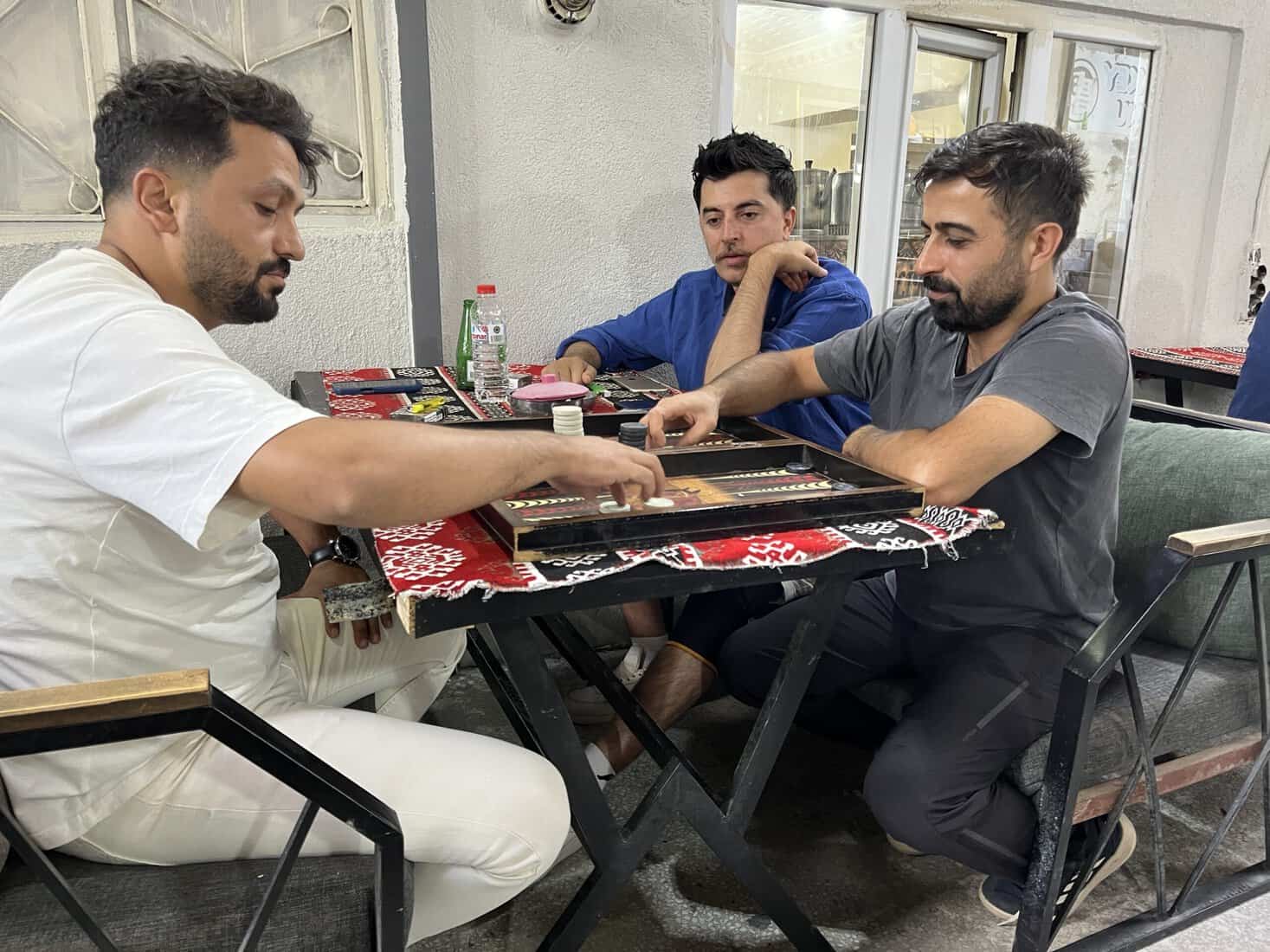
The history
The Kurdish people evolved from a collection of peoples and cultures that lived in the mountains and plains of the Iranian plateau and ancient Mesopotamia, the “Cradle of Civilization” which produced the wheel and agriculture.
As various civilizations came and went, it was the collapse of the Ottoman Empire at the end of World War I that gave the Kurds’ their first hope for a homeland. But instead of giving them their country, the Allied powers’ postwar settlement left Kurdish lands split between Turkey, Iraq, Iran and Syria.
The Kurds in Turkey got the worst end. Mustafa Kemal Atatürk, an Ottoman-born Turk and career military man, became the president in 1923 and modernized Turkey, partially through extreme nationalism.
That included suppressing any hint of Kurdish independence. From 1937-38 in the eastern Turkey town of Dersim, 13,800 were killed and 11,600 exiled. In 1930 in Zilan, thousands more were slaughtered.
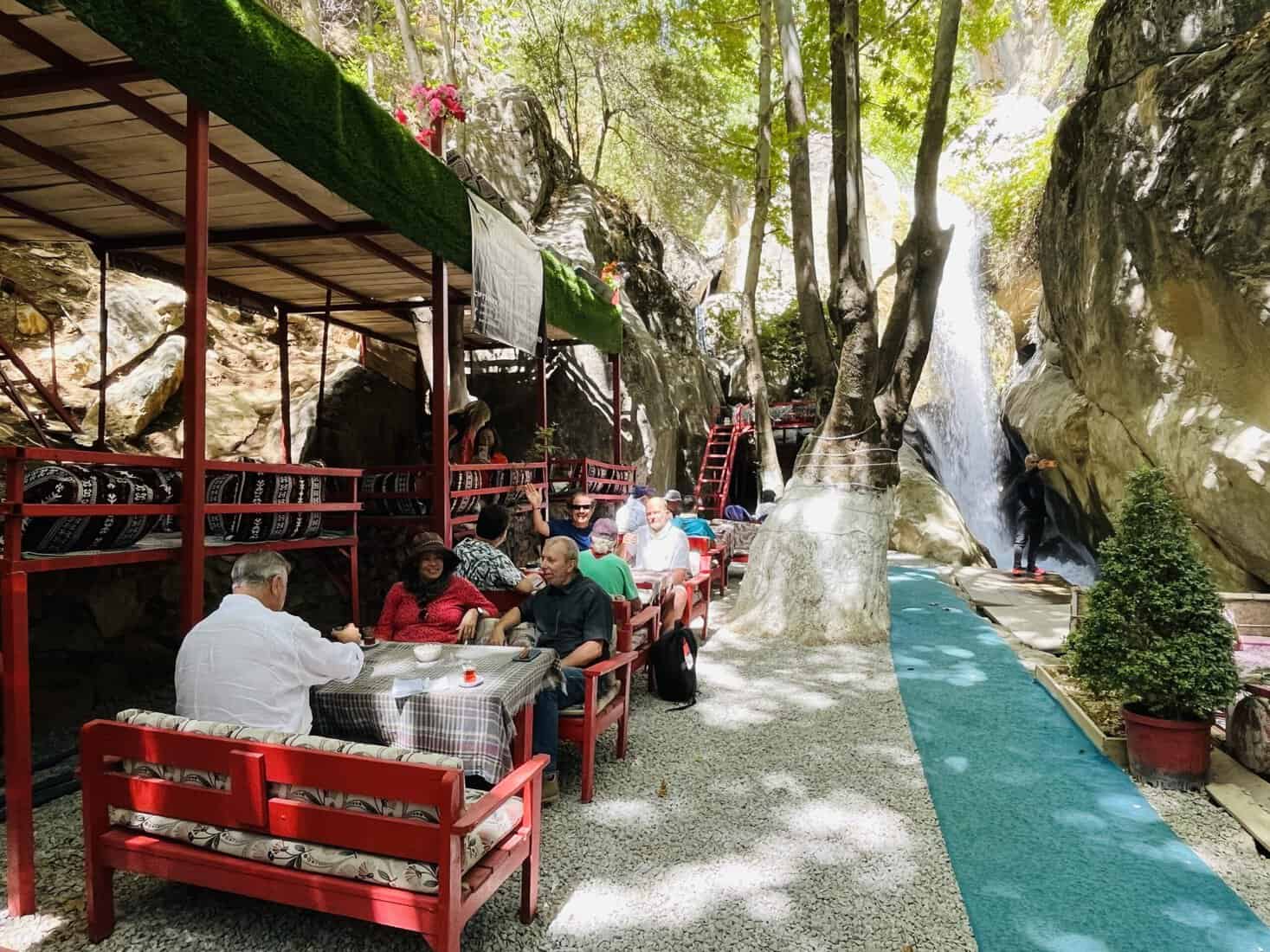
Kurdish language, dress and folklore was banned. The Turkish state referred to Kurds as “Mountain Turks” until the 1980s. They suffered from food embargos, forced deportation and burned villages.
The European Court of Human Rights condemned Turkey for human rights violations.
The Kurdish language ban was lifted in 1991, although some restrictions remained, A renewed war between the PKK and Turkish security forces erupted in 2015 and continued into 2016, devastating several southeastern towns.
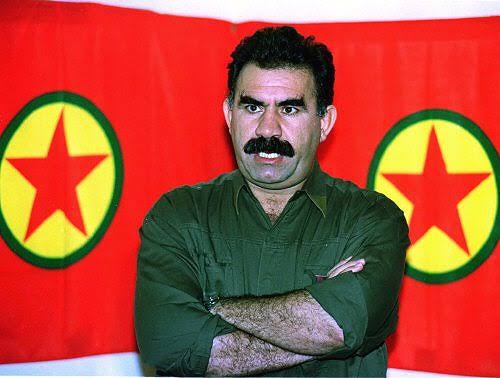
In February 2025, the Kurds’ imprisoned leader, Abdullah Ocalan, called on the PKK to officially disarm and pursue advancement through political means.
Ocalan remains in prison on tiny Imrali island (5 x 2.5 miles) in the Sea of Marmara 50 miles off the shore of Istanbul, where he has been since 1999. Kurds are hoping the PKK’s withdrawal will lead to his release.
The Armenians
The Kurds aren’t the only ethnic group persecuted in southeastern Turkey. The Armenians had lived in this corner for 2,500 years. But during the Ottoman Empire, which lasted from 1299-1922, the Ottomans feared an Armenian uprising.
Across the Ottoman Empire, they slaughtered an estimated 664,000-1.2 million Armenians.
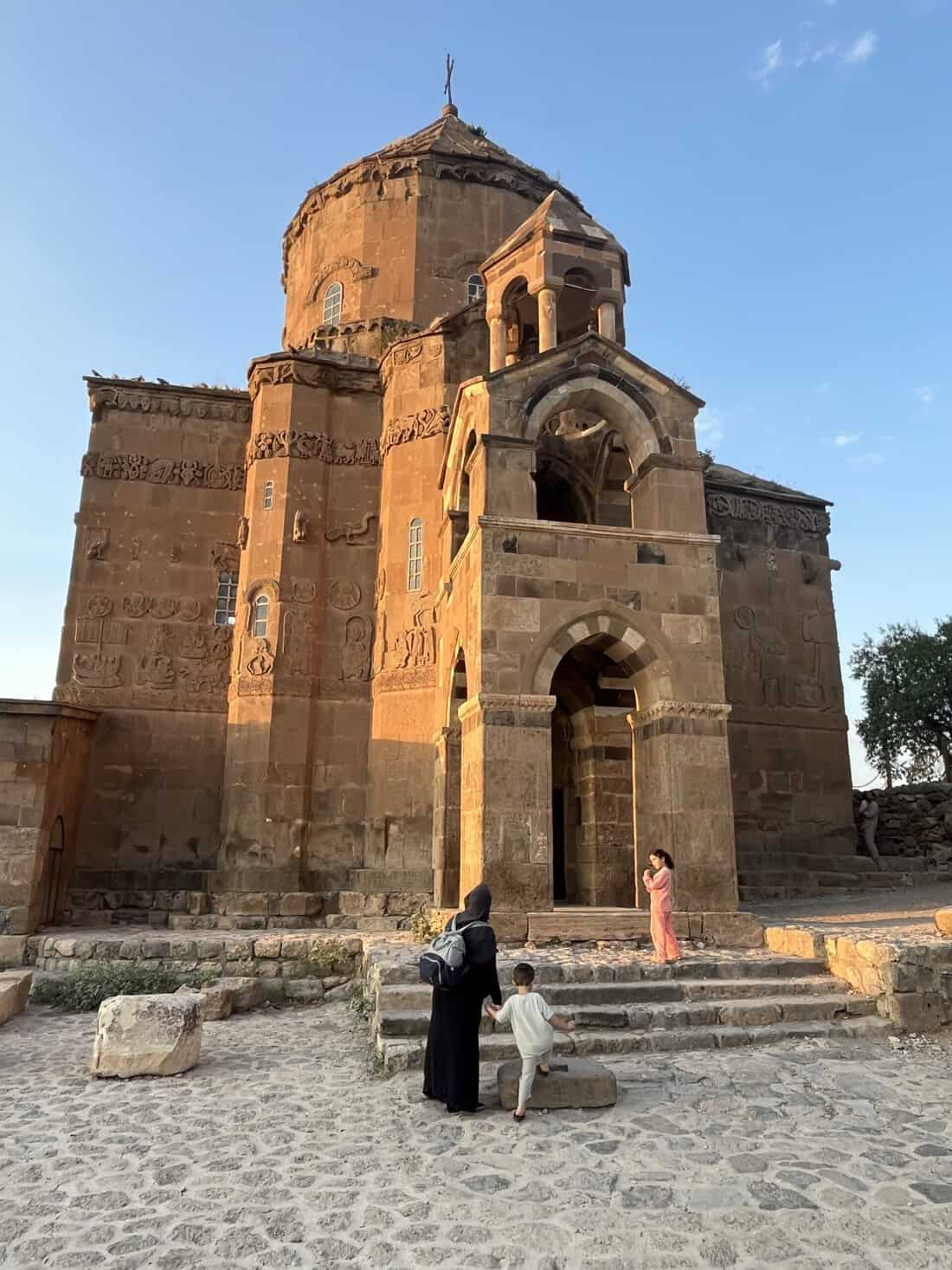
Today, the beautiful Akhdamar Armenian Church of the Holy Cross sits on an island in Lake Van dedicated to Armenians still in the area. From the shore, we took a ferry an hour to an island which is essentially a giant rock with a few trees around the shore, like whiskers on a chin.
The church, however, is gorgeous. It was built with reddish volcanic tufa from 915-921. Its elaborate artwork depicts scenes ranging from Adam and Eve to David and Goliath. It shows the four evangelists – Matthew, Mark, John and Luke – going through daily life.
Since 2010, every September except when fighting interrupted, Armenians come en masse to the church and pray before the annual Armenian Feast of the Exaltation of the Holy Cross.
As we sailed back across the lake to shore, a full moon burned like a glowing ember, sending a solid red streak across the water.
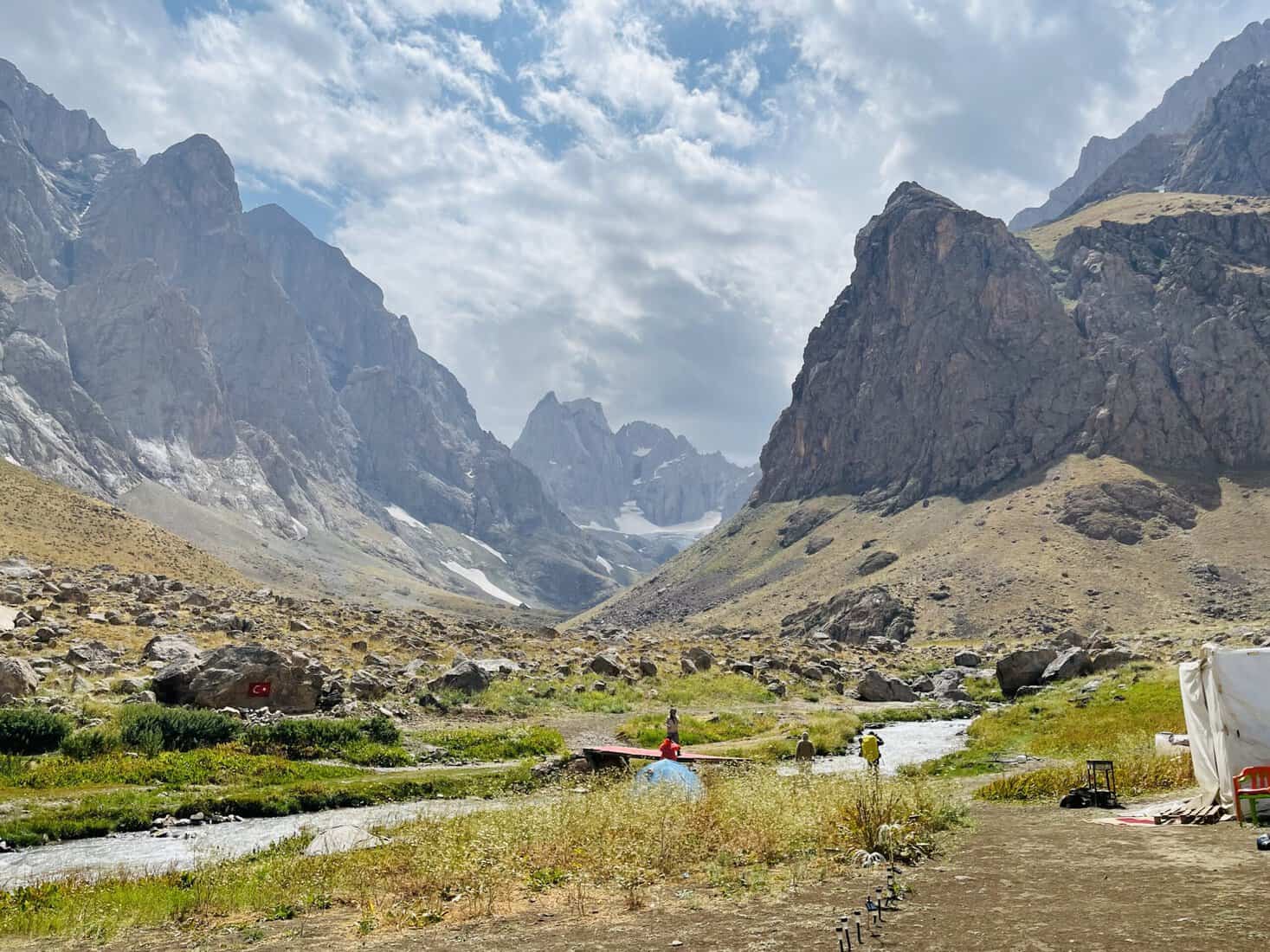
Hiking in Kurdistan
My weather in Turkey the last week in August was in the high 80s and low 90s – except for the one activity when I wanted it clear.
Hiking.
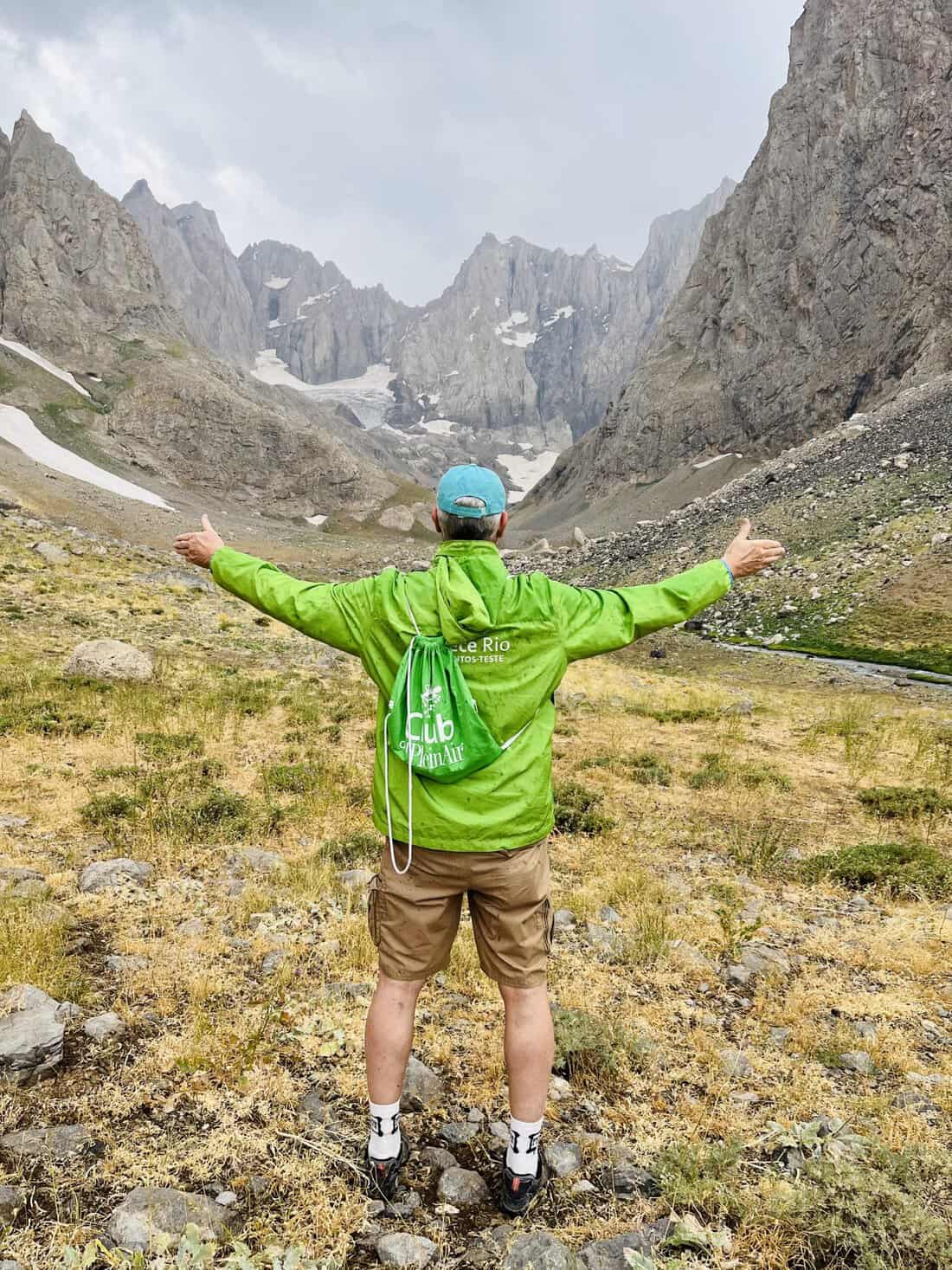
I woke in the town of Hakkari, 65 miles (110 kilometers) south of Van near the Iraqi border, to the first gray skies I’d seen in weeks. We piled into a van and headed straight into the rugged Cilo Mountains.
Ten years ago, this was the center of the war’s no-go zone. Even villagers weren’t allowed to go into this beautiful mountain area. We followed a narrow, windy road up and down a ravine with gradually higher hills on both sides.
An army guardhouse, left over from the war, checked our guide’s file and let us through. It took us 90 minutes following beautiful, unspoiled mountain scenery to reach Kirikdag, one of the most remote villages in Turkey.
Until 2016, this was a battle zone. Few Turks had even been here. Now, Abdullah, the village leader, took us in his small van and we climbed higher into the mountains with haunting, earthy Kurdish music providing the soundtrack.
From 1,300 meters, we climbed to 2,500 meters. The weather had turned windy. Raindrops streaked the windshield. From here we were going to walk for two hours to a glacial hike tucked in the middle of beautiful mountains 3,000 meters high.
We huddled under a crude tarp to wait out the rain. After a cup of tea, the sun peeked out briefly and we took off up the trail.
From 1984 to 2016, the war between the Turkish army and the PKK left 40,000 dead. Eventually, the army forced the PKK into remote mountain locations where the insurgency continued.
Ten years later, I was walking over a babbling brook to a mountain scene that belonged on a postcard if southeastern Turkey ever had any.
The elevation climb was steady but not steep. After three days of Istanbul and a long, hot summer in Rome, I liked the cold, windy weather. I even welcomed the rain that made me thankful I brought a raincoat.
But Ferzan Demirtas, our guide, wanted to return after only about 30 minutes. He said if the weather worsened, someone could get hurt. This area has no Internet. We had no phone communication.
However, we did pass a dozen young Turkish hikers who passed out hard-boiled eggs.
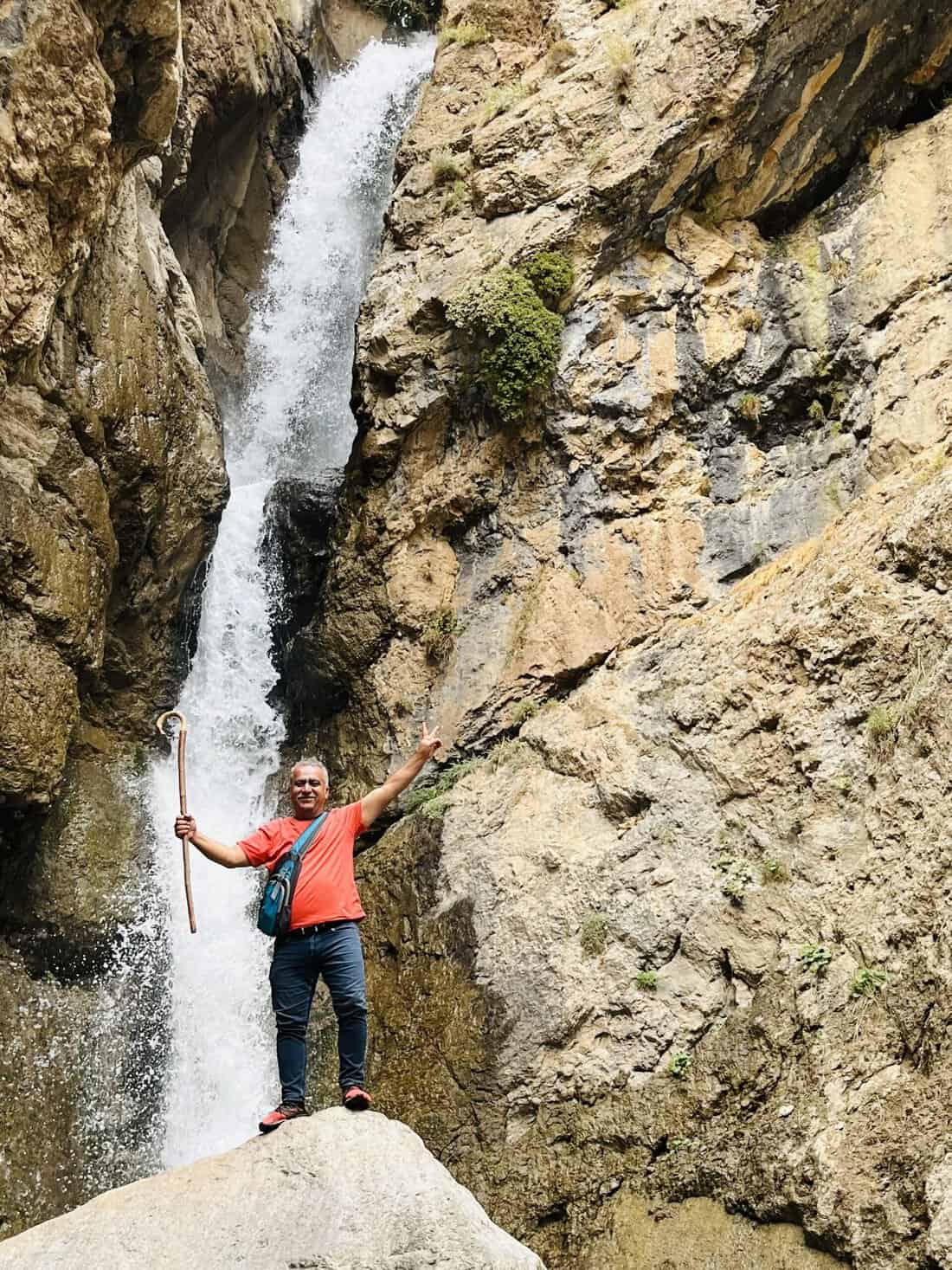
We returned to the tarp, barely winded. The BBQ chicken wings for lunch were as good as in any American sports bar. I sat next to Ferzan whose business has suffered since the start of the Iran War.
Husky with neat, short-cropped gray hair, the 49-year-old Ferzan hails from Mardin near the Syrian border. He has lived in Van for 28 years. I asked him what he likes most about this area.
“One is the nature and beauty,” he said. “You can see the four seasons at the same time. The weather is nice. The people also are nice. For my work it’s very good.”
I brought up the current Iran War and like with all Kurds, his expression changed. Right when peace had a chance, the Middle East is in turmoil. Again.
“For the last 49 years I always grow up with the war,” he said. “I hope it will be better in the future.”
We bid goodbye to Abdullah and headed back to Hakkari for our final night in Turkey. The next day, we were crossing the border where more Kurds faced more carnage.
Iraq.
If you are thinking of going …
How to get there: Regular flights leave from Istanbul. The two-hour flight cost me $89 one way.
Where to stay: Elite World Van Hotel, Kazim Karabekir, Blvd. No. 67, Van, 90-432-484-1111,
https://www.eliteworldhotels.com.tr/hotels/elite-world-van, info@eliteworldhotels.com.tr, Beautiful five-star hotel in the middle of Van. Rooms start at €85 a night.
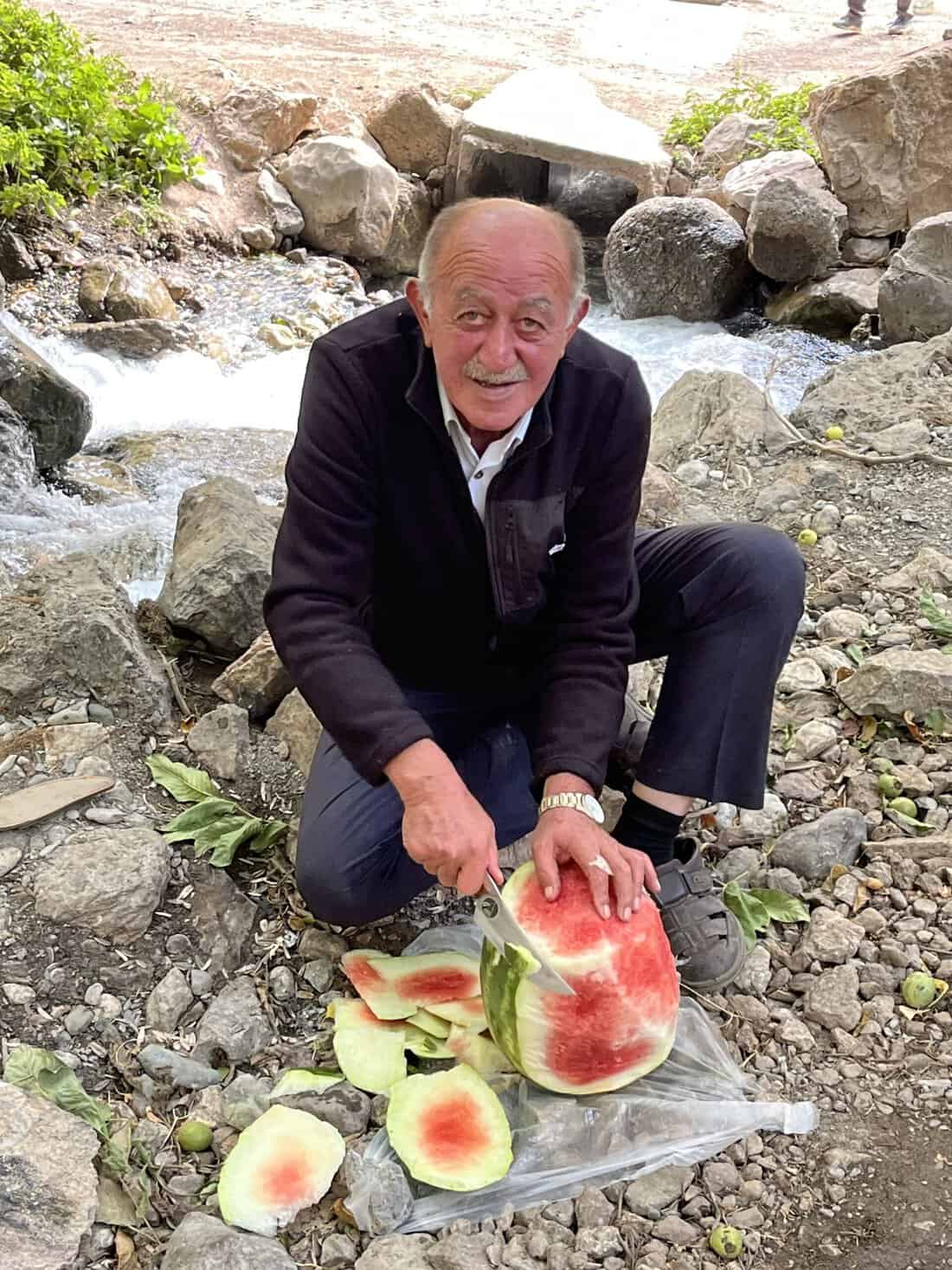
Where to eat: Samran Restaurant, Hatuniye Cad. uzeri, Van, 90-532-737-6365, 8 a.m.-10 p.m., 8:30 a.m.-9:30 p.m. Monday. Van is famous for its breakfasts and Samran throws out a tremendous spread, from cheeses, fried spinach rolls and borek, a flaky dough pastry filled with cheese or meat. Prices start at about €8.
When to go: Van is at 5,660 feet (1,725 meters) so it doesn’t get too hot in the summer. In the last week of August, we saw temperatures reach the low 80s. In June and September it’s in the mid-70s. Winters are near freezing with snow not far away.
For more information: Van Provincial Directorate of Culture and Tourism, Cumhuriyet Cad. 75, 90-432-280-1700, https://van.ktb.gov.tr.
(Next Tuesday: A guest at a Kurdish wedding.)
September 15, 2026 @ 3:53 pm
Wow, those pictures almost put Zion to shame!
September 15, 2026 @ 9:44 pm
Thanks, James. Never been to Zion but I’ll take your word for it.
September 16, 2026 @ 4:04 am
I really enjoyed the account of your journey. Can’t wait for more.
September 16, 2026 @ 7:10 am
Thanks, Lauren. I appreciate it. Next week’s on the Kurdish wedding will be good.