


Schwerin: Germany’s “fairy tale city” with a communist past
(This is the last of a three-part series on Hamburg, Germany.)
SCHWERIN, Germany – If you’ve followed TraveLazio, the blog Marina and I write about day trips from Rome, you know day trips are a passion of mine. I love breaking away from the crowds and tourists of a major city and spending a day in a tranquil small town in the countryside. See beautiful views. Eat delicious country cooking. Visit little-known historical sites.
But in the nearly four years of TraveLazio, we never had a day trip to a former town in communist Europe, where most people didn’t see a banana until the 1990s and where people had to walk to a telegraph office to call a different town.
Latina comes to mind, barely. Benito Mussolini founded it in 1932. Fascism architecture is everywhere. But Latina was fascist, not communist, and is not one of the prettiest little towns in Europe. It’s not even a pretty town.
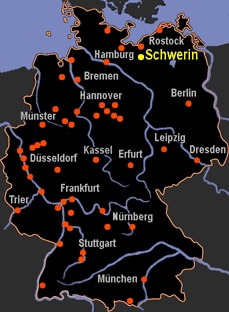
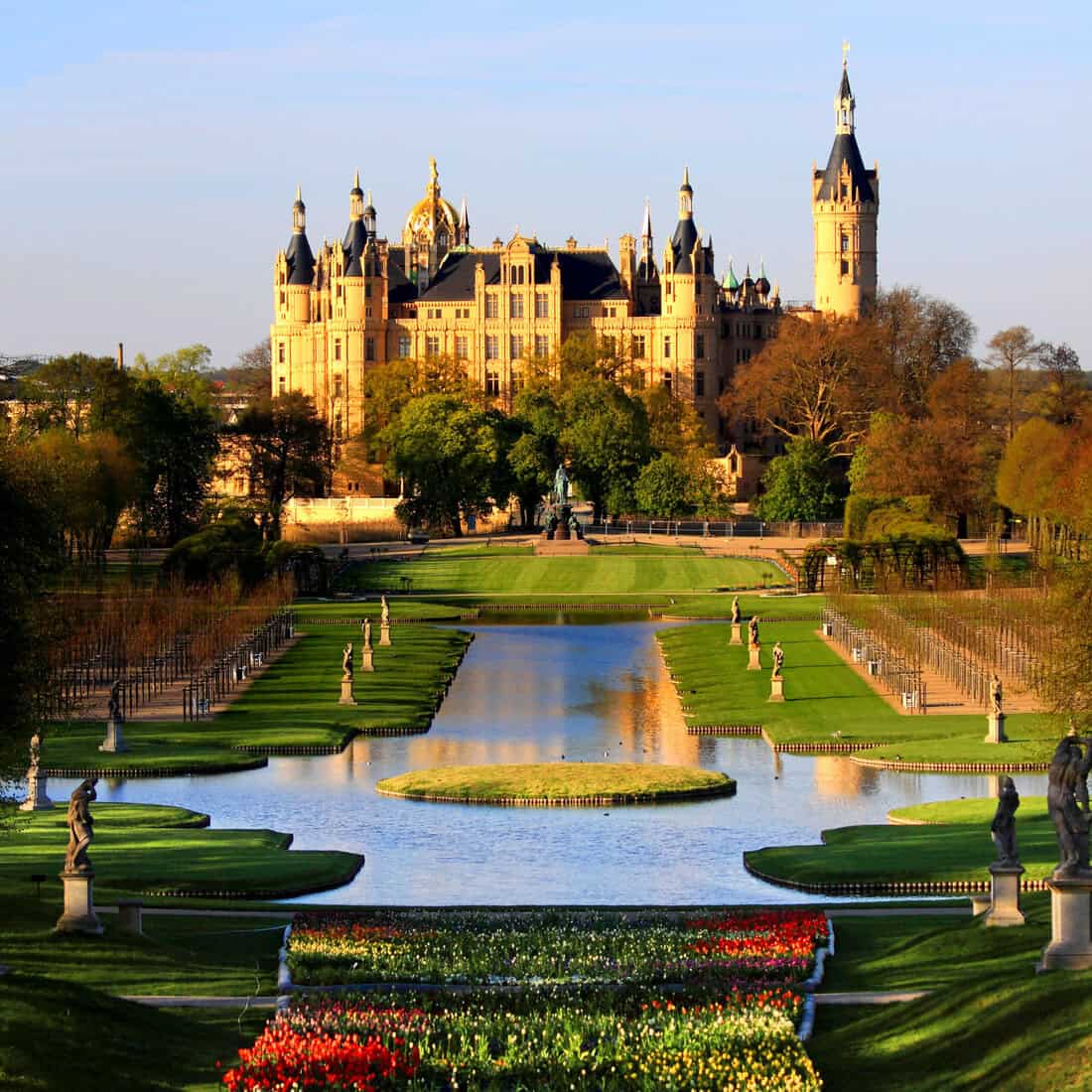
Schwerin, Germany, however, has surfaced from Europe’s cesspool of communist cities from the 20th century to become one of the coolest towns I’ve ever visited. It’s got everything: A gorgeous castle with spectacular views. Seven lakes. A UNESCO World Heritage Site designation. An old town so cute it could fill 12 pages of calendars for a decade. Even the castle ghost is cool.
All with a backdrop of evil.
I came to Schwerin (pronounced Shwe-REEN) courtesy of Traverse, the travel bloggers biennial conference I attended last month. It organized a day trip with a big van that took about 30 of us 60 miles (92 kilometers) east of Hamburg. From 1945-1990, Hamburg was only 25 miles (40 kilometers) from the old East German border.
Stasi, the East German secret police, was everywhere. Going from East to West was as rare as fresh fruit. Then in a survey 10 years ago, 94 percent of those surveyed in this city of 96,000 people said they “couldn’t imagine living anywhere else.”
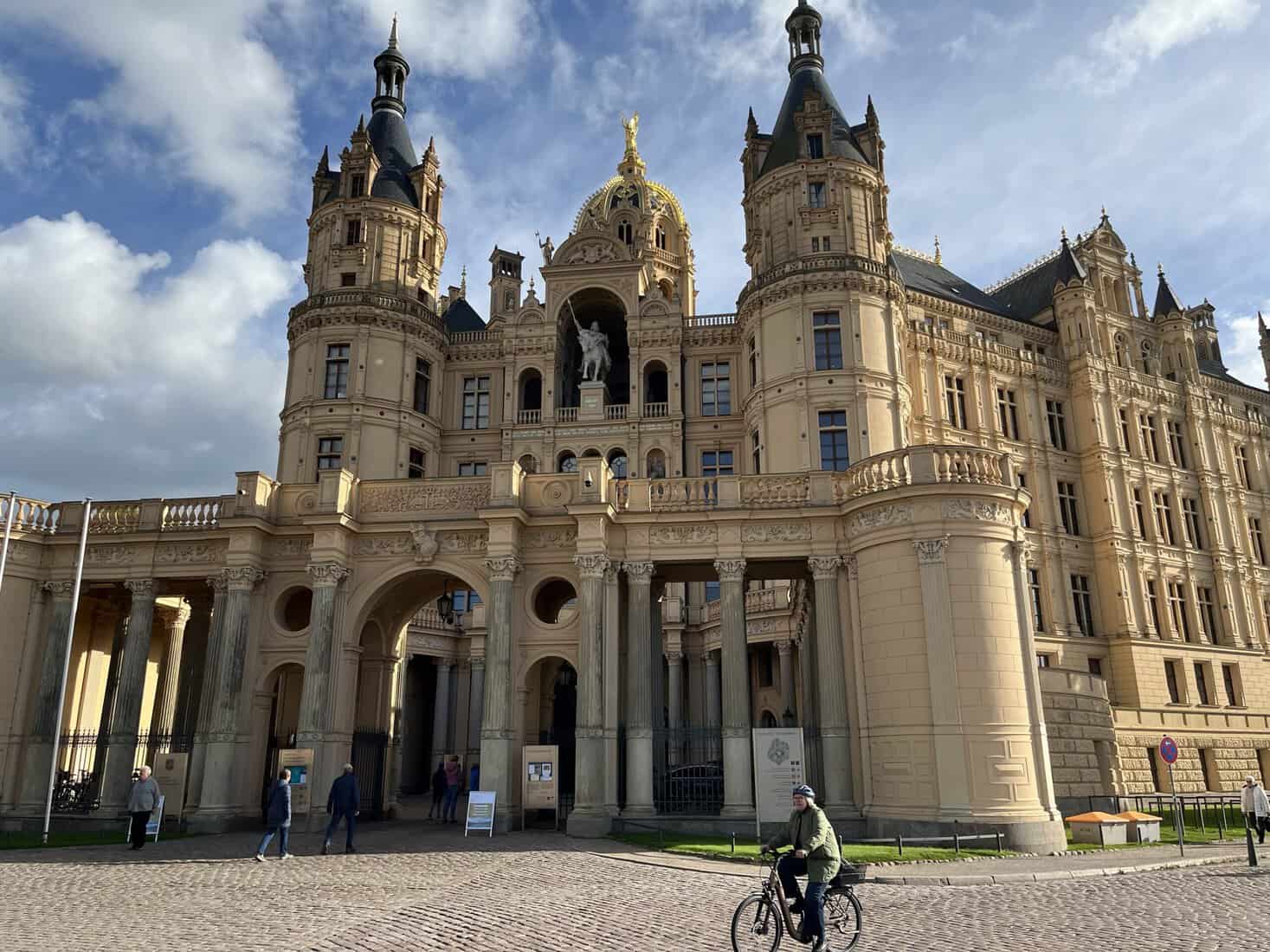
Schwerin Castle
We started our day at Schwerin’s centerpiece. Schwerin Castle has stood on an island in Lake Schwerin since 1847 but its origins go back 1,000 years when it was a stronghold for the Slavic residents at the time.
The Germans later turned it into a castle as a residence for the grand dukes of Mecklenburg-Schwerin, an independent grand duchy in northern Germany.
OK, the history is a bit dull. Castles in Lazio have at least had bloody battles. But lots of beautiful women are dull and Schwerin Castle is one of the prettiest castles in Europe.
Call Schwerin Castle Germany’s Kim Kardashian.
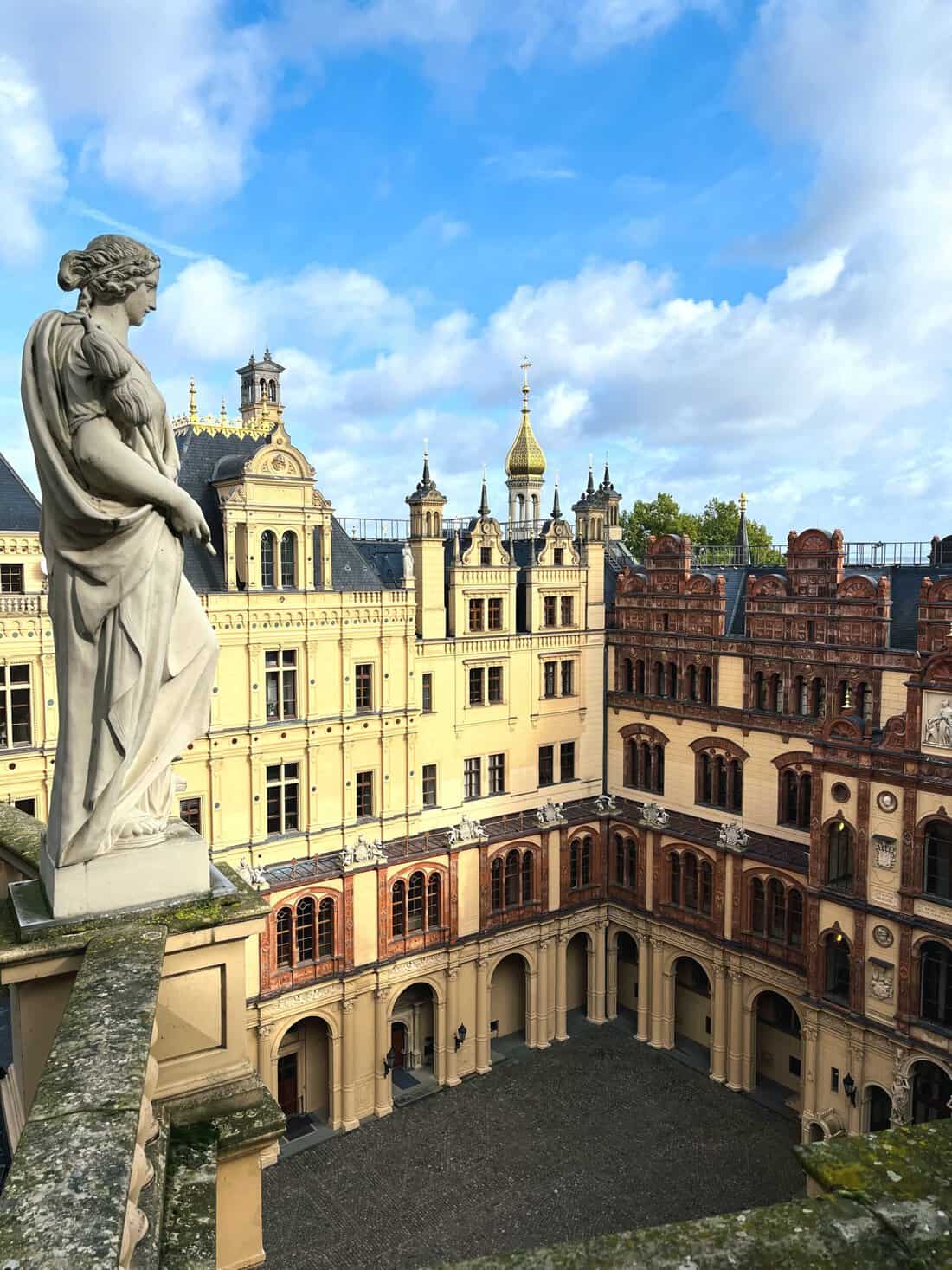
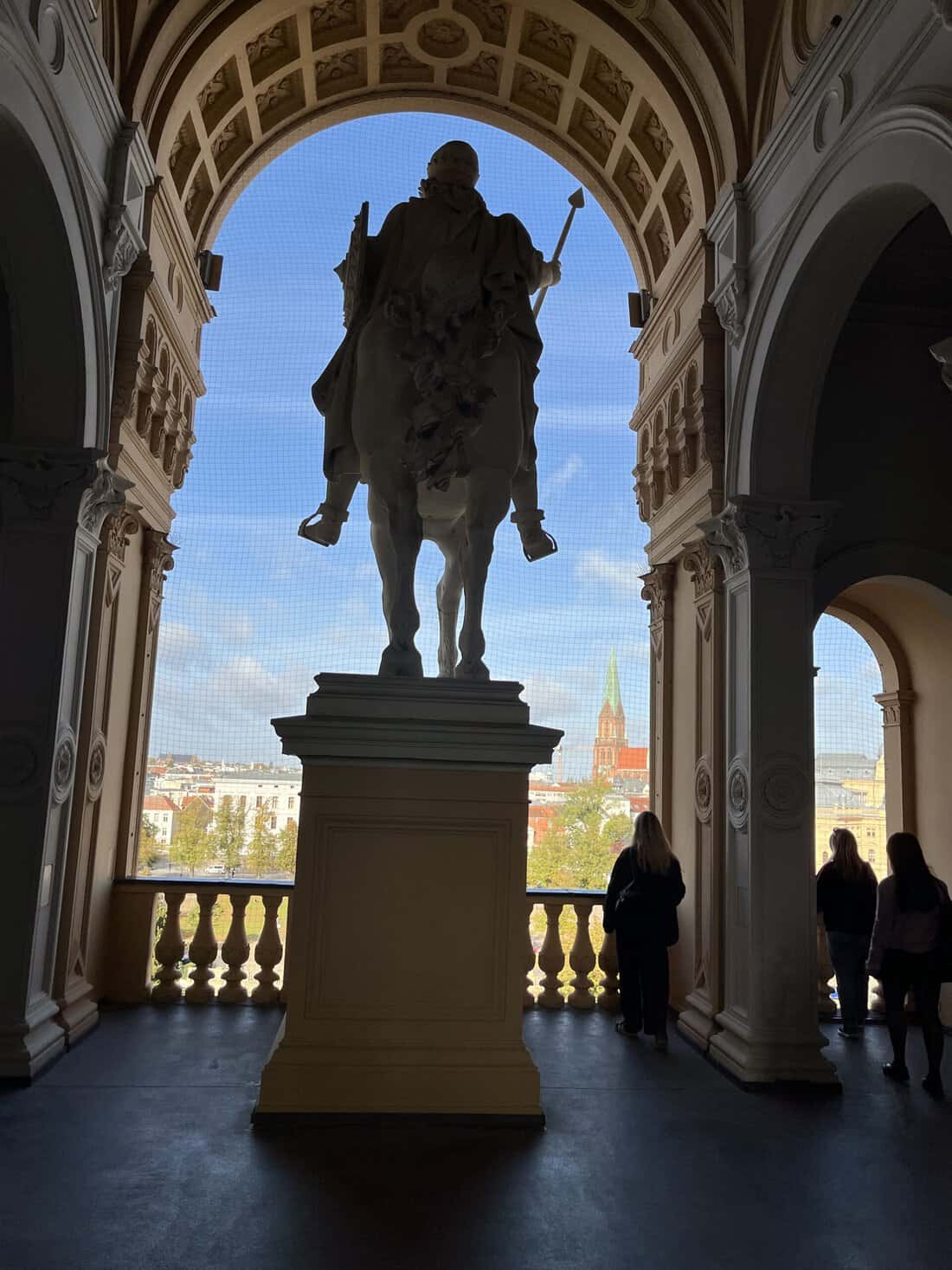
It’s a delicious confection of burnt orange and gold brick, plaster and stucco. Fifteen pointy towers stick in the air like missiles ready for takeoff. The upper balconies are lined with gold statues of eagles and marble statues of local tradesmen and women representing such jobs as weaving, smithing and sailing.
Walk along the statues and you get lovely views of the surrounding the 25-square-mile (64-square-kilometer) lake, town and countryside beyond. Today it houses the parliament of Mecklenberg-Vorpommern, one of Germany’s 16 federal states.
But it also houses a harmless ghost.
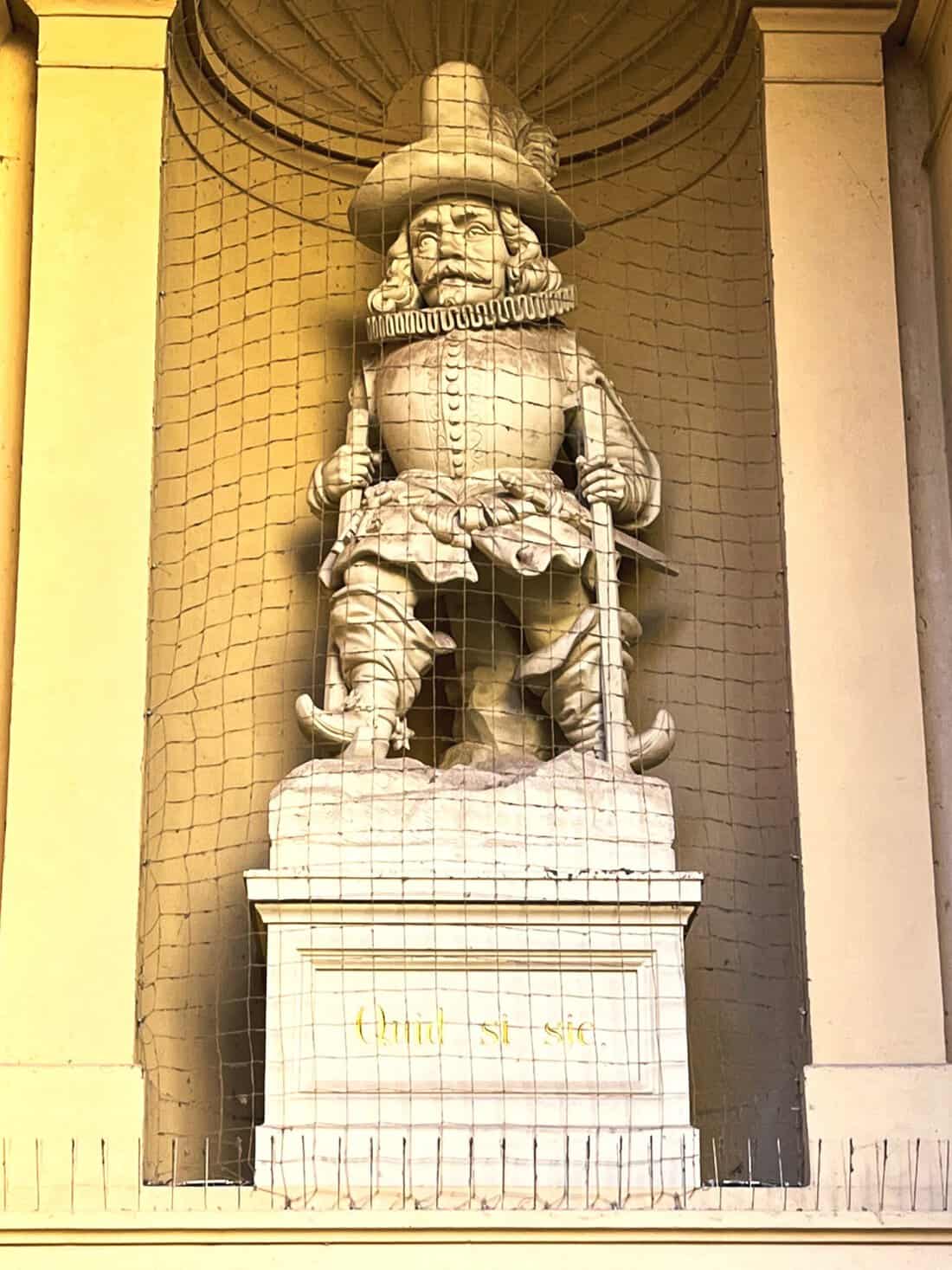
His name is Little Peterman and the folklore legend began 550 years ago when a Slavic prince killed a Christian priest who had destroyed an ancient pagan temple on the site. With his dying breath, the priest cursed the prince and condemned him to remain at the castle as a supernatural guardian.
The prince became Petermännchen, or Peterman in English, a dwarf ordered to protect the castle until someone with a good heart could release him from his curse.

Our guide said monks later forgave him for his act and let him stay in their monastery but the castle was built around it, condemning Peterman to a prison – albeit a beautiful one – for eternity.
It’s why he is always seen as a frowning old man carrying a lantern, a sword and a big ring of keys. That includes the depiction in his own niche on the ground floor of the castle. Not that Peterman remains a loving legend, but the town has its own Little Peter souvenir shop and his image is on the city streets’ stop and go pedestrian lights.
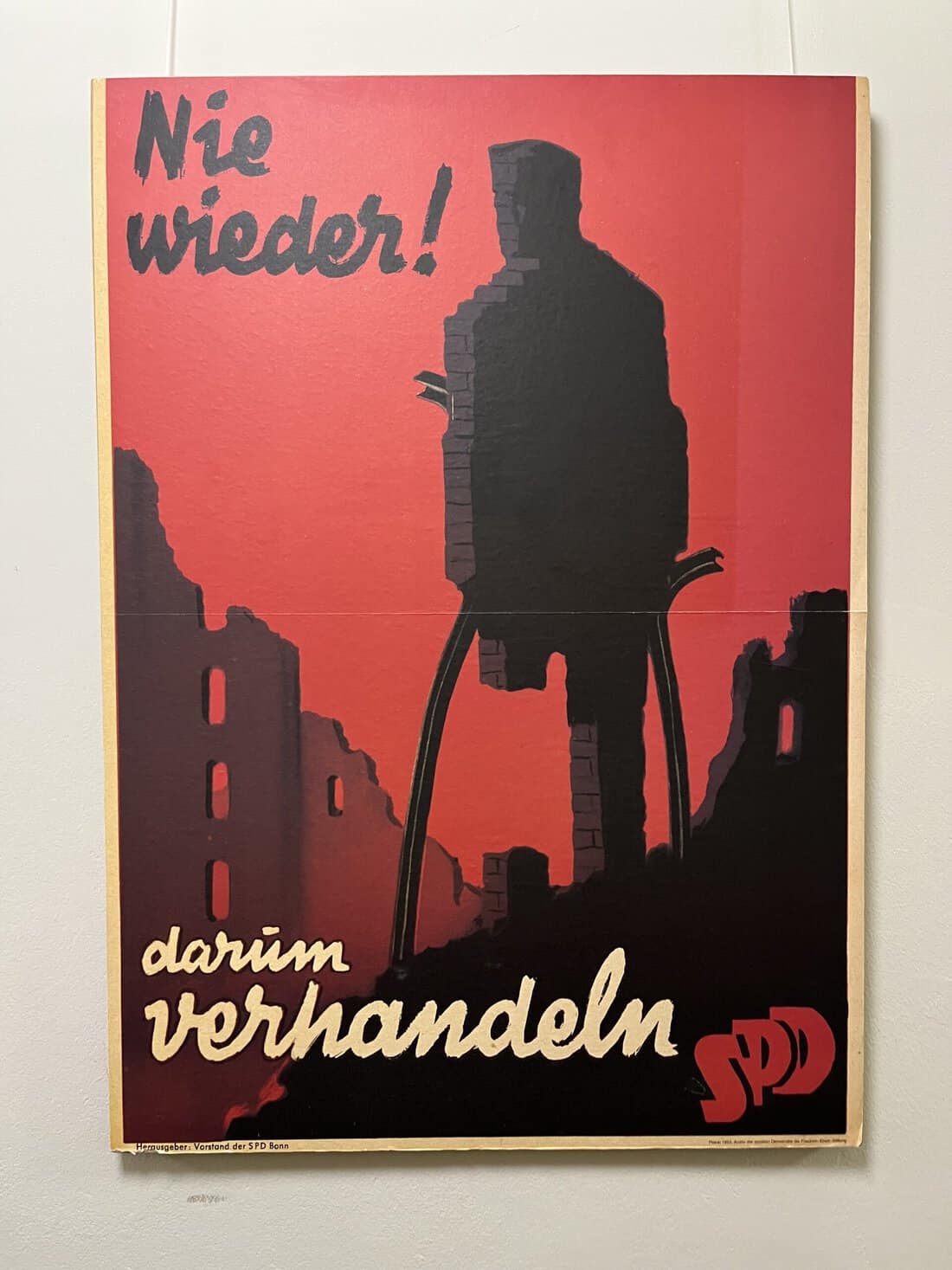
Schwerin, East Germany
The current government has left remnants of the city’s communist past. In the hallways are old propaganda posters of SPD, the Social Democratic Party of Germany from the 19th century which the Nazis banned but returned after the Nazis lost in World War II.
Leaving the castle, we joined Teresa Beck, our guide who was a little girl in Schwerin, East Germany. For decades, travel to West Germany was tightly restricted. Beginning in 1964, pensioners could apply to visit relatives in the West, but they needed an invitation and government permission.
“Everything was controlled,” she said. “Everything was observed.”
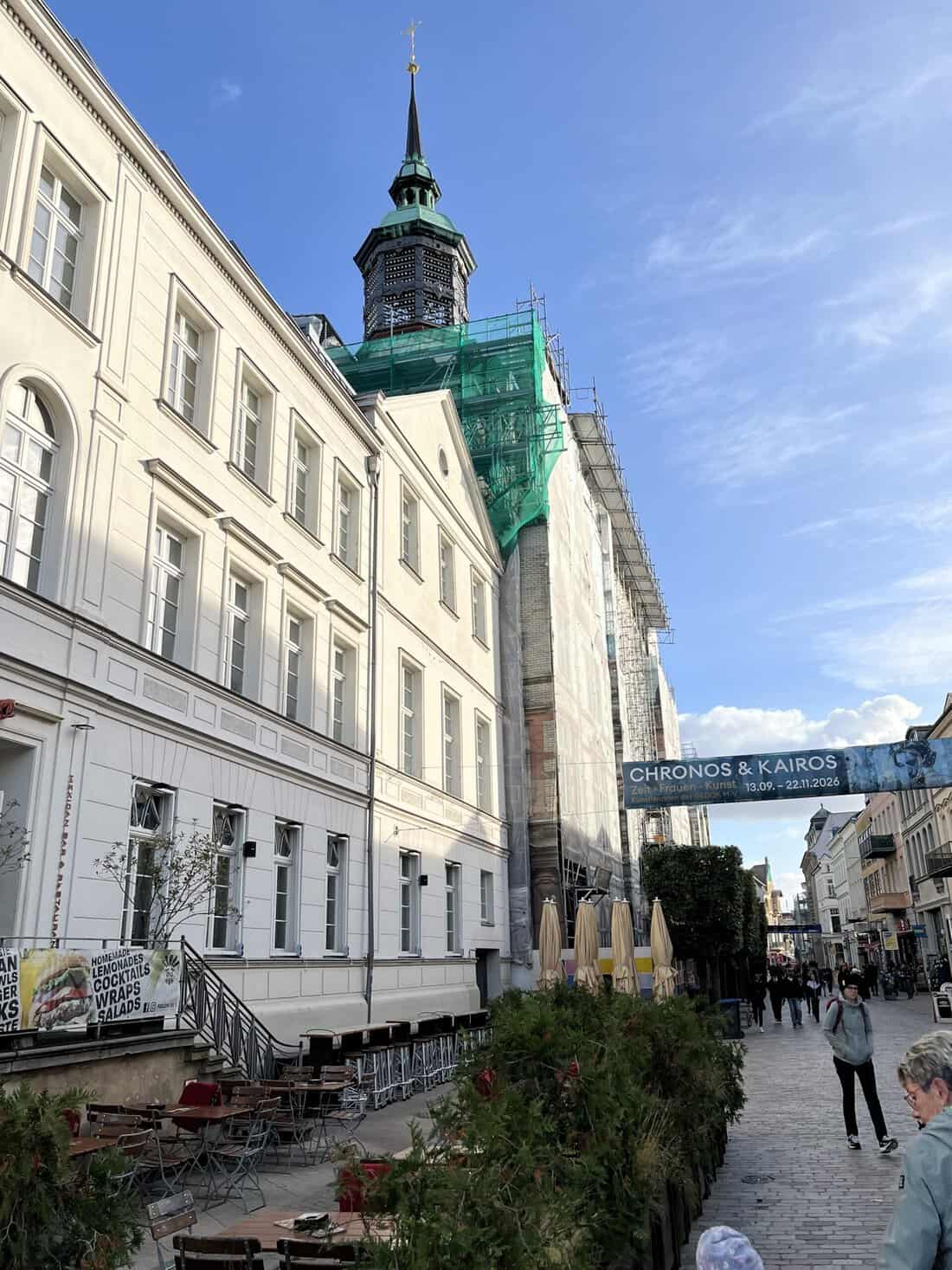
We passed the post office which served as the telegraph office during communism. Private phones were a luxury. Only 10 percent of residents had phones in 1989. If you wanted to talk to someone in town, Beck said, you had to visit them. Calling a different town required a trip to the telegraph office for a long-distance call. The telegraph office cage still sits atop the post office.
I asked how she looked back at her childhood.
“We didn’t know what we didn’t have,” she said. “We were happy.”
After the Berlin Wall and East Germany fell, she saw oranges and bananas for the first time. She spent 1991-92 in Imlay City, Mich., for her senior year in high school.
That’s where she saw her first computer.
Schwerin, Germany
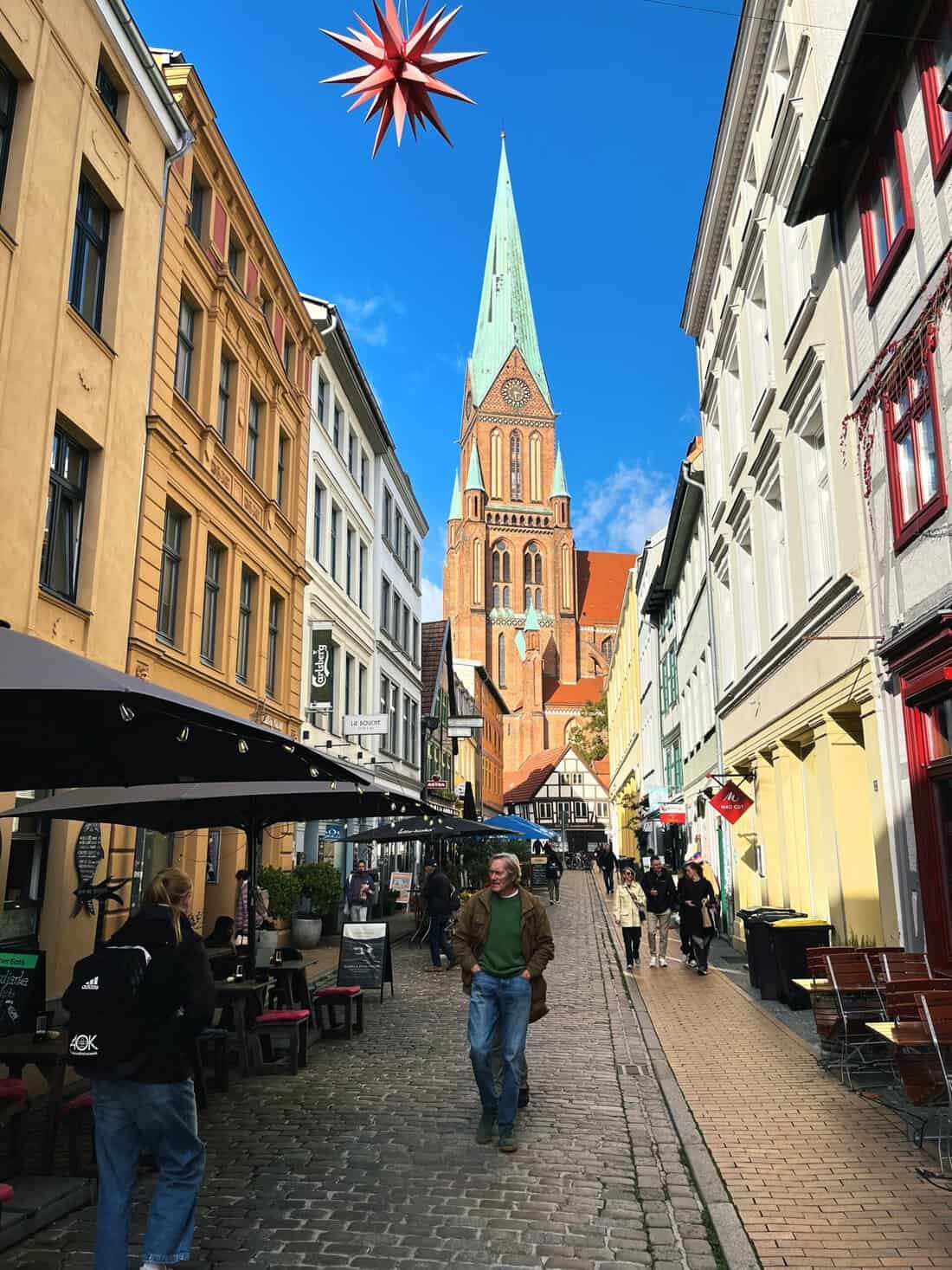
After the wall fell and people could leave for the West, the city population dropped from 130,000 to 99,000. But those who stayed were rewarded. The town joined the hundreds of others in Eastern Europe who threw a fresh coat of paint on their East German-era architecture and turned on the lights.
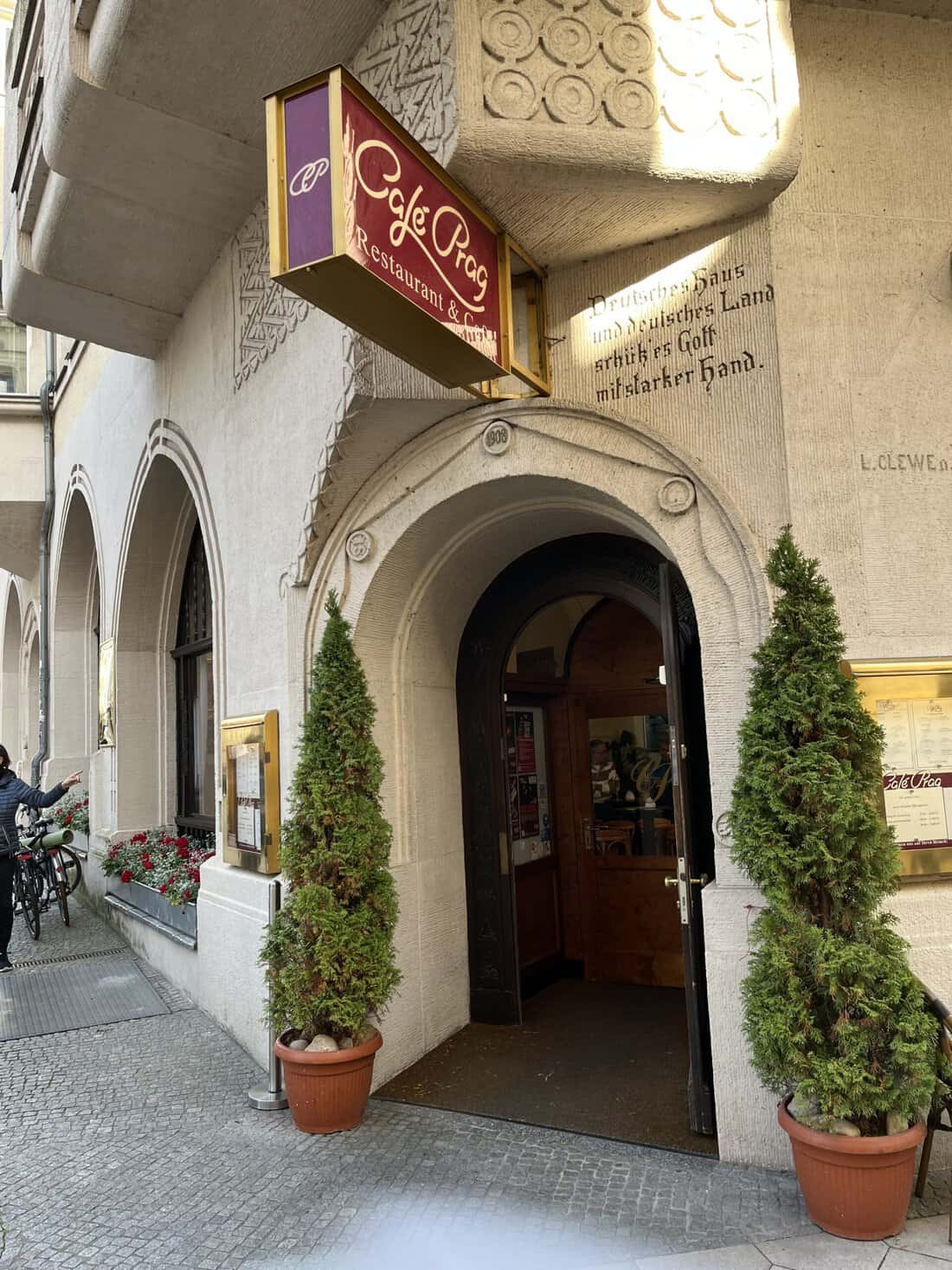
Today, Schwerin is considered one-third parks, one-third water and one-third buildings. It has kept some of the best of its past. The Grand Ducal Court Theatre, built in 1886, is under renovation and will reopen in March. Cafe Prag is still around from 1908 when it served pastries and cakes for the duke, and you could drink Czech beer under communism.
It’s still one of the best places in town for dessert.
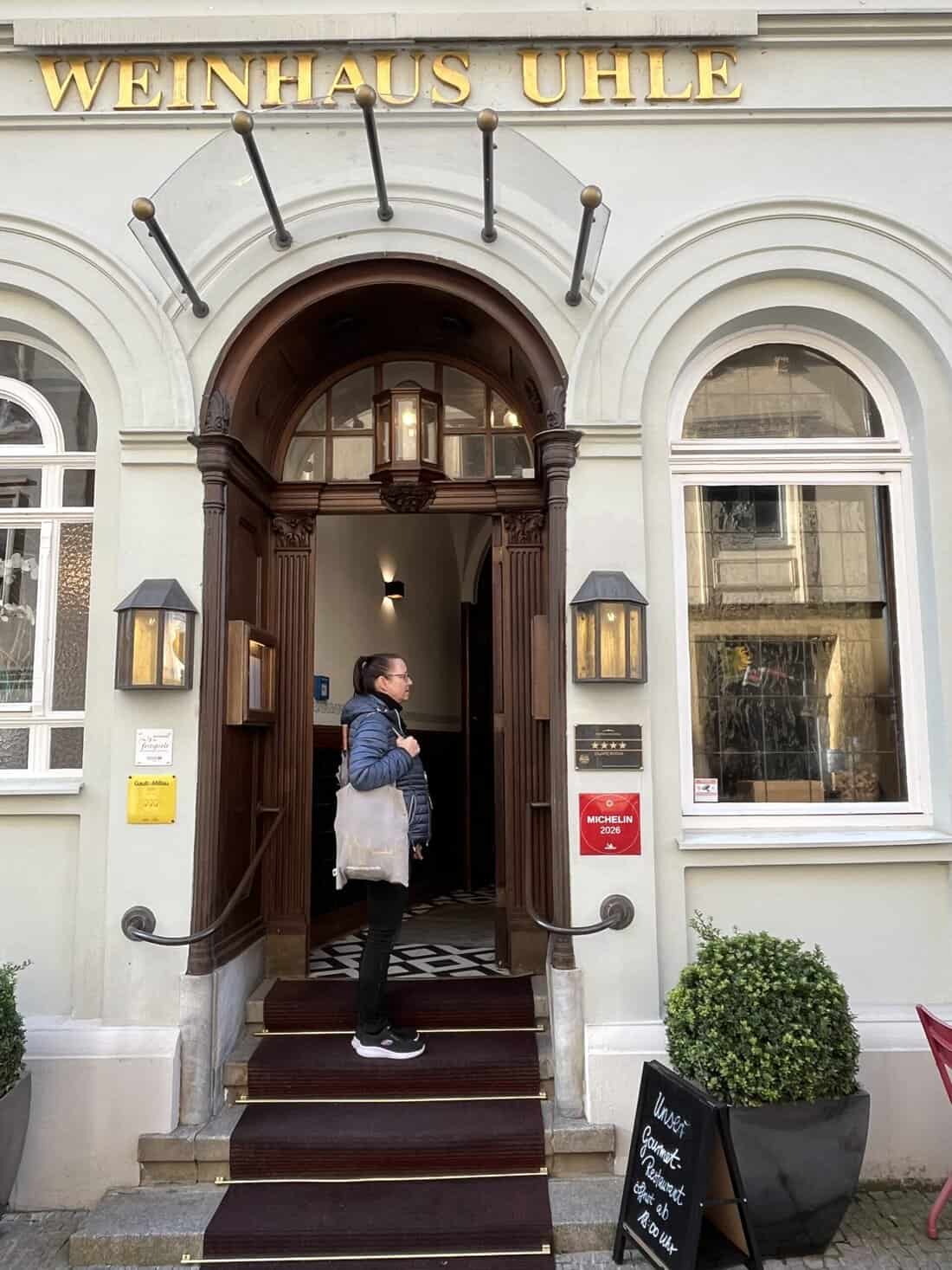
In 1998, all the city streets were repaved. From 10 a.m.-6 p.m. every day, many of the streets in Schwerin’s old town are pedestrian only where you pound cobblestones past boutique shops and tony restaurants. Gourmetrestaurant 1751 in the Weinhaus Uhle hotel became Schwerin’s first Michelin-star restaurant five months ago.
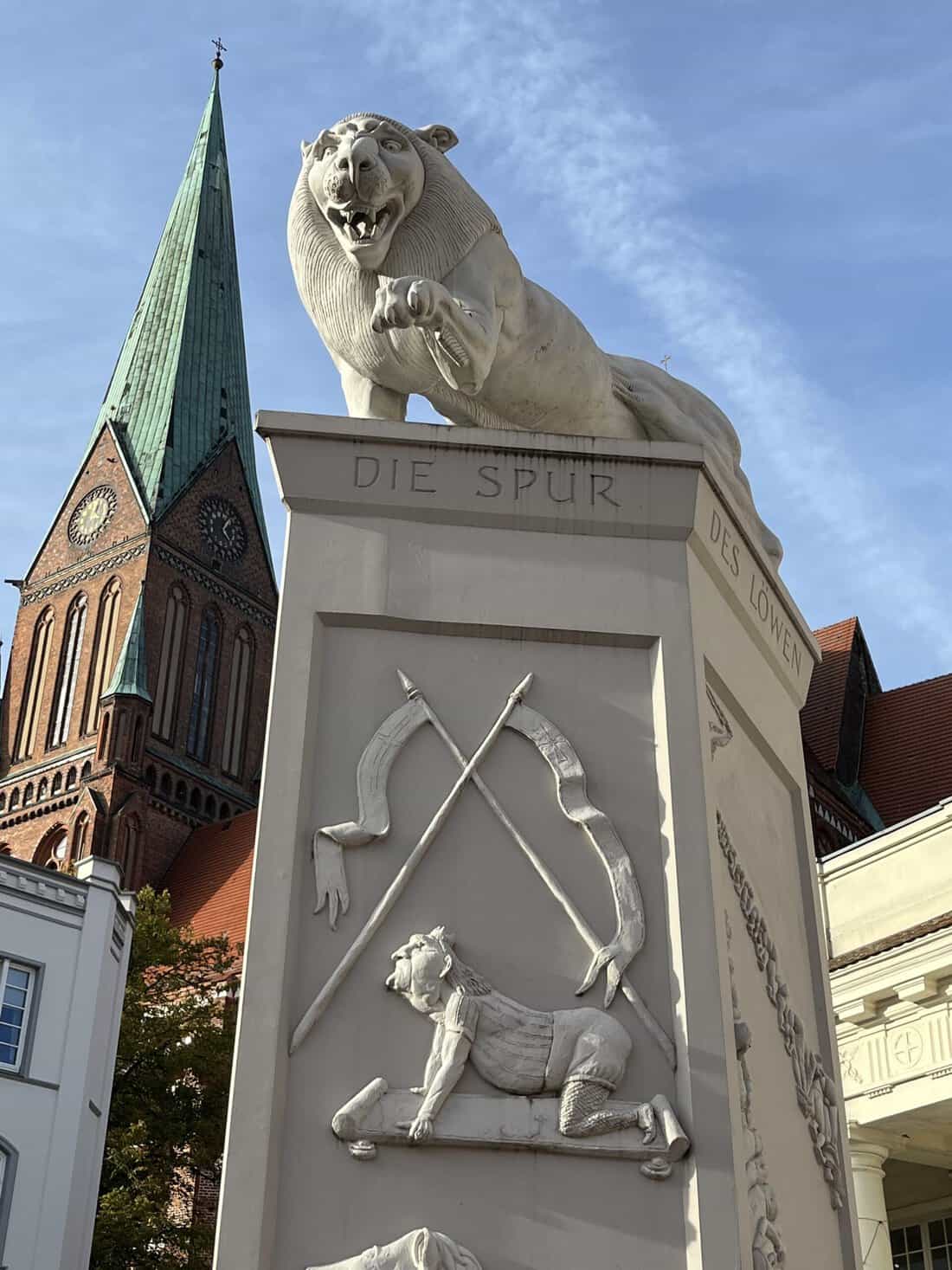
Looking over old town is Schwerin Cathedral which reaches 117 meters into the sky. Next to it are monuments to Henry the Lion, who conquered the Slavic stronghold in 1160 and made Schwerin a center for Christianity in Germany and laid the foundation for the city it is today.
As I walked past the gingerbread architecture on spotless, cobblestone streets, I kept wondering, This was really a communist city?
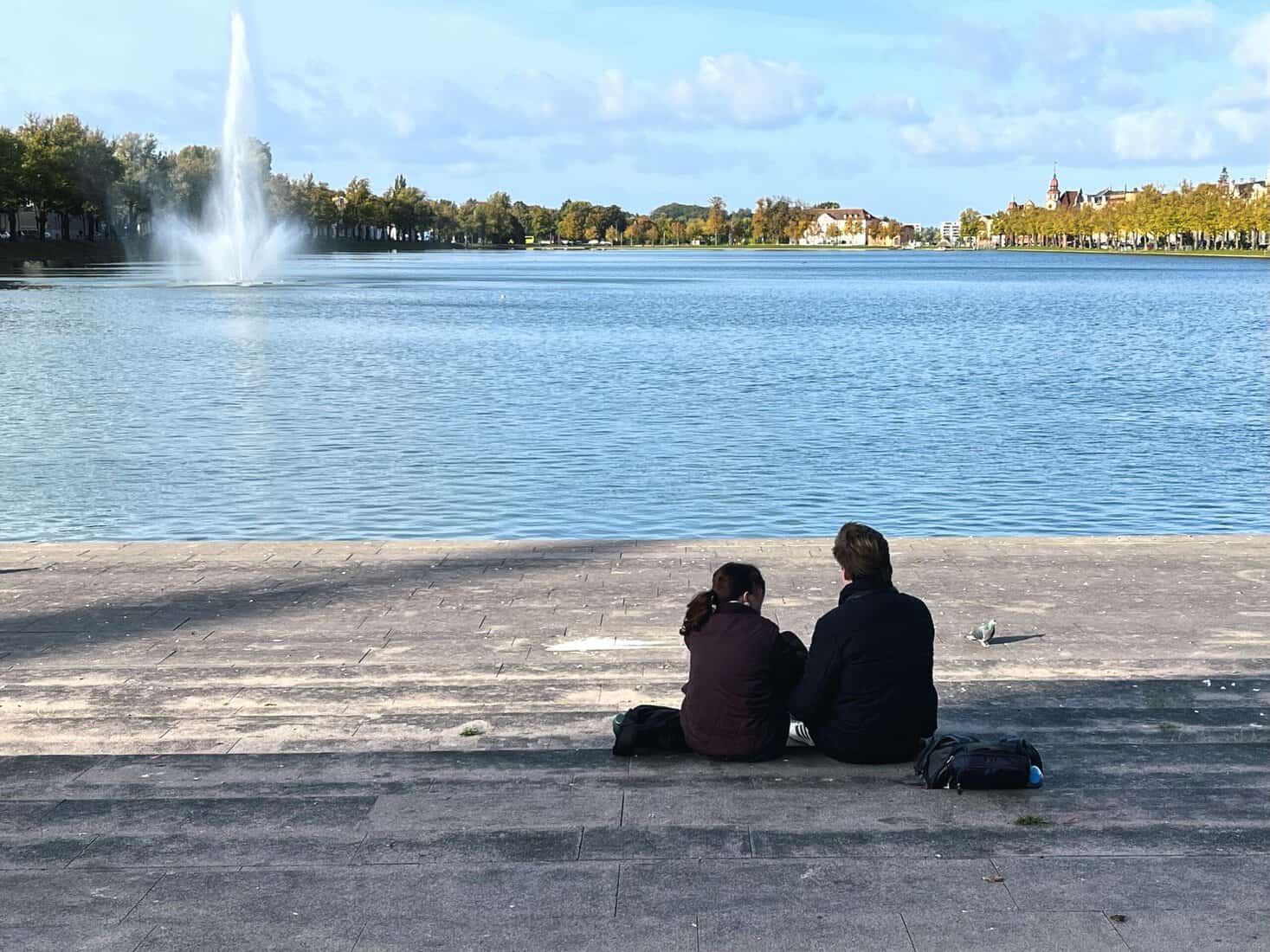
Two years ago, UNESCO put the Schwerin Residence Ensemble, 38 historic buildings, gardens and landscape features spread throughout the city, on its World Heritage list.
Near the lake where lovers held hands and friends drank coffee on the banks, our guide stopped a tall, clean-shaven, bespectacled, man in a casual suit. It was Sebastian Ehlers, the 44-year-old mayor since July 6. He was hurrying to his office but he had time to tell me how he describes his city to people who’d never heard of it.
“It’s the most beautiful capital of all the German federal states,” he told me. “It’s been growing since the UNESCO World Heritage Site.”
How much has it grown?
“We need more hotels,” he said before rushing off.
Tourism in Schwerin
We stopped for lunch at Weinhaus Wohler, opened in 1819 as a winery and now part of Schwerin’s World Heritage Site. Giving a brief speech was Peter Kranz, the CEO of Mecklenburg-Vorpommern Tourism.
Tourism has grown 28 percent since 2012 with 33 million overnight stays to Mecklenburg last year. However, he startled me when he said they’re getting cruise ship visitors who come into Rostock-Warnemunde, the port city an hour east of Schwerin.
I can’t imagine these cute little streets being flooded with a mob of selfie-snapping foreigners in Yankee ballcaps. I asked if he feared over-tourism.
“No, not yet,” he said. “It’s a question of definition of overtourism. Let me mention Barcelona or another city like Dubrovnik. I see this as overtourism. OK, we do have our peaks. We do have peaks in the summer because we have 2,000 kilometers of coast.”
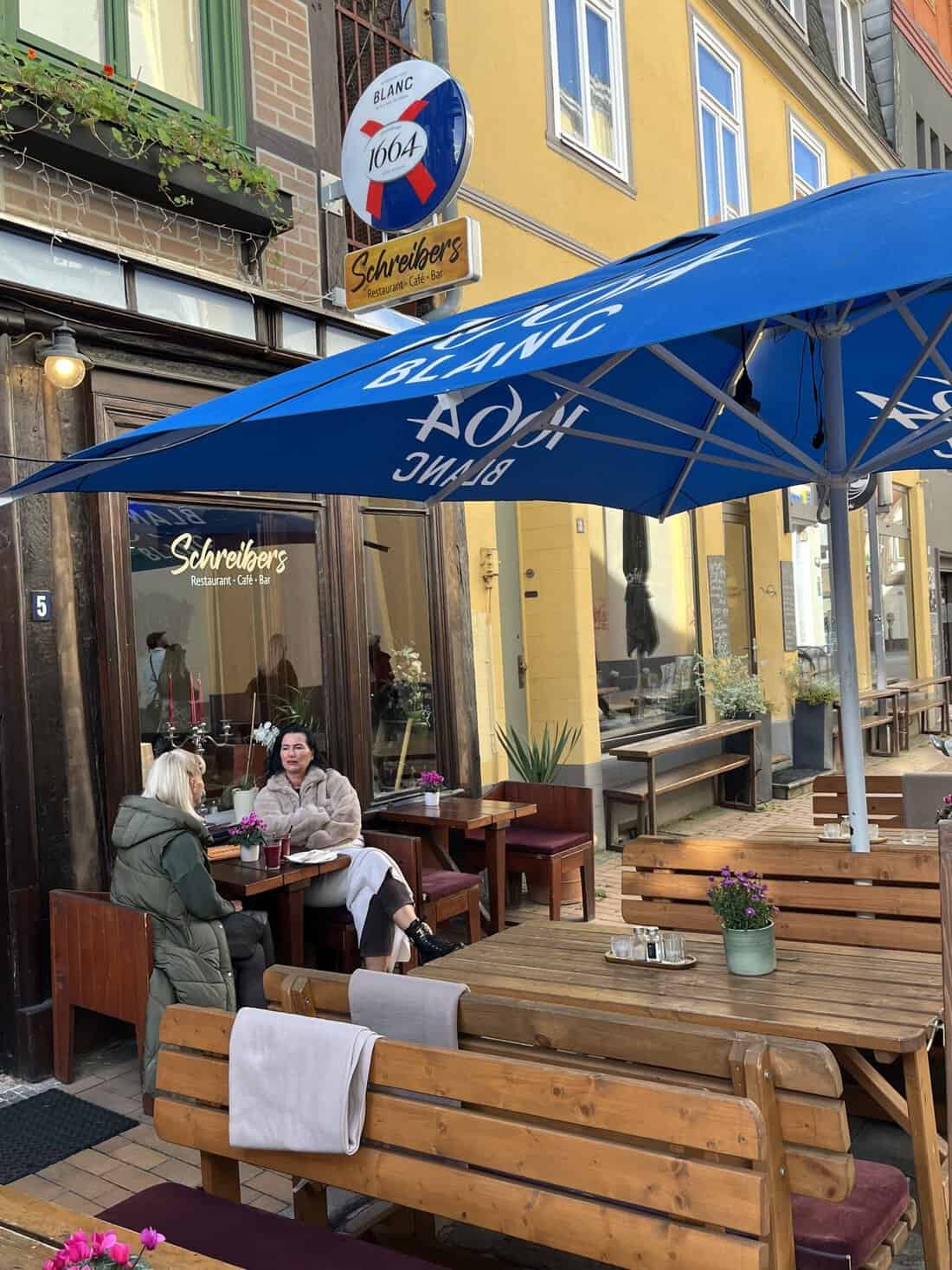
He has lived here for 30 years. I asked him how to describe it. He thought for a moment, smiled and said, “I would say it’s a fairy tale city.”
Down the road, somewhere deep in a fairy tale castle, a little angry dwarf is dying to get out and see it.
If you’re thinking of going …
How to get there: Trains leave all day from Hamburg. The 55-minute trip is €18 if booked in advance.
Where to stay: Hotel Hanseport, Erichstrasse 18, Hamburg, 49-40-31-9970, www.hotel-hanseport.de, info@hotel-hanseport.de. Simple 3-star hotel in the heart of the St. Pauli neighborhood. Big rooms and helpful staff. I paid €732 for six nights, including an excellent buffet breakfast.
Where to eat: Weinhaus Wohler, Puschkinstrasse 26, Schwerin, 49-385-555-830, https://weinhaus-woehler.de/restaurant, info@weinhaus-woehler.de, 11:30 a.m-10 p.m. Wednesday-Saturday, 5:30-10 p.m. Tuesday, 11:30 a.m.-2:30 p.m. Sunday. Historic, cozy restaurant with private rooms and vaulted ceilings. Fish and meat dishes start at €18.50.
When to go: Near the Baltic Sea, Northern Germany rarely gets steaming. Summer temperature highs in the 70s. Winter lows around freezing. My day in October was in the 60s and sunny.
For more information: Tourist-Information Schwerin, Am Market 14, 49-385-545-5000, https://www.schwerin.de/kultur-tourismus, touristinfo@schwerin.de, 10 a.m.-6 p.m. Monday-Friday, 10 a.m.-3 p.m. Saturday-Sunday.