


Istanbul’s Asian side: Only a ferry away but feels a continent away
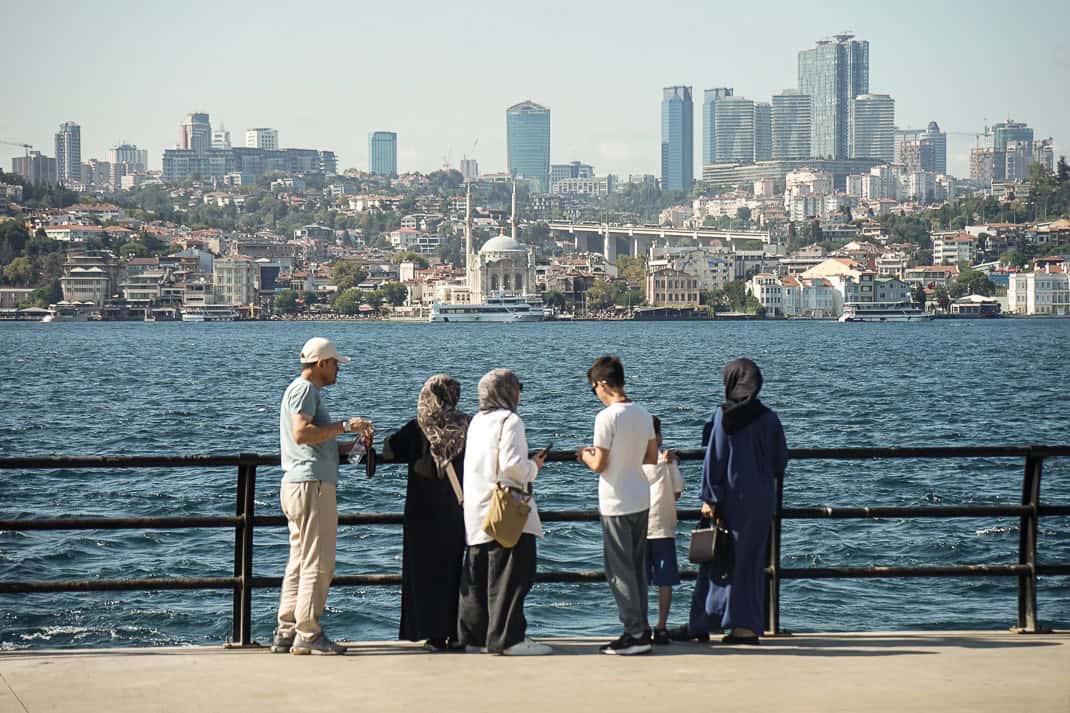
(This is the first of a five-part series on Turkey and Iraqi Kurdistan.)
“Istanbul’s greatest virtue is its people’s ability to see the city through both Western and Eastern eyes.” — Turkish novelist and Nobel Prize winner Orhan Pamuk.
ISTANBUL – Turkey’s heartbeat city has 16 million people. Visiting in late August, it seems like double that.
The sidewalks are cheek to cheek and I’m not talking faces. The trams are standing-room only. Restaurants’ outdoor tables on steaming evenings are full.
It’s so noisy, the muezzins’ eerily romantic call to prayer from the city’s 3,500 mosques is a tad more faint.
Istanbul, former center of the ruthless Ottoman Empire and Europe’s gateway to Asia, is a pulsating, sweating, bustling sensory overload. You don’t visit Istanbul in August. You survive it.
Or you can cross the Strait of Bosphorus and see an Istanbul of yesteryear.
It’s an Istanbul of quaint fishing villages, of long promenades along the water, of shaded boulevards lined with ice cream shops, boutiques and outdoor cafes.
Welcome to the Asian side of Istanbul.
If the European side has Istanbul’s wallet, the Asian side has its heart.
It makes sense that Istanbul is Europe’s gateway to Asia. More than a third of the city is on that continent, the tip of Turkey’s Asian region called Anatolia. Tourists rush straight to the European side, home of some of the world’s greatest monuments: the Blue Mosque. Aya Sofya. Topkapi Palace, not to mention the Grand Bazaar, where you can do your entire Christmas shopping in an hour.
Marina and I love Istanbul, and two weeks ago was our third trip. It was my first stop on a two-week journey to southeastern Turkey and Iraqi Kurdistan. We had spent little time on the Asian side and we vowed to explore it this time.
It was like discovering a new city. We could sit in the shade. We could dine alone by the water. We could, you know, breathe. I’ll tell you what else we could do.
“I could live here,” I told Marina.
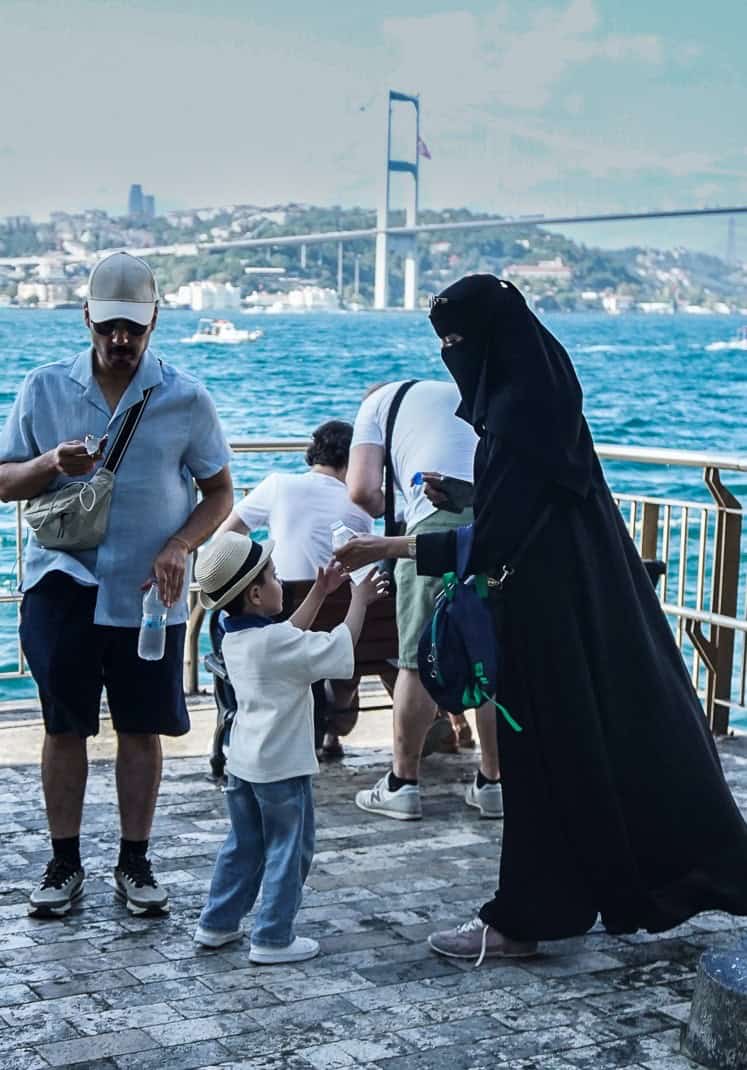
“If you spend only five or six days, you spend it on the historical side,” said Omer Yalkin, 69, the director of my Travelers’ Century Club who grew up on the Asian side. “Expats living in Istanbul, I know they enjoy more the Asian side. To really appreciate Istanbul, one definitely has to spend time exploring the Asian side as well.”
As the famous Turkish quote from the 13th century says, “The quieter you become, the more you are able to hear.”
Kadikoy
The Strait of Bosphorus cuts through Istanbul like a watery canyon. It connects the Black Sea in the north with the Marmara Sea in the south and the Aegean Sea beyond. At one point in the city it is two miles wide.
For centuries, sailors and explorers such as Marco Polo used the strait to travel from East to the West. Today, tourists use it for romantic sunset cruises to tony restaurants where you dine on fresh fish on the water.
On this trip, we became locals. We used it for transportation.
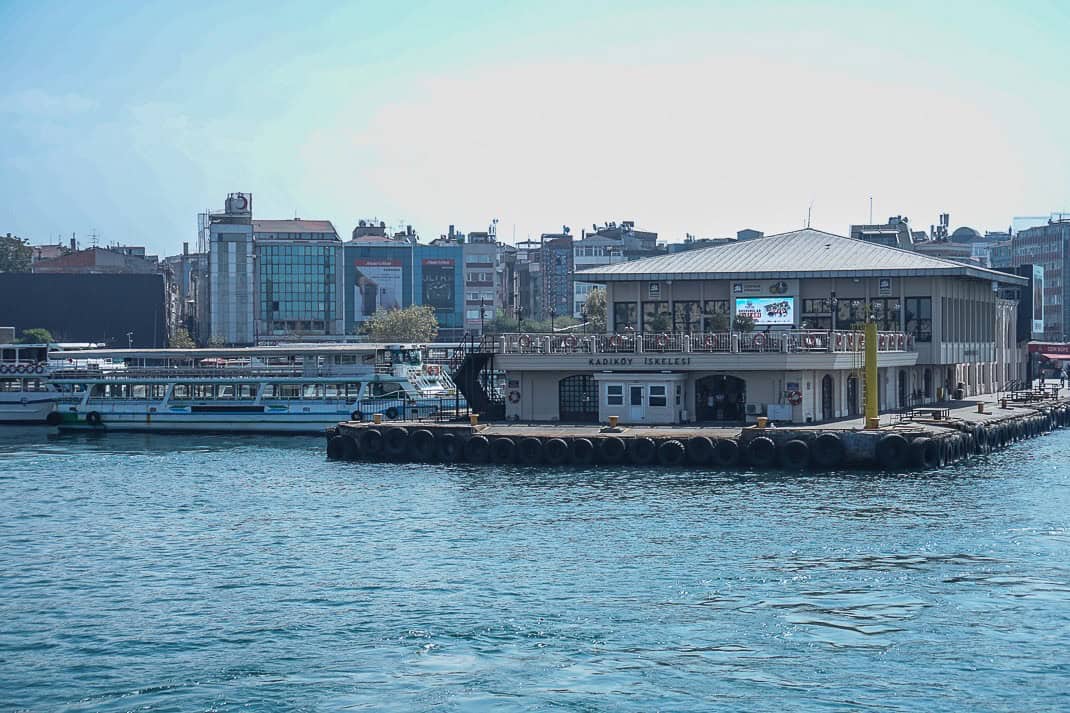
We took one of the dozens of ferries that ply these waters daily from a dock near our hotel on the European side. The ferries are big with lots of seats inside and on top, a cheaper, more authentic cruise of the Bosphorus.
As we motored south, we could see the long line of magical mosques lining the European side, their domes and minarets glittering in the morning sun.
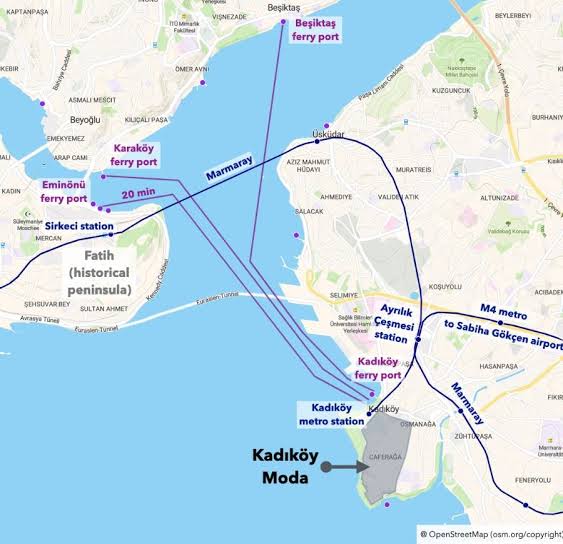
It dropped us off in the neighborhood of Kadikoy. As we left the quiet waterfront, lined with retail shops, we could feel a cool breeze mercifully coming up off the water.
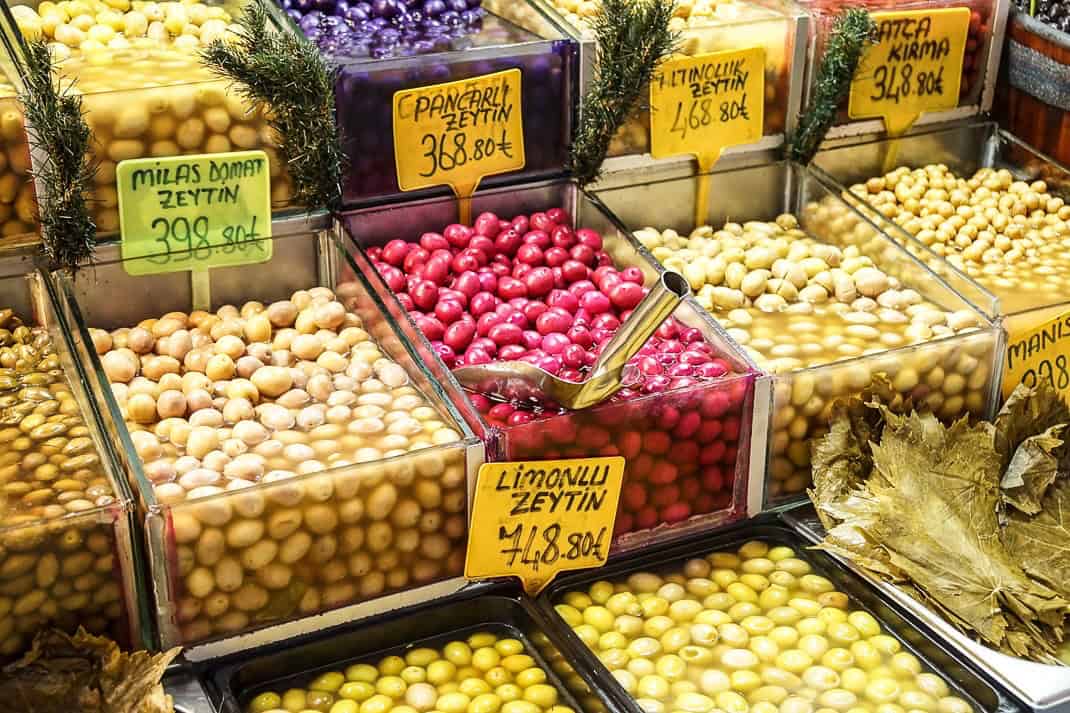
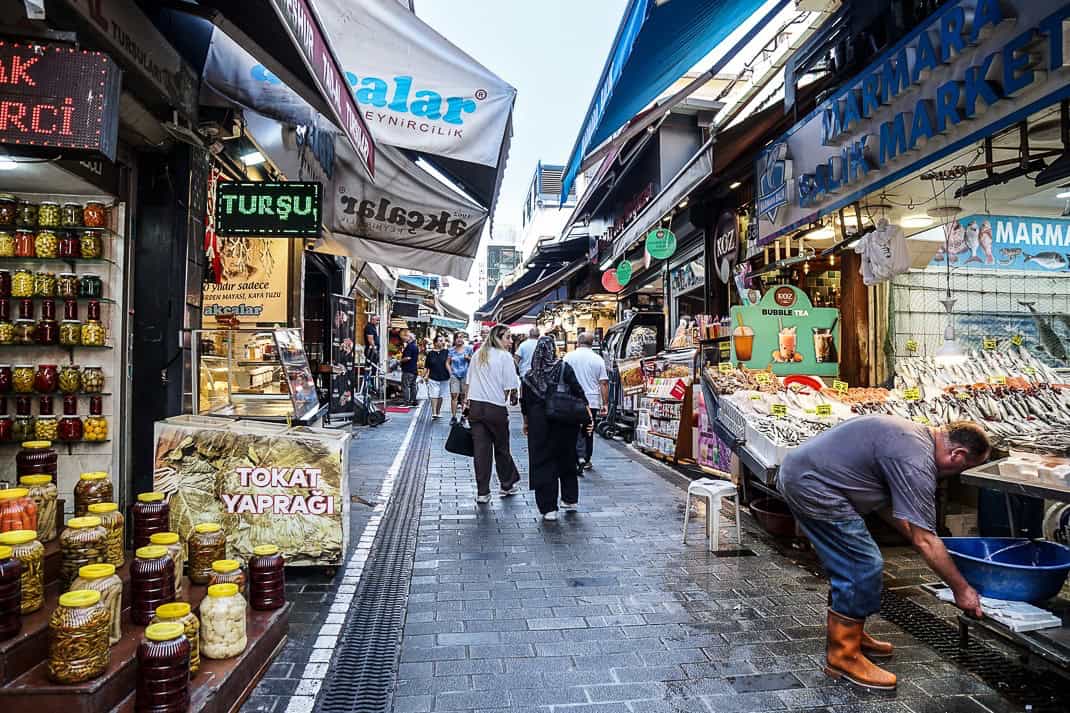
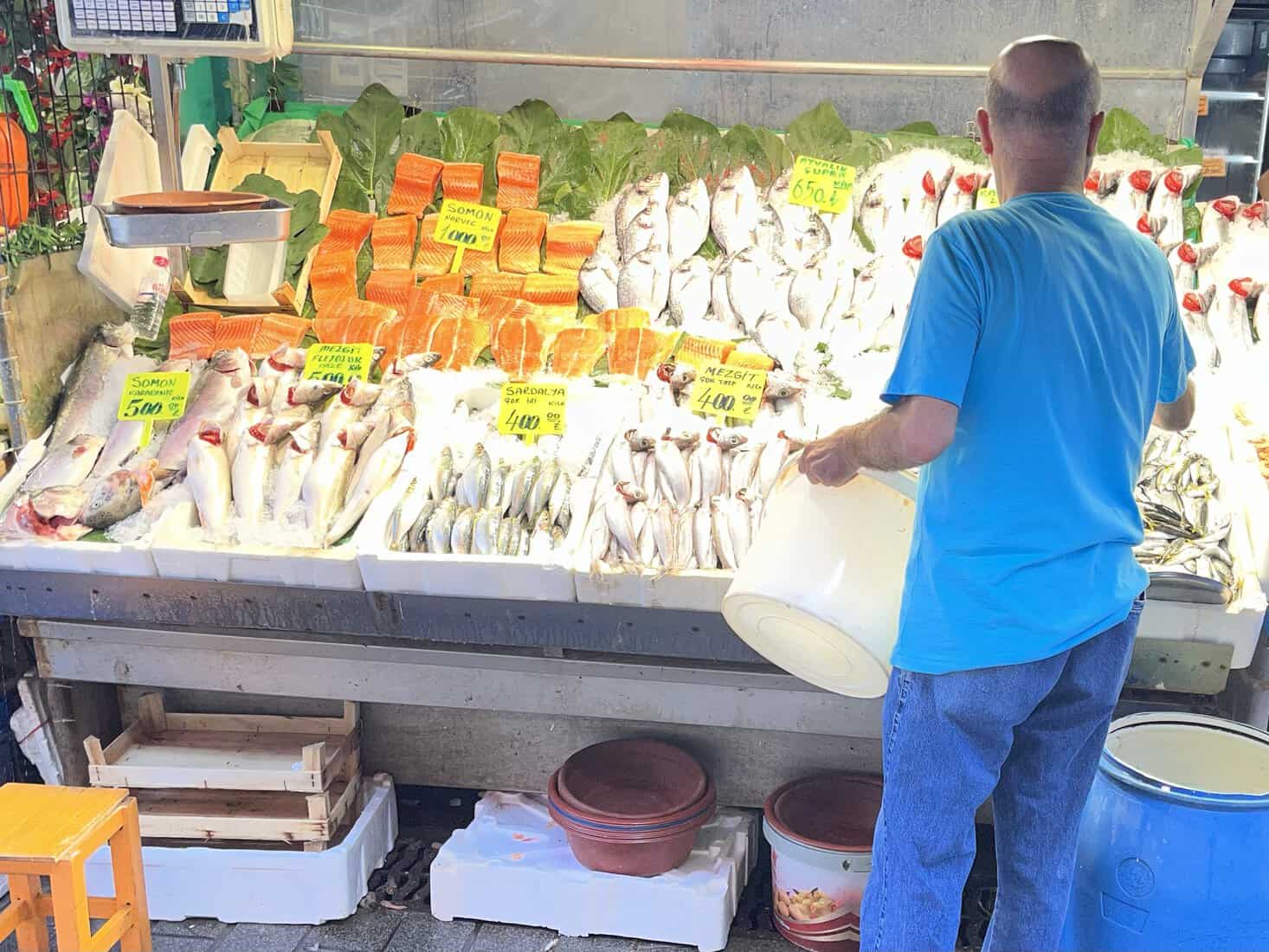
We entered a long, narrow alley lined with local products that make Turkish cuisine one of my favorites. Small stands were filled with crates of fish, from octopus to tuna to sea bass. Huge tubs held olives, some a curious purple color. Big wheels of cheese hung from hooks.
We saw Turkish munchies such as a dozen kinds of nuts alongside sundried sugarless mangos and sundried red apples which popped from shelves like gumdrops.
A long line of small restaurants with blue and white tablecloths reminded me of my many times prowling the Greek islands.
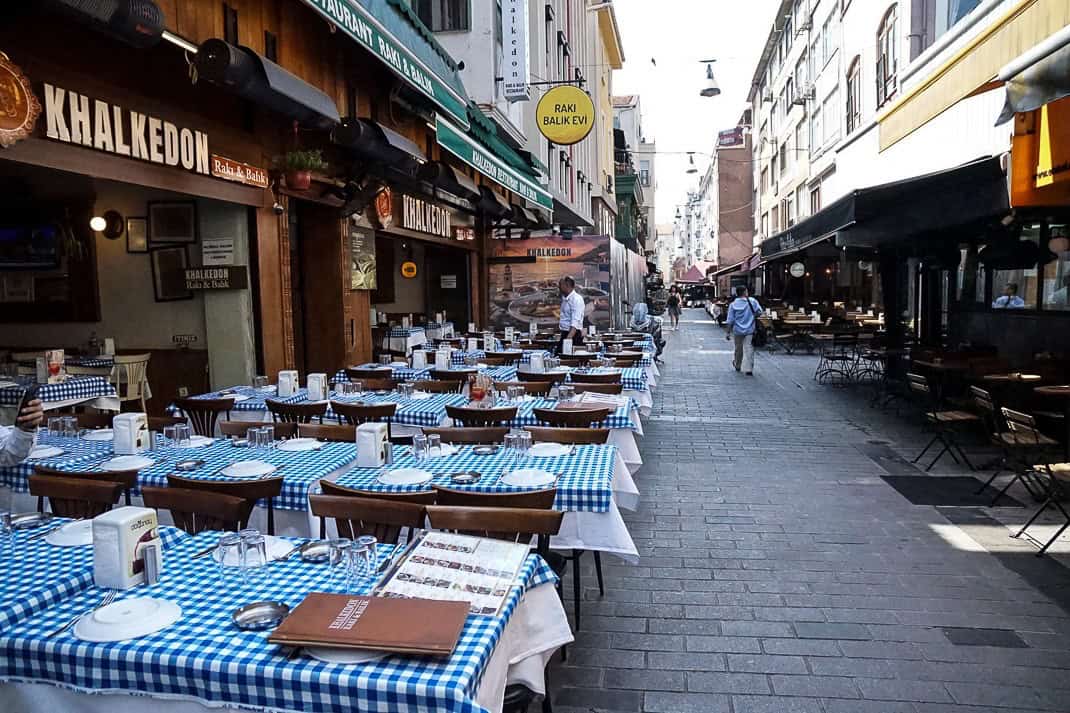
Marina and I looked around and in August, just a few miles from where hundreds stood in line to enter the Blue Mosque, we were about the only tourists. I felt like we’d discovered an untrodden path, even though Istanbul has been a tourist destination since it was called Constantinople during the Roman Empire.
At the end of this glorious local market, we found a string of bars all with tables in the shade under towering pagoda trees. The Old Shark Pub opened only nine months ago and we were the only ones sitting at the outdoor tables.
The young waiter with wavy jet-black hair served me Turkey’s national Efes beer and told me kadi in Turkish means “judge.” In the early years, this neighborhood housed many of the city’s judges.
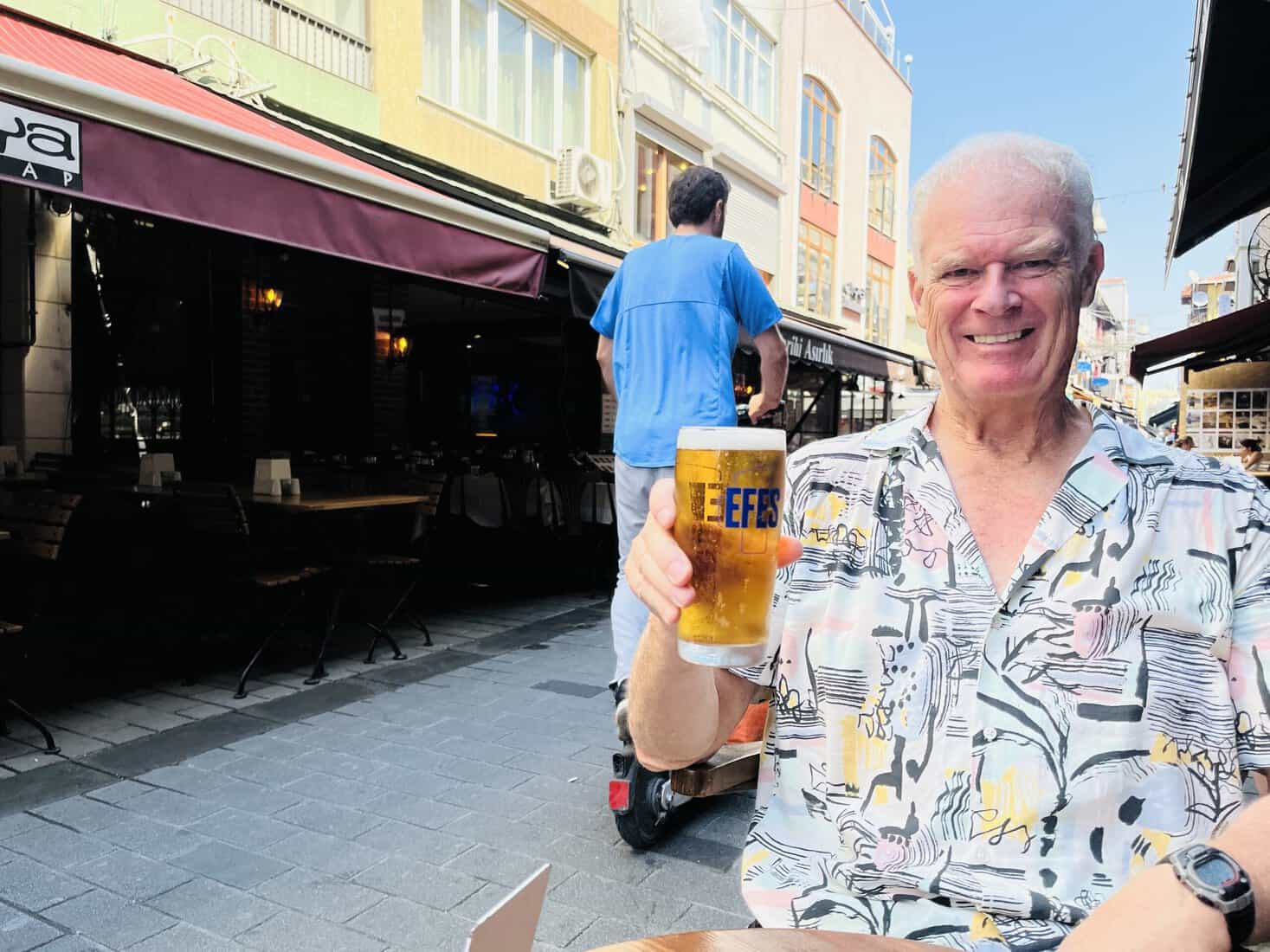
Alihan Bora, 27, is from Bursa, 155 kilometers (95 miles) to the south, but is living on Istanbul’s Asian side. I asked him the difference between the Asian and European sides.
“There’s a big difference,” he said. “The freedom is the biggest. You can see graffiti, different people. It’s part of the culture. You can wear anything, smoke whatever, drink whatever.
“On the European side they judge you.”
We kept walking past a string of boutique shops with DJ house music blaring out of one. We passed a stylish young woman wearing a sweatshirt.
It read “Liberated.”
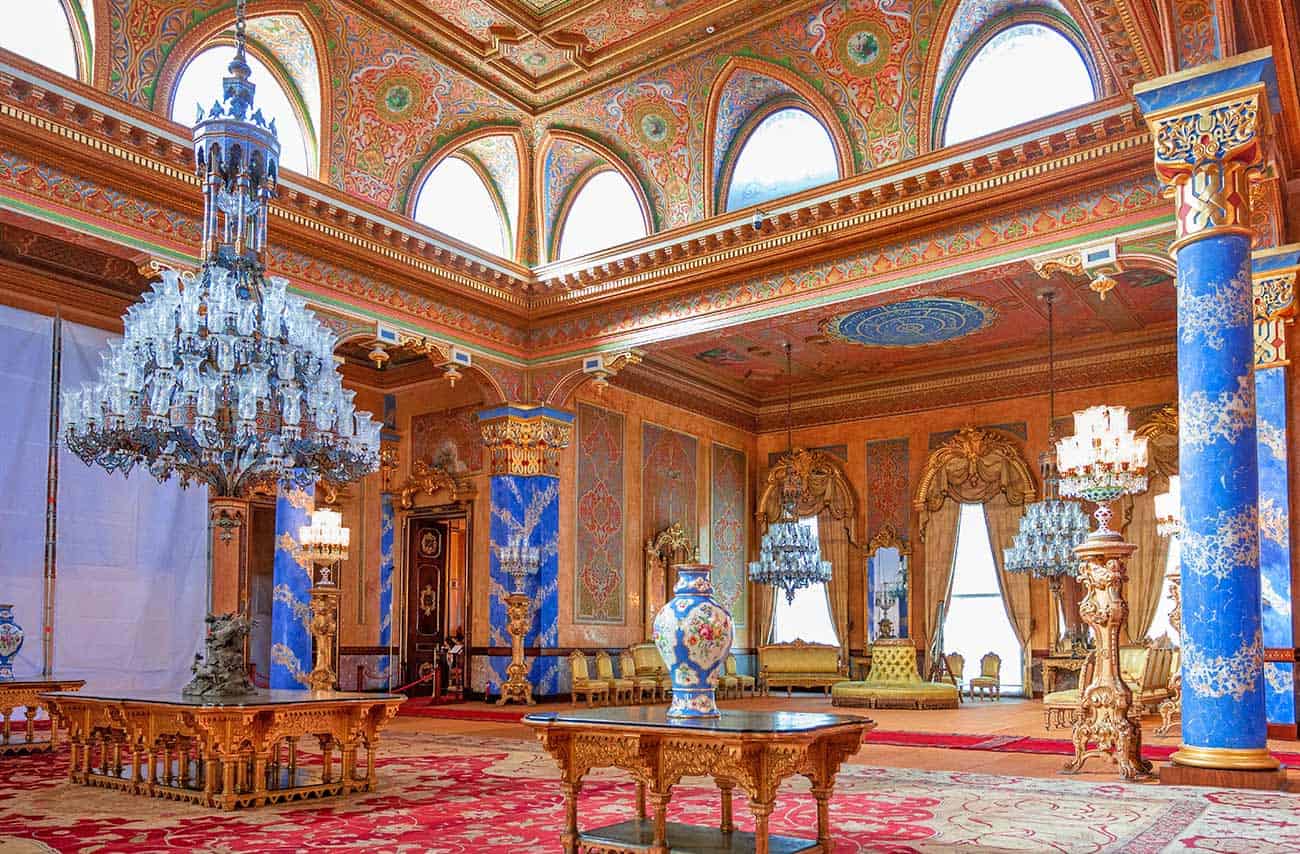
The history
It’s odd that tourists flock to the European side because the Asian shore is home to one of Istanbul’s oldest ancient settlements. Greek colonists founded Chalcedon, on the site of today’s Kadıkoy, in the seventh century B.C. Byzantium, on the European side, was founded later in the same century.
According to the traditional story, the founders of Byzantium, were told by the Oracle at Delphi to settle opposite the “land of the blind.” When they saw the established settlement at Chalcedon on the Asian side and the seemingly superior site across the water, they concluded that the Chalcedonians must have been blind to overlook it.
In 324 A.D., Constantine the Great won a battle of supremacy and six years later renamed the city Constantinople. The Asian side was reduced to a defensive periphery.
The invading Ottomans secured the Asian shore in the 15th century and took over Constantinople, but a large Christian population remained. The Ottomans made the Asian area now called Uskudar into a major religious, residential and administrative hub. It became a meeting place on Muslim pilgrimages to Mecca.
As Constantinople grew on the world stage, the Asian side transformed from a backward military base to a summer retreat. Sultans built coastal residences and palaces such as Beylerbeyi Palace which still stands.
In modern times, the Asian side became the settling spot for immigrants around the region. Greeks, Armenians and others made it a melting pot of cultures, one that has spawned the liberal vibe that remains today.
“In my neighborhood, it was preferred by the minorities,” Omer told me. “I remember that 30 percent of the Moda population were made up of Levantan people, Christian people from Europe who were doing business in Turkey for generations.”
Speaking of Moda, it was next on our route, just a short walk away.
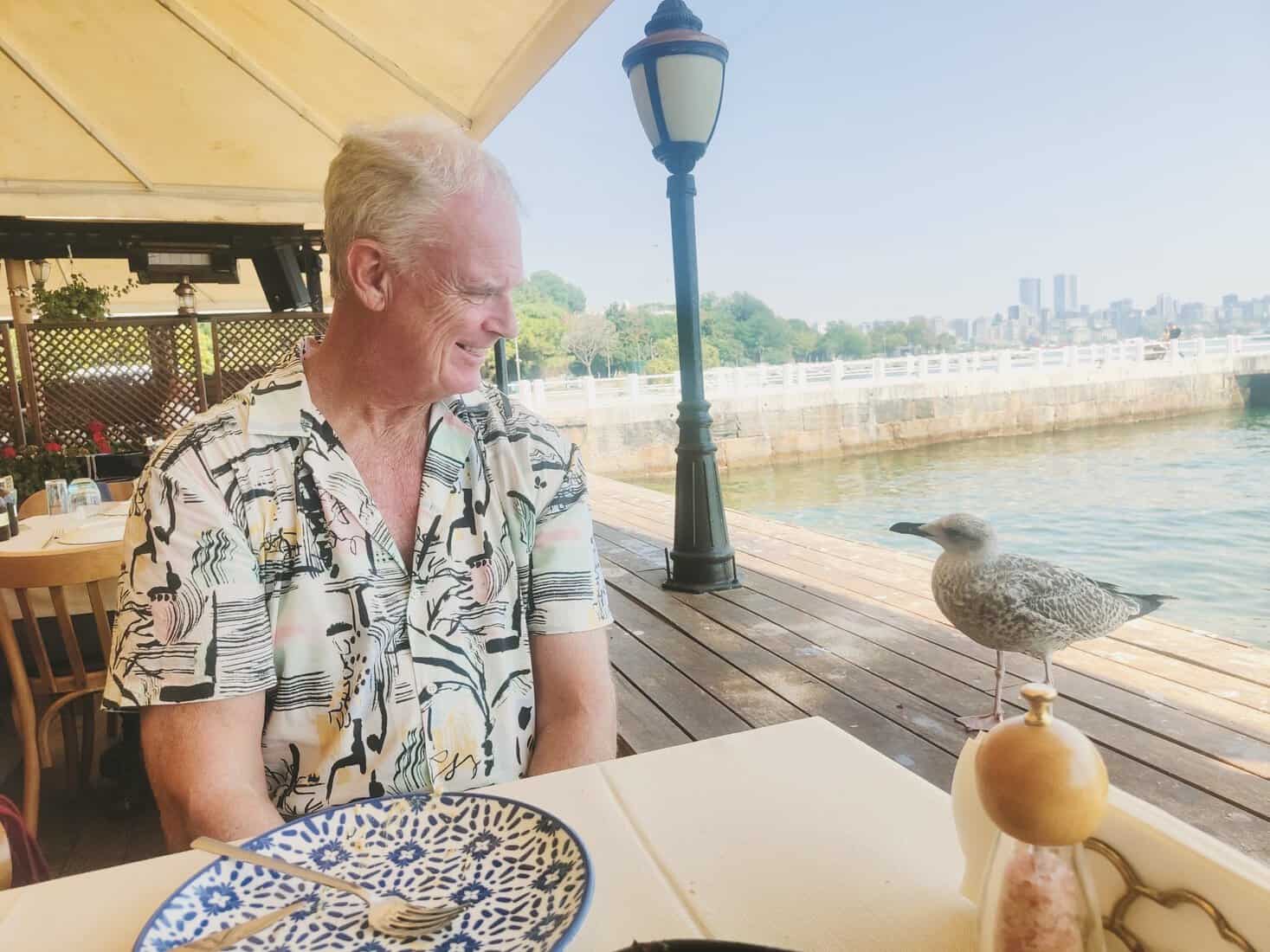
Moda
The walkway headed toward the water was lined with tall trees. Old men sold vegetables out of baskets on the street. The road was spotless, like a polished tourist trap which Moda is not.
In the 19th century, Moda’s place on the water attracted wealthy non-Muslims to build mansions. Other nationalities followed and this area is the most liberal neighborhood in Istanbul, particularly for religion.
Moda and Kadikoy feature a Catholic church, a Greek Orthodox church, a Presbyterian church and an Armenian Apostolic church as well as two mosques. It’s Istanbul’s UN.
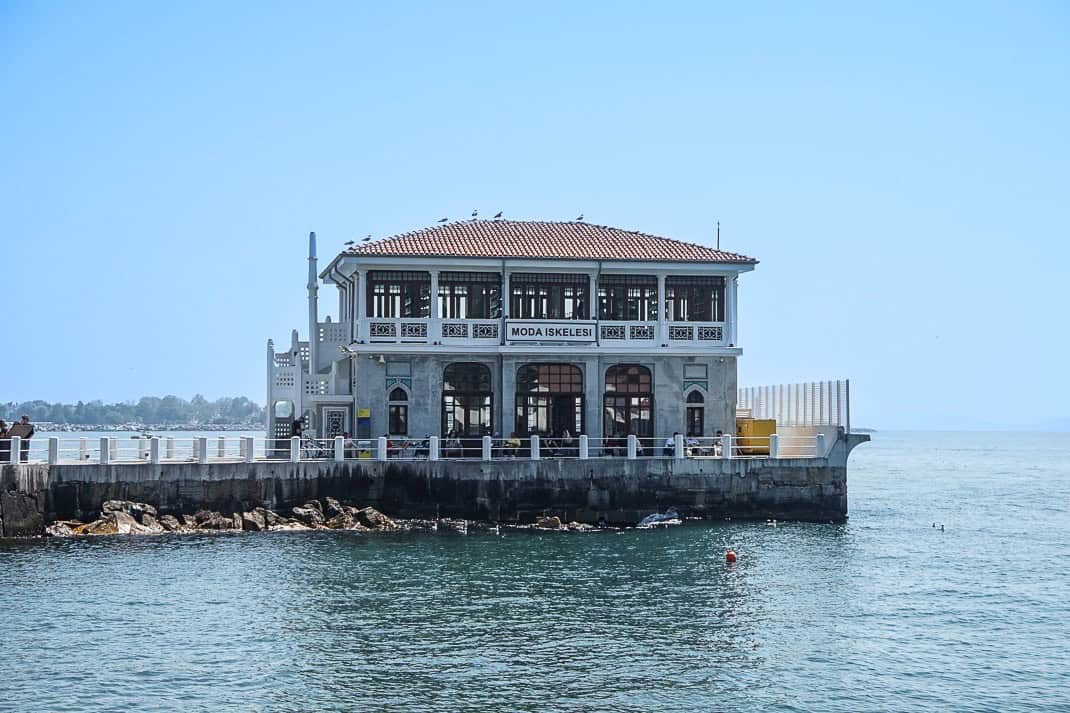
At lunchtime, we found numerous waterside restaurants completely empty. We walked into Kayikhane, a sprawling open-air restaurant with potted plants on a wooden wall next to the tables. An overly eager host ushered us to a table right on the water.
Kayikhane’s menu listed 15 different kinds of local fish I’d never heard of. Seagulls swooped past at eye level, eager for us to order. As we ate excellent fresh fish, a bird sat on the wall and looked at me like a kitten next to an empty food bowl.
We walked off the lunch along the promenade. In the background stood Istanbul’s growing skyline. Groups sat on blankets having picnics. Istanbul’s famed colony of wild cats slept on rocks. We passed a crafts market of homemade jewelry.
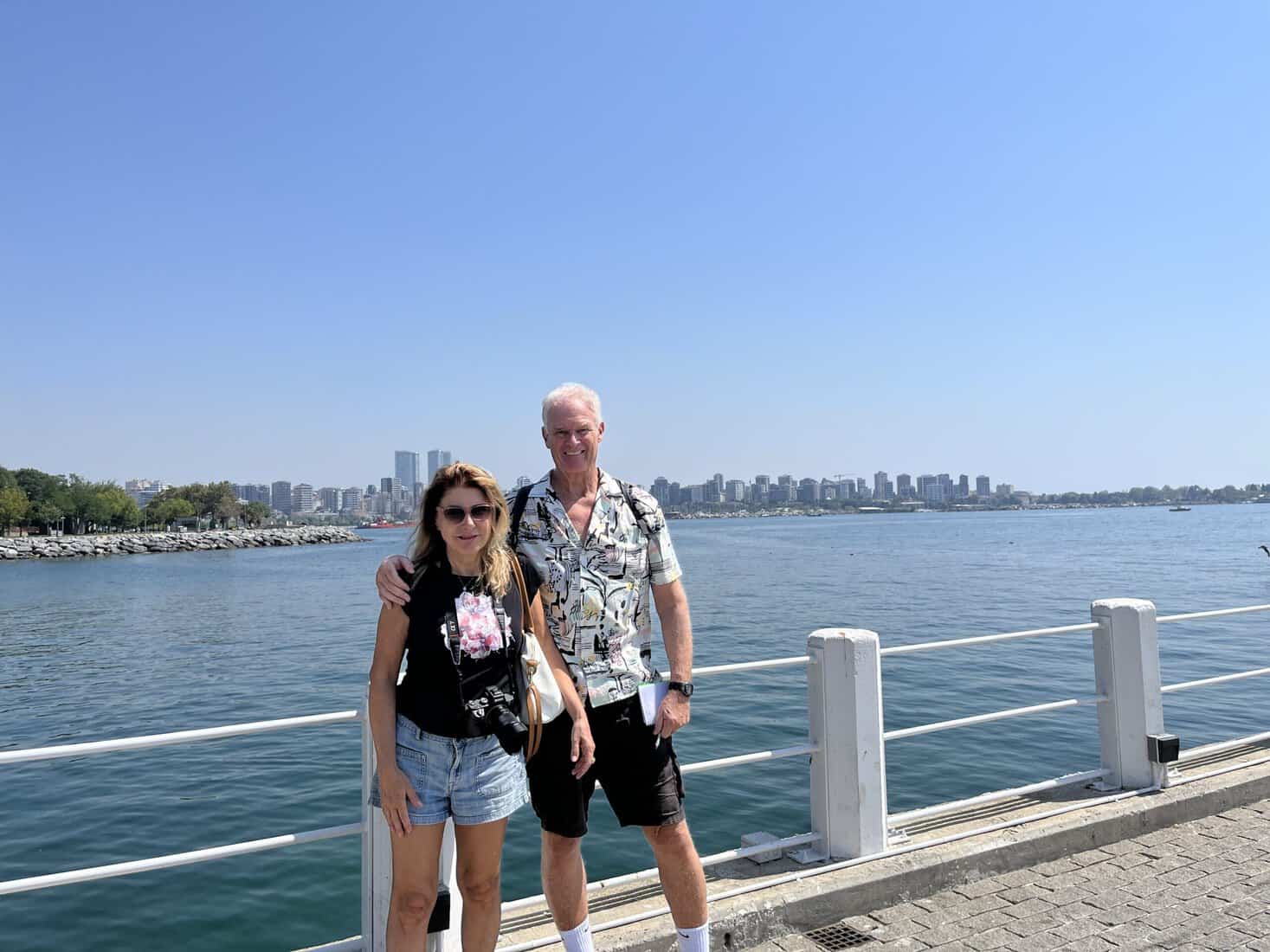
It was so quiet we could hear the ferries plying the water like cats purring in the sun.
Istanbul’s European side seriously did feel like a continent away.
Kuzguncuk
Istanbul’s Asian side is big. It takes up 35 percent of Istanbul’s land area and one third the population. I paid a taxi 600 Turkish lire (about €11) to weave through the narrow inland streets to the neighborhood of Kuzguncuk.
We had saved the best of last.
Kuzguncuk sits on the water with a spectacular view across the strait to Istanbul’s skyline, a weave of skyscrapers, palaces and mosques, their minarets sticking up like colorful matchsticks.
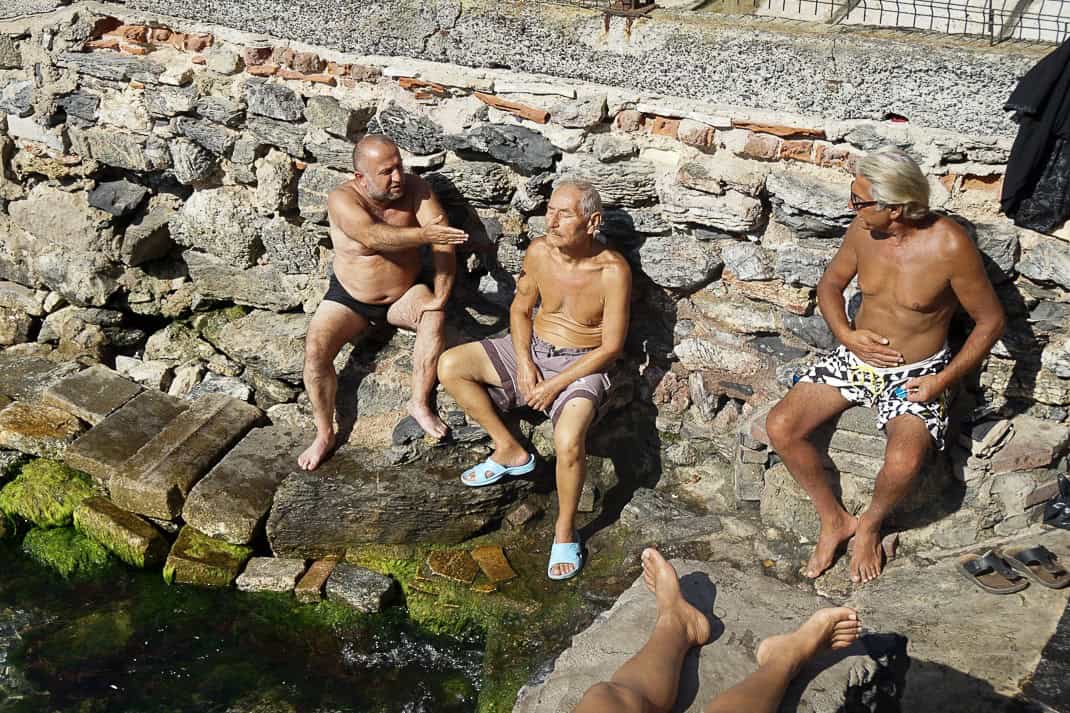
Along the big pier were swimming platforms where men sat on rocks and jumped into the cool strait next to restaurants with views of the water.
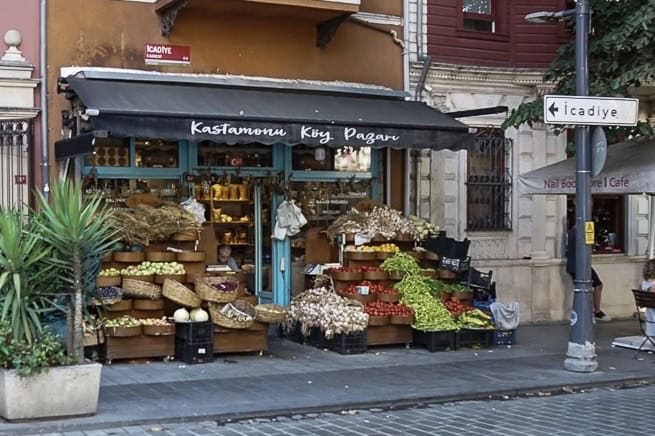
Icadiye Cad., Kuzguncuk’s main drag, is what sold me. It’s a two-lane brick boulevard covered in shade from tall plane trees. We passed art galleries where well-dressed patrons perused local paintings. Trendy cafes had plenty of outdoor tables free. Lazy cats sprawled under trees.
Unlike on the European side where we hear a cosmopolitan list of languages, we heard only Turkish.
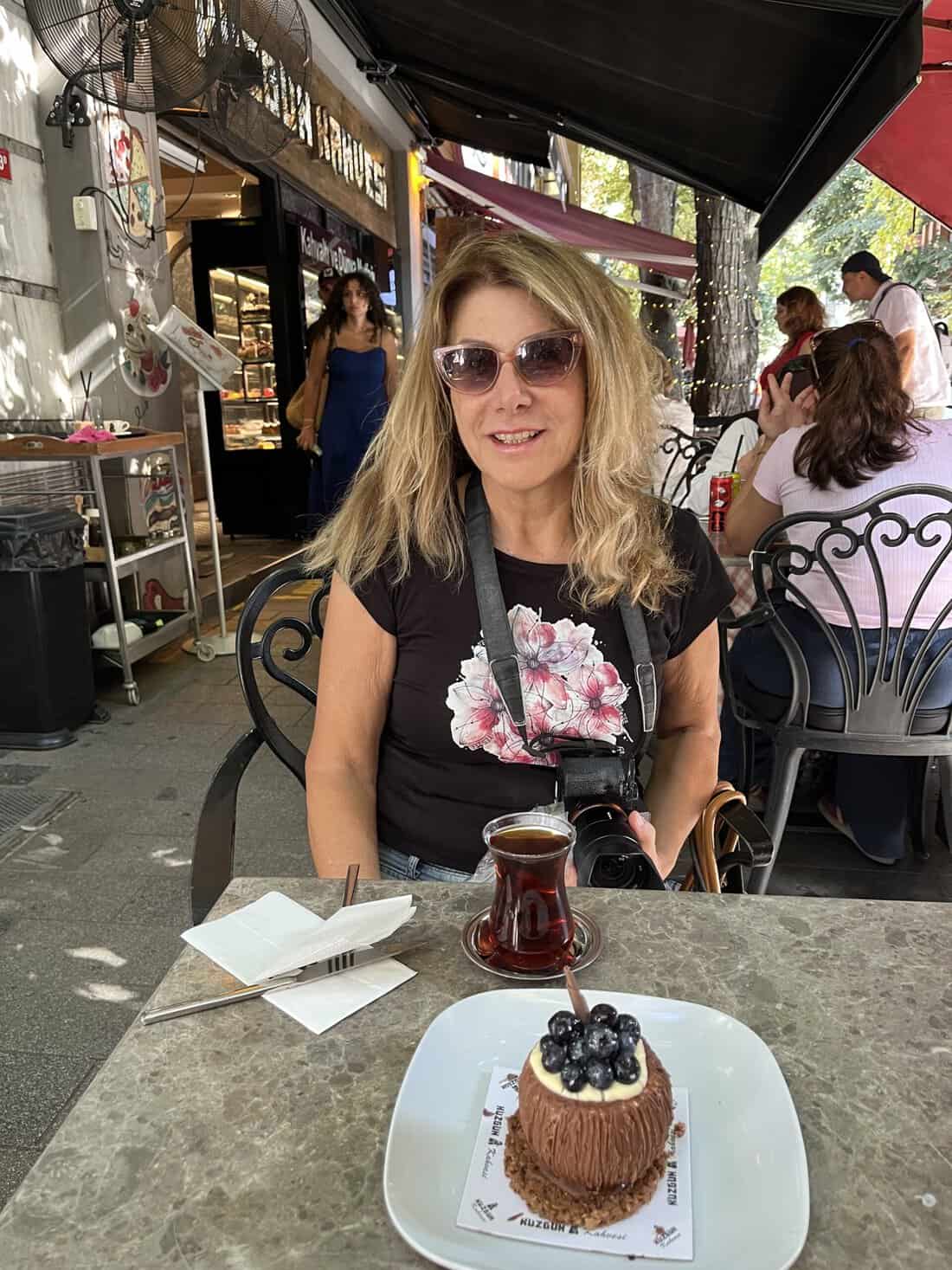
We stopped at Kuzgun Fahvesi, one of hte many ice cream parlors dotting the Asian side. We took a shady outdoor table and ordered something called a chocolate blueberry cream: blueberry ice cream in a solid chocolate ball topped with fat, juicy blueberries.
Three students sat at the table next to us. I interrupted their conversation, much to Marina’s protest, to ask the difference between the Asian and European sides.
“The European side is more crowded and alive,” said Rumeysa Nilsu Gones, 21. “It’s focused on business. This side is easy going and more calm. It’s slower. It’s easy to live here.”
I mentioned that this side feels more authentic.
“Living here is easy because I was born here,” she said. “This side I walk around and find more people like me. The European side has more tourists and nationalities. This is more comfortable.”
I could live in Kuzguncuk. So could Marina. Would I? No. Istanbul had my heart for a few days. Rome has had my soul for 25 years. But I do know one thing.
Next year, we’re staying on the Asian side.
If you’re thinking of going …
How to get there: Too many cities have direct flights to Istanbul to list here. Try to fly into Istanbul Airport, the city’s newer airport built in 2018. The older, cramped, chaotic Sabiha Gokcen Airport on the Asian side is farther from the city center.
Where to stay: Gulsoy Hotel, Sehzadebasi Cad, No. 9, 90-212-512-5842, grandhotelgulsoy.com, info@grandhotelgulsoy.com. Modern four-star hotel in the Fatih district on the European side. Great rooftop bar with view of the beautiful Sehzade Mosque across the street. I paid €270 for three nights including breakfast.
Where to eat: Moda Kayikhane, Caferaga Mahallesi, 90-05-44-471-7918. Beautiful, sprawling restaurant with open-air tables right on the water. I paid €83 for lunch including appetizers and wine.
When to go: July is hot and humid with average highs of 85 and lows of 69. January is the coldest at 48-37. The last week of August was in high 80s and 90s.
For more information: Istanbul Metropolitan Municipality Eminonu Contact Point, Hobyar, Iskele Yolu No. 29, 90-212-455-3296.
(Next Tuesday: southeastern Turkey, the former war zone makes a comeback.)
September 9, 2026 @ 1:01 am
Great report John! We were just in Istanbul this past June and it has to be one of my favorite cities. Amazing how it literally and figuratively straddles two different worlds. On the subway, we saw girls in mini-skirts who looked like they came off a Paris runway standing next to another group of girls in veils with shoulders & legs fully covered.
Fortunately, we also spent an afternoon in Kadakoy, and it is just as you described. Like you, we also skipped the expensive Bosporus cruises and opted for the public ferry which provided the same excellent views and experience. And as you said, Kadakoy is kind of away from the main tourist path. Not a Yankee’s cap in sight. We had an excellent dinner at a lokantasi in Kadakoy and wished we had more time to enjoy another meal (I really wanted to try the Midyeci which seemed to be on every street corner, but thought the better of it. Mussels from unknown origin sitting out in the sun all day probably not the best choice for a snack).
September 9, 2026 @ 9:57 am
Thanks, James. We’re making Istanbul an annual stop along with Skopelos, Greece, in the summer. I’m already excited about a hotel room on the Asian side.
September 9, 2026 @ 9:25 am
Hi John, and greetings from Ascoli Piceno. My wife and I went to Istanbul for the first time last November. We stayed on the Europe side. We liked some of it but were taken aback by the intense crowds, and the hills! But we did have a life-changing event take place at the Anglican church in the Beyoglu neighborhood. The kindness of strangers was demonstrated there by the young organ master at that church and his wife, who befriended us at a time when we needed it most. They have since become great friends and came to stay with us in AP in January! Their first time traveling to Italy and they chose to come here to be with us. We can’t wait to return to Istanbul and see that amazing city with them and through their eyes.
September 9, 2026 @ 9:55 am
Great story Steve, but what was the crisis with which the organ master helped?