

Italian healthcare: Hip replacement again reminds me why I live in Italy
The sentence hit me like a hypodermic needle through my ear.
On July 25, I saw an orthopedic surgeon about a sore back and a strained abductor muscle which had lingered too long. I don’t know if my weight training or six sessions of Pilates had tied me into a 6-foot-3 knot but I could barely put on my shoes and socks.
I had watched the British Open on July 20 and wasn’t as impressed with the golfers’ 350-yard drives as I was their ability to easily pick up their ball.
I was getting old before my mirror and needed a reverse pivot. Fast.
I sat in the surgeon’s office and told him my symptoms. I showed how I struggled to touch my right foot. He nodded his head through my entire spiel.
“You need a hip replacement,” he said.
Um, what?
Dr. Daniele Caviglia didn’t need an x-ray. He does about 500 hip replacements a year. But we took one anyway. Confirmed. My hip had a major league case of arthritis. My cartilage was gone.
A thousand negative thoughts ran through my mind. The long rehab. The cost. The pain. Then another thought erased all the others. It made me smile.
I live in Italy. The Italian healthcare system will take care of me.
That it did. While Pres. Trump still hasn’t developed a national healthcare plan for the United States after nine years and the No. 1 cause of bankruptcy in the U.S. is medical debt, Italy’s system that began in 1978 remains one of the best in the world.
Dissenters can falsely claim Italy’s system is socialism, spitting out the word as if Karl Marx’s photo adorns every Italian hospital, but 11 days after surgery I’m already walking without crutches or a limp.
And I didn’t pay one centesimo.
Granted, my Belgium-based insurance paid for it. But I had an option to get the operation for free even without insurance. Italy does that for you.
In my 11 years retired in Rome, I’ve written a lot about the glories of Italian healthcare. I went blind in my right eye eight years ago. I had Dupuytren surgery on my right pinkie last year. I chronicled Italy’s fight through the epicenter of the Covid epidemic. I even quoted an American doctor who pointed out bugs in the system.
The numbers
But as I write this with no pain and a physical therapy program that will allow me to still make my annual trip to Greece Aug. 31, I want to again compare Italian and American healthcare systems. While rankings differ depending on the agency, Italy is clearly near the top and the U.S. is near the bottom.
To wit:
- In one of the few world rankings that goes beyond the top 10, Italy’s healthcare system was ranked 17th and the U.S. 69th, according to the Legatum Institute, a London-based think tank that evaluates world healthcare.
- Although it no longer ranks healthcare systems, the World Health Organization ranked Italy second in the world behind France in 2020. The U.S. wasn’t listed but among 10 high-income countries, it was ranked last.
- According to the 2024 Bloomberg Global Health Index, Italy is the second healthiest country in the world behind Spain. The U.S. is 35th.
- Italy is seventh in the world in life expectancy at 84.0; the U.S. is 48th at 79.6.
- While my hip replacement cost €22,000, the average hip replacement in the U.S. is $23,000-$74,000 and more for more complicated surgeries.
“Historically, in Europe in general and Italy in particular, we have been pretty proud of being able to provide basic healthcare for the general population,” said my surgeon, Dr. Nicola Santori. “It has been working very well for the last 50 years.”
At 69, I feel pretty good about living past a vacation in Greece.
Italian healthcare: public vs. private
After getting the news, just out of habit I got a second opinion. My family doctor, whom I visit for free and is always available around the corner from my flat, agreed I needed surgery. He recommended I see Santori, the head of the Italian chapter of the European Hip Society.
While it sounded like a middle-aged dating site, I knew this guy was at the top of his field. His assistant, Dr. Salvatore Tecce, again confirmed the need for an operation and I had a choice where to have the surgery the following Wednesday, only five days after my diagnosis.
I chose Santori’s European Hospital primarily because it’s a 20-minute bus ride from my home and Caviglia’s Ars Medica clinic is 80 minutes away in the far north of Rome. It’s a hospital versus a clinic. We set a time for my arrival at 7:30 a.m.
But that Monday while I did my pre-surgery bloodwork, x-rays and ECG, I hit a small insurance snafu. My Expat & Co., insurance out of Belgium, which has been excellent for 10 years, sent a stunning email.
They wouldn’t cover the €22,000 surgery bill. They said my policy covered me for accidents and disease/illness. Degenerative joints due to aging don’t qualify as a disease. I suddenly felt abandoned.
While disappointed, I knew Italy gave me an out. Its public health system, Servizio Sanitaria Nazionale (SSN), would do it for free. Because it was non-emergency, I just had to wait. Santori said he could do the same surgery through the public system instead of private in September or October.
I could struggle to put on shoes for two more months to save €22,000.
But my insurance company relented. Santori’s office wrote three letters pleading my case, saying osteosclerosis was indeed a disease. That Wednesday, Expat emailed me saying they’ll cover me and to get healthy soon.
We set the surgery for that Friday, Aug. 1. One week after my diagnosis, I would get a new hip.
The surgery
Hip replacements aren’t nearly as complicated as knee replacements. But they’re crucial. Santori told me if I left it, the eventual pain would be unbearable and the required surgery more complicated.
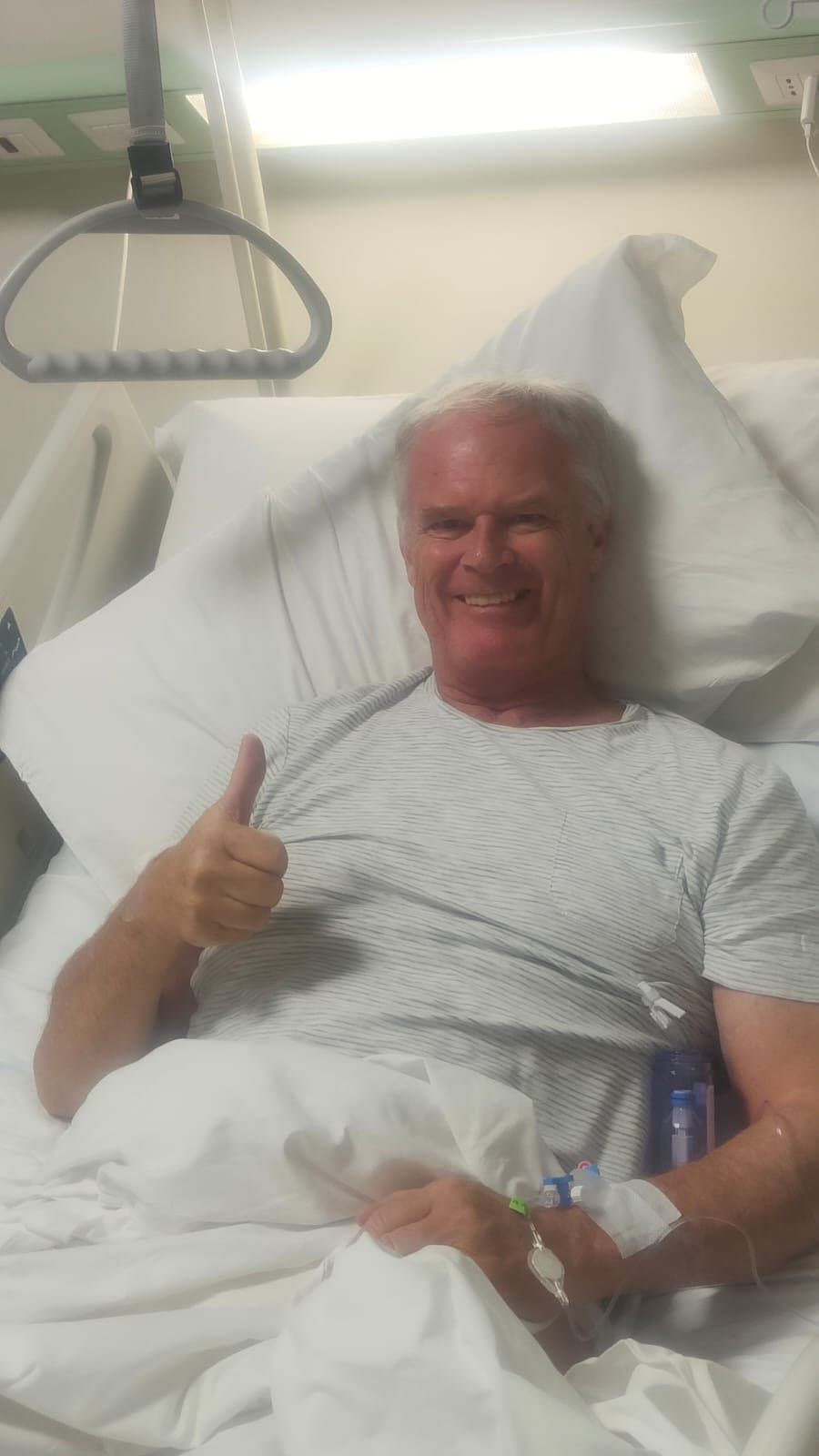
He replaced my hip with a titanium joint about 4 inches (10 centimeters) long. The surgery took about an hour. Not that I would know. The last thing I remembered was getting a shot of anesthesia and – boom! – waking up. It was like a colonoscopy except not as gross.
Lying in the bed where I would remain for three nights, I was numb from the waist down. I suddenly had even more sympathy for paraplegics. For about five hours, I couldn’t move my toes or my legs.
Even more strange, I couldn’t feel my dick, even when I touched it. It was just a lifeless blob of clay, useful only for the doubtful act of urinating.
That became my biggest challenge. Forget my hip. More than that, I needed “Big Al.” To urinate, the nurses gave me an oblong plastic bottle with a long spout pointed up at a 90-degree angle. It’s called a pappagallo, as it’s kind of shaped like a parrot.
I used it to pee in from bed which is a unique trick while laying on your back. It’s like shooting a free throw with your back flat on the court. Good aim is imperative. So is patience. It takes forever.
Once I got on my feet and could walk to the bathroom, I realized how much I underrated the glory of gravity.
Life in the hospital
My first nights in a hospital room were blissful. I was in almost no pain. Marina was an angel. Besides driving me to surgery, she brought me snacks, extra clothes, newspapers and kept me company during meals.
I had a three-sided walker which I used for the bathroom on Day 2. I read. I took notes. I watched Netflix. It was great for my Italian. Not a single nurse spoke more than a couple words of English.
I read Facebook messages from 137 well wishers. One American reader wrote of my quick surgery, “Wow! I blew out my knee on Tuesday and am still hoping to get an ortho to see me four days later. I kind of wish this had happened in Portugal in June. US health system is crap.”
Many American readers were more interested in Italy’s hospital food than its healthcare. While the food wasn’t straight out of Renato e Luisa, our favorite restaurant in Rome, it wasn’t Red Cross K rations, either.
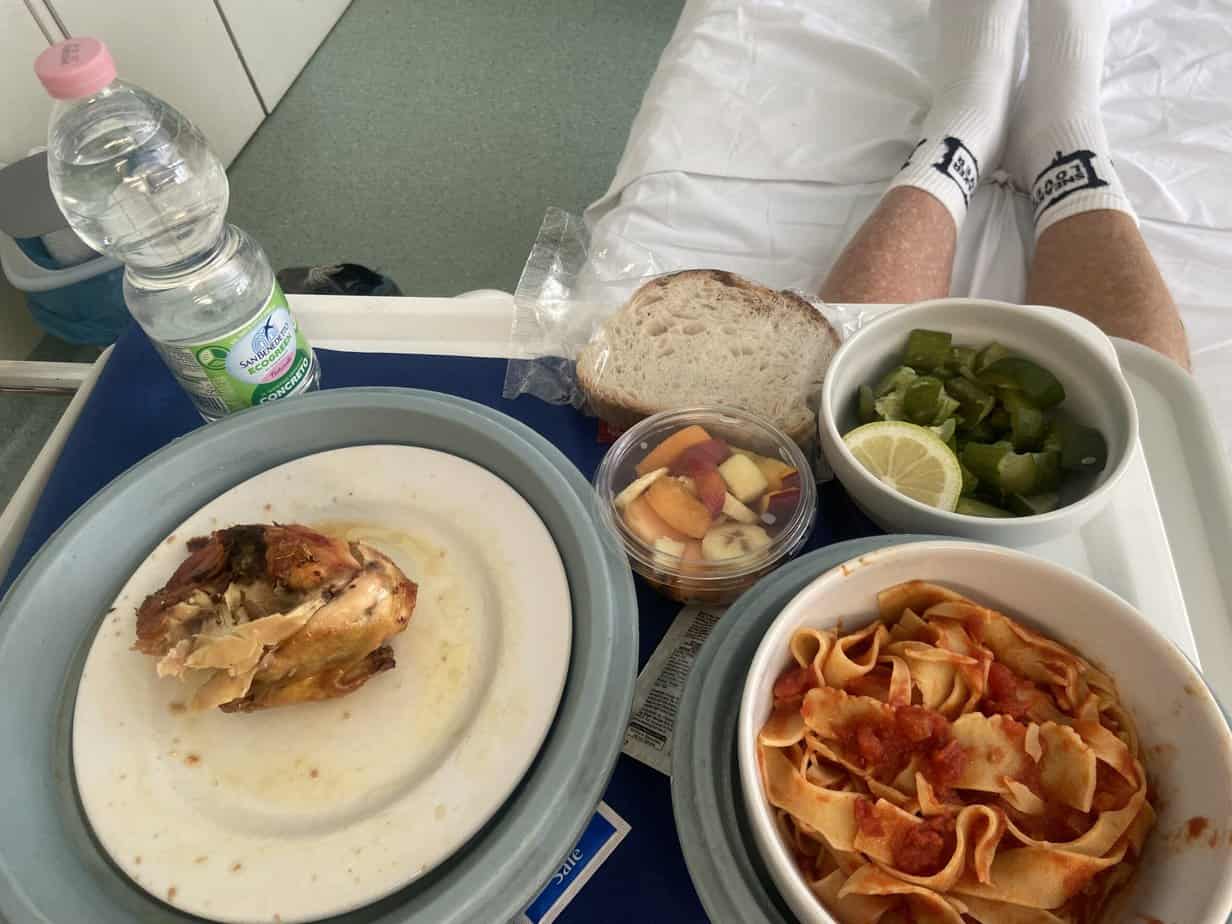
Some sample meals:
Minestrone soup, mashed potatoes, fruit salad.
Grilled chicken chunks, ziti pasta in tomato sauce, chicoria (an Italian spinach I gladly pitched to Marina).
Tuna, green bean and potato casserole, fruit salad, vegetable soup.
Lentil soup, Caprese salad, fruit salad.
Before bed they gave me a painkiller I didn’t really need and a magical serum that made me sleep like a baby waiting to walk for the first time instead of a 69-year-old hoping to put on shoes again.
Physical therapy
Since returning home Aug. 4, my physical therapy has been ridiculously easy but miraculously effective. Twice a day, under the supervision of my physical therapist, Simona Di Giacomo, I do a series of simple movements of my right leg. I walk up and down one flight of stairs. I walk around my adjacent block.
Every morning my range of movement has improved. I walk without crutches and with no limp and no pain. I’m not even that slow anymore. I’m also taking more pills than a Hollywood housewife and must inject myself every night with an anti-blood coagulant which reinforces my lifelong theory that shots really, really suck.
My doctors say I am ahead of schedule. Rehab takes about 20 days but putting on shoes may take two months. Right now, to put on my right shoe I use a shoehorn the length of a samurai. But I can finally touch my foot. My toes are the next step.
Forza salute italiana! (Go Italian healthcare!)
Santori interview
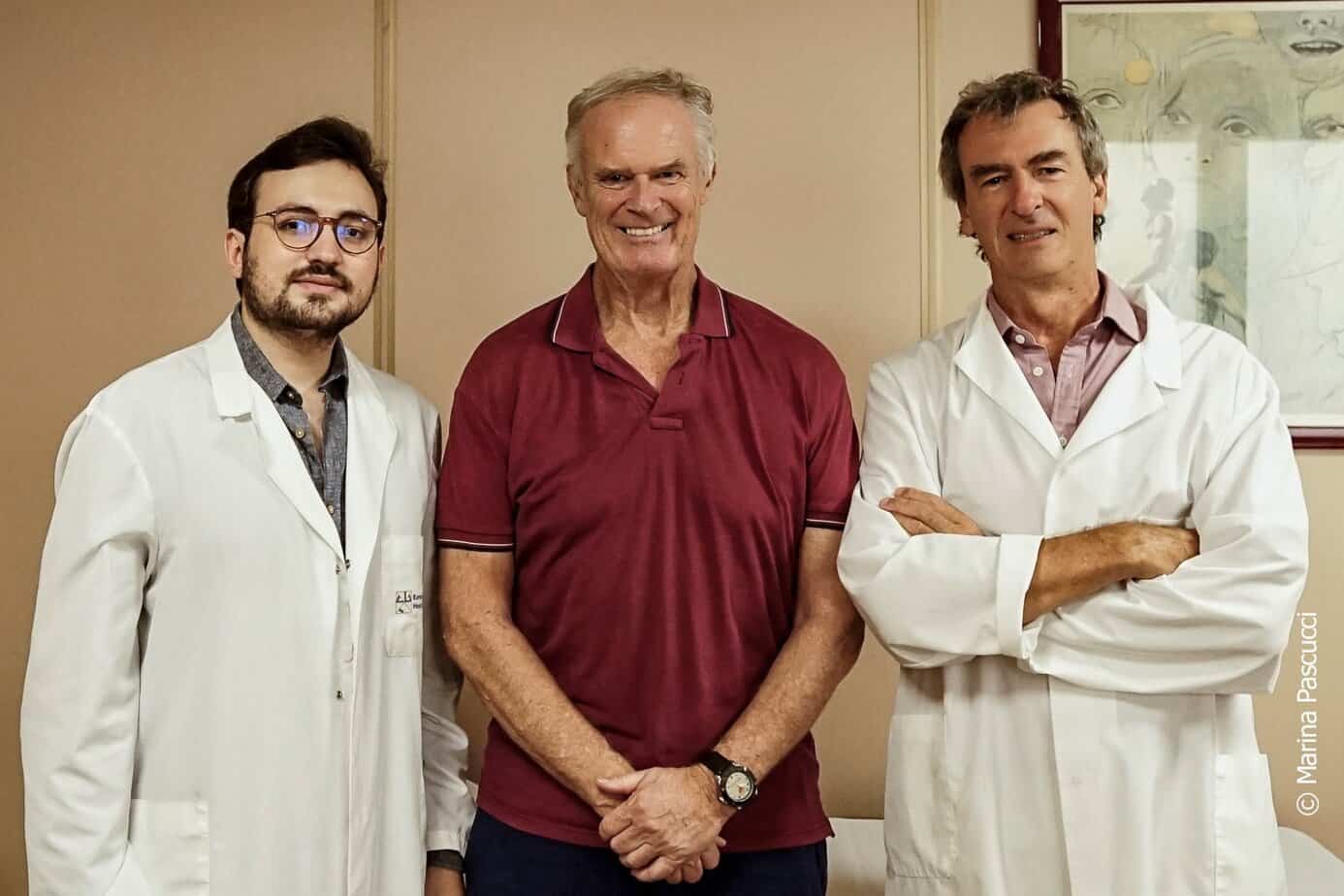
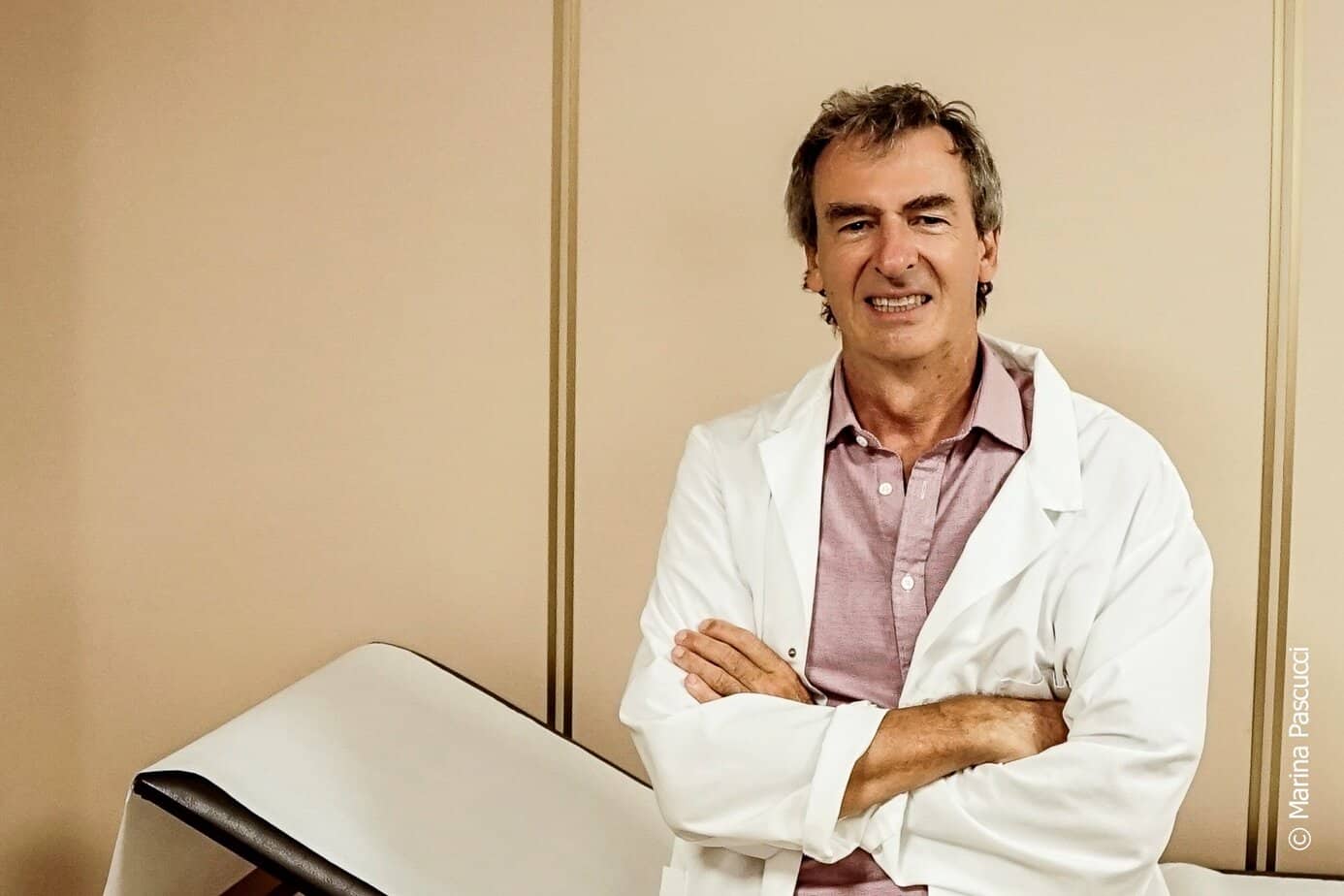
I wanted to learn more about the healthcare system that is prolonging my life in retirement. Marina drove me back to the hospital Saturday and I sat down with Santori. The 60-year-old Roman has been a surgeon for 35 years and has one of the top reputations in Italy.
He talked about the change in Italy in the 1960s when many hospitals that were owned by the Catholic Church moved to the national healthcare system.
What shocked me were the salaries these supreme doctors and nurses make. He said the average surgeon’s salary in an Italian public hospital is about €3,000 a month. A family doctor makes €4,000-€5,000 a month depending on their number of patients. Nurses average €1,600-€1,800 a month, he said.
“Everybody gets paid very little,” he said. “Unfortunately, there is a tendency for nurses and doctors to move abroad because of this. This is a huge problem.”
American surgeons average between $400,000-$500,000 a year.
Italian healthcare is facing another big problem. Prime minister Giorgia Meloni recently warned Italians that the public healthcare system is bursting at the seams. She urged people to go the private route when possible.
“The more things get complicated and sophisticated in medicine, the more they become expensive,” Santori said. “Obviously, to provide top healthcare, it’s becoming more and more demanding for most countries. The key point is to identify the level of essential care that is provided by the government.
“I don’t think in the future the system will be able to provide everybody.”
I asked him what he thought of the American healthcare system. The Commonwealth Fund looked at 10 high salaried countries: Australia, Germany, Netherlands, New Zealand, Sweden, Switzerland, United Kingdom, France, Canada and the U.S.
The U.S. was last in health system performance, affordable healthcare, healthcare access, equity and life expectancy but first in spending.
“It’s too much focused on money,” said Santori who has traveled extensively in the U.S. and speaks fluent English. “It doesn’t really care about the basic needs of the patients. That’s a big problem.
“For what concerns your operation, hip replacement, the U.S. does them in day surgery. You’re gone in a day. The insurance pays the hospital a fixed amount of money. Then the hospital talks to the doctor and together they decide the way they can get the most money for themselves.”
The U.S. sells this as an improvement. It’s not. I was happy to stay for three nights. I can’t imagine shuffling around my apartment that second day on a three-sided walker. I have no long hallway to practice walking.
What if I developed a complication the first three days? I’d be stuck.
Italian healthcare isn’t perfect. But when you’re a 69-year-old American completing the back nine of your life and looking smack dab at the 19th hole, it’s very much valued. Hopefully, I won’t see the inside of a Rome hospital anytime soon.
Now excuse me while I go for my daily walk.
August 12, 2025 @ 1:42 pm
Lovely piece; I very much enjoyed reading it. Funny too!
Hoping you are all back together again (like Humpty Dumpty) and enjoying some excruciatingly hot weather in Greece somewhere.
August 12, 2025 @ 1:59 pm
Thanks for the kind note, Caroline. The Greek Isles are never as hot as Rome in summer.
January 2, 2026 @ 8:10 pm
I’m an 83-y-o living happily alone in Treviso for 3 years and am sure I need a new left hip. Your story brings great hope. If a new hip is needed, my concern is immediate aftercare. Friends can only do so much, tho, and I have 1 flight of stairs to my elevator. The medical system is a mystery in any country, and overall so much better here, as is quality of life (excluding bureaucracy).
January 5, 2026 @ 9:18 am
My European Hospital assigned me a physical therapist who came over twice a week to exercise me and take me for walks. She taught me how to go up and down stairs with crutches. The physical therapy helped tremendously. I was good as new in less than a month. Wherever you get your hip replaced, ask for a physical therapist. And every country has bureaucracy. Ask immigrants in the U.S. Well, maybe that’s a bad example.
August 12, 2025 @ 2:05 pm
Thank you for a very informative and entertaining article.
Salud!
August 14, 2025 @ 8:27 am
Thanks, Bill. It’s one reason I’ll never leave Italy.
August 12, 2025 @ 3:25 pm
Glad all went well.
I had hip replaced in USA five years ago. Having surgery and leaving same day was an option. I chose one night for same reasons you went three. My concern of complications. Gratefully I had none.
I paid $200 for surgery, nothing for physical therapy. Surgeon visit prior to surgery was $25. Primary is $0. Good insurance which is not much a month.
I’m not pumping up USA health care. But this experience was great. I have had many bad experiences with healthcare here. Scary
August 14, 2025 @ 8:26 am
So your insurance paid all but $200 of your surgery? I’ve never heard of that. How? But I’m confused. You said you “… had many bad experiences with healthcare here.” “Here” meaning U.S. or Italy?
August 12, 2025 @ 3:28 pm
Thank you for this. Keep on keeping on.
Another difference is Italian health care is guaranteed in the Italian constitution.
• Article 32 of the Italian Constitution says:
La Repubblica tutela la salute come fondamentale diritto dell’individuo e interesse della collettività, e garantisce cure gratuite agli indigenti.
(“The Republic safeguards health as a fundamental right of the individual and as a collective interest, and guarantees free care to the indigent.”)
This constitutional principle is the legal foundation for Italy’s Servizio Sanitario Nazionale (SSN) — the national health service created in 1978.
It ensures universal coverage for all residents, with services largely funded by taxation.
So, while the exact services and co-pay levels (ticket) can vary by region, the right to health care is enshrined at the highest level of law.
At least for t now.
August 14, 2025 @ 8:25 am
I didn’t know this, Susan. I would’ve included that in my blog. Thanks. Yes, Italians worry that Meloni may change the healthcare system before it overloads. The salaries here in Italy aren’t high. If they get rid of public healthcare, a lot of people are going to die, just like in the U.S.
August 12, 2025 @ 11:35 pm
Ciao John,
Great report on the Italian Health system. I was very impressed with your surgeon writing to the insurance company and challenging their policy. Brilliant and correct.
I cannot believe the eye watering cost of a hip replacement. It makes the Australian system seem quite reasonable.
Your recovery is sensational and I’m looking forward to hearing about your Greek holiday.
Joanna
holiday in Greece
August 14, 2025 @ 8:22 am
Thanks, Joanna. How much does a hip replacement cost in Australia? How is the healthcare system there?
August 13, 2025 @ 5:48 am
Very interesting! Thank you for sharing your story and glad you are feeling so much better. 🙂
August 14, 2025 @ 8:21 am
Thanks, Brett. Getting old sucks. Just make sure you do the repairs.
August 20, 2025 @ 9:40 pm
Good news, John. Glad you were able to get the surgery so quickly and are mending well.
We were just in the Dolomites and Slovenia, but did not make it down to Roma this trip. Next time!
Jeff
August 21, 2025 @ 8:52 am
Thanks, Jeff. I walked seven kilometers yesterday when we went to Gaeta. I’ll celebrate once I can put my shoes on.
September 11, 2025 @ 7:06 pm
John, I would have wished you fast recovery, but it was too speedy and I didn’t make it on time