


Barolo and global warming: It’s bringing my favorite wine to the table faster but purists may balk
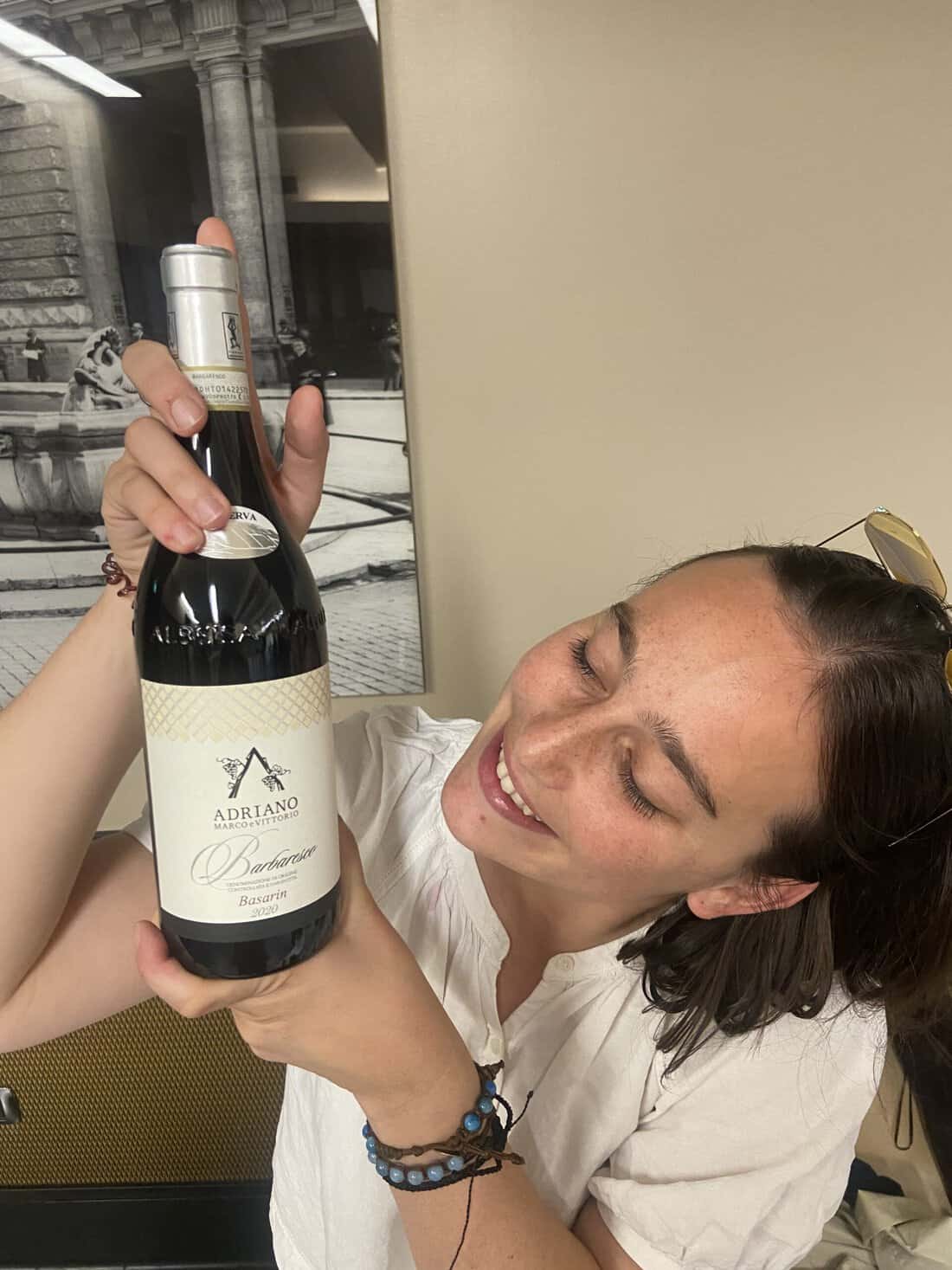
The three things in life I hate most are war, animal abuse and dancing. A close fourth – depending on the music – is global warming.
Let’s count all it has affected. Human lives. Animal species. Coral reefs. Icecaps. My necessity to take three showers a day here in Rome every summer.
However, is it possible that global warming has positively affected something dear to me as family and friends and the beauty of the Italian countryside?
Barolo wine.
It’s true. Global warming has affected my favorite wine in the world. I recently attended Go Wine’s wine tasting event of Barolo, Barbaresco and Roero wines at the Starhotels Metropole near Rome’s Termini train station.
I spent a couple of hours tasting Barolos from all over the Piedmont region. I don’t know if I could tell a big difference in taste but the wine makers say the change is in the aging. And most say the change is for the better.
“Before you had to wait 10-15 years to drink a very nice bottle,” said Michela Adriano, owner of Adriano Marco & Vittorio winery. “Now you wait two years and you drink an amazing Barolo and an amazing Barbaresco.”
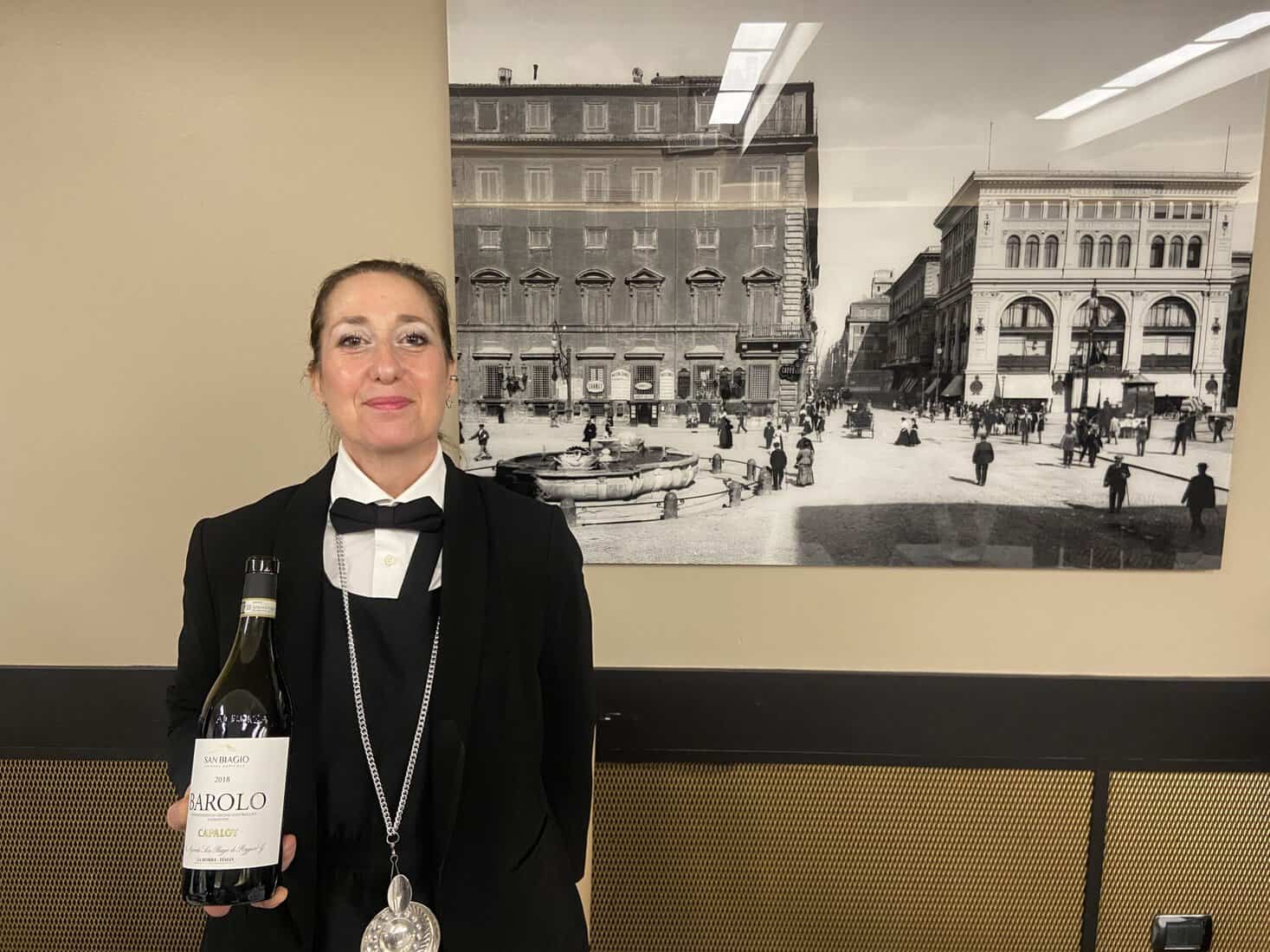
Global warming’s effects
You don’t need to be a biologist or left-wing environmentalist to understand it. According to the Intergovernmental Panel on Climate Change, Earth’s temperature has increased by 2.0-2.3 degrees Fahrenheit (1.1-1.3 Celcius). That is since the late 19th century but the majority since the 1970s. This last decade has been the hottest on record.
The hotter temperatures mean winemakers must harvest grapes in September instead of October, as has been the custom for centuries. The maturation in the wine process occurs earlier. Thus, the wine is ready to drink earlier.
“It is very tied to the climate,” said Maddalena Dioli, a sales rep for Tenuta Carretta winery. “The Barolo from 2022 has very high concentration. It is super fruity and ready to drink, approachable. If we see the vintage like 2021, when it was cooler, it’s aged more. But in general, in the last 10 years, the style of Barolo has changed a lot.
“Barolo now is ready to drink.”
Facts from Barolo country
In 2022 I toured Le Lange, the center of Piedmont’s Barolo and Barbaresco wine, and talked to many winemakers worried about global warming. I reported that:
- A climate change summit in Glasgow, Scotland, revealed that Italian wine production had dropped 9 percent in 2021.
- The Italian wine industry had lost €2 billion.
- The four wineries I visited suffered a loss of 10 percent production the previous year.
- One agricultural research firm predicted that if the average temperature rises by 2 degrees by 2050, Italy would lose 68 percent of its vineyards.
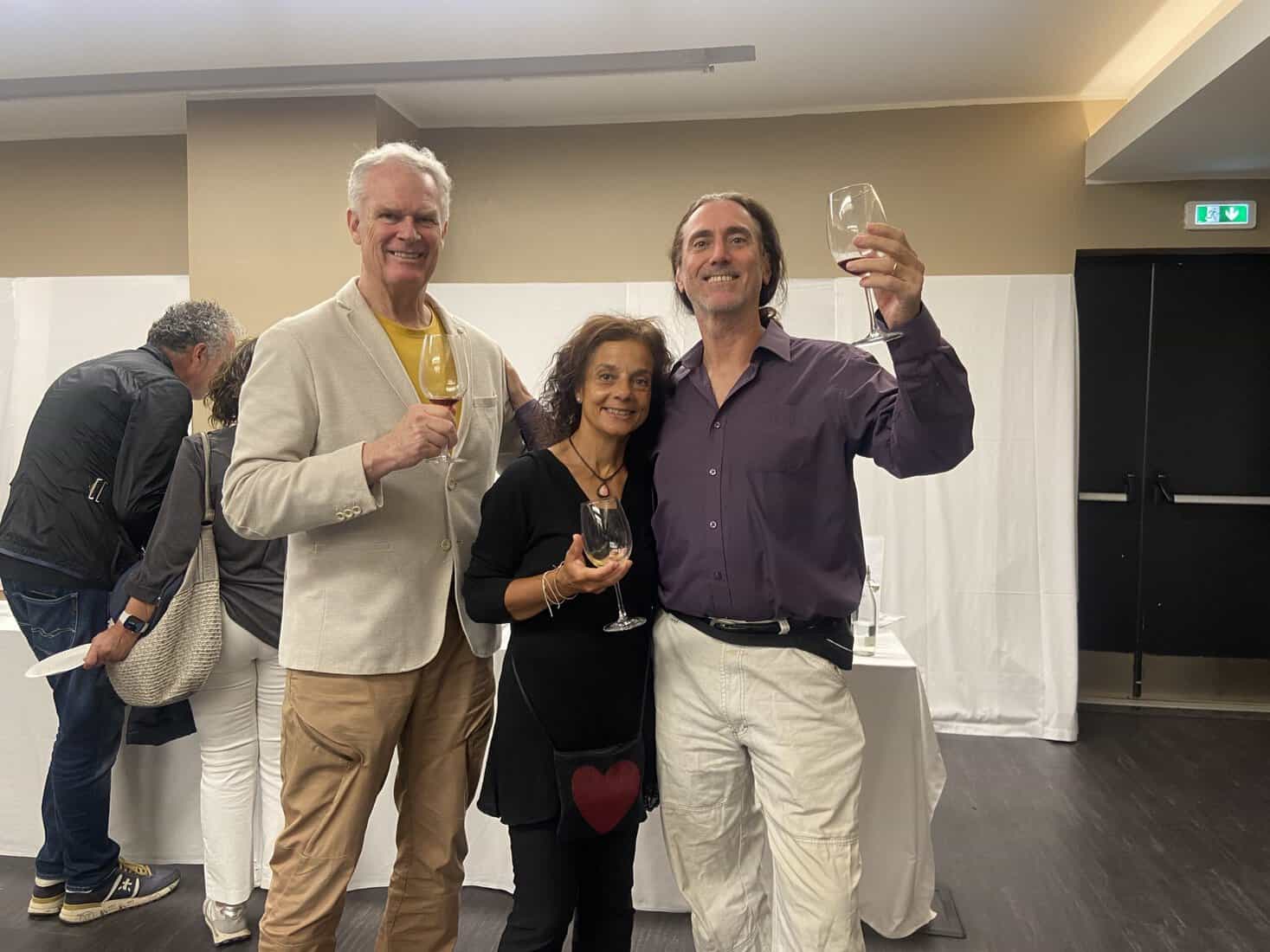
Maybe it was the festive atmosphere I always feel in Rome’s numerous wine tastings but the attending winemakers and sommeliers at the Metropole didn’t cast a pall of doom. They remain worried about global warming – as we all should – but for now, Barolo is still carrying its rep as, in my book, the best red wine in the world.
The Barolo paradox
I asked Alessia Cattarin, a sommelier in Piedmont, how Barolo is different today.
“Too much sun,” she said. “The smell and the taste is more open, more flowers, less cloudy. Before, the Barolo was a wine that was more intimate. Now it’s more ready. Yes, for the market it’s very good but for the ancient lovers, it depends.”
Yes, for purists, this change is not good. I’m not a purist. I’m no connoisseur. I’m a wine lover and love drinking Barolo. Later I wrote Rome-based sommelier Barbara Pasquini about the situation and she agrees there’s a dichotomy to the effects of global warming.
“Barolo is a ‘long’ wine, which makes you wait and which stands out for its austere tannic elegance,” she emailed. “However, nebbiolo’s extreme sensitivity to climatic variations puts its main gift at risk: that unique balance between acidic freshness and polished tannins that we have been accustomed to finding with every sip. Bringing forward the harvest by weeks – as is happening, moreover for the entire wine sector – is only one of the possible answers, unable alone to stem this phenomenon.
“To this scenario, however, I would also add the commercial pressure, which is equally decisive. Today’s market is less and less inclined to wait; demand pushes towards ‘ready-to-drink’ wines and, in order to survive at this rate, many producers choose to stay within the minimum aging times imposed by the regulations, transferring the wait to the consumer and changing, in fact, the historical approach to this wine based on the patience of the cellar.
“The question to ask is therefore whether we should give up forever the characteristics that have traditionally distinguished Barolo to find solutions to reproduce them at all costs.”
Global warming has made winemaking more labor intensive. Some vineyards are using nets to shade the vines from the heat and build small ditches in the vineyards to preserve water.
Heat has a big effect on alcohol. Unlike Americans, Italians don’t like high-alcoholic wine. You rarely find a wine here at more than 14.5 percent alcohol.
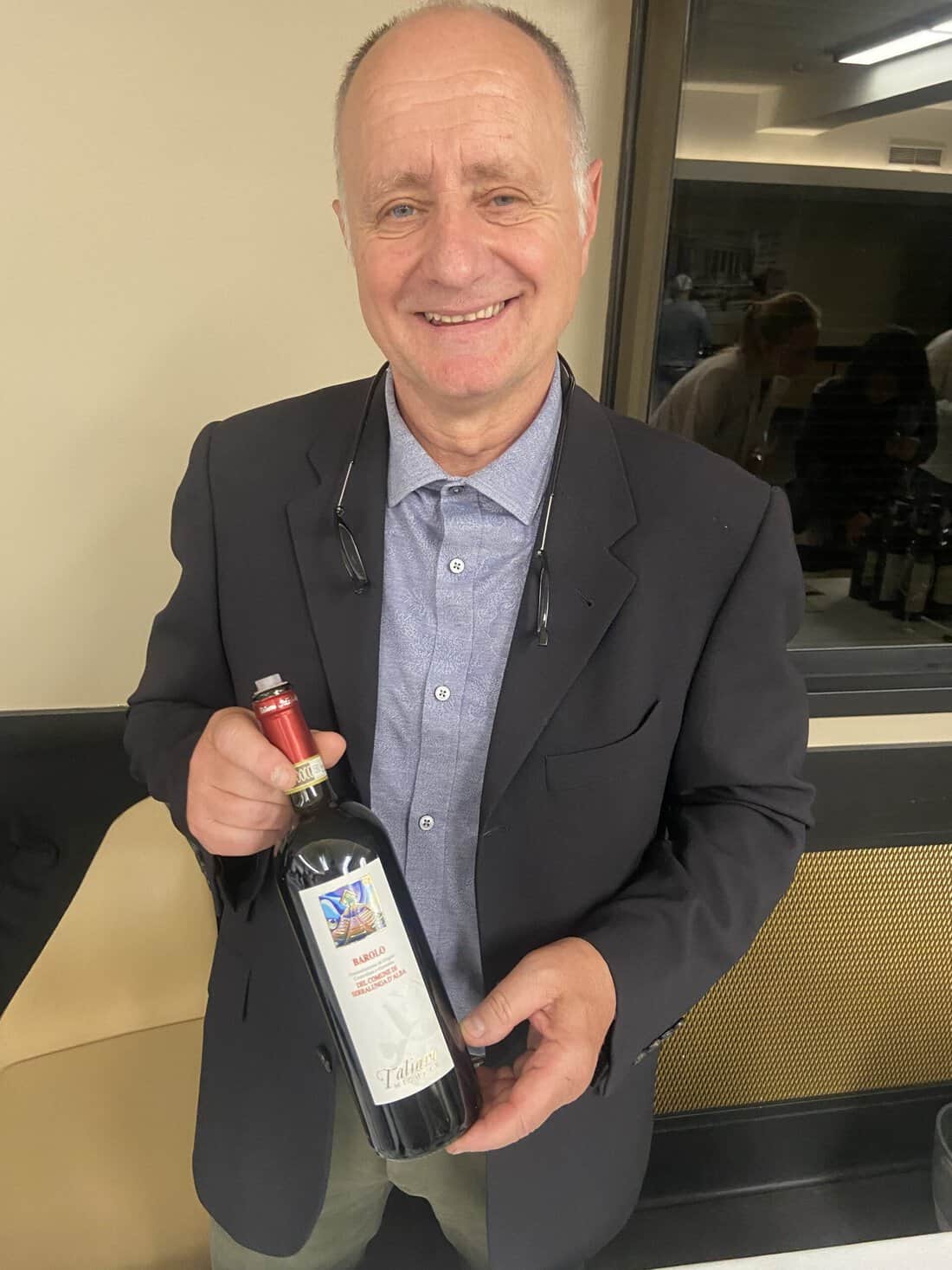
“The biggest change in the last 25 years has been in the perfume and the alcohol,” said Alberto Taliano of Taliano Michele winery. “In the last 12-15 years we have not made a lot of dillinamento because the alcohol is too high. We make the harvest earlier than 20-30 years ago.”
My favorites
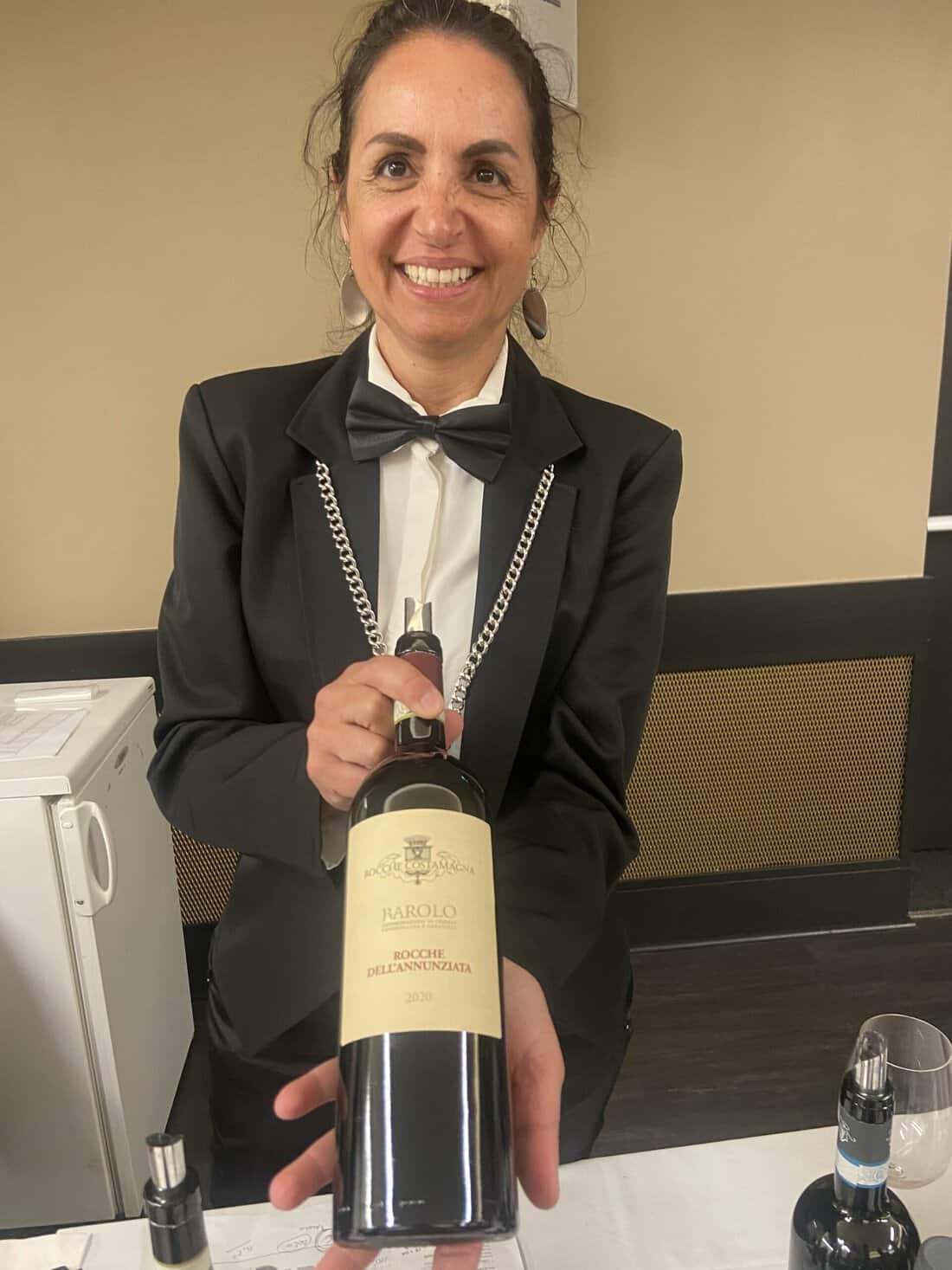
I tried at least 10 different Barolos and a couple Barbarescos. Taliano’s 2021 Barolo was one of the three best and a steal at €35 retail. The 2020 Barolo from Rocche Costamagna was terrific as well.
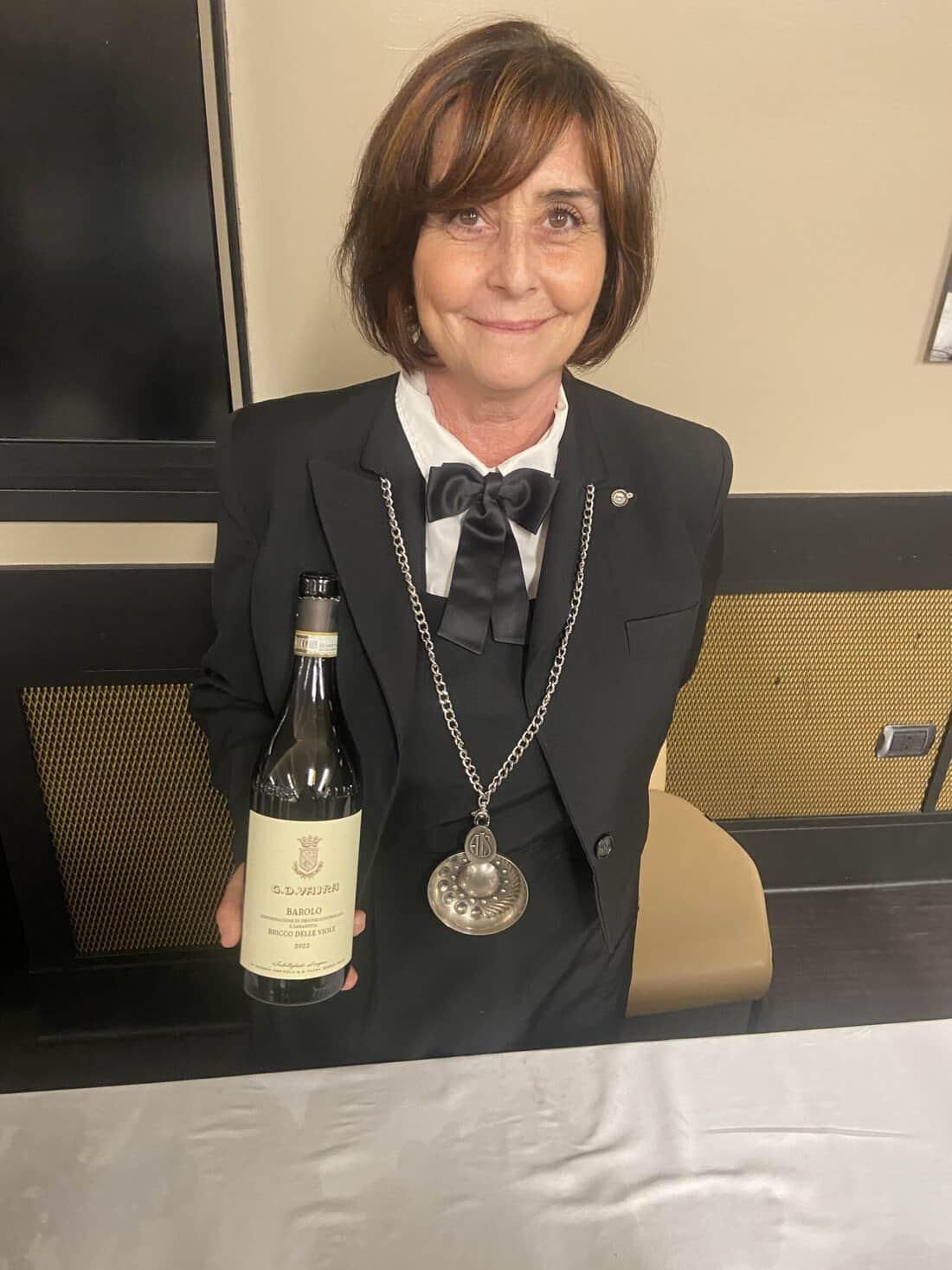
I upgraded and asked G.D. Vajra for its most expensive. I tried the Barolo Bricco delle Viole for €95 retail. Its vineyards are at 500 meters above sea level, one of the highest in Le Langhe. I will forevermore look for Barolos from high altitudes.
It was fantastic. Known as “The king of wines,” Barolo is among the richest of the world’s reds. Full of flavor, of berries and cherries, of roses and violets. It goes best with red meats but also perfect with any kind of pasta in tomato sauce.
Hell, unlike Italians, I drink it neat with no food, not even a piece of cheese.
I came to this event worried that global warming had claimed another victim. I left with a sigh of relief that Barolo, as it has for nearly 200 years, will survive. I asked some of the winemakers, who have successfully fought global warming, what they tell people who don’t believe in it.
Said Cattarin, the sommelier: “Open your eyes.”