


Hamburg: Beyond the red lights, a city hits the high notes
(This is the first of a three-part series on Hamburg, Germany.)
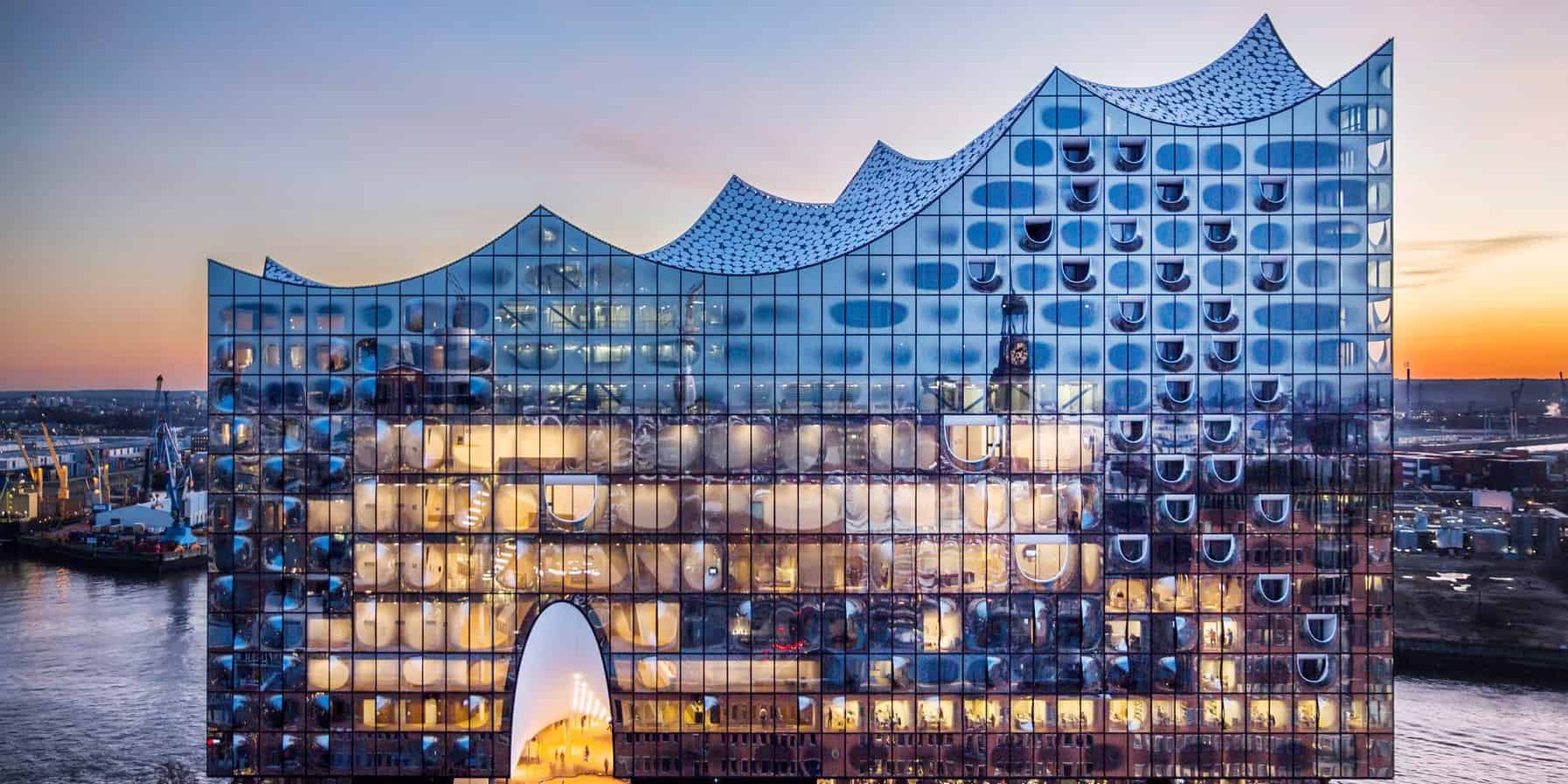
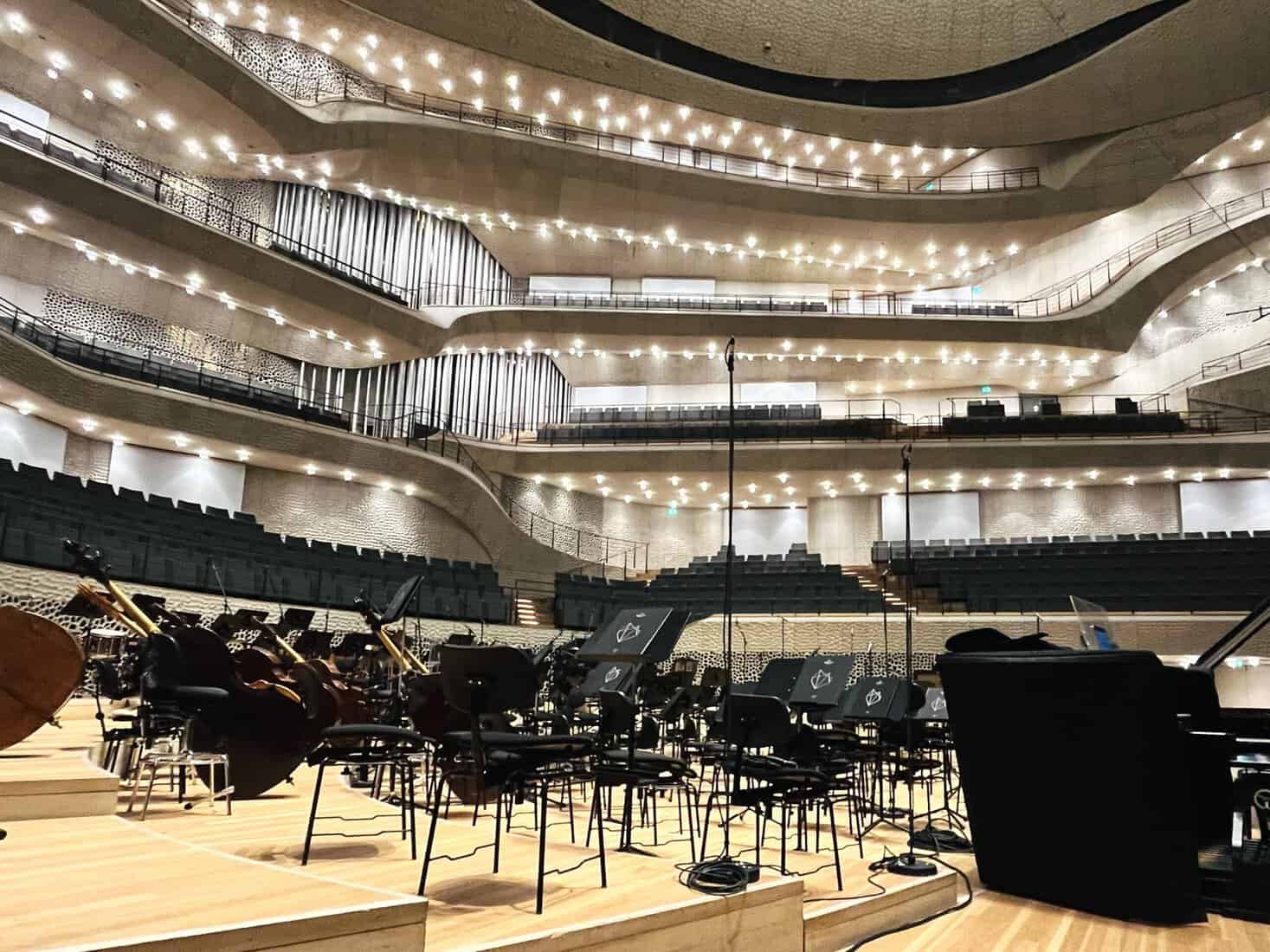
HAMBURG, Germany – Hamburg’s biggest boondoggle sits on the Elbe River like a giant cruise ship waiting to set sail. Its undulating roof gives the appearance of waves ready to collapse on the city. Inside, the concert hall looks like a giant honeycomb surrounded by thousands of white pinlights.
The veteran organist took a seat on the stage, curiously in the middle of the hall and not at one end. The 2,100 seats gave it a very intimate feel as if he had entered our living room. His classical music filled the air, every sound reverberating, bouncing off the walls in all directions like waves crashing against the shore, each one washing over the next in an endless cascade of sound.
I’m not a big music guy. I’m even less moved by classical music. But sitting there in one of the plush seats, I found it hard to fathom that only a mile away from this kaleidoscope of sophistication you can buy a prostitute and a spiked jockstrap on the same street.
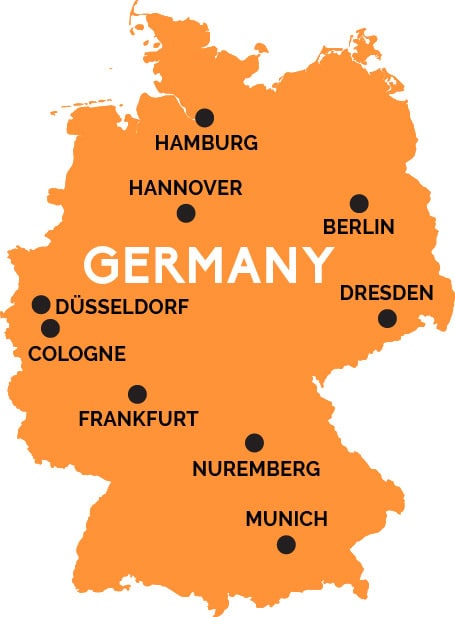
Jan. 11 marks the 10-year anniversary of Elphilharmonie, Hamburg’s €866 million classical music hall. It has altered Hamburg’s image as Germany’s biggest party animal, where anything goes – and Hamburg means anything – to a cultured, calm haven to relax and reflect.
St. Pauli, Hamburg’s neighborhood where Sodom meets Gomorrah at 3 a.m., will always exist. It has since 1833. (And I will blog it next Tuesday.)
But Hamburg has changed around it. A world-class concert hall. Port-side warehouses gentrified into posh residences with water views. A UNESCO World Heritage Site. Thirty lakes. The city with the richest residents in Germany, the second largest in Germany with 1.9 million people, is feeling richer than ever.
I came to Hamburg in 2006 when I covered the World Cup and the U.S. team was based here. I was in Hamburg longer than they were but coming back, I didn’t recognize much.
It starts with the Elbphilharmonie.
“This is the best thing that has happened to Hamburg,” said the organist, Thomas Cornelius.
However, “Elphi,” as Hamburgers call it, nearly tore the town apart with controversy. Its original cost estimate was €186 million, including $77 million from the city, and was scheduled to open in 2010. But the project was immediately buried in problems ranging from technical difficulties, incomplete designs and disputes.
Costs grew. Delays happened. The city fought with the construction company. It went more than a year without a construction hat on site. The people fought with the city, accusing politicians of mismanagement. Keep in mind, Hamburg has the highest median gross salary in Germany at €50,604, according to the Federal Employment Agency. It also has the highest concentration of income millionaires.
But even they wanted the astronomical German taxes they were paying to show something for it. More than 90 percent of Elphi would be financed by the city.
It finally opened on Jan. 11, 2017 at a cost of €866 million, more than 10 times the original estimate.
“Any public project, people aren’t fond of it,” Cornelius said. “There were lots of construction delays and such complicated construction in this area of the harbor. But in half a year, people saw it was a good thing for Hamburg and the feeling changed.”
In nearly 10 years, shows at Elphi have drawn 7.4 million people to concerts with some tickets going as low as €13. The farthest seat is only 30 meters. The honeycombed walls feature 10,000 acoustic panels, each one individually designed to handle acoustics from a particular spot.
“It’s one of the top halls,” Cornelius said. “Every artist – and not just classical – wants to play here.”
HafenCity
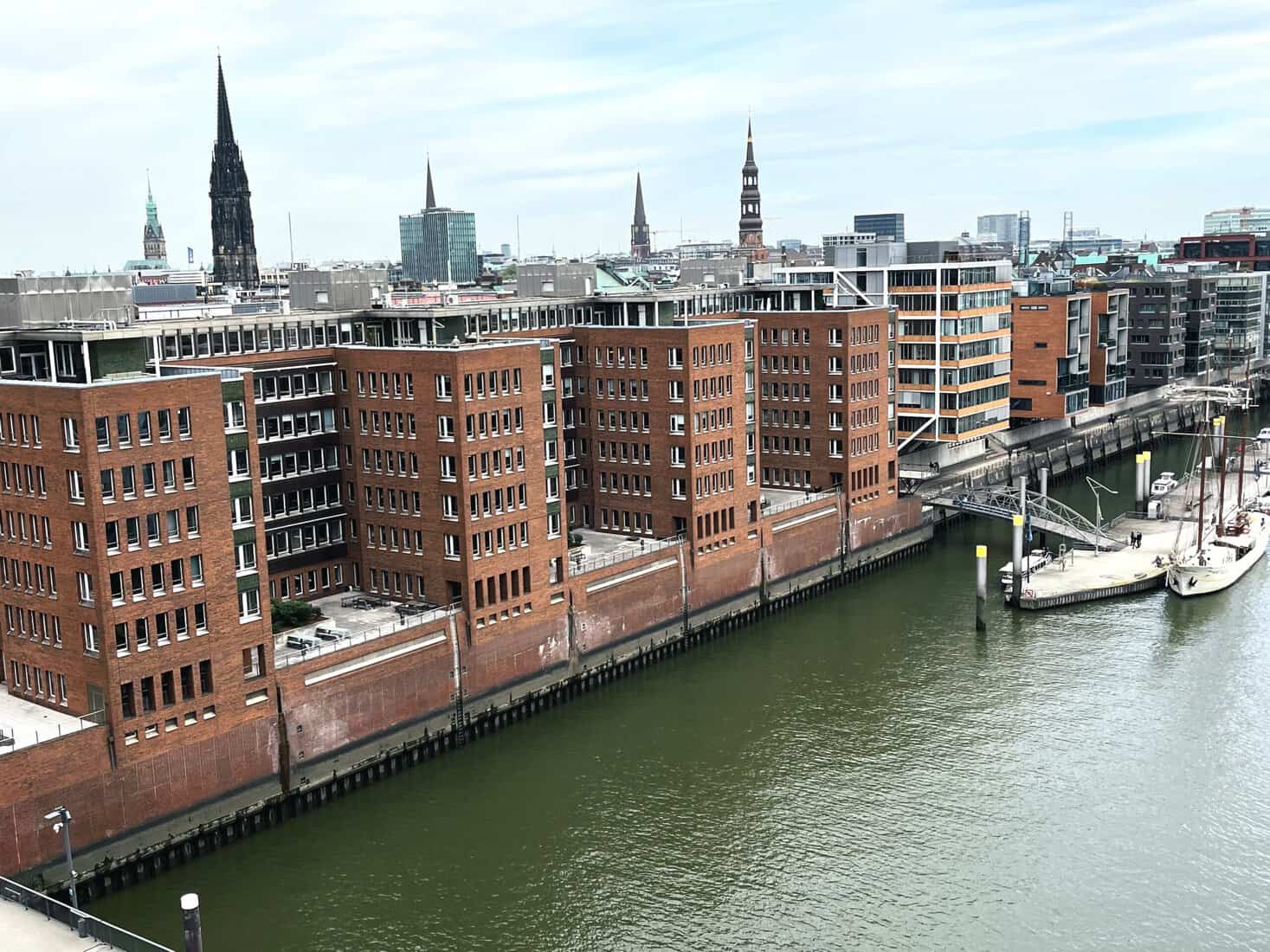
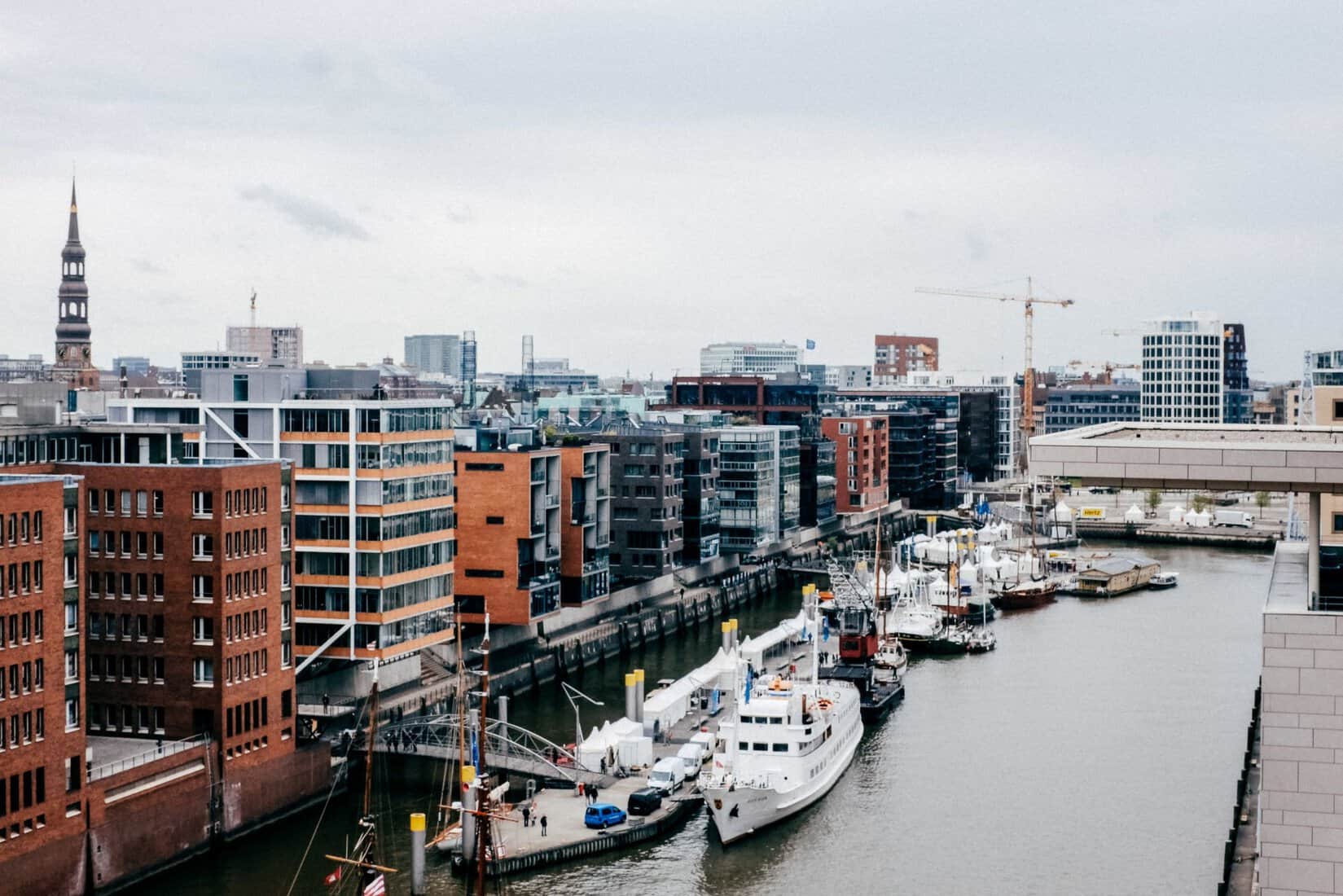
I took in a beautiful view of the harbor from the Elphi roof then walked outside immediately into Hamburg’s other urban success story. The city turned a neighborhood of scruffy port buildings and warehouses into a waterfront redevelopment district with apartments, offices, restaurants, shops, museums and waterfront promenades.
Construction of HafenCity began in 2001 and the first residents arrived in 2005. It expanded Hamburg’s city center by 40 percent and includes 10.5 kilometers (six miles) of waterfront walkways. The city envisions 16,000 residents and 45,000 jobs.
I walked across the street to Kesselhaus, one of the many hip coffee shops in HafenCity. Young professionals sat with their laptops and coffee. A Berlin artist’s paintings were on display at one end with prices ranging from €1,800-€2,500.
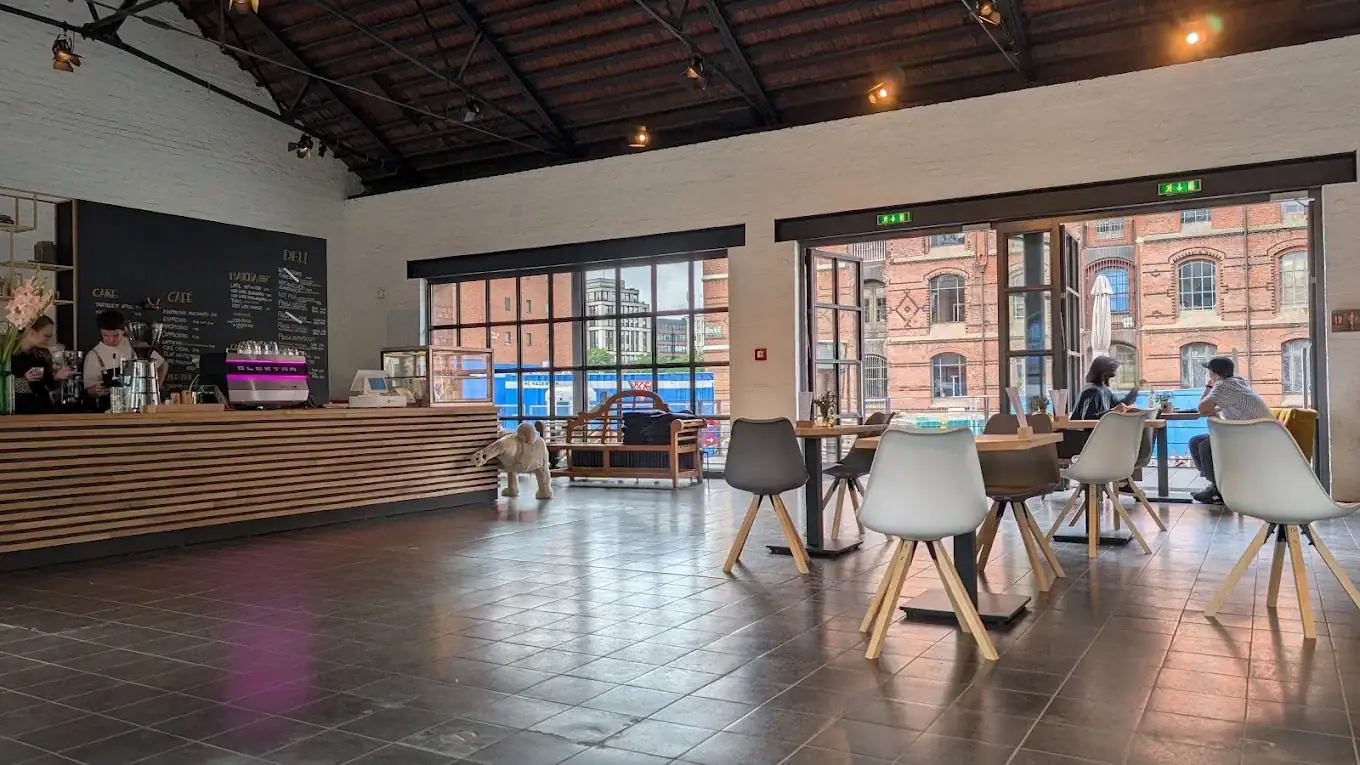
The modern trappings now fill a building built in 1886 and was once the city’s first steam power station. HafenCity’s apartment houses are beautiful with walls at different angles and all with balconies looking out at the Elbe.
The adjacent Speicherstadt historic warehouse district, with warehouses on islands connected by some of Hamburg’s 2,500 bridges, was named a UNESCO World Heritage Site in 2015.
Hamburg Harbor
Regardless how much culture and long coffee menus you add to this city, Hamburg remains a city of ships. Its position on the Elbe and connection to the North Sea has made it a port city since the Middle Ages in 1189 when Emperor Frederick Barbarossa granted trading privileges along the Lower Elbe.
Allied forces bombed it in 1943 but today it is the largest port in Germany and third largest container port in Europe, transporting 114.6 metric tons of cargo last year.
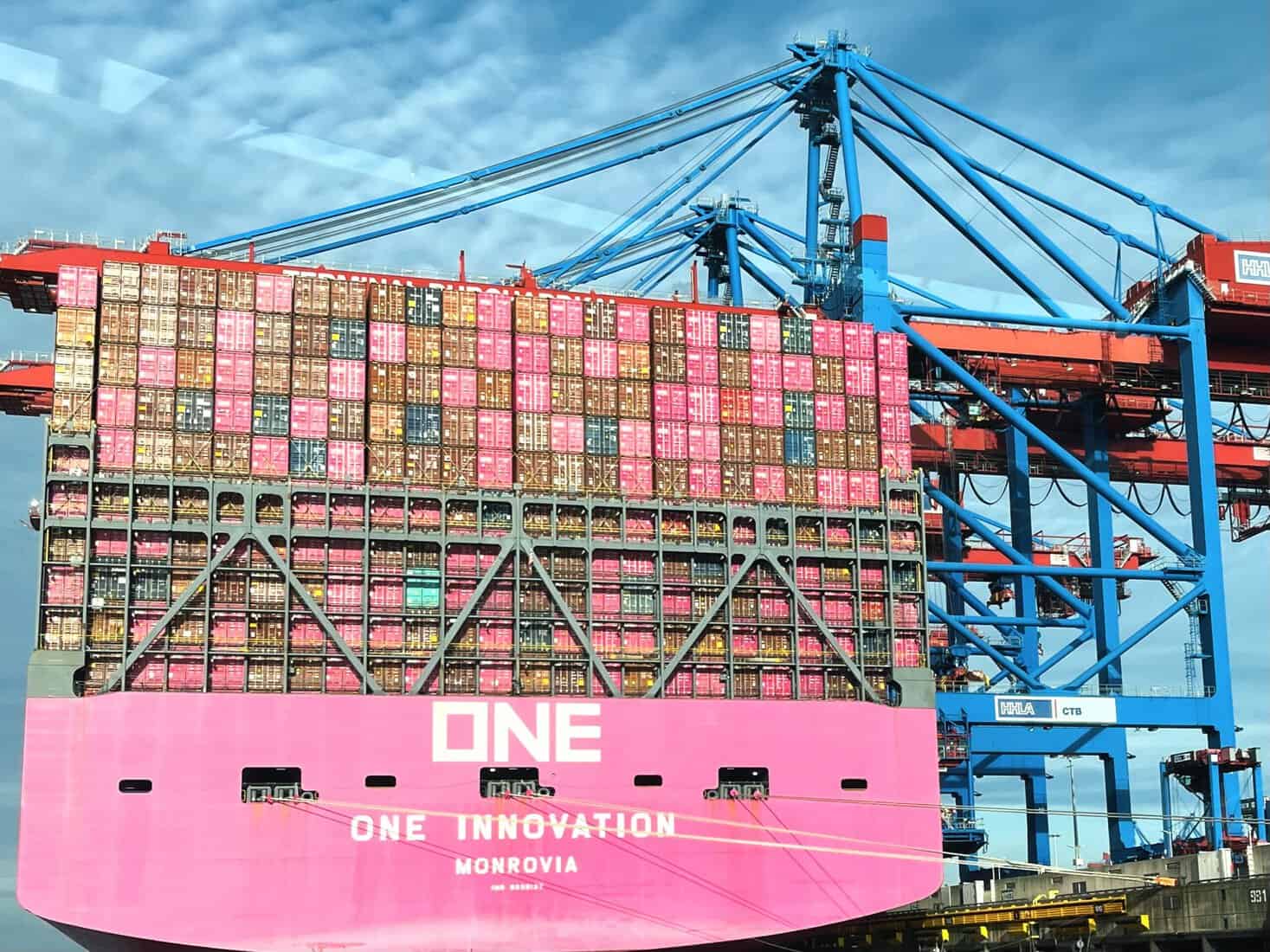
Hamburg’s harbor is nearly intimidating in its size. I took a harbor cruise one morning and in the 90 minutes we never even saw the North Sea. It was an endless string of towering cranes, huge tankers and massive cargo ships stacked high with crates.
On a chilly gray day last week, I walked five minutes from my hotel to the 1,200-year-old port. Beautiful apartment buildings lined the harbor. With the Eurythmics’ “Sweet Dreams” playing over the loudspeaker, the huge converted ferry took off down the water lane.
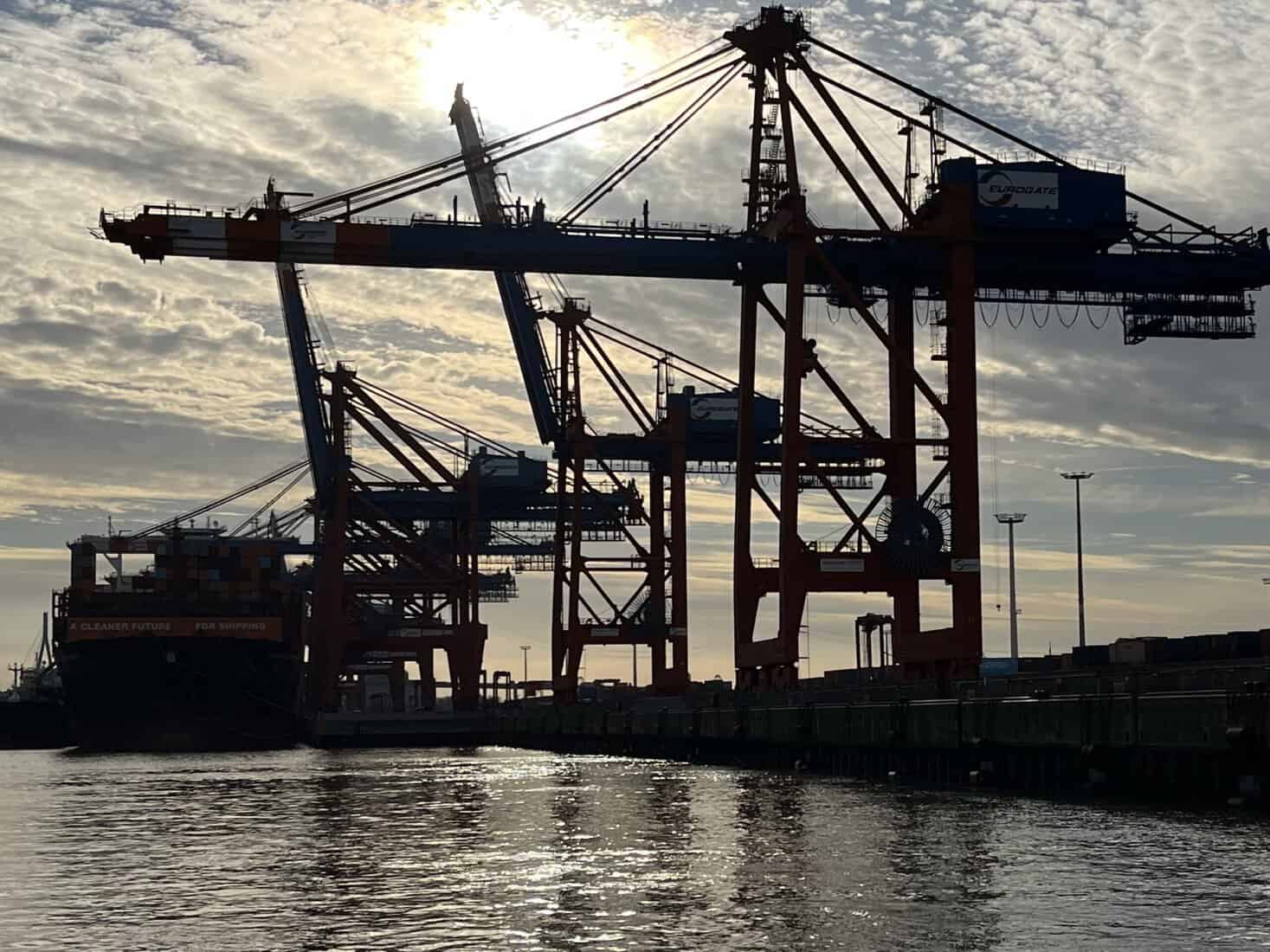
Cranes lifted crates onto ships. I passed a ship from Palermo, Sicily. We passed a docked schooner sans sails. We went along hulls of boats so high, we could barely see the crates that we prayed wouldn’t break and crush us all.
But something came to me. These waterside apartments, most of them new, are in prime locations and command some of the highest prices in Hamburg. But do you really want to sit on your balcony and look at cranes and crates and ugly cargo ships?
Still, talking to locals, Hamburg is one of their favorite places to live.
The American expat in Hamburg
Martha Gilbert was a junior at Smith College in her native Northampton, Mass., and decided to spend a year at the University of Hamburg. She returned after she graduated from Smith in 2011 and has been here ever since.
She was on the harbor cruise with me along with other attendees at the Traverse travel bloggers conference. It attracted writers, videographers and travel officials from all over the world. She writes the blog Like a Local Hamburg (www.likealocalhamburg.com) and didn’t have to travel far.
“It’s my chosen home,” she said. “I’ve lived here longer than I’ve lived anywhere else. You have the right quality of life living in Germany in general, but especially in Hamburg.”
I asked her what the advantages of living here are over the U.S.
“Work-life balance was one of the big things that convinced me to stay here as opposed to moving back to the U.S. because there was a point where I thought maybe I’d go back,” she said. “But like most people here have 33 days of vacation. Sometimes you only have 28. But in the U.S. you often have 14 or 10.”
The problem I hear from Americans who fear moving to Germany is the high taxes. It’s not a problem once you live here, she said.
“You have the high taxes, but you get a lot for it,” she said. “Healthcare is extremely high quality. Like my family, when I was living in the U.S., I was always insured but we still had to pay $25 every time I went to the doctor, 50 if it was a specialist.
“Here you just go to the doctor.”
Talking to other expats, a common complaint I heard is Hamburgers are standoffish, almost cold. Germans in general have that reputation. Myself, I didn’t find that at all. Hamburgers were extremely friendly all week.
“It can be difficult because people are not as open as Americans are used to,” she said. “If you were on the bus, you wouldn’t just chat to the person next to you. But there are also a lot of expats. A good amount of my friends are expats from English-speaking countries.”
Hamburg has always been great for the young, free and single. Or it’s great for the young and free – for one more night and need a bachelor party to remember. But I’m 70 and lived in Las Vegas for 10 years. I didn’t come to Hamburg for St. Pauli.
I came for the other Hamburg, the one where you can have a coffee surrounded by beautiful artwork and hear music flow through a honeycombed concert hall.
Hamburg deserves an encore.
If you are thinking of going …
How to get there: Many major U.S. cities fly to Hamburg via Frankfurt or Amsterdam. My round-trip, 2½-hour direct flight from Rome was €265.
Where to stay: Hotel Hanseport, Erichstrasse 18, 49-40-31-9970, www.hotel-hanseport.de, info@hotel-hanseport.de. Simple 3-star hotel in the heart of the St. Pauli neighborhood. Big rooms and helpful staff. I paid €732 for six nights, including an excellent buffet breakfast.
Where to eat: Fischereihafen Restaurant, Grosse Elbstrasse 143, 49-40-38-1816, www.fishereihafenrestaurant.de, info@fischereihafenrestaurant.de, 11:30 a.m.-10 p.m. Monday-Thursday, Sunday, 11:30 a.m.-10:30 p.m. Friday-Saturday. High-end fish restaurant on the water. Fish mains start at €28.50, meat mains at 36.50.
When to go: Near the North Sea, Hamburg rarely gets steaming. Summer temperature highs in the 70s. But it does get crowded in summer. Winter lows around freezing. My week in October was in the 50s with occasional rain.
For more information: Hamburg Tourismus, Wexstrasse 7, 49-40-300-51701, https://www.hamburg-travel.com, 9 a.m.-5 p.m. Monday-Friday.
Next Tuesday: Sleeping in Europe’s biggest red-light district.