


Six travel expeditions that feel like reaching the edge of the world
(Director’s note: Traveling to icy regions such as Antarctica and Nepal sound intimidating but with proper planning, they can be very rewarding. This guest blog details six expeditions to the far corners of the Earth.)
Some trips are about seeing a new place. Others are about seeing just how far you can go.
The world’s most remote expeditions take travelers beyond familiar cities, established tourist trails
and sometimes even roads. They lead across polar ice, through high mountain ranges, into isolated
archipelagos and toward landscapes where weather still has more influence over the itinerary than a
clock does.
These journeys also require a different approach to travel. Remoteness makes preparation,
experienced guidance, realistic itineraries, and flexibility considerably more important.
For travelers drawn to that feeling of reaching the very edge of the map, here are six extraordinary
expeditions to consider.
South Pole, Antarctica
Few destinations embody “the end of the world” as literally as the geographic South Pole.
At 90° South, every direction you travel is north. There are no towns or conventional roads waiting at
the destination, only an immense polar plateau and one of the most historically significant
coordinates in exploration.
Modern luxury expeditions to the South Pole make it possible to experience this environment without
recreating the months-long journeys undertaken during Antarctica’s Heroic Age.
A typical journey can begin in Punta Arenas, Chile, before flying into Antarctica and establishing a
base in the Ellsworth Mountains. From there, a ski-equipped aircraft can carry travelers across the
polar plateau to the Geographic South Pole.
Depending on the itinerary, it’s even possible to spend a night at a specially equipped camp at 90°
South.
But reaching the South Pole isn’t a journey where simply booking transportation is enough.
Temperatures can be extreme, weather windows affect aviation and the pole’s elevation creates a
physiological altitude that can feel significantly higher than its physical elevation. Itineraries therefore
need to remain flexible.
EYOS co-founder Rob McCallum explains the philosophy particularly well: “The secret to any successful
expedition is planning…..not just the primary plan, but all the alternates and backups so that you have every
eventuality covered.”
McCallum notes that authentic expeditions aren’t completely pre-scripted, meaning teams need to
anticipate changing ice, weather and technical challenges rather than relying on a rigid itinerary.
That level of preparation is what can turn an extremely remote objective into a carefully managed
expedition while preserving the unpredictability that makes polar travel extraordinary.
And the reward is difficult to replicate elsewhere: standing at a point where every longitude
converges, surrounded by seemingly endless ice.
Crossing Greenland’s vast interior
Greenland’s coastal settlements already feel wonderfully isolated, but traveling into the island’s
interior takes remoteness to another level.
Around 80 percent of Greenland is covered by ice, creating an enormous frozen landscape largely removed
from roads and settlements. Multi-day expeditions may involve skiing or traveling across sections of
the ice sheet while carrying supplies and camping in conditions that can change quickly.
There are few distractions here. Days become defined by distance, weather, snow conditions, food
and the repetitive rhythm of moving across ice. For travelers accustomed to busy itineraries, that simplicity can be one of Greenland’s greatest attractions.
The scale is equally memorable. With few buildings, trees or other familiar objects providing
perspective, distances can become surprisingly difficult to judge. What appears close may still require
hours of travel.
Trekking through Patagonia’s remote backcountry
Patagonia has become famous for dramatic trekking, but venture beyond its best-known trails and
the region still offers genuine wilderness.
Stretching across southern Chile and Argentina, Patagonia combines glaciers, mountains, grasslands,
forests and enormous ice fields. Remote routes can take travelers far from the region’s established
hiking centers and into terrain where changing weather becomes part of everyday decision-making.
Wind is particularly influential here. A seemingly straightforward trekking day can become
considerably harder when Patagonian conditions change. But that’s also part of the appeal.
The landscape feels constantly in motion: Clouds race across granite peaks, glaciers fracture into
lakes and sunlight can transform an otherwise gray valley within minutes.
Rather than rushing through Patagonia, allowing extra time for weather changes makes exploring its
wilder corners far more rewarding.
Exploring the high Arctic around Svalbard
Travel north from mainland Norway and eventually you’ll reach Svalbard, an Arctic archipelago
positioned between Norway and the North Pole.
Outside the main settlement of Longyearbyen, infrastructure quickly disappears. Expedition vessels provide one of the most practical ways to explore this environment, navigating fjords and coastlines while searching for wildlife and opportunities to go ashore.
Depending on location and season, travelers may encounter walruses, Arctic foxes, seabirds, seals
and potentially polar bears.
What makes Svalbard particularly compelling, however, is the landscape itself. Glaciers descend toward the sea, mountains rise abruptly from narrow fjords and drifting ice can alter routes. During summer, the midnight sun extends the hours available for exploration and gives the landscape an unusual sense of timelessness.
Trekking Nepal’s Upper Dolpo region
Not every edge-of-the-world expedition requires polar ice.
Hidden behind some of Nepal’s highest mountain ranges, Upper Dolpo offers a completely different
form of isolation. Reaching the region can involve small aircraft, long trekking days, high mountain passes and trails connecting communities that remain geographically separated from much of the country.
The landscape shifts between deep valleys, barren high-altitude plateaus, ancient settlements,
monasteries and intensely blue mountain lakes. Unlike busier Himalayan trekking corridors, the attraction here isn’t simply reaching a famous viewpoint.
Nepal has long rewarded travelers willing to experience the Himalayas on foot; a trek to the
Annapurna Sanctuary, for example, reveals how dramatically the mountains can change with every
turn and gain in elevation. Upper Dolpo takes that sense of immersion even further, trading a better-
known trekking route for longer distances, fewer visitors, and communities separated by formidable
terrain.
Distances between villages, altitude, basic infrastructure and unpredictable mountain weather mean
itineraries need to be approached conservatively. Travelers should allow enough time for
acclimatization rather than trying to compress the route into an aggressive schedule.
Sailing into Antarctica’s Ross Sea
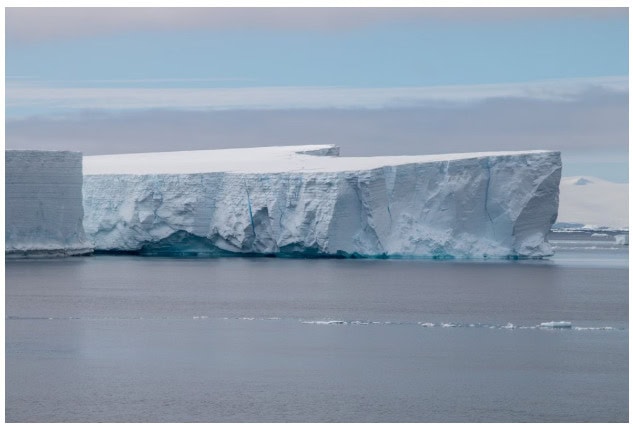
If the Antarctic Peninsula feels remote, the Ross Sea takes isolation several steps further.
Situated deep within Antarctica, the region lies roughly between 70° and 80° South and is protected
by extraordinary distance, latitude, and extensive sea ice. It remains one of the least frequently
visited parts of the continent.
The Ross Sea is closely associated with explorers including Robert Falcon Scott, Ernest Shackleton
and Roald Amundsen, whose expeditions used this part of Antarctica during the Heroic Age of
exploration.
Getting here remains an expedition rather than a conventional cruise. Sea ice, weather, vessel
capability and enormous distances can all influence what is possible on any particular voyage. That uncertainty is precisely why the Ross Sea belongs on this list.
When the journey matters as much as the destination
What connects these six expeditions isn’t simply distance. It’s the need to adapt.
In remote environments, travelers can’t assume every day will follow the original itinerary. Weather
changes. Ice moves. Flights wait for safe windows. Mountain passes become inaccessible.
A well-planned expedition doesn’t eliminate those uncertainties. Instead, it prepares for them.
And perhaps that’s what makes reaching the world’s edges so compelling. The farther you travel
from familiar infrastructure, the more the journey stops being about checking places off a list.
You start paying attention to weather, landscape, distance and time again—and discover just how
large the world can still feel.