


Italy and Iran: It will help allies but Meloni declares “We are not at war”
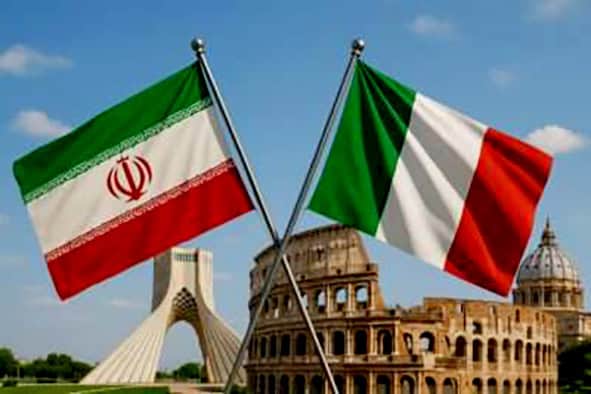
(This is the second of a three-part series on the Iran War from an Italy perspective.)
Italy defense minister Guido Crosetto just wanted a few days away with his family. He wanted a place in the sun, someplace luxurious. Then a war broke out which is troubling for a defense minister, particularly where he went on vacation.
Amid all the chaos in the Middle East, Crosetto got back home. Most here in Italy are hoping that’s the closest contact this country has to the Iran War. As I sit here safe and sound in Rome, the one word I keep reading about Italy’s involvement in the war is neutrality.
Italy sits in a tough position. It has had a mostly positive relationship with Iran for more than 2,000 years and relies on the Gulf of Hormuz, which remains all but closed, for part of its economy. We’re only about 2,000 miles from Tehran and a major jump-off point to the Middle East.
Prime minister Giorgia Meloni has powered her way into a position of a middle woman between the European Union and the U.S. yet her public canoodling with Pres. Trump has many Italians nervous. The U.S. has six major military bases in Italy and 120 in total.
Marco Travaglio, one of Meloni’s staunchest critics, wrote in the left-wing Il Fatto Quotidiano, “Italy is a waitress to Trump.”
Me? I’m more worried about my March 24 trip through Doha, Qatar, to the Maldive Islands. Doha’s Hamad International Airport has cancelled more than 1,000 flights since the war broke out Feb. 28 and remains closed except for extremely limited evacuation and emergency cargo flights.
I texted Marina Monday morning, “Siamo fottuti.” That’s Romanaccio dialect for “We’re fucked.” We’re already looking at alternate trips where we can celebrate my 70th birthday on the 29th.
By train. Driving is out of the question. Since the war began, gas prices in Rome have already gone from €1.59 a liter ($6.93 per gallon) to €2.60 ($11.37). Thanks, Don and Bibi.

Italy’s stance on the war
Monday I chronicled a friend’s struggle to get out of Dubai while wondering how Crosetto felt about the U.S. and Israel not warning allies that they were launching a major war in the Middle East. Hey, how about a hint? Maybe, like, “Corsica is lovely in March.”
Crosetto wasn’t happy.
“Think about what it means to be in a distant country when a war breaks out and you find yourself there with your children, your wife,” he said in Saturday’s Corriere della Sera, Italy’s most influential newspaper. “Someone tells you, ‘A plane is coming to pick you up, Mr. Minister.’
“And you look at your children, your children’s friends. You’re torn between being the man and the minister. And you answer that phone: ‘No. Not now.’”
Crosetto and Meloni are barely in the game. They’re on the sideline, edging a little over the touchline. They sent air defense to Cyprus, a close ally, and are helping 10,000 Italians leave the Middle East. It has 2,500 troops in the region.
Meloni said the U.S. could possibly use its military bases in Italy, many of which have been here since 1954. The U.S. has yet to ask. Meloni has not said Italy will take part in military operations other than play a mother hen role.
“We are not at war,” Meloni said. “We do not want to enter the war.”
Wrote Corriere della Sera Monday: “Thus, Meloni is trying to pursue a complex third European path, consisting of these coordinates: no war, defense of the continent’s borders starting with Cyprus, support for the Gulf countries under attack, solid transatlantic relations, but with an independent position in judgment.”
A YouTrend poll conducted by the website SkyTG24 reported 56 percent of Italians oppose the U.S-Israel military action and 48 percent want total neutrality. A Corriere della Sera poll showed a high of 35 percent of Italians said their biggest worry about the war is it will expand to other countries.
Twenty-one percent cited the effects on the economy, and 19 percent are most worried about a resurgence in terrorism in Europe.
“First, we must affirm a clear distinction from the world of Trump and (Bibi) Netanyahu,” said Giuseppe Provenzo, a member of the Chamber of Deputies, in an interview with Corriere della Sera, “a world without rules, one that despises direct international cooperation and multilateralism, a world of war for war’s sake, that plunges the Mediterranean into instability, can have incalculable consequences, and the costs, including economic ones, are borne first and foremost by us.”
One-fifth of the world’s oil flows through the Strait of Hormuz. With its closure, it stops a vast majority of Italy’s import and export business.
Iran has 10 percent of the global oil reserves and 16 percent of the natural gas reserves. It’s the third largest producer in OPEC. Italian economic officials predict a 30-40 percent hike in transport costs, and that household gas bills here will go up 15 percent by next month.
The hike in gas prices is already the largest in the world since Russia invaded Ukraine in 2022.
As I said, Siamo fottuti.
Italy’s history with Iran
Italy and Iran go back to 247 B.C. when Iran was part of the Parthian Empire and was a major cultural partner with the Roman Republic. They traded glassware and metals from Rome with Persian silk, textiles and horses from Parthia.
After the fall of Rome in the 5th century A.D., the city states of Venice, Genoa and Florence established commercial ties with Iran. Italian merchants traveled across Iran on the Silk Road.
The two countries established formal ties in 1886, and Italian archaeologists started traveling to Iran in 1959. After an interim nuclear deal was agreed on in 2013, Italy’s Emma Bonino became the first European foreign minister to visit Tehran since then-Pres. Mohammad Khatami took office in 1997.
In 2017, Italy was Iran’s largest trading partner in the European Union.
Today, Italy doesn’t sound like it wants to blow Iran off the face of the Earth. Foreign affairs minister Antonio Tajani said, “We are reaffirming diplomatic relations with Iran because, at this time, we believe we must continue discussions. The goal is to end hostilities as quickly as possible.”
Hell breaks loose
Iran is burning in more ways than one. It has bombed airports in Baku and Tel Aviv. It has launched 500 ballistic missiles and 2,000 drones since the start of the war 11 days ago. More than 1,200 have died in Iran, nearly 400 in Lebanon and 11 in Israel. Seven U.S. troops have died.
Israel has resumed bombing in my beloved Beirut. It has destroyed more buildings in the Hezbollah stronghold of Dahiyeh, the Beirut neighborhood I toured in December. I called my old El Sheikh Suites Hotel near the center and it remained full, but I imagine it will soon be near empty with all the cancelled flights.
And I’m afraid to look at my stock portfolio.
Considering the cries from families of the newly fallen, I won’t complain too loudly if I can’t spend my birthday this month on a sugary-sand beach in the Indian Ocean. I’m thankful I live in a country that is actively trying to stay out of a war instead of a country that started it yet refuses to call it a war.
Indeed, the world is at war. When it ends, let’s see if there’s a Dubai left to which Crosetto can return.
(Wednesday: An interview with an Iranian cultural official in Rome.)
March 10, 2026 @ 1:44 pm
Head to Southern Spain for your birthday. The only place in Europe with a warm climate end of March. Or maybe the Caribbean. Sorry that you won’t get Doha as a scalo.
March 10, 2026 @ 3:13 pm
We fear all airfares will be through the roof. That’s why we’re looking at an agriturismo in Tuscany.