


Learning Italian: Through Rome markets, cafés and small talk
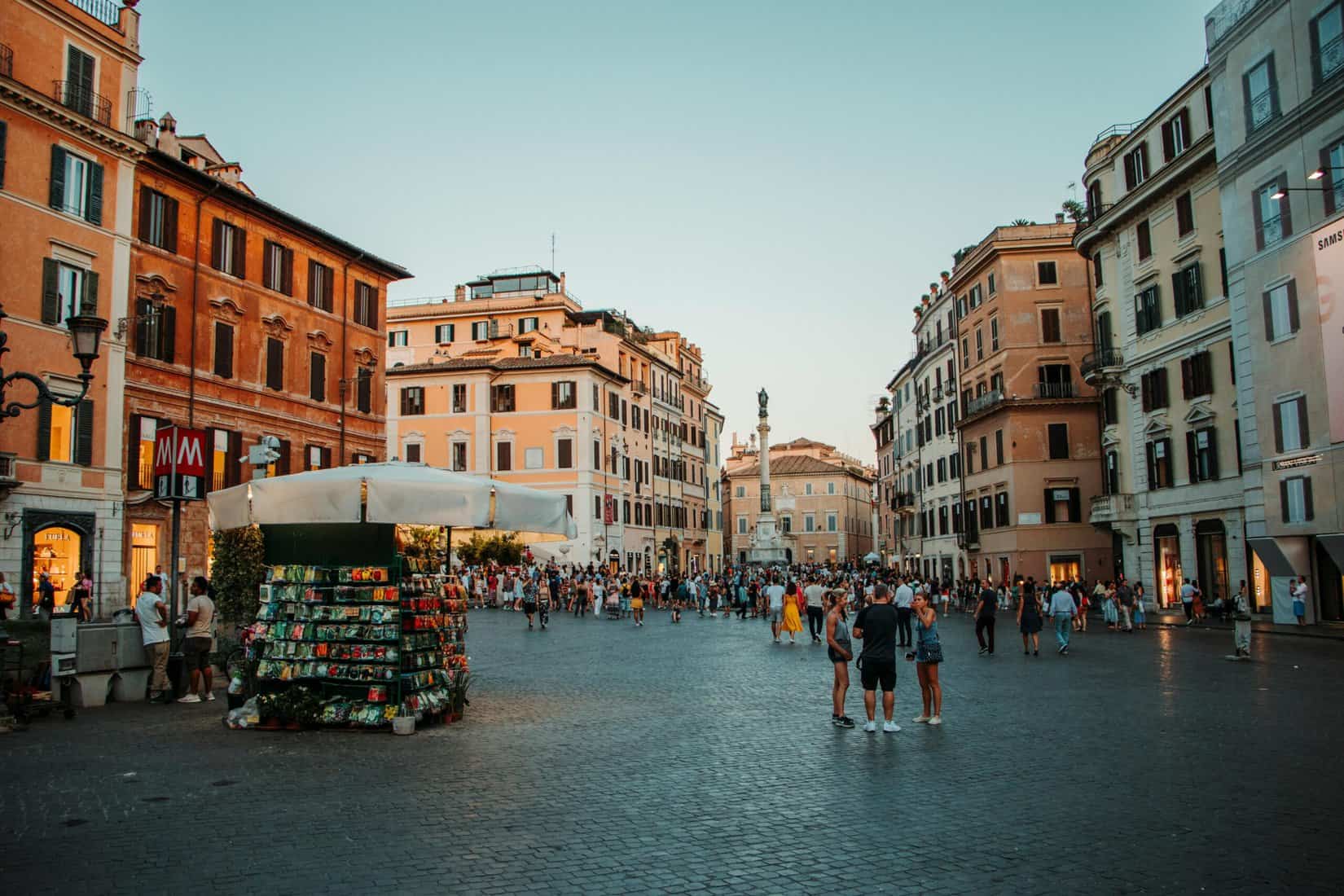
(Director’s note: Learning Italian is the hardest thing I’ve ever tried to do. It’s not only essential to live here in Rome, it’s very important to visit. Few people speak English. Rome-based freelance writer Clifford Cullens offers a whole list of handy tips for anyone visiting Rome this year. They are all words and phrases I use every day.)
Have you ever tried learning a language from a textbook and thought, “Okay… but when will
actually say this in real life?”
If that’s you, Rome is basically your outdoor classroom. The city
isn’t just monuments and museums—it’s voices bouncing off stone walls, quick jokes at the
espresso bar, friendly debates over tomatoes and the kind of small talk that makes you feel like
you belong.
And here’s the best part: You don’t need perfect grammar to start. In Rome, you can learn Italian
the same way you learn a dance: by stepping onto the floor, making a few awkward moves
and letting the rhythm teach you.
In this article, you’ll learn how to learn Italian in Rome through three everyday settings:
markets, cafés, and small talk. You’ll get practical phrases, tiny conversation scripts and a
realistic plan you can actually follow.
Why Rome is the perfect place
Rome is loud in the best possible way. Not just traffic-noise loud, but human loud. People talk
with their hands, their eyebrows, their shoulders—like the whole body is part of the sentence.
That’s gold for language learners, because even when you miss words, you can still catch
meaning.
Also, Rome gives you something apps can’t: mini-repetitions. You hear the same phrases
again and again:
● “Prego!”
● “Allora…”
● “Va bene.”
● “Quanto costa?”
● “Un attimo.”
It’s like the city keeps handing you flashcards—except the flashcards come with espresso, eye
contact and a smile.
Most importantly, Rome trains you in social Italian, not just “classroom Italian.” You’ll learn how
Italians actually ask questions, soften requests, show politeness and joke around. Think of it
like cooking: a textbook gives you ingredients, but Rome teaches you how to season.
A simple 7-day plan
Let’s make it practical. Here’s a realistic week you can repeat again and again.
Day 1: Market listening day
Go to a market and don’t force conversations. Just listen for repeated words: numbers, “prego,”
“basta,” “quanto.” Write 10 words afterward.
Day 2: One purchase, one sentence
Buy one thing. Use: “Buongiorno, vorrei…” That’s it. Success.
Day 3: Add the price question
Same purchase, add: “Quanto costa?” Learn numbers 1–20 that evening.
Day 4: Café routine
Order coffee in Italian. Add one extra phrase: “Qui, grazie” or “Da portare via.”
Day 5: Two questions challenge
At the market, ask two questions:
● “È fresco?” (Is it fresh?)
● “A quanto al chilo?” (How much per kilo?)
Day 6: Small talk micro-mission
Pick one starter: “Che caldo oggi!” Say it once to someone in a natural moment. Even if they
just nod, you did it.
Day 7: Review and repeat your best moments
Write down three sentences you actually used. Practice them out loud. Then repeat the week,
but slightly harder.
Common mistakes (and why they’re totally normal)
● Translating word-for-word from English: Italian has its own flow. Copy phrases you
hear.
● Over-focusing on grammar: In daily Rome life, clarity beats perfection.
● Being afraid to sound silly: Everyone sounds silly when they learn. It’s a rite of
passage, like your first espresso—strong, surprising and unforgettable.
If learning Italian is a journey, Rome is the moving walkway at the airport. You still walk—but the
city carries you forward. The trick is to keep your steps small and consistent: one market
question, one coffee order, one quick comment about the weather.
And if your schedule is packed, you can still study effectively by delegating some tasks to professionals at https://edubirdie.com/do-my-assignment or getting feedback and proofreading on what you
write—so your time goes into real practice, not stress. Bit by bit, those everyday moments stack
up, and suddenly you’re not just learning Italian—you’re living it.
Learning Italian at Rome markets
Markets in Rome are basically language gyms with better smells. You see the objects, you hear
the words, you repeat them and you get instant feedback. If you say the wrong thing, the
vendor usually helps you—sometimes with a laugh, but often in a warm way.
You can try places like Campo de’ Fiori, Mercato di Testaccio, Mercato Trionfale or
neighborhood markets where locals shop without thinking twice. The point isn’t the “perfect
market.” The point is the routine.
Essential market phrases
Here are high-value phrases—simple, natural, and super reusable:
● Buongiorno / Buonasera — Good morning / Good evening
● Vorrei… — I would like… (polite and safe)
● Mi dà…? — Can you give me…? (very common at stalls)
● Quanto costa? — How much does it cost?
● A quanto al chilo? — How much per kilo?
● Ne prendo… — I’ll take…
● Un etto — 100 grams (great for cheese/salami counters)
● Basta così — That’s enough
● Va bene così — That’s fine like that
● Me lo può mettere in un sacchetto? — Can you put it in a bag?
● Posso pagare con carta? — Can I pay by card?
Quick tip: “Vorrei” is like a magic key. It sounds polite without being complicated. If you only
memorize one market word, make it that.
Mini dialogues and small wins strategies
Let’s make this real. Here are tiny scripts you can copy-paste into real life.
Dialogue 1: Buying fruit
● Tu: Buongiorno! Vorrei due mele e tre arance, per favore.
● Venditore: Va bene. Altro?
● Tu: No, basta così. Quanto costa?
● Venditore: Sono cinque euro.
● Tu: Perfetto, grazie!
Dialogue 2: Cheese counter
● Tu: Salve! Mi dà due etti di pecorino, per favore?
● Venditore: Dolce o stagionato?
● Tu: Stagionato, grazie.
● Venditore: Così va bene?
● Tu: Sì, va bene così.
Now, how do you improve fast without feeling overwhelmed?
Try the “Small Wins” strategy:
1. Day 1: Only greetings + “Vorrei…”
2. Day 2: Add “Quanto costa?”
3. Day 3: Ask one extra question: “È dolce o amaro?” / “È fresco?”
4. Day 4: Add quantities: “un chilo,” “mezzo chilo,” “due etti”
5. Day 5: Do a full mini-dialogue without switching to English
Markets are perfect because the conversation is short. You’re not giving a speech—you’re
doing verbal ping-pong. And every “ping” makes you better.
Cafés and bars
In Rome, the café is often called a bar. Don’t panic—you’re not walking into a nightclub. You’re
walking into the heart of daily Italian life. People stop for a quick coffee, exchange a few words
and move on. That short format is amazing for language practice.
Here are the most common café phrases:
● Un caffè, per favore. — An espresso, please.
● Un cappuccino. — Cappuccino (usually morning)
● Da bere qui o da portare via? — To drink here or take away?
● Qui, grazie. / Da portare via, grazie. — Here / takeaway
● Quanto le devo? — How much do I owe you?
● Il conto, per favore. — The bill, please.
● Posso avere un bicchiere d’acqua? — Can I have a glass of water?
Want to level up from “ordering mode” to “conversation mode”? Try one friendly extra line:
● Che mi consiglia? — What do you recommend?
● È molto forte? — Is it very strong?
● Che giornata oggi, eh? — What a day today, huh?
That last one is pure small talk fuel. It’s like tossing a match near dry wood—suddenly the chat
starts.
And here’s a confidence trick: if you’re nervous, stand at the counter and keep it short. You’re
not auditioning for Italian TV. You’re practicing a daily ritual.
Everyday small talk in Rome
Small talk sounds “small,” but it’s the glue of social life. It’s also where you learn rhythm, humor
and those little phrases Italians use to sound natural. Where does small talk happen in Rome?
● In line at the bakery.
● In taxis or ride shares.
● At the corner store (alimentari).
● In your apartment building elevator-
● On public transport (Yes, even there).
Here are easy small talk starters that don’t feel awkward:
● Scusi, sa che ore sono? — Excuse me, do you know what time it is?
● È sempre così affollato qui? — Is it always this crowded here?
● Che caldo oggi! — It’s so hot today!
● Che freddo! — So cold!
● Oggi c’è un bel sole. — Nice sun today.
And here are conversational “connectors” that make you sound smoother:
● Allora… — So… / Well then…
● Dai! — Come on! (also encouragement/surprise)
● In effetti… — Actually…
● Comunque… — Anyway…
● Magari! — If only! / I wish!
A cultural tip: Romans often sound direct. Don’t read it as rude. It’s more like a fast tennis
game—quick shots, quick replies. If you respond with a smile and a simple sentence, you’re
already playing.
Conclusion: One conversation at a time
Learning Italian through Rome markets, cafés and everyday small talk isn’t just effective—it’s
alive. It turns vocabulary into tomatoes you can hold, grammar into questions you actually need
and confidence into something you build in tiny daily steps.
So next time you’re at a stall choosing fruit or standing at the bar waiting for a coffee, ask
yourself: What’s one sentence I can try right now? That one sentence is a seed. And in
Rome—where words fly around like birds in a piazza—your Italian grows faster than you expect.
March 7, 2026 @ 7:43 am
This is great! It is how I learned Italian. I had a few lessons to get some basics but really started learning by talking to people. You have to be brave and just start. People will occasionally laugh, but then they will correct you in a kind kind way. It is the best way to learn. You can learn more grammar later when it starts to make sense.
March 9, 2026 @ 8:41 am
Italians are very patient when it comes to our learning curve.