


An Iranian voice in Rome: Culture chief defends his nation in the throes of a deadly war
(This is the last of a three-part blog on the Iran War from an Italy perspective.)
As bombs and missiles flew across the Persian Gulf, as the mothers of murdered Iranian schoolchildren wailed, 2,000 miles to the west an Iranian man planted a flag in Rome.
“The United States started this war,” he said Tuesday. “We defend more and more. Then when this war is stopped, we will be winning. He started this war for regime change and Iranians accepted it. But when this war stops, we will win because an empire can’t stop us.”
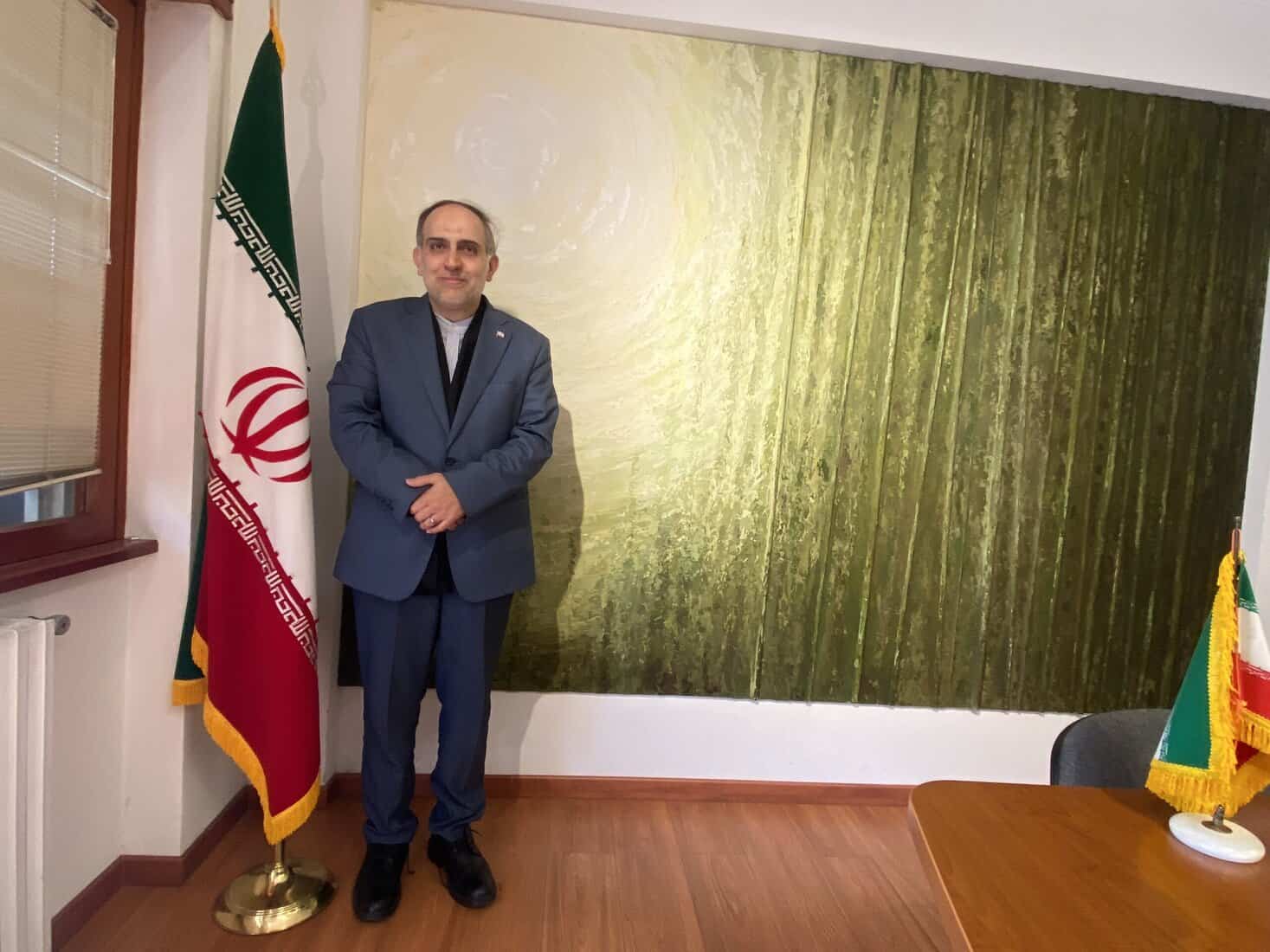
Seyed Majid Emami, 43, is not a wild-eyed fanatic. The cultural counselor for the Istituto Culturale dall’Iran in Rome is a former teacher of sociology, public policy and international communications at the University of Tehran.
The son of famous Iranian painters in the city of Isfahan, he was Iran’s secretary of the Council of Public Culture. In Rome, where he has worked for 20 months, he leads many cultural programs dealing with Iranian music, architecture and art. The institute bridges the academic and cultural gaps between Iran and Italy.
Wearing a blue sportcoat over a collarless shirt, he greeted me with a wide smile. He fondly talked about the music and dancing the institute enjoyed during a program the night before.
I came to talk about war.
It was a conversation between two nationals on the opposite side of the conflict. It was a civil, friendly conversation. In a large conference room in the leafy Trionfale neighborhood of northwest Rome, we didn’t solve the war in its 11th day.
But he gave me a great sense of the pride and resilience of the Iranian people. While I repeatedly pushed back on his version of the Iran government’s popularity, it helped the conversation’s tone that I agreed with most of his views of Pres. Donald Trump.
He never raised his voice. He only raised his index finger. And what it emphasized most were three things: Iran resiliency and Iran’s two enemies: Israel and the United States.
“For five decades we defend for our independence and our solidarity,” he said. “When we defend for our independence, we are very, very happy. Why? Because in our life and our ideology and our culture, a life with enemies is not living.
“It’s death.”
The numbers
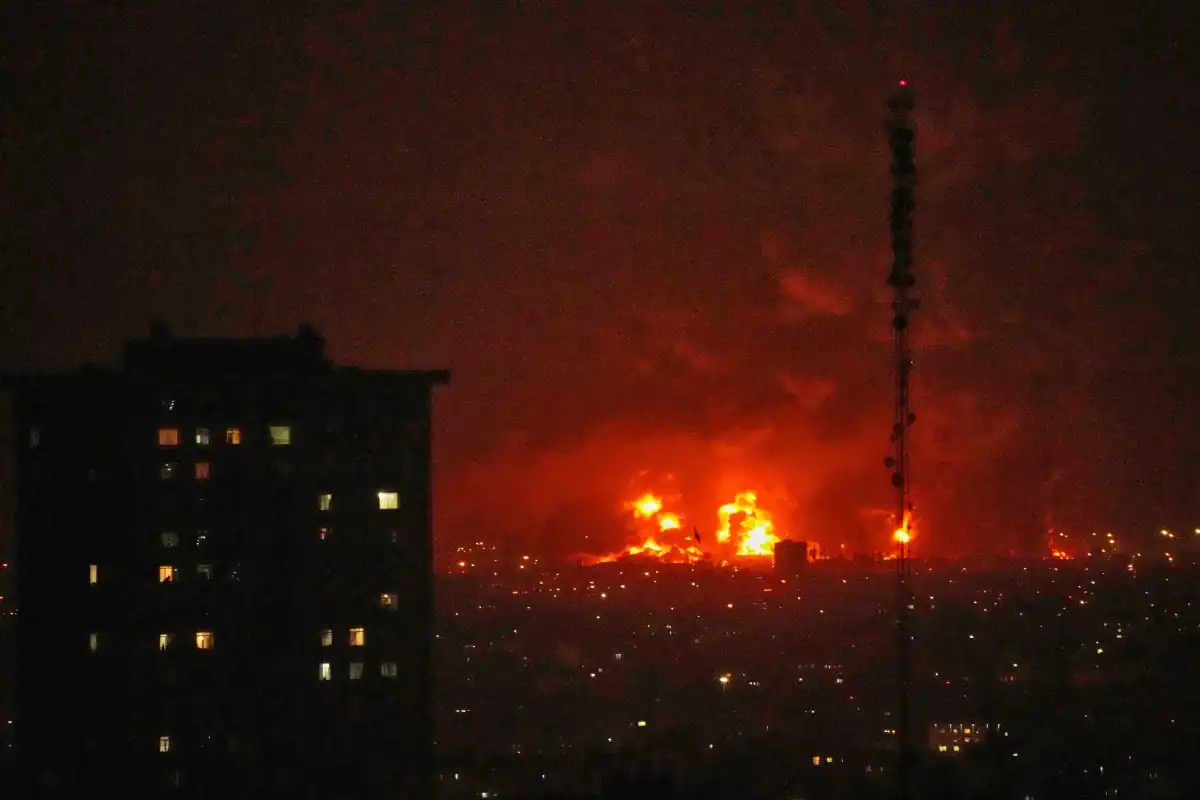
As we spoke, the war’s death toll topped 1,800, including 175 in an elementary school from a U.S. Tomahawk missile. It’s still under U.S. government investigation but Trump waved it off, saying whatever the outcome, “I can live with that report.” Defense secretary Pete Hegseth said the U.S. will not abide by “stupid rules of engagement.”
The U.S. is spending an estimated $1 billion a day on the war. Iran has damaged 17 U.S. sites in the region, including 11 military sites. The White House said the U.S. has dropped 2,000-pound bombs on secret sites in Iran. Iran placed bombs in the Strait of Hormuz.
Iran’s police chief said on state TV that all protesters will be treated as “the enemy” and “All of our forces are also ready with their hands on the trigger prepared to defend their revolution.” https://www.rnz.co.nz/news/world/589307/iran-police-chief-says-anti-government-protesters-treated-as-enemies
It’s getting ugly fast and in a 1-hour, 15-minute conversation, Emami ranged from Iranian history to the 1979 revolution to the shattered nuclear deal. But no bomb that Iran, the U.S. or Israel dropped was heavier than the one he dropped on me.
“I love Trump,” he said.
Say what?
Emami likes what Trump’s base likes: He says exactly what he thinks. And what Emami hears Trump saying is the United States are colonialists.
“Trump told this to an interviewer,” he said. “‘I like their petrol. I like their resources. They have very good resources. If they hear my command, they will live better than this.’
“But we don’t want this life, this life related to dependency and colonialism.”
Then he hit the U.S. … well, above the belt.
“The MAGA movement of Trump needs new sources for expanding the labor system and production and infrastructure in the United States,” he said. “China produces more than 50 percent of goods. And America consumes, consumes, consumes, consumes. This way of consumption, you will fall down.
“This is the new colonialism.”
He often quoted Imam Husayn ibn Ali, grandson of the prophet Muhammad and revered among Iran’s Shiite Muslim population. Born in 626 A.D., Husayn’s teachings are guiding many Iranians during this Iran War.
“He told us not to bow to enemies,” Emami said. “‘I prefer death and martyrdom when you say to me you must live with the enemy because he’s a supreme power. Why is he a supreme power?
“This braveness is not like braveness that you see in Hollywood movies. This is not like nationalism. Nationalism is good. Every nation loves their country. But this is another thing Trump doesn’t understand. And the CIA doesn’t understand until now. This is related to our identity. It’s related to our approach to life and death.”
The Iranians’ response
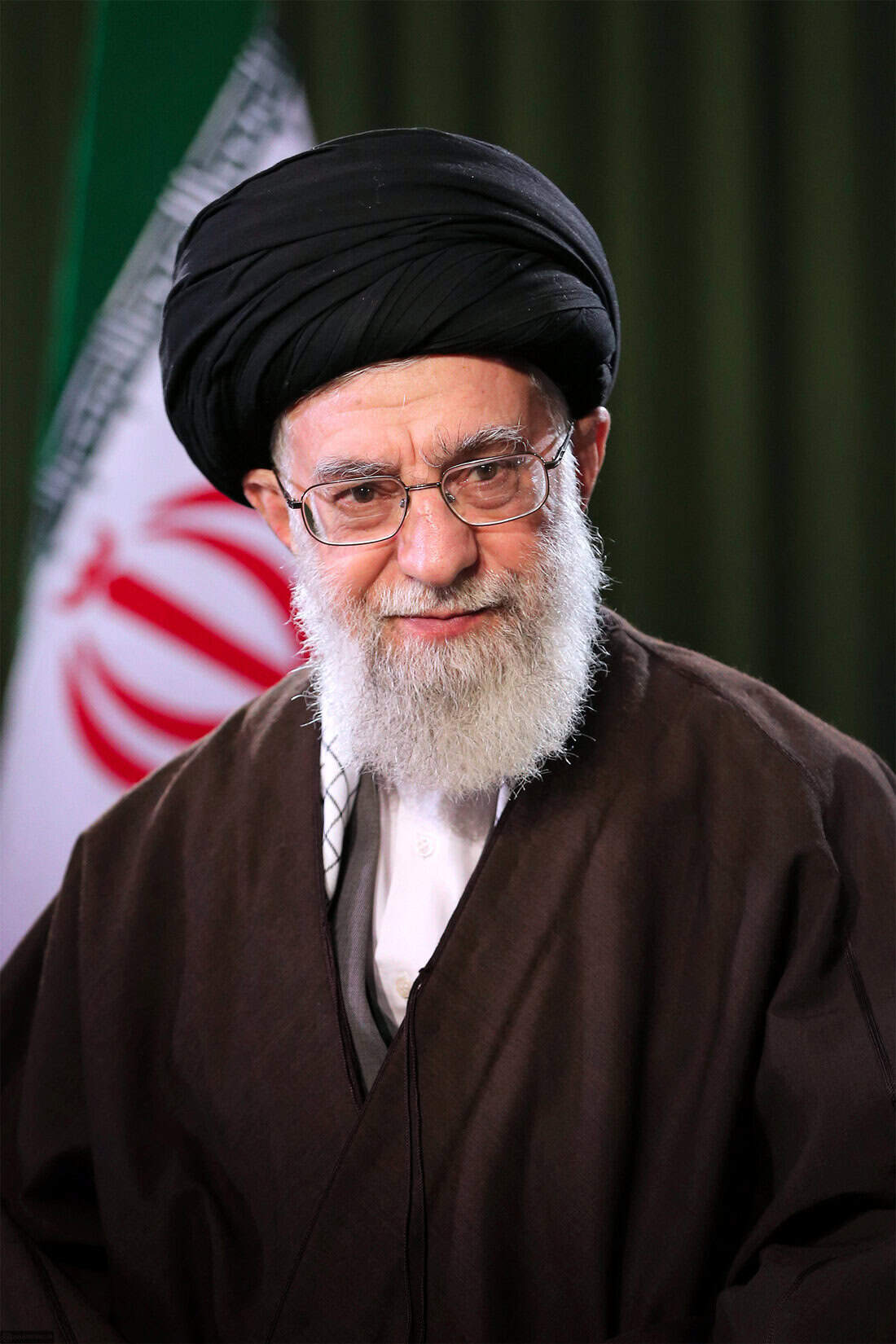
I have a contact in Iran who was all for any attack that would lead to the regime change. This friend put the number of dead who have protested in recent years under supreme leader Ali Khamenei at 100,000. Another 10,000 were in jail waiting trial and/or execution. Emami said the number is about 3,000.
I couldn’t reach my friend to get the current state of the war from the streets of Tehran. Internet has been cut off in the country since the U.S. and Israel attacked Feb. 28, the day the U.S. took out Khamenei.
Emami disputes the numbers.
“Maybe 50 percent of Iranian diaspora in Europe, the United States and Canada is happy,” he said. “Maybe 20 percent or 30 percent of Iranians in Iran agree with the regime change. Maybe. We have many polls and many surveys. But this is not regime change. This is reformation.”
I have a policy not to criticize a country I’ve never visited. I’ve never visited Iran. I toyed with going in April with Saiga Tours, the excellent adventure company I took last year to Turkmenistan and Damascus. But it cancelled its trip when the war began. There’s another tour in October.
However, Iran appears to follow the Middle East’s almost uniform discouragement of free speech. Just read the comment from Iran’s police chief. But Emami pointed out Jan. 8-9 when 500,000 Iranians protested Iran’s failing economy, much of it due, Emami says, to international sanctions. Emami said he called some of them “urban terrorists” but they weren’t all arrested.
“We don’t have the places in our jail,” he said with a big smile. “For example, my son in Iran protested the economic situation. Is he in jail? No. He contacted me: ‘Father, I protest the situation. We are in a very bad situation economically.’
“I agree with some of his approach and I don’t agree with some. But he’s free.”
Then he turned closer to home.
“In Italy, any month you have sciopero (strike),” he said. “Are you saying more Italians are against the regime of Italy? We protest because we are free. I know more than 25 percent of Iranians are against the Islamic Republic. This is reality.
“But we can’t change the regime for 25 percent.”
I asked him about Trump’s motivation behind the war of destroying Iran’s nuclear capabilities. I pointed out Pres. Obama had a treaty and Trump ripped it up in his first term. Iran then went on building and Trump invaded.
“Our nuclear negotiations with agents and European powers have been going on for three decades,” he said. “We have a history of nuclear negotiations. We negotiate about anything. Trump said, ‘You don’t need nuclear energy and nuclear infrastructure.’
“But we need energy. We need electric energy. We had a crisis in uranium energy, for the homes of the people. We need these rights.”
What will happen?
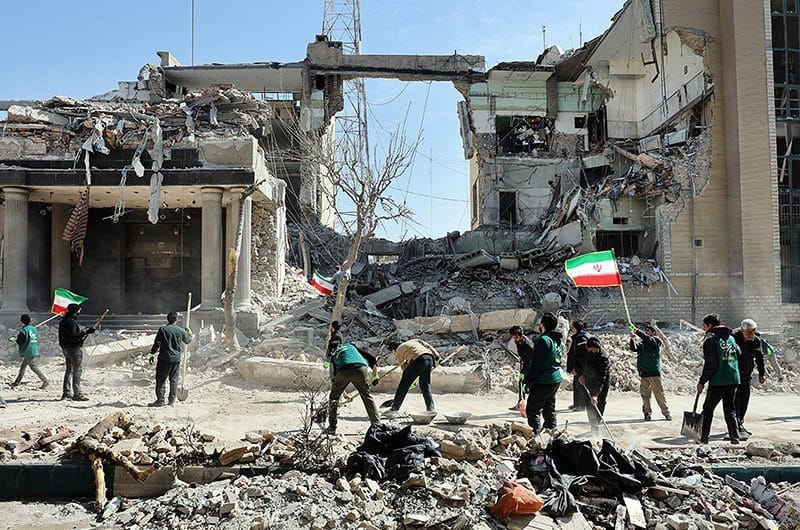
Who will win? What will determine the winner? Despite Iran getting double-teamed by Israel and the U.S., Emami likes Iran’s chances.
“Our people, we have three opportunities,” he said. “First, stopping the ships in Hormuz. This is our chance, our region, our sea. Second, our missiles’ power will be more effective. We couldn’t use more than 15 percent of our missile power. The third opportunity is our people, our nation.”
When we parted, he invited me to some of the institute’s upcoming cultural programs and I gladly agreed. Two men on opposite sides of the war can put away their swords and share laughs over heaping plates of ghormeh sabzi, Iran’s national dish.
Except I’m not carrying a sword. I was all for this regime change but not for this war. Although childless, I have this thing about the U.S. military turning school children into broken corpses under a pile of rubble.
One thing he said stuck with me as I walked out into the sun. I asked him how he felt about the U.S. starting the war and he hinted that he liked the opportunity.
“(The world) will accept that Iran is a global power because we defended against another global power,” he said. “We defended against the first level of army and the fourth level of army: the United States and Israel. ‘You defend against them?’
“‘So you are a global power.’”
March 17, 2026 @ 9:37 pm
John,
A great follow-up question might have been, “Why does Iran enrich uranium, miles underground, to 60% when only 3-5% is needed for electrical energy”? Also, did he mention the 40K Iranian citizens the mullahs have assassinated?
March 18, 2026 @ 10:51 am
He didn’t mention the 40,000. I mentioned the 100,000. That’s what my friend in Tehran told me. He said it was more like 3,000. It’s in the story.
September 4, 2026 @ 11:29 pm
Iran cna enrich all the uranium he wants, and since the 2 most terrorist state in the world (US and Israel) have nuclear weapon, Iran should have one too, they are far more intelligent then both the 2 previous country.
the 40k “iranian citizens” killed by mullah is a fake story brought by the enemy of the nation.. it was approximately 3.300 and the opposition itself can’t prove more than 3.000 death, most of that where innocent civilian killed by mossad and monarchist terrorist agents or policeman.
thanks God the iranian nation is awake and any further provocation by the traitors will be faced more severely.
anyone who supports the terorrists are terrorists themself